February Birthstone: Amethyst Quality, Colors and Prices (2026)
Expert guide to amethyst—purple quartz priced at $10-50/carat with royal heritage
Quick Facts: February Birthstone
| Property | Details | Why It Matters |
|---|---|---|
| Month | February | Traditional birthstone since 1912 |
| Color | Purple (light lavender to deep violet) | Intensity affects value; Siberian grade most prized |
| Mineral Family | Quartz (Silicon Dioxide) | Same family as citrine; distinguishes from sapphire |
| Mohs Hardness | 7 | Excellent daily-wear durability; safe for rings |
| Price Range | $10-50 per carat | Most affordable birthstone except citrine |
| Primary Sources | Brazil (volume), Uruguay (quality) | Origin impacts color saturation |
| Treatment | Usually none | Natural beauty; minimal enhancement required |
| Symbolism | Clarity, peace, sobriety | Greek "amethystos" = "not intoxicated" |
| Best For | Budget-conscious buyers seeking large stones | Permits statement jewelry at accessible prices |
Introduction
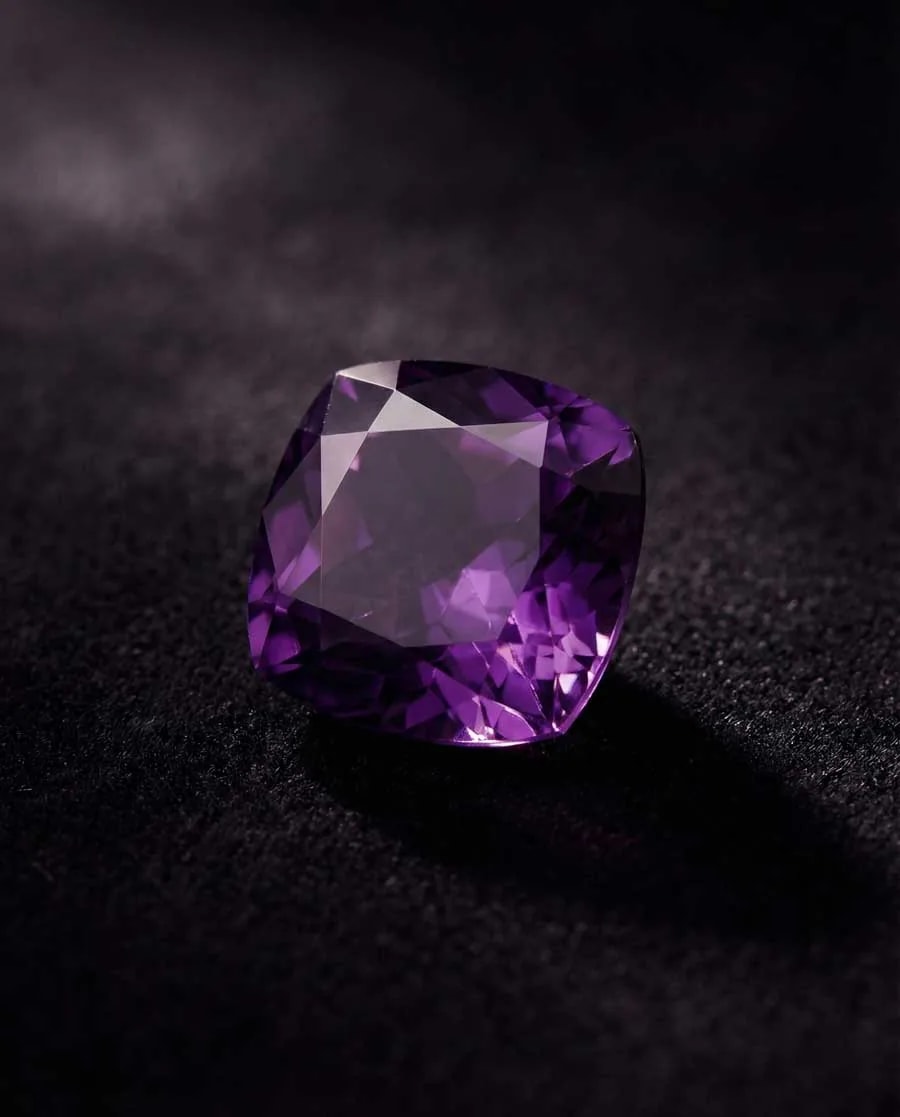
Amethyst is the purple variety of quartz, and it is February's birthstone. The color comes from iron impurities and irradiation within the crystal structure. Mohs 7, decent hardness, widely available, and genuinely affordable for quality material.
The range runs from pale rose-de-France lavender to deep 'Siberian' purple. The deeper the color, the higher the value, with the best material historically from Siberia and Zambia. Brazilian amethyst dominates the commercial market at lower price points. Updated March 2026.

February Birthstone: Amethyst
Top 5 Reasons to Choose Amethyst
Exceptional affordability: $10-50 per carat versus $100-1,000+ for comparable purple sapphires. Budget-friendly luxury for statement jewelry.
Amethyst — The February Birthstone. Video: GIA — Gemological Institute of America.
Daily-wear durability: Mohs 7 hardness suits rings, bracelets, pendants. Same hardness family as garnet and citrine—proven track record for everyday jewelry.
Size availability advantage: Flat pricing across carat weights. A 10-carat amethyst costs roughly the same per-carat as 1-carat stone. It permits bold statement pieces impossible with diamond budgets.
Natural, untreated beauty: 95%+ of commercial amethyst requires no enhancement. Natural color from iron impurities and geological irradiation during formation.
Rich historical symbolism: Greek "amethystos" (not intoxicated) represents clarity and wisdom. Medieval bishops wore amethyst rings symbolizing spiritual authority. Modern metaphysical associations with peace and emotional balance.
How Does Amethyst Compare to Other Purple Gemstones?
Gemstone | Mohs Hardness | Price Range (per carat) | Best Feature |
|---|---|---|---|
Amethyst | 7 | $10-50 | Affordability + size availability |
Sapphire (Purple) | 9 | $100-1,000+ | Durability + investment value |
Tanzanite | 6.5 | $200-600 | Color intensity + rarity |
Iolite | 7-7.5 | $50-150 | Color-change effect |
Spinel (Purple) | 8 | $100-300 | Brilliance + untreated |
Amethyst Meaning and Symbolism
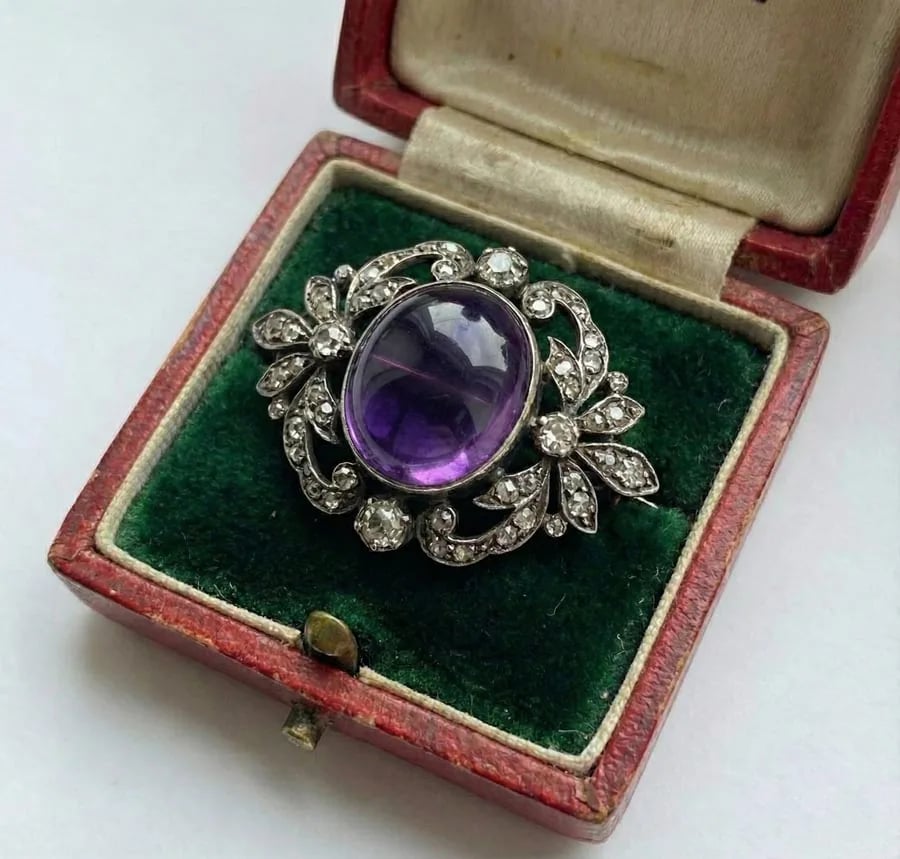
The name "amethyst" derives from Greek "amethystos" (not intoxicated), reflecting ancient beliefs about clarity and self-control.
Traditional meanings across cultures:
Mental clarity and sobriety - Greek civilization associated amethyst with clear-headed judgment and protection from intoxication
Spiritual devotion - Medieval European bishops wore amethyst rings symbolizing ecclesiastical authority and piety
Peace and emotional balance - Contemporary metaphysical practitioners associate amethyst with stress relief and calm
Courage and protection - Renaissance soldiers carried amethyst talismans believing they offered battle protection
For modern February birthstone jewelry, these associations create meaningful gifting narratives emphasizing clarity, wisdom, and peaceful strength.
What Determines Amethyst Value?
Unlike diamonds, which use the 4Cs, amethyst pricing is driven mainly by color, with clarity, size, and origin playing smaller supporting roles.
Color (the most important factor)
Color accounts for most of an amethyst’s value. The deeper and purer the purple, the higher the price.
Siberian-grade (top quality): Rich royal purple with red flashes. Mostly from Uruguay today.
Approx. $30–50/ct
Medium saturation (fine quality): Strong, balanced purple—best value for jewelry.
Approx. $15–35/ct
Light lavender (commercial grade): Pretty but less impactful, best for small stones.
Approx. $10–15/ct
Brown or gray undertones significantly reduce value because they dull the color.
Clarity
Most quality amethyst should be eye-clean.
Minor inclusions are acceptable if the color is strong, but visible internal marks lower the price.
Cloudy or milky amethyst has very little value—transparency is essential.
Carat Weight
Amethyst maintains stable pricing even in large sizes, unlike diamonds or sapphire.
This means you can enjoy big 5–10 carat stones at accessible prices, perfect for cocktail rings and pendants.
Only exceptional Siberian-grade stones above 20 carats receive notable premiums.
Origin
Origin affects value but gently:
Uruguay → deepest colors, slight premium
Brazil → consistent and affordable
Zambia → darker purple, growing popularity
Madagascar → lighter shades, budget-friendly
Market Trends
Amethyst remains one of the most stable gemstones in the industry.
Fine Uruguayan material has appreciated slightly, while commercial grades have stayed stable for years.
Lab-grown amethyst exists but is irrelevant because natural amethyst is already so affordable.
Best buying strategy
For maximum value, choose:
Brazilian or Zambian stones
Medium to deep saturation
Eye-clean transparency
3–7 carat sizes for the best visual impact under $200 total cost
Reserve Uruguayan stones for collector pieces or sentimental purchases where origin documentation matters.
Amethyst Origins and Sources
Geography significantly influences amethyst color, saturation, and market value.
Brazil (Dominant global producer)
Rio Grande do Sul state supplies majority of commercial amethyst
Lighter to medium purple with subtle reddish flashes
Sheer volume keeps pricing accessible while maintaining consistent quality
Uruguay (Premium quality)
Produces most coveted amethyst globally
Deep, saturated purple approaching royal violet
Commands 20-30% premiums over comparable Brazilian material
Preferred by collectors and high-end jewelers for statement pieces
African sources (Zambia, Madagascar)
Zambia: Darker purple without strong red flashes
Excellent value between Brazilian affordability and Uruguayan premium
Madagascar: Light to medium tones, fills mid-market demand
Amethyst Treatments
Natural amethyst status
95%+ of commercial amethyst is untreated (natural color)
Color results from iron impurities and natural irradiation during formation
Rare treatment cases
Heat treatment can lighten overly dark stones to more desirable medium purple
Intense heating (900°F+) transforms purple amethyst into yellow/orange citrine
Irradiation enhancement rarely used (natural irradiation already present)
How to Verify Amethyst Authenticity
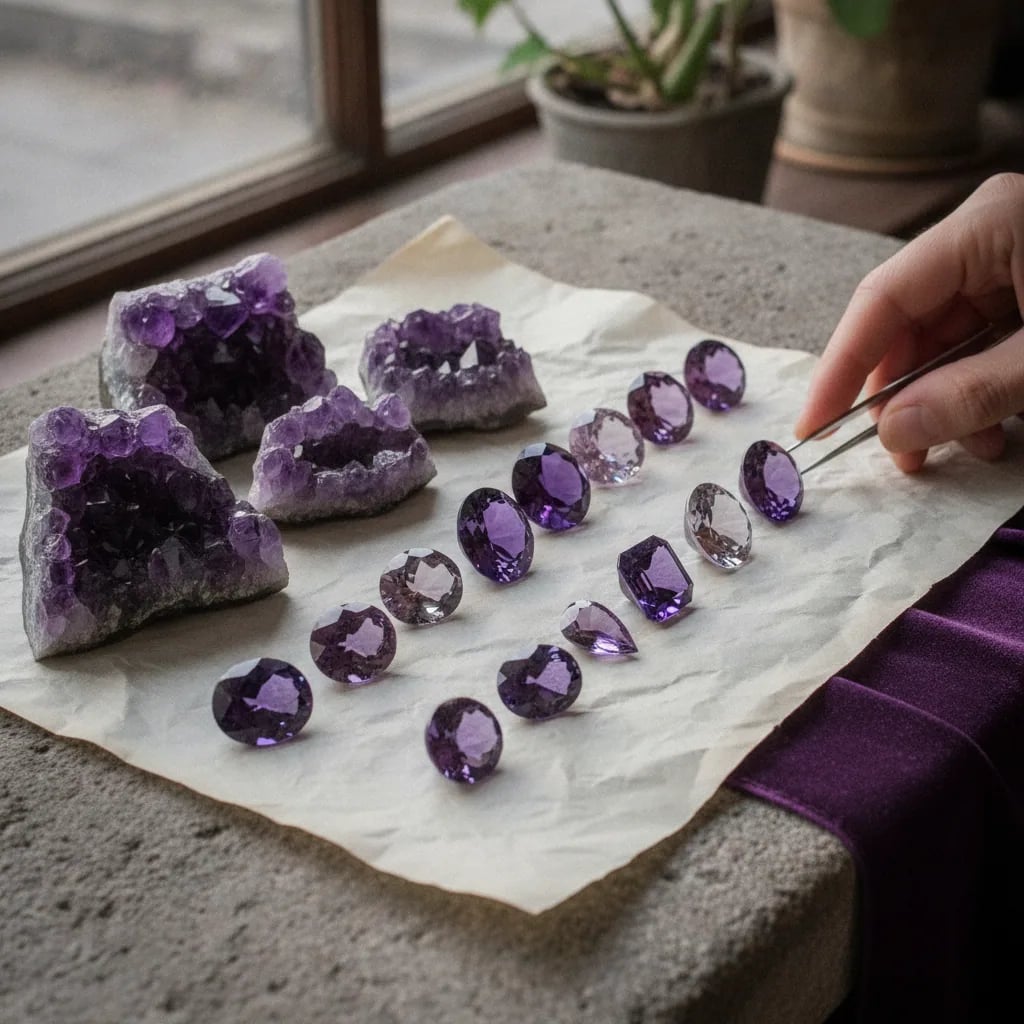
Although amethyst is affordable and not commonly targeted by high-end counterfeits, it’s still important to distinguish natural stones from glass or synthetic amethyst. Here’s what to look for when evaluating authenticity.
Visual Inspection Methods
Color zoning: Natural amethyst shows subtle variations in purple intensity when rotated under light. Glass usually appears perfectly uniform with no zoning.
Inclusions: Under 10× magnification, genuine amethyst often contains small mineral crystals, liquid “two-phase” inclusions, or tiny healing fractures.
If a large stone (over 5 carats) is completely flawless, it may be synthetic unless certified.
Simple Physical Tests
Temperature: Amethyst stays cool to the touch longer than glass, which warms quickly.
Pleochroism: Natural amethyst shows slight color shifts (bluish-purple to reddish-purple) depending on viewing angle. Glass and plastic do not.
Weight: Glass and amethyst weigh similarly, but plastic or resin imitations feel noticeably too light.
Light and Color Behavior
Natural amethyst may shift slightly between daylight (cooler purple) and incandescent light (warmer purple with red flashes).
Glass looks identical in every lighting condition.
Synthetic amethyst often has perfectly even color with no zoning.
Common Imitations to Watch For
Glass: Perfect color uniformity, gas bubbles, warms quickly.
Synthetic amethyst: Same chemistry as natural but shows curved growth lines and unusually strong saturation. If a large, eye-clean deep-purple stone is very cheap, ask for certification.
Purple synthetic sapphire: Much harder and more brilliant; requires professional testing.
Plastic/resin: Very light, warm to touch, scratches easily.
The Citrine Connection: (Heat Treatment)
Most commercial citrine is actually heat-treated amethyst. Signs of heating include reddish-orange tones, traces of purple zoning at crystal tips, or unusually low prices.
This is not fraud if disclosed, but sellers sometimes mislabel heated material as “natural citrine.”
Indicators of heated amethyst-origin citrine include:
Reddish-orange color with slight purple zoning remnants at crystal terminations
Price significantly below natural citrine from Brazil or Bolivia
Lack of treatment disclosure on certificates
When to Demand Certification
Request third-party certification for:
Any amethyst purchase exceeding $500 total value
Stones sold as "Siberian grade" or "Uruguayan origin" commanding premiums
Investment or heirloom pieces requiring documentation
Amethyst exceeding 15 carats claiming eye-clean clarity and vivid color
Online purchases from sellers without established reputation or return policies
Choosing Amethyst Jewelry
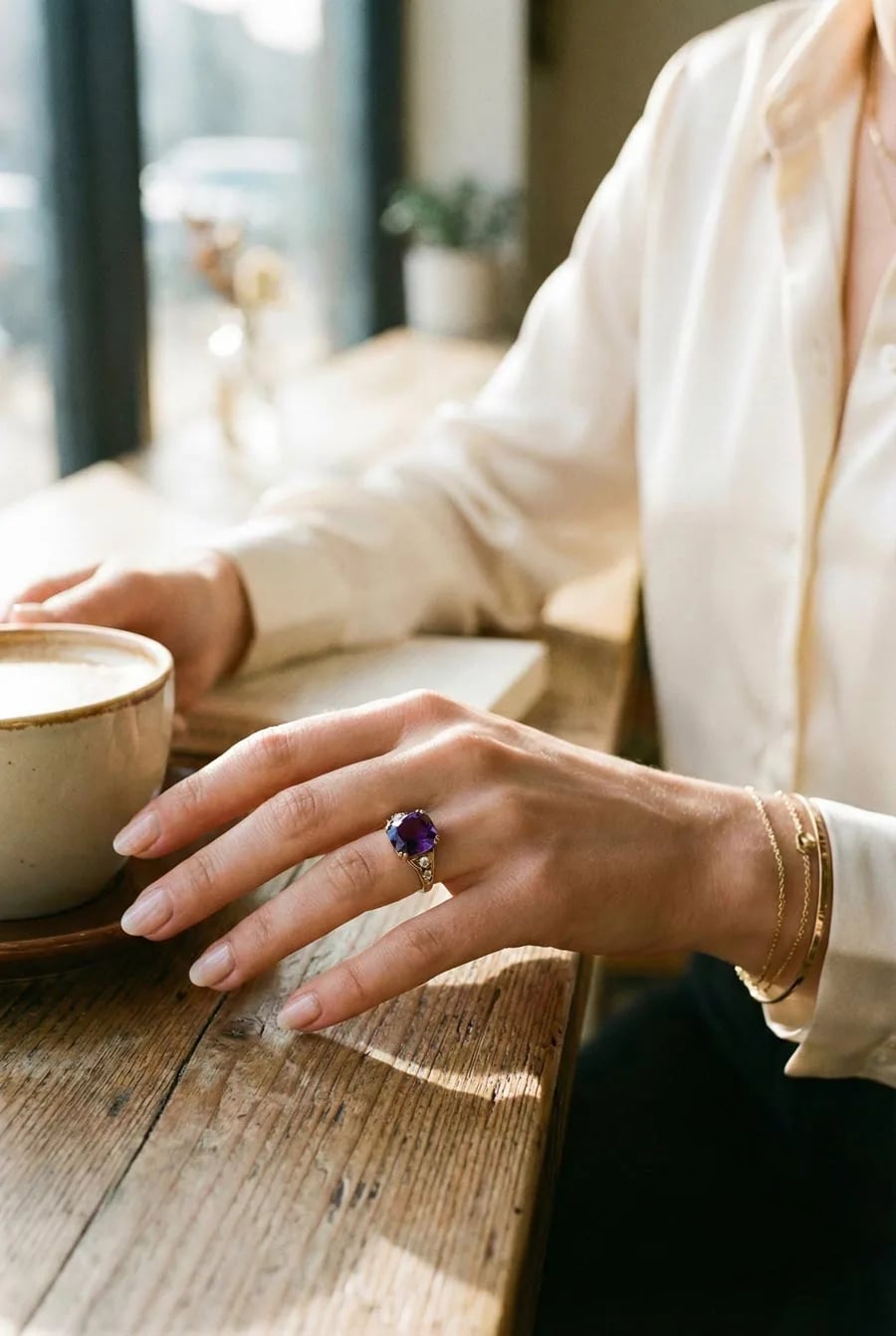
Amethyst’s durability and affordability make it one of the most versatile birthstones for jewelry. Whether you’re choosing a meaningful February gift or a standout statement piece, this gemstone adapts beautifully to any style.
Amethyst for Engagement Rings
Amethyst offers a distinctive and meaningful alternative to traditional diamonds or sapphires.
Its rich purple tone brings feminine elegance and a deep symbolic connection to February birthdays.
With a Mohs hardness of 7, it’s durable enough for engagement rings when treated with reasonable care.
Protective settings like halos or bezels help extend longevity, especially for everyday wear.
Because amethyst is accessible in cost, you can choose larger center stones without exceeding your budget. A 3-carat eye-clean amethyst often costs less than a 0.5-carat diamond of comparable clarity, allowing for bold, memorable designs.
Amethyst for Birthstone & Fashion Jewelry
Amethyst’s affordability encourages creativity across all jewelry categories.
Cocktail rings with 5–15 carat stones
Graduated pendant necklaces
Chandelier or drop earrings
Birthstone gifts for milestone birthdays (16th, 21st, 50th)
Its range of sizes and price points makes February birthstone jewelry both meaningful and visually impressive.
Best Settings & Metal Choices
Your choice of setting and metal can enhance amethyst’s natural beauty:
White Gold, Platinum, Silver
Cool-toned metals intensify amethyst’s violet saturation, giving the stone a clean, modern look.
Yellow Gold
Adds warmth and depth, creating a romantic, vintage aesthetic popular in antique-inspired designs.
Setting Styles
Protective settings (halos, bezels): Ideal for rings, helping minimize wear.
Prong settings: Maximize brilliance and light return—perfect for pendants and earrings where impact risk is low.
Frequently Asked Questions
Conclusion: Why Amethyst Matters
February birthstone jewelry represents the intersection of aesthetic prestige and financial accessibility. Amethyst delivers:
Royal purple saturation at $10-50 per carat (vs $100-1,000+ for sapphire)
Excellent Mohs 7 durability suitable for daily-wear rings
Meaningful symbolism (clarity, peace, wisdom)
Substantial size possibilities—pricing permits 10-20 carat statement pieces
Whether selecting birthstone jewelry for February-born loved ones, seeking engagement ring alternatives with distinctive personality, or building a gemstone collection emphasizing value and beauty, amethyst merits serious consideration.