Helix Piercing Jewelry: An Expert's Healing Guide
An expert guide to helix piercing jewelry, covering safe materials, proper sizing, and refined styling. Learn how to heal comfortably, avoid irritation, and curate a helix piercing that reflects lasting quality and personal style.
Helix Piercing Jewelry: Quick Facts
| Property | Details |
|---|---|
| Standard Gauge (Thickness) | 16g (1.2mm) is most common; 18g (1.0mm) is also used. |
| Best Material (New Piercing) | Implant-Grade Titanium (ASTM F-136) for optimal, hypoallergenic healing. |
| Luxury Material (Healed) | Nickel-free 14k or 18k Solid Gold for premium style and biocompatibility. |
| Recommended Initial Style | Flat back labret stud for maximum comfort and to prevent snagging. |
| Common Stud Lengths | 8mm for initial swelling, downsized to a snug 6mm post-healing. |
| Common Hoop Diameters | 8mm to 10mm, depending on piercing placement for a snug fit. |
| Materials to Avoid | Surgical Steel (contains nickel), Sterling Silver, and any plated jewelry. |
Introduction
Choosing a helix piercing is a form of personal expression, but its success depends largely on selecting the right jewelry. More than placement, the quality and fit of the piece determine whether the piercing heals smoothly or becomes a source of irritation and discomfort.
Helix ear piercings jewelry is designed specifically for the upper ear cartilage and should be made from biocompatible materials such as implant-grade titanium or 14k solid gold. Proper gauge and length are essential to support healing and prevent complications.
With many options on the market, understanding the difference between safe, high-quality materials and inferior alternatives is crucial to avoid allergic reactions, infections, and long-term cartilage issues.
Helix Jewelry Fundamentals: Studs vs. Hoops
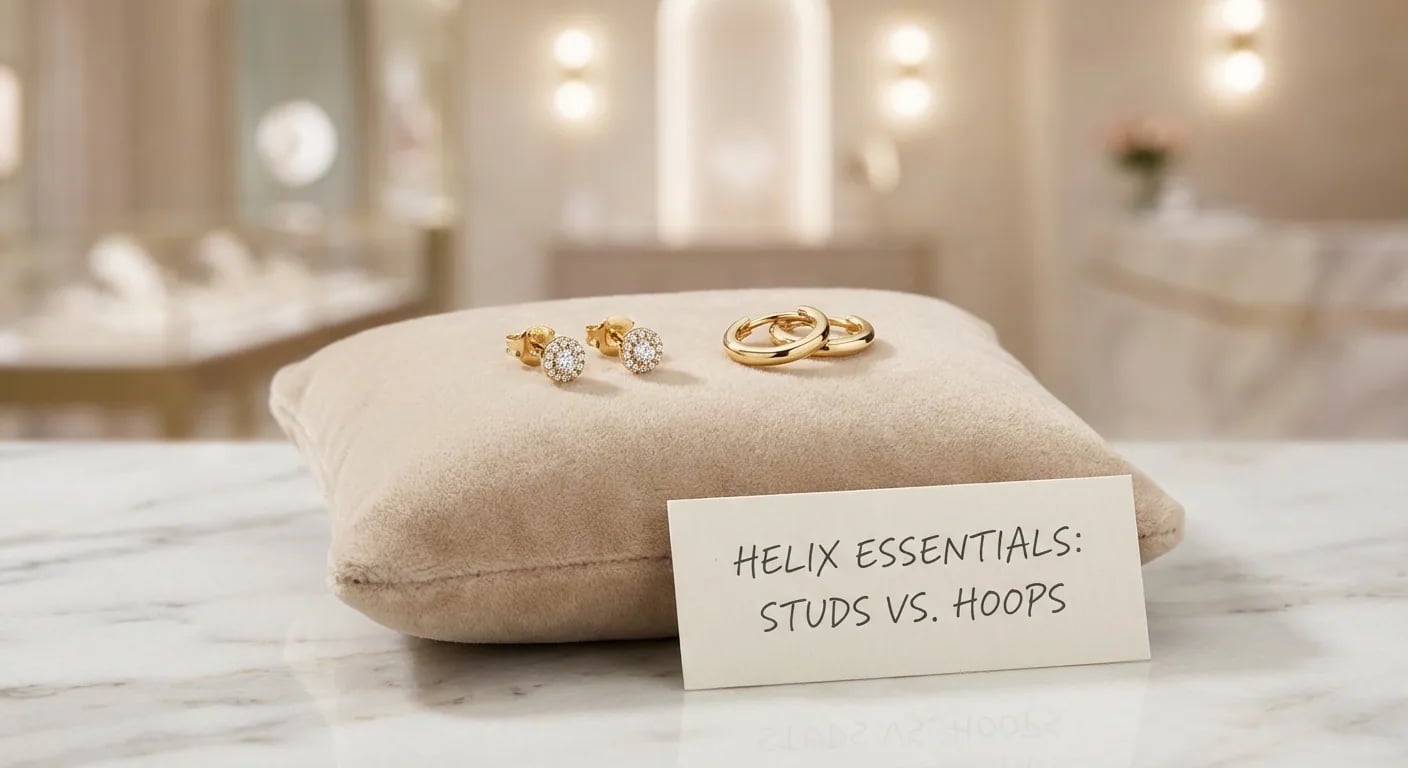
Selecting the appropriate jewelry for a helix piercing involves choosing between two primary styles: studs and hoops. The ideal choice depends on the piercing's healing stage, personal anatomy, and desired aesthetic. Professional piercers almost universally recommend starting with a stud for initial healing, as it promotes a stable and irritation-free environment. Hoops are typically reserved for piercings that are fully healed.
The Flat Back Stud: The Pinnacle of Comfort & Style
The flat back stud, technically known as a labret, is the professional standard for both new and healed helix piercings. Its design features a flat disc that rests flush against the back of the ear, preventing the poking and snagging common with butterfly-back earrings. This comfortable and secure design is crucial for uninterrupted healing and long-term wear.
There are two primary mechanisms for the decorative tops:
Threadless (Push-Pin): This modern design uses a pin on the decorative top that is slightly bent to create tension inside a hollow post. It is highly secure, easy to change, and ideal for intricate settings featuring a classic diamond or other precious gems.
Internally Threaded: In this style, the decorative top has a screw that threads into the post. This ensures a smooth post passes through the piercing, preventing scraping or irritation.
The Hoop: From Minimalist to Statement
Hoops offer a distinct aesthetic but are best suited for fully healed helix piercings, typically after 6-12 months. Introducing a hoop too early can cause irritation, migration, and healing complications due to its movement.
Popular hoop styles include:
Clickers: These feature a hinged segment that "clicks" securely into place, creating a seamless and continuous ring. They are easy to insert and remove, making them a favored choice for luxury pieces, sometimes adorned with a row of brilliant gems like the sapphire.
Seam Rings: A minimalist option, this is a continuous ring with a small split. The ring is gently twisted open for insertion and closed again. Achieving a perfect seam requires care to avoid distorting the ring's shape.
For those seeking a personalized touch, many find inspiration by selecting a stud or hoop featuring their birthstone. A comprehensive guide to birthstones can help identify which gem aligns with a specific month.
Stud vs. Hoop: A Comparative Overview
To aid in the decision-making process, the following table outlines the key differences between flat back studs and hoops for helix piercings.
Feature | Flat Back Stud | Hoop |
|---|---|---|
Best For | Initial healing & long-term wear | Fully healed piercings only |
Comfort | High; flat back prevents poking | Variable; can rotate and snag |
Healing Impact | Minimal movement, promotes stability | Movement can cause irritation |
Aesthetic | Focused, decorative point of light | Encircles the ear's cartilage |
Versatility | Easy to change decorative tops | Style is fixed once inserted |
The Hierarchy of Materials: A Guide to Safe & Luxurious Choices
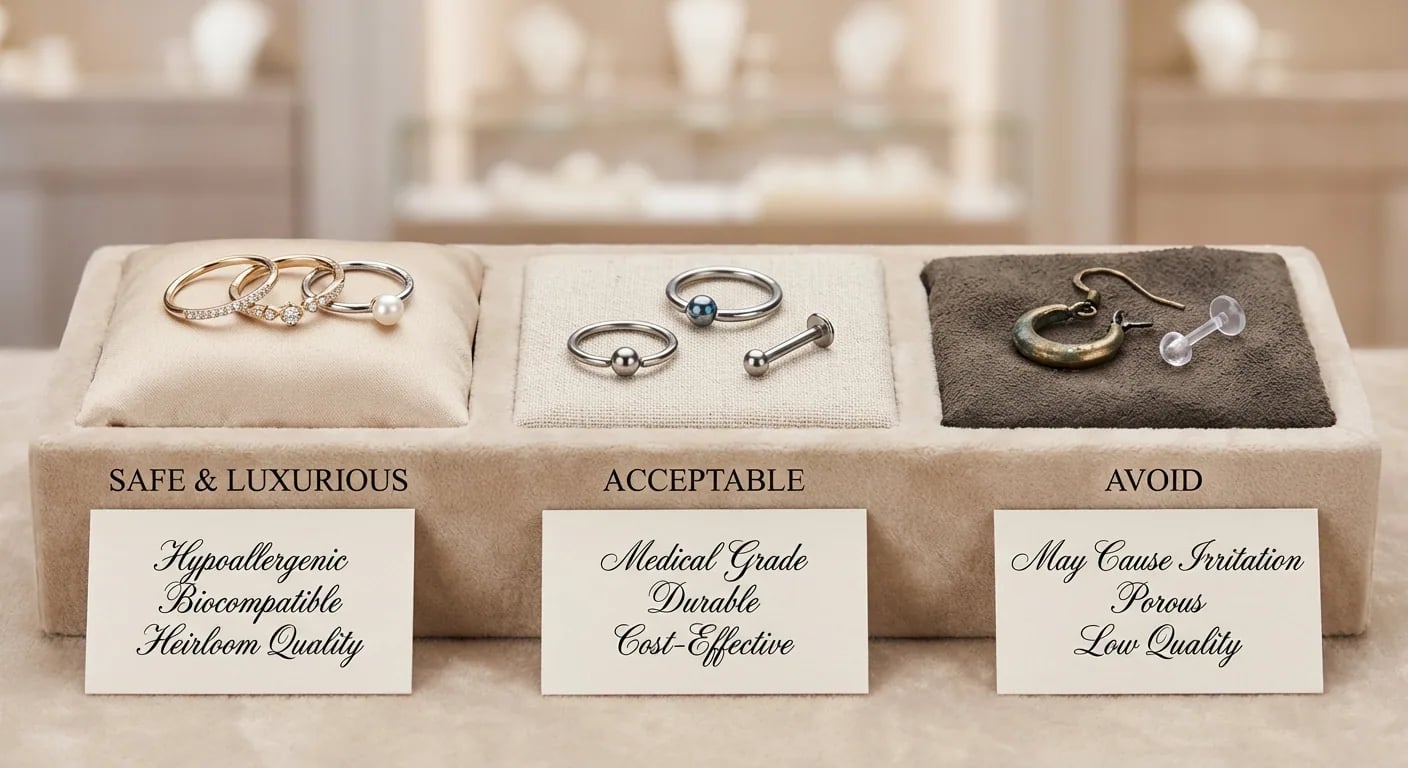
The material of your helix jewelry is the single most important factor for a healthy, irritation-free piercing. Choosing a biocompatible, high-quality metal is not just a matter of aesthetics; it is a crucial investment in long-term comfort and safety. The market offers a vast array of options, but professional piercers and gemologists adhere to a strict hierarchy based on body safety and purity.
The Gold Standard: Implant-Grade Metals for New & Sensitive Piercings
For initial piercings and individuals with sensitive skin, there is no substitute for implant-grade metals. These materials are specifically engineered for safe, long-term implantation in the human body.
Implant-Grade Titanium (ASTM F-136): This is the premier choice recommended by the Association of Professional Piercers (APP). It is entirely nickel-free, lightweight, and non-porous, which prevents bacteria from accumulating. Its biocompatibility ensures that the body does not react to it, significantly reducing the risk of irritation, swelling, and allergic reactions during the critical healing phase.
Niobium: Another highly biocompatible element, Niobium is also nickel-free and safe for new piercings. It can be anodized to create a vibrant spectrum of colors without affecting its safety.
The Touch of Luxury: Solid Gold & Platinum
Once a helix piercing is fully healed, the options expand to include precious metals. It is critical, however, to select the correct purity and alloy.
14k or 18k Solid Gold: As a premium choice, solid gold offers timeless luxury. For body jewelry, 14k or 18k gold is ideal as it provides the right balance of purity and durability. It is essential to ensure the gold is a nickel-free alloy, especially for white gold, which often contains nickel. Yellow and rose gold are typically safer choices. These rich metals provide the perfect setting for precious gems, from a classic diamond to a vibrant ruby. A curated ear can be further personalized by selecting jewelry featuring a stone from a comprehensive guide to birthstones.
Platinum: A dense, durable, and prestigious metal, platinum is naturally hypoallergenic and highly resistant to tarnish. Its silvery-white luster makes it an exceptional choice for luxury helix jewelry.
Materials to Approach with Caution
Low-quality materials are the primary cause of piercing complications. The following table clarifies the risks associated with common but problematic metals.
Material | Common Misconception | The Reality (Risk) |
|---|---|---|
"Surgical" Steel | It is medical-grade and safe for everyone. | This is an unregulated term. Most "surgical" steel contains significant amounts of nickel, a common allergen that can cause severe irritation and healing delays. |
Plated / Vermeil | It is an affordable way to get a gold look. | The thin outer layer of gold can flake, chip, or wear away, exposing the base metal (often containing nickel) directly to the piercing channel. |
Sterling Silver | It is a precious metal, so it must be safe. | Sterling silver (92.5% silver) oxidizes or tarnishes when exposed to air and bodily fluids. This tarnish can permanently stain the skin (argyria) and cause severe irritation in a healing piercing. |
The Perfect Fit: Mastering Helix Jewelry Sizing
Choosing the Right Size for Helix Jewelry
The right size can make all the difference between a helix piercing that heals effortlessly and one that becomes a constant source of irritation. Gauge, length, and hoop diameter are not just technical details. They directly affect comfort, healing, and how polished the final result looks. Understanding these three measurements helps you avoid common mistakes and choose jewelry that truly works with your ear.
Gauge: Finding the Right Thickness
Gauge refers to the thickness of the jewelry post or hoop. The numbering works in reverse, meaning a lower number equals a thicker piece.
For helix piercings, two sizes are most common.
A 16 gauge (1.2 mm) is the standard choice and offers the best balance of strength, comfort, and versatility.
An 18 gauge (1.0 mm) is slightly thinner and can work well for a more delicate look or closely spaced piercings.
Wearing the wrong gauge can cause problems. Jewelry that is too thick may stress the piercing, while jewelry that is too thin can shift or migrate. If you are unsure, your original piercer can easily confirm the correct gauge.
Stud Length and Why Downsizing Matters
Flat back studs need the right post length to heal properly. This usually happens in two stages.
At first, a longer post is necessary to allow room for swelling. Most piercers use a length between 8 mm and 10 mm during the early healing phase. This prevents pressure, embedding, and unnecessary discomfort.
Once swelling goes down, usually after four to eight weeks, downsizing becomes essential. Switching to a shorter post around 6 mm to 7 mm allows the jewelry to sit closer to the ear. This reduces snagging on hair, clothes, or pillows and helps the piercing settle comfortably.
Skipping this step is one of the most common reasons helix piercings stay irritated longer than they should.
Hoop Diameter: Snug or Statement
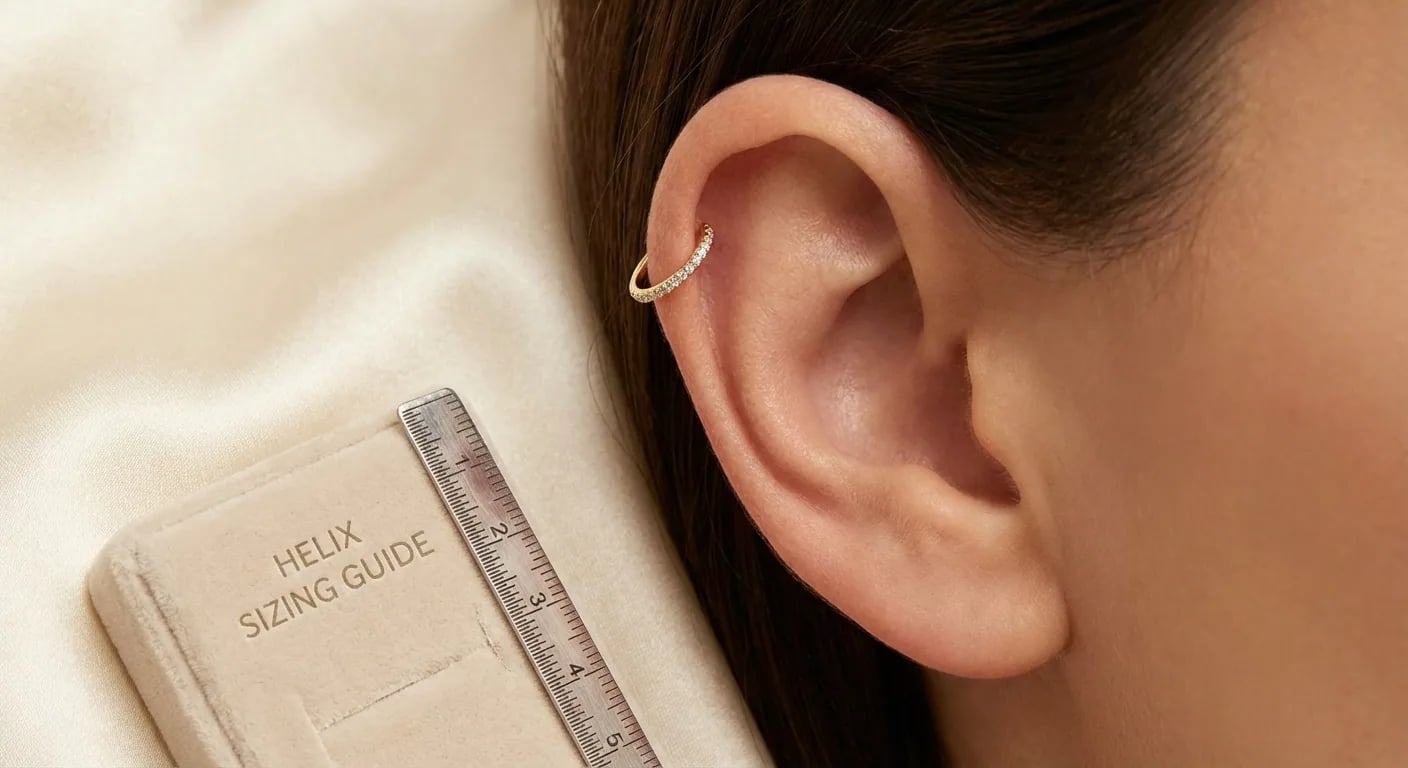
For hoops, the diameter determines how closely the ring follows the curve of your ear. Most helix hoops fall between 8 mm and 12 mm.
A smaller diameter creates a clean, snug look that hugs the cartilage. A larger diameter gives a more open, statement style with extra movement.
To estimate the right size, measure from the center of the piercing to the outer edge of your ear where you want the hoop to rest, then add 1 mm to 2 mm for comfort. The goal is a fit that feels natural, not tight or restrictive.
A hoop that is too small can put pressure on the piercing and slow healing, while one that is too large may catch easily and cause irritation.
Curating Your Ear: Styling Your Helix Piercing
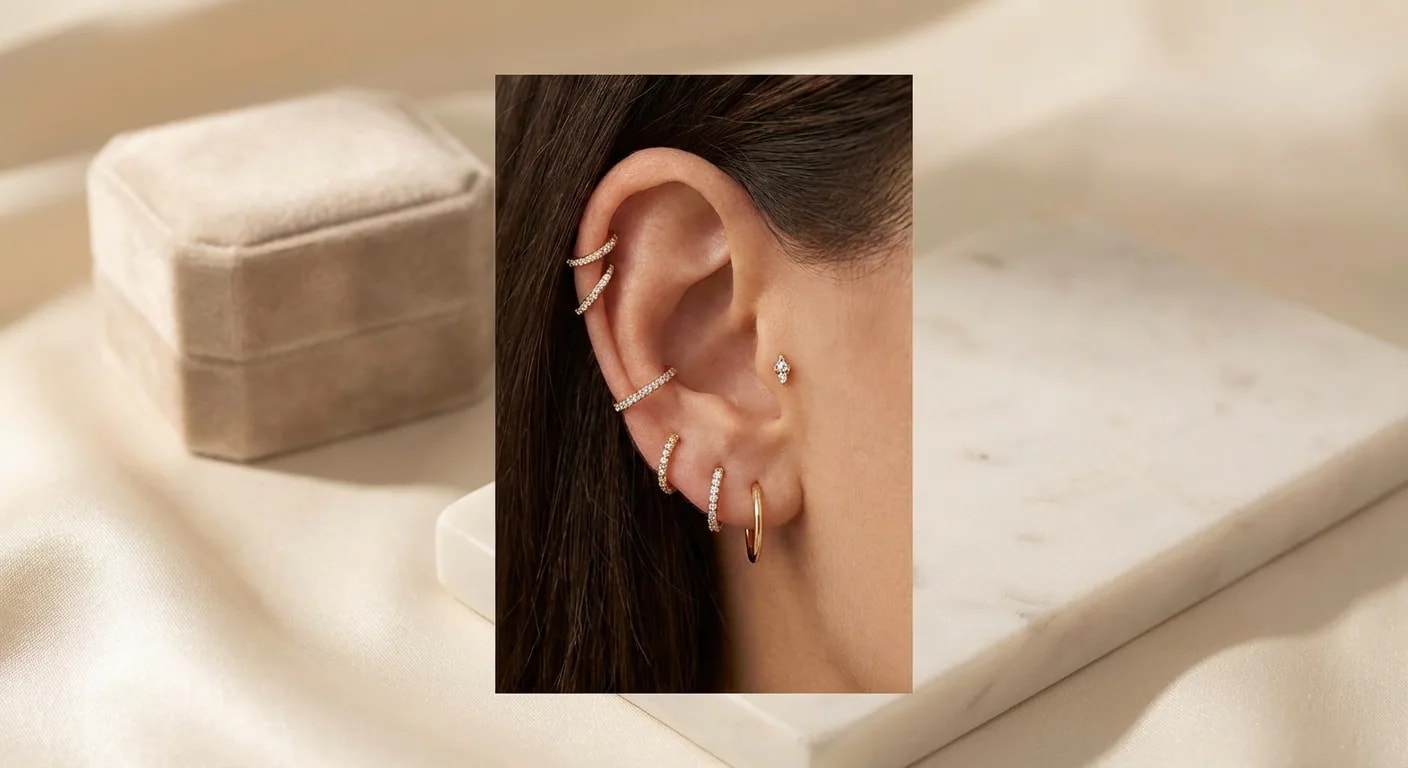
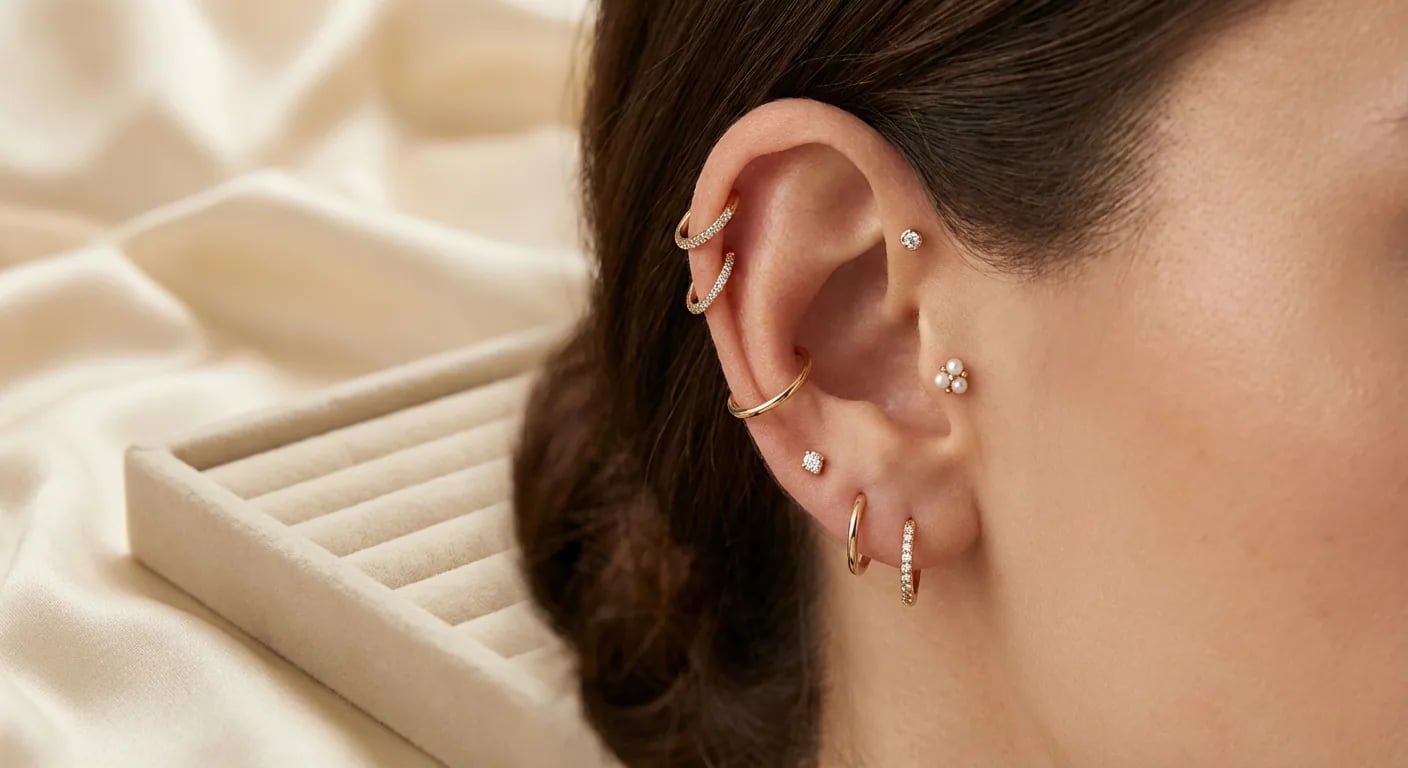
Once a helix piercing is fully healed, it becomes a key element in the art of ear curation. This concept involves styling multiple piercings to create a cohesive and personalized aesthetic that complements the ear's natural anatomy. A well-curated ear is not random; it is a deliberate composition of jewelry that reflects a unified theme, balances visual weight, and tells a personal story. The helix piercing, with its prominent placement, often serves as an anchor or centerpiece for the entire design.
Principles of Ear Curation
Achieving a harmonious look involves considering several design principles. These guidelines help transform a collection of individual piercings into a singular, elegant statement.
Theme and Cohesion: The foundation of a curated ear is a unifying theme. This can be achieved by sticking to a single metal color, such as 14k yellow or white gold. Another popular approach is to build a color story using gemstones. For example, creating a celestial look with a moonstone stud, a diamond star, and a deep blue sapphire.
Balance and Flow: Jewelry should be arranged to create visual balance. A large, ornate hoop in the helix might be counterbalanced by smaller, delicate studs in the lobe. The goal is to guide the eye along the natural curve of the ear, creating a sense of movement and flow.
Texture and Dimension: Combining different textures adds depth and interest. A smooth, polished gold hoop can be paired with a pavé-set stud, or a piece with intricate milgrain detailing can be placed next to a simple bezel-set gem like a fiery ruby. This interplay prevents the overall look from appearing flat.
Common Styling Approaches
Styling a helix piercing can range from subtle minimalism to bold maximalism. Exploring different combinations allows for a look that is uniquely personal. A guide to birthstones can provide endless inspiration for creating a meaningful and colorful curation.
Styling Approach | Key Characteristics | Best For | Example Combination |
|---|---|---|---|
Minimalist | Clean lines, single metal tone, delicate pieces. | Everyday elegance, professional settings. | A thin 14k gold helix hoop with a matching small lobe stud. |
Constellation | Multiple small studs creating a scattered, starry effect. | Creative expression, drawing attention to the ear's shape. | A mix of diamond, opal, and sapphire studs across the helix and flat. |
Statement | One dominant, eye-catching piece balanced by subtler jewelry. | Special occasions, making a bold personal statement. | A large pavé diamond helix clicker with tiny, plain gold lobe studs. |
Color Story | A cohesive theme based on gemstone colors. | A personalized and vibrant look. | An ombre effect using emerald, peridot, and tourmaline studs. |
Frequently Asked Questions
Choosing the right helix piercing jewelry depends on material quality, proper sizing, and personal style. Implant-grade titanium or solid gold, combined with accurate gauge and length, are essential for smooth healing and long-term comfort.
More than a decorative choice, helix jewelry is an investment in both health and self-expression. When quality materials, proper fit, and thoughtful design come together, the piercing becomes a refined and comfortable extension of personal style rather than a source of irritation.