January Birthstone: Garnet Colors, Quality and Prices (2026)
Discover January's garnet birthstone: deep red gemstone symbolizing trust & protection. Prices from $20-$2,000/carat. Complete buying guide & meaning.
Quick Facts: January Birthstone
| Property | Details |
|---|---|
| Birth Month | January |
| Primary Color | Deep red to burgundy |
| Color Range | Red, purple, orange, yellow, green (all except blue) |
| Mohs Hardness | 6.5-7.5 |
| Price Range | $20-$2,000+ per carat |
| Primary Sources | India, Brazil, Sri Lanka, Tanzania, Kenya |
| Traditional Meaning | Protection, trust, friendship, strength |
Introduction
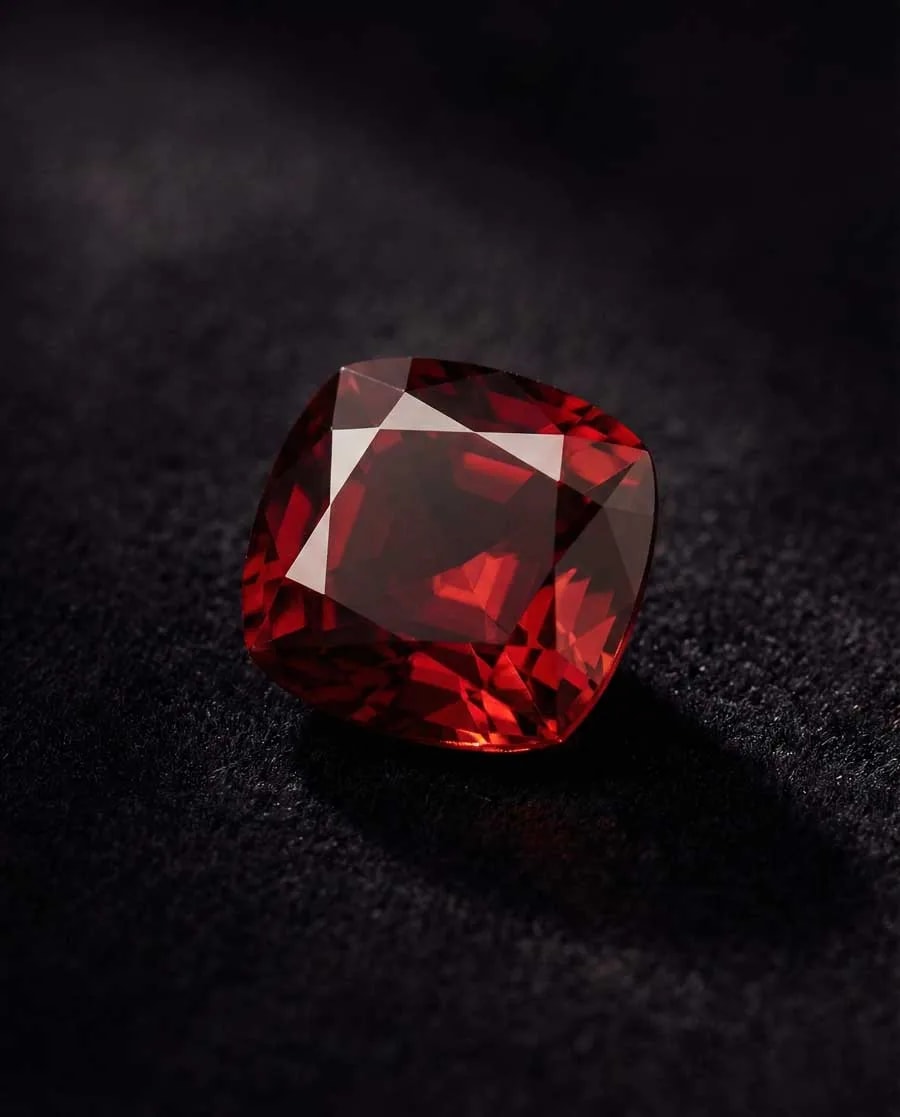
Most people picture garnet as a deep red stone. Here is the thing: garnet comes in almost every color except blue. Green tsavorite from Kenya. Orange hessonite from Sri Lanka. Purple rhodolite. Color-change garnet that shifts from green in daylight to red under incandescent light. Red is just the most common variety.
January birthstone jewelry has been made with garnet for centuries, and the stone earns its place: Mohs 6.5 to 7.5, decent hardness for daily wear, and a price range that makes quality accessible at most budgets. Updated March 2026.

January Birthstone: Garnet
Top 5 Reasons to Choose Garnet
Affordability: Common red varieties (almandine, pyrope) cost $20-$80 per carat. Rare varieties (tsavorite, demantoid) cost $300-$2,000/carat.
Garnet — The January Birthstone. Video: GIA — Gemological Institute of America.
Daily Wear Durability: Mohs hardness 6.5-7.5. No cleavage planes. Suitable for rings, pendants, earrings with reasonable care.
Color Variety: Available in red (almandine, pyrope), green (tsavorite, demantoid), orange (spessartine), purple (rhodolite), and color-change varieties. All colors except blue.
Historical Symbolism: Protection (medieval warriors), loyalty (Victorian jewelry), trust (second-anniversary gift). Cultural significance across civilizations.
Global Sourcing: India (almandine), Brazil (spessartine), Kenya/Tanzania (tsavorite), Russia (demantoid), Sri Lanka (hessonite). Ethical sourcing available.
What Is Garnet?
Garnet is January's birthstone is a family of silicate minerals available in every color except blue.
Unlike single-gem birthstones, "garnet" refers to multiple varieties, each with distinct chemical compositions but similar crystal structures.
All garnets share cubic crystal systems. They form distinctive 12-sided or 24-sided crystals that catch light beautifully even before cutting. This natural geometric precision contributes to the stone's appeal in fine jewelry.
The five most common garnet varieties offer different characteristics:
Almandine: Classic deep red, most abundant variety
Pyrope: Pure blood-red color, no brown tones
Spessartine: Bright orange to reddish-orange hues
Tsavorite: Vivid green, rivals emerald's color intensity
Demantoid: Green with exceptional fire (light dispersion)
Garnets measure 6.5-7.5 on the Mohs hardness scale. This rating makes them suitable for everyday jewelry wear. They're harder than opal or turquoise but softer than September's sapphire birthstone (Mohs 9), which offers maximum durability for engagement rings requiring extreme hardness.
The garnet's lack of cleavage planes means it resists chipping better than some harder gemstones. This structural advantage enhances durability despite moderate hardness.
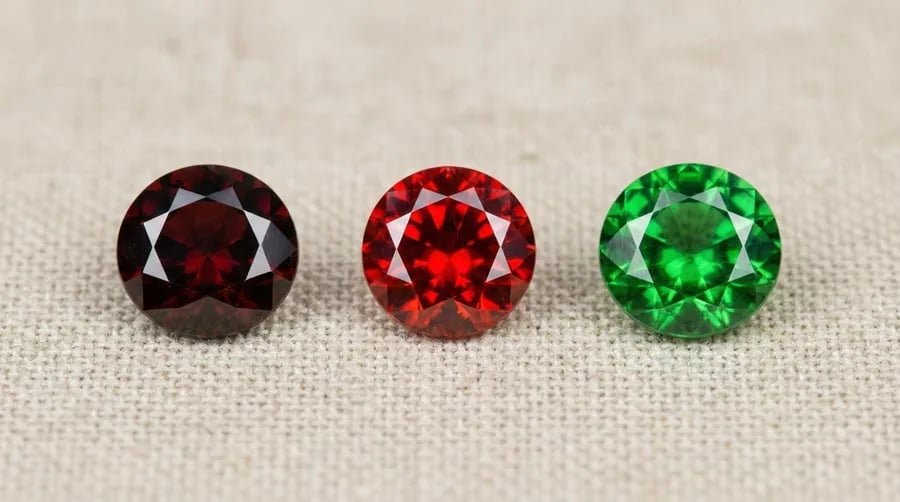
Garnet varieties comparison: prices, colors, and ideal uses
| Variety | Price/Carat | Color | Mohs Hardness | Best For |
|---|---|---|---|---|
| Almandine | $20-$80 | Deep Red | 7.0-7.5 | Daily wear rings, affordable jewelry |
| Pyrope | $20-$80 | Blood Red | 7.0-7.5 | Classic birthstone jewelry |
| Rhodolite | $50-$300 | Purple-Red | 7.0-7.5 | Alternative to amethyst |
| Spessartine | $50-$300 | Mandarin Orange | 7.0-7.5 | Contemporary designs |
| Tsavorite | $300-$1,500 | Emerald Green | 7.0-7.5 | High-end jewelry, emerald alternative |
| Demantoid | $500-$2,000+ | Green with Fire | 6.5-7.0 | Collectors, investment pieces |
Garnet Meaning and Symbolism
What does the January birthstone represent? Throughout history, people believed garnets offered protection and strength.
Historical significance: Garnets symbolize protection (medieval Europe), loyalty (Victorian era jewelry), and passionate commitment (modern second-anniversary gift). Archaeological evidence shows garnet use in jewelry dating to 3000 BCE.
Contemporary meanings link garnets with trust, friendship, and passionate commitment. The gemstone appears frequently as a second-anniversary gift, representing relationships deepening beyond initial romance. January birthstone wearers often embrace garnet as a loyalty symbol.
Metaphysical traditions attribute energizing properties to garnets, though these healing claims lack scientific verification. The stone's cultural symbolism and historical significance remain its verified value.
What Determines Garnet Value?
Color (the biggest value driver)
Color determines most of a garnet’s worth.
Red garnets: Pure, vivid red pyrope is far more valuable than brownish almandine.
Green garnets: Tsavorite with emerald-like intensity can reach high prices, while softer yellow-green stones remain affordable.
Orange garnets: Pure “mandarin” orange spessartine outvalues brownish tones by a large margin.
In all varieties, vivid color typically costs three to five times more than medium saturation.
Clarity
Clarity expectations vary between garnet types.
Most garnets should be eye-clean to reach premium pricing.
Exceptions exist: Russian demantoid garnets with their signature “horsetail” inclusions are more valuable with inclusions, not without.
Carat Weight
Common varieties (almandine, pyrope) remain affordable even in large sizes, but rare types increase sharply in value as they grow.
Tsavorite and demantoid become exponentially rare above 2–3 carats.
Stones over 5 carats in fine color and clarity enter collector territory.
Variety Rarity & Origin
Some garnet types are simply scarce.
Demantoid and tsavorite sit at the top of the value hierarchy.
Rhodolite and spessartine occupy the mid-range.
Almandine and pyrope remain widely available.
Origins can add premiums: Russian demantoid, Kenyan tsavorite, or rare color-change garnets from Madagascar.
Market Trends
Tsavorite demand is rising as people look for emerald alternatives.
Russian demantoid remains a stable collector stone.
Common red garnets stay very affordable, ideal for budget-friendly January jewelry.
Garnet Physical Properties
Hardness
Garnets rank between 6.5 and 7.5 on the Mohs scale depending on the variety. This makes them durable enough for everyday jewelry, although they can still be scratched by harder gemstones like sapphire or diamond. With normal wear and proper settings, garnets hold up beautifully over time.
Optical Properties
Most garnets have a bright, glassy luster and impressive transparency in high-quality stones. Some varieties, like green demantoid, are especially prized for their strong dispersion, the same optical effect that gives diamonds their fire.
Composition
Garnets belong to a family of silicate minerals that share the same basic structure but differ in chemical composition.
Almandine contains iron and aluminum, giving deep red tones.
Pyrope contains magnesium and aluminum, producing pure, vibrant reds.
Spessartine contains manganese, responsible for its orange to mandarin hues.
These compositional differences explain garnet’s incredible color diversity.
Where Does Garnet Come From?
Garnets are found in many parts of the world, but each variety has its own geographical story.
Major Sources
India is the leading supplier of affordable almandine garnets, the deep red variety most people recognize. Brazil produces both almandine and bright orange spessartine. Sri Lanka is known for almandine and warm cinnamon-colored hessonite, often recovered from gentle alluvial deposits rather than deep mining.
Premium Origins
East Africa is home to the world’s finest green garnets. Tsavorite, discovered in 1967 by gemologist Campbell Bridges, comes primarily from Kenya and Tanzania. With vivid, emerald-like color and natural brilliance, tsavorite has become one of the most sought-after garnet varieties.
Like tanzanite, tsavorite has a concentrated geographic origin, giving it the same rarity appeal.
Collector Sources
Russia’s Ural Mountains remain the iconic source of demantoid garnet, famous for its intense brilliance and unique “horsetail” inclusions treasured by collectors. Madagascar also produces rare color-change garnets that shift between red, purple, and green depending on the light.
How Garnets Form
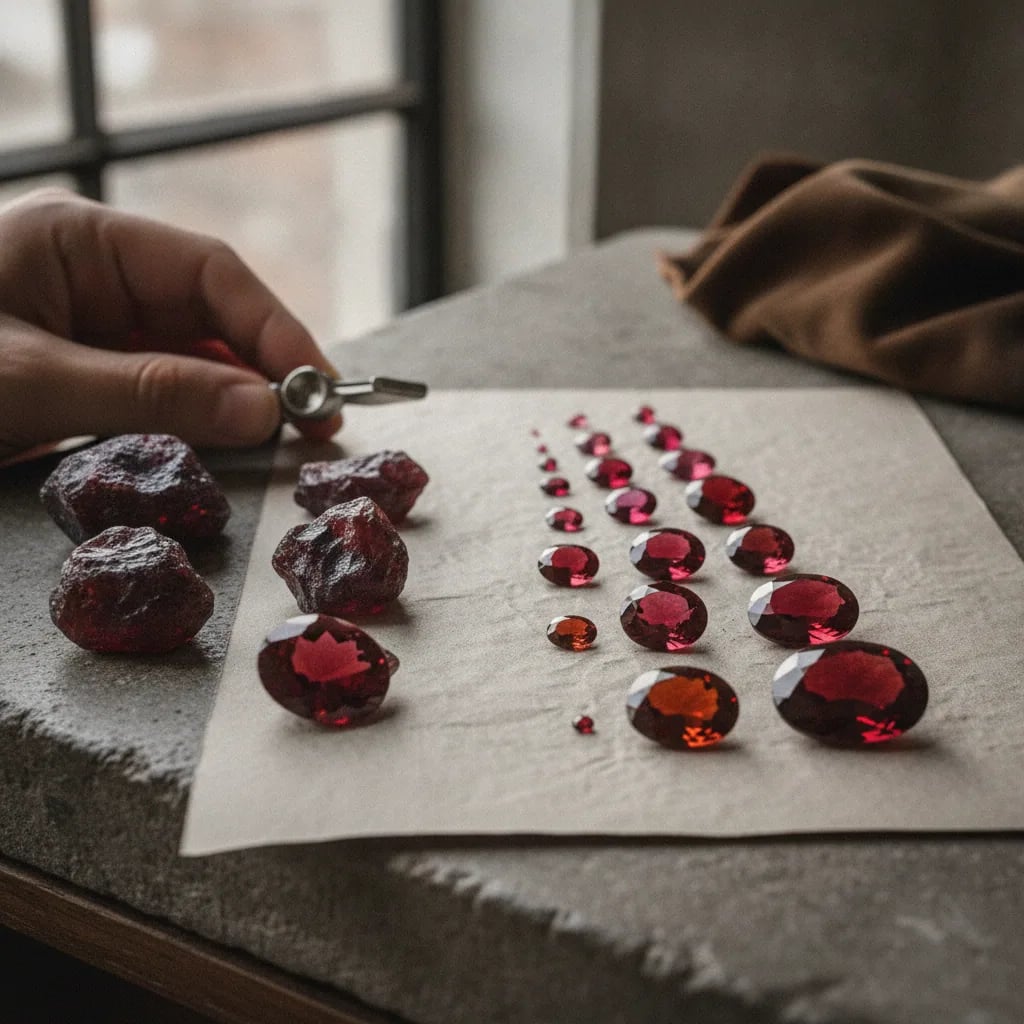
Most garnets grow deep within metamorphic rocks under intense heat and pressure. Over time, erosion carries them into riverbeds, where they are often found in alluvial deposits, one reason garnet jewelry remains widely accessible despite the rarity of its premium varieties.
Choosing Garnet Jewelry
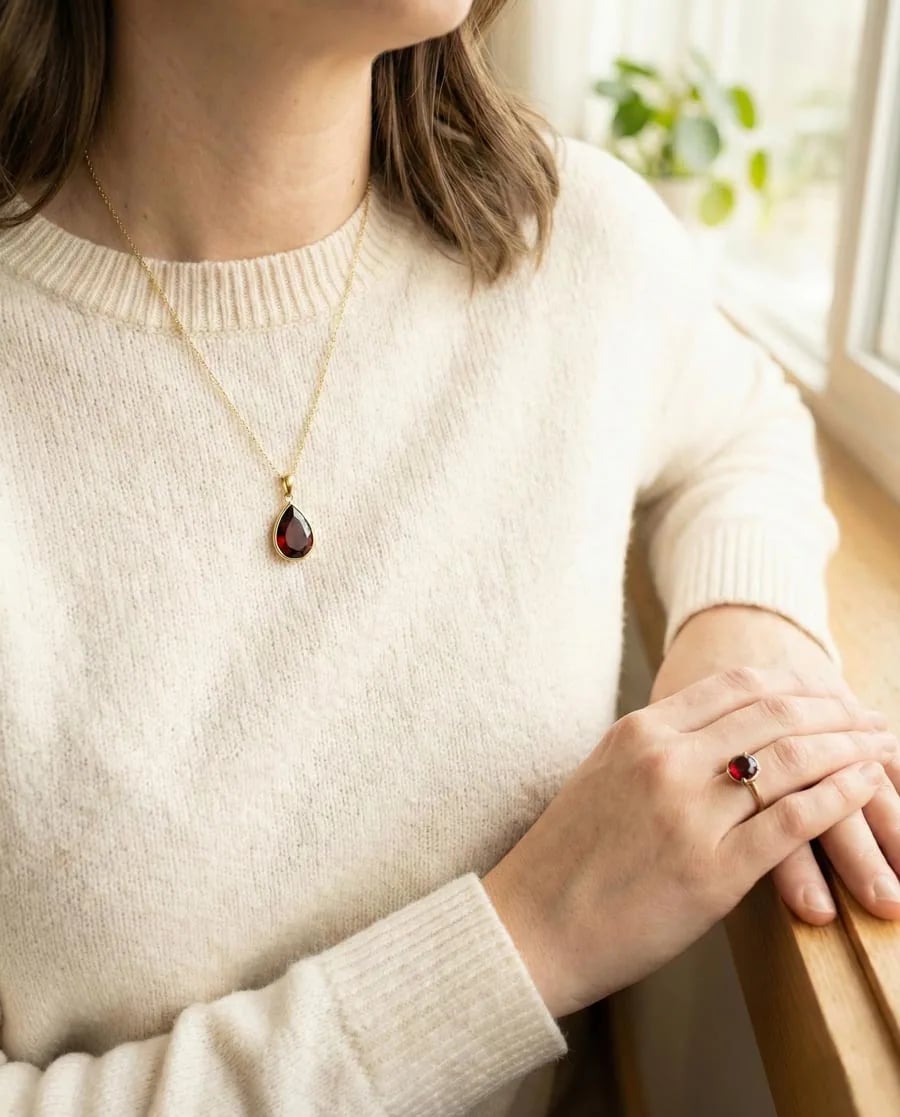
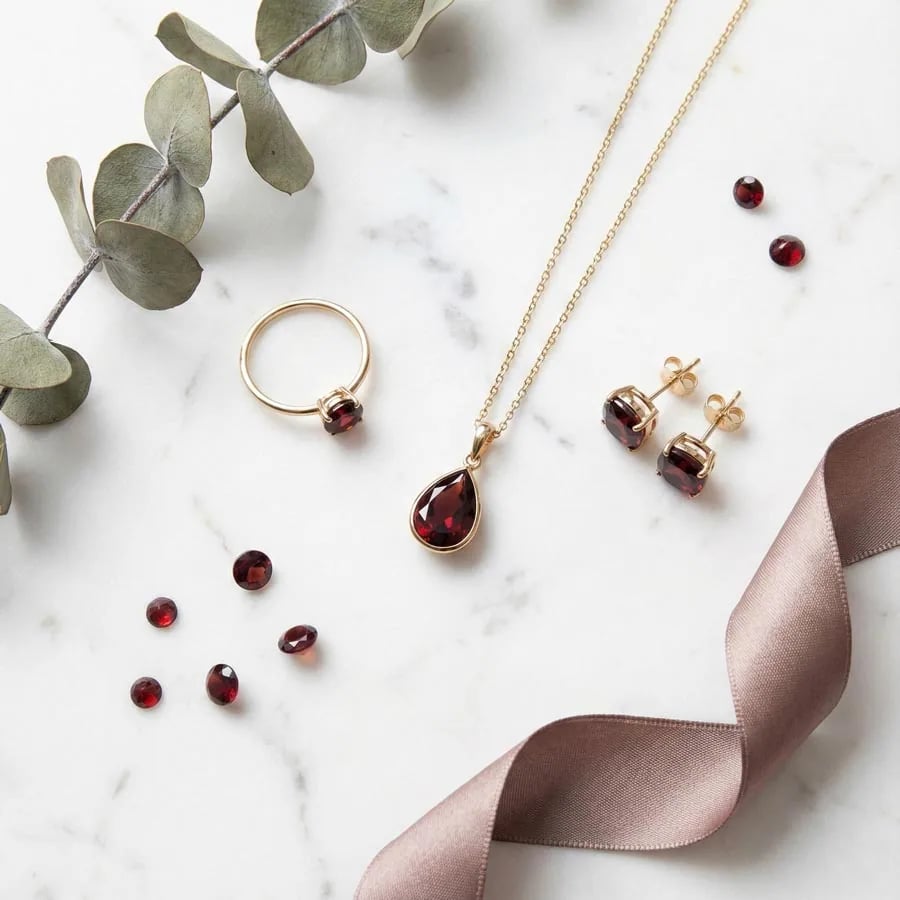
Best settings: Bezel settings provide maximum protection for garnet's faceted edges, particularly important for rings subject to daily wear. Explore bezel-set garnet rings in our curated collection, designed for durability and elegance. Prong settings work well for harder varieties (7.5 Mohs) in earrings and pendants with less impact exposure.
Jewelry types: Garnet's durability suits rings, bracelets, necklaces, earrings, and pendants. The gemstone's moderate hardness requires reasonable care in rings but presents minimal concerns in protected pendant and earring applications.
Care recommendations: Clean garnet jewelry with warm soapy water and a soft brush. Avoid ultrasonic cleaners with fracture-filled garnets. Store garnets separately from harder gemstones (sapphire, diamond) to prevent scratching. Remove garnet rings during heavy physical activities.
For detailed cleaning techniques and storage solutions for all gemstones, consult our comprehensive jewelry care guide.
Buying considerations: Request certification from recognized gemological laboratories (GIA, AGS, IGI) for premium garnets like demantoid and tsavorite. Learn verification techniques applicable to all birthstones in our authentication guide. Examine stones for eye-clean clarity under normal viewing conditions. Consider color saturation, vivid, pure hues command premiums over muddy or brownish tones.
How to Verify Garnet Authenticity
Garnet isn’t often counterfeited, but imitations do exist, especially in inexpensive jewelry. Here’s how to recognize a genuine stone.
Look for Natural Inclusions
Under magnification, real garnets show tiny mineral inclusions, fine needles, or small internal structures created during natural formation.
Glass imitations look “too perfect” and often contain gas bubbles instead of mineral patterns.
Check the Feel of the Stone
Temperature: Garnet stays cool longer in the hand, while glass warms almost immediately.
Weight: Garnet feels heavier than glass of the same size.
Sparkle: Cubic zirconia shines more brightly than garnet because it disperses light differently.
Synthetic Garnets
Vintage pieces may contain synthetic garnets made in the 1970s–80s. They typically appear very clean, overly saturated in color, and lack the natural inclusions seen in genuine stones. Most modern jewelers label them correctly.
When to Ask for Certification
Certification is useful only for higher-value garnets such as:
tsavorite
demantoid
color-change garnet
For affordable red garnets (almandine, pyrope), certification isn’t usually necessary unless the stone is unusually large or exceptionally fine.
Frequently Asked Questions
Discover Your Perfect January Birthstone
Garnet stands out as a January birthstone thanks to its wide color range, solid durability, and prices that often stay far below traditional precious gems. Whether you choose it for its symbolism, its beauty, or its value, garnet remains a meaningful stone that offers character, color, and everyday practicality.