June Birthstone: Pearl, Alexandrite and Moonstone Guide (2026)
June birthstones include pearl, alexandrite, and moonstone. Compare prices ($50-50,000+), durability, meanings, and beauty to choose your perfect gem.
Quick Facts: June Birthstones at a Glance
| Attribute | Pearl | Alexandrite | Moonstone |
|---|---|---|---|
| Type | Traditional (1912) | Modern (1952) | Alternative |
| Formation | Organic (mollusk) | Chrysoberyl mineral | Feldspar mineral |
| Primary Color | White, cream, black | Green/red (color-change) | Colorless with blue sheen |
| Mohs Hardness | 2.5-4.5 (soft) | 8.5 (durable) | 6-6.5 (moderate) |
| Price Range | $50-10,000+/strand | $500-50,000+/carat | $10-200/carat |
| Rarity | Cultured: Common | Extremely rare | Moderately available |
Introduction
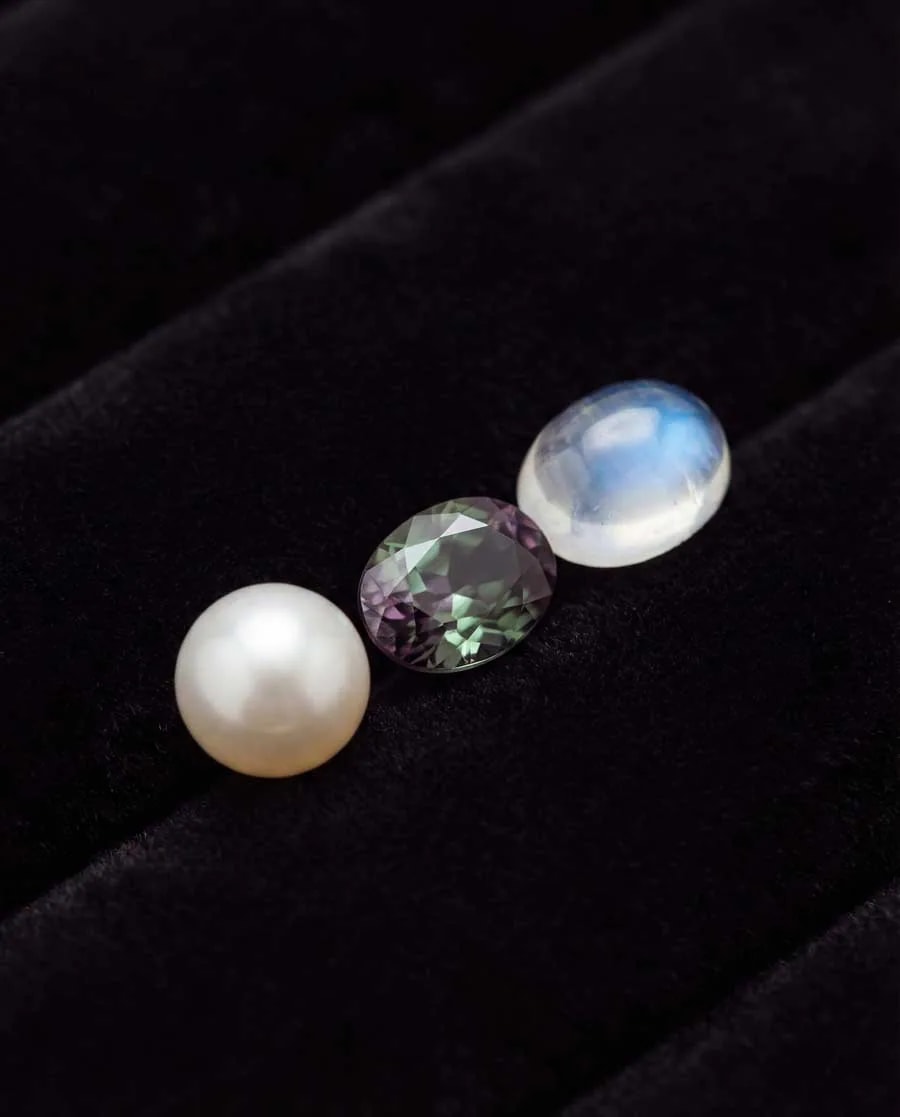
June is one of three months with more than one birthstone: pearl, alexandrite, and moonstone. They could not be more different from each other. Pearl is organic, soft, classic. Alexandrite is a color-change chrysoberyl discovered in 1830 Russia, rarer than diamond in fine quality. Moonstone glows with a floating light effect called adularescence.
Which you choose depends entirely on what you value: tradition, rarity, or ethereal beauty. This guide covers all three honestly. Updated March 2026.

June Birthstone: Alexandrite
June Birthstone Quick Comparison
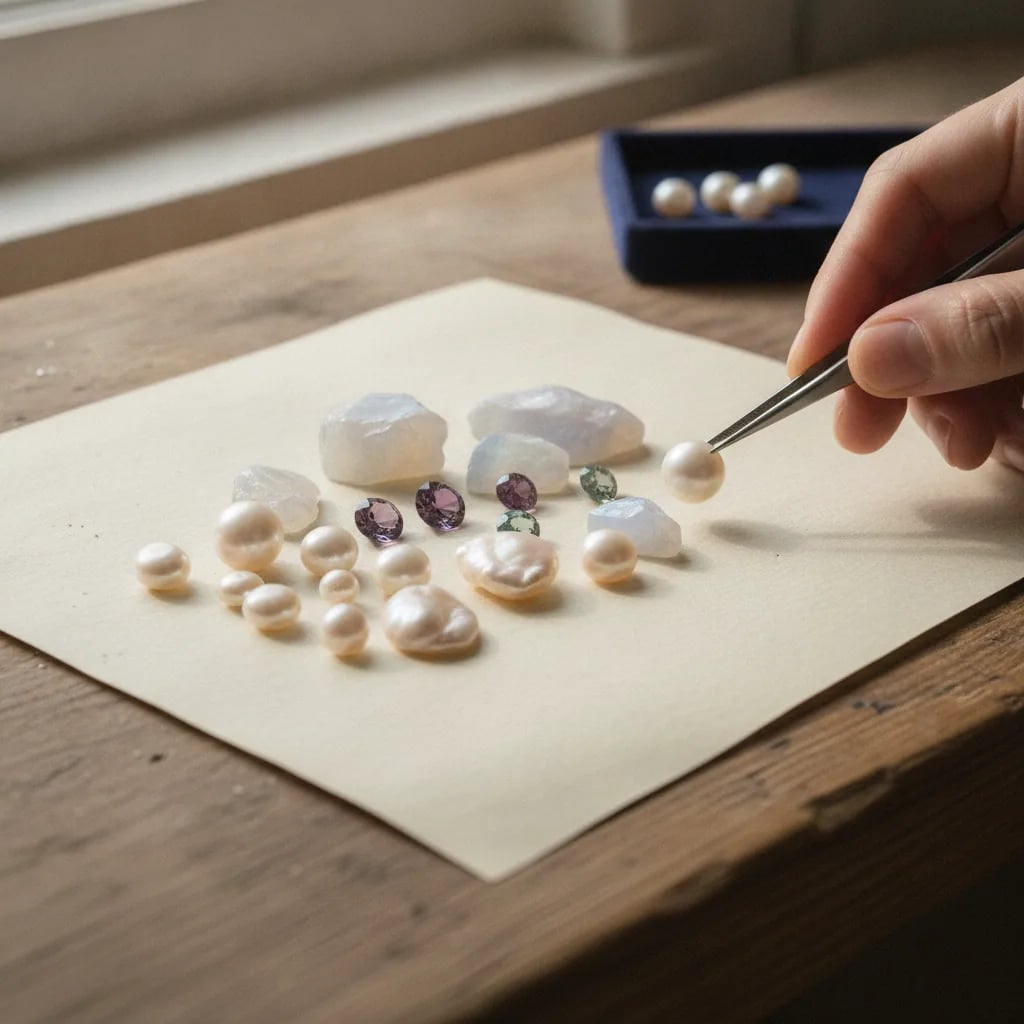
Not sure which June birthstone fits your needs? This comparison table summarizes the key differences to help you decide in 60 seconds.
Factor | Pearl | Alexandrite | Moonstone |
|---|---|---|---|
Best For | Classic elegance, formal events, bridal jewelry | Daily wear, investment, rarity collectors, engagement rings | Boho style, affordable luxury, spiritual connection |
Price Range | $50 - $100K+ | $500 - $50K+ | $10 - $200 |
Durability (Mohs) | ⚠️ Delicate (2.5-4.5) | ✅ Excellent (8.5) | ⚠️ Moderate (6-6.5) |
Color Options | White, cream, black, pink, golden | Green (daylight) → Red (incandescent) | White/colorless with blue sheen |
Maintenance | High (avoid chemicals, perfumes) | Low (very durable) | Medium (protective setting recommended) |
Investment Value | ⭐⭐⭐⭐ (top-grade South Sea/natural) | ⭐⭐⭐⭐⭐ (exceptional appreciation) | ⭐⭐ (personal enjoyment, not investment) |
Typical Use | Necklaces, earrings, occasional rings | All jewelry types, engagement rings | Pendants, earrings, protected rings |
Still unsure which to choose? Continue reading for detailed guidance, or consult our GIA-certified gemologist for personalized advice.
Pearl: The Classic June Birthstone
What makes pearl unique among gemstones? Pearls are the only organic gemstones, formed not through geological processes but within living mollusks.
When an irritant enters an oyster or mussel, the creature secretes nacre (calcium carbonate and protein) in concentric layers. This process gradually builds a pearl over months to years. The natural formation creates pearl's signature luster, a soft, glowing radiance fundamentally different from the brilliance of faceted gemstones.
Cultured pearls comprise over 99% of the market. These pearls undergo the same organic formation but with human-initiated nucleation.
Pearl varieties for June birthstone jewelry:
Akoya pearls - Classic white rounds from Japan, 6-8mm typical, representing traditional elegance
South Sea pearls - The largest pearls (10-20mm), white or golden, from Australian waters
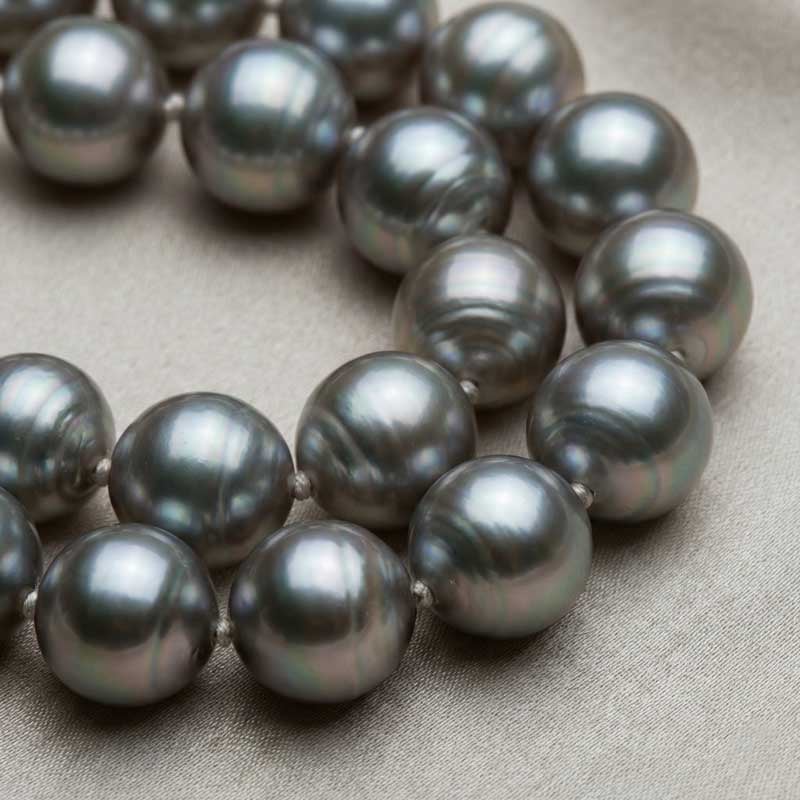
Tahitian pearls - Naturally dark gray to black, never dyed, exclusively from French Polynesia
Freshwater pearls - Affordable entry point, diverse shapes and colors
Geographic origins: Japan dominates Akoya pearl cultivation (crisp white with rose overtones). French Polynesia exclusively produces Tahitian pearls (naturally dark, never dyed). Australia, Philippines, and Indonesia supply South Sea pearls (largest, most lustrous). China produces the majority of freshwater pearls, offering affordable entry points to pearl ownership.
Treatment considerations: Cultured pearls undergo minimal processing, primarily cleaning and sorting. However, consumers should know that dark "chocolate" or "black" freshwater pearls are often dye-treated. Reputable sellers disclose treatments. Untreated Tahitian pearls command premiums for their natural dark coloration.
Pearl's softness (Mohs 2.5-4.5) requires thoughtful care. Avoid exposure to cosmetics, perfumes, and acidic substances. Wipe pearls gently after wearing to remove oils and perspiration that can gradually dull nacre's luster.
Traditional symbolism: Purity, wisdom and integrity, are the qualities that made pearls the preferred gemstone for brides in Ancient Rome and continue to define their appeal in contemporary jewelry.
Alexandrite: The Rare Color-Changer
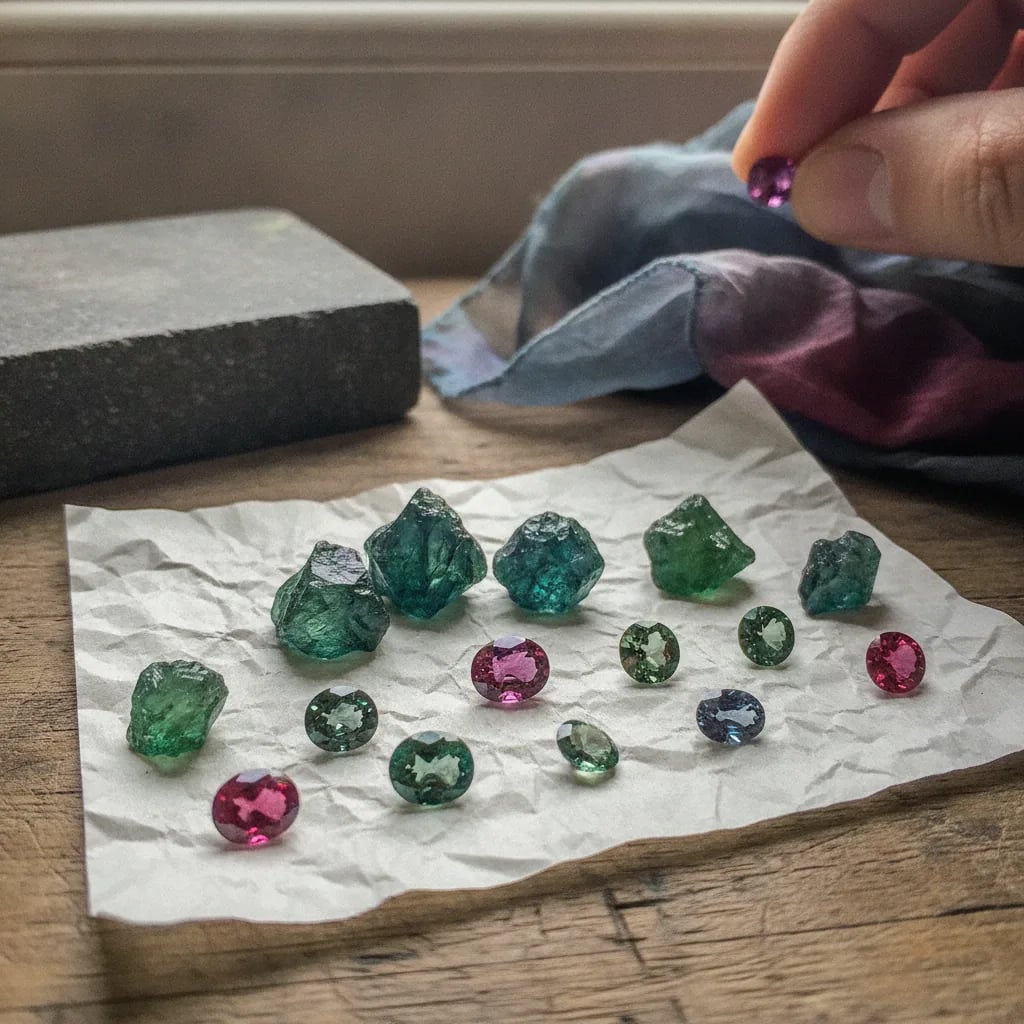
Alexandrite is June’s rarest and most valuable birthstone. First discovered in Russia’s Ural Mountains in the 1830s, it’s famous for its dramatic color-change effect—green in daylight, red under warm light. One stone, two personalities.
This optical magic comes from trace amounts of chromium in the crystal structure, the same element that gives emeralds their green and rubies their red. The stronger the color change, the more prized the stone.
Geographic considerations for June alexandrite:
Russia (Ural Mountains) - Original source, now largely depleted, commands premium prices with certified origin
Brazil - Current major source, typically shows 30-60% color change
Sri Lanka - Produces fine specimens with strong color change approaching Russian quality
East Africa (Tanzania) - Newer source with variable quality
Top-quality natural alexandrite can reach several thousand dollars per carat, while Russian-origin stones with exceptional color change can command extraordinary prices. Lab-grown alexandrite, chemically identical, offers a more affordable alternative but doesn’t carry the same investment appeal.
With a hardness of 8.5 on the Mohs scale, alexandrite is durable enough for everyday wear.
Symbolism: balance, adaptability, and good fortune, a gemstone that reminds us that everything shifts with the light.
Moonstone: The Mystical Alternative
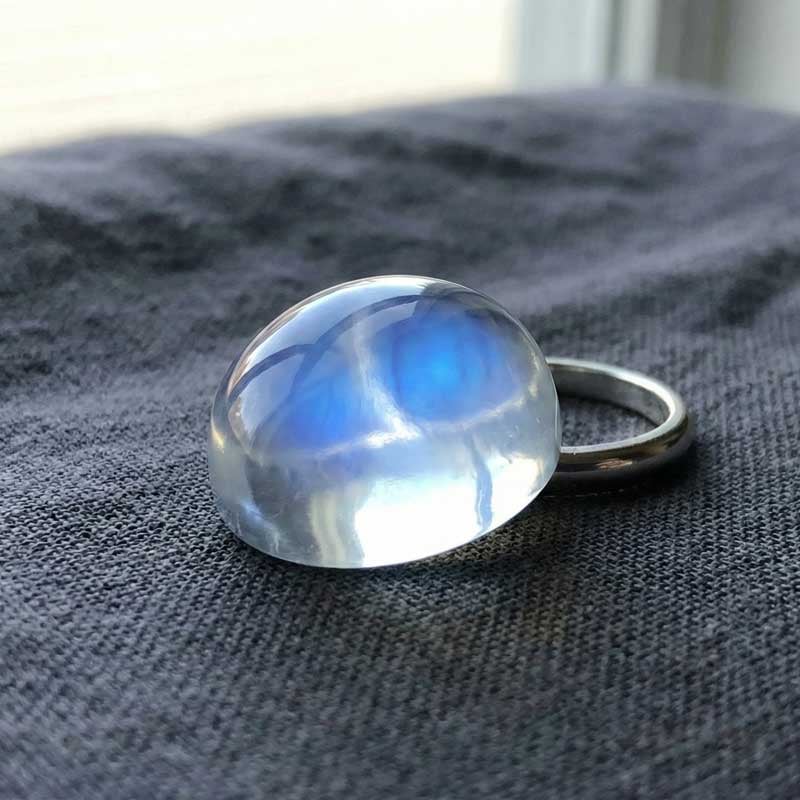
Moonstone is June’s third birthstone, loved for its soft, glowing light called adularescence. This dreamy effect looks like moonlight drifting under the surface, created by light scattering between tiny layers of feldspar.
The most prized variety is blue moonstone, typically from Sri Lanka, showing a strong blue sheen over a clear or nearly transparent body. Rainbow moonstone, with its multicolor flashes, offers a more bohemian aesthetic, while cat’s eye moonstone combines adularescence with a rare linear glow.
Moonstone varieties for June jewelry:
Blue moonstone - Strong centered blue sheen, most valuable
Rainbow moonstone - Multi-color adularescence, popular for bohemian aesthetics
Cat's eye moonstone - Rare combination of adularescence and chatoyancy (cat's eye linear effect)
Origins: Sri Lanka produces the finest blue moonstone. India supplies commercial-grade material with a softer glow, while Madagascar is known for vibrant rainbow moonstone. Quality can vary widely, with premium Sri Lankan stones reaching around $50–$200 per carat versus $10–$30 for more common grades.
Most fine moonstone is untreated. Lower-quality pieces may undergo diffusion treatments to boost their sheen, but this is relatively uncommon.
With a hardness of 6 to 6.5, moonstone is best suited for earrings, pendants, or ring designs with protective settings. Its accessible price range makes it ideal for larger, luminous statement pieces.
Symbolism: Traditionally associated with intuition, feminine energy, and emotional balance, moonstone has long been linked to lunar mythology, from ancient Romans who believed it formed from solidified moonlight to Hindu traditions honoring the moon god Chandra.
Moonstone with a warm body colour reads cream rather than white, which puts it alongside pearl, cream sapphire and champagne zircon. Our guide to cream colored gemstones compares that whole family on durability and price.
June Birthstone Meanings & Symbolism
Each June birthstone carries its own traditional meaning.
Pearl symbolizes purity, wisdom, and integrity. Its formation, beauty created from irritation has long been seen as a metaphor for turning challenges into growth. This is why pearls became the classic 30th-anniversary gift, celebrating the wisdom built over decades.
Alexandrite represents balance, adaptability, and good fortune. Its dramatic shift from green to red reflects duality: growth and passion, logic and emotion. It’s often associated with finding harmony between opposing forces.
Moonstone is linked to intuition, emotional balance, and feminine energy. Across ancient cultures, it was tied to lunar cycles and divine feminine power, and today it’s appreciated for its connection to introspection and inner calm.
These meanings come from cultural tradition rather than science, but many people still choose the June birthstone that resonates most with their personality or life story.
June Birthstone Price Comparison
Understanding the dramatic price variation among June birthstones enables informed selection aligned with both aesthetic preference and budget reality.
Pearl pricing (per 16-inch strand):
Freshwater pearls: $50-$200 (accessible entry point)
Akoya pearls: $300-$10,000+ (classic white rounds)
Tahitian pearls: $500-$25,000+ (naturally dark)
South Sea pearls: $1,000-$100,000+ (largest, most lustrous)
Pearl value depends primarily on luster quality, nacre thickness, surface cleanliness, and size.
Alexandrite pricing (per carat):
Modest color change (30-50%): $500-$2,000
Good color change (50-75%): $2,000-$5,000
Excellent color change (75-100%): $5,000-$15,000+
Russian alexandrite (certified): $15,000-$50,000+
Alexandrite represents the most expensive birthstone across all months when comparing top-quality specimens.
Moonstone pricing (per carat):
Commercial grade: $10-$30
Fine blue sheen: $30-$100
Exceptional quality: $100-$200
Moonstone represents one of the most affordable birthstone options, allowing significant carat weight within modest budgets.
June's extreme price diversity, from $50 moonstone to $50,000+ alexandrite, represents the widest range in the birthstone calendar.
June Birthstone in Celebrity Style & Pop Culture
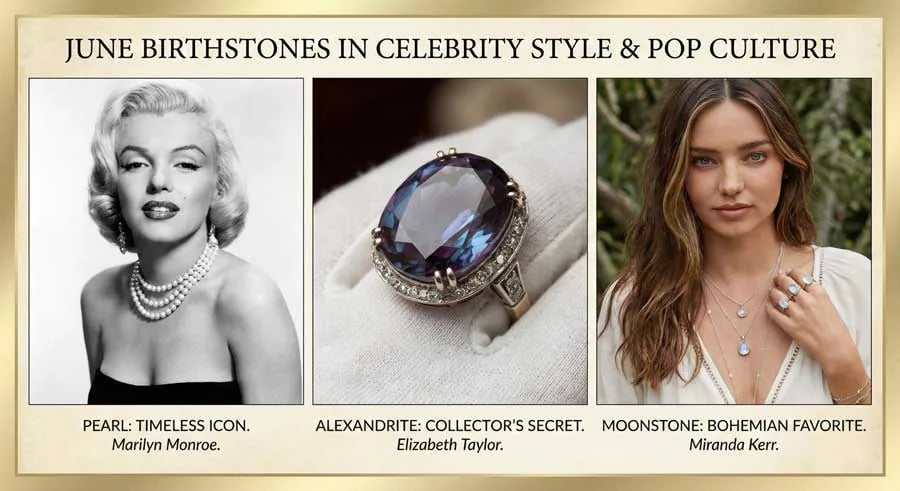
June birthstones have adorned royalty, Hollywood icons, and modern style leaders for centuries, proving these gems transcend fleeting trends.
Pearl: The Timeless Icon
Marilyn Monroe - Her iconic triple-strand pearl necklace became signature style, proving pearl's sensuality beyond grandmother jewelry stereotypes. The Japan Mikimoto pearls worn in Gentlemen Prefer Blondes sold for $150,000 at auction.
Coco Chanel - Revolutionized pearl jewelry by layering multiple strands and mixing real with costume pearls, declaring A woman needs ropes and ropes of pearls. Her personal collection featured South Sea pearls valued over $2 million.
Michelle Obama - Wore double-strand pearl necklace to both inaugurations, cementing pearl's modern elegance and bipartisan appeal.
Princess Diana - The Royal Family's extensive pearl collection includes seven-strand choker worn with Catherine Walker gowns, now worn by Kate Middleton at state events.
Alexandrite: The Collector's Secret
Private Royal Collections - Russian Imperial Family owned history's finest alexandrite specimens from Ural Mountain deposits. Catherine the Great's alexandrite brooch (37 carats, 100% color change) remains in Kremlin Diamond Fund, valued over $15 million.
Elizabeth Taylor - Known gemstone collector owned 12-carat Sri Lankan alexandrite ring, understanding rarity value before mainstream recognition.
Modern Collectors - Tech billionaires and hedge fund managers quietly acquire investment-grade alexandrite—Sotheby's 2023 auction saw 5.68ct Russian alexandrite sell for $1.1 million ($193,000/carat).
Moonstone: The Bohemian Favorite
Miranda Kerr - Frequently wears moonstone jewelry from independent designers, aligning with wellness and spiritual lifestyle branding.
Stevie Nicks - Fleetwood Mac icon's stage costumes featured moonstone rings and pendants, cementing the gem's mystical-bohemian association.
Indie Bride Movement - Moonstone engagement rings surged 340% on Pinterest 2020-2024 as millennials reject diamond traditions for personalized symbolism.
Choosing Your June Birthstone: Practical Considerations
Select pearl if you value:
Traditional elegance and timeless sophistication
Organic beauty with soft, glowing luster
Classic appeal appropriate for formal occasions
Willingness to provide careful maintenance
Pearl suits those who appreciate jewelry with cultural heritage and don't require daily-wear durability.
Choose alexandrite if you seek:
Exceptional rarity and investment potential
Conversation-starting color-change phenomenon
Maximum durability (Mohs 8.5) for daily wear
Unique gemstone virtually never encountered
Alexandrite appeals to collectors and those who value exclusivity above all other factors.
Opt for moonstone when prioritizing:
Affordability enabling larger statement pieces
Ethereal, mystical aesthetic
Spiritual or metaphysical connection
Artistic, bohemian design expression
Moonstone serves June-born individuals who want distinctive beauty without significant financial commitment.
Consider also the jewelry setting: alexandrite excels in any design due to its durability; moonstone requires protective settings for rings; pearl demands designs that minimize exposure to abrasion and chemicals.
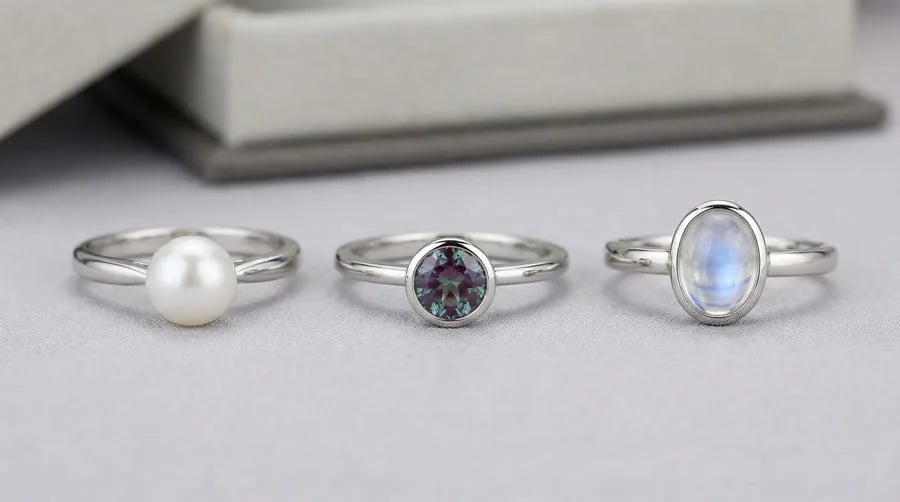
Which June Birthstone Should You Choose? (Decision Guide)
Choosing between three birthstones can feel overwhelming. This decision framework helps you match the right gem to your lifestyle, budget, and aesthetic preferences.
Choose Pearl If:
You want timeless, classic elegance (Audrey Hepburn aesthetic, royal tradition)
This is for a formal milestone (wedding jewelry, gala events, significant anniversary)
You appreciate organic beauty and centuries of cultural heritage
Budget: $300+ (freshwater entry) to $100K+ (investment-grade South Sea)
You understand maintenance requirements (avoid chemicals, gentle cleaning)
Choose Alexandrite If:
You seek ultimate rarity (exponentially scarcer than diamond)
You want a conversation-starting centerpiece (Is that emerald or ruby? Answer: Both)
This represents an investment purchase (fine alexandrite appreciates 8-15% annually)
You need daily-wear durability (Mohs 8.5, engagement ring suitable)
Budget: $2,000+ per carat for quality color-change specimens
Choose Moonstone If:
You love mystical, bohemian aesthetics (ethereal glow, spiritual symbolism)
You want affordable statement jewelry (entire piece under $500)
You value spiritual or metaphysical connection over prestige
This is for casual or artistic wear (not daily rough-use scenarios)
Budget: $50-$200 for fine-quality pieces
Still Unsure? Answer These 3 Questions:
Budget reality check: Under $500 → Moonstone | $500-$5,000 → Pearl (freshwater/Akoya) | $5,000+ → Pearl (South Sea/Tahitian) or Alexandrite
Wear frequency: Daily wear (rings) → Alexandrite | Special occasions → Pearl | Casual/artistic expression → Moonstone
Style aesthetic: Classic/formal → Pearl | Modern/edgy/investment → Alexandrite | Boho/spiritual/indie → Moonstone
Need personalized guidance? Schedule a free consultation with our GIA-certified gemologist or explore our curated June birthstone collection to see options side-by-side.
Frequently Asked Questions
June birthstones offer a rare level of variety, ranging from the organic elegance of pearl to the dramatic color-change of alexandrite and the mystical glow of moonstone. This diversity means anyone born in June can find a gemstone that matches their personal style, budget, and lifestyle.
Pearl remains the timeless classic, admired for centuries and available in everything from affordable freshwater strands to luxurious South Sea pieces. With proper care, pearls can be treasured for generations.
Alexandrite, the rarest of the three, fascinates with its remarkable shift from green in daylight to red under warm light. Its high durability makes it an exceptional choice for meaningful jewelry intended for daily wear.
Moonstone brings an ethereal softness at an accessible price point. Fine blue moonstone from Sri Lanka is especially prized for its luminous sheen, making it a favorite for artistic and bohemian-inspired designs.
Together, these stones make June one of the most versatile birthstone months. Whether you prefer classic elegance, bold individuality, or subtle mysticism, June offers a gemstone with a story and symbolism to match.