May Birthstone: What It Is, Emerald Quality & Prices (2026)
May's birthstone emerald: one of the Big Four precious stones. Colombian emeralds $2K-18K/carat. Inclusions normal. Complete 2025 buying guide.
Quick Answer
What Is May's Birthstone?
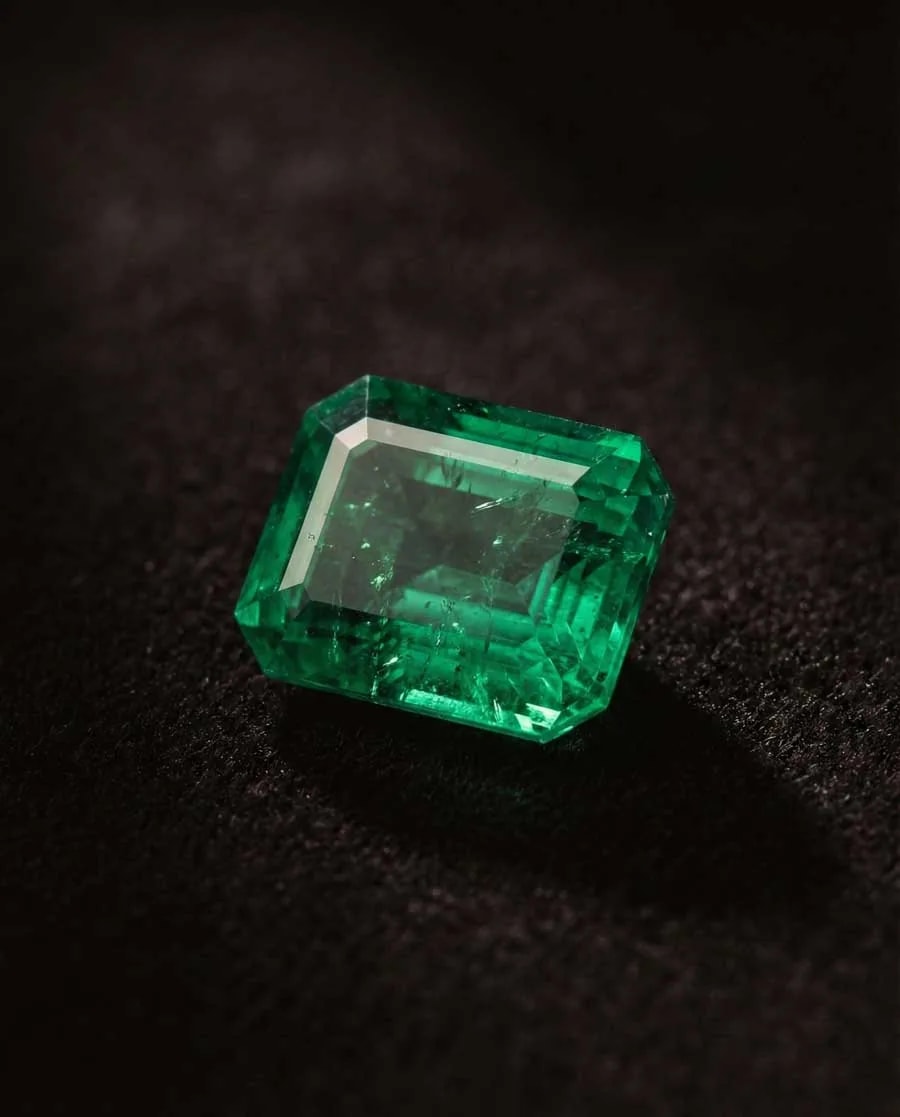
The May birthstone is emerald. If you (or someone born in May) are looking up the May birthstone, that's the short answer: emerald, the vivid green member of the beryl family and one of the four traditional precious gemstones alongside diamond, ruby, and sapphire.
The green comes from chromium and vanadium. No two emeralds look the same, and the tiny internal markings, called 'jardin' (French for garden), are treated as part of the stone's character rather than flaws. That's the first thing that throws people: an emerald is not supposed to look like a flawless diamond.
Almost every emerald on the market is oiled or resin-filled to improve clarity. This is standard, accepted, and must be disclosed. Learning to read that treatment scale is the one skill that lets you buy emerald with confidence, and it's where most of this guide goes. Updated March 2026.

May birthstone: emerald
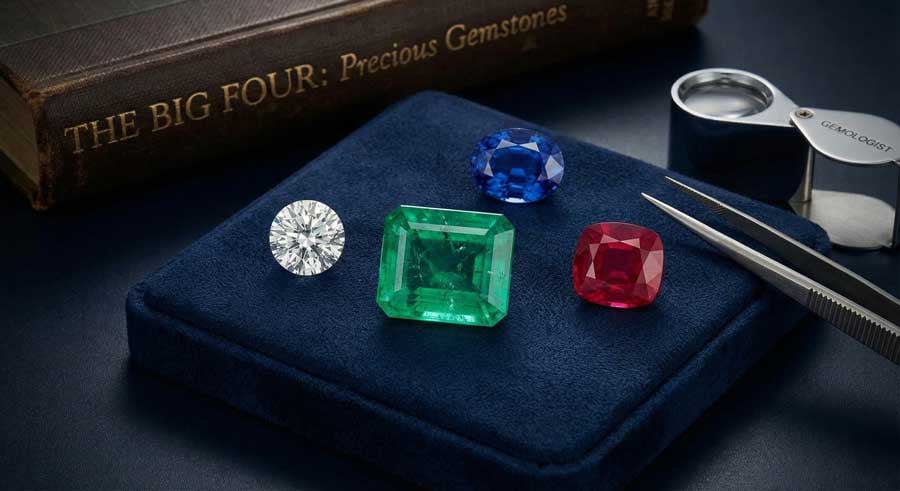
The "Big Four" Precious Stone Classification
In traditional gemology, only four stones hold the title of “precious gemstones”: diamond, ruby, sapphire, and emerald. That grouping is a nineteenth-century trade convention rather than a gemological grade. It carries real history, real rarity and consistently high prices, but no laboratory grades a stone on it, which is exactly why the other half of the split, the idea that everything else is "semi-precious", does not survive contact with gemology.
Emerald, the May Birthstone Guide. Video: GIA, Gemological Institute of America.
Emerald holds a unique place within this group. These four gems dominate fine jewelry, command the highest per-carat prices, and carry unmatched global recognition. Yet emerald stands apart for one unusual reason:
It is the only precious gemstone where visible inclusions do not diminish value.
A diamond with visible inclusions is considered commercial grade. A sapphire or ruby with obvious inclusions loses desirability. But in emeralds, inclusions, known as jardin, or “garden”, are not only accepted, they are embraced. Collectors view them as proof of natural origin and part of the gem’s identity.
This paradox is one of the reasons emerald remains so captivating. No other precious stone balances such extraordinary beauty with such distinctive natural character.
Emerald Meaning and Symbolism
Emerald symbolizes renewal, growth, and prosperity, attributes naturally linked to May's spring season. The gemstone's vibrant green evokes new life, making emerald a symbolic representation of rebirth and fresh beginnings.
Emerald serves as the traditional 20th and 35th wedding anniversary gemstone, symbolizing enduring love and relationship growth. As one of the Big Four precious stones alongside diamond, ruby, and sapphire, emerald also represents prestige, refined taste, and lasting value.
Emerald Physical Properties
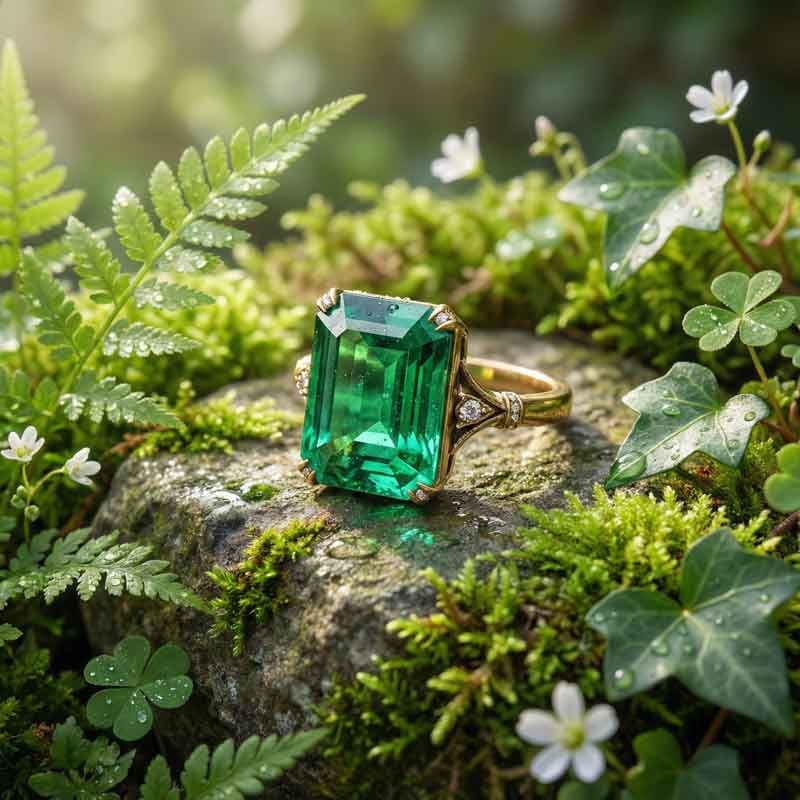
Emerald belongs to the beryl family, the same mineral group as aquamarine and morganite. What sets emerald apart is the presence of chromium or vanadium, which give the gemstone its unmistakable green color.
Durability: Strong, With a Few Sensitivities
With a hardness of 7.5 to 8 on the Mohs scale, emerald is durable enough for everyday jewelry. It isn’t as hard as sapphire or diamond, but in a protective setting it performs very well in rings, pendants, and earrings.
Because emeralds naturally contain internal features (inclusions), they can be more sensitive to sharp blows or sudden temperature shifts. Still, countless people wear emerald engagement rings daily without issues. The key is simple: choose a secure setting and avoid activities that could damage any fine gemstone.
Jardin: The Feature That Defines Emerald
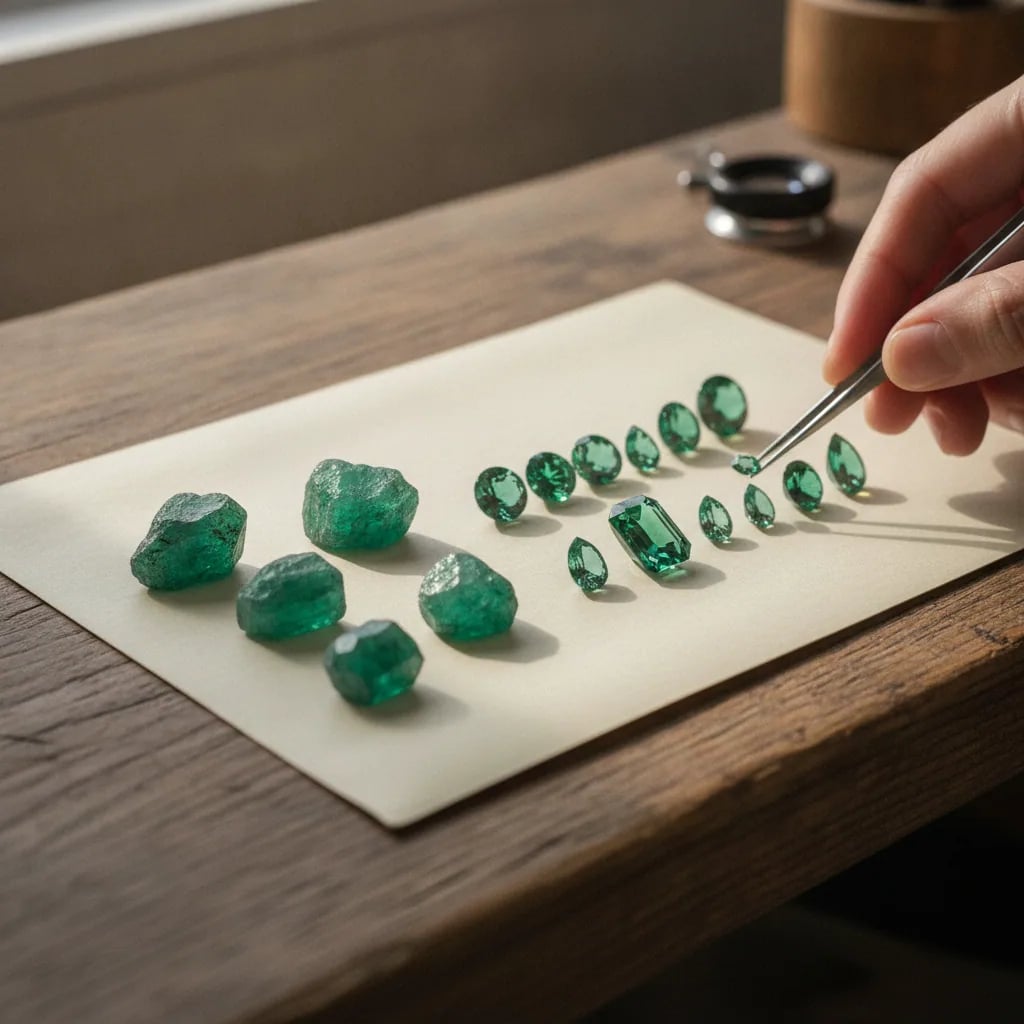
One of emerald’s most distinctive traits is its jardin, the French word for “garden.” Up close, you’ll see tiny crystals, wisps, or patterns inside the stone, almost like a miniature landscape.
Here’s what makes emerald unique among precious stones:
Its inclusions are not considered flaws. They’re part of the emerald’s identity.
No two jardons are identical, which makes each emerald as individual as a fingerprint.
Quick clarity rules:
Internal inclusions that don’t reach the surface are normal and stable.
Surface-reaching fractures are the ones jewelers monitor, because they can affect durability.
Truly clean emeralds are exceptionally rare and often cost two to three times more. In those cases, you’re paying for rarity more than visible perfection.
Care Requirements
Emerald jewelry isn’t fragile, it’s simply particular. Think of it like cashmere: beautiful and durable, but happier with gentle care than rough treatment.
What to Avoid (These Damage Emeralds)
Thermal shock
Emeralds don’t handle sudden temperature changes well. Moving from hot water to cold air can cause internal fractures to expand. Remove emerald rings before dishwashing, showering, cooking over steam, or intense exercise.
Chlorine exposure
Chlorine can damage the cedar oil used in 90–95% of emeralds, leading to permanent cloudiness. Avoid pools, hot tubs, and cleaning products containing chlorine. Brief handwashing is fine.
Ultrasonic cleaners
Ultrasonic and steam cleaners that work for diamonds can crack emeralds. Vibrations and heat amplify natural fractures.
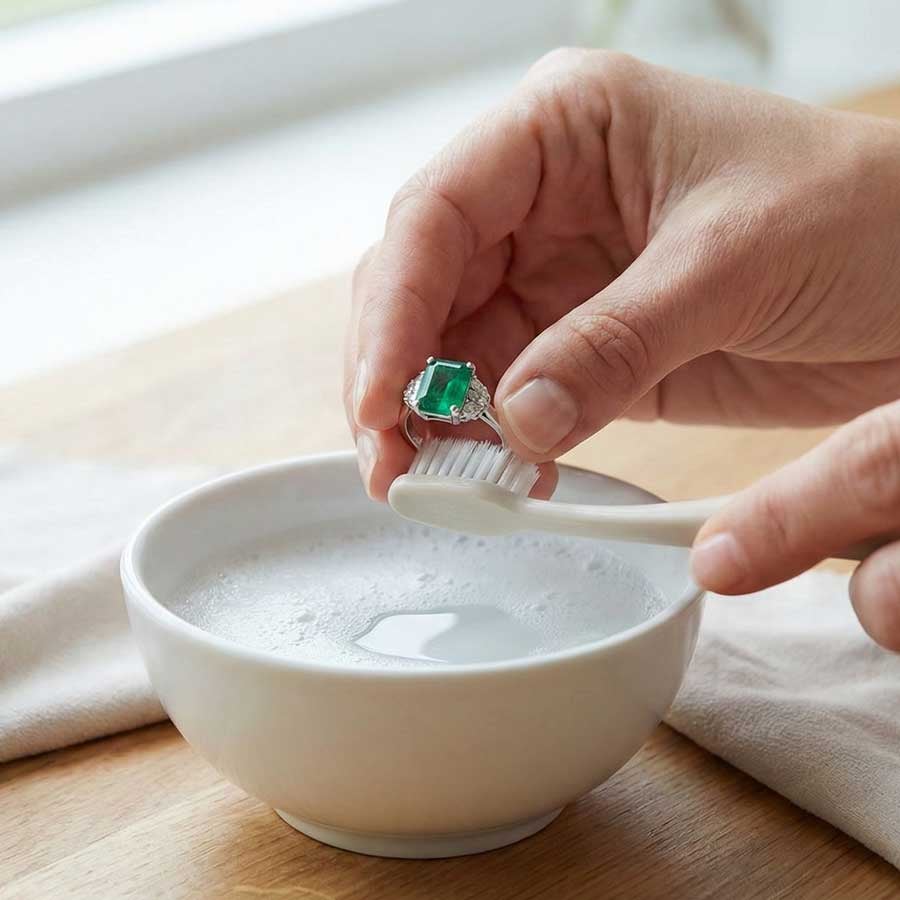
How to Care for Emeralds (Safe Practices)
Cleaning
Use lukewarm water + a drop of mild, pH-neutral soap
Gently brush with a soft toothbrush
Rinse with water at the same temperature
Pat dry with a lint-free cloth (avoid air-drying, which can leave spots)
Storage
Store emerald jewelry separately from harder stones like diamonds or sapphires. A fabric-lined box or individual pouch prevents scratching.
Professional Check-Ups
Have prongs and settings inspected annually. Cedar oil treatments may need refreshing every 2–5 years; this must be done professionally.
Emeralds aside, cleaning rules change from one gem to the next; our jewelry care and maintenance guide covers the safe method for each stone type.
Emerald Origins
Emerald Origins and Why They Matter
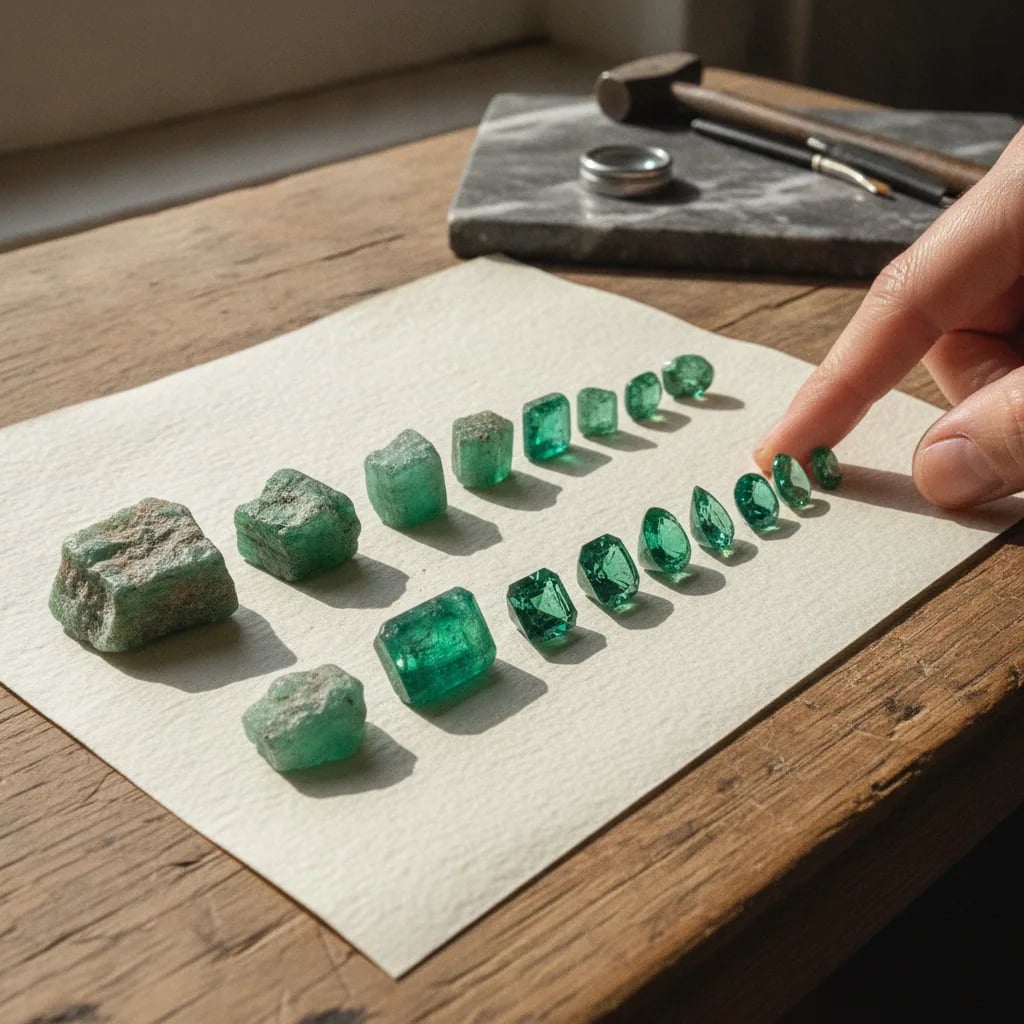
Geographic origin is one of the strongest price factors in emeralds. Among all sources, Colombia sets the global benchmark, commanding meaningful premiums for equivalent color and clarity.
Colombia — The Gold Standard
Colombia produces the majority of the world’s emerald supply (70–90%). Three major mines define Colombian emerald identity:
Muzo – The legendary “Muzo green,” a deep, slightly bluish pure green considered the finest in the world
Chivor – Slightly yellow-green tones, historically important since the 1500s
Coscuez – Medium green material in larger commercial quantities
Why Colombian stones cost more
The Colombian premium (often 20–50%) isn’t hype , it’s rooted in geology and history:
1. Unique geology
Colombian emeralds form in sedimentary host rock through hydrothermal fluids. Most other sources (Zambia, Brazil) form in metamorphic schist.
This difference produces clean, vivid greens that lack the gray or strong blue modifiers more common elsewhere.
2. Color intensity
“Muzo green” remains the reference point for ideal emerald color: pure, vibrant, and slightly bluish without turning teal.
3. Five centuries of prestige
Since the 16th century, Colombian emeralds have appeared in royal regalia across Europe and South America. Historic pieces like the Crown of the Andes shaped emerald mythology and demand.
Other Important Emerald Sources
Zambia
Second-largest global producer
Often slightly bluish-green
Typically fewer inclusions than Colombian stones
Strong value: similar look at a lower price
Brazil
Wide range from pale green to medium saturation
Ideal entry-level emeralds
Vivid color is less common
Afghanistan (Panjshir Valley)
Produces small quantities with color rivaling fine Colombian stones
Political instability limits supply
Rarely seen in mainstream retail
Ethiopia
Newer source (post-2016)
Quality varies but shows strong potential
Still developing a market identity
Emerald Price Guide
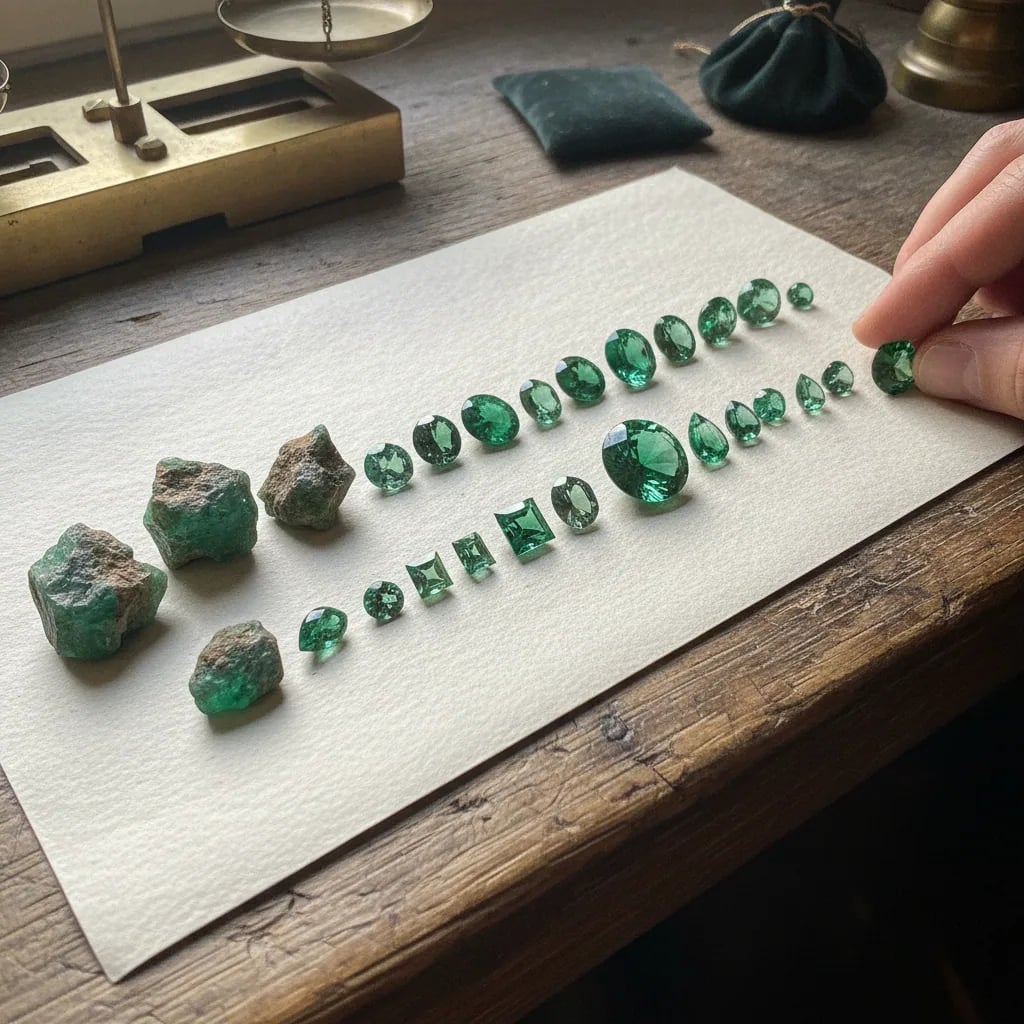
Emerald pricing reflects a complex interplay of color intensity, clarity relative to type, origin, treatment disclosure, and carat weight. Unlike diamonds with standardized pricing, emerald markets require gemological expertise for accurate valuation.
Price Ranges by Quality
Quality Tier | Price/Carat | Color | Clarity | Treatment | Best For |
|---|---|---|---|---|---|
Commercial | $200-400 | Light green | SI-I, heavy inclusions | Standard oil | Fashion jewelry, larger carats |
Fine | $500-2,000 | Good saturation | SI, moderate inclusions | Moderate oil | Everyday fine jewelry |
Premium | $2,000-5,000 | Vivid green | VS-SI, minor inclusions | Minor oil | Engagement rings, investment |
Exceptional | $5,000-18,000+ | Intense Muzo green | VS-VVS, 2+ carats | Minimal/no oil | Collectors, heirlooms |
Colombian vs Zambian Emerald Pricing
Colombian emeralds command 20-50% premiums over equivalent Zambian stones. This comparison shows the price difference across quality grades:
Quality Grade | Colombian ($/ct) | Zambian ($/ct) | Premium % |
|---|---|---|---|
Commercial | $300-500 | $200-400 | +25-50% |
Fine | $1,000-2,500 | $700-1,800 | +30-40% |
Premium | $3,000-6,000 | $2,000-4,000 | +33-50% |
Exceptional | $8,000-18,000+ | $5,000-12,000 | +40-60% |
Clarity Impact on Emerald Pricing
Unlike diamonds where clarity significantly affects price, emerald's acceptance of inclusions creates different pricing dynamics:
Clarity Grade | Description | Price Multiplier | Eye-Clean? |
|---|---|---|---|
I (Included) | Heavy visible inclusions | 1× (base) | No |
SI (Slightly Included) | Moderate inclusions | 1.5-2× | No |
VS (Very Slightly) | Minor inclusions | 2-3× | Mostly |
VVS (Very Very Slightly) | Minimal inclusions | 3-4× | Yes |
Choosing May Birthstone Emerald Jewelry: What Actually Matters
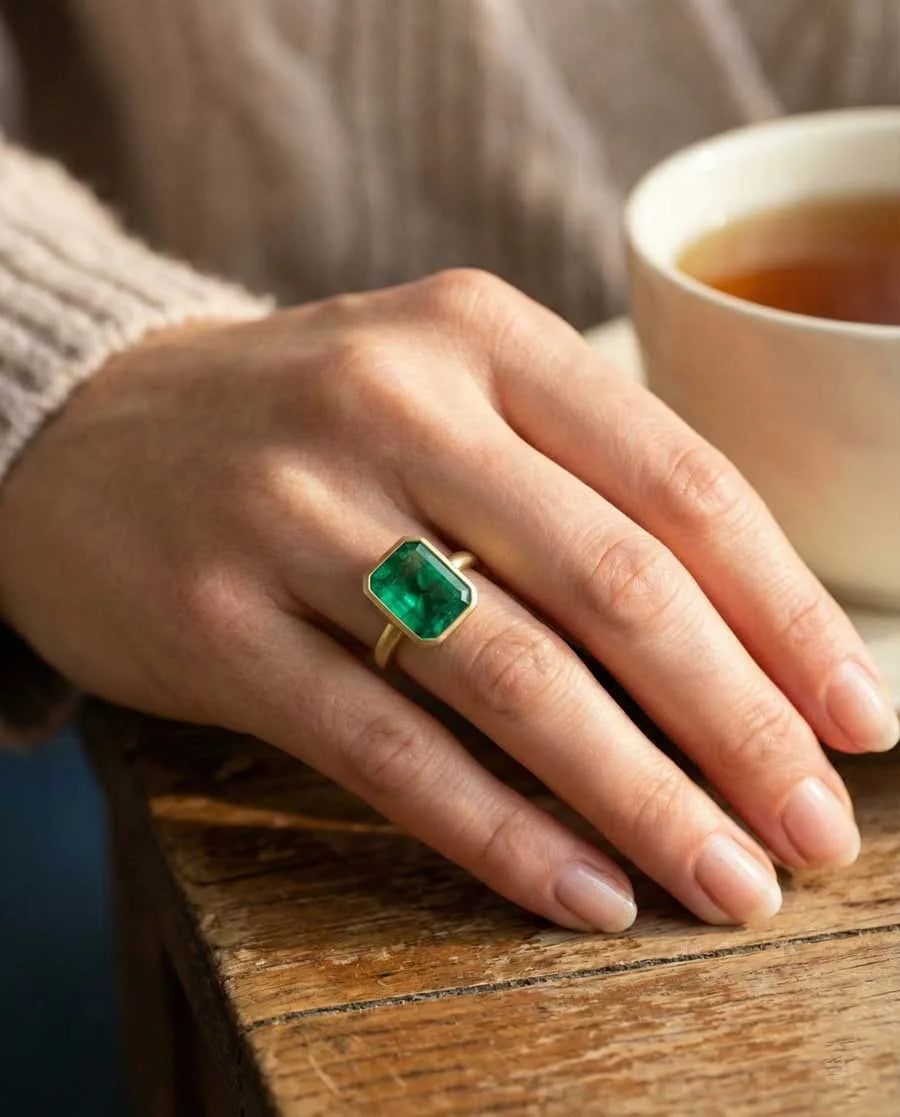
Selecting emerald jewelry means balancing beauty with durability. Because emeralds naturally contain inclusions, the right setting and cut play a major role in long-term wearability.
Setting Protection
Emeralds are durable enough for daily wear, but their internal features make them more vulnerable at the edges. Protective settings are especially important for rings:
Bezel settings (metal surrounding the entire stone) provide the strongest protection and reduce the risk of corner or edge damage.
Halo settings add a layer of surrounding stones and metal, giving extra structural support while enhancing appearance.
Prong settings can work, but they leave edges more exposed and are better for earrings or pendants rather than daily-wear rings.
The Emerald Cut
The emerald cut was developed specifically for this gemstone. Its long step-cut facets and trimmed corners:
reduce pressure on the stone’s most vulnerable points
emphasize color saturation
reveal transparency and the natural jardin, helping buyers judge quality honestly
The emerald cut doesn’t hide inclusions—it celebrates the stone’s natural character.
Certification and Treatment Disclosure
Buying an emerald without certification is like buying a house without an inspection. You might get lucky, but the risk is unnecessary. For any emerald purchase over $1,000, insist on a report from a respected laboratory such as GIA, AGL, Gübelin, or SSEF.
A proper certificate gives you critical information:
Natural or Synthetic
Lab-grown emeralds are chemically real emeralds, but they cost 60–80 percent less. If you are paying natural-stone pricing, certification confirms you are not unknowingly buying a synthetic stone.
Geographic Origin
Colombian emeralds command 20–50 percent premiums. A seller claiming “Colombian origin” should be able to prove it. Certification verifies or disproves the claim, removing guesswork.
Treatment Level
This is the most important disclosure. Certification reveals whether the emerald has been enhanced with oil or resin, and to what degree: insignificant, minor, moderate, or significant. Significant enhancement reduces value by 30–50 percent compared to a lightly treated stone of equal color. Without documentation, you won’t know what you are actually paying for.
Weight and Measurements
Certification confirms the exact carat weight and dimensions. It sounds simple, but misrepresentation happens more often than people expect.
Emerald Treatment: What You Must Know
Around 90–95 percent of emeralds receive clarity enhancement with oil or resin. This is standard in the industry and nothing to fear. What matters is how much treatment the stone received.
GIA and other labs classify enhancement into levels:
F1 (minor/insignificant)
F2 (moderate)
F3 (significant)
These distinctions affect value enormously. A stone with significant treatment should cost dramatically less than a lightly treated stone with similar color and clarity. If treatment is not disclosed, you may be overpaying.
Treatment itself is not the problem.
Undisclosed treatment at full price is.
Certification protects you from that.
Making Your May Birthstone Purchase Decision
Selecting an emerald means balancing color, clarity, origin, treatment, durability, and budget. This simplified framework helps you choose correctly based on your purpose.
For Engagement Rings (Daily Wear)
Emeralds can be worn daily, but only with the right design choices.
Priorities
Protective setting such as bezel or halo
Good color saturation (doesn’t need to be the absolute finest)
SI clarity or better; visible inclusions are normal, but avoid fractures that reach the surface
Origin value: Zambian emeralds offer reliable color and durability at good prices
Budget suggestion
Allocate about 60% to the setting for protection and 40% to the stone.
For Special Occasion Jewelry
When the piece isn’t worn daily, you can prioritize aesthetics.
Priorities
Vivid green color
Origin certification if your budget allows, especially for Colombian stones
Minimal eye-visible inclusions (VS to SI clarity)
Setting style can prioritize beauty over maximum protection
Budget suggestion
Roughly 75% toward the gemstone, 25% toward the setting.
For Investment or Collecting
Here, you focus on rarity and documentation.
Priorities
Origin certification, with Colombian (especially Muzo) preferred
Untreated or minimally treated stones
Size of 3 carats and above, where price jumps significantly
High clarity, ideally VS or better
Top-tier labs such as GIA, Gübelin, or SSEF for verification
Price expectations
Fine investment-grade emeralds often range from $5,000 to $18,000+ per carat.
Red Flags to Avoid
No treatment disclosure
Emeralds advertised as natural but actually synthetic
Suspiciously low pricing (a “fine” 2 ct Colombian emerald for $500 is not real)
Premium stones without certification
Sellers refusing returns or independent evaluations
Smart Questions to Ask
What treatment has this emerald received, and to what extent?
Can you provide origin certification from a reputable lab?
What is your return policy if I get a third-party appraisal?
Is this emerald suitable for daily wear in a ring?
Which setting style best protects this stone long-term?
Frequently Asked Questions
Discover Your Perfect May Birthstone
From Cleopatra's legendary collection to modern engagement rings, emerald has captivated humanity for over 4,000 years. As May's birthstone, it offers something no other gem can match: the prestige of the "Big Four" precious stones combined with a personality that embraces character over perfection.
Whether you're drawn to emerald's vivid green that literally defines the color standard worldwide, its fascinating acceptance of natural inclusions (those jardin gardens that prove authenticity), or its investment potential ($5,000-18,000/carat for exceptional specimens), this May birthstone combines natural beauty with cultural significance in ways few gemstones can match.
Ready to find your perfect May birthstone? Our collection features certified emeralds across all quality grades and budgets, each selected for exceptional color saturation and durability.