Marquise Diamond: The Ultimate Guide to a Royal Legacy
Fall for the elegant marquise diamond, a royal cut that maximizes carat size. Our guide reveals its romantic history & secrets to avoiding the bow-tie effect. Discover now!
Marquise Diamond: Quick Facts
| Property | Details |
|---|---|
| Shape Origin | Commissioned by King Louis XV to resemble the smile of the Marquise de Pompadour |
| Hardness (Mohs) | 10 (the hardest natural substance, exceptionally durable for daily wear) |
| Ideal L/W Ratio | 1.75 to 2.15 for a classic, elongated appearance |
| Key Challenge | The 'bow-tie effect', a dark shadow across the center that requires visual inspection |
| Best Settings | V-prong or bezel settings are essential to protect the two pointed tips from chipping |
| Visual Size | Appears larger face-up than most other diamond shapes of the same carat weight |
| Recommended Color | H or higher, as color can be more noticeable at the pointed tips |
| Recommended Clarity | VS2 or higher, as the large table can make inclusions more visible |
Introduction
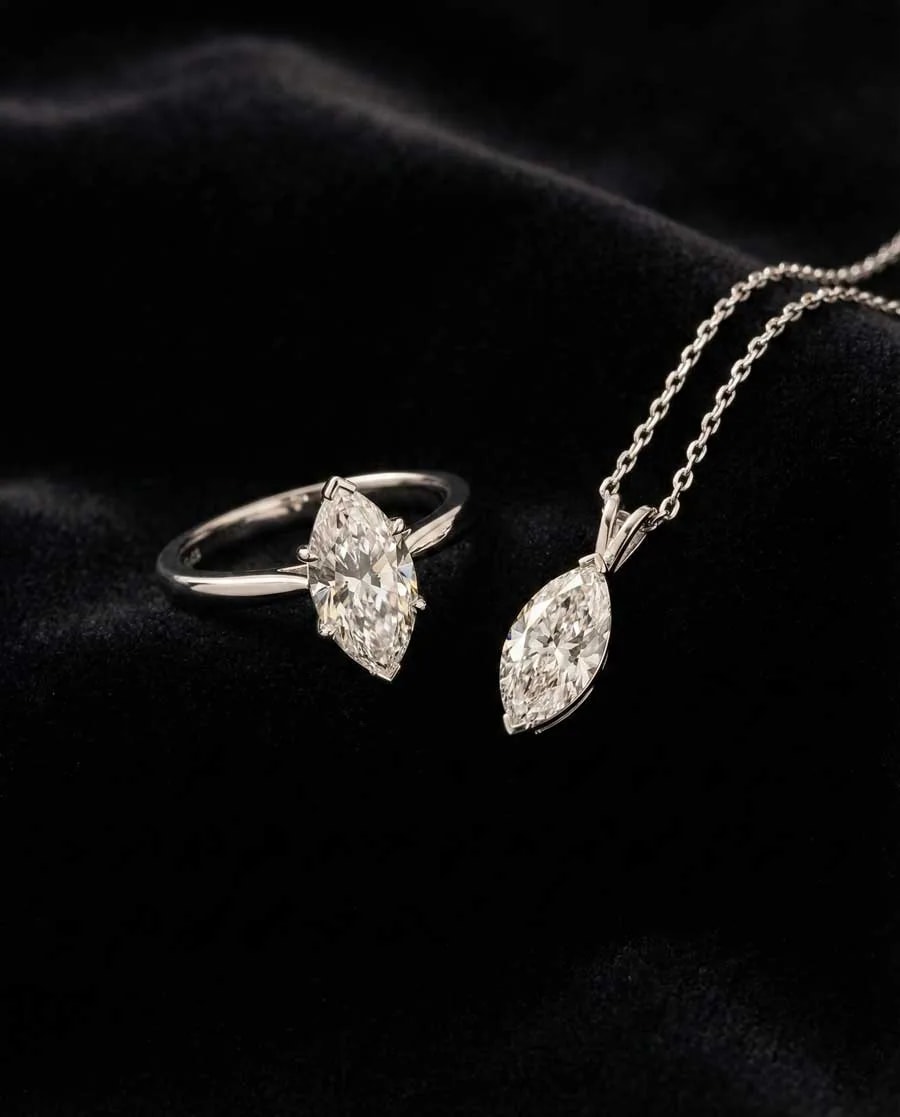
A marquise diamond is an elongated brilliant-cut stone with pointed ends, admired for its striking silhouette and impressive surface area that often makes it appear larger than other cuts of the same carat weight. It offers a refined, distinctive look, but also requires careful selection to avoid issues like the bow-tie effect and to protect its delicate tips.
The marquise cut owes its origin to royal romance. In the 18th century, King Louis XV commissioned a diamond shape that would capture the perfectly curved smile of his mistress, the Marquise de Pompadour. This storied heritage gives the marquise diamond a legacy of elegance, passion, and courtly sophistication.
This guide will give you the clarity needed to choose an exceptional marquise diamond, covering its unique appeal, expert selection criteria beyond the 4Cs, and the best settings to preserve its beauty and structure.
Why Choose a Marquise? The Allure of a Royal Cut
The marquise cut diamond is a choice for the discerning individual, one who values history, elegance, and a distinctive silhouette. Its origins are famously tied to the French monarchy, commissioned by King Louis XV to mirror the smile of his mistress, the Marquise de Pompadour. This royal legacy imbues the shape with a sense of romance and grandeur that few other cuts can claim.
Beyond its storied past, the marquise diamond offers unique aesthetic and practical advantages that contribute to its enduring appeal. It is a modified brilliant cut, designed with 58 facets to maximize fire and sparkle, much like the classic round brilliant-cut diamond.
A Flattering & Striking Silhouette
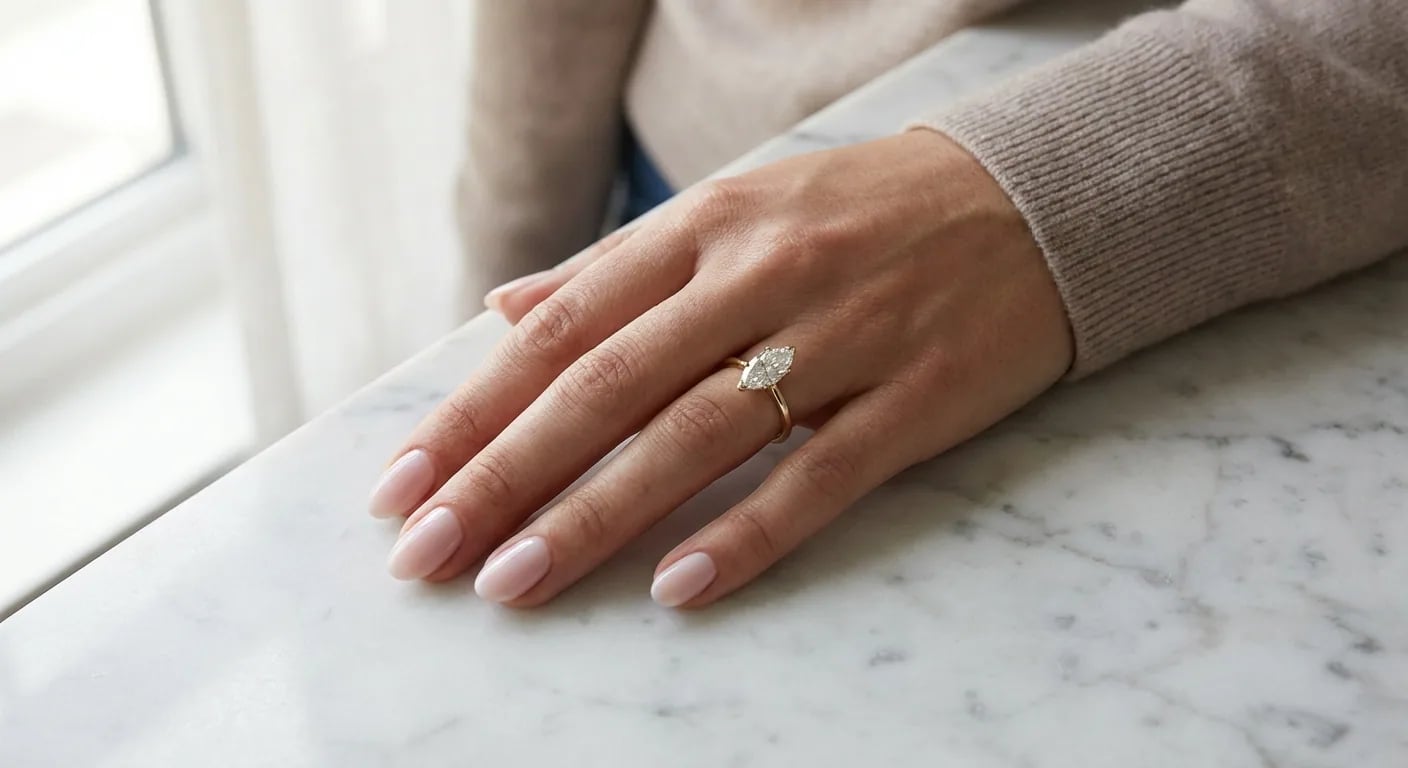
The most celebrated attribute of the marquise diamond is its ability to create a flattering illusion of length. When worn in a traditional north-south orientation, the elongated shape and pointed ends make the finger appear longer and more slender.
Furthermore, the marquise cut offers an exceptional "spread," meaning its face-up surface area is larger than most other diamond shapes of the same carat weight. This gives it a greater visual presence, offering significant impact for its size. This characteristic is shared with other elongated shapes, such as the elegant emerald cut, making it a popular choice for those seeking maximum visual appeal.
Visual Size Comparison: 1.00 Carat Diamond
| Diamond Shape | Typical Dimensions (mm) | Approximate Surface Area (mm²) |
|---|---|---|
| Marquise Cut | 10.5 x 5.0 | 41.2 mm² |
| Round Brilliant | 6.5 x 6.5 | 33.2 mm² |
Note: Dimensions are illustrative and can vary based on the stone's specific length-to-width ratio.
From Vintage Romance to Modern Edge
The marquise cut possesses a remarkable stylistic versatility. Its distinctive shape is a cornerstone of vintage and Art Deco-inspired jewelry, often set with intricate details or flanked by accent gems like deep blue sapphires to create a timeless, heirloom quality. This historical association gives it a classic, romantic feel.
Simultaneously, contemporary designers have embraced the marquise for its modern potential. When set horizontally in an "east-west" orientation, the diamond takes on an entirely new, avant-garde personality. This modern twist transforms the classic shape into a bold, architectural statement, proving its ability to transcend trends and remain relevant for generations. Its unique form makes it stand out among more common choices in a collection of birthstones or other precious gems.
The Expert's Guide to Marquise Diamond Quality
Selecting a high-quality marquise diamond requires a nuanced approach that extends beyond the standard evaluation criteria. While the 4Cs provide a fundamental framework, the marquise cut's unique geometry introduces specific factors (the bow-tie effect, length-to-width ratio, and symmetry) that are paramount to its beauty. An expert assessment prioritizes these characteristics to ensure the stone exhibits exceptional brilliance and a graceful silhouette.
The 'Bow-Tie' Effect: Your Guide to Judging It
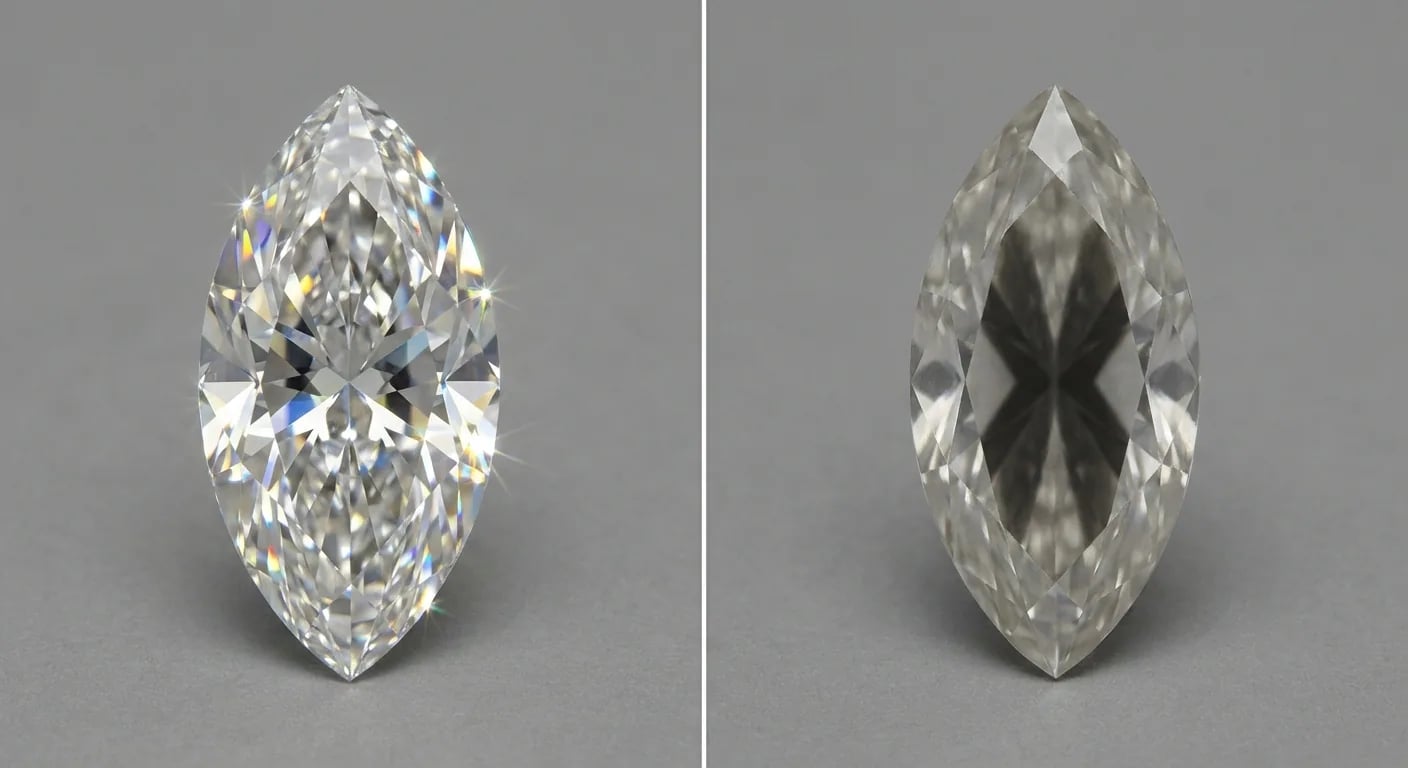
The "bow-tie" is a dark, bow-tie-shaped shadow that can appear across the center of elongated brilliant-cut diamonds, including the marquise, oval, and pear shapes. It is not a flaw but an unavoidable optical consequence of the stone's faceting pattern, which can block light from certain angles. The key is not to find a stone with no bow-tie, but one where the effect is minimal and does not detract from its overall brilliance.
A well-cut marquise will exhibit a subtle bow-tie that is barely noticeable. A poorly cut stone will have a dark, prominent bow-tie that creates a "dead" spot in the center, severely impacting its sparkle.
How to Assess the Bow-Tie:
- Observe in Motion: View high-resolution videos of the diamond. As the stone rotates, a minimal bow-tie may appear and disappear, while a severe one will remain dark and static from most angles.
- Look for Brilliance: The area of the bow-tie should still show some life and sparkle. If it appears as a flat, dark void, it is a sign of a poor cut.
- Trust Visuals Over Reports: A grading report from the GIA will not mention the severity of a bow-tie. This characteristic must be judged visually.
Beyond the 4 Cs: Ratio & Symmetry
For a marquise diamond, proportion and balance are as critical as its color or clarity grades. These two factors dictate the stone's overall shape and visual harmony. While the fundamental principles of the 4Cs of diamond quality are essential, ratio and symmetry give the marquise its unique character, a trait that defines all well-chosen gemstones.
Length-to-Width (L/W) Ratio The L/W ratio determines the diamond's outline. While personal preference plays a role, a classic and aesthetically pleasing marquise typically falls within a specific range.
| L/W Ratio | Appearance | Description |
|---|---|---|
| 1.60 - 1.74 | Wider | A slightly chubbier, fuller appearance. |
| 1.75 - 2.15 | Classic | The traditional, elegant and elongated silhouette. |
The Best Settings to Protect & Showcase Your Marquise
Choosing the right setting for a marquise diamond is a critical decision that balances aesthetic preference with essential protection. The elongated shape and pointed tips that define the marquise cut are also its most vulnerable areas. A well-designed setting not only secures the gemstone but also complements its unique silhouette, ensuring both its safety and its brilliance for a lifetime.
Protecting the Points: V-Prongs & Bezels
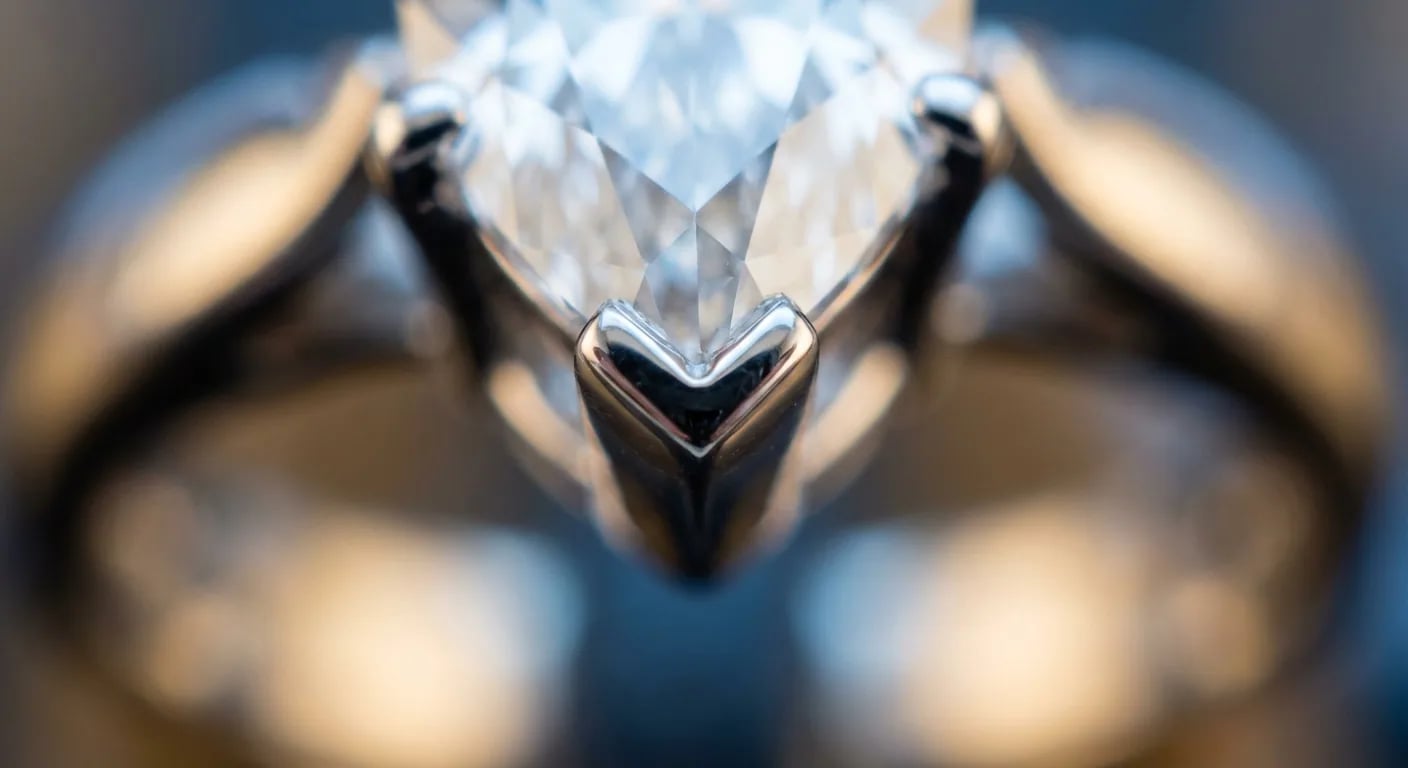
The primary structural concern for a marquise diamond is the security of its two sharp points, which are susceptible to chipping if left exposed. Gemologists and expert jewelers consistently recommend settings designed specifically to shield these tips. The two most effective and popular options are V-prongs and bezel settings.
- V-Prongs (or V-Tips): This is the most common protective solution. V-prongs are specially shaped claws that curve into a "V" shape, securely cradling each pointed end of the diamond. This method offers robust protection against impact without covering too much of the diamond's surface, allowing maximum light to enter the stone.
- Bezel Setting: For maximum security, a full bezel setting is unparalleled. This design features a thin metal rim that fully encases the diamond's entire perimeter. A bezel offers superior protection against knocks and snags, making it an excellent choice for individuals with active lifestyles. It also provides a sleek, modern frame that can make the diamond appear larger. This level of protection is also recommended for other fancy shapes with sharp corners, such as the emerald cut.
Setting Comparison: V-Prong vs. Bezel
| Feature | V-Prong Setting | Full Bezel Setting |
|---|---|---|
| Protection Level | Excellent (for tips) | Maximum (for entire stone) |
| Aesthetic Style | Classic, Traditional | Modern, Sleek |
| Light Exposure | High | Slightly Reduced |
| Maintenance | Standard prong checks | Very low maintenance |
Popular Styles: From Classic Solitaire to Ornate Halos
Once the protective elements are addressed, the focus shifts to style. The marquise diamond's versatility allows it to shine in a variety of designs, from minimalist to elaborate.
- The Solitaire: A classic solitaire setting places the marquise front and center, allowing its dramatic shape to be the sole focus. Typically using six prongs, including two V-prongs, this timeless style highlights the diamond's elegant lines.
- The Halo: A halo setting surrounds the center marquise with a frame of smaller pavé-set diamonds. This not only adds a layer of sparkle and visual impact but also provides an extra buffer
Frequently Asked Questions
Conclusion
Selecting an exceptional marquise diamond is a matter of looking beyond standard metrics. The true art lies in critically assessing the bow-tie effect for minimal distraction, demanding excellent symmetry for perfect balance, and choosing a protective setting like V-prongs to secure its elegant points. This knowledge empowers you to choose a stone with confidence and lasting value.
With this expert framework, you are ready to find the perfect stone. Begin by exploring the curated collections of certified diamonds at Joalys, each selected for its remarkable fire and elegant proportions. For personalized assistance in evaluating a specific diamond or to discuss a custom design,