Emerald Jewelry: How to Buy, What to Look For, and What to Avoid (2026)
Ready to own a timeless emerald? Our guide covers its symbolism, the 4Cs, and how to buy with confidence. Discover the perfect stone for your collection today!
Quick Facts: Emerald Jewelry
| Property | Details |
|---|---|
| Hardness (Mohs) | 7.5 - 8 (good durability, but requires care) |
| Key Value Factor | Color (vivid, saturated green is most prized) |
| Primary Sources | Colombia, Zambia, Brazil |
| Clarity Feature | Inclusions, known as 'jardin' (garden), are characteristic |
| Common Treatment | Clarity enhancement with colorless oil (an accepted practice) |
| Birthstone Month | May |
| Meaning | Symbol of rebirth, successful love, and wisdom |
TL;DR: Emerald Jewelry Buying Essentials
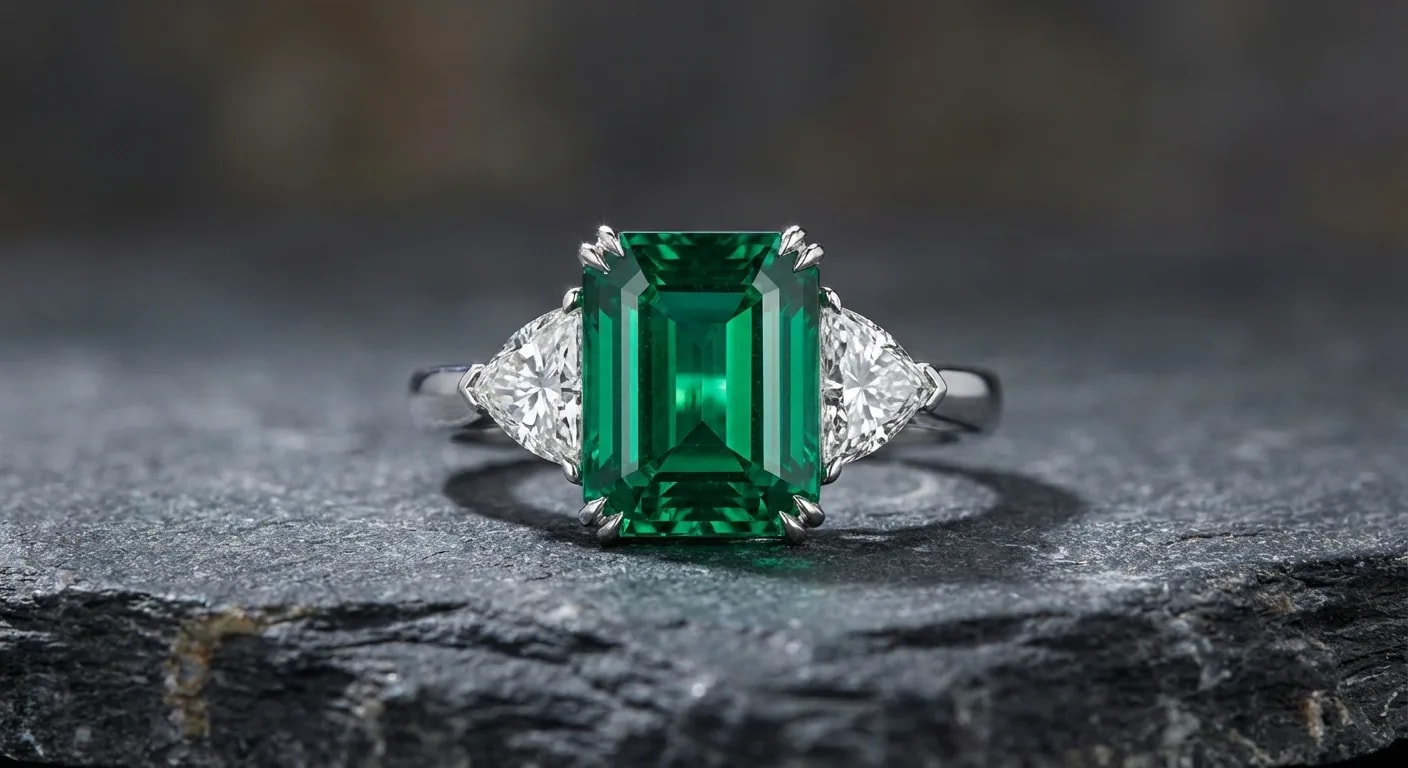
Emerald jewelry ranks among the "big three" colored gemstones alongside ruby and sapphire. Color is the #1 value driver, not clarity. Expect to pay $500-$3,000/ct for commercial quality, $5,000-$30,000+/ct for top stones. Over 99% of emeralds are clarity-enhanced with oil, which is standard and accepted. Always demand a GIA or AGL certificate. Colombian emeralds command a 25-30% premium over similar Zambian stones. For rings, protective settings (bezel, halo) beat exposed prongs.
Introduction
We've handled hundreds of emeralds over the years, from 0.5-carat Zambian stones to 8-carat Colombian museum pieces. Here's the thing: buying emerald jewelry online is genuinely tricky. You can't rotate the stone under daylight, you can't see how the jardin catches light at different angles, and stock photos rarely show what you're actually getting.
That's exactly why we wrote this. Not a glossy marketing piece, but a practical breakdown of what actually matters when you're spending real money on emerald jewelry. We'll walk through the 4Cs (color dominates everything for emeralds, unlike diamonds), explain why 99% of emeralds are treated and why that's perfectly fine, and help you avoid the mistakes we see buyers make over and over.
Whether you're hunting for an emerald engagement ring, a statement necklace, or a loose stone for a bespoke setting, this guide gives you the same framework our GIA-certified team uses when sourcing emeralds directly from mines in Colombia and Zambia.
A Brief History of Emerald Jewelry
Cleopatra's obsession with emeralds wasn't just legend. Egyptian mines near the Red Sea (now called "Cleopatra's Mines") operated from roughly 1500 BCE, producing stones that adorned pharaohs and priestesses alike. The Romans valued emeralds so highly that Pliny the Elder wrote: "nothing greens greener." Nero reportedly watched gladiator fights through a flat emerald lens.
The real game-changer came in the 1500s when Spanish conquistadors discovered Colombian emerald deposits. Muzo and Chivor mines produced stones of a quality the Old World had never seen, with that signature vivid green that's still the global benchmark. These Colombian emeralds flooded European courts and Mughal India, where Emperor Shah Jahan (the Taj Mahal guy) was a known collector.
Fast forward to today: emerald jewelry sits alongside ruby and sapphire in the "big three" of colored gemstones. Auction records keep climbing. In 2023, the Rockefeller Emerald sold for $5.5 million at Christie's. In our experience sourcing from Ratnapura and Bogota, demand has only accelerated since 2024, driven largely by Asian collectors and the quiet luxury movement.
How Are Emeralds Graded? The 4Cs Explained
Gemologists grade emeralds using the same 4Cs framework as diamonds, but the hierarchy is completely different. For diamonds, clarity is king. For emeralds, color outranks everything else by a wide margin. Let's break each one down.
Emerald quality factors explained by GIA (Gemological Institute of America).
Color: The Single Biggest Value Driver
Color accounts for roughly 50-70% of an emerald's value. It's assessed on three axes:
- Hue: Pure green or slightly bluish-green commands the highest prices. Yellowish-green stones trade at a 30-50% discount. The most prized hue? That intense, slightly bluish green you see in top Colombian material.
- Tone: Medium to medium-dark is the sweet spot. Too light and the stone looks washed out. Too dark and it appears almost black in indoor lighting.
- Saturation: This is the intensity of the color. A vivid, electric green with zero grayish or brownish overtones, that's what collectors and jewelers pay premiums for. It's also why the May birthstone has such enduring appeal.
Clarity: Why Inclusions Aren't Always Bad
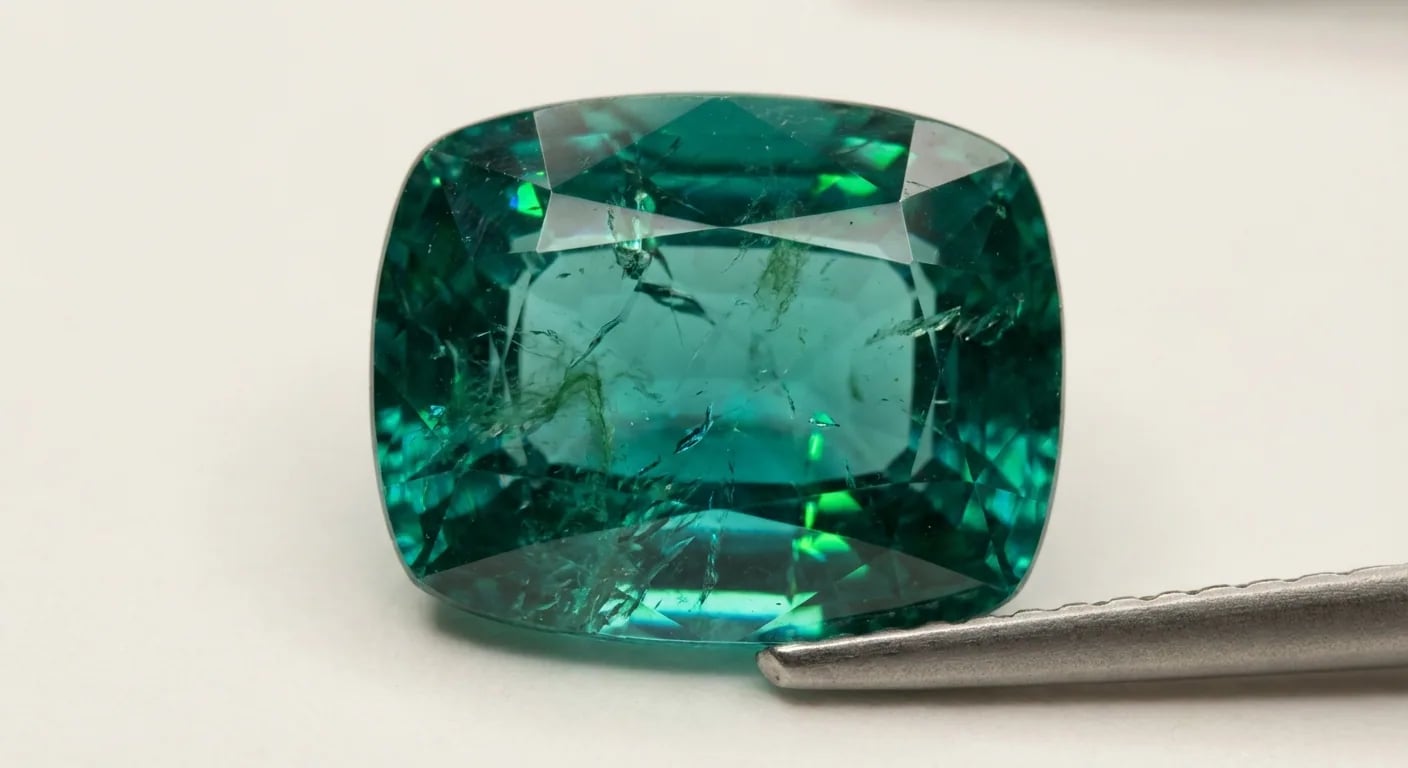
Here's where emeralds flip the diamond script completely. Virtually all natural emeralds contain inclusions, tiny fractures, gas bubbles, or mineral crystals formed during millions of years of growth. The gem trade calls these the jardin (French for "garden") because they often resemble mossy branches.
An eye-clean emerald (no visible inclusions at arm's length) is exceptionally rare and commands massive premiums. But a moderate jardin isn't a deal-breaker. It actually proves the stone is natural, not lab-grown. The red flag is when inclusions threaten structural integrity or severely block light return.
Cut and Carat Weight
The classic "emerald cut" (rectangular step-cut) wasn't named by accident. It was specifically designed to protect the stone's brittle corners while maximizing color display. You'll also find oval, pear, and cabochon cuts, each chosen to suit the rough stone's natural shape and inclusion pattern.
Price per carat doesn't scale linearly. A 3-carat emerald isn't simply 3x the price of a 1-carat stone of the same quality. It can be 5-8x more, because larger clean material is exponentially rarer.
Colombian vs Zambian Emeralds: Which Origin Should You Choose?
Origin matters more for emeralds than almost any other gemstone. The two dominant sources, Colombia and Zambia, produce distinctly different material, and each has loyal collectors.
Colombian Emeralds
Colombia produces roughly 70-90% of the world's top-quality emeralds. The famous Muzo, Chivor, and Coscuez mines yield stones with that iconic warm, vivid green, often with a slight bluish undertone. Colombian material typically has a warmer, more saturated look because chromium is the primary coloring agent.
The premium? 25-30% more than equivalent-quality Zambian stones, sometimes higher at auction. A 2-carat vivid Colombian with minor oil and GIA certification can easily fetch $8,000-$15,000 per carat at retail.
Zambian Emeralds
Zambian emeralds (primarily from the Kagem mine) tend to be slightly bluer-green and often have better clarity than their Colombian counterparts. The coloring comes from both chromium and iron, giving them a cooler, sometimes slightly darker tone.
For buyers who prefer that deeper, bluish-green look, Zambian stones are a smart choice and offer better value per carat. We've seen growing demand for Zambian material among European jewelers who want that cooler aesthetic.
Other Origins Worth Knowing
Brazil produces commercial to fine-quality stones. Ethiopian emeralds have entered the market since 2016 with surprisingly good color. Afghanistan's Panjshir Valley yields excellent material but in limited quantities. Each origin has its personality, and a GIA origin report can confirm provenance.
Emerald Treatments and Certification: What Every Buyer Must Know
Why 99% of Emeralds Are Treated (And Why That's OK)
Let's be honest: if someone tells you their emerald is "untreated," they're either selling a $50,000+ stone or they're not telling the truth. Over 99% of natural emeralds undergo clarity enhancement, filling surface-reaching fissures with colorless oil (traditionally cedarwood oil) or synthetic resin. This practice dates back centuries and is universally accepted by GIA, AGL, and every major gem lab.
The critical distinction is between colorless fillers (standard, accepted) and dyed green fillers (unacceptable, deceptive). A dyed emerald artificially inflates color and can lose its enhanced appearance over time. GIA reports grade enhancement from "None" through "Minor," "Moderate," to "Significant." We recommend targeting "Minor" to "Moderate" for the best value-to-beauty ratio.
Certification: Your Non-Negotiable Safety Net
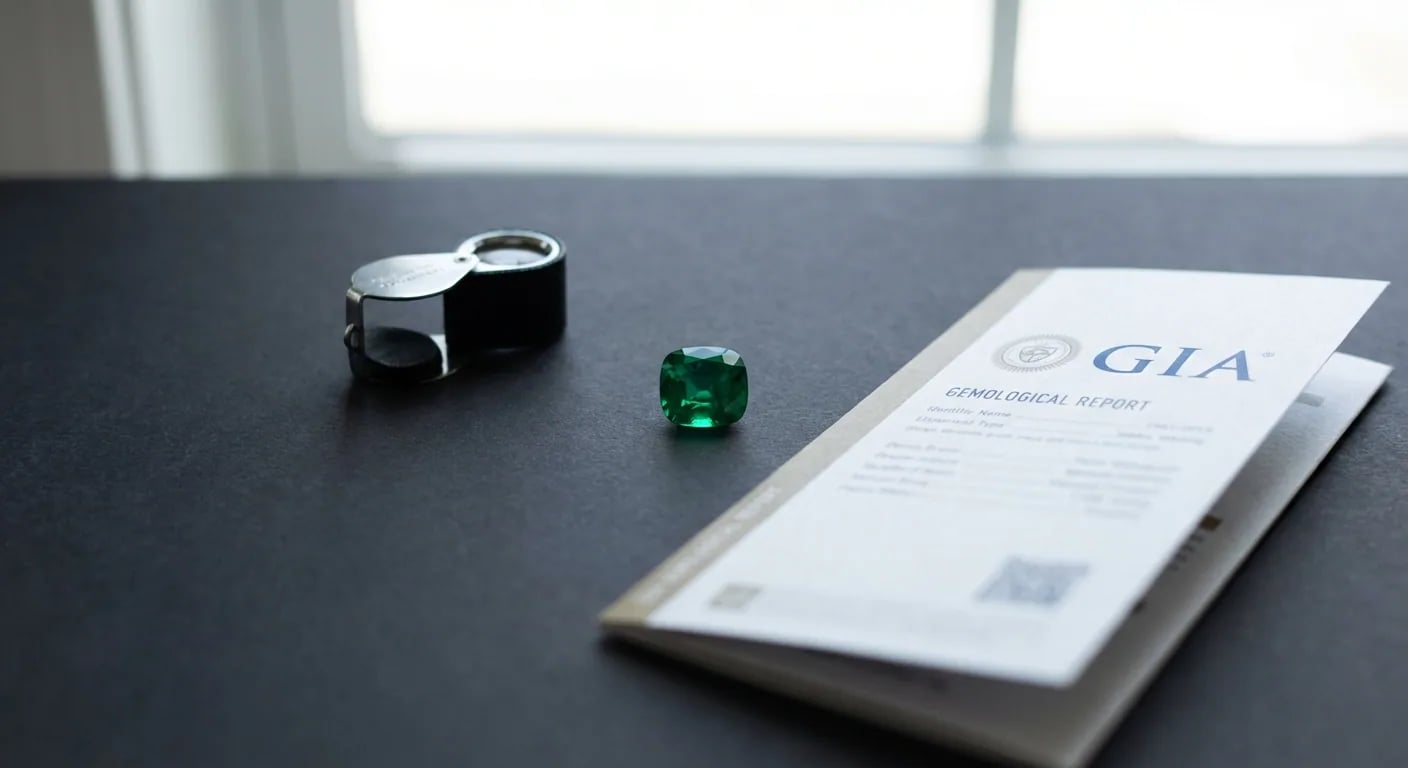
An independent gemological report from GIA or AGL is the single most important document when buying emerald jewelry. Period. It confirms:
- Identity: Natural emerald (beryl variety), not synthetic or simulant
- Origin: Geographic source when determinable (Colombia, Zambia, etc.)
- Treatment: Type and degree of clarity enhancement
- Measurements: Precise dimensions and carat weight
This matters just as much for emeralds as it does for sapphires or natural rubies. Without certification, you're buying on faith. With it, you're buying on facts.
Natural vs. Lab-Grown Emeralds
Lab-grown emeralds are chemically identical to natural ones but cost 70-90% less. They're a valid option if your priority is appearance over investment value. However, lab-grown stones have essentially zero resale value, while high-quality natural emeralds have appreciated 15-25% since 2023.
The decision is personal, not technical. For heirloom pieces or investment, natural wins. For fashion jewelry you'll rotate seasonally, lab-grown makes financial sense.
How Much Does Emerald Jewelry Cost in 2026?
Emerald pricing is less standardized than diamond pricing, which is part of what makes it confusing for first-time buyers. There's no universal price list like the Rapaport for diamonds. Instead, prices vary enormously based on the 4Cs, origin, and treatment level.
Here's a realistic breakdown based on current market conditions (April 2026):
| Quality Tier | Price Per Carat (USD) | What to Expect |
|---|---|---|
| Commercial | $100 - $500 | Lighter color, visible inclusions, moderate-to-significant treatment. Good for fashion jewelry. |
| Good | $500 - $3,000 | Medium green, eye-clean or near eye-clean, moderate treatment. Solid everyday emerald jewelry. |
| Fine | $3,000 - $10,000 | Vivid green, minimal inclusions, minor treatment, certified origin. Investment grade starts here. |
| Exceptional | $10,000 - $30,000+ | Top color, eye-clean, none-to-minor treatment, Colombian Muzo/Chivor. Auction-level stones. |
A complete emerald ring (stone + setting) at the "Good" tier typically runs $2,000-$8,000 depending on carat weight and metal choice. A fine-quality emerald pendant with diamond halo starts around $5,000-$15,000.
One thing we tell every client: don't chase size. A 1-carat emerald with vivid color and minor treatment will always look better (and hold value better) than a 3-carat washed-out stone with significant enhancement.
JOALYS
Everything Begins with the Stone
One stone, chosen by hand at the source. The piece comes afterwards.
Keep the gemstone loose, or commission a piece made around it — made to order, never off the shelf.
Emerald Jewelry Designs: Rings, Necklaces, and Earrings
Emerald Rings: From Engagements to Heirlooms
Emerald engagement rings have surged in popularity since celebrities like Hailey Bieber and Megan Fox brought colored stones into the spotlight. Designs range from classic solitaires to elaborate three-stone settings flanked by diamonds for added brilliance and contrast.
For emerald rings, setting choice matters more than with harder gems. We strongly recommend bezel settings or halo designs that protect the stone's edges, since emeralds (7.5-8 Mohs hardness) are more vulnerable to chipping than sapphires or diamonds.
The choice of metal creates dramatically different looks:
| Metal | Effect with Emerald | Best For |
|---|---|---|
| Yellow Gold (18K) | Warm contrast, enhances green depth | Vintage and traditional designs |
| Platinum | Cool backdrop, makes green pop | Modern settings, maximum durability |
| White Gold | Similar to platinum, lighter feel | Contemporary and versatile styles |
| Rose Gold | Romantic warmth, unique contrast | Fashion-forward statement pieces |
Emerald Necklaces and Pendants
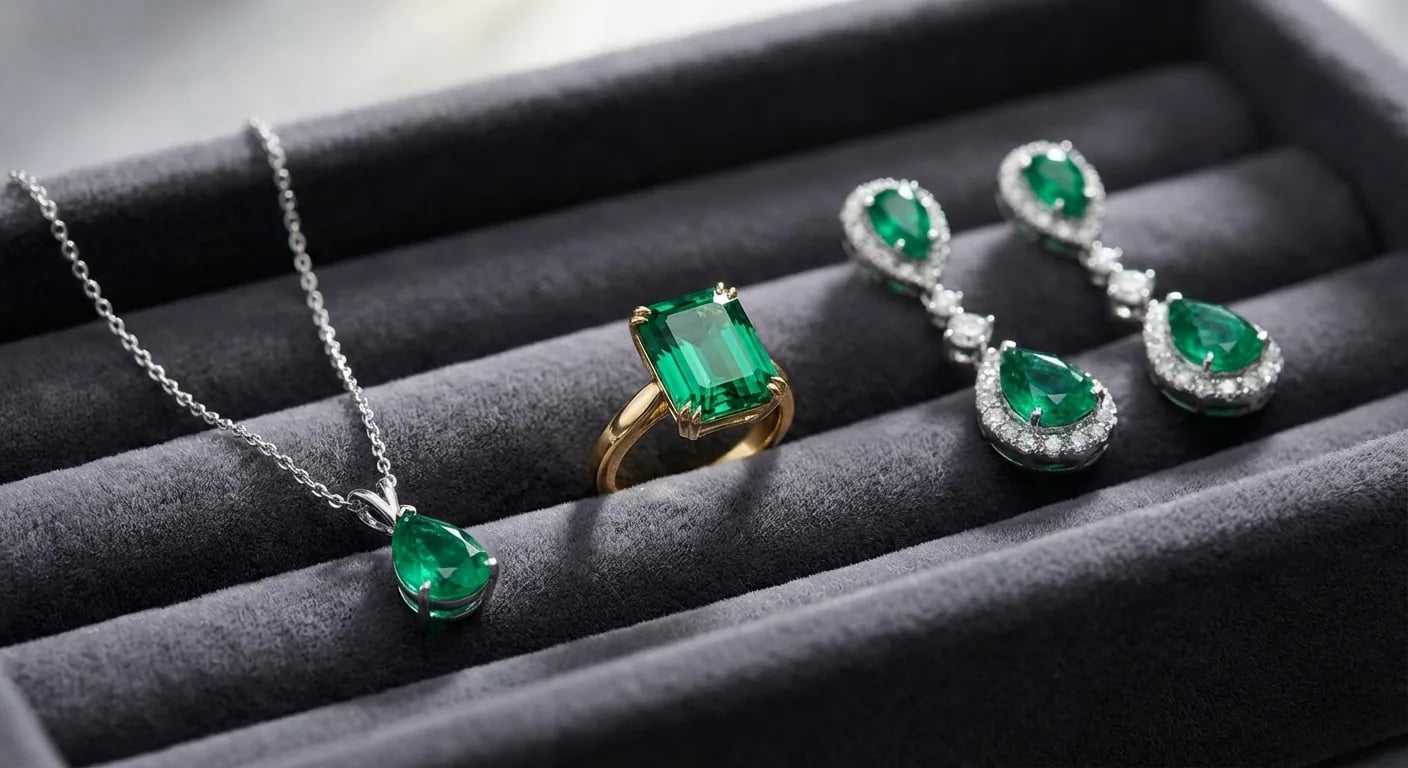
Emerald pendant necklaces bring the stone's captivating color close to the face, illuminating the complexion beautifully. Simple solitaire pendants work for daily wear, while larger stones with diamond halos create impact for formal occasions.
For necklace length, a 16-18 inch chain sits at the collarbone and gives the best color display against skin. Princess length (18") is our most-requested length for emerald pendants.
Emerald Earrings
Stud earrings with 0.5-1 carat emeralds are a versatile entry point, perfect for both office and evening wear. Drop earrings and chandelier designs with larger emeralds create statement-level impact. Pair emerald earrings with ruby or sapphire pieces for a bold, high-contrast jewelry set.
How to Care for Emerald Jewelry (Without Ruining It)
Emeralds are beautiful but they need more care than sapphires or diamonds. At 7.5-8 on the Mohs scale, they're hard enough for daily wear, but their natural inclusions make them more susceptible to chipping from sharp impacts.
Cleaning: The Safe Way
Use lukewarm water with a tiny drop of mild dish soap. Gently scrub with a soft-bristle toothbrush. Rinse under clean water. Pat dry with a lint-free cloth. That's it.
Never use ultrasonic cleaners, steam cleaners, or any chemical jewelry cleaner on emeralds. These can dissolve the oil treatment and cause the stone to look cloudier. We've seen clients bring in beautiful emeralds that looked like they aged 20 years overnight after an ultrasonic bath.
Storage Tips
- Store emerald jewelry separately from harder gems (diamonds, sapphires) that can scratch it
- Wrap in a soft cloth or use individual compartments in your jewelry box
- Keep away from extreme heat, which can cause oil to dry out
- Remove emerald rings before gym workouts, gardening, or heavy lifting
Re-Oiling: When and How
Over time (typically 5-10 years of regular wear), the oil treatment in an emerald can dry out, making inclusions more visible. This is completely normal. A professional jeweler can re-oil the stone, restoring its original appearance. Cost: typically $50-$150. For more tips, check our complete jewelry care guide.
Frequently Asked Questions About Emerald Jewelry
How can you tell if an emerald is real?
A genuine emerald displays vivid green color with natural inclusions called jardin. The most reliable way to verify authenticity is through a gemological certificate from GIA or AGL. These labs confirm the stone is natural beryl, identify any treatments, and can determine geographic origin. Visual inspection alone isn't enough, as high-quality synthetics can fool even experienced buyers.
Are emeralds a good investment in 2026?
High-quality natural emeralds have appreciated 15-25% since 2023, driven by decreasing Colombian mine output and rising Asian demand. Fine stones with vivid color, minor treatment, and GIA certification hold value well. However, commercial-grade emeralds don't appreciate meaningfully. Think of it like real estate: location (origin), condition (treatment level), and documentation (certification) determine investment potential.
Which is better: Colombian or Zambian emeralds?
Colombian emeralds are prized for their warm, vivid green with a slight bluish hue and command a 25-30% premium. Zambian emeralds tend toward a cooler, bluer green and often have better clarity. "Better" depends on your color preference: warm vivid green means Colombian, cooler blue-green means Zambian. Both origins produce world-class stones.
Is emerald durable enough for an engagement ring?
At 7.5-8 on the Mohs hardness scale, emeralds are durable enough for daily wear with proper care. The key is choosing a protective setting like a bezel or halo that shields the stone's edges. Avoid exposed prong settings for emerald engagement rings. Remove the ring during heavy physical activity, and you'll enjoy it for decades.
What does emerald clarity enhancement mean?
Clarity enhancement means filling an emerald's natural surface-reaching fissures with colorless oil or resin to improve transparency. Over 99% of emeralds undergo this standard, centuries-old treatment. GIA grades it from "None" to "Significant." Stones with "Minor" enhancement offer the best balance of beauty and value. Avoid emeralds treated with green-dyed fillers.
How should I clean emerald jewelry at home?
Clean emerald jewelry with lukewarm water and a drop of mild dish soap. Gently scrub with a soft-bristle brush, rinse under clean water, and pat dry. Never use ultrasonic cleaners, steam cleaners, or chemical solutions, as these can dissolve the oil treatment and permanently damage the stone's appearance.
How much should I spend on emerald jewelry?
Emerald jewelry spans a wide range: $200-$1,500 for commercial-grade pieces, $2,000-$8,000 for good-quality rings, and $10,000+ for fine or exceptional pieces. Price per carat depends on color, clarity, treatment level, and origin. Our advice: prioritize color and certification over carat weight. A smaller, vivid stone always outperforms a larger dull one.
What is the difference between emerald and green sapphire?
Emeralds are beryl minerals (Be3Al2Si6O18) colored by chromium and vanadium, known for vivid green and characteristic jardin inclusions. Green sapphires are corundum (Al2O3), harder at 9 Mohs, and typically show a darker, more subdued green. Emeralds command higher prices due to rarity and that unmistakable saturated green that no other gemstone replicates.
Can emerald oil treatment wear off?
Yes, the oil in clarity-enhanced emeralds can gradually dry out over 5-10 years of regular wear, especially with heat exposure or improper cleaning. When this happens, inclusions become more visible. A professional jeweler can re-oil the stone for $50-$150, restoring its original beauty. This is routine maintenance, not a defect.
Final Thoughts on Buying Emerald Jewelry
Buying emerald jewelry doesn't need to be intimidating. Focus on color first (vivid green, minimal gray or brown), demand GIA or AGL certification, and understand that oil treatment is standard, not a red flag. Choose protective settings for rings, store pieces carefully, and you'll own something that genuinely appreciates over time.
We source emeralds directly from mines in Colombia, Zambia, and through our direct sourcing network in Ratnapura, Sri Lanka. Every stone we sell comes with independent certification and our commitment to transparency. If you're looking for a specific color, carat, or setting style, reach out to our team and we'll find exactly what you need, straight from the source to your hands.
Frequently Asked Questions
Conclusion
Mastering the art of buying emeralds online hinges on a few key principles. True value is found in the