Birthstones by Month: All 12 Birthstones Listed (with Prices, 2026)
Unlock the secrets of gemstones months. Discover the history, symbolism, and modern significance behind each birthstone. Find the perfect, meaningful gift.
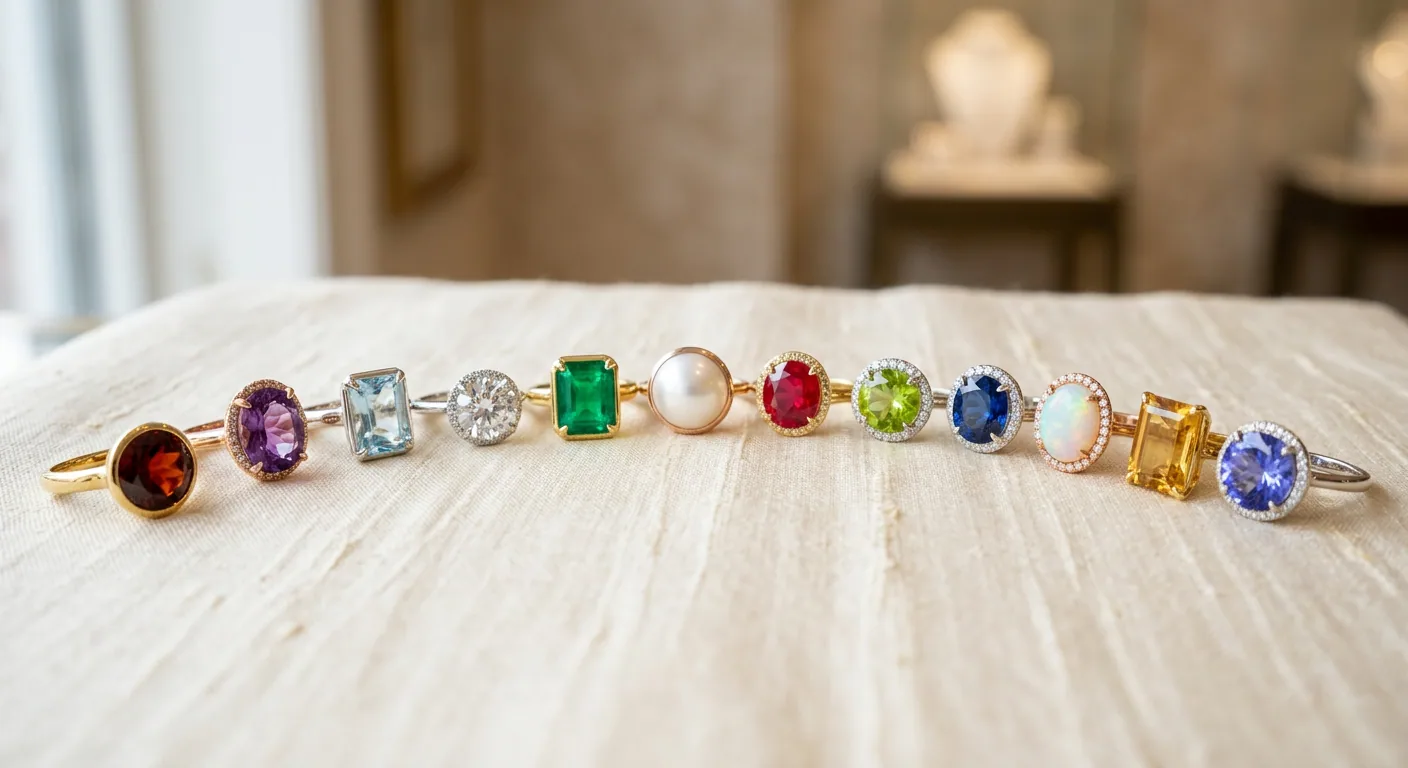
Here are the birthstones by month, the complete list, before anything else. Updated March 2026.
- January: Garnet (deep red, also vivid green tsavorite)
- February: Amethyst (purple quartz, the calm stone)
- March: Aquamarine (sky-blue beryl)
- April: Diamond (hardest of them all, Mohs 10)
- May: Emerald (vivid green, almost always oiled)
- June: Pearl, Alexandrite, Moonstone
- July: Ruby (red corundum, Mohs 9)
- August: Peridot, Spinel
- September: Sapphire (blue corundum, Mohs 9)
- October: Opal, Tourmaline
- November: Topaz, Citrine
- December: Tanzanite, Turquoise, Blue Zircon
That's the modern list standardized by Jewelers of America. Some months carry more than one stone, and a separate traditional list exists alongside it. Below we break down each month: what the stone actually looks like, real price ranges per carat, how to judge quality, and which treatments to expect. We source colored stones directly from Sri Lanka, so the prices here are what we see on the ground, not catalogue markups.
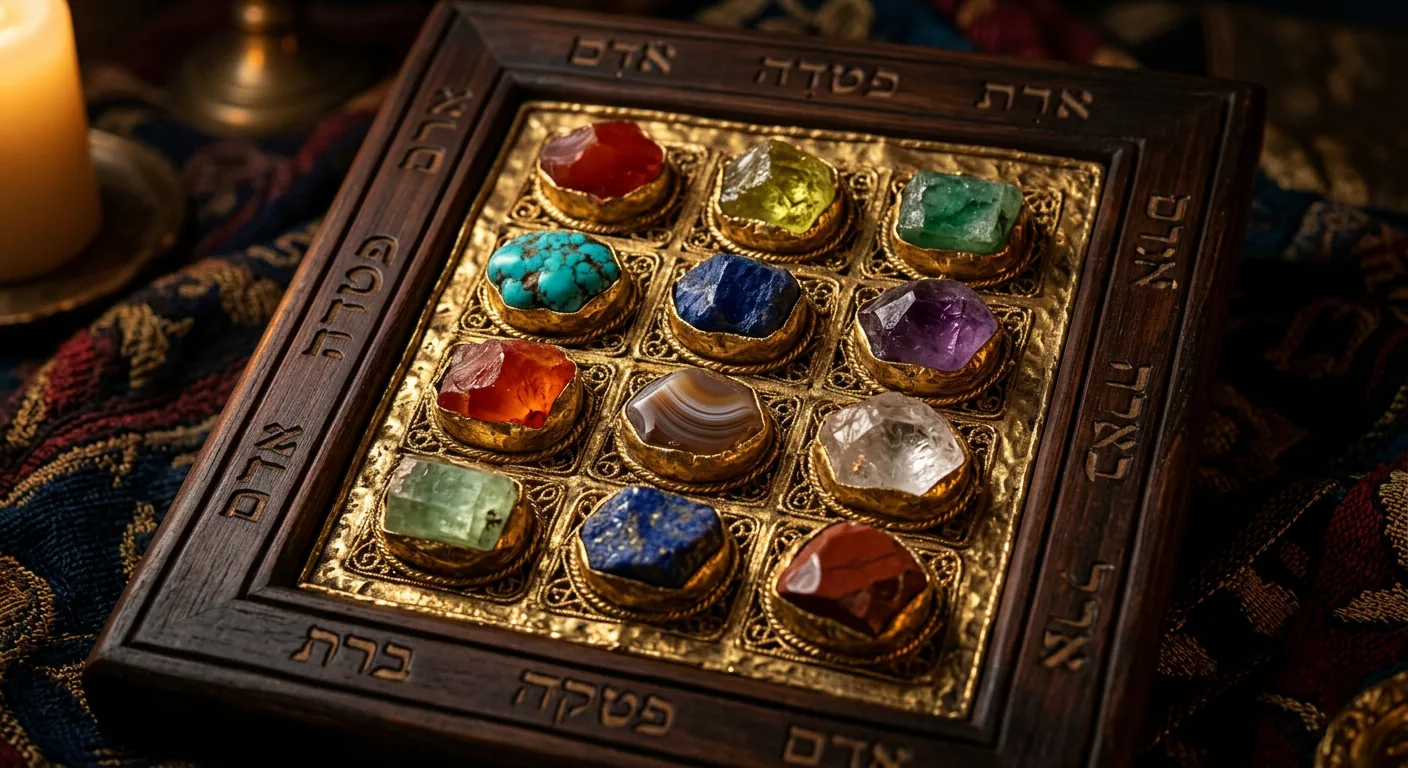
The tradition is older than most people realize. It traces back to the biblical breastplate of Aaron in Exodus, which held twelve stones for the twelve tribes of Israel. The link to calendar months came later, formalized in 1912 when the American National Association of Jewelers published the standardized list most of the world still uses today.
Find Your Birthstone: Gemstones by Month
Birthstones by Month (Complete List)
| Month | Birthstone(s) | What It's Known For |
|---|---|---|
| January | Garnet | Deep red (also green tsavorite); affordable, from $20/ct |
| February | Amethyst | Purple quartz; symbolizes calm and clarity; $5 to $50/ct |
| March | Aquamarine | Sky-blue beryl; courage and the sea; $50 to $300/ct |
| April | Diamond | Hardest stone (Mohs 10); lab-grown costs ~10x less |
| May | Emerald | Vivid green; love and rebirth; almost always oiled |
| June | Pearl, Alexandrite, Moonstone | Pearl = classic; alexandrite changes color; moonstone glows |
| July | Ruby | Red corundum (Mohs 9); passion; Ceylon best value |
| August | Peridot, Spinel | Peridot = lime green; spinel = the underpriced one to watch |
| September | Sapphire | Blue corundum (Mohs 9); wisdom; Ceylon is the benchmark |
| October | Opal, Tourmaline | Opal = play-of-color; tourmaline = widest color range |
| November | Topaz, Citrine | Golden and warm; imperial topaz is underrated |
| December | Tanzanite, Turquoise, Zircon | Tanzanite from one place on Earth; blue zircon undervalued |
The History and Evolution of Birthstones
The birthstone tradition did not arrive fully formed in 1912. It evolved over roughly two thousand years from religious symbolism to astrological practice to commercial standardization.
Birthstones by Month — Complete Guide. Video: GIA — Gemological Institute of America.
Ancient Origins
The twelve stones on Aaron's breastplate, described in Exodus 28:17-20, were interpreted by first-century historian Josephus as connected to the twelve months and zodiac signs. Medieval European gemologists built on this, assigning stones to months based on their perceived protective powers. The idea was that each stone's power was strongest during its associated month, which is why some traditions suggested rotating through all twelve rather than wearing just your birth month stone.
The 1912 Standardization
The American National Association of Jewelers met in Kansas City in 1912 and published the first standardized birthstone list for commercial purposes. The goal was straightforward: simplify the gift-buying decision and drive jewelry sales. It worked. The list has been updated three times since: 1952 (alexandrite, citrine, tourmaline added), 2002 (tanzanite for December), and 2016 (spinel for August).
Why Multiple Lists Exist
The 1912 American list is the dominant commercial standard, but it is not universal. The UK, Japan, and various astrological traditions each have their own versions. The differences matter if you care about historical accuracy or cultural alignment. They do not matter much if you are buying a birthday gift.
Modern vs. Traditional Birthstones: Understanding the Difference
When people talk about "birthstones," they almost always mean the 1912 modern list. But a traditional list predating it assigns different stones to the same months, and the differences are sometimes significant.
Key Differences
March: modern list uses aquamarine, traditional list uses bloodstone (a dark green jasper with red spots). June: modern adds alexandrite and moonstone to pearl. August: traditional uses sardonyx, modern uses peridot, and spinel was added in 2016. December: traditional uses turquoise, modern list added tanzanite (2002) and blue zircon.
In practice, the modern list wins commercially because the stones are more visually appealing and better suited to fine jewelry. Nobody is making bloodstone engagement rings in 2026. But the traditional stones are worth knowing about for historical interest and because some buyers prefer them for their older symbolism.
The September Exception
September's birthstone has been sapphire across every major list since the medieval period. It is one of the few genuinely universal assignments with no serious alternatives. For September birthdays, sapphire is the answer regardless of which tradition you follow.
Month-by-Month Detailed Guide (Jan-Jun)
Here's the practical breakdown for the first six months. Not a textbook list, just what you actually need to know before buying.
January: Garnet
Most people picture a dark red stone and stop there. That's pyrope garnet, and yes, it's beautiful, but the garnet family is much bigger than that. Tsavorite garnet is vivid chrome green, rarer than emerald, and still criminally underpriced. Spessartite runs vivid orange. Red pyrope: $20 to $150 per carat. Tsavorite: $300 to $1,500 per carat for the good stuff. If a January birthday gift is coming up, don't default to red, ask what color they actually like.
February: Amethyst
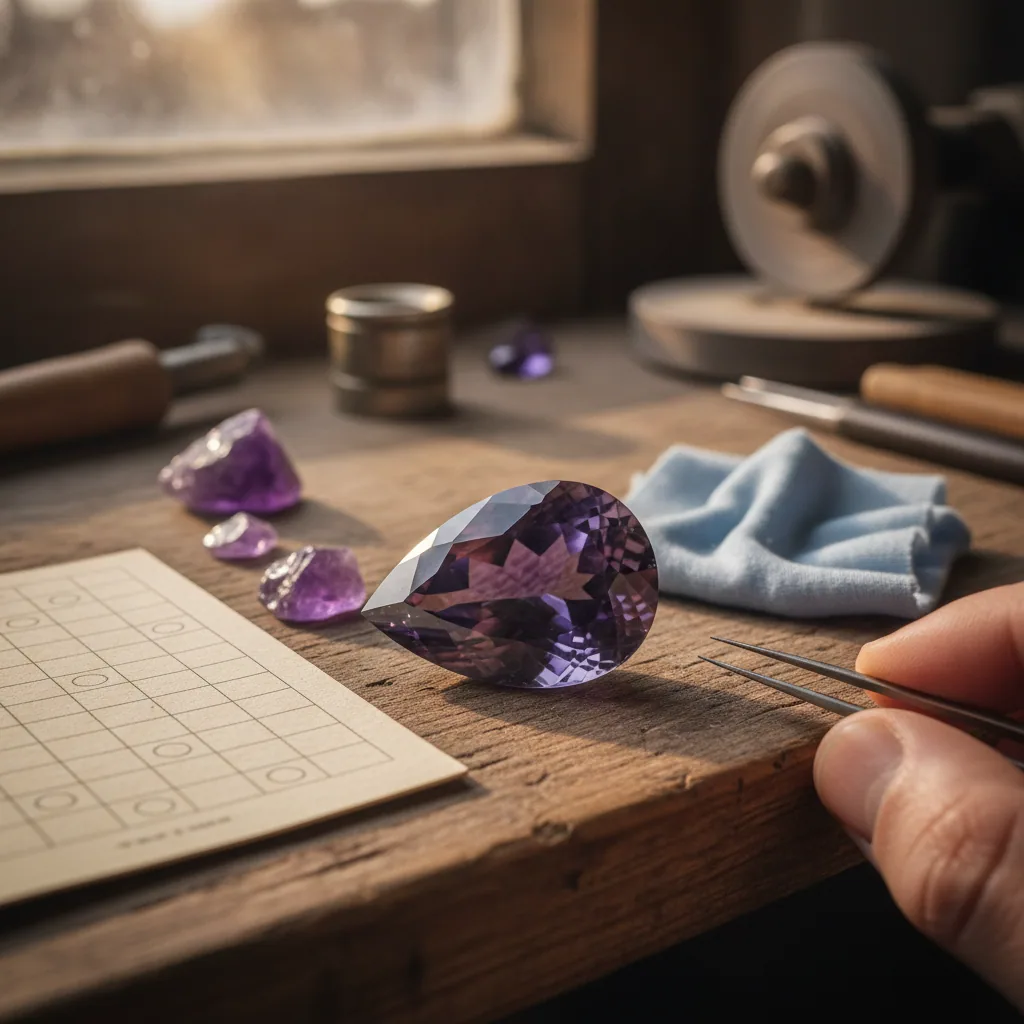
Purple quartz, Mohs 7, one of the most accessible stones in the calendar. The best material, deep "Siberian" purple, actually comes from Zambia and Brazil these days, not Siberia. Price: $5 to $50 per carat for jewelry quality. Honest assessment: amethyst is not exciting for collectors, but for wearable everyday jewelry at a reasonable price, it's hard to beat.
March: Aquamarine
Light blue beryl, Mohs 7.5 to 8, same mineral family as emerald. The color ranges from pale sky blue to a deeper greenish-blue, and we personally prefer the slightly greenish material, it looks more alive than the washed-out pale versions. Brazil dominates production. Good aquamarine: $50 to $300 per carat. The traditional alternative, bloodstone, is a dark green jasper with red spots. Nobody buys it for jewelry in 2026 and that's fine.
April: Diamond
Hardest natural material on Earth, Mohs 10, the most commercially marketed gemstone in history. A 1-carat round brilliant in G/VS2: $4,000 to $6,000 retail. Lab-grown equivalent: $400 to $800. Chemically identical. The only real question is whether natural rarity matters to you. There's no wrong answer, but be honest with yourself about why you're choosing one over the other.
May: Emerald
Vivid green beryl, Mohs 7.5 to 8. Here's the thing about emeralds: almost every single one you'll ever see has been oiled or resin-treated to fill surface fractures. This is completely standard practice and not a scam, but it must be disclosed. Colombian material is the benchmark for color: $500 to $8,000+ per carat. Zambian emerald gives you excellent color at 30 to 50% less. If budget matters, Zambia is where we'd look first.
June: Pearl, Alexandrite, Moonstone
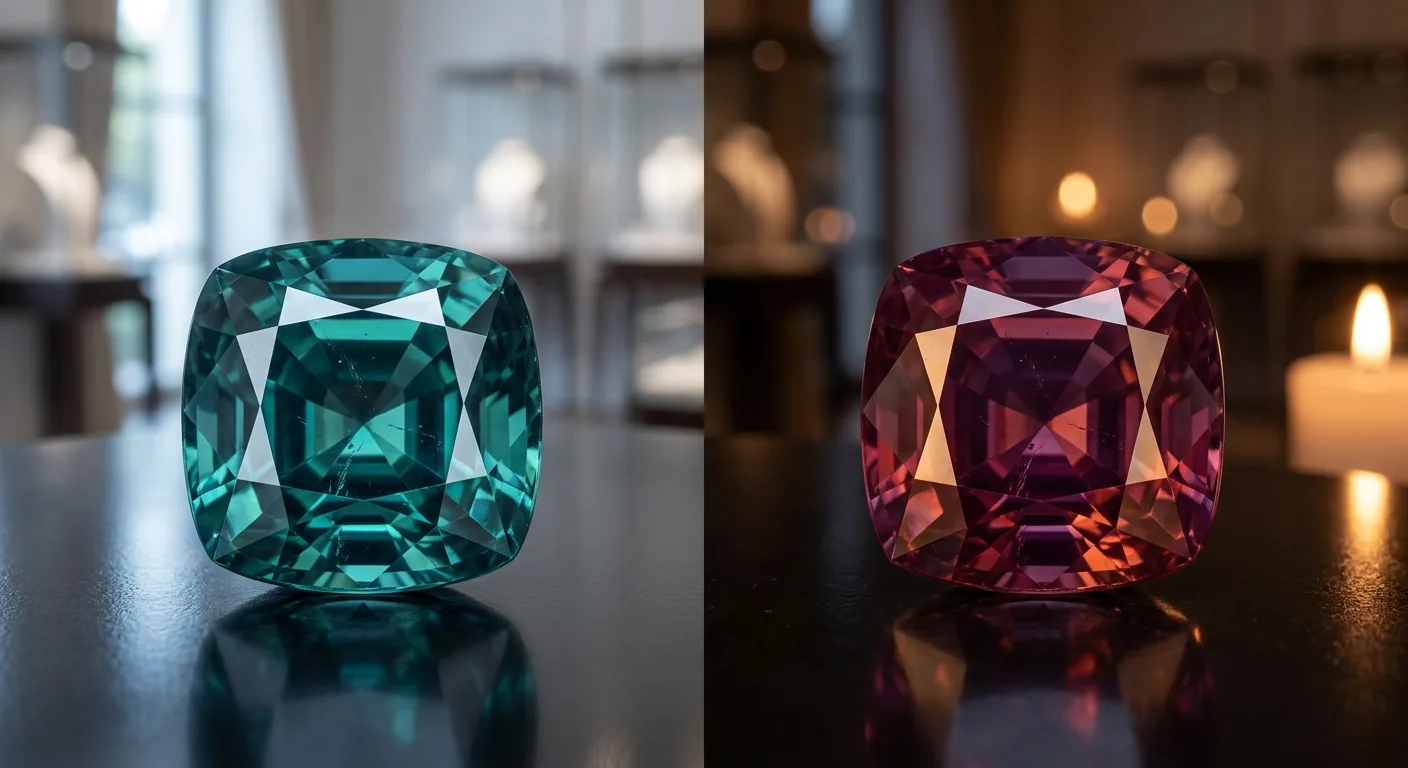
Three stones with almost nothing in common except sharing a birth month. Freshwater pearl: $30 to $200 for quality jewelry pieces. Moonstone (adularescence, that floating blue light effect): $20 to $200 per carat. Alexandrite is the wild card, color-change chrysoberyl that goes from green in daylight to red under incandescent light. Sri Lankan sapphire is our main sourcing territory; alexandrite we have bought exactly once, and we explain why. Fine quality: $500 to $5,000+ per carat. June is genuinely the most flexible month if someone wants options.
Month-by-Month Detailed Guide (Jul-Dec)
The second half of the year covers some of the most valuable stones in the market, and a few massively underrated ones worth knowing about.
July: Ruby
Red corundum, Mohs 9, one of the four precious gemstones. Fine Burmese ruby with unheated "pigeon blood" red: $3,000 to $30,000+ per carat. That's not a typo. Commercial heat-treated ruby: $100 to $800 per carat, which is a completely different product. Ceylon ruby from Sri Lanka tends toward pinkish-red with strong transparency, $500 to $3,000 per carat, and in our experience it offers significantly better value than Burmese for buyers who aren't chasing auction records.
August: Peridot and Spinel
Peridot is yellow-green olivine formed deep in the Earth's mantle, delivered to the surface by volcanic activity. It also arrives via meteorite, which is a fun fact that works well in conversation. Mohs 6.5 to 7. Price: $30 to $200 per carat for quality material. Spinel was added to the August list in 2016 and it's the one we're genuinely excited about. Mohs 8, excellent durability, vivid reds, pinks, blues, and violets. Sri Lankan spinel is still priced well below sapphire and ruby of comparable color. That gap will close eventually.
September: Sapphire
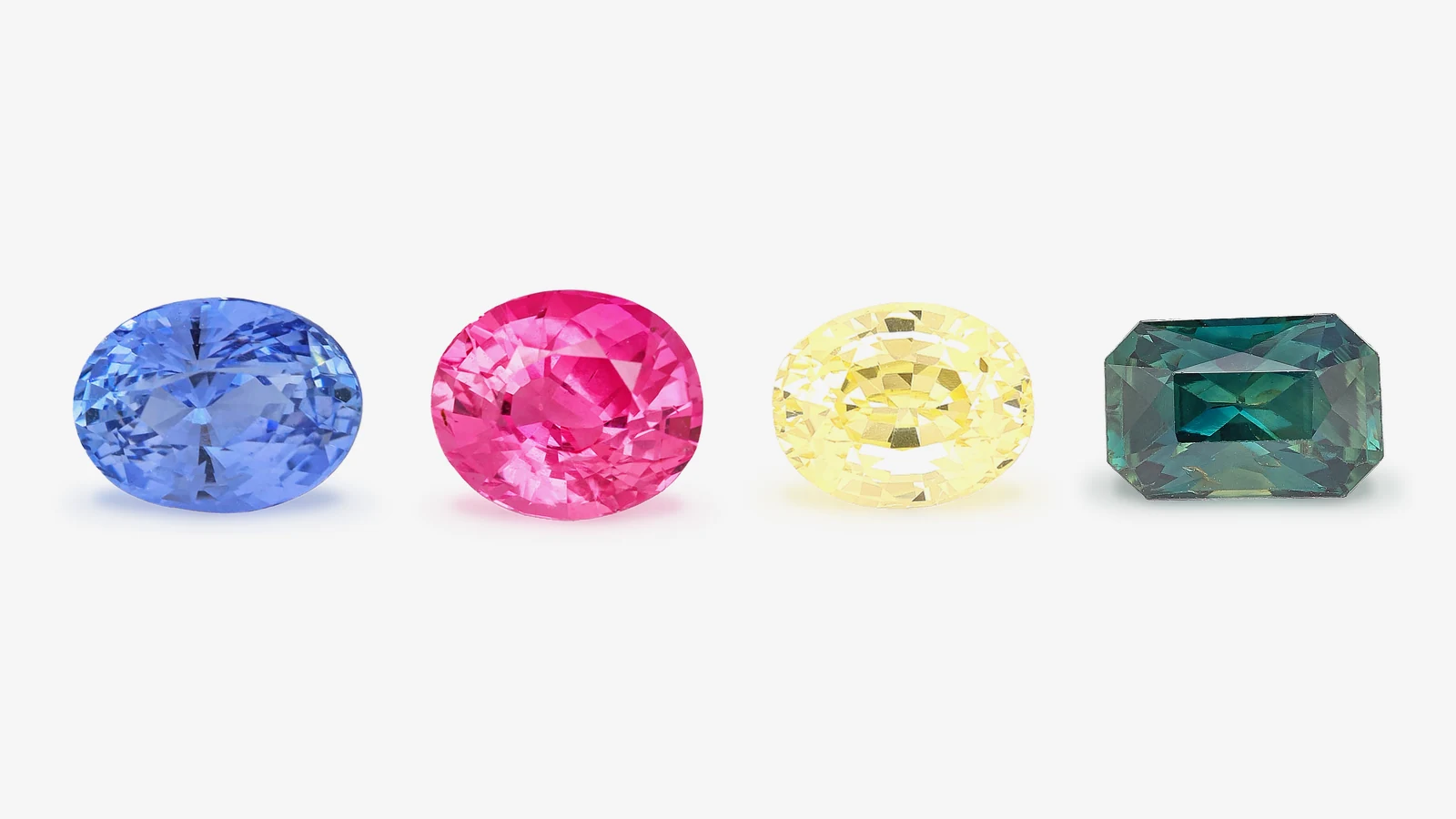
Corundum, Mohs 9, the most universally recognized colored birthstone. The tradition never specified blue, and sapphire in fact comes in twelve colors. The color range goes from pale ice blue to deep royal blue. Ceylon cornflower blue is the benchmark, $400 to $3,000 per carat heated, $600 to $5,000+ unheated with GIA origin certificate. Kashmir and Burma command 3 to 10x premiums for equivalent color. We source Ceylon sapphire directly and can tell you that the unheated material at the $800 to $1,500 per carat range represents some of the best value in colored stones right now.
October: Opal and Tourmaline
Opal's play-of-color is unlike anything else in gemmology. Mohs 5.5 to 6.5, needs a protective bezel or halo setting for daily rings. Black Lightning Ridge opal: $500 to $10,000+ per carat. Ethiopian opal: $50 to $500 per carat, more accessible and increasingly popular. Tourmaline has the widest color range of any gemstone, full stop. Watermelon tourmaline shows green and pink in a single crystal. Paraiba tourmaline, neon blue-green from copper traces, is one of the rarest gems in the world: $3,000 to $50,000 per carat for the best material.
November: Topaz and Citrine
Imperial topaz, pink-orange, from Brazil's Ouro Preto mines specifically, is genuinely beautiful and underappreciated: $500 to $3,000 per carat for fine material. Blue topaz is $5 to $40 per carat and everywhere. Citrine (yellow quartz): $10 to $50 per carat. One thing worth knowing: most commercial citrine sold today is heat-treated amethyst, not natural citrine. Both are real quartz, but natural citrine is rarer than the market suggests.
December: Tanzanite, Turquoise, Blue Zircon
Tanzanite only comes from one place on Earth, a small area near Kilimanjaro in Tanzania. Fine quality: $200 to $1,200 per carat. Turquoise is a minefield. Let's be honest: 90% of what gets sold as turquoise is treated, stabilized, or outright fake. Buy only with a certificate confirming natural, untreated material. Blue zircon is persistently undervalued. Natural blue zircon has exceptional brilliance, real fire, and costs $50 to $200 per carat. Not cubic zirconia, completely different mineral, completely different stone.
December is the crowded month, with tanzanite, turquoise and zircon all laying claim to it. Tanzanite is the one people ask the price of, and our tanzanite price per carat chart lists it by size and colour grade.
The JOALYS Buying Guide: Choosing High-Quality Birthstone Jewelry
Buying a birthstone gift well comes down to three things: knowing the stone, understanding treatment status, and requiring certification for anything above $200.
Color Quality
Color is the primary value driver for every colored gemstone. Vivid, saturated color with no grey or brown masking tones is what you want. Pale, washed-out stones are cheaper but look cheap. Medium-toned stones with strong saturation offer the best balance of price and visual impact. If you can only look at one quality factor, look at color.
Treatment Disclosure
Most colored stones are treated. Heat treatment for sapphire and ruby is standard and accepted. Oiling for emerald is standard and accepted. Dyeing for lower-grade turquoise is deceptive and should be disclosed. Ask directly: "What treatments has this stone received?" If the seller cannot answer clearly, that is a red flag.
Certification
For any stone above $300: GIA, AGL, or Gübelin certificate with online-verifiable report number. The certificate will state origin and treatment status. These two pieces of information are worth far more than any grade label the seller puts on the stone themselves.
Origin and Traceability
Stones from known, reputable origins command premiums for good reason: they are rarer, better documented, and hold value better over time. Ceylon sapphire, Colombian emerald, Burmese ruby with origin certificates are investments as well as jewelry. A stone with no traceable origin is just a stone.
Alternative Birthstone Systems: Beyond the Calendar Month
The 1912 list is not the only way to assign birthstones. Several alternative systems exist and are worth knowing about, especially for buyers interested in personalization beyond the standard.
Zodiac Birthstones
Zodiac assignments use astrological signs rather than calendar months, so someone born on January 15 (Capricorn) gets a different stone than someone born on January 25 (Aquarius). The zodiac list predates the 1912 standardization and uses stones like garnet for Capricorn, amethyst for Aquarius, and bloodstone for Aries. For buyers interested in astrology or historical symbolism, the zodiac list offers a meaningful alternative.
Planetary and Vedic Systems
Jyotish (Hindu astrology) assigns "Navaratna" or nine gems to the nine planetary influences in the birth chart: ruby for the Sun, pearl for the Moon, red coral for Mars, emerald for Mercury, yellow sapphire for Jupiter, diamond for Venus, blue sapphire for Saturn, hessonite for Rahu, and cat's eye for Ketu. This system is taken seriously across South and Southeast Asia and influences significant fine jewelry purchases, particularly in India.
Anniversary Stones
A separate tradition assigns gemstones to wedding anniversaries: ruby for 40 years, sapphire for 45, gold for 50, emerald for 55, diamond for 60. These overlap partially with birthstones but follow their own logic. For anniversary gifts, the anniversary stone list is often more meaningful than the birth month stone.
Quick answers
What is the difference between traditional and modern birthstones?
Why do some months have multiple birthstones?
Are birthstones always one color?
Which birthstones are most durable for everyday wear?
Do I need a certificate when buying a birthstone?
What treatments are standard and which ones are red flags?
Which birth month has the rarest birthstone?
Can I wear a birthstone that isn't my birth month?
Conclusion
The tradition of gemstones by month offers a powerful connection to personal history and symbolism, evolving from ancient protective amulets to sophisticated modern expressions of identity. Selecting the perfect birthstone involves understanding these rich meanings while navigating the nuances between traditional and modern lists and prioritizing essential quality factors like color and durability. This knowledge empowers individuals to choose jewelry that is both beautiful and deeply significant.