Opal Buying Guide: Solid, Doublet or Synthetic? What to Check
What you pay for in an opal, how to read its play-of-color, and the checks to make before you pay. From a stone sourcer who doesn't sell opal.
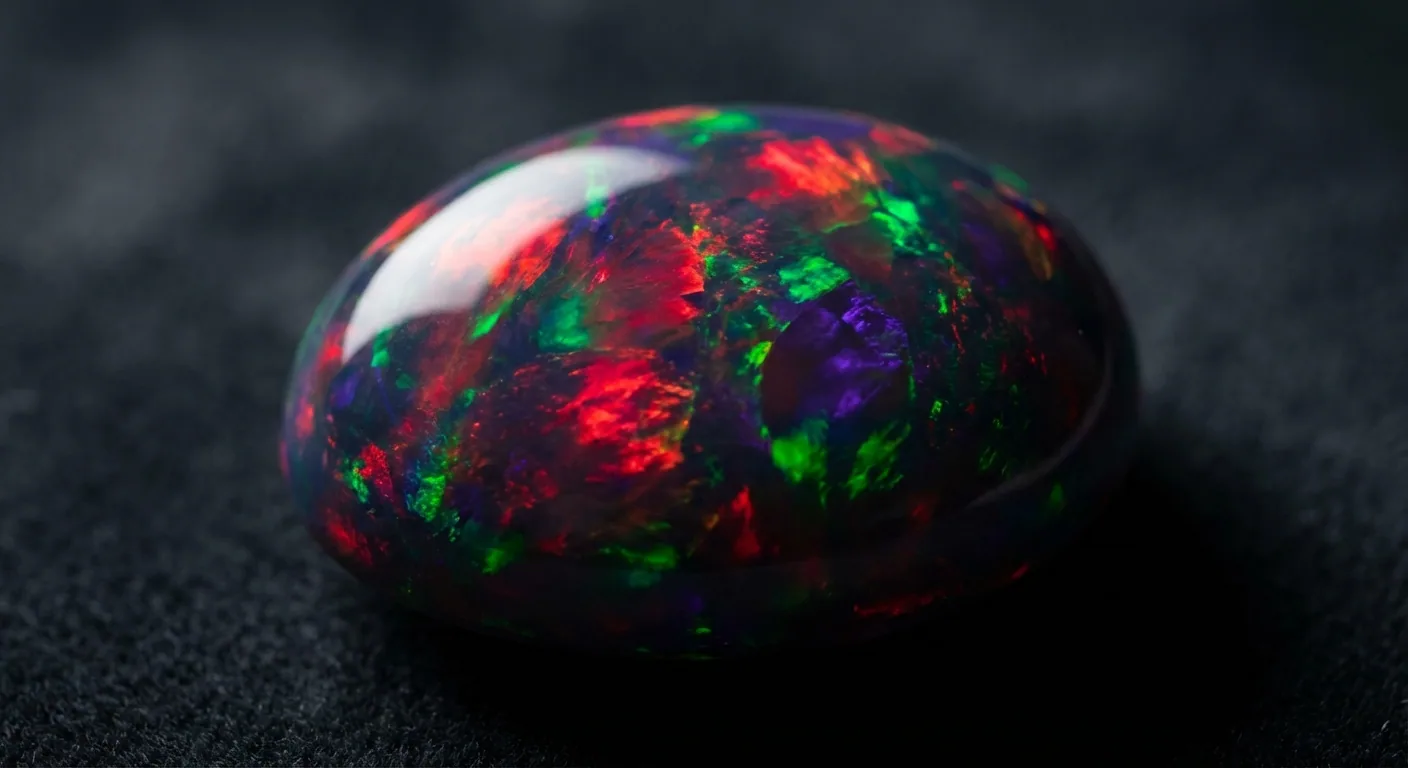
Buy an opal for its play-of-color, then check three things: is it solid or a thin slice glued to a backing, natural or synthetic, and will it crack as it dries? Bright color on a dark background costs the most. At 5 to 6.5 on the Mohs scale, opal suits earrings and pendants better than an everyday ring.
- What it is
- Silica that holds water, usually 3 to 10 percent
- Play-of-color
- Light broken up by tiny stacked silica spheres
- Mohs hardness
- 5 to 6.5
- Toughness
- Very poor to fair
- Most valued
- Black opal: darkest background, red seen from every angle
- Assembled stones
- Doublet (opal slice on a backing), triplet (plus a clear top)
- Main sources
- Australia (black, white, boulder), Mexico (fire), Brazil, Ethiopia
- Cleaning
- Warm, soapy water; never ultrasonic or steam
What are you paying for in an opal?
Not the stone. The light inside it. Precious opal is silica packed into billions of tiny, identical spheres, stacked in rows. That grid breaks white light into flashes of color that move as you tilt it: play-of-color. Common opal, which the trade calls potch, is the same silica in disorder. No flashes.
The background behind the flashes gives the type its name:
- Black opal. A dark background that makes every color look stronger. The most expensive type.
- White opal. A pale background. Most of the opal you will see for sale.
- Crystal opal. See-through, with strong play-of-color.
- Boulder opal. A thin layer of opal cut with its host rock left on the back, which makes it sturdier.
- Fire opal. A yellow, orange or red body, valued with or without flashes.
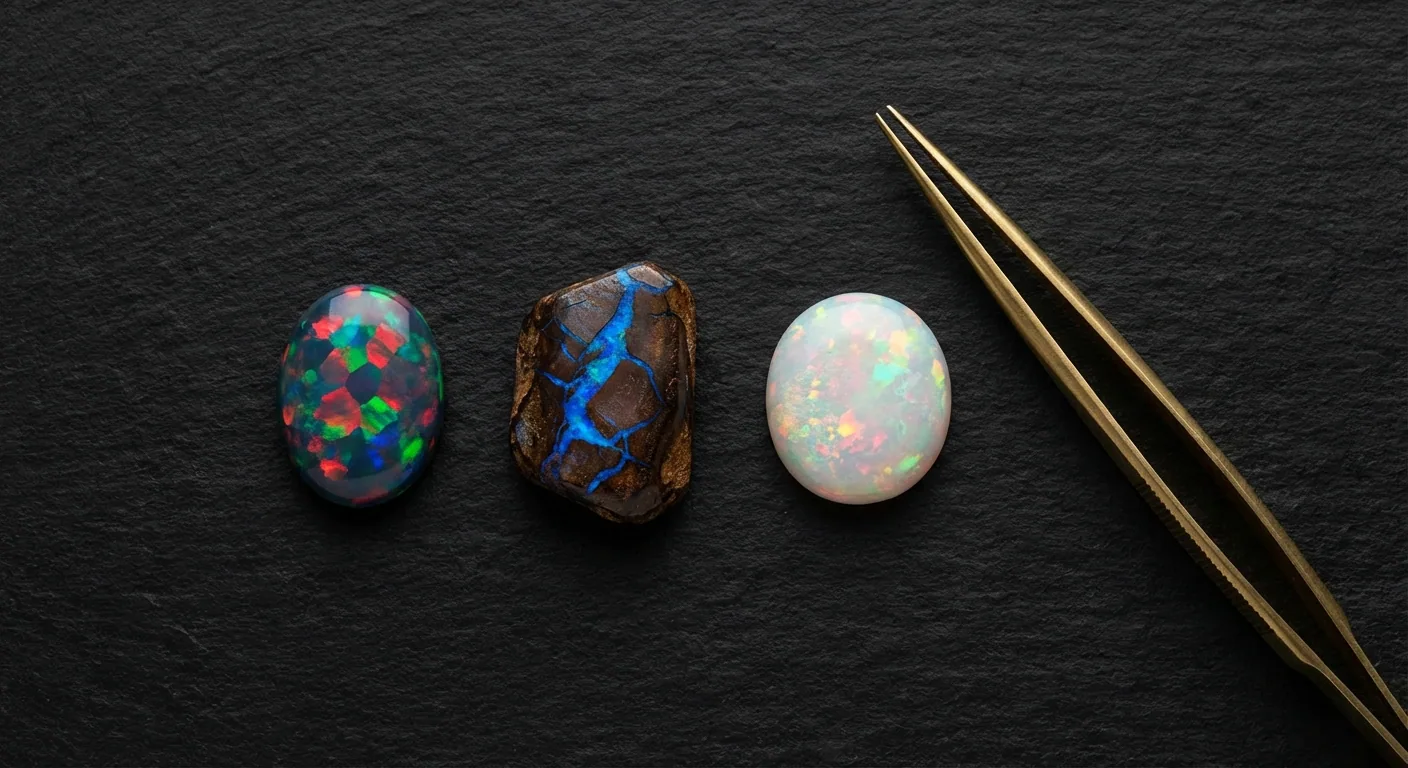
How to tell a good quality opal
Look at it the way the trade does: steady light, a dark background, and turn it slowly.
- How much of the face flashes. More color than background is better. Dead spots that stay dark as you turn it lower the value.
- How strong. Strength comes first, range second. A faint opal showing every color is still a faint opal.
- Which colors. Red is traditionally the top, then orange, then green. A red you see from every angle beats a red you catch from one.
- The pattern. Pinfire is tiny dots. Flash is broad areas. Harlequin, big patches set edge to edge like a mosaic, is extremely rare.
- The background. In black opal, the darker the better. In crystal opal, the clearer the better. A milky, cloudy look lowers the value of any type, and can signal an unstable stone.
Then the shape. A well-rounded dome shows the colors best. A very flat stone can break when it is set.
The rest is your eye. Favorite colors follow fashion, and a beautiful stone is a personal choice: I can't decide for you that it's beautiful.
Solid, doublet or triplet: how to tell
Plenty of the opal on sale is not one stone: triplets are a market staple. Slices too thin to use alone get glued to something else.
| Form | What it is | Seen from the side |
|---|---|---|
| Solid | Opal all the way through | One material, no join |
| Doublet | A thin opal slice on a backing | A flat join, often black cement |
| Triplet | A doublet with a clear dome on top | Two joins, a glassy top |
The backing can be dyed black chalcedony, glass, obsidian, plastic or common opal. The dome is quartz or glass. A well-made triplet can look identical to a fine black opal, because the dark back deepens every color. But it holds only a small share of real opal, and it is worth much less.
So turn the stone on its side. If it is already set, the metal can hide the join: ask to see the back, or buy it loose. An assembled opal is not a fake, as long as it is sold as one. A high price is not the scam. The scam is not knowing what you are buying.
Is it natural, synthetic or an imitation?
Synthetic opal exists, and it is grown with the same stacked spheres, so its play-of-color is real. The tell is the pattern. Under a loupe the color sits in a mosaic of cells, like chicken wire or snakeskin, and from the side it can look columnar. Magnification is what separates it from natural opal.
Imitations give themselves away differently. Glass ones, such as Slocum Stone, flash from foil-like flakes and can hold gas bubbles. Plastic ones feel warm and light in the hand, and they scratch easily.
Then come the treatments that fake a black opal. Smoke and sugar treatments push carbon into a porous opal to darken its background. Look for a speckled look, and for pale opal showing where the surface is chipped: the dark layer is thin. Impregnation with oil, wax or plastic is common too. A surface-treated opal is worth a fraction of a natural one that looks the same. On a stone that matters, ask for a report from an independent outside laboratory.
Under a loupe
The pattern, and the thin dark skin
Two of the checks above are easier with a picture: the mosaic of a synthetic opal, and the thin dark layer of a treated one.
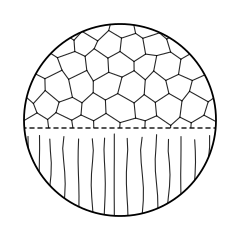
- Mosaic of cells Under magnification the color sits in a mosaic of cells, like chicken wire or snakeskin.
- Columns from the side Seen from the side, it can look columnar.
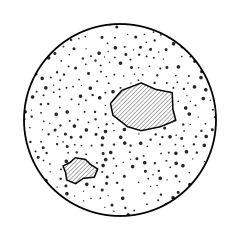
- Speckled look The dark background looks speckled, in fine dots.
- Pale under a chip Where the surface is chipped, whitish opal shows beneath: the dark layer is thin.
Illustration. Simplified drawings of what to look for, not photographs of real stones.
A sign points, it does not prove. Magnification is what separates a synthetic from a natural opal, and a drawing does not replace a laboratory.
Australian or Ethiopian opal: what changes?
Australia produces most of the world's black, white and boulder opal, and Lightning Ridge is the main source of black opal. Most fire opal comes from Mexico. Brazil and Ethiopia supply white opal.
Ethiopia is the one to understand. Opal has come from its Wollo region since the 1990s, and output rose in 2008 with finds near Wegel Tena. Most Ethiopian opal is hydrophane: it soaks up water like a sponge. Soaked, it can turn transparent and its play-of-color can change. Cracks already in the stone can grow. It takes dye just as easily, and some of it is dyed. None of this makes it a bad stone. It makes it a stone you never soak.
One last thing: an opal is not always sold where it was mined. If a seller names a mine, ask how they know. For the wider market, see our colored gemstone market statistics.
Can you wear an opal every day?
With care. Opal rates 5 to 6.5 on the Mohs scale and its toughness runs from very poor to fair: it scratches, and it chips. Tap opal on the map below and compare it with sapphire.
Opal next to stones you know
Hardness is resistance to scratches. Toughness is resistance to chips and breaks. A ring needs both. Opal is selected: tap another stone to compare.
Touch a point to read about the stone.
Opal Mohs 5 to 6.5 · Toughness: Very poor to fair
It can craze if it dries out. Earrings and pendants.
Turquoise Mohs 5 to 6 · Toughness: Generally fair to good
5 to 6 on the Mohs scale. Earrings or a pendant.
Moonstone Mohs 6 to 6.5 · Toughness: Poor, because of cleavage
It has cleavage in two directions. In a ring, a protective setting.
Quartz Mohs 7 · Toughness: Good
Mohs 7 with good toughness.
Emerald Mohs 7.5 to 8 · Toughness: Poor to good
7.5 to 8 on the Mohs scale, but its inclusions make toughness run from poor to good. A ring stone that needs care.
Sapphire Mohs 9 · Toughness: Usually excellent
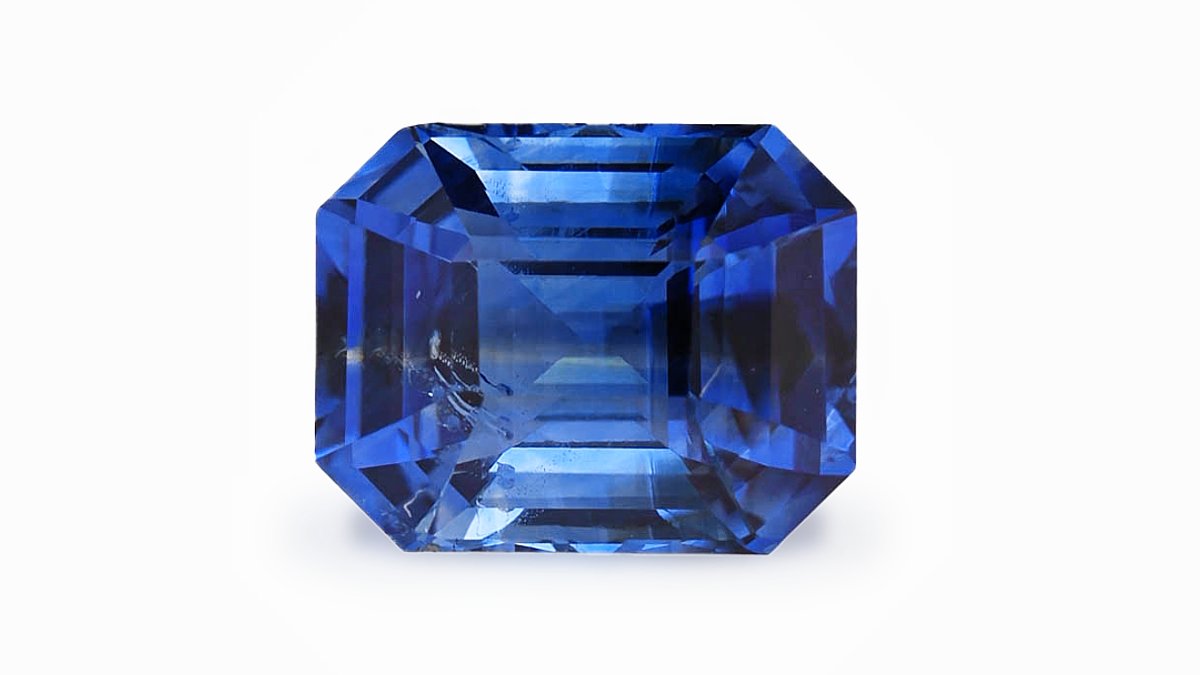
9 on the Mohs scale and usually excellent toughness: an excellent ring stone.
Diamond Mohs 10 · Toughness: Good in the cleavage directions, exceptional in all others
10 on the Mohs scale, harder than any other gem. A hard knock at the wrong angle can still chip it.
| Stone | Mohs | Toughness |
|---|---|---|
| 1OpalIt can craze if it dries out. Earrings and pendants. | 5 to 6.5 | Very poor to fair |
| 2Turquoise5 to 6 on the Mohs scale. Earrings or a pendant. | 5 to 6 | Generally fair to good |
| 3MoonstoneIt has cleavage in two directions. In a ring, a protective setting. | 6 to 6.5 | Poor, because of cleavage |
| 4QuartzMohs 7 with good toughness. | 7 | Good |
| 5Emerald7.5 to 8 on the Mohs scale, but its inclusions make toughness run from poor to good. A ring stone that needs care. | 7.5 to 8 | Poor to good |
| 6Sapphire9 on the Mohs scale and usually excellent toughness: an excellent ring stone. | 9 | Usually excellent |
| 7Diamond10 on the Mohs scale, harder than any other gem. A hard knock at the wrong angle can still chip it. | 10 | Good in the cleavage directions, exceptional in all others |
Points that would overlap are moved apart a little. The exact values are in the table.
Toughness has no number: it is rated in words, and one stone can sit on two lines. Inclusions, fractures or some treatments lower it for any single stone.
Earrings and pendants take less wear than a ring, so they are the safer choice. For a ring, pick a protective setting with metal around the stone. Boulder opal, backed by its own rock, is usually sturdier than other types.
- Warm, soapy water is safe. Ultrasonic and steam cleaners never are.
- Keep it away from high heat and sudden temperature changes: both can crack it.
- Don't store it for long in an airtight box or a safe deposit box. Dryness can make it craze.
Opal holds water, usually 3 to 10 percent. Crazing is the fine web of cracks that appears when it loses some. A crazed opal has little durability in jewelry. Hold the stone up to a light before you buy and look for the web. The rest is in our jewelry care guide.
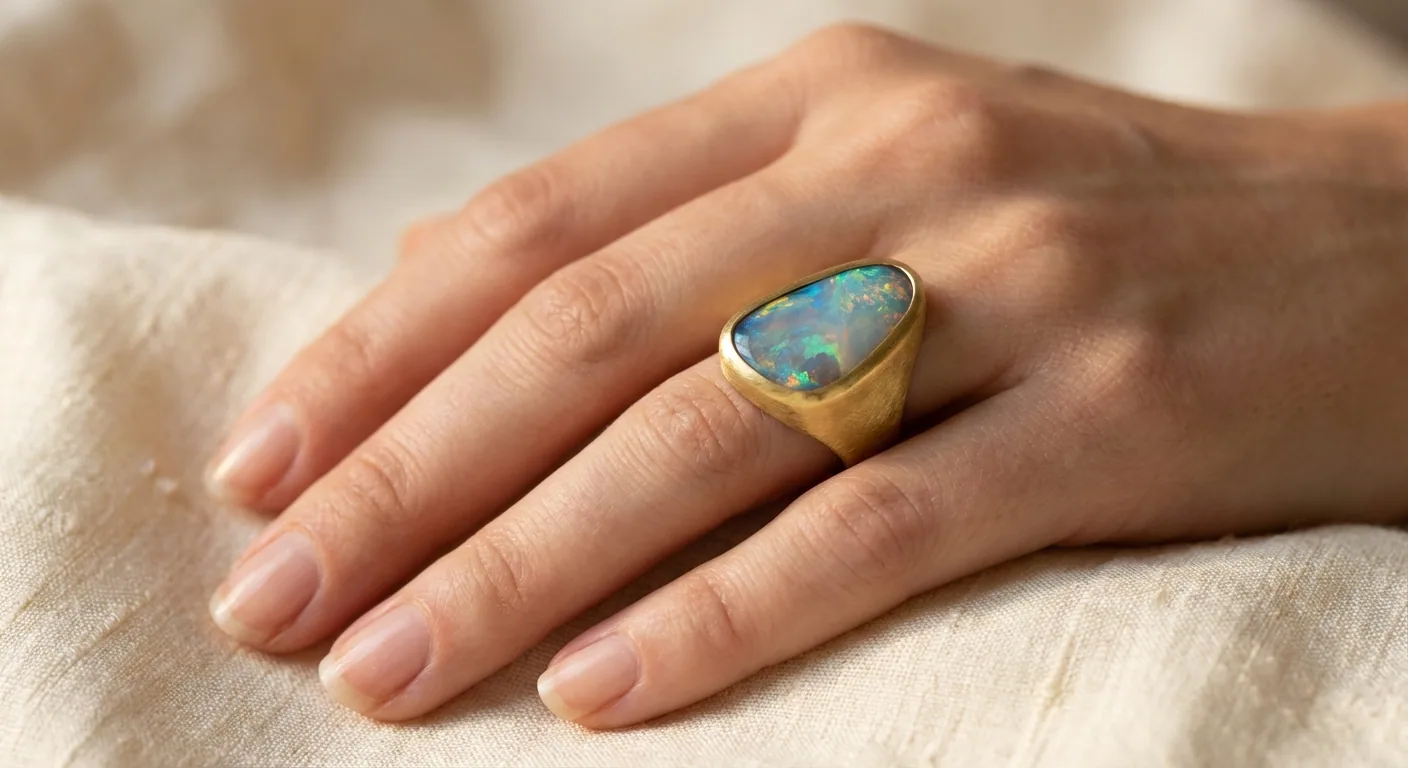
How to buy an opal: five questions for the seller
- Solid, doublet or triplet? Get the answer in writing.
- Natural or synthetic?
- Any treatment? Smoke, sugar, dye, oil, wax or plastic. A seller should disclose every treatment.
- Where was it mined, and how do you know?
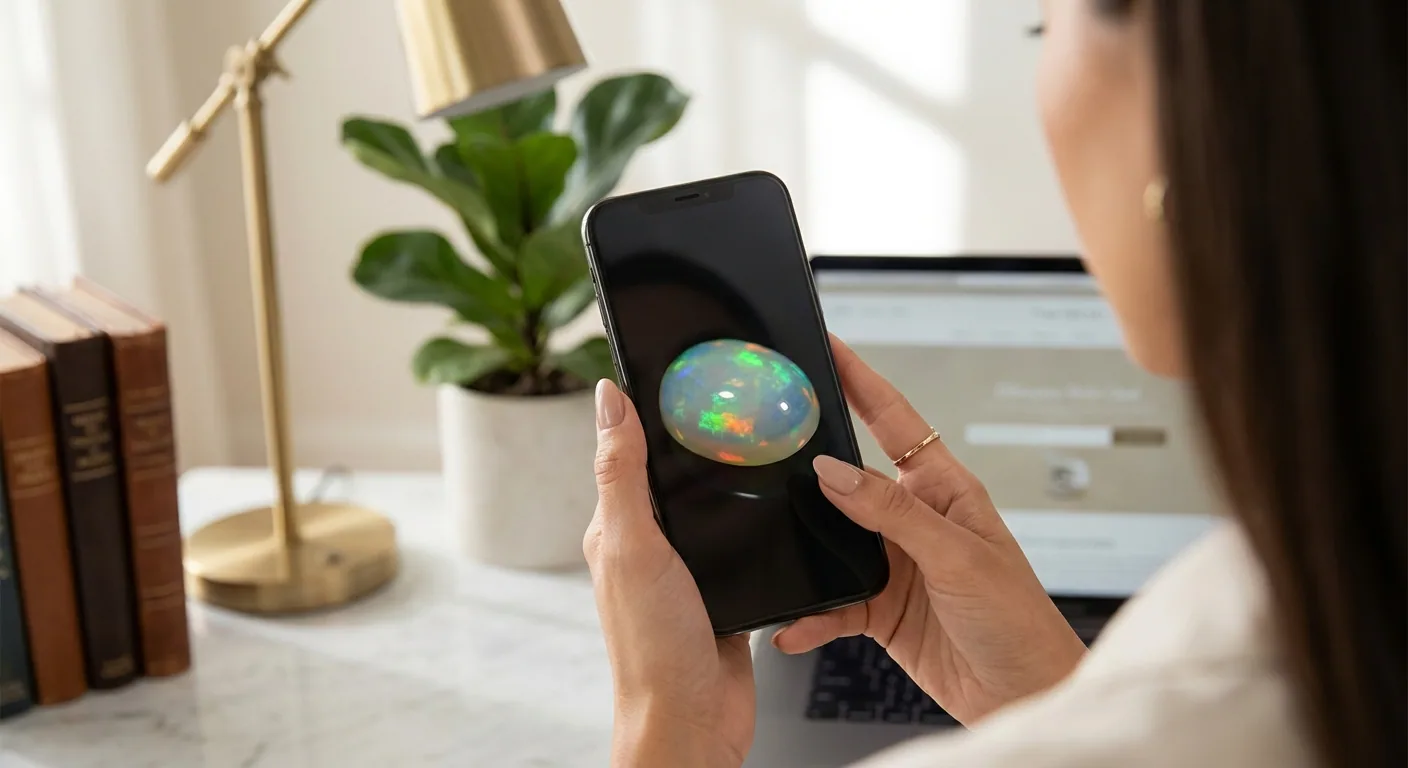
- Can I see a video? The stone turning slowly, against a dark background, under steady light.
Your five questions, ready to send
Tick them as you get answers. The button copies all five, ready to send.
5 points
A message ready to send to the seller, with all the questions.
See the message
Hello, I am interested in this opal. Before I decide, could you answer a few questions in writing?

1. Is it a solid opal, a doublet or a triplet? Could you confirm it in writing?
2. Is it natural or synthetic?
3. Has it had any treatment: smoke, sugar, dye, oil, wax or plastic? Could you list every one in writing?
4. Where was it mined, and how do you know?
5. Could I see a video of the stone turning slowly, against a dark background, under steady light?

Thank you for your time.
The last one matters more with opal than with most stones. Its colors change with the angle and the light, and a still photo freezes one moment. What I see and feel with a stone in my hand is never quite what people see on a screen.
On a stone that matters, add a report from an independent outside laboratory. Here is what a gemstone certificate proves.
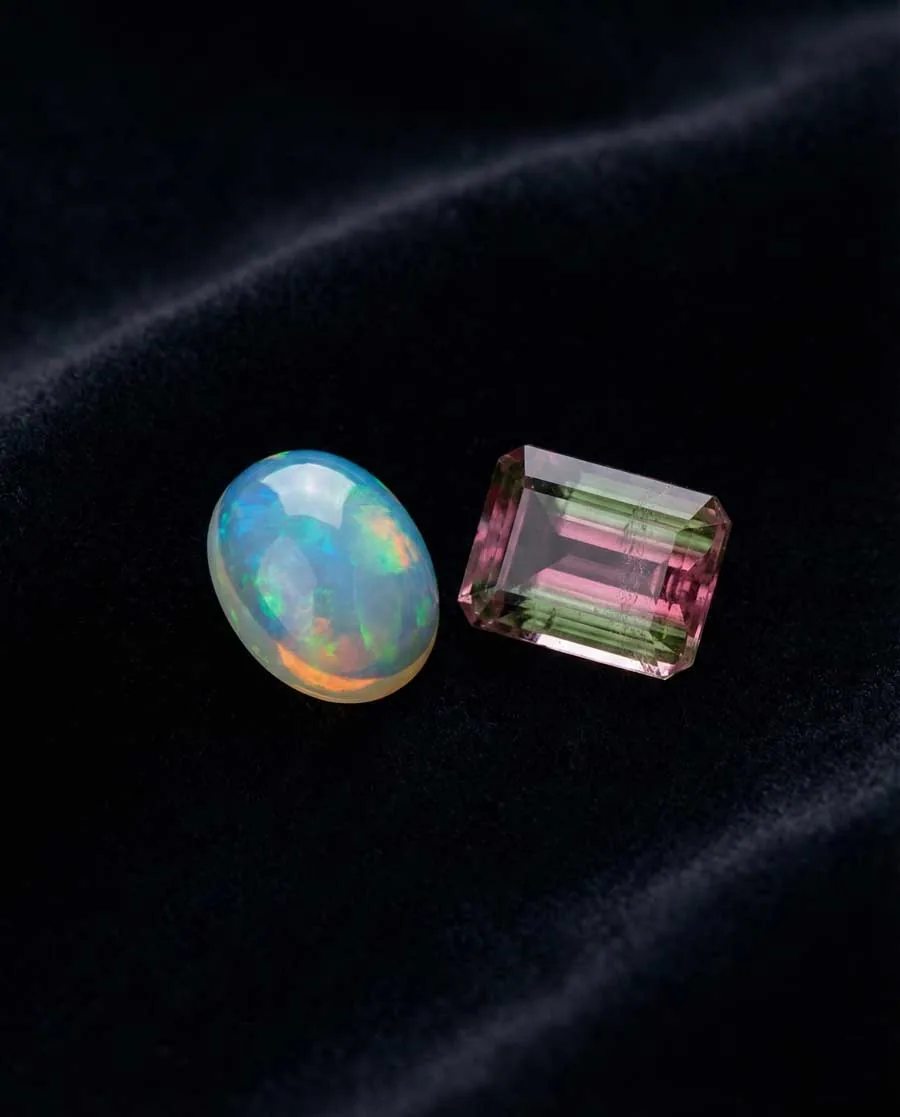
We don't carry opal today, so nothing on this page is trying to sell you one. Our opal page is empty for now, and you can still request a stone. Born in October? Opal shares the month with tourmaline: see our October birthstone guide.
Quick answers
Is opalite real opal?
Are opals bad luck?
Can opals get wet?
Is opal expensive?
The bottom line
Fall for the play-of-color, then check what it sits on. Solid or assembled, natural or synthetic, treated or not: get each answer in writing, and turn the stone on its side before you pay. After that, keep it away from heat, dry boxes and ultrasonic cleaners.