Expert Tourmaline Buying Guide: Find Your Perfect Gem
Unlock the secrets of the 'rainbow gem.' This expert tourmaline buying guide reveals why origin & color saturation are critical for true value. Read now & buy with confidence!
Quick Facts: Tourmaline Buying Guide
| Property | Details |
|---|---|
| Hardness (Mohs Scale) | 7 to 7.5 (Durable for most jewelry with proper care) |
| Primary Value Factor | Color (Saturation is the most important attribute) |
| Price Per Carat | $50 to $50,000+ (Varies extremely by variety and quality) |
| Most Valuable Variety | Paraíba Tourmaline (Neon blue-green due to copper) |
| Key Origins | Brazil, Mozambique, Nigeria, Afghanistan, USA |
| Clarity Standard | Often a Type II or III gem; 'eye-clean' is the benchmark |
| Birthstone Month | October (shared with Opal) |
Introduction
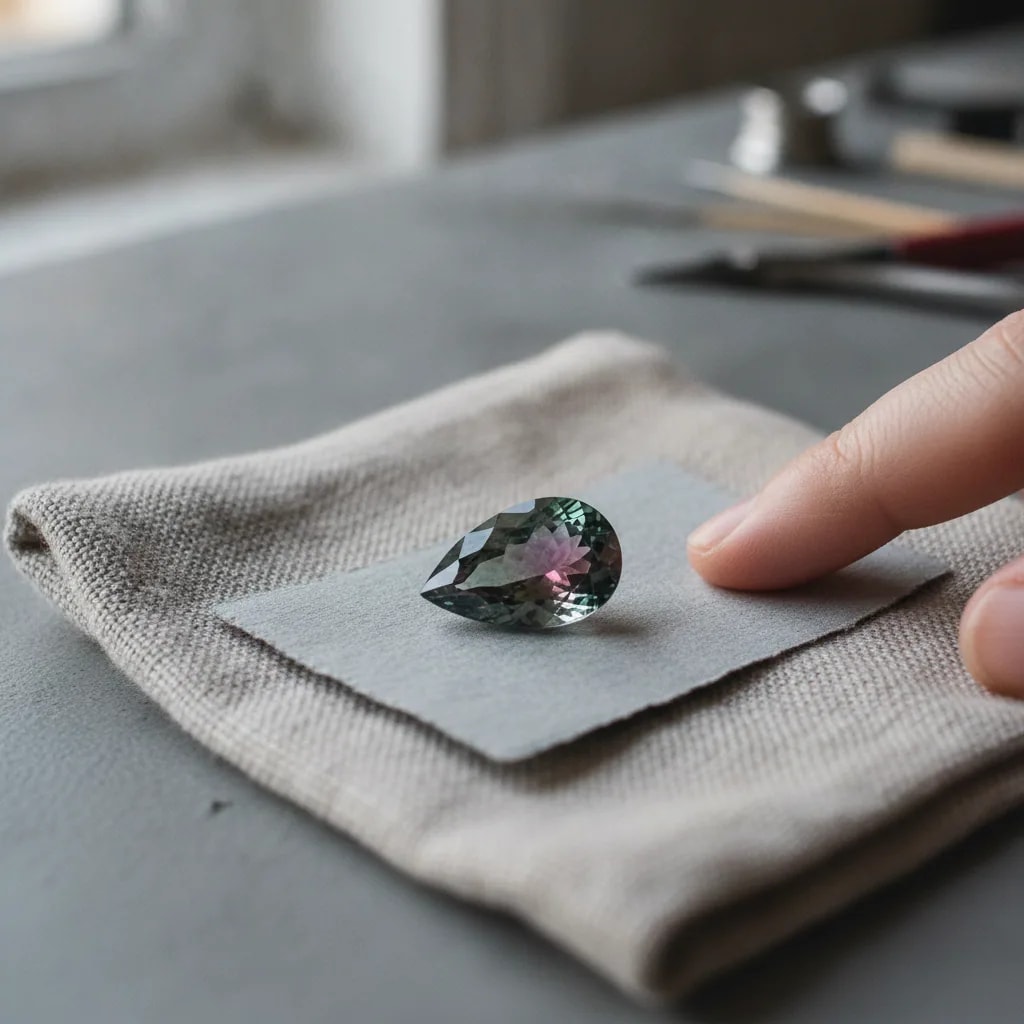
Known as the "gemstone of rainbows," tourmaline is the only gem that naturally occurs in every color imaginable, from electric greens to vibrant pinks.
A tourmaline buying guide provides the essential framework for evaluating this complex gem. It focuses on the critical value factors beyond the 4Cs, such as color saturation, origin (especially for Paraíba), and clarity type, ensuring a confident and informed purchase.
Unlike a diamond's standardized grading, tourmaline's value is a nuanced art. A stone’s geographic origin can alter its price by over 500%, and subtle differences in hue can mean the difference between a common stone and a collector’s masterpiece. Understanding these distinctions is the key to acquiring true value. But how can a non-expert spot the difference?
Why Choose Tourmaline? The Chameleon of Gemstones
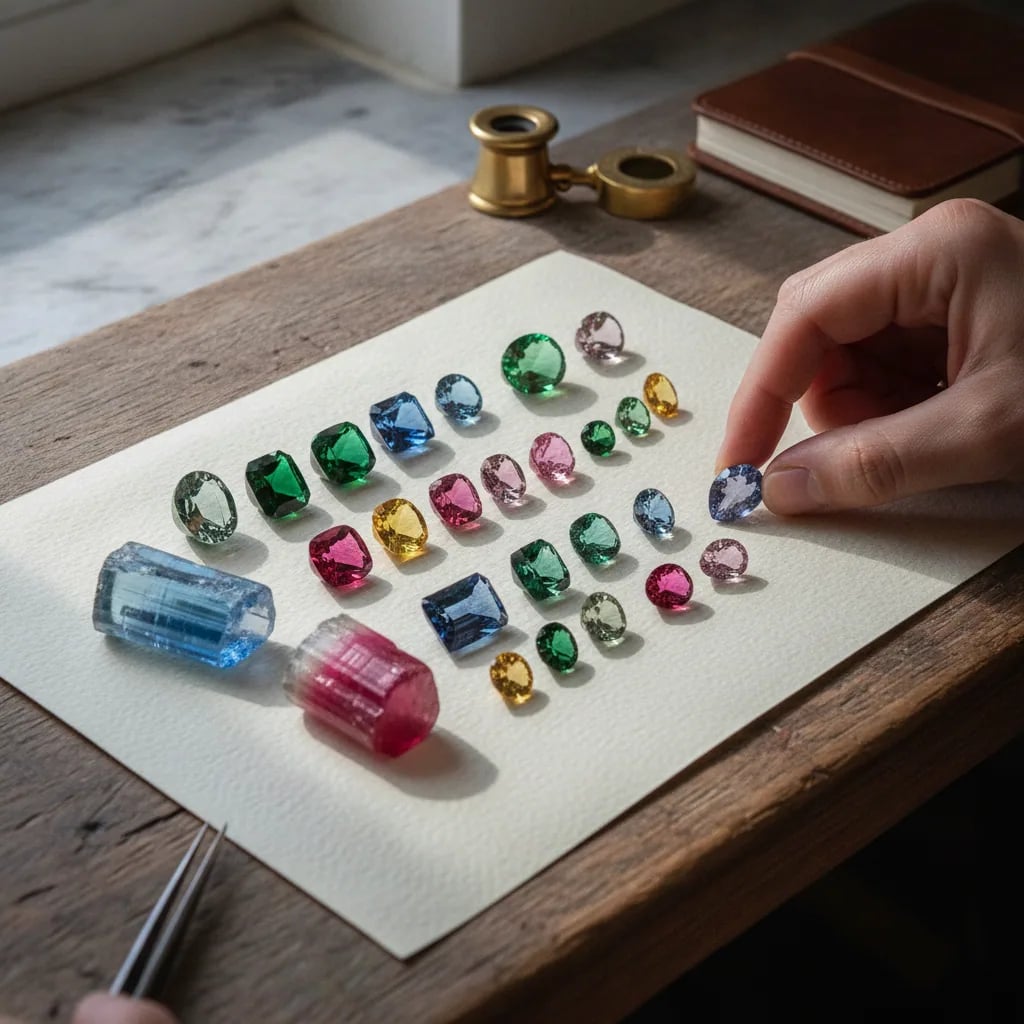
Tourmaline stands alone in the gem world for its astonishing range of colors. Often called the "chameleon of gemstones," it is one of the few minerals that can be found in every hue, from rich reds and pastel pinks to deep blues and vibrant emerald greens. This unmatched versatility makes it a premier choice for those seeking a gem that truly reflects personal style.
A Spectrum of Possibilities
The sheer diversity of tourmaline allows for unparalleled creative expression in jewelry. Its spectrum includes rare and coveted varieties like the electric blue Paraíba and the deep red Rubellite. As the modern October birthstone, it offers a colorful and durable alternative to opal, appealing to a wide range of tastes. This vast palette ensures that a tourmaline exists for nearly any design or preference.
For those seeking to explore this gem's full potential, a curated selection is the best place to start. Browse a collection of certified tourmalines to find the perfect hue.
Durability for Everyday Luxury
Beyond its beauty, tourmaline is a practical choice for fine jewelry. With a rating of 7 to 7.5 on the Mohs scale of hardness, it is a resilient gemstone suitable for daily wear. While not as hard as a sapphire, it is more robust than gems like emerald, making it an excellent option for engagement rings and other frequently worn pieces that require a balance of beauty and durability.
Evaluating Quality: Beyond the Standard 4Cs
While the 4Cs (Color, Clarity, Cut, and Carat) provide a universal framework for gemstone evaluation, their hierarchy of importance shifts dramatically for colored stones like tourmaline. Unlike diamonds, where a flawless clarity grade and precise cut can define value, a tourmaline's quality is overwhelmingly dictated by the richness and beauty of its color. A nuanced understanding of these specific value factors is essential for any serious buyer.
Color: The Undisputed King of Value
Color is the single most important quality factor for tourmaline, often accounting for over 70% of its final value. Gemologists assess tourmaline color based on three distinct attributes:
Hue: This refers to the primary color of the stone, such as blue, green, or pink. The most valuable hues are pure and distinct, without significant secondary tones.
Tone: This describes the color's lightness or darkness. The ideal tone is typically in the medium range, allowing the stone to appear vibrant. Tones that are too light can look washed out, while those that are too dark can appear inky or blackish, obscuring the color.
Saturation: This is the purity or intensity of the color. High saturation, often described as "vivid" or "electric," is the most prized characteristic. A stone with strong saturation will appear brilliant and lively, commanding a significantly higher price than a stone with a grayish or brownish cast.
Clarity: A Practical Classification
Inclusions are a natural part of a gemstone's formation. The Gemological Institute of America (GIA) classifies colored gemstones into three types based on their typical clarity. Most tourmaline varieties fall into the Type II or Type III categories, meaning some inclusions are expected and accepted, even in high-quality specimens.
GIA Clarity Type | Typical Inclusions | Common Tourmaline Examples |
|---|---|---|
Type II | Often contain minor, visible inclusions. | Rubellite, Indicolite, Paraíba |
Type III | Almost always contain visible inclusions. | Watermelon Tourmaline, some red tourmalines |
The benchmark for fine tourmaline is "eye-clean," meaning no inclusions are visible to the naked eye from a normal viewing distance (approximately 15 centimeters). This standard is more practical than the microscopic flawlessness demanded for diamonds and acknowledges the unique nature of colored gems. A beautiful stone with minor inclusions is often more valuable than a flawless stone with weak color. This practical approach is also applied to gems like emeralds and rubies.
Cut and Carat: Maximizing Beauty and Rarity
The primary goal of a tourmaline's cut is to maximize its color and brilliance. Expert lapidaries will orient the rough stone to showcase its most saturated hue and minimize any color zoning or undesirable pleochroism (the appearance of different colors from different angles). For this reason, elongated shapes like emerald cuts and ovals are common, as they enhance the depth of color.
Carat weight impacts value, but its effect is magnified by quality. For common tourmaline, the price per carat increases modestly with size. However, for exceptionally rare and vividly colored varieties like Paraíba or top-grade Rubellite, the price per carat can escalate exponentially. A three-carat Paraíba with electric color can be worth many times more per carat than a one-carat stone of similar quality, reflecting its extreme rarity. This price behavior is similar to that of other top-tier colored gems, such as fine sapphire.
The Tourmaline Family: A Guide to Varieties & Origins
The term "tourmaline" refers not to a single gemstone, but to a complex group of minerals. Different trace elements within its crystal structure give rise to distinct, named varieties, each with its own unique market and value factors. For a discerning buyer, understanding the difference between a common pink tourmaline and a fine Rubellite, or a standard green tourmaline and a rare Chrome tourmaline, is paramount. Origin plays a critical role, particularly for the most coveted varieties where provenance can dramatically influence price.
Paraíba Tourmaline: The Rarest of Them All
Discovered in the 1980s in the Brazilian state of Paraíba, this variety is famed for its vivid, electric blue-to-green glow that seems to emanate from within. This unique luminescence is caused by the presence of copper, an element not found in other tourmalines. The extreme rarity of the original Brazilian material has made it one of the most valuable gemstones in the world.
In the early 2000s, similar copper-bearing tourmalines were discovered in Mozambique and Nigeria. While chemically almost identical, the market still places a significant premium on stones with certified Brazilian origin due to their historical significance and perceived color saturation.
Attribute | Brazilian Paraíba | African (Mozambique/Nigeria) |
|---|---|---|
Trace Element | Copper and Manganese | Copper and Manganese |
Typical Colors | Intense, saturated neon blue, violet-blue, and green-blue | Broader range, including lighter tones and some green hues |
Rarity | Extremely rare, especially in sizes over one carat | More readily available in larger sizes |
Market Value | Highest premium; prices can exceed those of fine diamonds | High value, but generally priced lower than Brazilian material |
For those seeking the unparalleled glow of a copper-bearing tourmaline, expert verification of origin is crucial. Consult a gemological specialist to navigate the complexities of Paraíba certification and sourcing.
Rubellite: The Vibrant Red & Pink Rival to Ruby
Not every red or pink tourmaline earns the title of Rubellite. This prestigious designation is reserved for specimens that display a highly saturated, vivid purplish-red, red, or pink color. Critically, a true Rubellite maintains its rich color under various lighting conditions, unlike lesser tourmalines that can appear brownish or washed out. Its intense hue and brilliance make it a compelling and often more accessible alternative to a fine ruby.
Indicolite & Chrome: The Alluring Blues & Greens
Among the other prized tourmaline varieties, two stand out for their exceptional color:
Indicolite: The name given to blue tourmaline, ranging from light grayish-blue to deep, rich blues that can rival the color of a fine sapphire. The most valuable Indicolites possess a pure, highly saturated blue hue without green secondary tones.
Chrome Tourmaline: A specific and rare variety of green tourmaline colored by chromium and vanadium, the same elements that give emeralds their color. Found primarily in Tanzania, its pure, intense green is more saturated than that of standard green tourmalines (known as Verdelite) and is highly sought after by collectors.
Decoding Tourmaline Prices & Investment Value
Tourmaline prices exhibit one of the widest ranges in the gemstone world, from accessible ornamental stones to investment-grade specimens that rival the value of top-tier gems. This variation is driven primarily by the rarity of a specific variety, followed by the intensity of its color, its origin, and its clarity. Understanding these factors is essential for making an informed purchase.
Price-Per-Carat: A Spectrum of Value
Unlike the more standardized pricing of a diamond, tourmaline value is highly nuanced. A fine Paraíba tourmaline can command prices over one hundred times higher than a common green or pink tourmaline of the same size. The following table provides a general overview of market price ranges, which can fluctuate based on market demand and specific stone characteristics.
Tourmaline Variety | Quality Tier | Estimated Price Per Carat (USD) |
|---|---|---|
Green Tourmaline (Verdelite) | Good Commercial Quality | $50 - $300 |
Rubellite Tourmaline | Fine Quality (Eye-Clean, Vivid) | $400 - $2,500+ |
Indicolite (Blue) Tourmaline | Fine Quality (Vivid, Well-Cut) | $350 - $2,000+ |
Paraíba Tourmaline (African) | Fine Quality (Neon Glow) | $2,000 - $15,000+ |
Paraíba Tourmaline (Brazilian) | Top Gem Quality (Exceptional Color) | $10,000 - $70,000+ |
These figures illustrate how color saturation and origin create exponential value jumps. A top-quality Rubellite can approach the per-carat price of a fine ruby, while Brazilian Paraíba occupies a pricing tier of its own, driven by extreme scarcity.
Investment Potential and Market Trends
For investment purposes, gemologists focus exclusively on the rarest and finest examples of tourmaline. The most significant appreciation in value is seen in untreated, certified Brazilian Paraíba tourmalines over two carats, as well as exceptionally large and vivid Rubellites and Chrome tourmalines. The investment potential of these stones is tied to their finite supply and growing recognition among collectors.
While beautiful, common varieties of tourmaline are not typically considered investment assets. Their value is primarily aesthetic. An investor-grade tourmaline must possess a combination of exceptional color, high clarity, a certified origin (where applicable), and a significant carat weight. This level of quality ensures its desirability and long-term value retention, much like a fine sapphire or emerald.
Frequently Asked Questions
Conclusion
This tourmaline buying guide demonstrates that a confident purchase hinges on understanding value factors beyond the 4Cs. Color saturation, clarity type, and geographic origin are the true determinants of a tourmaline's quality and rarity. Armed with this knowledge, any buyer can distinguish an ordinary stone from a true investment-grade gem.
Putting this expertise into action is the final step. The journey to acquiring the perfect tourmaline is best realized through a transparent, stone-first approach. At Joalys, this begins when you select your certified tourmaline from a curated collection of exceptional stones. The gem is delivered in a luxury authentication case for your private inspection, giving you the freedom to design your custom setting whenever you are ready. For those seeking bespoke advice on rare varieties like Paraíba or Rubellite, speak with an expert gemologist to secure a stone of exceptional character.