Tanzanite Buying Guide: Color, Grades, Prices and What to Avoid
Tanzanite is 1000x rarer than diamond. Our expert buying guide demystifies quality beyond "AAAA" grades, focusing on color, clarity & certification. Learn to invest wisely.
Tanzanite Quick Facts
| Property | Details |
|---|---|
| Primary Source | Merelani Hills, Tanzania (single source worldwide) |
| Key Value Driver | Color (deep, saturated violet-blue is most valuable) |
| Hardness (Mohs) | 6.5 (fair; best for pendants or occasional-wear rings) |
| Clarity Standard | Type I Gemstone (should be free of eye-visible inclusions) |
| Common Treatment | Gentle heating is a standard, accepted practice to enhance color |
| Grading | Seller grades (e.g., AAAA) are not official; insist on a lab certificate (GIA, etc.) |
| Price Per Carat | Approx. $300 - $1,500+ (varies greatly with color and size) |
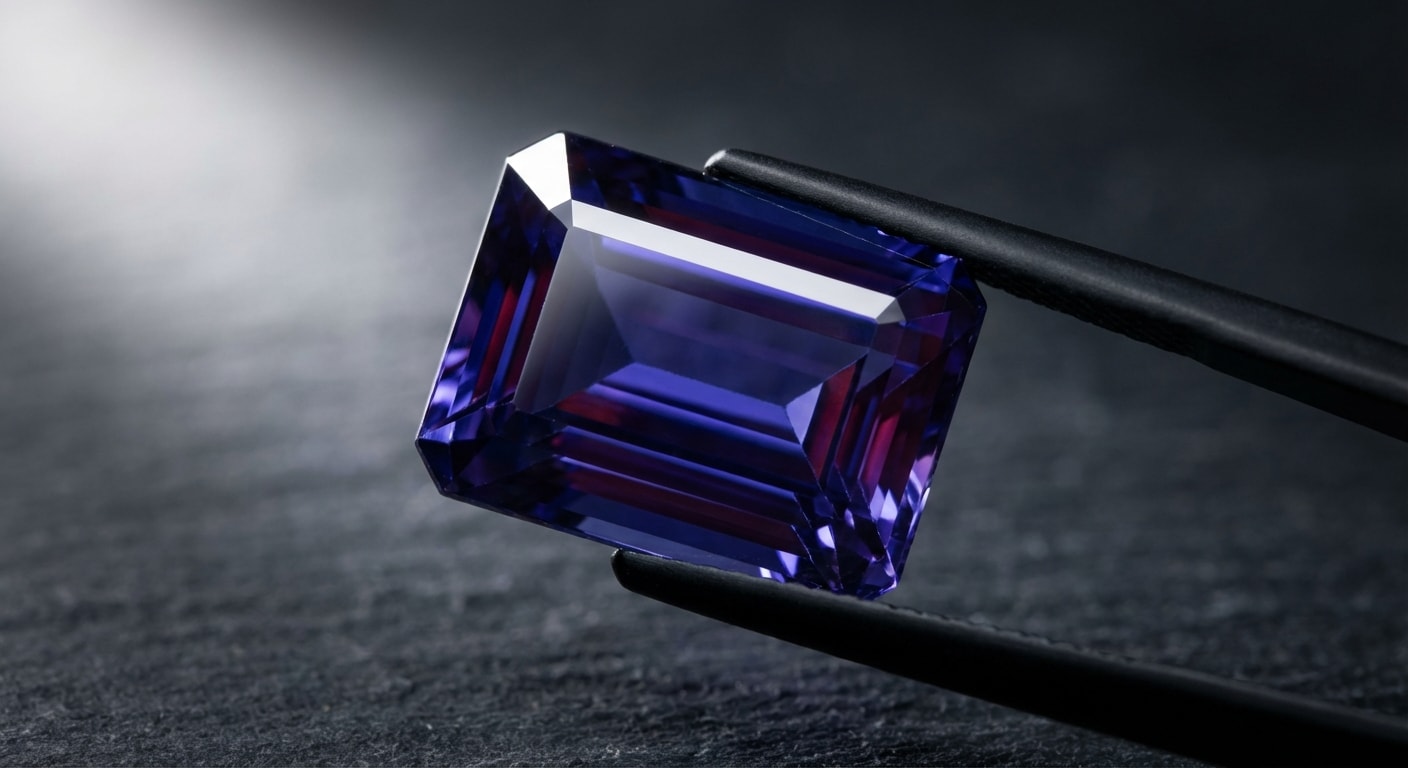
Introduction
Tanzanite was discovered in 1967. One location on Earth, the foothills of Mount Kilimanjaro in Tanzania. That is it. No other deposit has ever been found anywhere else in the world. Geologists estimate the remaining reserves will be exhausted within 20 to 30 years.
We personally find tanzanite one of the most compelling buys in colored stones right now, not just for its beauty but because the supply situation is real and verifiable. Every year the mines go deeper, extraction costs rise, and fine material becomes rarer. This guide covers how to evaluate quality, understand pricing, avoid the grading system confusion, and buy with confidence.
Updated March 2026.
Tanzanite Buying Guide: 4-Step Blueprint
The 4 Cs of Tanzanite (Where Color is King)
Color is everything with tanzanite. More than any other factor, it determines value. Here is what to look for.
Tanzanite Buying Guide — Everything You Need to Know. Video: GIA — Gemological Institute of America.
The Blue-Violet Balance
Tanzanite's signature is its trichroism: it shows blue, violet, and burgundy depending on the viewing angle. The most prized stones show a strong blue with violet secondary tones in normal lighting, and shift toward a more vivid violet under incandescent light. That color shift is what makes a great tanzanite hypnotic to look at.
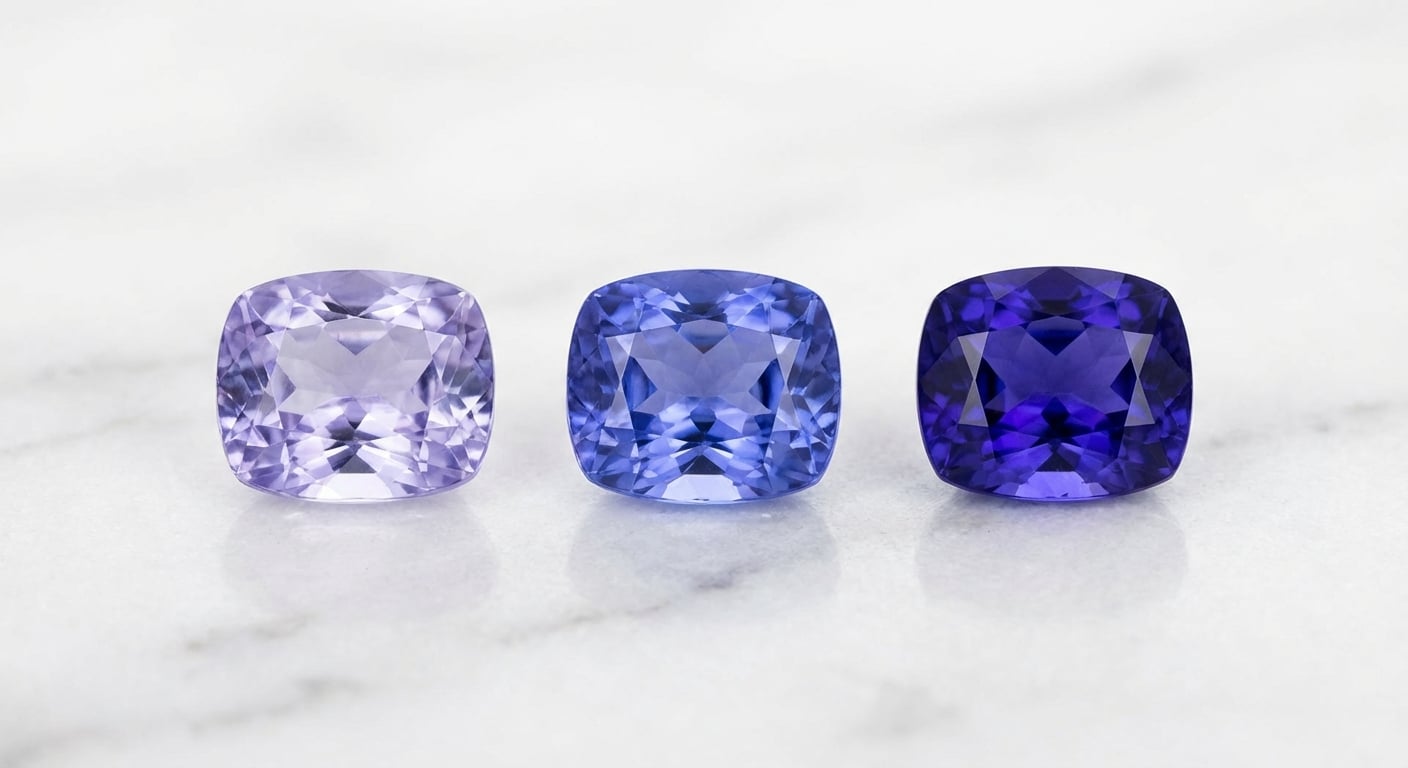
Top-grade material is described as "velvety" blue-violet with high saturation and no grey or brown masking tones. Those grey and brown tones are what cheap tanzanite looks like. Nice in photos, flat and dead in person.
Saturation and Tone
Medium to medium-dark tone is the sweet spot. Too light: the stone looks washed out. Too dark: it loses its glow in low light. The ideal piece looks vibrant both in bright daylight and under a restaurant's warm lighting. If you can only view it under a jeweler's lamp, ask to take it to a window.
Size and Color Depth
Tanzanite under 1 carat tends to look pale regardless of grade. The color really opens up at 2 carats and above. This is not a bias, it is physics: the stone needs depth to saturate. Budget tanzanite earring studs in 0.5 ct will always look lighter than the photos suggest.
Decoding Tanzanite Price & "AAAA" Grades
Here is the thing about tanzanite grading: there is no universal standard. Unlike diamonds, no internationally recognized body (GIA, AGL) has issued a standardized color grading scale for tanzanite. Every seller uses their own system.
"AAAA" from one dealer equals "AAA" from another. "Investment grade" means nothing legally. "Top color" is entirely subjective. This is not a scam exactly, it is just an unregulated market that benefits sellers who can inflate grade labels without accountability.
What Actually Matters
Forget the letter grades. Evaluate the stone visually using the criteria above: saturation, tone, absence of grey/brown, color shift quality. Then ask for an independent lab certificate if you are spending more than $500.
Real Price Ranges (March 2026)
Commercial quality (pale, slight grey): $50 to $150 per carat. Good quality (solid blue-violet, clean): $200 to $500 per carat. Fine quality (vivid, strong saturation): $500 to $1,200 per carat. Top color, large stones (3 ct+, exceptional saturation): $1,200 to $3,000+ per carat.
These are retail prices. Wholesale runs 40 to 60% lower. If someone offers you "top quality tanzanite" at $80 per carat, it is not top quality.
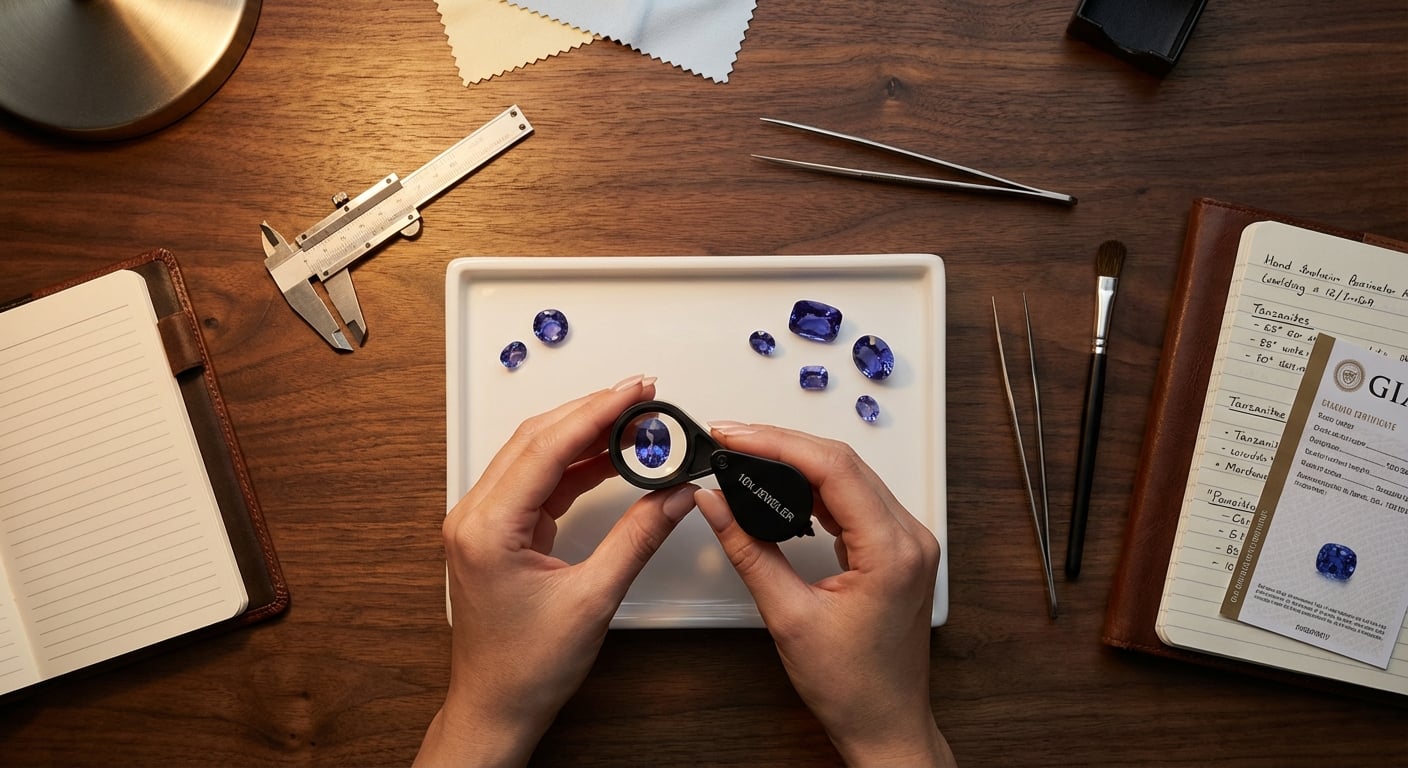
Certification: Your Unshakeable Proof of Authenticity
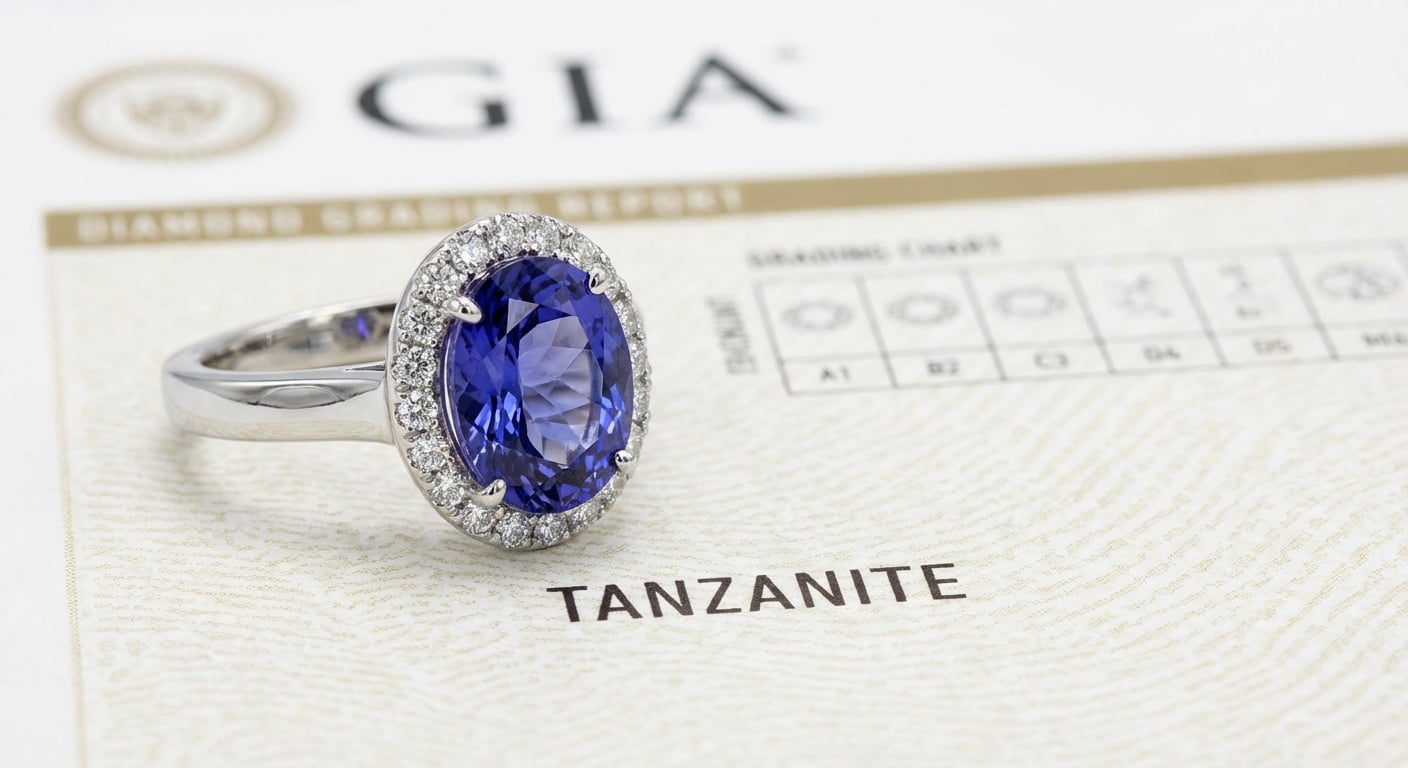
For any tanzanite purchase above $300, get an independent certificate. Not a certificate from the seller. An actual third-party lab report.
Which Labs to Trust
GIA (Gemological Institute of America) issues colored stone reports for tanzanite including origin confirmation and treatment disclosure. AGL (American Gemological Laboratories) is excellent for colored stones and provides detailed origin and treatment reports. Both are internationally recognized and verifiable online.
A certificate does three things for you: confirms it is actually tanzanite and not iolite or blue glass, discloses whether it has been heated (most tanzanite is heat-treated to bring out the blue-violet, this is standard and acceptable, but must be disclosed), and gives you an independent color and quality assessment without the seller's financial interest in the answer.
The Heat Treatment Question
Almost all tanzanite on the market has been gently heated to 600 degrees Celsius. Raw tanzanite is typically brownish, and heating removes the brown mask to reveal the blue-violet. This is industry-standard, universally accepted, and does not significantly affect value. What matters is that it is disclosed. Unheated tanzanite exists but is extremely rare and commands a premium for collector interest, not because it looks better.
The Merelani Miracle: A Gemstone of a Generation
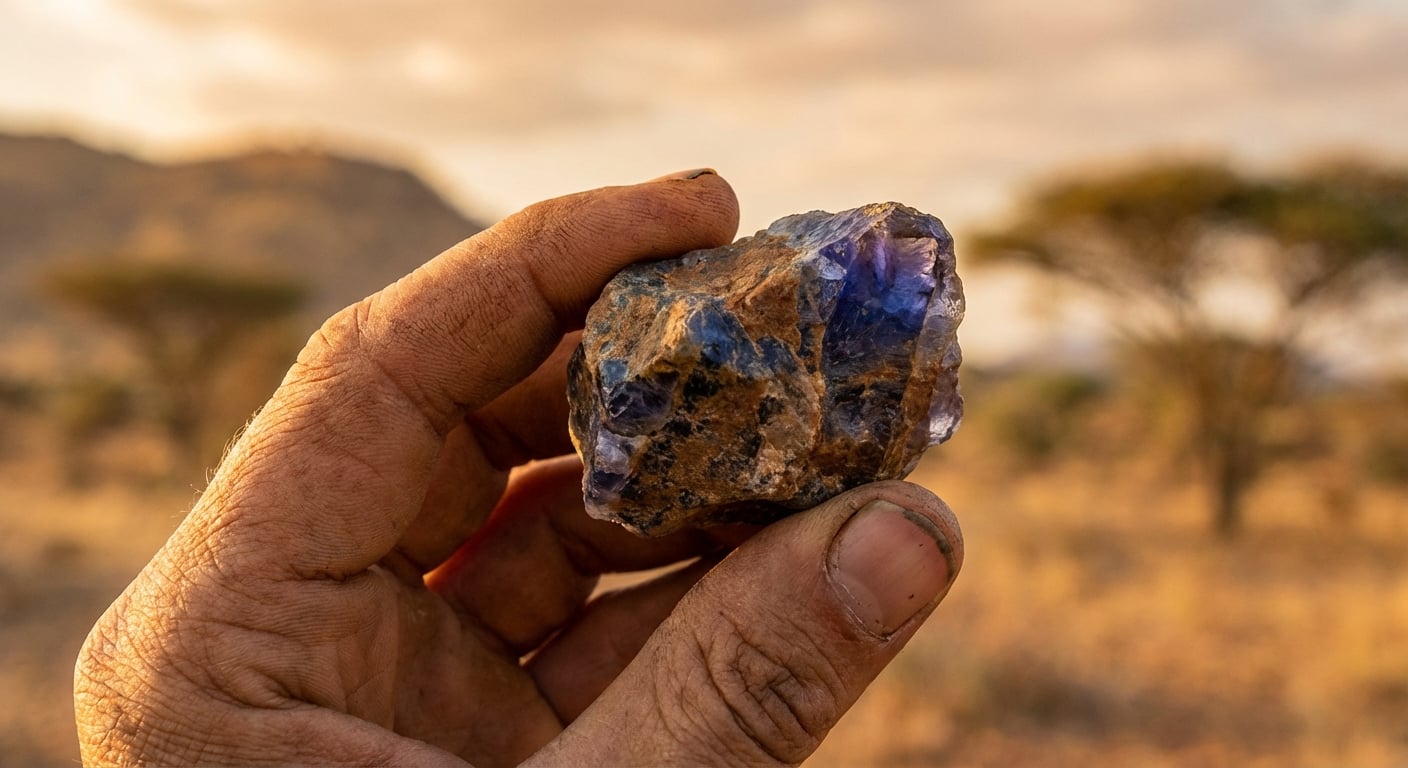
Every tanzanite on the planet came from a 7-kilometer strip of land near Arusha, Tanzania. That is not marketing. That is geology. The specific pressure, heat, and mineral conditions that created tanzanite simply did not occur anywhere else in the Earth's history, at least nowhere accessible to us.
The mines are divided into blocks. Block D, operated by TanzaniteOne, has historically produced the finest material. Block C produces large volumes of commercial grade. Block B is largely exhausted. Knowing which block a stone came from is difficult for most buyers, but a reputable dealer who sources directly from Tanzania can tell you.
Why Rarity Matters Now
We have been watching tanzanite pricing for years. Fine material above 3 carats has increased roughly 15 to 20% annually since 2020. The mines are not getting shallower. Production costs are rising. When the deposit eventually exhausts, there will be no new supply ever. Tanzanite you buy today will almost certainly be worth more in 10 years, assuming you buy actual quality and not commercial grade dressed up with inflated letter grades.
Living with Your Tanzanite: A Practical Guide to Care
Tanzanite is Mohs 6.5 to 7, softer than sapphire or ruby, and it has cleavage in one direction, meaning a sharp blow at the right angle can split it. That sounds scary. In practice, tanzanite held in a protective bezel setting and treated with basic care lasts generations.
Daily Wear
Fine for earrings, pendants, and occasional-wear rings. For a daily ring worn while typing, gardening, or cooking, a bezel or halo setting that protects the edges is strongly recommended. Avoid exposing tanzanite to sharp impacts, ultrasonic cleaners, or sudden temperature changes.
Cleaning
Warm water, mild dish soap, soft brush. That is all you need. No steam cleaners. No ultrasonic unless your jeweler has specifically confirmed the stone has no fractures and the setting is solid. Store separately from harder stones like diamonds and sapphires that will scratch the surface over time.
Basic rule: treat it like you would a fine watch. Not fragile, but worth being thoughtful about.
Frequently Asked Questions
Conclusion
A successful tanzanite acquisition hinges on three core principles: prioritizing deep, saturated violet-blue color, demanding an independent gemological certificate for verification, and appreciating the gem's single-source rarity. This knowledge transforms a buyer from a spectator into a confident connoisseur, capable of selecting a truly exceptional stone.
With the insights from this tanzanite buying guide, the next step is exploration. Joalys offers a distinct approach to acquiring these rare gems, beginning when you select your certified tanzanite from an exclusive collection. The stone is delivered first in a luxury authentication case for your inspection, giving you the freedom to design your custom setting only when you are completely ready. For personalized guidance through this process, speak with a Joalys gemologist to find the perfect generational treasure.