Expert Tanzanite Buying Guide: Unlock Its True Value
Tanzanite is 1000x rarer than diamond. Our expert buying guide demystifies quality beyond "AAAA" grades, focusing on color, clarity & certification. Learn to invest wisely.
Tanzanite Quick Facts
| Property | Details |
|---|---|
| Primary Source | Merelani Hills, Tanzania (single source worldwide) |
| Key Value Driver | Color (deep, saturated violet-blue is most valuable) |
| Hardness (Mohs) | 6.5 (fair; best for pendants or occasional-wear rings) |
| Clarity Standard | Type I Gemstone (should be free of eye-visible inclusions) |
| Common Treatment | Gentle heating is a standard, accepted practice to enhance color |
| Grading | Seller grades (e.g., AAAA) are not official; insist on a lab certificate (GIA, etc.) |
| Price Per Carat | Approx. $300 - $1,500+ (varies greatly with color and size) |
Introduction
Discovered less than 60 years ago in a single location on Earth, tanzanite is over a thousand times rarer than diamond. Owning one is possessing a fleeting geological miracle.
This tanzanite buying guide provides expert criteria for evaluating a stone's quality, value, and authenticity. It focuses on the critical factors of color saturation, clarity, certification, and the unique characteristics that determine a gem's investment potential and beauty.
Navigating the world of tanzanite presents unique challenges. Unlike diamonds, its quality is not universally standardized, leaving buyers to decipher seller-specific grades like "AAAA". Understanding the subtle differences between a good stone and a truly exceptional one is the key to a wise investment. But how can a buyer be certain they are seeing the gem's true potential?
The 4 Cs of Tanzanite (Where Color is King)
While the familiar "4 Cs" framework, Color, Clarity, Cut, and Carat Weight, it provides a universal standard for gemstone evaluation, for tanzanite, one factor reigns supreme. Color is not just the most important characteristic; it is the very soul of the gem, dictating over half of its market value. A comprehensive tanzanite quality guide begins and ends with an appreciation for its extraordinary hue.
Color: The Heart of Tanzanite's Value
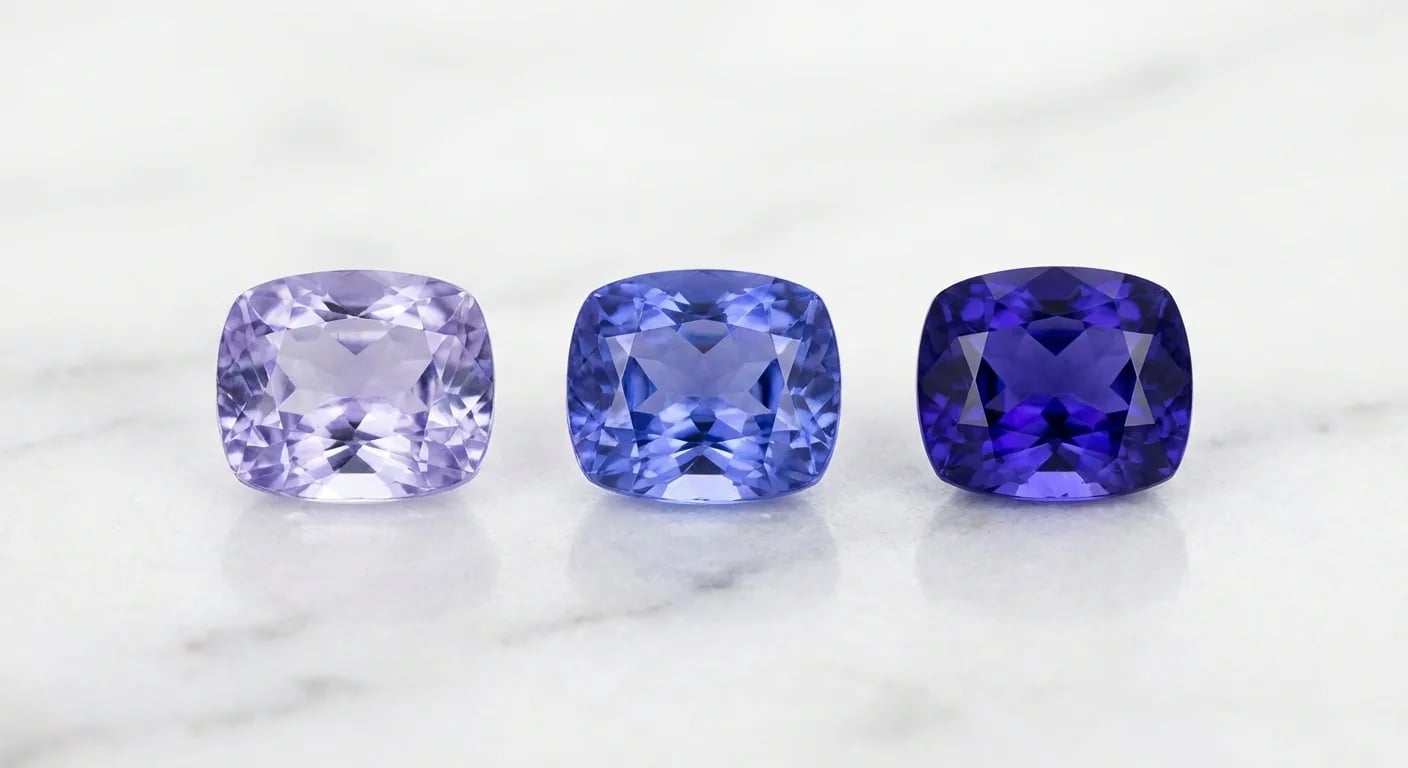
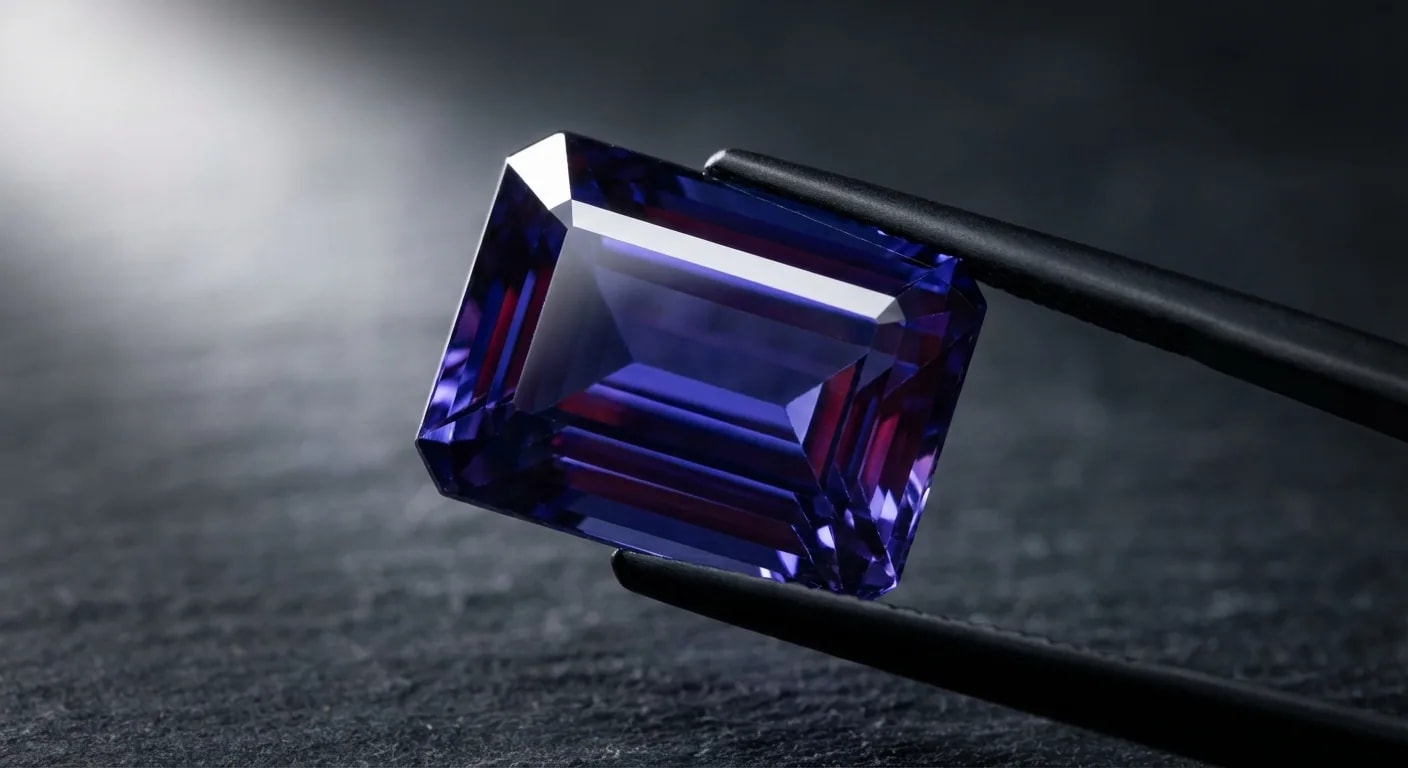
The most coveted tanzanite displays a deeply saturated, velvety violet-blue. This singular appearance is a result of three distinct components working in harmony:
Hue: This refers to the balance between blue and violet. While personal preference plays a role, the market's highest valuation is for stones with a dominant blue component (e.g., 60-80% blue) complemented by a rich violet.
Tone: This describes the color's lightness or darkness. An ideal tone is medium-dark, rich enough to showcase deep color without being so dark that it appears black or inky in low light.
Saturation: This is the intensity and purity of the color. Low-saturation stones can appear grayish or washed out, while high-saturation tanzanite is vivid and electric. This is the single most critical driver of value.
A unique optical phenomenon called pleochroism is essential to understanding tanzanite's color. It means the gemstone can display different colors when viewed from different directions and typically blue, violet, and a reddish-brown or burgundy along its different crystal axes. An expert gem cutter will orient the rough stone to showcase the vibrant violet-blue axis face-up, a skill that separates an average gem from a spectacular one. This complexity is unlike the more singular hue of a fine sapphire, making the cutter's job paramount.
Clarity, Cut, and Carat Weight
While color is the hero, the other three Cs are critical supporting characters that affirm a tanzanite's quality.
Clarity The Gemological Institute of America (GIA) classifies tanzanite as a Type I gemstone, meaning it is typically "eye-clean" in nature. This sets a high standard for buyers.
Clarity Standard | Expectation for Tanzanite | Impact on Value |
|---|---|---|
Eye-Clean | No inclusions visible to the naked eye at 6 inches. | This is the minimum standard for investment-grade stones. |
Included | Flaws (crystals, feathers, etc.) are visible. | Significantly decreases value and can impact durability. |
Unlike gems such as emerald, where inclusions are often accepted as part of the stone's character, any visible flaw in a tanzanite is considered a detriment.
Cut A precision cut unlocks the tanzanite’s brilliance and pleochroism. The goal is to maximize the face-up color and light return while retaining as much carat weight as possible. Poor cutting can lead to "windows" (lifeless, transparent areas) or an orientation that displays undesirable brownish tones.
Carat Weight As with other precious gems like diamond or ruby, tanzanite's price per carat increases exponentially with size. This is because large, gem-quality rough crystals with top-tier color saturation are exceptionally rare. A single 5-carat tanzanite of the highest quality is far more valuable than five 1-carat stones of the same grade.
Understanding these quality factors is the first step toward making a confident purchase. For those ready to see how color, clarity, and cut unite in exceptional examples, a curated selection offers the best education. Explore a collection of certified tanzanite gemstones to see the standard for fine quality.

Decoding Tanzanite Price & "AAAA" Grades
Understanding a tanzanite's price and the common grading systems used in the market is the second critical step for any prospective buyer. Unlike the standardized pricing models for commodities, gemstone valuation is a nuanced art, especially for a gem as rare as tanzanite. The market is also filled with proprietary grading terms that can be confusing, making objective knowledge your most powerful tool.
Tanzanite Price Per Carat: What to Expect
The price of tanzanite is not linear; it increases exponentially based on the quality of its color and its carat weight. A one-carat stone is not simply half the price of a two-carat stone. As carat size increases, the rarity of top-quality rough material skyrockets, driving the per-carat price significantly higher. The most dramatic price jumps occur when a stone crosses key weight thresholds (e.g., 3 carats, 5 carats, and 10 carats) and possesses exceptional color saturation.
While market prices fluctuate, a general framework can provide a baseline for what to expect.
| Quality Tier | Color Characteristics | Typical Price Per Carat (USD) |
|---|---|---|
| Commercial Grade | Lighter tones, lower saturation with noticeable gray or brownish modifiers. | $100 - $350 |
| Fine Quality | Good saturation, medium tones, pleasing violet-blue appearance. | $400 - $750 |
| Exceptional/Investment | Intense, deeply saturated violet-blue, often with a dominant blue hue. | $800 - $1,500+ |
It is important to note that a top-tier tanzanite can command a price comparable to other precious gems. While it may be more accessible than a fine sapphire of the same size, its value is firmly established among connoisseurs who appreciate its unique beauty and extreme rarity.
The Truth About "AAAA" Quality
Many buyers encounter terms like "AAAA" or "AAA" when shopping for tanzanite and assume they are official, standardized grades. This is a common and critical misconception. These letter-based systems are internal quality scales created by individual sellers to categorize their own inventory. They are marketing tools, not gemological standards.
There is no universally accepted "AAAA" grade from an independent authority like the Gemological Institute of America (GIA). One seller's "AAAA" might be another's "AAA." Relying solely on these terms can be misleading. The only objective assessment of a gemstone's quality comes from a report issued by a respected gemological laboratory. This distinction is crucial for any significant purchase, from tanzanite to a classic ruby or emerald.
| Grading System | Origin | Purpose | Reliability |
|---|---|---|---|
| Seller Grades (AAAA, AAA) | Created by an individual retailer. | Internal inventory sorting and marketing. | Subjective and inconsistent between sellers. |
| Lab Reports (GIA, AGL) | Independent, third-party scientific laboratories. | To provide an objective, factual identity and quality assessment. | The global standard for verification and trust. |
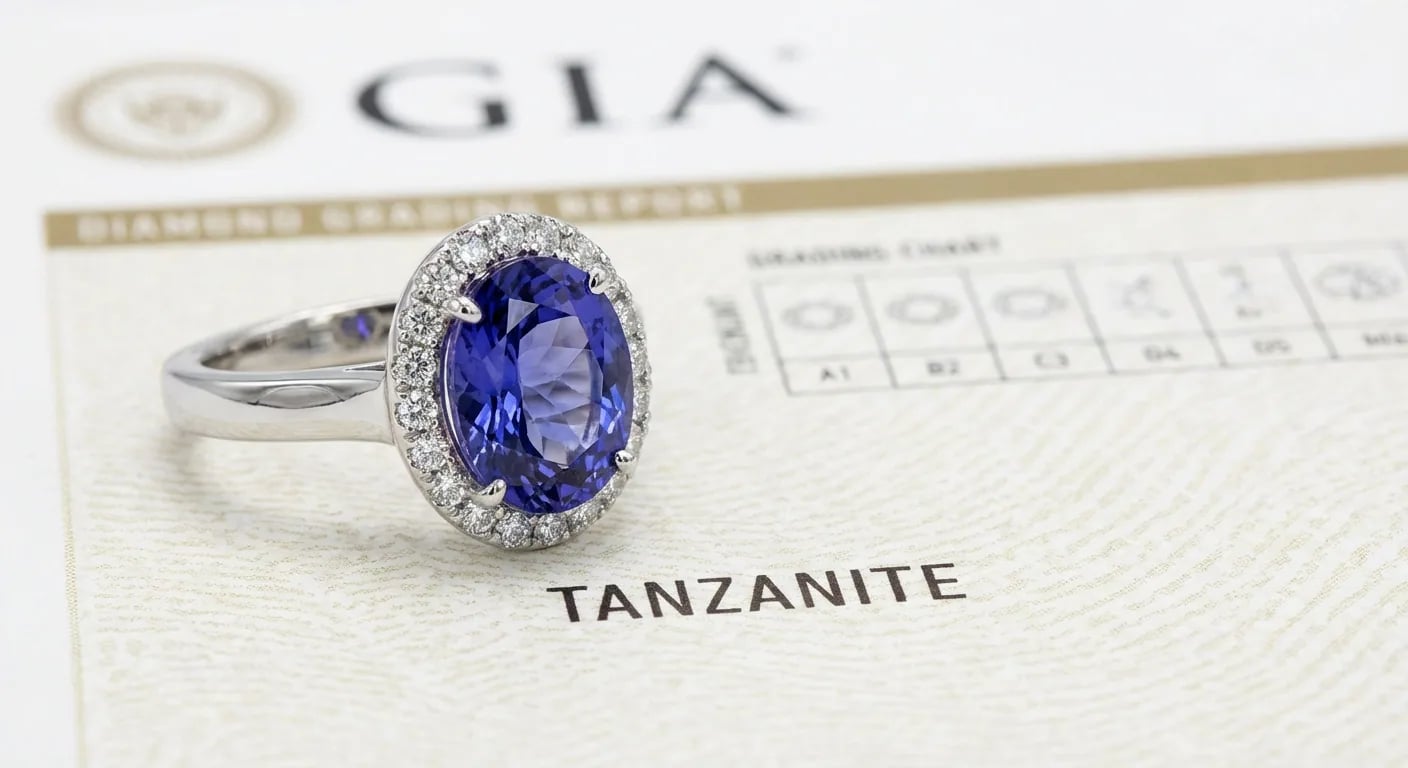
A formal lab report does not assign a simple letter grade. Instead, it provides a detailed scientific analysis, describing the stone's specific hue, tone, and saturation, confirming its identity as zoisite, and noting any treatments. This is the same rigorous process applied to the world's most important gems, including investment-grade diamonds. An educated buyer should always prioritize the detailed findings of a lab report over any in-house quality rating. This focus on independent verification is a cornerstone for anyone building a collection of fine birthstone jewelry.

Certification: Your Unshakeable Proof of Authenticity
After navigating the nuances of color and the confusion of seller-specific "AAAA" grades, the final and most crucial step in a confident purchase is securing independent verification. A gemological certificate from a respected, third-party laboratory is not a luxury accessory; it is the cornerstone of your investment. It serves as an unbiased, scientific blueprint of your gemstone, providing unshakeable proof of its identity, characteristics, and authenticity. For any significant gemstone purchase, from a vibrant tanzanite to a classic diamond, a lab report is the ultimate consumer protection tool.
Why Independent Certification is Non-Negotiable
Relying solely on a seller's in-house appraisal or guarantee introduces a potential conflict of interest. An independent laboratory has no financial stake in the sale. Its sole function is to analyze and report the facts. This objective assessment provides several key benefits:
- Identity Verification: The report will definitively identify the stone as "Natural Zoisite," with the variety "Tanzanite." This protects the buyer from misidentified stones or synthetics.
- Treatment Disclosure: It will transparently state if the stone has undergone treatments. For tanzanite, a comment such as "Heated" is standard and expected, but this disclosure is vital for confirming industry-accepted practices.
- Quality Substantiation: The report documents the exact measurements, carat weight, cut, and provides an objective description of the color, which substantiates the stone's quality claims.
- Insurance and Resale: A certificate from a globally recognized lab like the Gemological Institute of America (GIA) or the American Gemological Laboratories (AGL) is essential for obtaining insurance and greatly facilitates any future resale.
This level of documentation is the standard for all high-value gems, including rare and precious stones like ruby and fine sapphire.
How to Read a Gemological Report
A formal lab report can seem technical, but focusing on a few key areas will empower any buyer. When reviewing a certificate for a tanzanite, pay close attention to the following sections.
| Report Section | What to Look For | Why It Matters |
|---|---|---|
| Identification | Species: Natural Zoisite Variety: Tanzanite |
Confirms the gemstone is exactly what it is claimed to be, ruling out imitations or synthetics. |
| Measurements & Weight | Dimensions in millimeters (e.g., 10.15 x 8.05 x 5.50 mm) Carat Weight (e.g., 3.52 carats) |
Provides the precise physical data of the stone, crucial for setting design and value assessment. |
| Color | A descriptive analysis (e.g., "violetish Blue" or "bluish Violet"). GIA does not assign letter grades. | Offers an expert, objective description of the stone's hue, tone, and saturation. |
| Comments/Treatments | Notes such as "Heated." | Discloses any enhancements. For tanzanite, gentle heating is a permanent and accepted practice to bring out its color. |
Understanding these elements transforms the buying process from one of hope to one of certainty. It ensures that the gemstone you acquire is not only beautiful but also accurately represented, a principle that applies to all fine birthstone jewelry.
A certified gemstone is the foundation of any piece of fine jewelry. The Joalys stone-first approach to custom design ensures that every client begins their journey by selecting a fully documented, high-quality gemstone before the creative process of designing a setting even starts. To begin your own bespoke creation, explore the collection of independently certified tanzanites.

The Merelani Miracle: A Gemstone of a Generation
Beyond the metrics of color, clarity, and carat lies the soul of a gemstone: its story. For tanzanite, that story is one of geological serendipity and profound rarity. Unlike gems found across continents, every tanzanite in existence originates from a single, minuscule patch of earth, making it not just a precious stone, but a fleeting treasure of our time. Understanding this origin is essential to appreciating its true value.
The World's Only Source: A Geological Anomaly
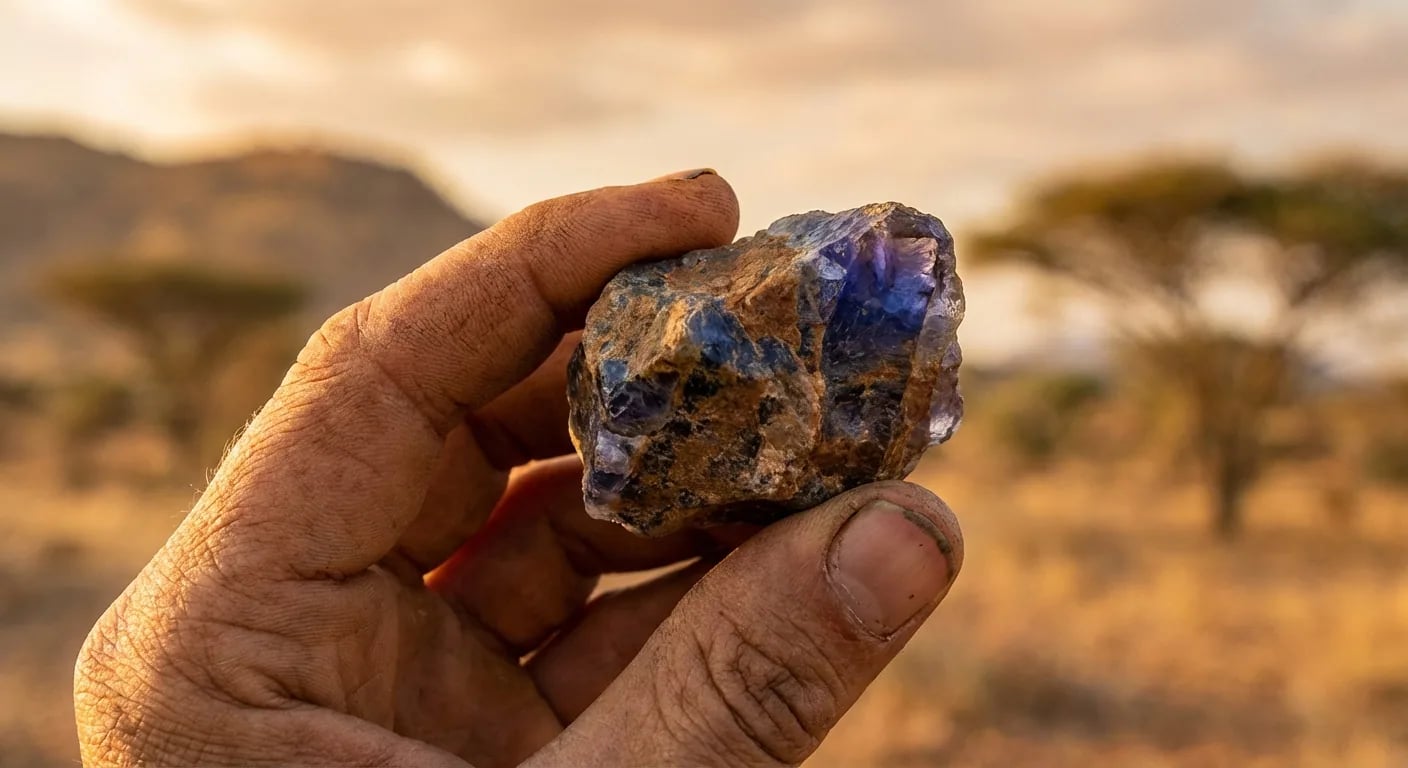
Tanzanite is a geological miracle. It is found commercially in only one location on the planet: a tiny, 4-kilometer-long strip of land in the Merelani Hills of northern Tanzania, in the shadow of Mount Kilimanjaro. The extraordinary combination of heat, pressure, and the rare element vanadium that gave birth to this violet-blue zoisite has never been discovered anywhere else. This makes tanzanite at least a thousand times rarer than a diamond.
This single-source reality has profound implications for its availability. Geologists estimate that, at the current rate of mining, the world’s supply of tanzanite could be depleted within a single generation. This finite nature means that those who acquire a fine tanzanite today are among the first, and likely the last, to own a new stone directly from this legendary deposit.
Tanzanite Origin Facts | Significance for Buyers |
|---|---|
Single Global Source | Merelani Hills, Tanzania. No other commercial deposits are known. |
Recent Discovery | First commercially mined in the late 1960s. |
Finite Supply | Mines are projected to be exhausted within the next 20-30 years. |
Geological Rarity | Formed by a unique geological event unlikely to be repeated elsewhere. |
Ethical Provenance and the Tanzanian Promise
The question of how to buy tanzanite from tanzania is intrinsically linked to ethical considerations. Given its single origin, ensuring a transparent and responsible supply chain is paramount. The modern gemstone market places immense value on provenance, a standard that applies equally to gems like ruby from specific locales or Colombian emeralds.
Industry best practices, such as the Tucson Tanzanite Protocol, were established to ensure that tanzanite's journey from mine to market is ethical and benefits the local Tanzanian communities. Reputable suppliers work to provide traceability, confirming that each stone has been sourced responsibly, with fair labor practices and environmental consideration. An ethically sourced tanzanite is not just a beautiful gem; it represents a direct investment in the economy and people of its home country. This adds a meaningful dimension to the ownership of all fine birthstone-stones, transforming a luxury purchase into a conscious choice.

Living with Your Tanzanite: A Practical Guide to Care
Owning a tanzanite is a privilege, given its profound rarity. To ensure its violet-blue fire endures for generations, a practical understanding of its unique characteristics is essential. While breathtakingly beautiful, tanzanite is not as invincible as other precious gems. Proper care and mindful wear are not suggestions; they are fundamental practices for protecting this significant investment. This guide provides the expert knowledge needed to maintain your tanzanite's brilliance and structural integrity over a lifetime.
Understanding Tanzanite's Durability
The durability of a gemstone is primarily assessed by its hardness, which is its resistance to scratching. This is measured on the Mohs scale, a 1-to-10 ranking where 10 is the hardest. Tanzanite has a hardness of 6.5, which places it alongside gems that require thoughtful handling. It is considerably softer than the traditional choices for daily-wear jewelry.
To put this into perspective, here is how tanzanite compares to other well-known gemstones:
Gemstone | Hardness (Mohs Scale) | Wearability Recommendation |
|---|---|---|
Diamond | 10 | Exceptional; suitable for all jewelry types |
Sapphire | 9 | Excellent; ideal for daily-wear rings |
Ruby | 9 | Excellent; ideal for daily-wear rings |
Emerald | 7.5 - 8 | Good; requires care, especially in rings |
Tanzanite | 6.5 | Fair; best for pendants, earrings, or occasional-wear rings |
This rating means tanzanite can be scratched by common materials, including quartz (a 7 on the Mohs scale), which is a component of household dust. Beyond hardness, tanzanite also possesses what gemologists call "perfect cleavage" in one direction. This means a sharp, direct impact along this plane can cause the stone to chip or split. This property makes it more sensitive to knocks than a sapphire, which has no cleavage.
Best Practices for Wear and Setting Design
Given its moderate hardness, the type of jewelry and its setting design are critical considerations for tanzanite.
Ideal Jewelry Types: Pendants, necklaces, and earrings are exceptionally safe choices for tanzanite. These pieces are naturally protected from the bumps and abrasion of daily life, allowing the gem to be worn frequently with minimal risk.
Rings: A tanzanite ring can be a stunning statement piece, but it is best suited for special occasions rather than as a ring worn during vigorous activities. For those who desire a tanzanite engagement ring, the setting must be designed for protection.
Protective Settings: Bezel settings, which encircle the gem's perimeter with metal, offer the highest level of security. Halo settings also provide a buffer of smaller, harder stones like diamonds.
Avoid High-Profile Settings: Settings that expose the gem's corners and edges, such as high-prong solitaires, increase the risk of chipping.
For a gem of this importance, a custom setting is often the best approach to balance beauty with security. The Joalys stone-first design process allows for the creation of a bespoke piece of jewelry engineered specifically to protect the gemstone while enhancing its unique color. Begin the journey of crafting a secure and beautiful custom tanzanite setting designed by experts.
Proper Cleaning and Storage
Correct cleaning techniques are vital to maintaining tanzanite's luster without causing damage. Harsh methods suitable for harder stones can be detrimental to tanzanite.
Safe Cleaning Method:
Fill a bowl with warm water and a few drops of mild dish soap.
Submerge the tanzanite jewelry and let it soak for 20-30 minutes to loosen dirt and oils.
Gently scrub the stone, including the underside, with a very soft toothbrush.
Rinse thoroughly with warm water.
Pat dry with a soft, lint-free cloth.
Crucial Warnings:
NEVER use ultrasonic or steam cleaners. The intense vibrations and sudden temperature changes can exploit the stone's natural inclusions and cleavage, causing fractures. This advice also applies to other included gems like a fine emerald.
Avoid harsh chemicals. Exposure to acids and other strong cleaning agents can damage the stone's surface.
Proper storage is the final step in responsible ownership. Store tanzanite jewelry separately in a soft pouch or a fabric-lined jewelry box to prevent harder gems from scratching it. This simple habit is a best practice for all fine birthstone jewelry.
Frequently Asked Questions
Conclusion
A successful tanzanite acquisition hinges on three core principles: prioritizing deep, saturated violet-blue color, demanding an independent gemological certificate for verification, and appreciating the gem's single-source rarity. This knowledge transforms a buyer from a spectator into a confident connoisseur, capable of selecting a truly exceptional stone.
With the insights from this tanzanite buying guide, the next step is exploration. Joalys offers a distinct approach to acquiring these rare gems, beginning when you select your certified tanzanite from an exclusive collection. The stone is delivered first in a luxury authentication case for your inspection, giving you the freedom to design your custom setting only when you are completely ready. For personalized guidance through this process, speak with a Joalys gemologist to find the perfect generational treasure.