Garnet Jewelry: Uncover the Secret Rainbow of Gems
Think garnet is just red? Discover a world of vibrant garnet jewelry, from electric green to fiery orange. Our complete guide helps you choose the perfect gem.
Garnet Jewelry: Quick Facts
| Property | Details |
|---|---|
| Birthstone | January |
| Hardness (Mohs) | 6.5 - 7.5 (Good for everyday jewelry) |
| Color Spectrum | All colors; known for deep reds, but includes rare greens (Tsavorite) and vibrant oranges (Spessartine) |
| Meaning & Symbolism | Love, friendship, protection, commitment |
| Price Range (per carat) | $50 (common reds) to $7,000+ (rare Tsavorite, Demantoid) |
| Clarity & Treatments | Typically eye-clean; almost always natural and untreated, a major selling point |
| Key Varieties | Almandine, Pyrope (reds), Rhodolite (purplish-red), Spessartine (orange), Tsavorite (green) |
Introduction
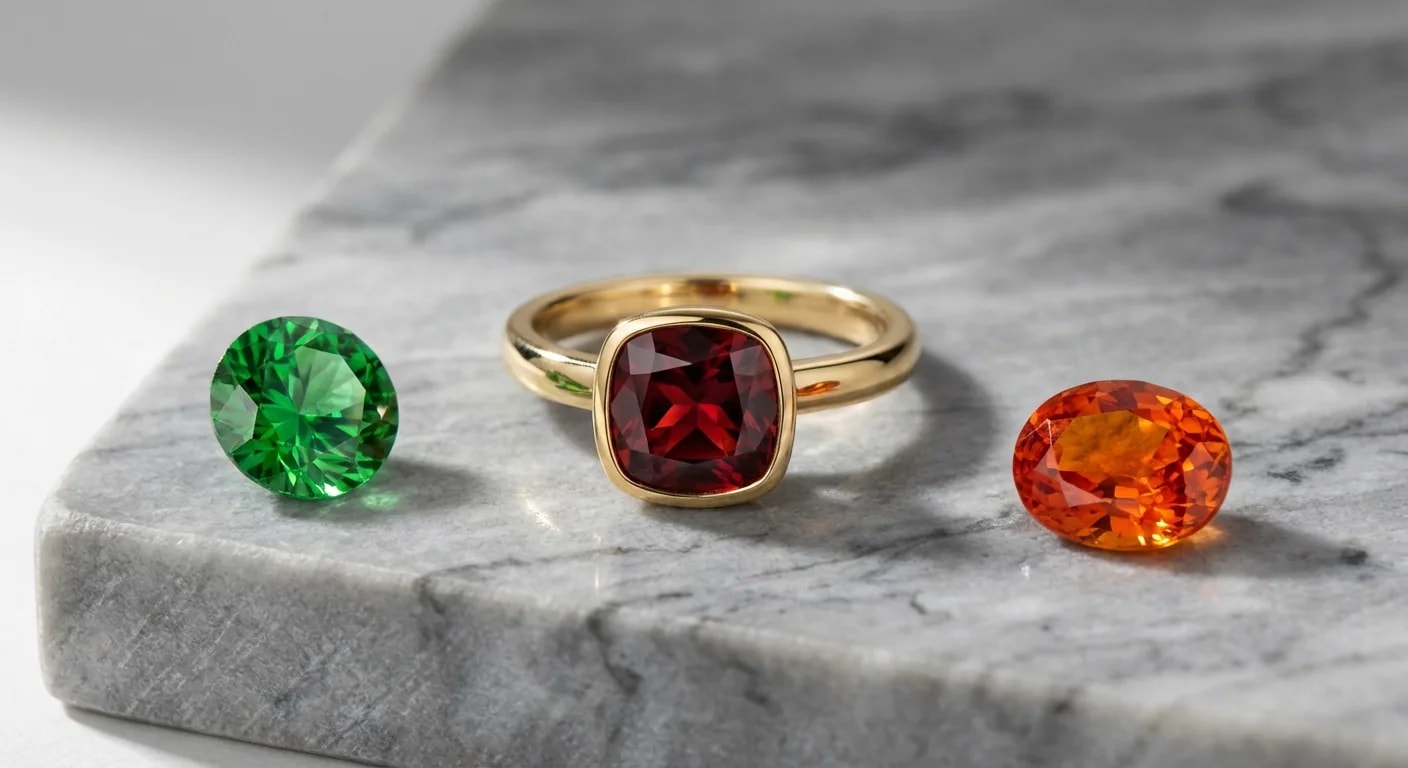
Most people associate garnet with deep red, but that's only one chapter of its story. The garnet family is a diverse group of minerals hiding an unexpected rainbow, from the electric green of Tsavorite to the fiery mandarin orange of Spessartine, revealing a spectrum far beyond its classic crimson hue.
Garnet jewelry showcases this versatile silicate mineral group, prized for its brilliance, durability, and rich history dating back to the Bronze Age. Its wide color range and symbolic depth make it a meaningful and accessible choice for collectors.
This guide covers the garnet varieties worth knowing, how to evaluate quality, and expert styling advice so you can choose the right piece with confidence.
The Enduring Allure of Garnet: More Than a Birthstone
Garnet's reputation as a deep red gemstone is well-earned, yet it represents only a fraction of its true identity. This gem family boasts a rich history and a spectrum of colors that position it as a sophisticated choice for modern jewelry connoisseurs.
Garnet Gemstone Properties & Buying Guide. Video: GIA — Gemological Institute of America.
A Legacy of Passion and Protection
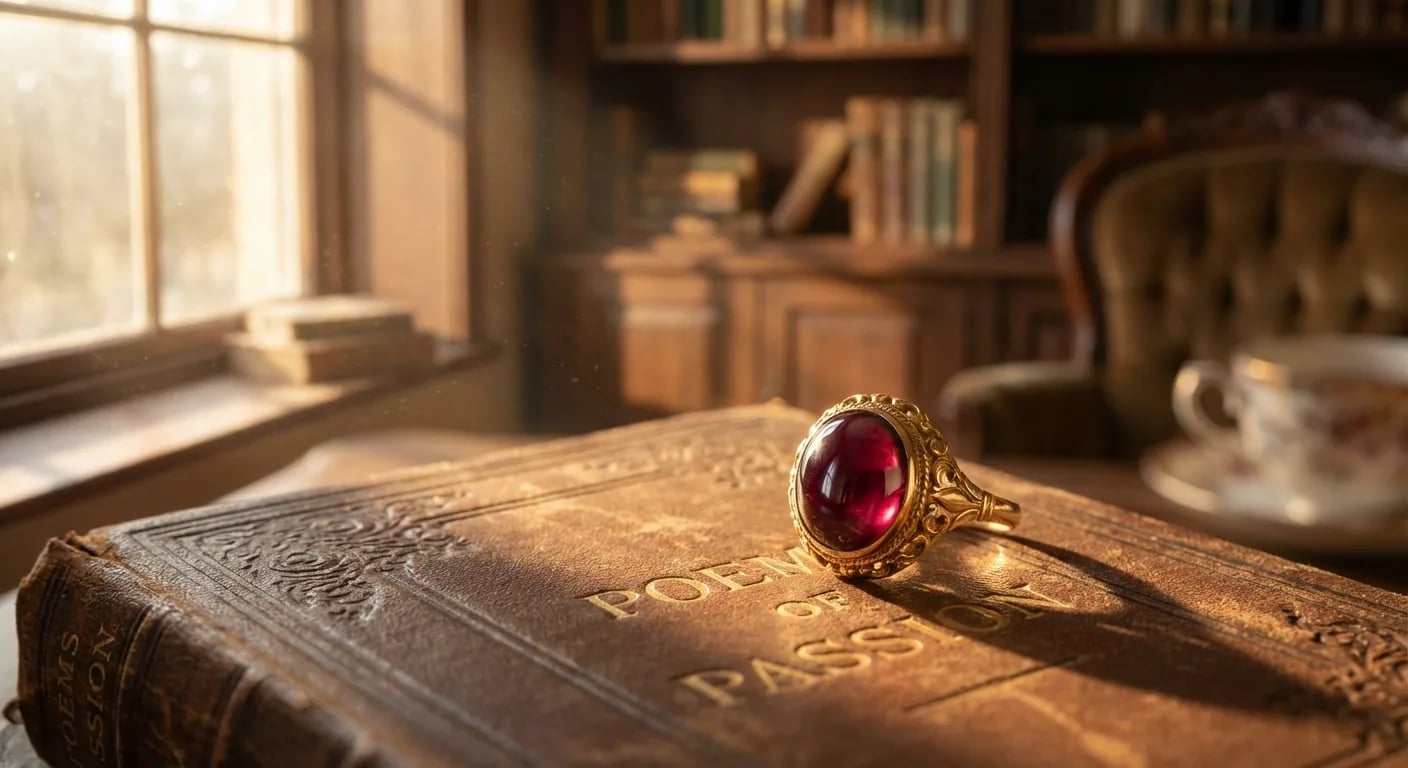
Long before it was designated as the official January birthstone, garnet was treasured by ancient civilizations. Egyptian pharaohs were entombed with garnet necklaces, believing they held life-giving properties. In ancient Rome, nobles and senators used intricately carved garnet signet rings to seal important documents.
This historical reverence imbued the gemstone with powerful symbolism. It has long been regarded as a stone of commitment, passion, and enduring friendship. Medieval travelers and crusaders wore garnets as protective talismans, believing the gem would illuminate the night and ward off evil. This legacy of protection and deep emotional connection continues to make garnet a meaningful choice for gifts and personal adornment.
Why Choose Garnet Jewelry Today?
In the contemporary luxury market, garnet represents an intelligent and versatile investment. Its primary advantages lie in its durability, diverse color palette, and exceptional value. With a Mohs hardness rating of 6.5 to 7.5, most garnet varieties are resilient enough for daily wear in pieces like rings and bracelets.
While the classic red garnet is timeless, the gem family offers a surprising range of hues, from the electric green of Tsavorite to the fiery orange of Spessartine. This diversity allows for unique and personalized jewelry expressions.
Feature Comparison | Garnet (Pyrope/Almandine) | Ruby |
|---|---|---|
Primary Color | Deep, warm red to purplish-red | Intense, fluorescent "pigeon's blood" red |
Hardness (Mohs) | 6.5 to 7.5 | 9 |
Clarity | Typically eye-clean | Often contains natural inclusions |
Value Proposition | Accessible luxury, excellent brilliance | Premium investment, exceptional rarity |
This comparison makes fine garnet a compelling alternative to the more costly ruby, delivering rich color and brilliance at a price point that makes quality accessible without compromise.
Beyond Red: A Guide to the Garnet Gemstone Family
The term "garnet" refers to a group of silicate minerals with similar physical properties but different chemical compositions, resulting in a wide array of colors. Understanding these varieties is what separates a smart buyer from someone who settles for the first red stone they see.
The Classic Reds and Purples
The foundation of garnet's reputation lies in its classic red varieties.
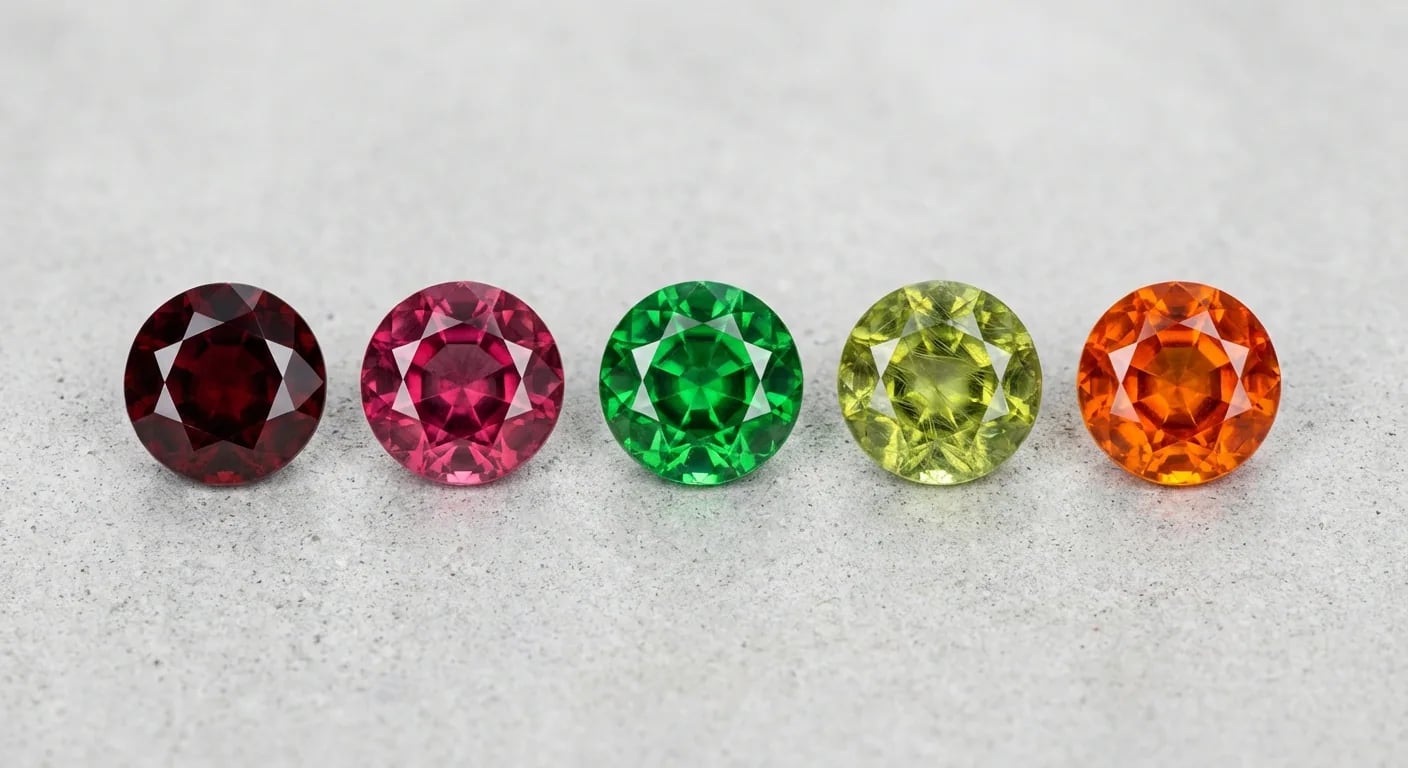
Almandine and Pyrope: The most common types, responsible for the traditional deep red to brownish-red color associated with garnet. Rich, warm tones that have been used in jewelry for centuries. Price: $20 to $100 per carat for good quality.
Rhodolite: A natural blend of pyrope and almandine, prized for its stunning raspberry to purplish-red hues. Noticeably brighter and more vivid than standard red garnet. One of the best value-for-color stones in the market. Price: $50 to $300 per carat.
The Rare and Valuable
Tsavorite: Vivid chrome green, found near the Kenya-Tanzania border. Rarer than emerald of comparable quality, and still significantly underpriced by the market. Mohs 7 to 7.5. Price: $300 to $2,000+ per carat for fine material. A 3-carat clean Tsavorite with strong saturation is genuinely hard to find.
Demantoid: The rarest and most valuable garnet. Extraordinary fire that exceeds diamond's dispersion. Found mainly in Russia and Namibia. Identified by its distinctive "horsetail" inclusions, which actually increase value and confirm authenticity. Price: $500 to $5,000+ per carat.
The Underrated
Spessartine (Mandarin Garnet): Vivid orange to reddish-orange. The best material from Namibia is eye-catching in a way very few stones can match. Price: $100 to $800 per carat.
Hessonite: Orange-brown, often called "cinnamon stone." An important stone in Vedic astrology (associated with Rahu). More included than other garnets but priced accordingly. Price: $20 to $150 per carat.
The 4 Cs of Garnet: An Expert Buyer's Checklist
While the 4 Cs framework, Color, Clarity, Cut, and Carat Weight, is famously associated with diamonds, it requires a nuanced approach for colored gemstones like garnet. For these gems, one factor reigns supreme: color. A systematic evaluation of all four criteria, however, empowers a buyer to distinguish between a standard piece and a true investment-grade jewel.
Color: The Ultimate Value Factor
Color is the most critical determinant of a garnet's value. The quality of its color is assessed based on three components: hue (the pure color), tone (its lightness or darkness), and saturation (its intensity).
Hue and Saturation: The most desirable garnets display a pure, vivid hue with strong saturation. For a Rhodolite, this means a vibrant raspberry red rather than a muted, brownish-red. For a Tsavorite, the ideal is a pure, intense green, free of yellowish or bluish modifiers. Stones with rich, highly saturated colors command the highest prices.
Tone: An ideal tone allows the garnet's color to shine without being too dark or washed out. A common flaw in lower-quality red garnets is an overly dark tone that appears almost black in certain lighting, which significantly reduces their value.
Clarity, Cut, and Carat Weight
While secondary to color, these three factors are essential for a garnet's overall beauty and value.
Clarity: Gemologists classify gemstones into Clarity Types based on how frequently they form with inclusions. Most popular garnet varieties are considered "eye-clean," meaning they should have no inclusions visible to the naked eye.
Garnet Type | GIA Clarity Type | Common Inclusions |
|---|---|---|
Almandine, Pyrope, Rhodolite | Type II | Typically eye-clean; minor inclusions acceptable. |
Spessartine, Tsavorite | Type II | Often have minor inclusions, but eye-clean stones are available and preferred. |
Demantoid | Type II | Prized for distinctive "horsetail" inclusions, which can increase value. |
Hessonite | Type III | Often included with a wavy or oily internal appearance. |
Unlike emeralds, where inclusions are expected, significant visible flaws will devalue most garnets. The exception is the rare Demantoid, where a distinct horsetail inclusion is a mark of authenticity and desirability.
Cut: A precision cut is what unlocks a garnet's brilliance. An expert lapidary will facet the stone to maximize its light return and color presentation. A poor cut can create "windows" (lifeless, transparent areas) or make a beautiful color appear too dark. Look for symmetry, proportion, and a lively sparkle across the gem's surface.
Carat Weight: The relationship between size and price varies dramatically across the garnet family. For common red garnets, the price per carat increases gradually with size. For rare varieties like Tsavorite and Demantoid, the price escalates exponentially. A high-quality 3-carat Tsavorite can be
worth $1,500 to $4,000 per carat or more, reflecting both its rarity and the difficulty of finding clean material above 2 carats. Red garnets scale gradually; rare varieties like Demantoid and Tsavorite escalate steeply past 1 carat.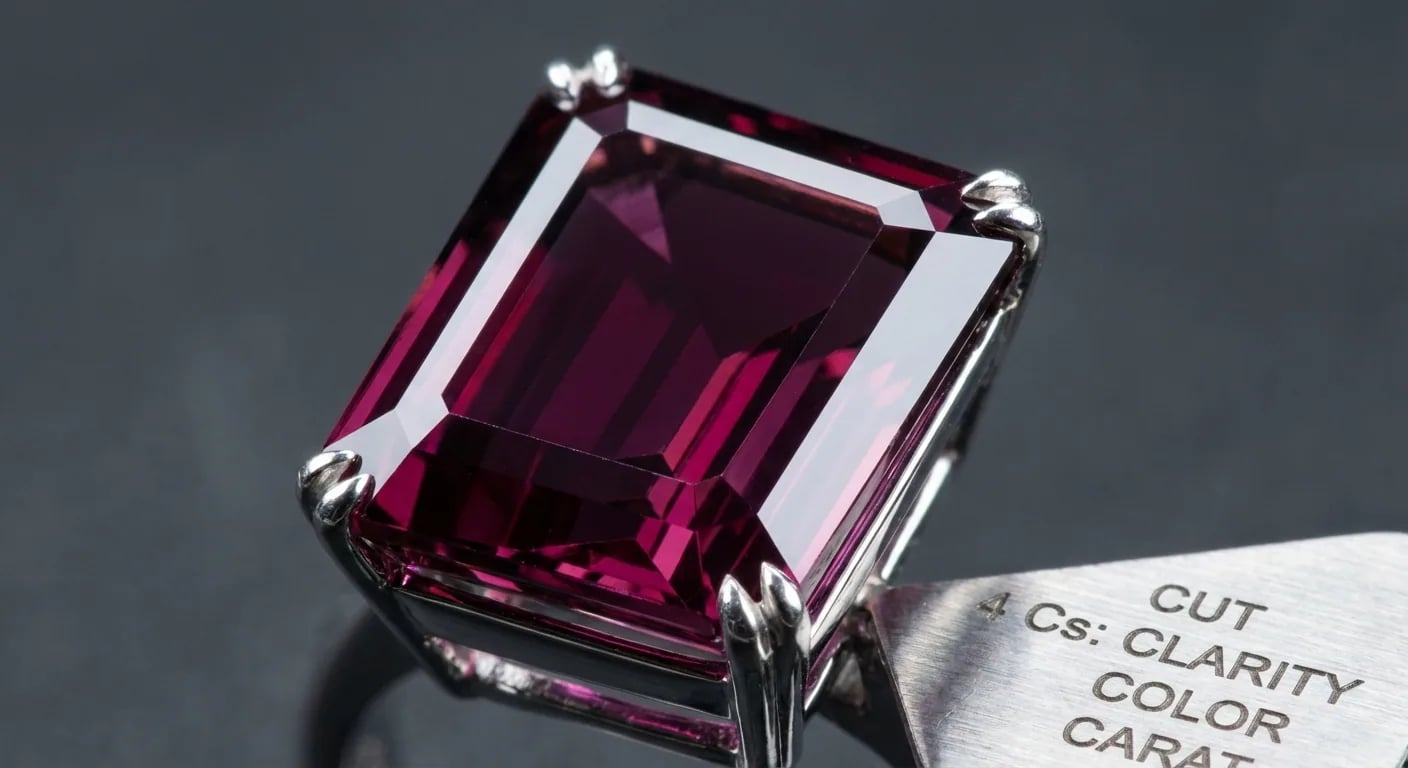
Styling Garnet Jewelry: Finding Your Perfect Piece
The vast color spectrum of the garnet family provides remarkable styling versatility. The choice of precious metal and design is not just a setting. It can complement or contrast with or contrast with the gemstone's unique character, defining its final aesthetic from classic warmth to modern brilliance.
Choosing the Right Metal for Your Garnet
Selecting the appropriate metal is essential to enhance a garnet's specific color profile. Each metal interacts differently with the gem's hue, allowing for a tailored and sophisticated look. Professional jewelers often pair specific garnets with metals that amplify their natural beauty.
Metal Type | Aesthetic Effect & Recommendation | Best Suited for Garnet Varieties |
|---|---|---|
Yellow Gold | Creates a warm, classic, and often vintage appeal. | Enhances the deep, rich tones of red Almandine, Pyrope, and earthy Hessonite garnets. |
White Gold/Platinum | Provides a cool, modern, high-contrast backdrop. | Makes vibrant colors pop, making it the ideal choice for green Tsavorite and purplish-red Rhodolite. |
Rose Gold | Offers a romantic, harmonious, and soft aesthetic. | Beautifully complements the pinkish hues in Rhodolite and the fiery tones of Spessartine. |
Popular Styles for Every Occasion
Garnet's durability and diversity lend it to a wide range of jewelry styles, suitable for both daily wear and special events.
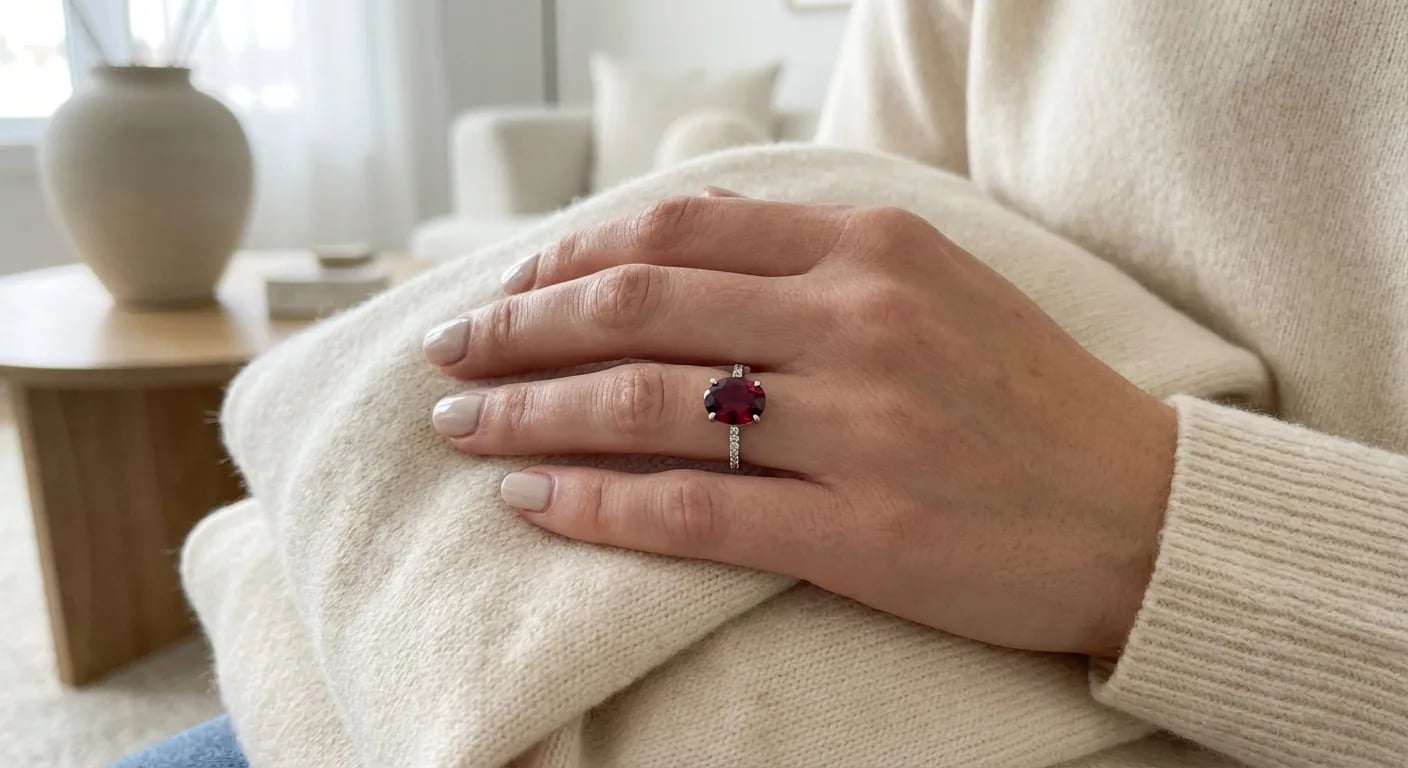
Rings: With a Mohs hardness of 6.5-7.5, garnet is an excellent choice for pieces intended for frequent wear. It is a popular option for statement cocktail rings and is increasingly chosen for unique garnet engagement rings, offering a distinctive alternative to a traditional sapphire.
Necklaces and Earrings: Solitaire pendants and stud earrings are timeless ways to showcase a high-quality garnet, making them ideal gifts for garnet birthstone jewelry. The rich raspberry tones of Rhodolite offer a sophisticated alternative to the more common violet shades found in amethyst jewelry.
JOALYS
Everything Begins with the Stone
Garnet is a family, not a colour. Yours is chosen from the whole family.
Keep the garnet loose, or commission a piece made around it — made to order, never off the shelf.
Frequently Asked Questions
Conclusion
The garnet family offers far more than the traditional deep red birthstone. From brilliant green Tsavorite to fiery Spessartine, this diverse gemstone group provides exceptional versatility for discerning collectors. This guide has equipped you with expert knowledge to evaluate garnet quality through the 4 Cs, emphasizing color saturation and clarity that distinguish investment-grade stones.
Garnet jewelry represents intelligent luxury: durability for daily wear combined with a color spectrum rivaling more expensive gems. Whether choosing a Rhodolite engagement ring or a vintage-inspired piece, confident purchasing requires understanding variety-specific quality markers and selecting certified sources.
Your journey to the perfect garnet piece begins here. Explore authenticated collections at Joalys.com, where each stone meets the highest standards of color, clarity, and cut.