How to Buy a Sapphire Online: What to Check, What to Pay, What to Avoid (2026)
Expert guide to safely buying sapphire online. Prices, GIA/LFG certificates, heated vs unheated, step-by-step buying process.
Buying Sapphires Online: Key Points
| Criterion | Recommendation | Reason |
|---|---|---|
| Certification | GIA, Gübelin, SSEF | Guarantees authenticity & quality |
| Seller | Reputable jeweler | Trust & reliability |
| Color | Cornflower or royal blue | Most precious shades |
| Origin | Kashmir, Burma, Sri Lanka | Prestigious origins |
| Heat treatment | Unheated preferred | Better value retention |
| Return policy | Minimum 14 days | Purchase protection |
| Insured shipping | Mandatory | Protects your investment |
Introduction
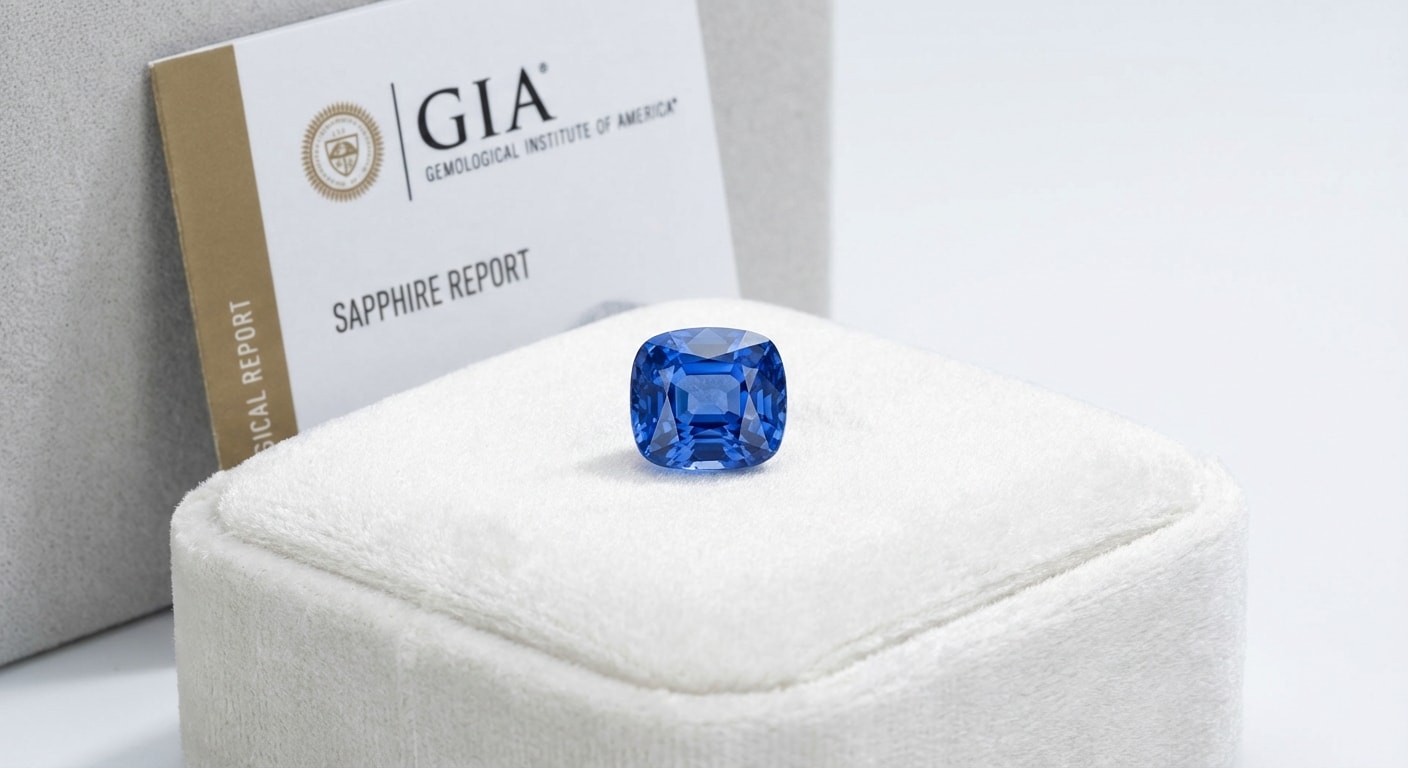
Yes, you can buy a sapphire online safely. Millions of dollars of certified gemstones are sold online every month by reputable dealers, and the process is genuinely more transparent than buying in a physical store where you cannot compare prices in real time.
That said, the online sapphire market has real risks. Misrepresented treatments. Origin claims that cannot be verified. Photos that make a grey stone look blue. Certificates from labs no one has heard of. This guide walks you through exactly what to check, what to ask, and what to pay. Updated March 2026.
The three rules before anything else:
- Require a GIA or AGL certificate with an online-verifiable report number
- Know the price range for what you are buying before you talk to any seller
- Confirm the return policy in writing before you pay

Sapphire Buyer's Guide: True Prices and Value
Why Buy a Sapphire Online?
Physical jewelry stores carry significant overhead: downtown rent, commissioned staff, display cases, insurance on floor stock. Those costs sit somewhere between 40 and 60% of the retail price on top of the stone's actual value. Online dealers, especially direct-from-origin suppliers, operate with margins closer to 20 to 30%.
How to Buy a Sapphire — Key Quality Factors. Video: GIA — Gemological Institute of America.
In practice: a 1-carat cornflower blue Ceylon sapphire with a GIA certificate will typically cost $900 to $1,400 online from a reputable dealer. The same stone in a traditional jewelry store: $1,500 to $2,500. The stone is identical. The price difference is distribution cost, not quality.
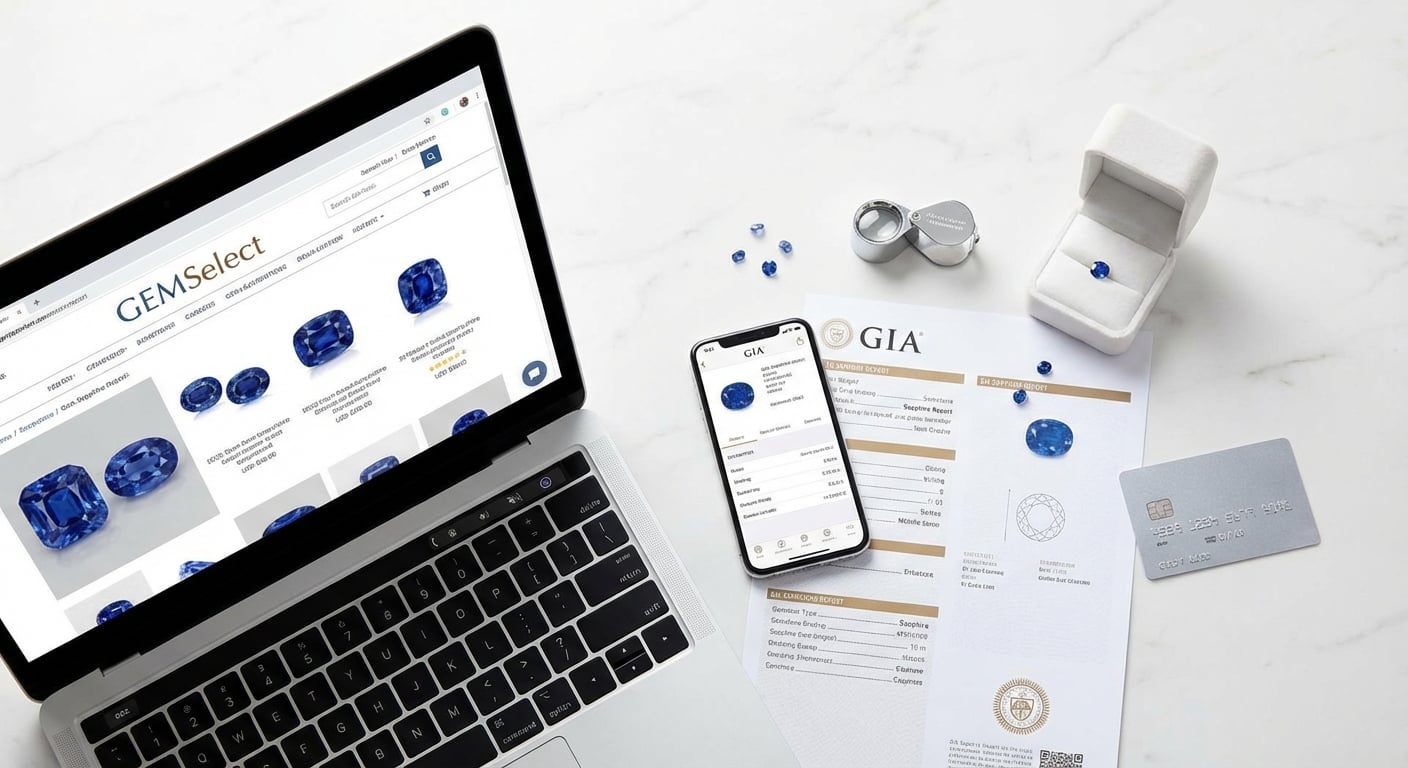
The other advantage is selection. A physical store carries 20 to 50 sapphires in stock at any given time. A serious online dealer shows hundreds, often with 360-degree video, full certification details, and side-by-side comparison tools. You make a better-informed decision.
Understanding Prices: The 4 Value Factors
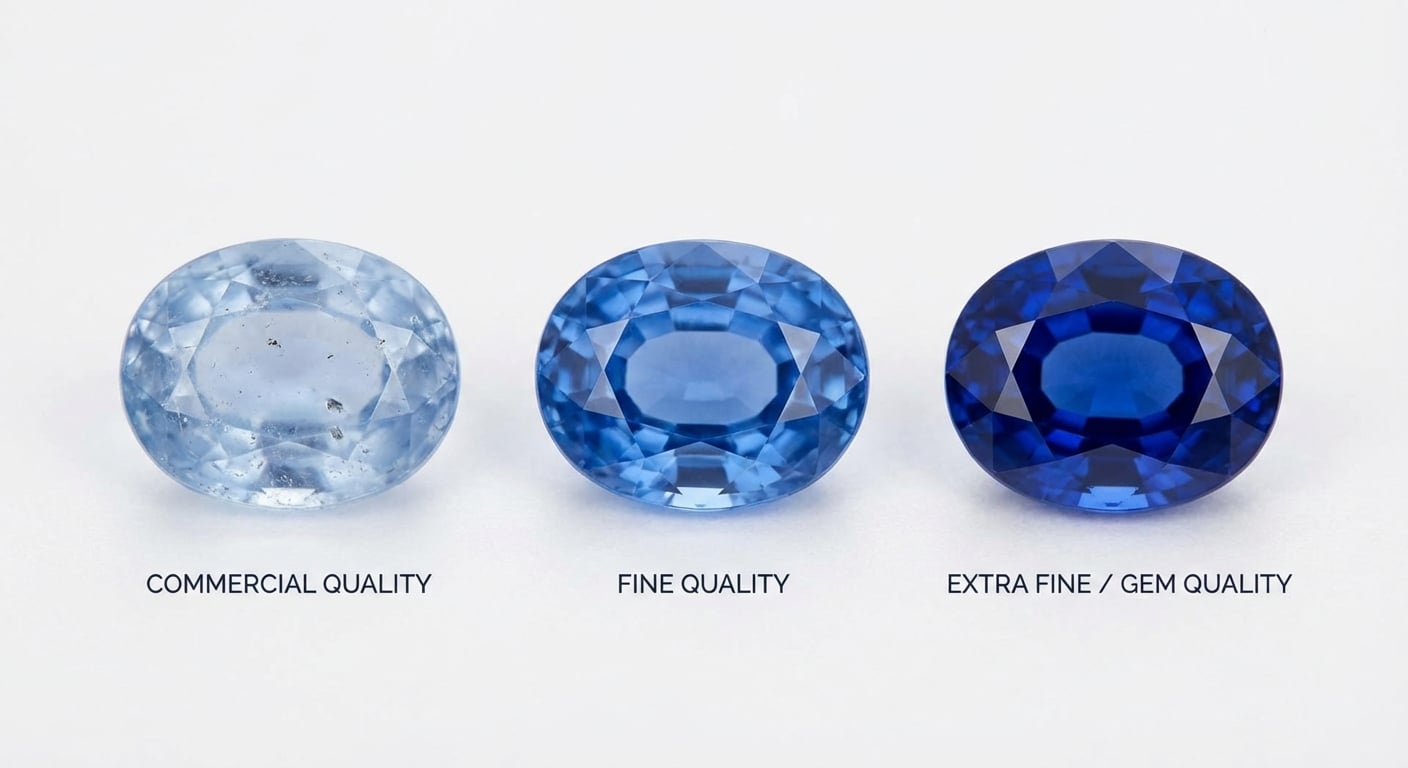
Color is the dominant price driver. Everything else is secondary.
Color: The Ranges That Matter
Royal blue (deep, highly saturated, associated with Kashmir and fine Ceylon): $1,500 to $5,000 per carat for certified natural material. Cornflower blue (medium tone, slightly violet, classic Ceylon): $400 to $2,000 per carat. Pale or grey-blue (washed out, weak saturation): $80 to $300 per carat. Other colors (pink, yellow, teal, padparadscha): $200 to $8,000 per carat depending on rarity and quality.
A stone with good color but heavy grey secondary tone is not "royal blue" regardless of what the listing says. Trust your eyes and the certificate, not the marketing label.
Heated vs. Unheated: The Price Gap
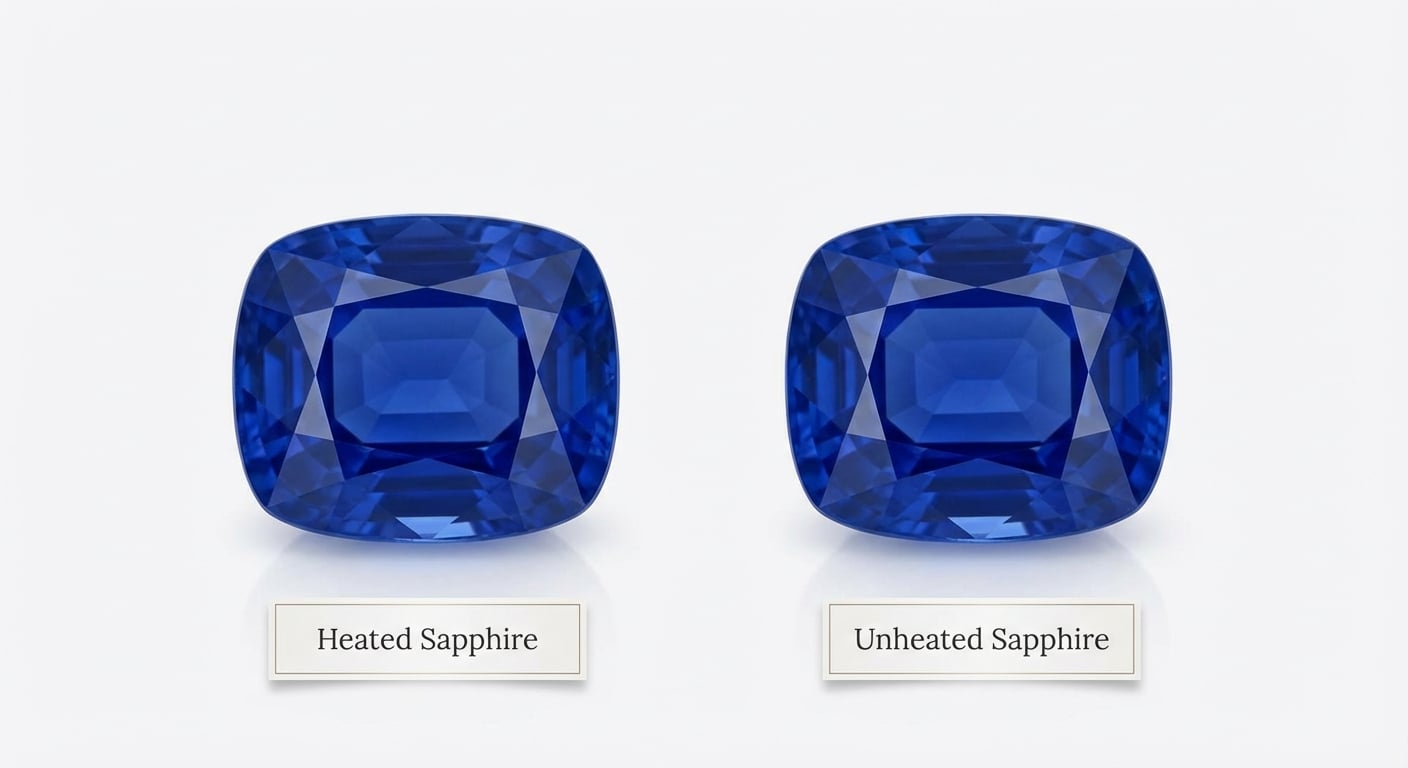
About 95% of sapphires on the market are heat-treated. This is standard, stable, and permanently enhances color. A heated stone is real sapphire. What you pay extra for with unheated: the premium for entirely natural color, which collectors and investors value. Expect to pay 30 to 60% more for an equivalent unheated stone with a GIA origin report confirming "no indications of heating."
For an engagement ring you plan to wear for 40 years, unheated Ceylon sapphire with certification is worth the premium. For a fashion piece or a first sapphire purchase, a well-colored heated stone is the sensible choice.
Origin and Its Effect on Price
Kashmir sapphire (India, largely exhausted mines): $5,000 to $100,000+ per carat for certified material. Prices are driven by extreme scarcity. Burma (Myanmar): $1,000 to $15,000 per carat for fine unheated material. Ceylon (Sri Lanka): $400 to $5,000 per carat, the most accessible fine sapphire origin. Madagascar: $200 to $1,500 per carat, good quality at lower price point. The GIA certificate will state the geographic origin. If origin is not disclosed, assume it cannot be verified.
Heated vs Unheated Sapphire: The Truth
Heat treatment is probably the most misunderstood topic in sapphire buying. Here is the reality.
Heating sapphire rough to 1,200 to 1,800 degrees Celsius under controlled conditions improves color saturation and can reduce the visibility of inclusions. The process is permanent, does not affect durability, and has been standard industry practice for over a century. Approximately 95% of commercial sapphires have been heated.
This is not fraud. A heated sapphire is natural sapphire. What changes is that the color you see is partially the result of controlled heat rather than purely geological process. For most buyers, this distinction is not meaningful. For collectors and investors buying stones above 3 carats, it matters significantly because unheated stones are rarer and command long-term premiums.
The GIA certificate states clearly: "No indications of heating" for unheated stones, or "Indications of heating" for treated material. There is no ambiguity in the report. If a seller claims "unheated" but cannot provide a GIA or equivalent certificate with that specific language, the claim is unverified.
The Buying Process in 6 Steps
Follow this sequence and you will not get burned.
Step 1: Set Your Budget and Priority
Decide first: do you want the best color you can get at your budget, or the largest stone? These are different priorities and lead to different purchases. A 1-carat stone with excellent color is almost always a better buy than a 2-carat stone with mediocre color at the same price.
Step 2: Choose Color and Origin
Pick a color family (blue, teal, pink, yellow, padparadscha) and decide whether origin matters to you. If you want Ceylon origin for the name and the provenance: budget accordingly. If you want the best blue you can find at your price: Madagascar and Sri Lanka both produce excellent material at more accessible prices than Burma or Kashmir.
Step 3: Require Video and Certificate
Before making any offer, ask for a short video of the stone in natural light and under white LED. Ask for the certificate number so you can verify it independently before paying. This takes 10 minutes and eliminates 90% of potential issues.
Step 4: Confirm Return Policy in Writing
Minimum 14 days return, no questions asked. Any serious dealer offers this. If the return policy is vague or absent, move on regardless of how good the stone looks.
Step 5: Inspect on Arrival
When the stone arrives, compare it to the photos and video in natural light. Check that the certificate number matches the stone (laser inscriptions on the girdle for GIA-certified material). If anything does not match: initiate the return immediately, within the return window.
Conclusion
Buying a sapphire online in 2026 is a reasonable, well-established process used by experienced collectors and first-time buyers alike. The market is more transparent than it was 10 years ago: video is standard, certification is expected, and information on pricing is freely available.
The risks are real but manageable. Stick to certified stones from verifiable labs, compare prices against the ranges in this guide, and confirm the return policy before paying. Those three steps handle most of what can go wrong.
If you want to go one step further: buy from a source with traceable origin and direct supply chain access. You pay less per carat and you know exactly where the stone came from. That is the JOALYS model. Browse our certified sapphire collection.
Frequently Asked Questions
Ready to Buy Your Sapphire Online?
Buying a sapphire online has never been safer and more accessible. By following this guide and systematically requiring a verifiable GIA or LFG certificate, you have all the keys to make an informed and secure purchase.

How to Verify Authenticity: Certificates
Certification is not optional above $300. Here is which labs to trust and which to question.
Trusted Labs
GIA (Gemological Institute of America): the global standard. Verifiable at gia.edu/report-check in seconds. Covers origin determination, treatment disclosure, and quality assessment. AGL (American Gemological Laboratories): excellent for colored stones, detailed origin reports, respected internationally. Gübelin (Switzerland): the top choice for high-value Kashmir and Burma sapphires. Their provenance reports carry the most weight at auction.
Labs to Question
House certificates from the seller, certificates from labs with no verifiable online database, certificates that do not disclose treatment status. These are not fraud by definition, but they provide no independent verification. A seller who offers only a house certificate for a $2,000 stone should be asked directly why no independent cert exists.
LFG for European Buyers
LFG (Laboratoire Français de Gemmologie) is the French standard, recognized by French insurance companies and respected across Europe. Verifiable at lfg.fr. Fully equivalent to GIA for colored stone reports in the European market.