Opal Buying Guide: How to Choose, Evaluate and Buy Real Opal (2026)
Don't buy an opal without our expert guide. We reveal the #1 factor sellers won't tell you, helping you judge play-of-color, body tone & value like a pro.
Quick Facts: The Opal Buying Guide
| Property | Details |
|---|---|
| Hardness (Mohs) | 5.5 - 6.5 (Relatively soft, requires careful wear) |
| Primary Value Driver | Play-of-Color (intensity, pattern, and range of colors) |
| Most Valuable Color | Red play-of-color is the rarest and most prized |
| Key Types | Australian Black, Boulder, Ethiopian Welo, Mexican Fire |
| Primary Sources | Australia (Lightning Ridge, Coober Pedy), Ethiopia, Mexico |
| Common Composites | Doublets (opal slice + backing) and Triplets (adds a clear cap) |
| Recommended Care | Avoid ultrasonic cleaners, harsh chemicals, and sudden temperature changes |
Introduction
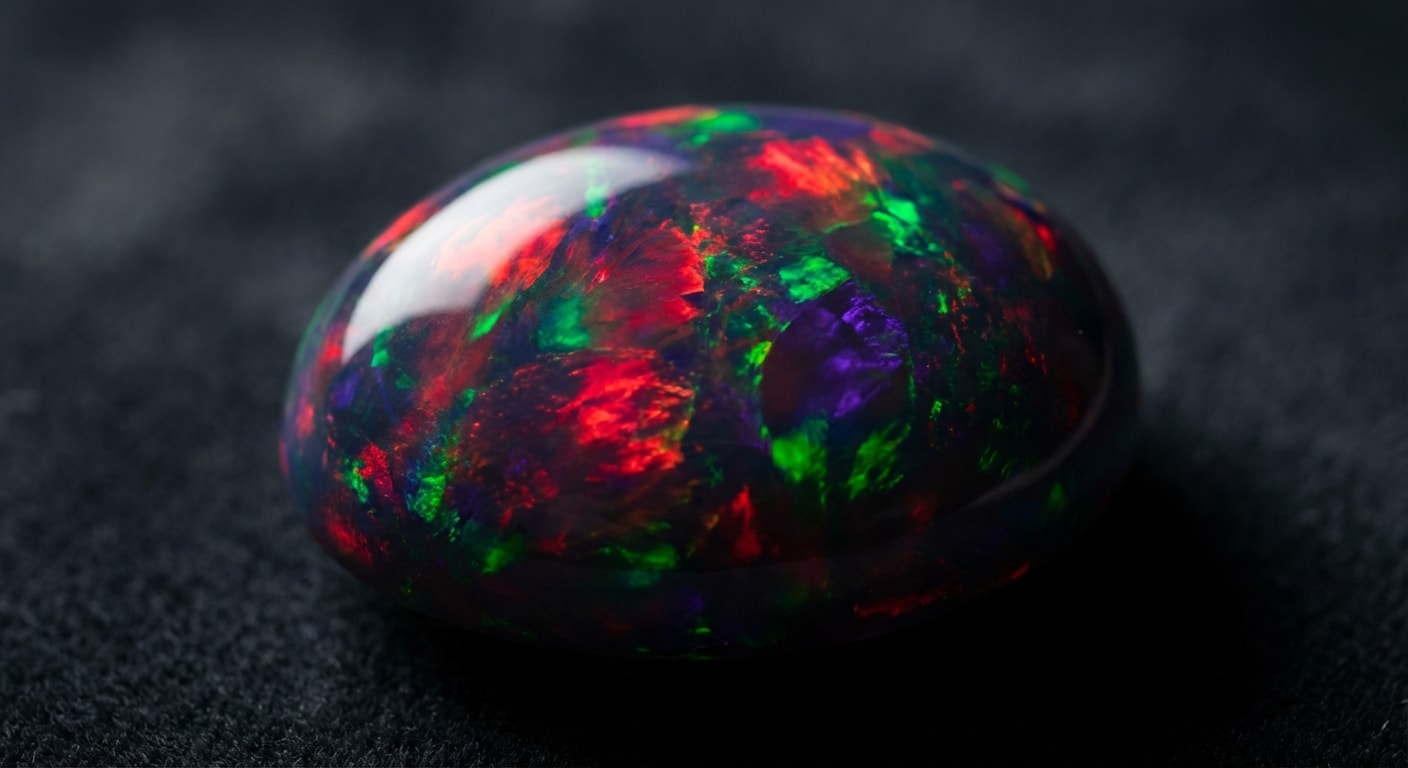
Opal is the only gemstone that shows a different color every time you tilt it. That play-of-color, caused by silica spheres diffracting light, is what makes a great opal genuinely impossible to replicate with any synthetic material. It is also what makes buying opal confusing: no two stones are alike, there is no universal grading scale, and the online market is full of doublets and triplets sold as "solid opal."
This guide covers how to evaluate the five quality factors specific to opal, understand the difference between solid, doublet, and triplet, know which origins produce which characteristics, and avoid the most common mistakes buyers make. Updated March 2026.
How to Buy Opal Online (Practical Guide)
The 5 Cs of Opal Value: Beyond the Diamond Standard
Opal cannot be graded with the diamond 4Cs. It needs its own framework. Gemologists use five factors, and they are not weighted equally.
Opal Buying Guide — What to Look For. Video: GIA — Gemological Institute of America.
Play-of-Color: The Most Important Factor
This is the spectral flash you see when the stone moves. The best play-of-color covers the entire surface of the stone (called "full coverage"), shows multiple colors including red (the rarest and most valuable hue), and shifts dramatically with movement rather than appearing in just one viewing angle.
A stone with red in its play-of-color is worth 2 to 3 times more than one showing only blue and green at the same size and body tone. That is not an opinion, it is consistent pricing across the Australian opal market.
Body Tone: Dark vs Light
Body tone runs from N1 (jet black) to N9 (crystal clear). Dark and black opals (N1 to N4) show the most dramatic color contrast and command the highest prices. White and light opals (N7 to N9) show softer color but are far more common and affordable. Crystal opals are transparent to semi-transparent with a clear or slightly tinted body.
Black Lightning Ridge opal with red play-of-color at N1 body tone is the most valuable opal in the world. Prices for exceptional specimens exceed $50,000 per carat at auction.
Clarity, Cut, and Carat
Clarity means absence of sand inclusions, crazing (surface cracking), and potch (colorless opal). A stone with crazing will deteriorate over time. Avoid it regardless of price. Cut should maximize color coverage and protect thin edges. Carat weight matters less than color quality for opal: a 2-carat stone with full-coverage red play-of-color is worth more than a 5-carat stone with patchy blue-only color.
A Visual Guide to the World's Most Famous Opals
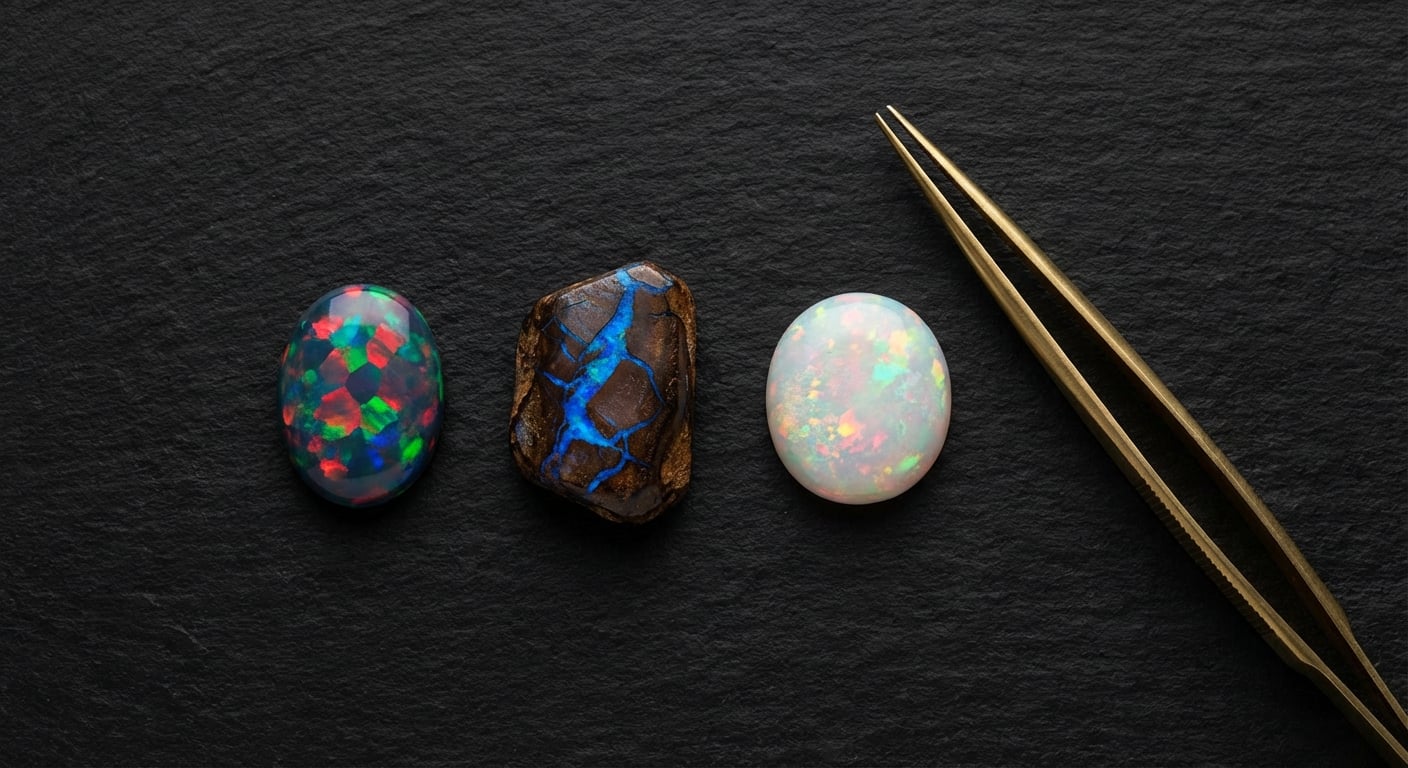
Where an opal comes from determines what kind of stone it will be. Origins are not interchangeable.
Australian Opal: The Gold Standard
Australia produces roughly 95% of the world's precious opal. Lightning Ridge (New South Wales) is the source of black opal, the most valuable type. Coober Pedy produces white and crystal opal. Andamooka and Mintabie also contribute significant volumes of white opal.
Australian opal is geologically stable, forms in sedimentary rock, and has low water content (3 to 10%). It does not craze easily and holds its color for generations when cared for properly.
Ethiopian Opal: High Color, Lower Stability
Ethiopian opal, discovered commercially in the 1990s and expanded significantly after the Welo deposit opened around 2008, produces spectacular play-of-color often rivaling the best Australian material. The key difference: Ethiopian opal is hydrophane, meaning it absorbs water and can temporarily go translucent when wet, then return to normal when dry.
This is not a defect, it is a characteristic. But it means Ethiopian opal should not be soaked, worn in the shower, or stored in humid conditions long-term. Properly cared for, it is beautiful and increasingly well-regarded by collectors.
Doublets and Triplets: Not Fake, But Not Solid
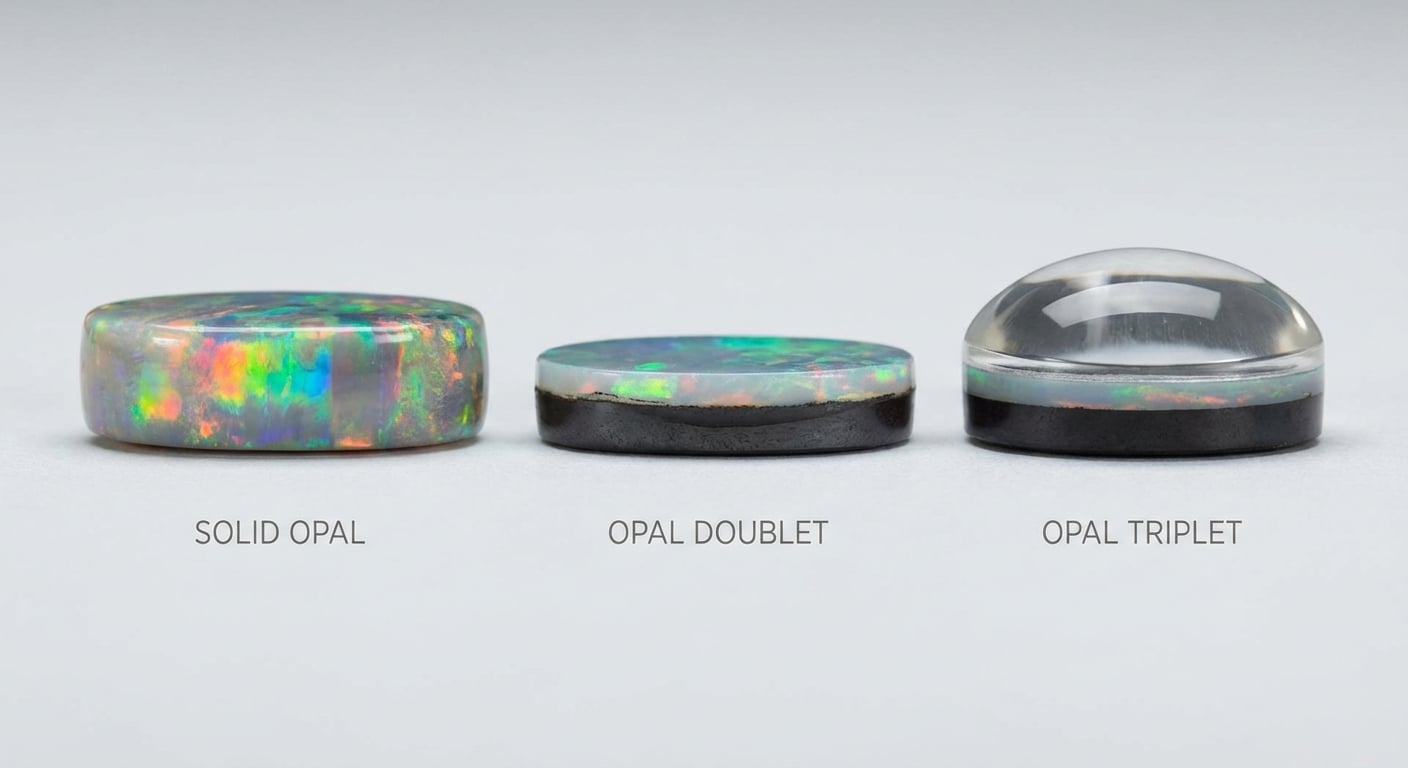
A doublet is a thin slice of real opal glued to a dark backing. A triplet adds a clear quartz or glass cap on top. Both can look spectacular in photos. Both must be disclosed and priced accordingly, roughly 5 to 20% of equivalent solid opal value. The problem is they are frequently sold without disclosure online.
How to spot them: look at the stone from the side. A doublet or triplet shows a visible layer line. A solid opal is one continuous material all the way through.
The Online Buyer's Toolkit: Vetting Your Opal Virtually
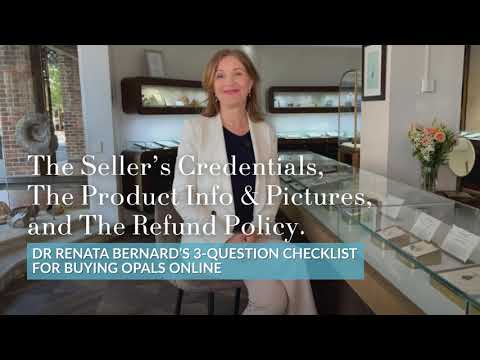
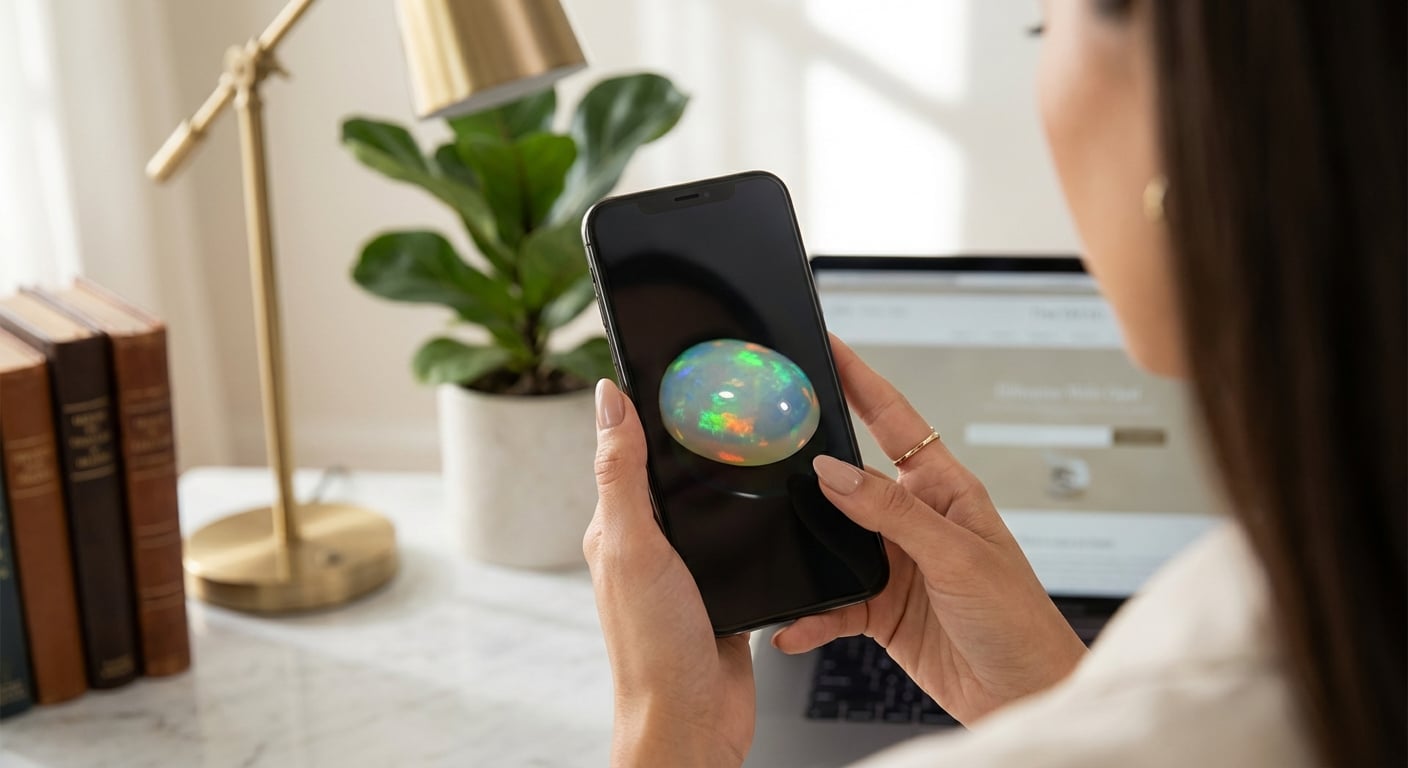
Buying opal online is the hardest gemstone purchase to get right because play-of-color does not photograph accurately. Here is what to insist on.
Video Is Non-Negotiable
A photo of opal tells you almost nothing useful. You need a video showing the stone rotating under consistent lighting, ideally both white LED and natural light. Watch for how broadly the color shifts across the face, whether coverage is full or patchy, and whether red appears in the play-of-color.
If a seller cannot provide video for a stone above $100, that is a red flag. Every serious opal dealer has video capability in 2026.
Checklist Before Buying
Type clearly stated: solid, doublet, or triplet. Origin disclosed (Lightning Ridge, Coober Pedy, Welo Ethiopia). Body tone grade (N1 to N9 scale or equivalent description). Treatment disclosure (most solid opal is untreated, but ask). Return policy of at least 14 days. Weight in carats and dimensions.
Red Flags
Listing says "solid opal" but shows only one static photo. Price seems very low for the color shown (fine black opal under $200 per carat is essentially impossible). Origin listed vaguely as "natural stone" or "gemstone." No return policy mentioned.
Practical Ownership: Durability, Care, and Jewelry Settings
Opal is Mohs 5.5 to 6.5. That is softer than most gemstones and requires some thought about how and where you wear it.
Settings
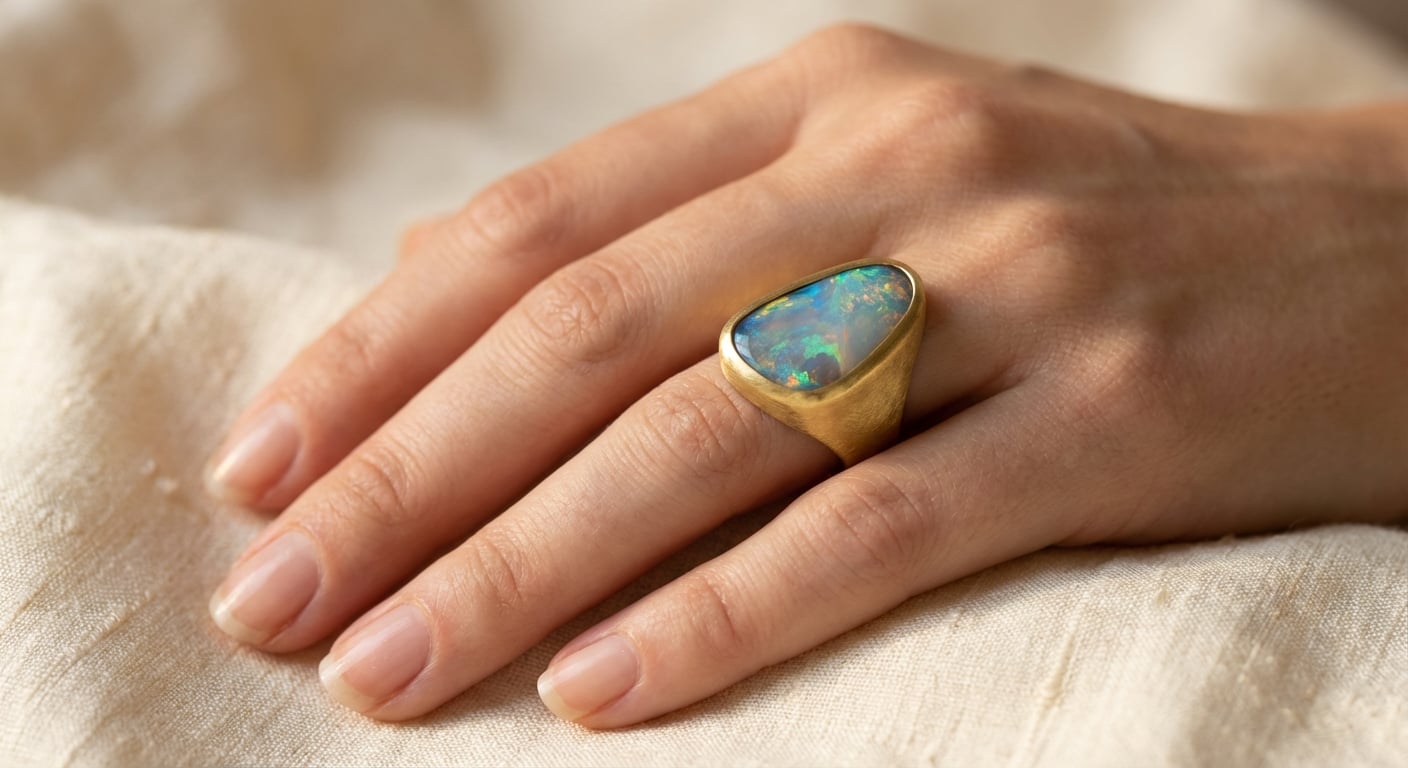
Bezel settings are the best choice for opal rings. The metal rim protects the edges from chips. Avoid prong settings for rings you plan to wear daily. For pendants and earrings where impact risk is low, any setting works well.
Never set opal in a ring for everyday hard-use activities: gardening, gym, cooking, typing heavily. The stone chips. This is not a flaw in the opal, it is physics: Mohs 6 versus a granite countertop does not end well.
Cleaning and Storage
Mild soap and warm water with a soft cloth. No ultrasonic, no steam, no harsh chemicals. For Ethiopian opal specifically: avoid soaking and do not store in a sealed airtight container, the stone needs some ambient humidity equilibrium.
Store opal away from diamonds, sapphires, and other hard stones that will scratch the surface. A soft pouch or separate compartment in a jewelry box is all you need.
One practical note from our sourcing experience: opal that has been properly cut and stored in stable conditions holds its color and structure for decades without any special treatment. The horror stories about opal "drying out and cracking" mostly apply to poorly stored raw material or stones cut too thin. A well-made piece, treated sensibly, will outlast the person who bought it.
Frequently Asked Questions
Conclusion
Evaluating an opal's worth is no longer a mystery; it is a skill founded on understanding the interplay of body tone, play-of-color, pattern, and origin. This knowledge transforms a potential purchase from a risk into a confident investment in a piece of natural art, ensuring the stone you choose is valued correctly and treasured for its true character. With the insights from this expert opal buying guide, you are fully equipped to assess quality like a professional.
The next step is putting this expertise into practice. Joalys facilitates a modern, transparent journey from selection to creation, beginning when you select your certified gemstone from the curated collection. Your chosen opal arrives in a luxury authentication case for personal inspection, ensuring complete confidence before you collaborate on a custom setting when you are ready. For personalized guidance in finding an exceptional stone, speak with a gemologist to translate your vision into a timeless reality.