Turquoise Buying Guide: How to Spot Fakes and Buy the Real Thing
With 90% of turquoise being fake, buying is risky. Our expert guide teaches you to evaluate color, matrix, and origin to spot imitations. Buy with confidence!
Quick Facts: Turquoise Buying
| Property | Details |
|---|---|
| Hardness (Mohs) | 5-6 (Relatively soft, requires care) |
| Key Quality Factors | Color (Robin's Egg Blue is most prized) and Matrix (Spiderweb pattern is highly valued) |
| Authenticity Check | Ask the seller: 'Is this natural, stabilized, or enhanced?' |
| Common Imitations | Dyed Howlite (uniform color, dye in cracks) and Reconstituted Block (plastic-like appearance) |
| Prized Origins | Persian (Nishapur), Sleeping Beauty (USA), Kingman (USA) |
| Price Influencers | Mine origin, color purity, matrix pattern, and treatment type (natural vs. stabilized) |
| Ideal Metal Setting | Sterling Silver is the traditional and preferred metal for authentic turquoise jewelry |
Introduction
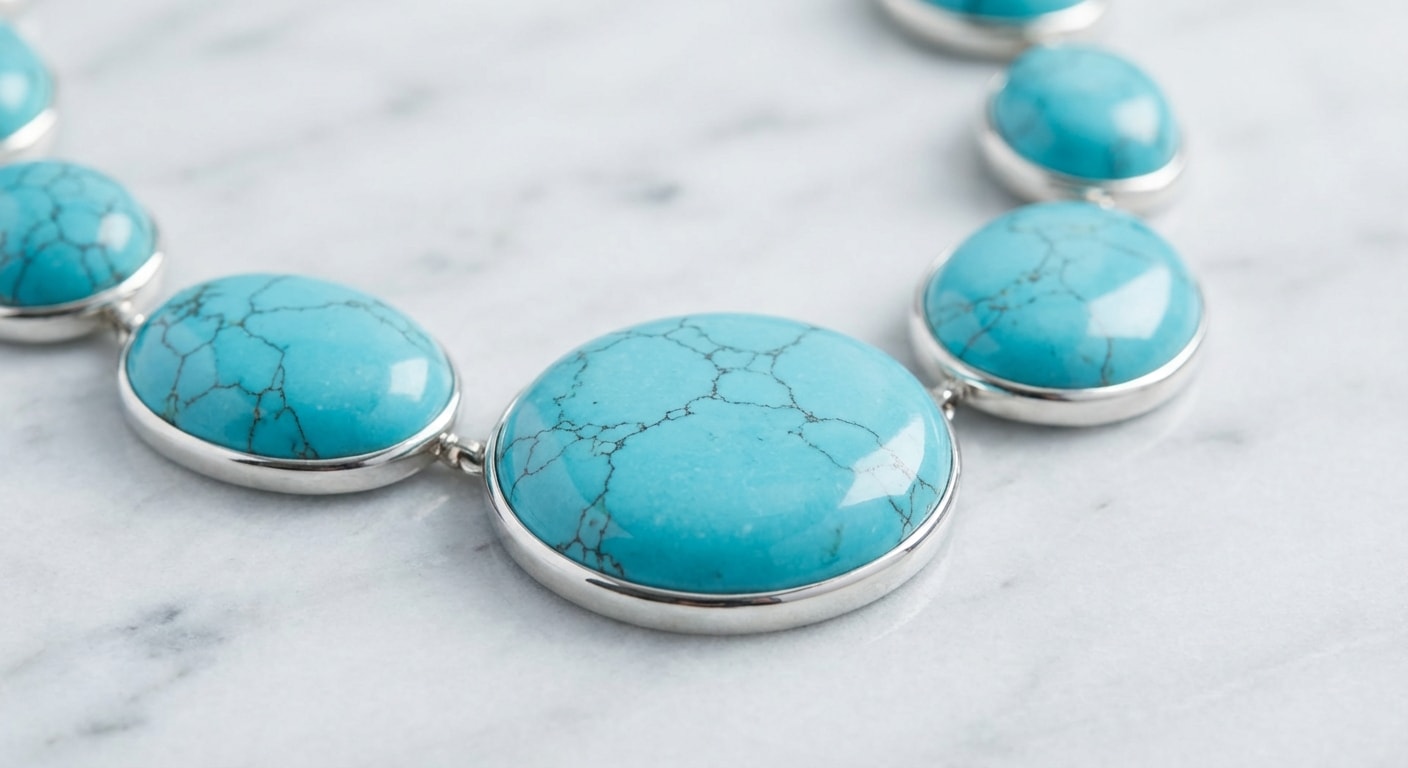
Here is the honest truth about turquoise: roughly 90% of what is sold today has been treated, dyed, or is not turquoise at all. Dyed howlite, plastic resin, epoxy-stabilized powder, glass. We have seen all of it, including from dealers who look completely legitimate online.
Turquoise is one of the oldest gemstones in human history, worn by pharaohs, traded across the Silk Road, carved into Aztec masks. It deserves better than the flood of counterfeits that currently dominate the market. This guide gives you the tools to tell the difference, understand pricing, and buy with confidence.
Updated March 2026.

Watch This Before You Buy Turquoise
The Foundations of Turquoise Quality: Beyond Just Color
Judging turquoise quality comes down to three things: color, matrix pattern, and hardness. Everything else, setting, origin name, price tag, follows from these three. Get these right and you will not overpay.
Color: The Most Important Factor
The most sought-after turquoise color is an intense medium blue, what collectors call "robin's egg" or "sky blue." This is the color historically associated with the Nishapur mines of Iran and the Sleeping Beauty mine in Arizona. Both are largely depleted now, which is exactly why that color commands such high prices.
Green turquoise is not inferior. It simply reflects higher iron content in the host rock. Persian blue versus Southwest green is a matter of taste, not quality, as long as the color is even and vivid. What you want to avoid: pale, washed-out blue, brownish tints, or uneven patches that suggest dye rather than natural color distribution.
Matrix: Character, Not Defect
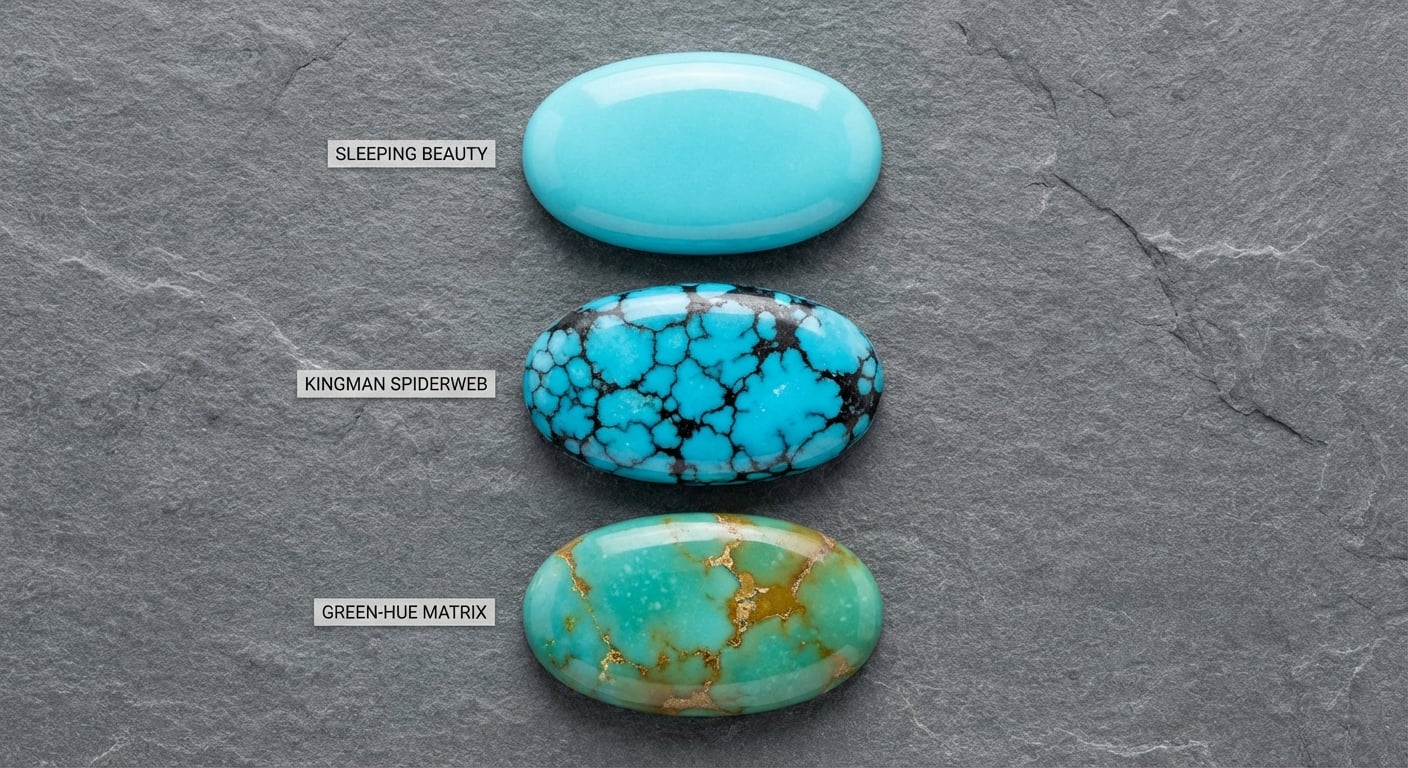
The dark veining you see in turquoise, that's the matrix, the remnants of the host rock. Spider web matrix from mines like Kingman or Number 8 is highly prized by collectors. A clean, matrix-free stone from Sleeping Beauty commands premium prices for a different reason: its pure, even color photographs beautifully and works well in modern settings.
Neither is better. They are different products for different buyers. What matters is that the matrix looks natural, with irregular organic patterns. Perfectly uniform veining is a red flag for synthetic material.
Hardness: The Practical Question
Natural turquoise sits at Mohs 5 to 6. That is softer than most gemstones, which is why so much of the commercial market is stabilized. Stabilized turquoise has had resin injected under pressure to harden the stone and deepen the color. It is real turquoise, just treated. Fine for jewelry, as long as it is disclosed and priced accordingly.
Real vs. Fake Turquoise: Your Authenticity Checklist
Let's be direct: when a vendor says "real turquoise," that could mean four very different things. Knowing the categories protects your money.
Natural Turquoise
Untreated, no resin, no dye, straight from the mine. Rare. Expensive. Typically Mohs 6+ with good hardness naturally. If someone is selling "natural untreated turquoise" for $15 a carat, walk away. The real thing starts around $30 to $50 per carat for decent quality, and goes up steeply for high-grade Persian or Sleeping Beauty material.
Stabilized Turquoise
Real turquoise impregnated with colorless resin under pressure. Acceptable practice, widely used, should be disclosed. Accounts for the majority of turquoise jewelry in the market. Prices range from $5 to $20 per carat. Not a scam as long as it is sold as stabilized.
Treated or Dyed
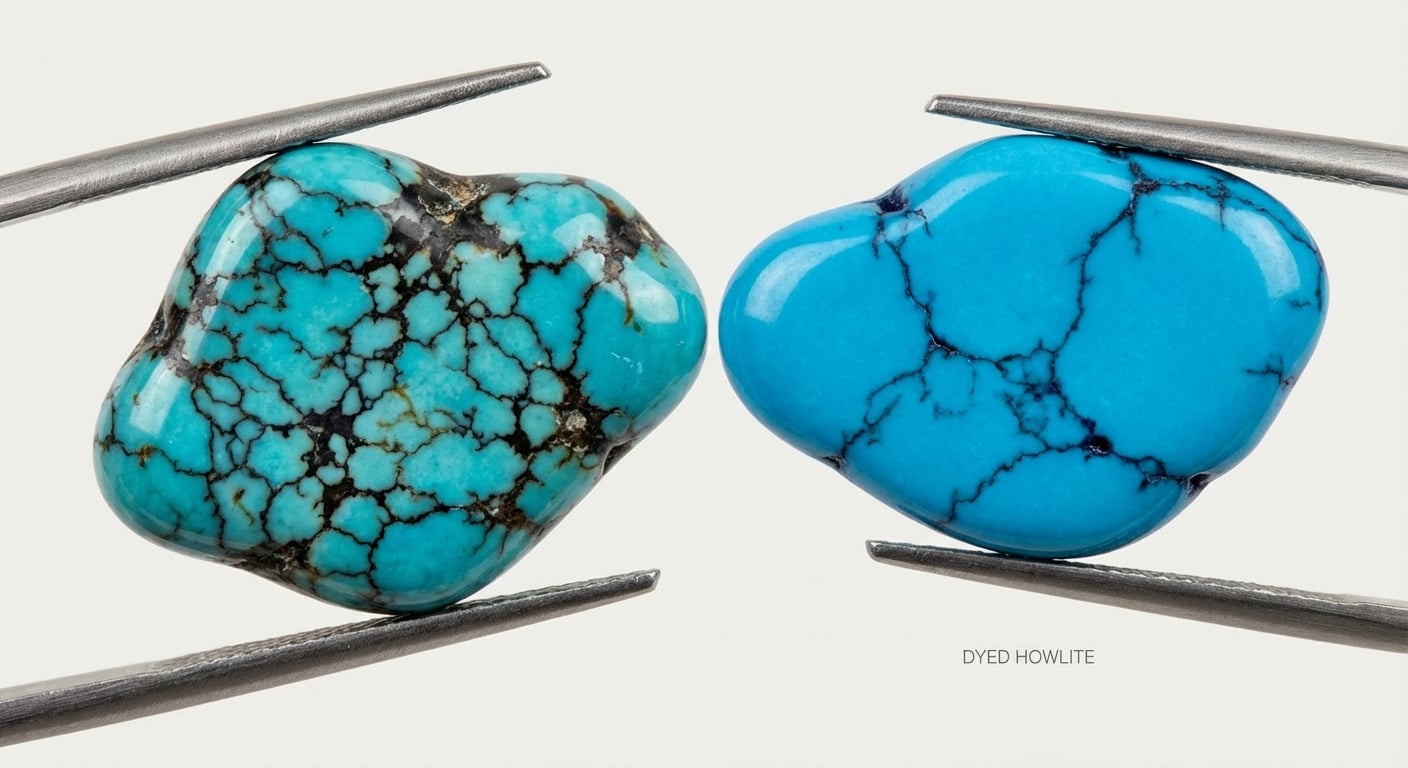
Low-grade material dyed to improve color, sometimes also stabilized. The dye fades over time. If the blue looks too perfect and too even, and the price is suspiciously low, this is probably what you are looking at. A quick acetone wipe test on an inconspicuous spot will show color transfer if dye is present.
Simulants: The Real Fakes
Dyed howlite is the most common. It looks remarkably like turquoise, takes dye well, and is sold deceptively across online marketplaces. Plastic and glass simulants also exist. A simple test: howlite is lighter in weight and warmer to the touch than real turquoise. Under a loupe, dyed howlite shows dye concentrated in surface cracks rather than natural color zoning within the stone.
A Connoisseur's Guide to Turquoise Mines & Origins
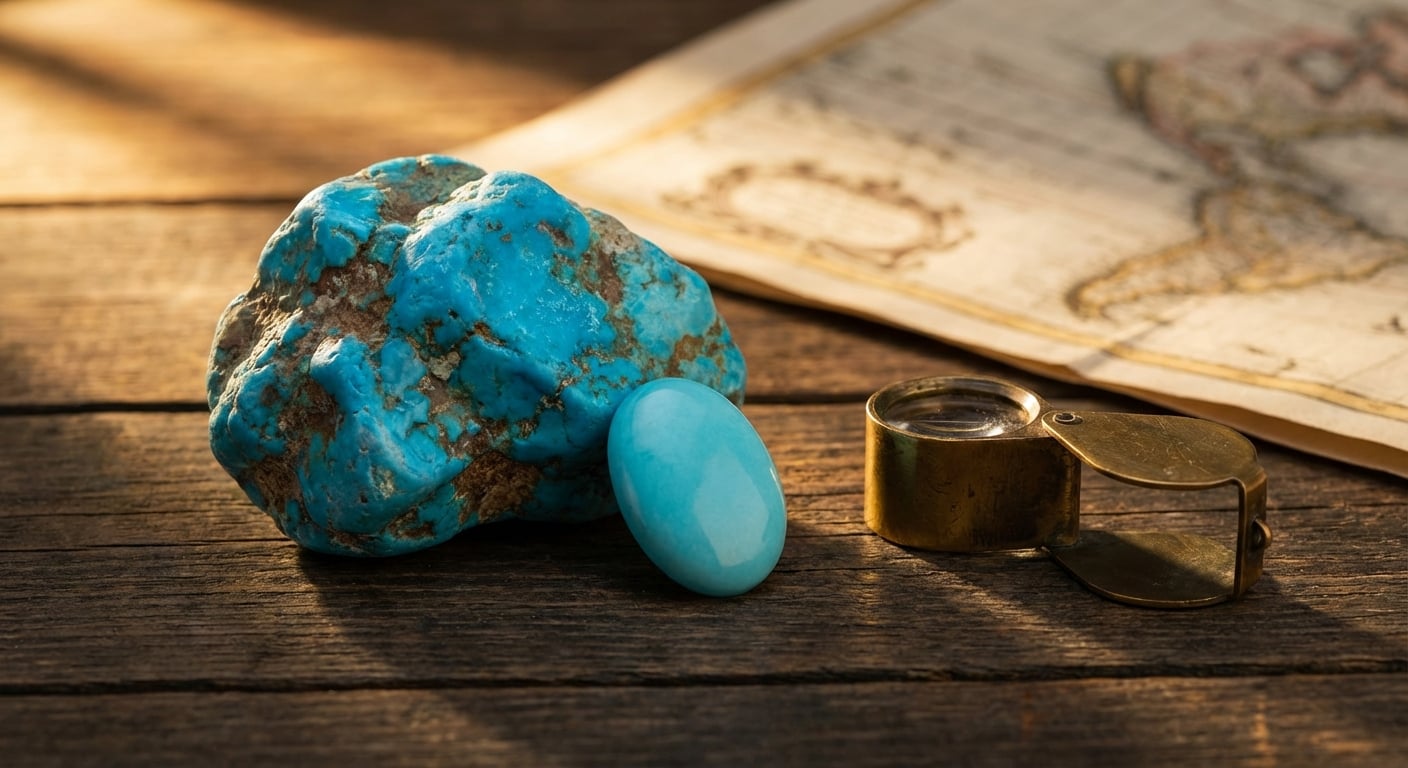
A turquoise's origin is its pedigree. The specific geological conditions of a mine impart a unique signature of color and matrix, defining its character, rarity, and value. Just as the finest sapphires are associated with specific regions like Kashmir, certain turquoise mines have achieved legendary status among collectors and jewelers. Understanding these provenances is the key to appreciating a stone's true worth and making a discerning investment.
The American Classics: Sleeping Beauty & Kingman
The American Southwest is home to some of the world's most iconic turquoise deposits. Each mine produces stones with distinct characteristics that are highly sought after by connoisseurs for their unique beauty and story.
- Sleeping Beauty, Arizona: Now closed, this mine is legendary for producing turquoise of a pure, intense sky-blue color with little to no matrix. Its uniform and vibrant hue made it a favorite for high-end jewelry. Due to the mine's closure, genuine Sleeping Beauty turquoise is increasingly rare and valuable, primarily available on the secondary market.
- Kingman, Arizona: As one of the oldest and largest active mines, Kingman is celebrated for its brilliant blue turquoise, often featuring a striking black or brown spiderweb matrix. This distinctive pattern is highly prized and serves as a natural fingerprint, making each stone unique.
| Mine | Primary Color | Signature Matrix | Status & Rarity |
|---|---|---|---|
| Sleeping Beauty | Intense, uniform sky blue | Typically matrix-free | Closed; highly rare and collectible |
| Kingman | Vibrant blue, sometimes with green tones | Black or brown spiderweb | Active; a benchmark for quality |
Global Icons: Persian and Tibetan Turquoise
Beyond the Americas, two regions hold immense historical and cultural significance in the world of turquoise, producing gems that have set global standards for centuries.
- Persian (Nishapur) Turquoise: Mined for over 2,000 years in modern-day Iran, Persian turquoise is the historical benchmark for quality. It is known for its pure, medium-blue "robin's egg" color, a term coined to describe its perfection. This origin is synonymous with the highest grade of turquoise, much like Burma is for the famed "pigeon's blood" color of the July birthstone, ruby.
- Tibetan Turquoise: Deeply intertwined with spiritual and cultural traditions, Tibetan turquoise is prized for its unique spectrum of colors, ranging from blue-green to a deep, rich green. It often features a dark, intricate spiderweb matrix that is highly valued for its character and rustic beauty.
For those seeking to acquire a gemstone with a distinguished provenance, the first step is to consult with an expert who can verify its origin and quality. A personalized consultation can help navigate the nuances of selecting a stone from a legendary mine. Schedule an expert consultation to discuss your preferences.
Understanding a stone's origin story is fundamental to the "stone-first" philosophy championed by bespoke jewelers like Joalys, where the gem's intrinsic beauty dictates the final design. This approach ensures that the craftsmanship honors the unique journey of each stone, from the earth to its final setting. The unique color story of a turquoise from a specific mine is as important as the fire in a well-cut diamond.
Beyond the Stone: Evaluating the Artistry of the Jewelry
A good stone in a bad setting is a waste. Here is what the metalwork tells you about the overall quality of a piece.
Metal Choice
Sterling silver is the traditional pairing for turquoise, especially in Navajo and Zuni jewelry. The cool tone of silver complements both blue and green turquoise. Gold settings work beautifully with deeper blue stones but tend to clash with greener material. Yellow gold with spider web matrix turquoise is a specific aesthetic that either works for you or does not.
Bezel settings, where a metal rim wraps the stone, are the practical choice for turquoise given its relative softness. Prong settings expose more of the stone but leave the edges vulnerable. For a ring worn daily, bezel is the smarter call.
What Poor Craftsmanship Signals
Rough solder points, uneven bezels, glue visible around the stone, machine-stamped marks that look soft rather than crisp. These are not just aesthetic issues. They often indicate that the vendor cuts corners on stone quality too. We have consistently found that pieces with sloppy settings contain lower-grade or treated stones, not always, but often enough to treat it as a warning sign.

Investing with Confidence: Pricing & Making the Purchase
Turquoise pricing is all over the place, which makes it one of the easier gems to overpay for if you do not know the market.
What Actually Drives the Price
Origin matters enormously. Persian turquoise (Iran) and Sleeping Beauty (Arizona, now closed) command the highest prices for their pure blue color. Kingman and Number 8 mine material is prized for spider web matrix. Chinese turquoise floods the low end of the market and is often heavily treated.
Treatment status is the other big variable. Natural untreated: $30 to $200+ per carat for quality material. Stabilized: $5 to $25 per carat. Dyed or simulants: should be priced at cents, but often is not.
Red Flags on Price
"Persian turquoise" at $8 per carat. "Sleeping Beauty" from a Chinese wholesale site. "Natural untreated" with no documentation. These claims are cheap to make and almost impossible to verify without lab testing. For anything above $200 total, ask for a certificate from an independent gemological lab. For anything significant, AGL and GIA both issue colored stone reports.
At JOALYS, we source directly from verified suppliers with traceable provenance. We cannot source turquoise from Sri Lanka, it does not occur here, but the same principle applies: know where the stone comes from, who handled it, and whether the price makes sense for that origin and treatment status.
Frequently Asked Questions
Conclusion
Navigating the turquoise market no longer requires guesswork. An informed buyer can confidently assess a stone's value by evaluating its color, matrix, and origin, and easily distinguish genuine gems from common imitations. This expertise transforms a daunting purchase into a rewarding investment in timeless beauty.
The final step in any successful turquoise buying guide is applying this knowledge with confidence. The Joalys process is designed for this purpose, allowing you to first select a certified turquoise gemstone based on its individual merit. Your chosen stone arrives in a luxury authentication case, giving you time to appreciate its unique character before you design your custom jewelry setting when the moment is right. For personalized guidance in finding a stone that meets these exacting standards, speak with a Joalys gemologist to begin your journey.