JOALYS PARIS

Language & Currency

EUROPE

🇫🇷France
🇧🇪Belgium
🇨🇭Switzerland
🇬🇧United Kingdom
🇩🇪Germany
🇮🇹Italy
🇪🇸Spain
🇵🇹Portugal
🇱🇺Luxembourg
🇷🇺Russia

AMERICA

🇺🇸United States
🇨🇦Canada

ASIA-PACIFIC

🇨🇳China
🇯🇵Japan
🇦🇺Australia

MIDDLE EAST

🇦🇪United Arab Emirates
🇶🇦Qatar
🇸🇦Saudi Arabia
🇴🇲Oman
🇧🇭Bahrain

OTHER LOCATIONS

🌍Other
Guide

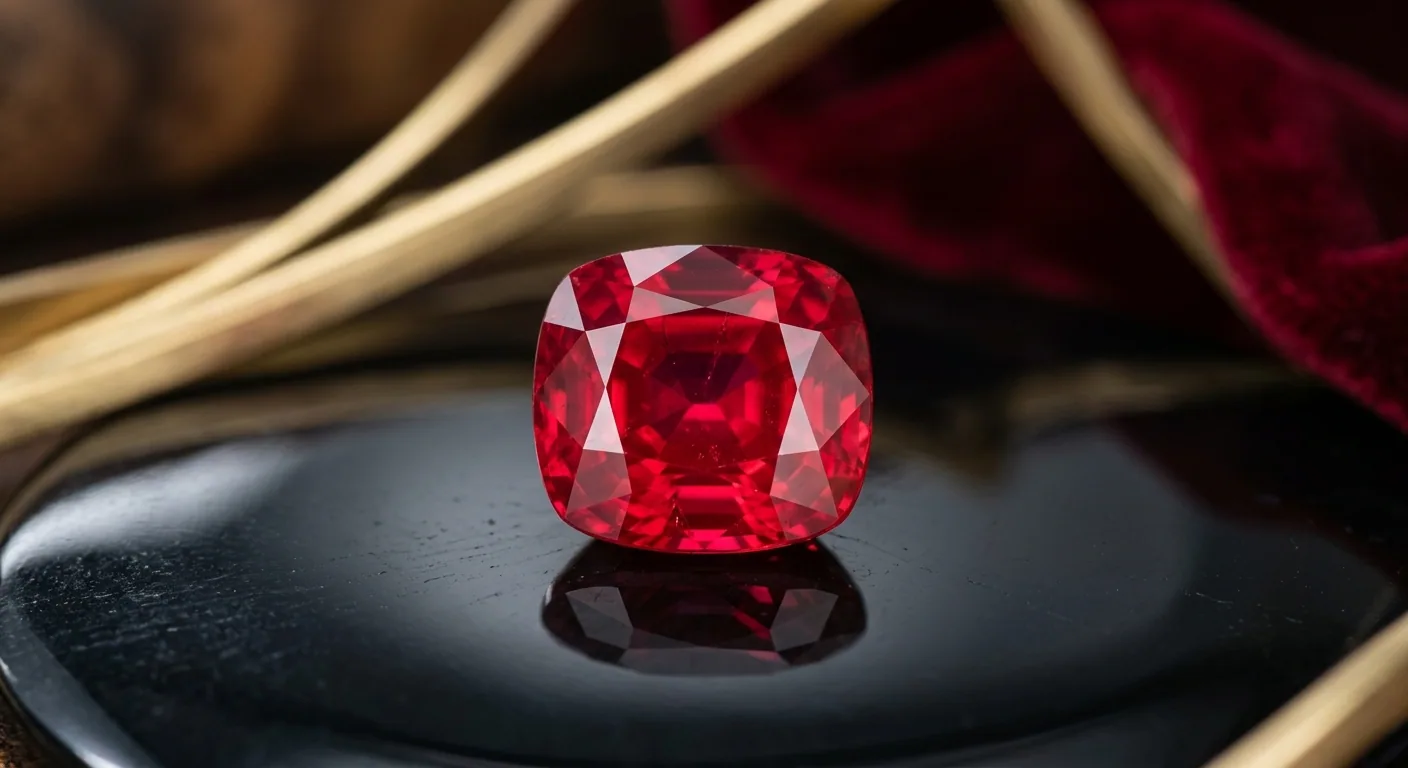
Natural Ruby Stone Guide: Identification, Grading & Value

Master the art of buying natural ruby stones. Learn expert identification techniques, decoding grading factors (color, clarity), and understanding market value.

Natural Ruby Quick Facts

PropertyDetails
Hardness (Mohs)9 (extremely durable)
Key Identification SignsNatural inclusions ('silk', crystals, color zoning)
Most Valued ColorVibrant, medium-dark pure red ('Pigeon's Blood')
Primary Grading FactorsColor (Hue, Saturation, Tone), Clarity, Cut, Carat
Top Geographic OriginBurma (Myanmar) - commands highest premium
Common TreatmentHeat treatment (widely accepted to improve color/clarity)
Treatment to AvoidLead-glass filling (significantly lowers value and durability)
Value DeterminantsColor quality, lack of treatment, origin, carat weight
Natural Ruby Stone: Identification, Grading & Value
Master the art of buying natural ruby stones. Learn expert identification techniques, decoding grading factors (color, clarity), and understanding market value.

Introduction

A single natural ruby stone can command higher prices per carat than almost any other gemstone on earth. We've seen stones in our sourcing trips to Sri Lanka and Madagascar that stopped buyers cold, not because of the price tag, but because of that unmistakable glow. Yet the market is full of synthetics, undisclosed treatments, and outright fakes.

Updated March 2026. A natural ruby is a red gemstone made of the mineral corundum, colored by chromium. Identifying one means looking for specific internal features (inclusions, fluorescence). Grading it means understanding color above all else: hue, saturation, tone. And valuing it correctly means knowing treatment status and origin, two factors that can swing the price by 900% or more.

This guide covers everything you need: how to spot a real ruby, how grading works, where the best stones come from, and what you should actually pay.

Authenticity First: How to Identify a Natural Ruby Stone

Here's the thing about rubies: the "King of Gemstones" title means the fakes are sophisticated. Glass-filled composites, lab-grown stones, red spinels, they all look convincing in photos. In our experience sourcing rubies directly from Sri Lanka, Madagascar, and Tanzania, we've learned that authentication always starts with knowing what to look for.

Visual Inspection: The Tell-Tale Signs

A simple visual inspection, particularly with the aid of a standard 10x jeweler's loupe, can reveal essential clues about a ruby's authenticity.

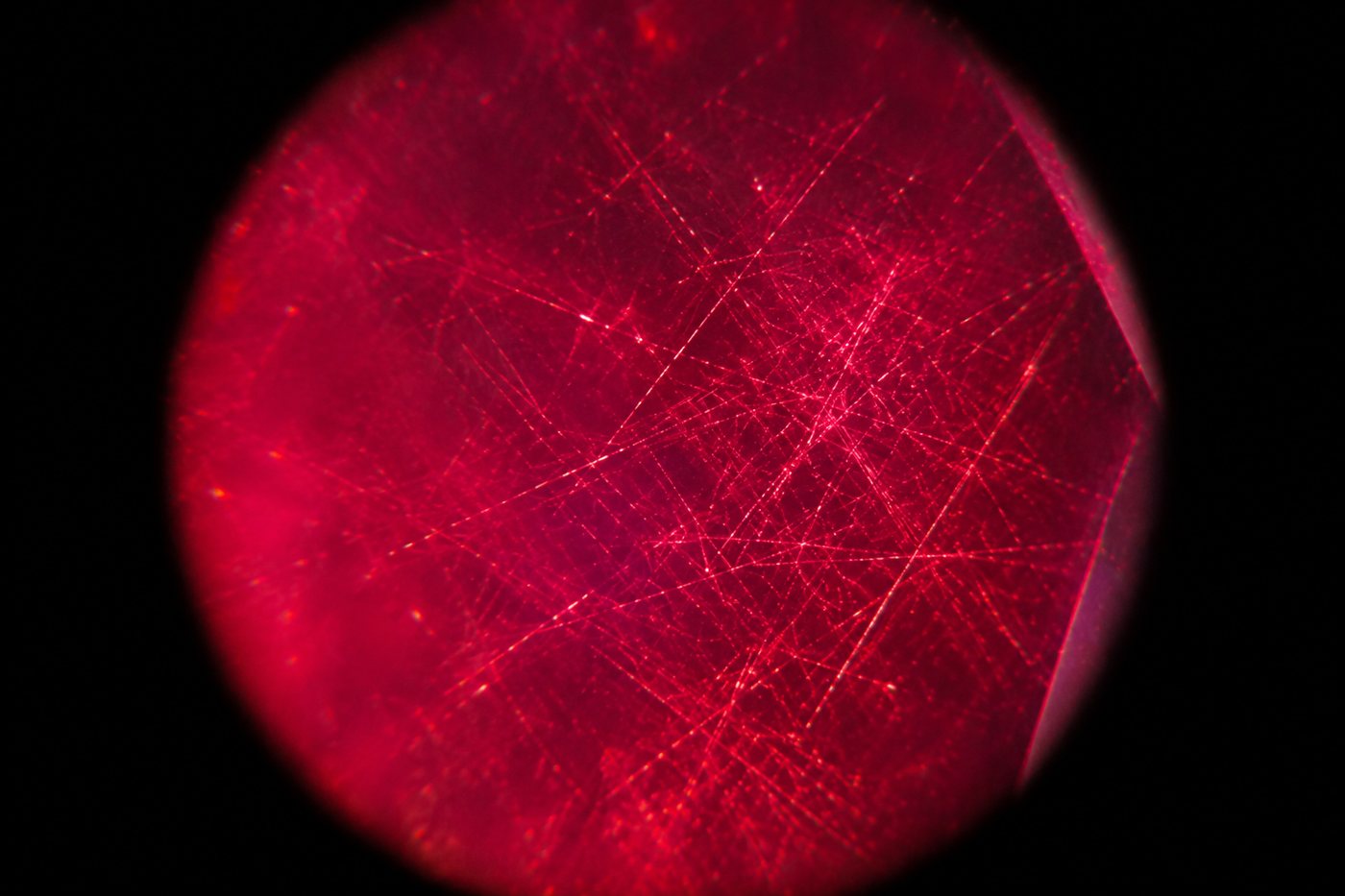
Inclusions: Nature's Birthmarks Unlike synthetic rubies, which are often flawless or contain perfectly spherical bubbles, natural rubies always possess internal features known as inclusions. These unique "birthmarks" are fascinating proof of the stone's natural formation deep within the earth over millions of years.

Key natural ruby inclusions include:

  • Silk: Fine, parallel needles of rutile (titanium dioxide) that often intersect at angles. "Silk" can create a velvety appearance and, when abundant, the phenomenon of asterism (a star effect). Its presence is a strong indicator of natural origin.
  • Crystals: Tiny crystals of other minerals (like calcite or zircon) trapped inside during growth.
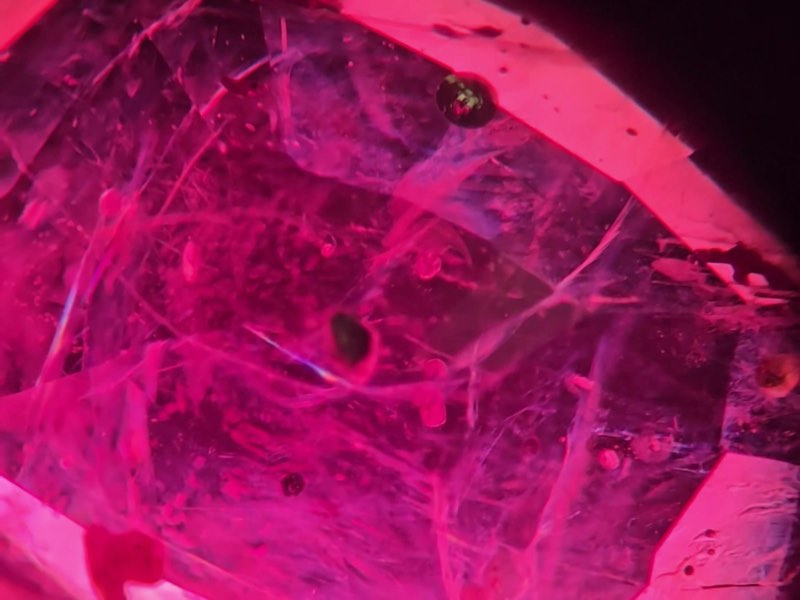
  • Fingerprints: Networks of microscopic fluid-filled tubes that resemble human fingerprints, formed during crystal growth or healing.
  • Color Zoning: Uneven distribution of color within the crystal, often visible as straight, angular bands, contrasting with the curved growth lines seen in some synthetic rubies.

Luster and Rarity A well-cut natural ruby exhibits a sub-adamantine to vitreous luster, meaning it reflects light brilliantly, though not quite with the intensity of a diamond. This characteristic luster, combined with the presence of natural inclusions, helps establish authenticity. Understanding gemstone rarity is also vital; perfectly clean rubies over one carat are exceptionally rare, meaning a "too perfect" stone at a low price point should always prompt further verification.

Beyond the Naked Eye: Professional Identification Tools

While a loupe is valuable, definitive identification often requires the sophisticated equipment found in a professional gemological laboratory. Expert gemologists employ several techniques to confirm natural origin and detect treatments.

Identification Method What It Reveals Key for Ruby
Microscopic Examination Detailed view of internal features. Distinguishes natural angular growth/silk from synthetic curved striae/bubbles.
Refractive Index (RI) Measures how light bends as it enters the stone. Ruby has a specific RI (approx. 1.762-1.770); this test separates it from most simulants.
Specific Gravity (SG) Measures the stone's density relative to water. Helps confirm identity (ruby SG is approx. 4.00), differentiating it from lighter or denser look-alikes.
UV Fluorescence Observes reaction to ultraviolet light. Natural rubies often show strong red fluorescence due to chromium, though some synthetics do too; fluorescence patterns can offer clues.
Spectroscopy Analyzes the absorption of light to identify chemical composition. Detects the presence of trace elements and diagnostic absorption lines, helping to identify the stone and potentially its origin.

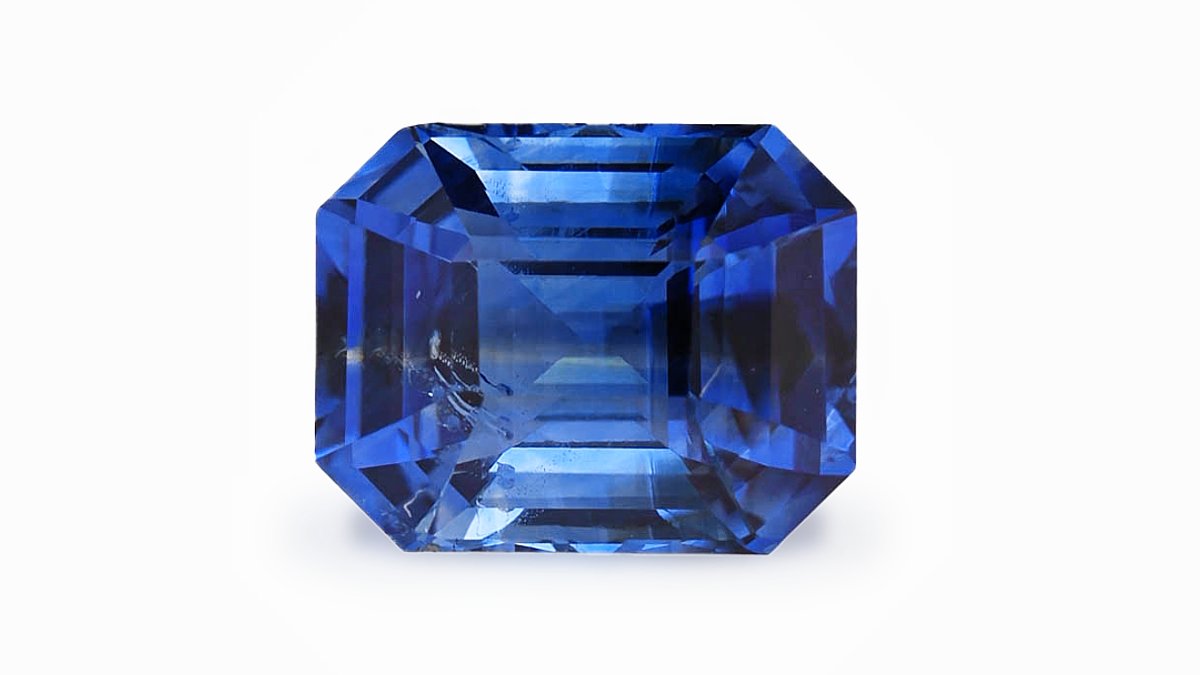
These professional tests provide definitive data, ensuring accurate identification. For instance, while a sapphire (also a variety of corundum) might share similar RI and SG, spectroscopy and inclusion analysis easily distinguish the two.

Ready to explore the world of authentic gemstones? You can browse our certified collection of natural rubies, each accompanied by an independent lab report.

A photomicrograph showing internal inclusions within a natural ruby, including fine rutile needles (silk) and a small crystal, viewed through a gemological microscope.

Decoding Quality: The Ruby Grading Chart Explained

Grading a ruby is not like grading a diamond. With diamonds, every factor matters roughly equally. With rubies, color dominates everything, and within color, there are three separate dimensions to assess. Get color right and you understand 70% of the price. Here's how it all works.

Color: The Single Most Important Factor

In the world of fine gemstones, color is essential. For rubies, this evaluation is broken down into three precise components: hue, tone, and saturation.

  • Hue: This refers to the basic color of the gemstone. While a pure, vibrant red is the ideal, most rubies exhibit secondary hues. Gemstone varieties are often defined by these subtle shifts; a ruby with too much purple may be classified as a purplish-red ruby, while one with strong orange modifiers may be called an orange-red ruby. The closer the hue is to a true, spectral red, the higher the grade.
  • Tone: This describes the lightness or darkness of the red color. The finest rubies typically fall within the medium to medium-dark tone range. If the tone is too light, the stone may cross the boundary into being classified as a pink sapphire. Conversely, if the tone is too dark, the red becomes difficult to discern, diminishing the stone's brilliance.
  • Saturation: This is the intensity or brightness of the color. It measures how "pure" the red is, free from gray or brown modifiers. Top-quality rubies possess vivid saturation, meaning the color appears rich and intense.

The "Pigeon's Blood" Designation The term "Pigeon's Blood" is perhaps the most famous and coveted description in gemology. Historically associated with the finest rubies from Burma (Myanmar), it does not refer to a specific geographic origin today but rather a particular color profile. Some gemological laboratories use this grade to describe a ruby that exhibits a highly saturated, medium-dark red hue, often enhanced by a soft red fluorescence. This combination creates a glowing effect that is exceptionally rare and valuable.

Clarity, Cut, and Carat Weight

While color is the dominant factor, the remaining Cs complete the grading profile and significantly impact a ruby's value and desirability.

Clarity Rubies are classified as Type II gemstones, meaning they almost always contain eye-visible inclusions. Unlike diamonds, where flawless clarity is attainable, an "eye-clean" ruby (one where inclusions are not visible to the naked eye) is considered exceptional. Grading focuses on the location, size, and visibility of these inclusions. Experienced graders determine if the inclusions detract from the stone's overall beauty or compromise its structural integrity.

Cut The cut of a ruby is essential for maximizing its inherent beauty. A skilled cutter balances weight retention with the need to optimize brilliance (the return of white light) and fire (the display of spectral colors). The cut also affects how the color is presented; a well-proportioned cut can intensify saturation and minimize extinction (dark areas). Common shapes like oval and cushion are often preferred as they follow the natural crystal shape, maximizing carat weight.

Carat Weight Like all precious gems, the price of a ruby increases exponentially with its size. However, due to extreme rarity, this escalating value is particularly dramatic for high-quality rubies over one carat. A three-carat ruby of exceptional quality is exponentially more valuable than three one-carat rubies of the same grade. This rarity factor is a key driver in the luxury market, making large, fine rubies significant assets.

The following table summarizes how these factors are typically presented in a simplified ruby grading chart used by industry professionals:

Grading Factor Exceptional (Top Grade) Fine Quality Commercial Quality
Color (Hue) Pure Red to slight Purplish-Red Purplish-Red to Pinkish-Red Noticeable Orange or Brown modifiers
Color (Tone) Medium to Medium-Dark Medium-Light to Dark Very Light or Very Dark
Color (Saturation) Vivid (Intense) Strong Moderate to Weak
Clarity Eye-Clean Slightly Included (minor eye-visible) Moderately to Heavily Included
Cut Quality Excellent (Maximum Brilliance) Very Good to Good Fair to Poor (significant extinction)
Rarity Factor Extremely Rare (especially >1ct) Rare Common
A visual comparison of three natural rubies showcasing variations in color saturation and tone, from a vibrant 'pigeon's blood' red to a slightly lighter and darker red.

The Origins of Value: Burma vs. Mozambique and Beyond

Where a ruby comes from matters enormously for price. Two rubies with the same color grade can differ by 400% in value based purely on origin. We source directly from Sri Lanka, Madagascar, and Tanzania, which means we've seen firsthand how different these stones look. Here's what the origin map actually means for buyers.

The Legendary Burma (Myanmar) Ruby

For centuries, the Mogok stone tract in Burma (now Myanmar) has been the undisputed source of the world's most coveted rubies. This legendary status is rooted in the exceptional quality and unique characteristics of the gems unearthed there.

Characteristics and The "Glowing" Effect Burmese rubies are celebrated for their rich, vibrant red color, which often possesses a soft, glowing quality. This distinctive optical effect is caused by a high concentration of chromium, the element responsible for the red hue, combined with remarkably low levels of iron. The low iron content allows the ruby to exhibit strong red fluorescence, meaning it literally glows when exposed to ultraviolet light (including sunlight), intensifying its apparent color.

The Origin Premium and Investment Value Due to their historical significance, unparalleled color profile, and increasing scarcity, compounded by political instability and sanctions, natural, untreated rubies from Burma command the highest prices per carat in the gemstone market. An exceptional Burma ruby is considered a pinnacle acquisition, often outperforming other gemstone varieties in value retention and appreciation. While the "Pigeon's Blood" designation can apply to rubies from other origins, a certified, untreated Burmese ruby with this color grade represents the apex of luxury and rarity.

Origin Characteristic Burma (Mogok) Ruby Mozambique (Montepuez) Ruby
Typical Color Pure Red to slight Purplish-Red Vibrant Red to slightly darker Purplish-Red
Fluorescence Very Strong (Low Iron) Medium to Strong (Moderate Iron)
Clarity Often Included ("Silk" common) Can be exceptionally Eye-Clean
Common Size Rare above 1-2 carats Available in larger sizes (>3 carats)
Market Value Highest (Significant Origin Premium) High (Excellent value for quality)

Mozambique and Other Sources Worth Knowing

While Burma holds historical dominance, the discovery of significant ruby deposits in Mozambique over the last decade has transformed the modern gemstone market.

Mozambique: The Modern Standard The Montepuez region in Mozambique has emerged as the leading producer of high-quality rubies, offering a consistent supply that rivals Burma in beauty, if not historical cachet. Mozambique rubies are characterized by excellent clarity and are frequently found in larger sizes, which are exceptionally rare for Burmese stones. Their color ranges from a vibrant, pure red to slightly darker, purplish-red hues. With moderate iron content, they exhibit strong fluorescence, though generally less intense than their Burmese counterparts.

Comparative Value and Strategic Buying High-quality Mozambique rubies are exceptionally valuable and sought after. However, they generally do not command the same exponential "origin premium" as Burmese stones of comparable appearance. This makes them a highly attractive option for discerning buyers seeking exceptional color and size without the historical surcharge. Other notable sources include Thailand and Cambodia, historically significant for darker, brownish-red rubies (high iron), and Madagascar, a newer source producing a diverse range of qualities.

Ready to find your perfect gemstone? Explore our certified collection of hand-selected stones, including exceptional examples from both Burma and Mozambique.

Understanding these origins allows collectors to make informed decisions based on rarity, aesthetic preference, and investment potential. For instance, while a emerald value is driven heavily by clarity and color origin (like Colombia), a ruby's value is uniquely tied to this historical interplay between Burma and the rest of the world.

Two exceptional natural rubies, one a classic Burmese ruby with soft fluorescence and the other a vibrant Mozambique ruby, displayed side-by-side on a map-themed background.

Understanding Ruby Treatments and Their Impact on Value

Let's be honest: 95%+ of the rubies you'll encounter have been heat-treated. That's not a scandal, it's just how the gem trade works, and has worked for centuries. But there's a real difference between acceptable heat treatment and treatments that destroy long-term value. At JOALYS, we always disclose treatment status upfront, because buyers deserve to know what they're paying for.

Heat Treatment: The Standard You'll See Everywhere

Heat treatment is the most prevalent and widely accepted enhancement for natural rubies. This practice, with origins dating back hundreds of years, involves heating the gemstone to high temperatures, often in a controlled environment.

Process and Purpose The primary objectives of heating are to improve color and enhance clarity. Controlled high temperatures can dissolve secondary hues, such as purple or blue, resulting in a purer, more desirable red. Heat can also cause certain types of inclusions, particularly "silk" (rutile needles), to partially dissolve or re-crystallize, improving the overall transparency of the stone.

Market Acceptance and Value It is estimated that over 95% of all natural rubies in the jewelry market are heat-treated. Because this treatment is stable, permanent, and significantly increases the supply of beautiful gemstones, it is fully accepted within the trade. However, disclosure is mandatory. Heated rubies are substantially more affordable than untreated stones of comparable color and clarity. An untreated Burma ruby, for instance, commands a massive premium over a heated counterpart due to its extreme rarity.

Other Treatments: Know the Difference

While simple heat treatment is standard, other enhancement methods exist that significantly impact the integrity and value of the gemstone. Buyers must distinguish stable enhancements from those that compromise the stone.

Flux Healing (Heat with Borax) During the heating process, flux materials like borax may be added. This flux can melt and fill fractures that reach the surface, effectively "healing" them and improving clarity. While stable and generally accepted if disclosed, flux-healed rubies are valued lower than stones subjected to heat alone.

Lead-Glass Filling: A Critical Distinction This treatment represents a severe enhancement and requires careful attention. Low-grade, heavily fractured corundum, which would otherwise be unsuitable for jewelry, is infused with high-refractive index lead glass. This dramatic clarity improvement makes the material appear gem-quality. However, these are often referred to as "composite rubies" or "glass-filled rubies" and have very low intrinsic value. They are unstable, easily damaged by household chemicals or jeweler's torches, and require special care. This treatment must always be disclosed, as it differs fundamentally from standard heating.

Lattice Diffusion Lattice diffusion involves heating the ruby to near its melting point in the presence of coloring agents like beryllium. These elements penetrate the crystal lattice, altering or intensifying the color throughout the stone. Unlike surface diffusion, which only colors the exterior, lattice diffusion is stable. However, because it drastically changes the stone's appearance through artificial means, it must be disclosed and results in a significantly lower value than naturally colored or standard heat-treated rubies. The following table compares these key treatments:

Treatment Type Stability Acceptability Impact on Value Detection
Untreated N/A Highly Coveted Highest (Maximum Rarity) Microscopic analysis
Standard Heat Permanent Widely Accepted Significant reduction vs Untreated Magnification, advanced testing
Flux Healing Stable Accepted with Disclosure Lower than Standard Heat Microscopic examination
Lattice Diffusion Stable Accepted with Disclosure Much lower value Advanced spectroscopy
Lead-Glass Filled Unstable Controversial (Must Disclose) Very Low (Composite material) Magnification, RI testing

Understanding these distinctions ensures buyers recognize that a heated ruby, while enhanced, remains a valuable natural gemstone, much like a heated sapphire. Conversely, glass-filled composites offer a very different value proposition.

A side-by-side comparison of two natural rubies, one untreated and one heat-treated, illustrating the subtle difference in color and clarity achieved through traditional heating.

JOALYS

Everything Begins with the Stone

There is a ruby that already carries your story. We help you find it.

Choose your ruby loose, or let us set it into a piece crafted entirely for you.

Smart Buyer's Guide: How to Determine Natural Ruby Value & Price

Buying a natural ruby without the right information is how people get burned. The price spread is enormous: a commercial heated ruby might cost $300/ct, while an untreated Burmese pigeon blood ruby hits $10,000/ct or more. Both are technically "natural rubies." The difference is origin, treatment status, and color grade. Here's how to read all three before you buy.

Why Independent Certification Is Non-Negotiable

For any significant ruby purchase, an independent grading report from a reputable gemological laboratory is non-negotiable. This document serves as an objective blueprint of the gemstone's characteristics, verified by expert gemologists using advanced diagnostic equipment.

Verification of Key Factors A certificate from a recognized lab, such as GIA (Gemological Institute of America) or GRS (Gemresearch Swisslab), provides definitive confirmation of several critical value drivers. It identifies the species (natural corundum) and variety (ruby), and essentially, states whether any treatments were detected. As discussed, an untreated ruby commands a vast premium over a heated one. The report also offers an expert opinion on geographic origin, based on diagnostic inclusions, which significantly impacts value, particularly for Burma rubies.

Avoiding "Seller Certificates" It is vital to distinguish between an independent laboratory report and a "certificate of authenticity" issued by the seller. The latter represents a conflict of interest and may not adhere to strict, standardized grading criteria. Relying solely on a seller's documentation increases the risk of misrepresentation regarding quality or treatment status. An independent report provides peace of mind and essential documentation for insurance and future resale value.

Feature Independent Lab Report (e.g., GIA, GRS) Seller "Certificate of Authenticity"
Issuer Third-party, unbiased gemologists The retailer selling the gemstone
Objectivity High (No financial interest in the sale) Low (Potential conflict of interest)
Equipment Advanced diagnostic technology Often limited to basic tools like a loupe
Treatment Detection Highly accurate May not detect subtle enhancements
Market Acceptance Globally recognized standard Varies, often not accepted for valuation

A Practical Ruby Price Checklist

Determining if a ruby is fairly priced involves synthesizing all the information gathered. Use this checklist to structure your evaluation and ask the right questions.

  1. Prioritize Color: Recall that color is the essential factor. Evaluate the hue (purity of red), tone (medium to medium-dark is ideal), and saturation (vividness). Compare the stone against the described ideal color profile, understanding that secondary hues like strong orange or brown significantly reduce value.
  2. Assess Clarity and Cut: Check for eye-visible inclusions. While expected in rubies, they should not distract from the stone's beauty or threaten its durability. Evaluate the cut quality, does the stone sparkle brilliantly, or are there large dark areas (extinction)? A well-cut ruby maximizes its inherent color and light performance.
  3. Factor in Origin and Treatment: This is where price differences become dramatic. Confirm the origin and treatment status via the independent report. A heated Mozambique ruby will have a vastly different price point than an untreated Burma ruby of similar appearance. Be exceptionally cautious of "bargain" rubies, which may be unstable, lead-glass filled composites with minimal intrinsic value.
  4. Research Market Prices: Compare the asking price with current market data. Look at listed prices from reputable online dealers, recent auction results for comparable stones, and gemstone price guides. This research helps establish a realistic price range for a ruby with specific characteristics.
  5. Ask the Right Questions: Engage with the jeweler directly. Specific questions include: "Is this ruby natural and earth-mined?", "Has it undergone any treatments, and what kind?", "Is there a report from an independent lab like GIA?", and "What is the confirmed geographic origin?". A reputable jeweler, experienced in colored gemstones, will provide transparent answers and documentation.

Understanding these value factors allows for a confident purchase. For instance, while a top-quality emerald or sapphire also requires careful evaluation of color and origin, the interplay of treatment and rarity is particularly acute for rubies.

Ready to find your perfect gemstone? Explore our certified collection of hand-selected natural rubies, each accompanied by an independent lab report.

A luxurious natural ruby and diamond ring presented alongside an official GIA grading report, symbolizing authenticity and informed purchasing.

Frequently Asked Questions

Ruby prices fluctuate based on quality, origin, and treatment. Commercial heated rubies range from $500 to $2,500 per carat. Fine heated Mozambique stones cost $5,000 to $15,000. Top-quality untreated Burma rubies command $20,000 to over $100,000 per carat.
Definitive home tests are unreliable. Observations with a 10x magnifying glass can reveal natural inclusions; flawless stones are suspicious. Ruby scratches glass but not sapphire or diamond. Professional laboratory verification is essential for confirmation.
Yes. Heat treatment is a stable, accepted enhancement improving appearance. It does not change the stone's fundamental identity as an earth-mined ruby. This differs from synthetic rubies, which are man-made.
Red spinel offers excellent brilliance and durability. Rubellite tourmaline provides vibrant color but less hardness. Red garnet is affordable, though typically darker. Lab-grown rubies are chemically identical but significantly cheaper.
Clean gently with warm, soapy water and a soft brush. Avoid harsh chemicals, ultrasonic cleaners (especially for treated stones), and extreme heat. Store separately to prevent scratching other jewelry.
High-quality diamonds generally cost more per carat than commercial rubies. However, top-quality, untreated natural rubies, especially from Burma, are significantly rarer than comparable diamonds and can command higher prices per carat.
Pigeon’s Blood describes highly saturated, pure red with a medium-dark tone. It often exhibits a soft red fluorescence, making the color appear to "glow" from within. It is considered the epitome of ruby color.
Political issues in Myanmar (Burma) have led to sanctions. Mozambique offers a more transparent alternative. Buyers should ask jewelers about sourcing policies and prioritize reputable dealers who guarantee ethical practices.
Natural rubies typically contain "silk" (fine rutile needles), fingerprints (healed fractures), crystals of other minerals, and color zoning. Observing these features confirms natural origin.
Choose established online gemstone dealers or reputable high-end jewelry brands specializing in certified natural stones. Ensure they provide clear photos, detailed descriptions, independent lab reports, secure payment, and a solid return policy. Still have questions about Natural Ruby Stone: Identification, Grading & Value? Our gemstone experts provide personalized guidance. Schedule a Free Consultation | Explore Our Collection

Conclusion

Natural rubies are the most price-sensitive gemstone we handle. A 0.5-carat difference in tone, a "no heat" verdict on a GIA report, a Mogok origin confirmation, any one of those can multiply value by 3x or more. That's why this stuff matters.

In our experience at JOALYS, sourcing directly from mines in Sri Lanka, Madagascar, and Tanzania and cutting in Sri Lanka, we skip 2-3 intermediaries. Better stones at fair prices, always with full disclosure on treatment status. We personally prefer Ceylon rubies for their distinctive fluorescent glow and competitive price-to-quality ratio.

Browse our certified loose rubies or talk to our gemstone specialists for personalized guidance.

Expert Certification

Bilal Ahmed Mahir - Certified Gemmologist
GIA

Bilal Ahmed Mahir

Certified Gemmologist GIA

GIA-certified gemmologist with extensive experience in fine gemstone evaluation. As JOALYS's lead expert, Bilal ensures every stone meets the highest standards of quality, authenticity, and ethical sourcing.

GIA Certified Professional
Expert in Colored Gemstones
JOALYS Lead Gemmologist
Expert-Verified ContentThis article has been reviewed and certified by a qualified gemological professional