How to Choose a Wedding Band for Women: Expert Guide (2026)
Expert guide to wedding bands for women in 2026. Compare metals, styles, and gemstone options. Find out why sapphire and ruby eternity bands are trending, and how to get yours sourced direct from the mine.
Quick Facts: Women's Wedding Bands
| Property | Details |
|---|---|
| Average Cost (US, 2025) | $1,100 (The Knot 2025 Real Weddings Study) |
| Most Popular Metals | 18k Gold (Yellow, White, Rose), Platinum |
| Most Durable Metal | Platinum (dense, naturally white, requires low maintenance) |
| Top Styles | Plain, Pave Diamond, Eternity, Gemstone Eternity |
| Recommended Width | 2mm to 4mm (most common range) |
| Best Gemstones for Daily Wear | Sapphires and Rubies (Mohs 9 hardness) |
| Full vs Half Eternity | Full eternity cannot be resized; half eternity can be resized |
| Custom Lead Time | 3 to 6 weeks (4-5 weeks at JOALYS) |
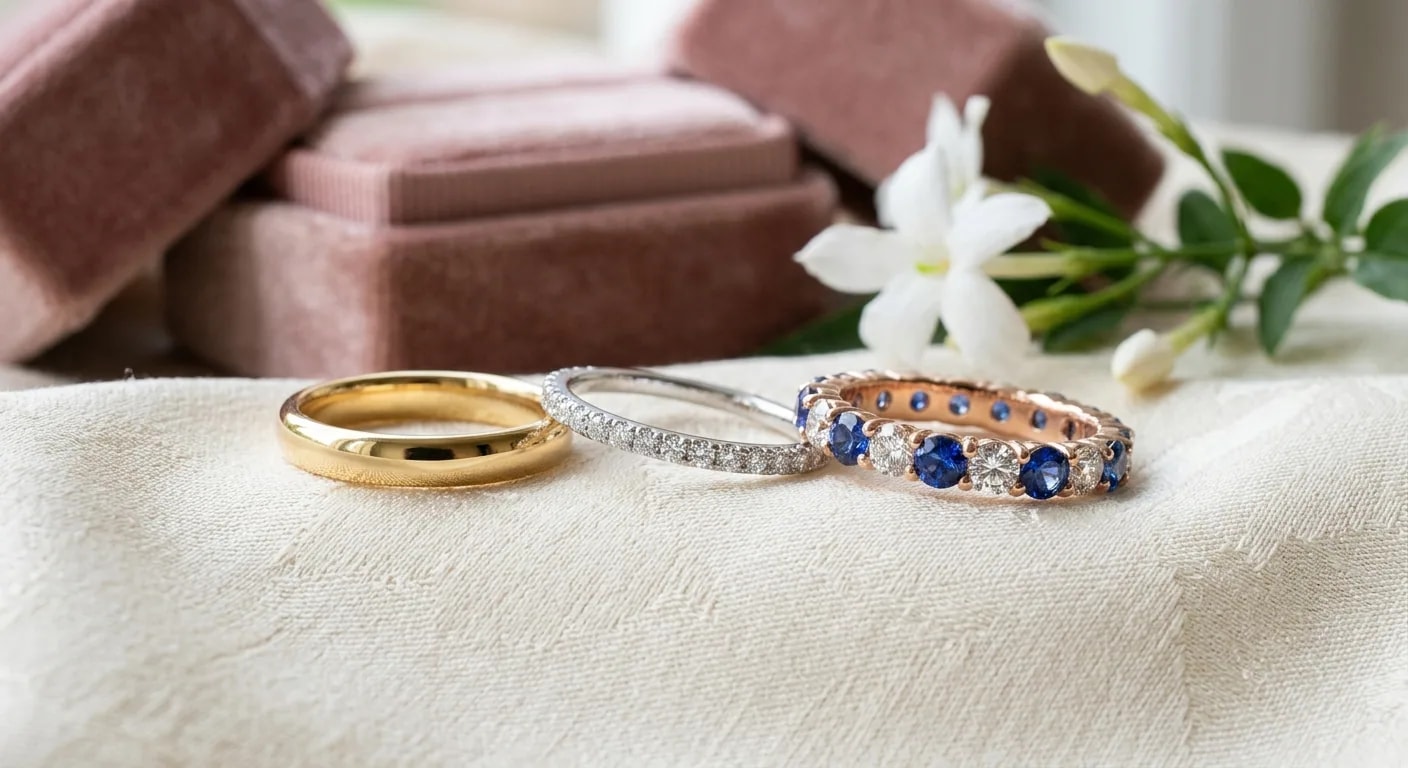
Introduction
You have the engagement ring sorted. Now comes the part everyone underestimates: the wedding band women wear sits right next to that ring every single day. Through gym sessions, dishwashing, travel, everything.
A women's wedding band is the ring exchanged during the ceremony. It sits closest to the heart, designed to pair flush against the engagement ring. In 2026, popular styles range from classic metal bands to diamond pave and durable gemstone eternity bands.
The market has expanded well beyond plain gold. Thin stackable rings, gemstone eternity bands, and mixed metals give you exciting options. The average bride now spends around $1,100 on her wedding band (The Knot, 2025), a 12% jump since 2023. This guide covers current market trends, gemstone availability, and pricing as of April 2026. Pick wrong, and you feel it daily.
Updated April 2026
TL;DR / Quick Answer Box
The Essential Decision Factors
Several things shape your final pick. Here is what matters most and how each factor tips the scales.
| Decision Factor | Key Considerations | Impact on Choice |
|---|---|---|
| Metal | Gold (Yellow, White, Rose) vs. Platinum | Affects durability, upkeep, and price. Platinum is the toughest but carries a premium. |
| Style | Plain, Pave, Eternity (Full or Half) | Sets the overall look. Eternity bands bring continuous sparkle but limit resizing. |
| Gemstones | Diamonds vs. Colored Stones (Sapphires, Rubies) | Adds personality and color. Sapphires and rubies handle daily wear beautifully at Mohs 9. |
| Fit | Straight vs. Curved/Contoured | Determines compatibility with your engagement ring. A flush sit may need a shaped band. |
Gemstone Durability and Daily Wear
If you want something other than diamonds, durability matters most for a ring you wear every day. Gemstones are graded on the Mohs scale, which measures scratch resistance.
Diamonds top the chart at Mohs 10. Sapphires and rubies, both corundum family, sit at Mohs 9. That makes them highly resistant to everyday scratches and perfect for lifetime wear. Emeralds (Mohs 7.5-8) need gentler handling, so we generally steer clients away from emerald wedding bands.
Want to see what durable gemstone options look like? Browse our certified collection of hand-selected sapphires and precious gemstones.
What Is a Wedding Band for Women, and How Is It Different from an Engagement Ring?
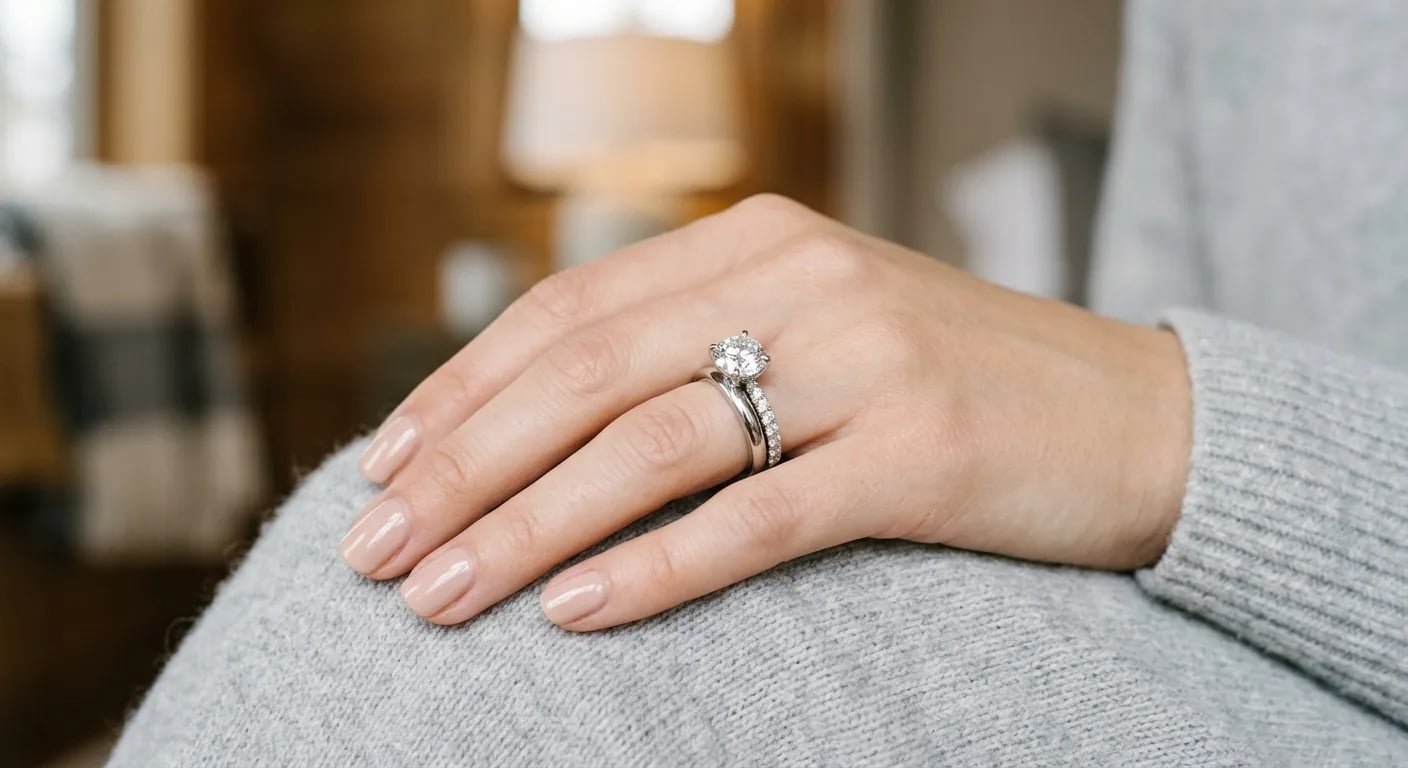
A wedding band is a metal ring, often set with diamonds or colored gemstones, exchanged during the marriage ceremony. An engagement ring comes earlier, at the proposal, and usually features one big center stone. Both sit together on the left hand's ring finger, with the wedding band placed first, closest to the heart. The two rings should work together visually, not necessarily match perfectly.
Band vs Ring: The Practical Distinction
The real difference is timing and design. An engagement ring is the proposal piece, built around a striking centerpiece like a large diamond or a vivid sapphire. The wedding band is the ceremony ring. It keeps a lower profile so it complements rather than competes.
When worn as a set, the wedding band goes on first. During the ceremony, the engagement ring gets moved temporarily to the right hand. The officiant slides the wedding band onto the left hand. Then the engagement ring stacks back on top.
Can You Wear a Wedding Band Without an Engagement Ring?
Absolutely. Wearing just a wedding band is a growing trend. Many women prefer the simplicity of one ring for daily life. Full eternity bands with rubies or diamonds deliver plenty of presence on their own.
This approach appeals to people with active lifestyles or jobs where a raised setting gets in the way. Going solo also opens up design freedom. You can choose wider bands or three-dimensional designs that would be tricky to pair with an engagement ring.
What Are the Most Popular Styles of Women's Wedding Bands?
Your style choice needs to work with the engagement ring, match your taste, and survive daily wear. Some styles have stuck around for decades because they just work. In 2026, classic metal bands remain strong, while diamond pave and colored gemstone eternity rings are surging.
Plain Bands: Minimal and Timeless
The plain metal band stays popular for good reason: understated elegance, symbolic simplicity. These are defined by their profile (cross-sectional shape), which affects both looks and comfort. Common profiles include high-domed (traditional), flat (modern), and court (slightly rounded inside and out).
A "comfort fit" profile is worth requesting. The interior is slightly domed, reducing skin contact and making the ring easier to slide on and off. We recommend it for anyone who plans to wear their ring 24/7. A plain band also pairs perfectly with a busy engagement ring, giving it breathing room.
Pave Diamond Bands: Continuous Sparkle
Pave comes from the French word for "paved." Small diamonds sit close together, hiding the metal prongs and creating a surface that looks like it's paved with light. Seriously popular for adding sparkle to any wedding set.
Here is how the main pave types differ:
- Standard Pave: Small beads of metal secure each stone individually.
- French Pave (V-Pave): The metal under each diamond is cut into a V-shape, letting more light hit the stone.
- Micro-Pave: Uses tiny diamonds set under magnification for a refined, delicate sparkle.
One thing to know: pave bands need periodic checkups. A jeweler should inspect the prongs every 6-12 months to make sure nothing has loosened.
Eternity Bands: Full vs. Half
Eternity bands carry a continuous line of identically cut gemstones around the ring, symbolizing love without end.
- Full Eternity: Stones wrap the entire circumference. Maximum brilliance from every angle, but here is the catch: full eternity bands cannot be resized. Plan your sizing carefully.
- Half Eternity: Gemstones cover the top half only, leaving plain metal underneath. This design allows resizing and tends to be more comfortable because no stones press against the underside of your finger.
In 2026, demand for colored gemstone eternity bands, especially sapphires and rubies, has jumped substantially. These stones bring durability and personality that all-diamond designs simply cannot match.
Stackable Thin Bands and Vintage Styles
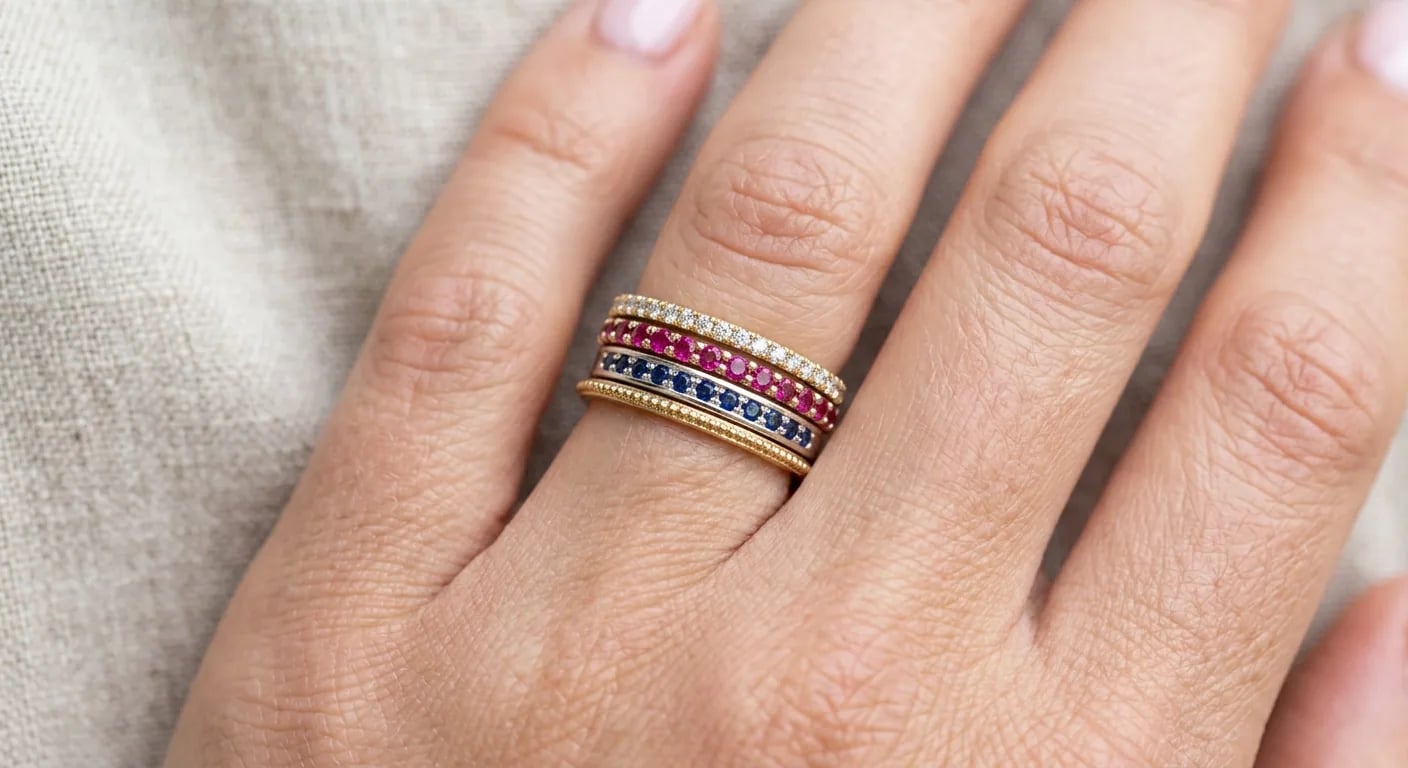
Thin stackable bands (1-2mm wide) are everywhere right now. You can mix metals, textures, and gemstone colors. Build a personal stack that grows over time, worn alongside an engagement ring or as a standalone group.
On the other end of the spectrum, vintage-inspired bands are making a comeback. Think milgrain edging (tiny decorative beads along the rim), Art Deco geometry, and warm yellow or rose gold. These deliver a handcrafted feel that mass-produced rings simply do not have.
Should a Wedding Band Match the Engagement Ring?
Short answer: it does not have to. While tradition favored coordinated sets, 2026 brides happily embrace both matching and mismatched combos. The real goal is creating a look that feels like yours, whether through uniform design or deliberate contrast.
Matching metals is the classic route. A platinum engagement ring paired with a platinum wedding band creates a clean, streamlined look. Neither ring distracts from the other, letting the center stone, maybe a brilliant diamond or a vivid sapphire, stay the star.
But mixing metals has become seriously popular. Pairing a rose gold wedding band with a white gold engagement ring adds warmth and visual interest. The trick is making it look intentional rather than accidental. We have helped dozens of clients build mixed-metal stacks, and the key is picking two metals that share a common element, like both having a warm undertone.
Flush vs. Contoured vs. Curved Bands
Beyond metal, physical fit matters. A lot. Many engagement rings, particularly those with low-set stones or detailed basket designs, leave a gap when paired with a straight band.
For a gap-free look, here are your options:
- Contoured Bands: Feature a slight curve that follows the engagement ring's setting for a flush fit.
- Curved Bands: More pronounced curve to accommodate larger or unusual center stones like pear or marquise cuts.
- Notched (Shadow) Bands: Have a specific cutout designed to wrap around the engagement ring's setting seamlessly.
The best way to decide? Bring your engagement ring and try bands in person. Professional gemologists can measure the gap and recommend the exact contour you need.
Achieving Aesthetic Harmony
The most important thing is that the two rings feel like they belong together. This does not require matching every detail. A pave engagement ring looks beautiful next to a plain wedding band, the contrast highlights the sparkle. Flip it: a plain solitaire paired with a sapphire eternity band adds brilliant color.
When working with colored gemstones, think about how the colors interact. A ruby engagement ring next to a simple gold band? Gorgeous. Adding a sapphire band on top creates a richer, multi-colored stack. Let's be honest, there are no wrong answers here. The rings should tell your story.
Gemstone Wedding Bands for Women: Sapphire, Ruby and Beyond
Diamonds are traditional. But gemstone wedding bands are taking over, and for good reasons. They bring a pop of color and personality that diamonds alone cannot deliver. Beyond looks, high-quality durable gemstones often offer better value than diamond bands at similar carat weight, especially through transparent supply chains.
Why Sapphires and Rubies Work for Wedding Bands
For a ring you will wear every single day for decades, durability is non-negotiable. We assess durability based on hardness, toughness, and stability.
Sapphires and rubies belong to the corundum mineral family. They score 9 on the Mohs hardness scale, just one step below diamonds at 10. That means they resist scratching from virtually every surface you encounter daily. Corundum also lacks cleavage planes, making it tougher and less prone to chipping than stones like emeralds (Mohs 7.5-8). In practical terms, a sapphire or ruby band handles gym sessions, gardening, cooking, everything, while keeping its brilliance for decades.
Ceylon Sapphire Bands: Cornflower to Royal Blue
Ceylon sapphires from Sri Lanka are world-famous for their luminosity and blue range, from delicate cornflower to deep royal blue. A wedding band with these stones gives you a "something blue" that is both symbolic and genuinely stunning.
Shade choice depends on your metal. Lighter cornflower blues pop in white gold or platinum. Deeper royal blues look striking against yellow gold. And sapphires go far beyond blue: pink, yellow, orange, green, and the incredibly rare sunset-toned Padparadscha. Pink sapphire bands, in particular, are a favorite among brides wanting a romantic, feminine alternative.
Ruby Bands: Passion and Durability
Rubies carry intense red color that symbolizes passion, love, and energy. Their hardness matches sapphires, so they handle a lifetime of daily wear without complaint. A ruby eternity or half-eternity band makes a bold statement, worn alone or stacked.
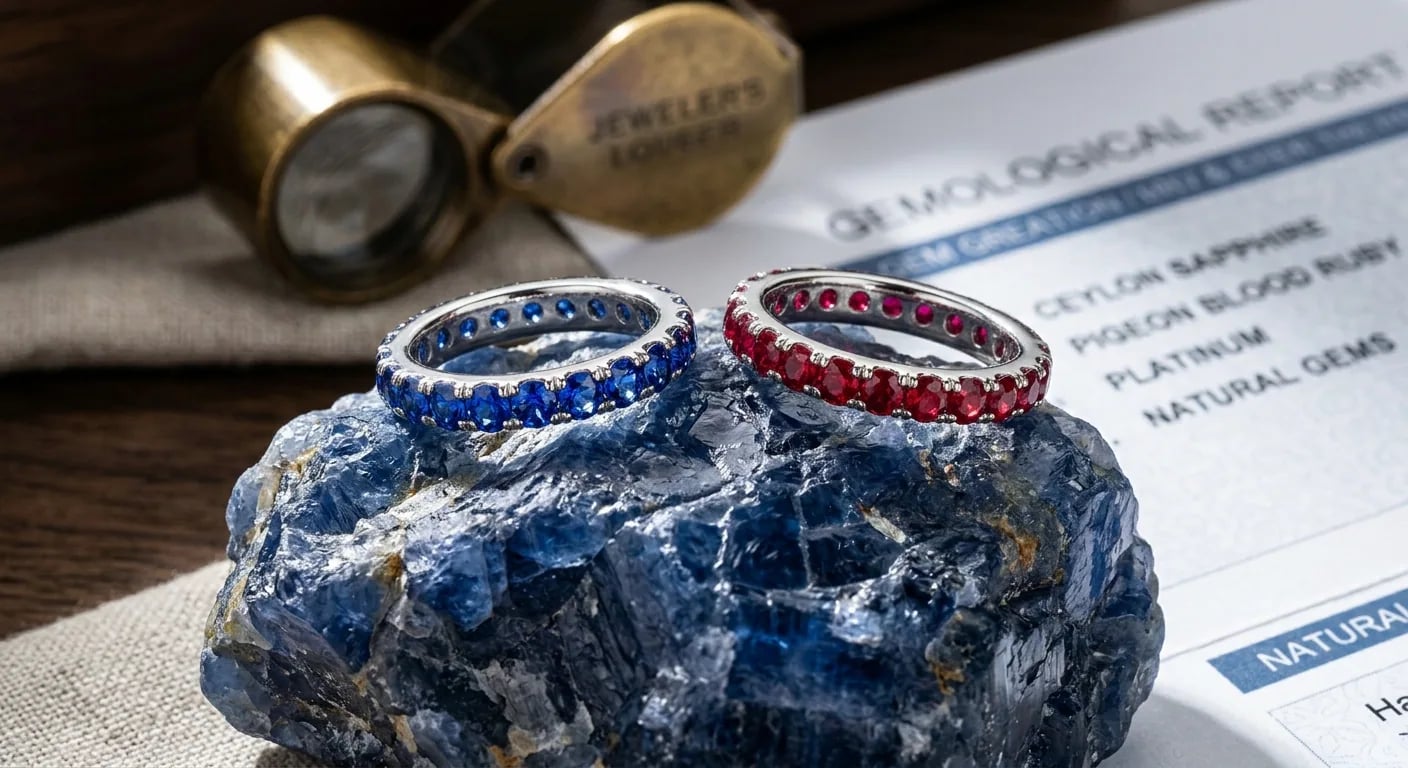
The most prized rubies show a pure, vivid red with a subtle blue undertone, historically called "pigeon's blood." Burmese rubies are legendary for this quality, but exceptional stones also come from Madagascar and Mozambique. Here is the thing about treatments: most rubies on the market are heat-treated to improve color and clarity. This is stable and widely accepted. However, comparable unheated rubies command significantly higher prices. Always request a lab report from GIA or AGL to verify natural status.
Sourcing and Certification Matter
The quality of a gemstone wedding band depends on how those stones were sourced. Unlike engagement ring center stones, the smaller "melee" gems in eternity bands often get sold in bulk parcels without individual certification. That opens the door to lower-quality stones or, in some retail environments, synthetic simulants mixed in.
This is why sourcing from jewelers with direct, transparent supply chains makes a real difference. For extra assurance, especially with larger gemstone bands, get independent verification from GIA or AGL confirming origin, natural status, and treatments.
How Much Does a Women's Wedding Band Cost?
Wedding band pricing in 2026 depends on three things: metal, gemstones, and design complexity. Simple metal bands are affordable. Detailed eternity rings with rare gemstones cost more. According to The Knot 2025 Real Weddings Study, the average spend on a women's wedding band in the US hit $1,100, up 12% from 2023. That reflects a clear shift toward more substantial or customized designs.
Budget Breakdown by Style
Knowing the price ranges helps you set realistic expectations before shopping. Plain polished metal bands are the most budget-friendly, with costs varying by metal type and width.
| Wedding Band Style | Estimated Price Range (USD) | Key Cost Drivers |
|---|---|---|
| Plain Metal Band | $300 - $1,000 | Metal type (gold vs. platinum), width, weight. |
| Pave Diamond Band | $800 - $3,000 | Total carat weight, diamond quality (color/clarity), setting type. |
| Gemstone Eternity Band | $1,500 - $5,000+ | Stone rarity (sapphire, ruby), color saturation, origin, full vs. half eternity. |
| Custom Bespoke Band | $2,000 - $10,000+ | Design complexity, materials, labor, specialized stone sourcing. |
For stone-set bands, price climbs with total carat weight and gem quality. Sapphire and ruby eternity bands often deliver better value than all-diamond bands at similar coverage, especially when the colored stones come from efficient supply chains.
What Actually Drives the Price
Several factors shape what you pay. Understanding them helps you spot where the real value sits.
- Metal: Platinum costs more than gold, period. It is denser and requires higher purity. Among gold options, 18k runs higher than 14k because of the gold content.
- Gemstone Quality: For colored stones, color intensity is the biggest price driver. A vivid royal blue sapphire or a "pigeon's blood" ruby costs substantially more than a lighter, less saturated stone.
- Manufacturing: Intricate settings like micro-pave or milgrain engraving require skilled hand labor, pushing the price up.
- Supply Chain: Traditional retail jewelry passes through 4-5 middlemen, from mine to rough dealer, cutter, polished dealer, manufacturer, and retailer. Each stage adds 60-100% markup, totaling 300-500% above original stone value.
Sourcing gemstones directly from the mine cuts most of that markup out. It is how we offer exceptional quality, independently certified, at price points that compete with mass-market retailers selling lower-grade stones.
How to Choose the Right Wedding Band Width
Width is one of those things that feels minor until you get it wrong. For most women, the sweet spot falls between 2mm and 4mm. Wide enough for durability, slim enough to look feminine and stack well.
We have seen clients agonize over style and metal, then overlook width. A band that is too wide restricts movement. One that is too thin may lack structure over decades, especially with a full diamond pave or delicate emerald setting.
Width Guide by Finger Size
Hand proportion matters more than most people realize. What looks substantial on petite hands may appear delicate on larger hands. And a wide band can make shorter fingers appear even shorter.
| Hand/Finger Size | Recommended Width | Visual Impact |
|---|---|---|
| Petite/Slender (Size 3-5) | 1.5mm - 2.5mm | Delicate and proportional. Does not overwhelm small fingers. |
| Medium (Size 6-8) | 2.0mm - 4.0mm | Most versatile range. Good balance of presence and comfort. |
| Larger/Wider (Size 9+) | 3.0mm - 6.0mm+ | Provides presence and balance. Thinner bands can look lost. |
When stacking, think about combined width. If the engagement ring band is already 3mm or wider, pick a narrower wedding band (around 2mm) to keep the total stack manageable. If the engagement ring is very thin, a slightly wider wedding band adds welcome contrast.
Comfort Fit vs. Standard Fit
The interior profile affects how the ring feels just as much as external width. This becomes especially noticeable on wider bands. A 6mm standard fit band feels noticeably tighter than a 6mm comfort fit.
- Comfort Fit: Slightly domed or rounded interior. Less skin contact means easier sliding over the knuckle and better long-term comfort. We recommend this for any band 3mm or wider.
- Standard Fit: Flat interior. The traditional approach, most common on very thin bands where a comfort profile is technically hard to achieve.
Custom Wedding Bands: Is Bespoke Worth It?
Going custom gives you total control: metal, profile, specific gemstones, engraving, everything. It typically costs 20-40% more than comparable ready-to-wear designs, with a 3-6 week production timeline. But for a ring you will wear every day for the rest of your life, we think it is worth it. A bespoke band fits perfectly, both on your finger and in your story.
The Bespoke Process Step by Step
Creating a custom wedding band is a collaborative process. Here is what each stage looks like.
| Step | Description | What You Get |
|---|---|---|
| 1. Consultation | Discussion of design ideas, lifestyle, metal preferences, and budget. | Initial concept and cost estimate. |
| 2. CAD Design | Computer-Aided Design models with 3D renderings from multiple angles. | Photorealistic images for review and tweaks. |
| 3. Gemstone Sourcing | Selection of specific stones based on quality, color, and cut needs. | Curated parcel of loose stones for your selection. |
| 4. Fabrication | Ring creation: casting, stone setting, polishing. | The physical ring, expertly crafted. |
| 5. Quality Check | Final inspection for craftsmanship, setting security. Independent certification for significant gemstones. | Completed ring with appraisal and lab reports. |
Each stage has a checkpoint. You approve before we move to the next, so there are no surprises.
Why Go Custom?
The biggest advantage is solving design problems that off-the-shelf rings cannot handle.
- Perfect Matching: If your engagement ring has a unique shape, like a large emerald or an intricate vintage setting, a custom-contoured band is often the only way to get a flush fit.
- Unique Gem Combos: Want a sapphire birthstone in your band? Or a ruby for its symbolic meaning? Custom lets you create combinations that retail collections do not offer.
- Personal Touches: Hidden engravings, secret gemstones set inside the band, specific textures. Details that make the ring uniquely yours.
Custom Bands: From the Mine to Your Finger
We personally maintain a presence at sourcing locations in Sri Lanka, Madagascar, and Tanzania. When a client wants specific sapphires or rubies, we source them directly, cutting out the 4-5 middlemen that inflate prices in traditional retail.
Our bespoke service includes one-on-one design consultations where you work with a gemologist to turn your idea into a technically sound design. The typical lead time from design approval to delivery runs 4-5 weeks, depending on complexity and stone availability. We personally prefer keeping it under 5 weeks so you are not waiting longer than necessary.
JOALYS
Everything Begins with the Stone
Two sapphires can share the same grade and nothing else. Yours is chosen in hand.
Keep the sapphire loose, or commission a ring made around it — made to order, never off the shelf.
Custom Ring Creation Process
See How It Works

Creating your custom ring takes three steps:
- Stone Selection - Browse certified gemstones and pick the ones that speak to you.
- Inspection - Your stones arrive in an authentication case for hands-on review.
- Setting Design - Work with our jewelers to design the perfect setting.
Frequently Asked Questions
Your Wedding Band, Your Rules
Choosing a wedding band comes down to three things: metal durability, your preferred style, and whether gemstones belong in the picture. Whether you go classic with a plain band, add sparkle with diamond pave, or make a statement with a sapphire eternity ring, daily comfort and engagement ring compatibility should guide every decision.
For brides wanting something truly unique, certified sapphires and rubies bring exceptional hardness (Mohs 9), vivid personality, and outstanding value, especially when sourced directly. At JOALYS, the process starts with selecting a certified gemstone, delivered in an authentication case. The custom setting gets designed when you are ready. Our gemologists are here to help you create exactly the piece you envision.