Citrine and Diamond Ring: How to Choose, What to Pay, and What to Avoid
Quick Answer
Key Takeaway: A quality citrine and diamond ring costs between $200 and $3,000 depending on stone size, metal, and diamond accent quality. Natural citrine is rare (only 10% of market supply). Look for warm golden-yellow color with no abrupt white base, choose 14K or 18K gold, and always request diamond certification from GIA or IGI. Citrine rates 7 on the Mohs scale, suitable for daily wear with basic care.
Introduction
Shopping for a citrine and diamond ring can feel overwhelming. You're staring at dozens of styles, metals, and price points, and nobody tells you the one thing that matters most: 90% of citrine on the market is heat-treated amethyst. Not exactly what you'd expect, right?
We've spent years sourcing gemstones directly from mines in Sri Lanka and Brazil. We've held natural Madeira citrine in one hand and heat-treated material in the other, and the difference is real. This guide breaks down everything you need to know before you spend a single dollar on a citrine and diamond ring, from color grades to setting styles to the red flags that most jewelers won't mention.
What Makes a Citrine and Diamond Ring Special?
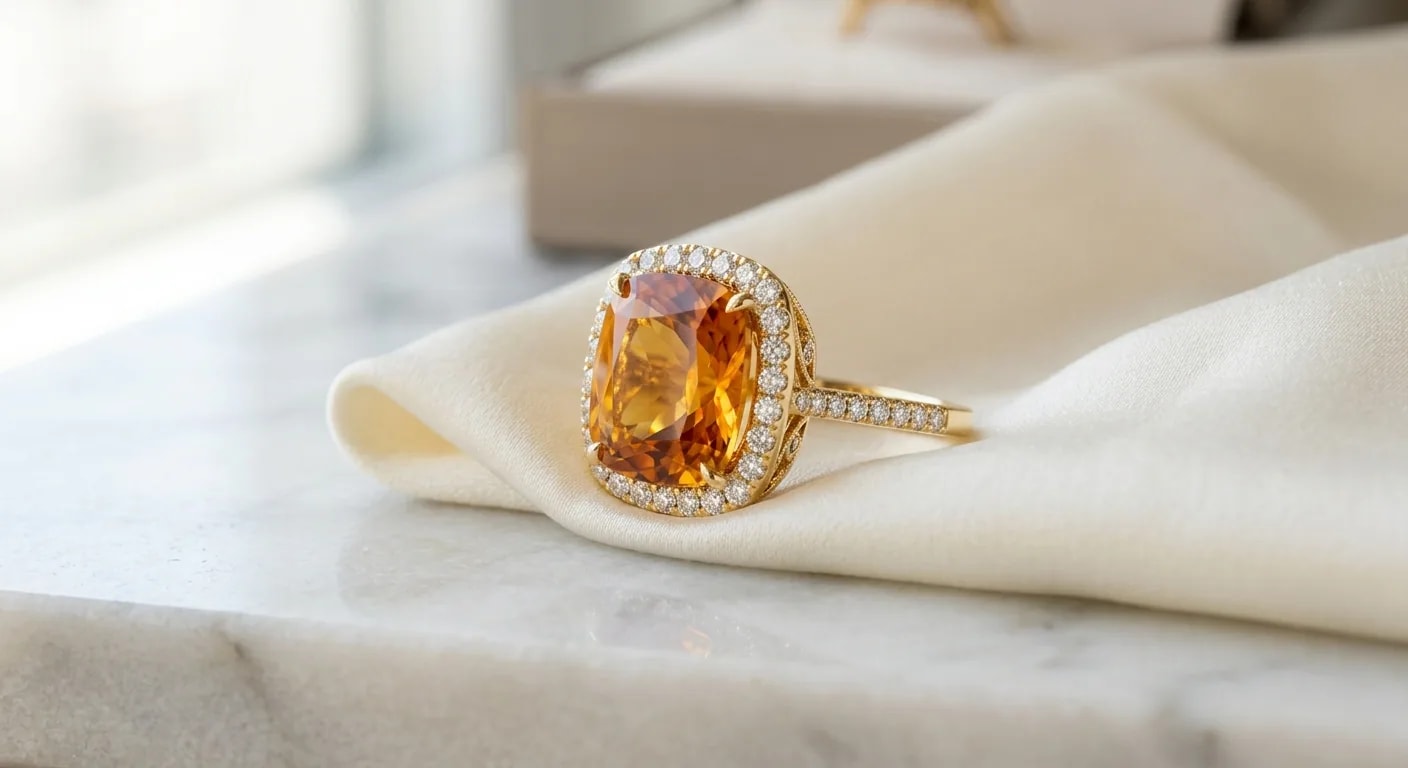
Here's the thing about citrine: it's one of the few gemstones that genuinely looks better with diamond accents than without. The warm golden tones of citrine bounce light differently than cool-toned stones, and when you pair that with the white fire of diamonds, the contrast is striking.
Citrine belongs to the quartz family. It gets its color from trace amounts of ferric iron in the crystal structure, producing hues that range from pale lemon to deep burnt orange. The most prized variety, Madeira citrine, shows a saturated reddish-orange that commands $20 to $140 per carat, according to Gemval's 2026 pricing data.
A citrine and diamond ring works for engagement rings, November birthstone gifts, cocktail rings, and anniversary pieces. The global citrine ring market hit $3.9 billion in 2025 (Business Research Insights), growing at 6.42% annually. That's not a niche stone anymore.
Why Pair Citrine With Diamonds?
Diamonds do two things for citrine that no other accent stone can match. First, the white brilliance creates a visual "frame" that makes citrine's warm hue pop. Second, diamonds at F-G color or higher won't compete with citrine's golden tone. They'll amplify it.
We personally prefer the look of a citrine center stone surrounded by a diamond halo in 18K yellow gold. The yellow metal warms the entire piece, and the diamond halo makes a 1-carat citrine look like 1.5 carats.
How Much Does a Citrine and Diamond Ring Cost?
Let's be honest: citrine is affordable. That's part of its appeal. Standard jewelry-grade citrine runs $10 to $50 per carat (International Gem Society, 2025). Even top-tier Madeira citrine rarely breaks $140 per carat. Compare that to yellow sapphire at $500 to $5,000 per carat, and you see why citrine wins on value.
The total ring price depends on three factors:
| Component | Budget Range | Mid-Range | Premium |
|---|---|---|---|
| Citrine center stone (1-3ct) | $15 - $90 | $90 - $300 | $300 - $500 |
| Diamond accents (0.15-0.50ct total) | $100 - $400 | $400 - $800 | $800 - $1,500 |
| Setting (gold/platinum) | $150 - $400 | $400 - $800 | $800 - $2,000 |
| Total | $265 - $890 | $890 - $1,900 | $1,900 - $4,000 |
Most buyers land in the $500 to $1,500 range for a beautiful citrine and diamond ring. That's significantly less than an all-diamond ring of similar visual impact.
How to Choose the Right Citrine for Your Ring
Color is the single biggest value driver for citrine. Here's what to look for.
The Color Spectrum
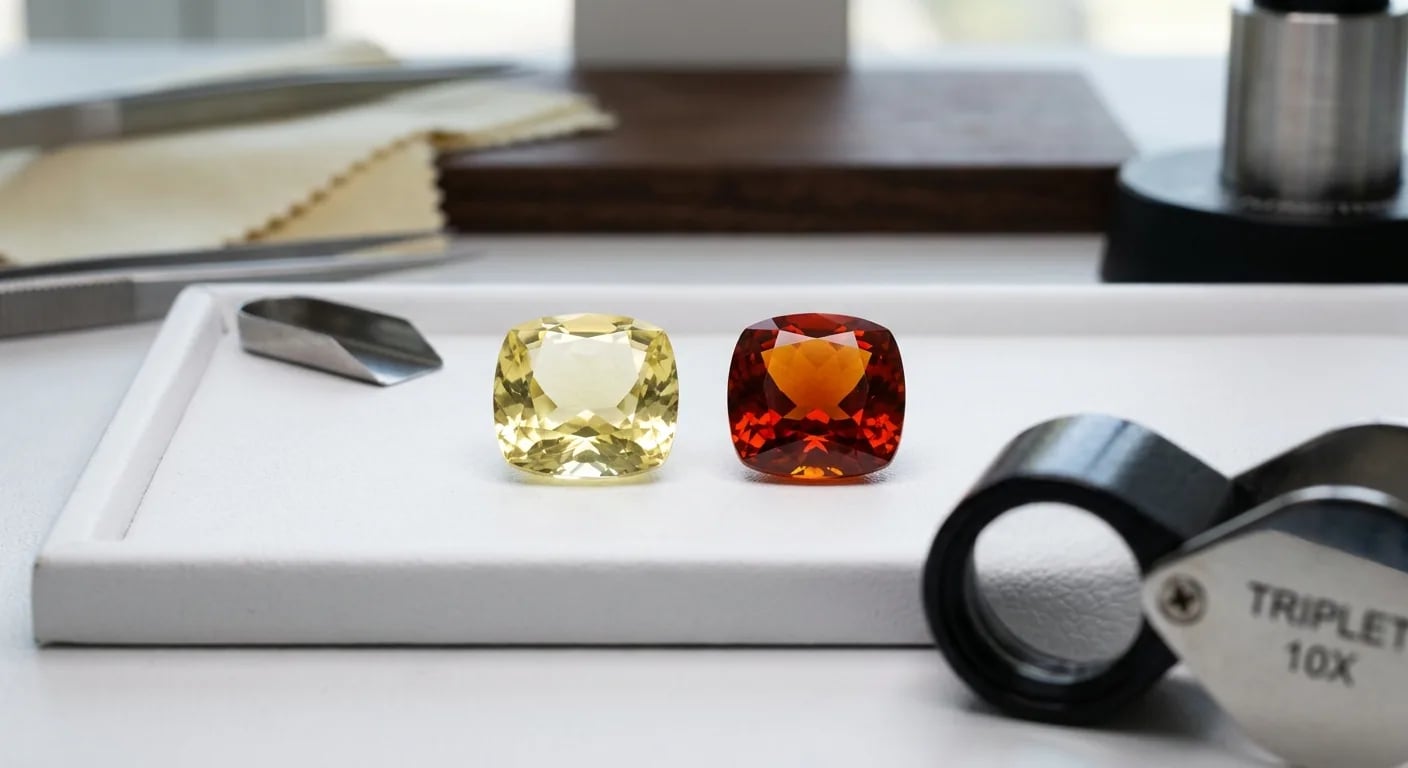
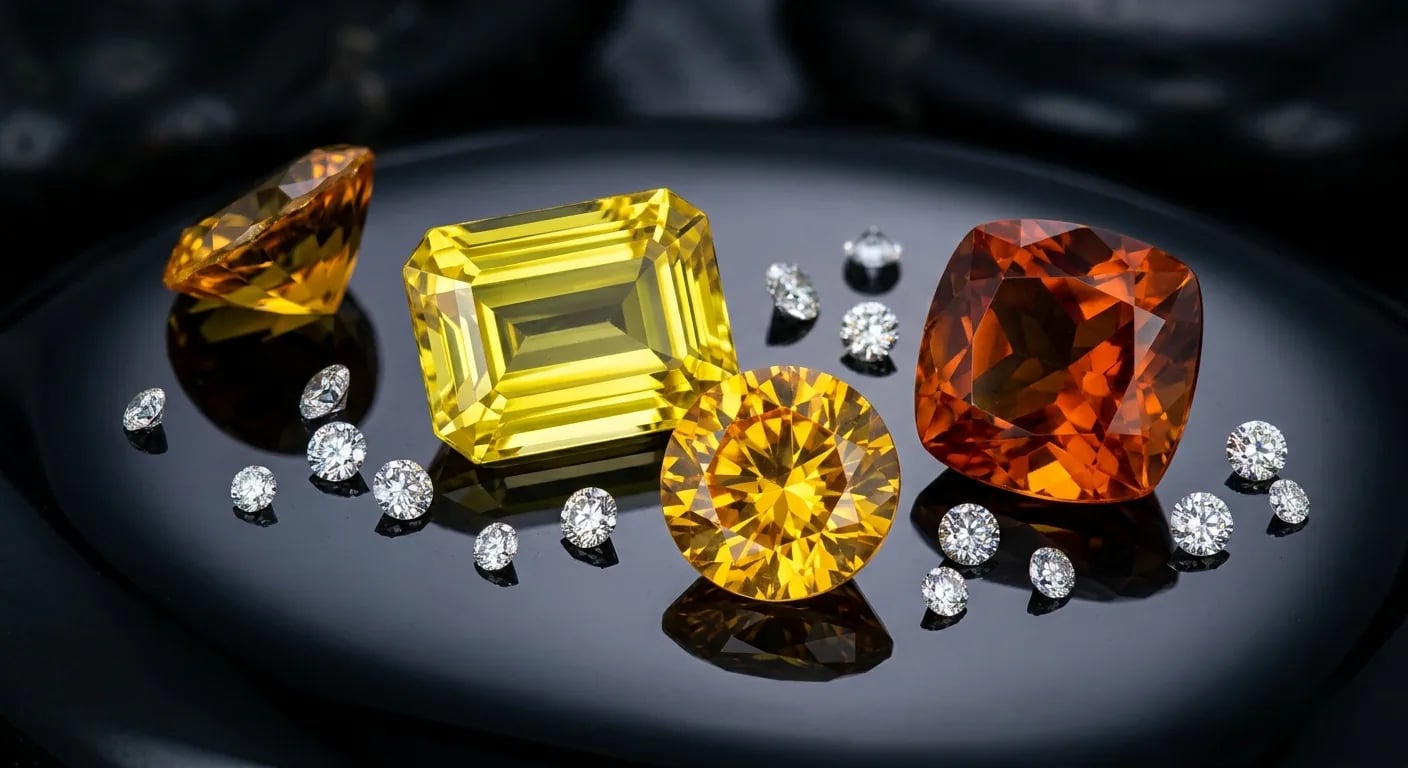
Natural citrine shows a smooth, even color distribution. The best stones display a warm golden-yellow to orange hue without any brown muddiness. Avoid stones with sharp color boundaries or white bases, as these are telltale signs of heat-treated amethyst.
According to GIA's gemstone grading standards (2025), the most desirable citrine colors fall into three categories:
- Lemon citrine: Pale, bright yellow. Clean and fresh. $8 to $25 per carat.
- Golden citrine: Medium warm yellow. The sweet spot for rings. $15 to $50 per carat.
- Madeira citrine: Deep reddish-orange. The rarest and most valuable. $20 to $140 per carat.
Natural vs. Heat-Treated: The 90% Problem
This is where most buyers get burned. An estimated 90% or more of citrine sold today started life as amethyst or smoky quartz, then was heated to between 470°C and 560°C to produce yellow-orange color (Mindat.org). Is that a problem? Not necessarily, if the treatment is disclosed and the price reflects it.
Here's how to spot heat-treated stones:
- Orange tips fading to white base: Natural citrine shows even color. Heated amethyst keeps its original white quartz base.
- Geode form: If it's sold as a geode, it's heated amethyst. Natural citrine doesn't form in geodes. Period.
- Too-saturated orange: Intense, burnt orange with no color transition usually means heat treatment.
- Price too low for the color: A stunning 5-carat Madeira citrine for $20? That's heated material.
We always recommend asking your jeweler for a disclosure statement. Any reputable seller will tell you whether the stone is natural or treated.
Clarity and Cut
Good news: citrine is typically eye-clean. You won't struggle to find stones free of visible inclusions. Focus your attention on the cut instead.
The best cuts for citrine in a ring setting are:
- Cushion cut: Maximizes the warm glow. Our top pick for halo settings.
- Oval cut: Elongates the finger. Pairs well with side diamond accents.
- Round brilliant: Classic choice. Maximum sparkle.
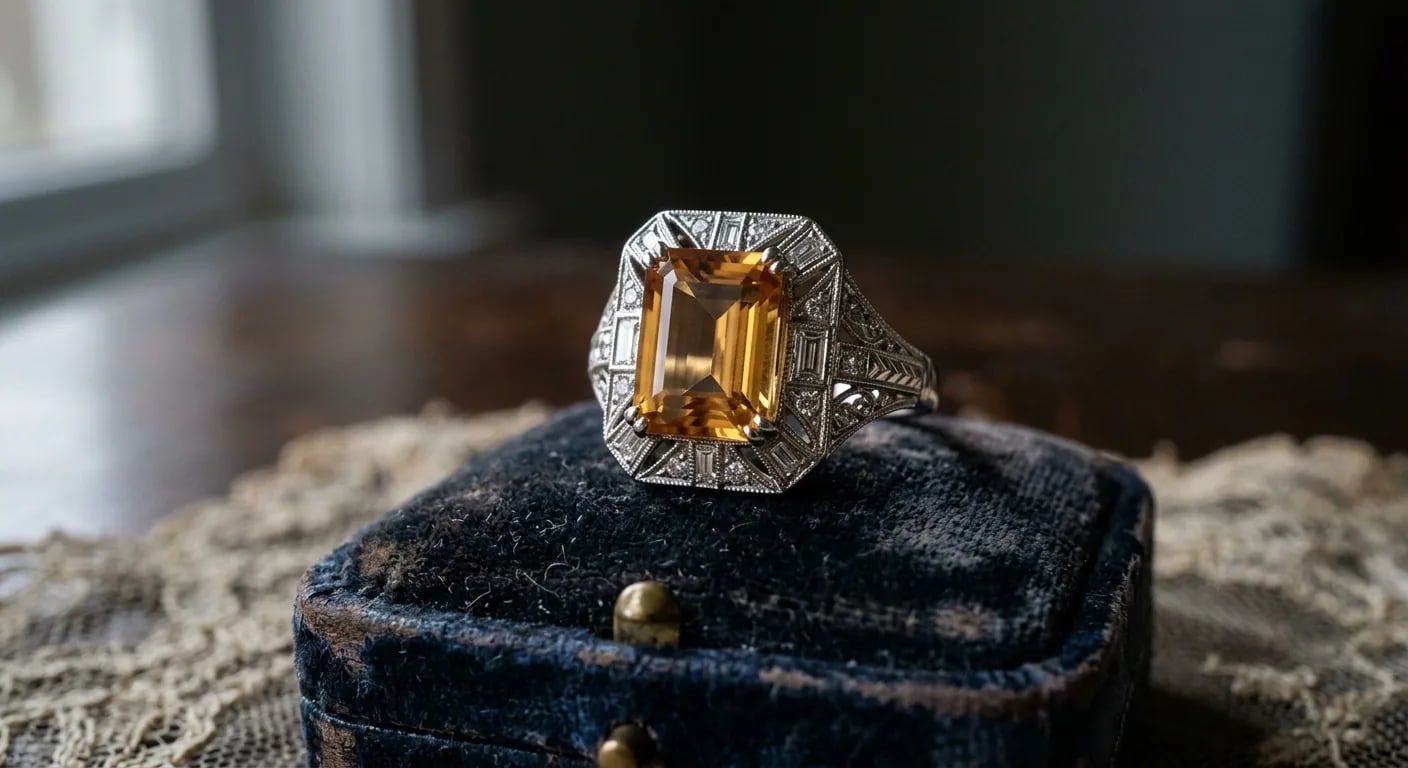
- Emerald cut: Clean lines, sophisticated look. Shows color depth beautifully.
A well-cut citrine should show even color face-up with good light return. Avoid stones that look "windowy" (you can see through them like glass).
What Is the Best Setting for a Citrine and Diamond Ring?
The setting makes or breaks your ring. Here are the four most popular options.
Halo Setting
A diamond halo around a citrine center stone is the most popular choice, and for good reason. The ring of small diamonds amplifies the citrine's size by 25-30% visually, adds serious sparkle, and creates that "wow" factor. Best in 14K or 18K yellow gold to complement the warm tones.
Solitaire With Diamond Band
Clean, minimal, timeless. A single citrine in a four or six-prong setting with diamonds set into the band. This style lets the citrine speak for itself. Works beautifully in white gold or platinum if you want contrast.
Three-Stone Setting
Two diamonds flanking a citrine center stone. The three-stone design symbolizes past, present, and future, making it a meaningful choice for engagement rings and anniversaries. The diamonds should be roughly 30% the carat weight of the center citrine for balanced proportions.
Bezel Setting
A metal rim fully surrounds the citrine, offering maximum protection for the stone. This is the most practical choice for someone who works with their hands. The trade-off is slightly less light entering the stone from the sides.
Which Metal Works Best With Citrine?
Metal choice transforms the entire look of a citrine and diamond ring.
| Metal | Effect on Citrine | Best For |
|---|---|---|
| Yellow gold (14K-18K) | Enhances warm tones, creates harmony | Classic, warm aesthetic |
| Rose gold | Adds romantic warmth, unique look | Fashion-forward styles |
| White gold | Cool contrast, modern feel | Halo and three-stone settings |
| Platinum | Cool contrast, hypoallergenic | Premium engagement rings |
| Palladium | No rhodium plating needed | Low-maintenance daily wear |
One thing to watch: white gold requires rhodium plating, and re-plating can sometimes expose citrine to chemicals. Palladium and silver avoid this issue entirely (Serendipity Diamonds, 2025). If you're choosing white gold, ask your jeweler to protect the citrine during re-plating.
Is Citrine Good Enough for an Engagement Ring?
Short answer: yes, with a caveat.
Citrine scores 7 on the Mohs hardness scale. That's harder than opal (5.5-6.5), softer than sapphire (9), and right in the "daily-wearable with care" zone. For context, common household dust contains quartz particles that also rate 7 on the Mohs scale, which means citrine can accumulate micro-scratches over years of wear.
That doesn't make it a bad choice. It makes it a "know what you're getting into" choice.
Pros of citrine engagement rings:
- Affordable (spend more on the setting and diamonds)
- Unique color that stands out from the sea of white diamonds
- November birthstone, adding personal significance
- Eye-clean clarity in most stones
Cons to consider:
- Softer than sapphire or diamond (may need re-polishing every 5-10 years)
- Sensitive to prolonged sunlight (color can fade with extended UV exposure)
- 90% of the market is heat-treated (need to verify authenticity)
In our experience, a citrine engagement ring in a bezel or semi-bezel setting will last decades with normal care. We've seen clients wear theirs daily for 8+ years with minimal visible wear.
Citrine vs. Yellow Sapphire vs. Yellow Diamond
If you're drawn to yellow gemstones, you have three main options. Here's the honest comparison.
| Factor | Citrine | Yellow Sapphire | Yellow Diamond |
|---|---|---|---|
| Hardness (Mohs) | 7 | 9 | 10 |
| Price per carat | $10 - $140 | $500 - $5,000 | $3,000 - $20,000+ |
| Brilliance | Good | Excellent | Exceptional |
| Durability | Good | Excellent | Excellent |
| Rarity | Common | Moderate | Rare |
| Best for | Budget-friendly beauty | Premium daily wear | Investment pieces |
Citrine wins on value. Yellow sapphire wins on durability. Yellow diamond wins on prestige. There's no wrong answer here, just different priorities.
How to Care for Your Citrine and Diamond Ring
Citrine is low-maintenance, but a few simple habits will keep it looking brilliant for years.
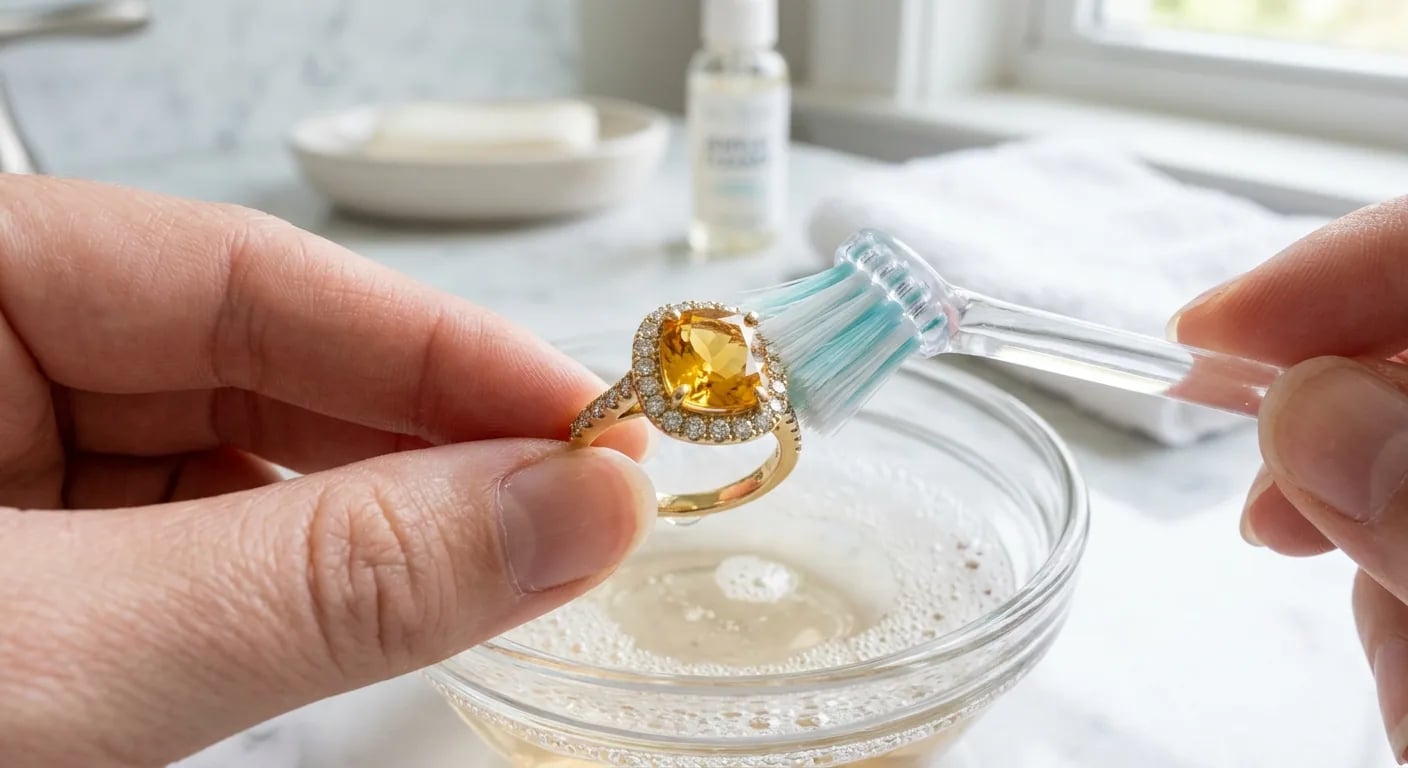
Cleaning method (GIA recommended):
- Mix warm water with a few drops of mild dish soap
- Soak the ring for 10-15 minutes
- Gently brush with a soft-bristled toothbrush
- Rinse under clean warm water
- Pat dry with a lint-free cloth
What to avoid:
- Steam cleaning (high heat can damage citrine, per GIA 2025 guidelines)
- Harsh chemicals (bleach, acetone, ammonia)
- Ultrasonic cleaners with heat functions (standard ultrasonic without heat is OK)
- Storing next to harder stones (diamonds, sapphires can scratch citrine)
- Extended direct sunlight (UV exposure can gradually fade color)
Store your ring separately in a soft pouch or lined box. Remove it before gym workouts, gardening, or heavy cleaning.
For cleaning methods across every other stone in your collection, from soft pearls to hard sapphires, see our complete jewelry care and maintenance guide.
What Does Citrine Symbolize?
Citrine carries some of the most positive symbolism in the gemstone world. Known as the "Merchant's Stone," it's been associated with prosperity, success, and abundance for centuries. Medieval European merchants kept citrine in their cash registers believing it would attract wealth.
Beyond money associations, citrine represents:
- Joy and optimism: The warm golden color mirrors sunlight
- Confidence: Believed to boost self-esteem and personal power
- November birthstone: A meaningful personal gift for November babies
- 13th wedding anniversary: Traditional gemstone for this milestone
Whether you believe in gemstone metaphysics or simply appreciate the symbolism, a citrine and diamond ring carries more meaning than most colored gemstone alternatives.
JOALYS
Everything Begins with the Stone
Most citrine on the market is heated amethyst. We tell you which one you are holding.
Keep the citrine loose, or commission a ring made around it — made to order, never off the shelf.
Frequently Asked Questions
The warm glow of a citrine and diamond ring is something you have to see in person to appreciate. Whether you're choosing one for an engagement, a birthday, or simply because you love the look, the combination of affordable golden citrine with brilliant white diamonds creates a piece that punches well above its price point. Take your time, verify the treatment status of your citrine, and pick a setting that matches your lifestyle. You'll have a ring that turns heads for years.