Engagement Ring Styles: Which Setting Actually Protects Your Stone
Solitaire, halo, three-stone, vintage or bezel. The look is your call, but how much protection the stone needs is decided by the stone itself.
Engagement Ring Styles at a Glance
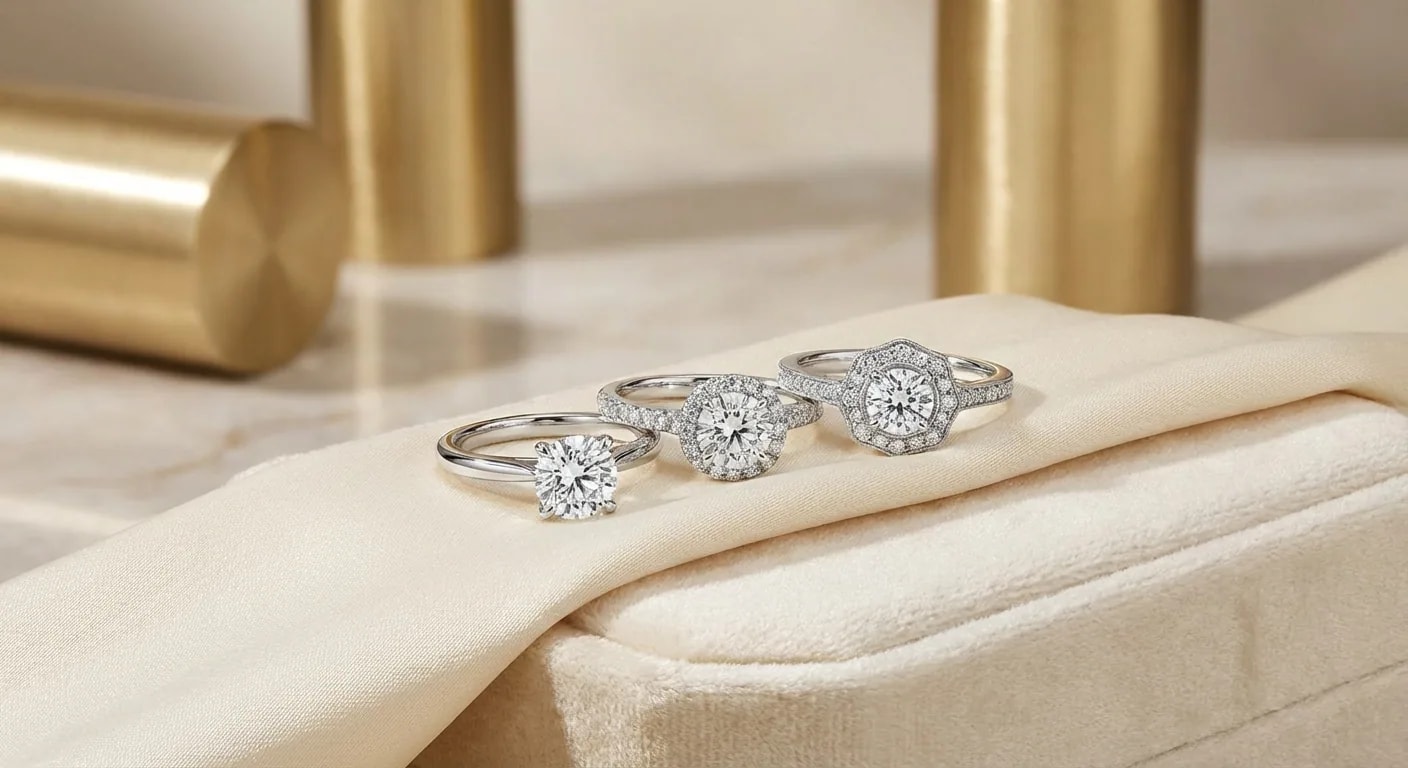
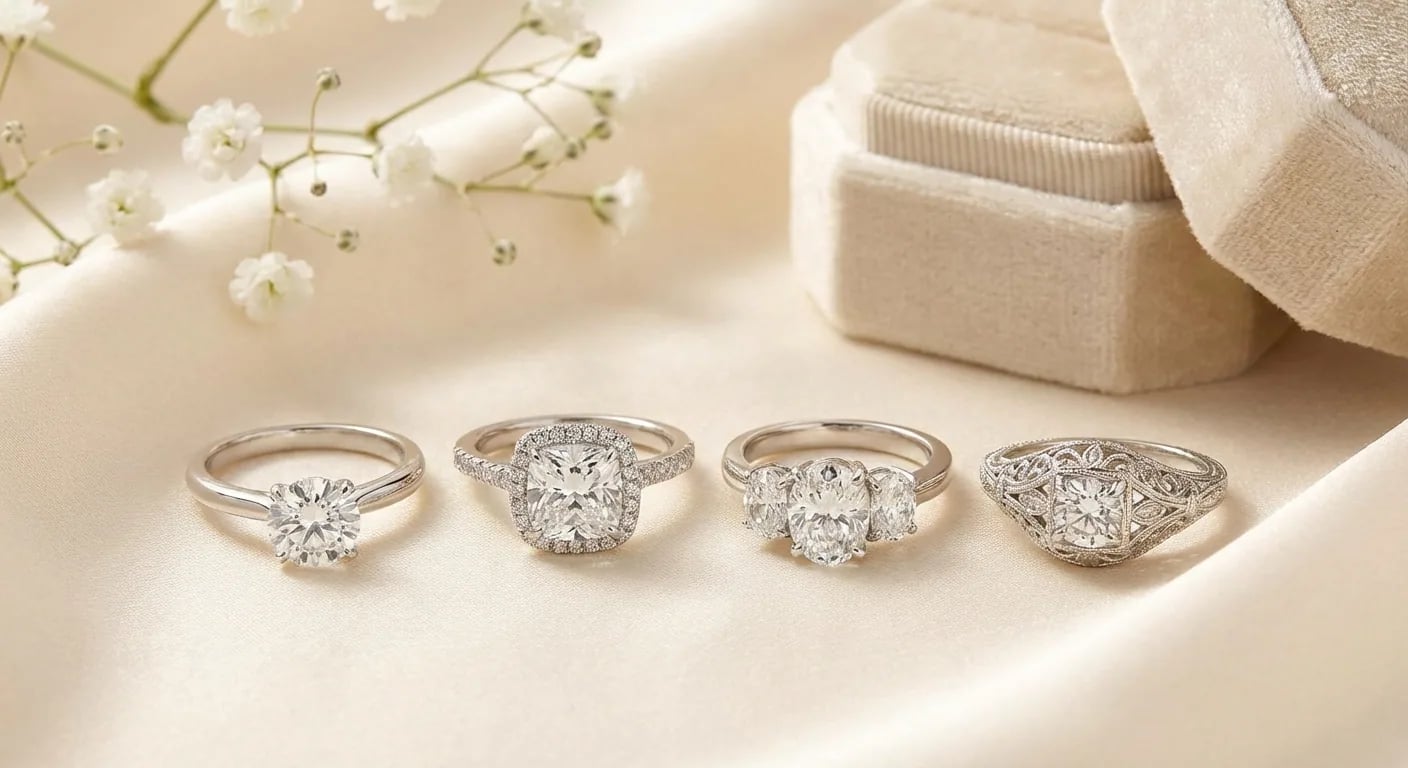
| Style | What it does to the stone | Suits stones that are |
|---|---|---|
| Solitaire | Leaves the stone exposed on every side; prongs are the only contact | Hard and tough: sapphire, ruby, spinel |
| Halo | A ring of small stones sits proud of the girdle and takes the first knock | Small, or thin around the girdle |
| Three-Stone | Two side stones flank the center and absorb side impacts | Matched in hardness, so one does not scratch the others |
| Vintage | Filigree and milgrain metalwork wrap and cushion the stone | Included or softer, and in need of cover |
| Bezel | A continuous metal rim encloses the girdle completely | Below 8 on Mohs, or low in toughness: emerald, tanzanite, opal |
Introduction
Updated September 2026
Most engagement ring style guides are written by people who sell rings. This one is written by someone who buys stones, so it starts at the other end of the problem.
Engagement ring styles are design categories defined by how the metal holds the stone. Solitaire, halo, three-stone, vintage and bezel each change three things: how much light reaches the stone, how much of the stone you can see, and how much of it is exposed to a door frame on a Tuesday morning. Almost every guide covers the first two. The third one is the one that ends in a repair bill.
Here is the part ring shops rarely lead with. Style is your call. Protection is not entirely your call, because the stone has already decided part of it. A Ceylon sapphire and an emerald of the same size do not want the same mounting, and the reason is measurable rather than aesthetic.
The Essential Takeaway
The five core engagement ring styles differ mainly in how much of the stone they leave exposed. Solitaire shows the most and protects the least; bezel protects the most and shows the least; halo, three-stone and vintage sit in between. Pick the level of protection your stone needs first, using its hardness and toughness, then pick the look you love.
What Are the Five Core Engagement Ring Styles?
Five settings cover the overwhelming majority of what you will be shown in a shop. They are not five flavours of the same thing. Each one makes a different trade between light and protection, and once you see them that way the choice gets a lot simpler.
The Solitaire: Maximum Stone, Minimum Armour
One stone. One band. Nothing else. The solitaire is engagement ring design stripped to its essence, and it is still the setting most people picture when they hear the words.
It works because it hides nothing. No side stones compete for attention, no pave band pulls the eye away. If you have bought a stone worth looking at, this setting lets it do the talking. The cost of that honesty is exposure: the girdle, the thin edge running around the widest part of the stone, sits out in the open where a knock can reach it.
Prong count is the one detail people underrate. Four prongs show more of the stone and cover less of it. Six prongs are more secure but read bulkier on stones under about 0.75 carats. We prefer four prongs on a round brilliant above a carat, where the extra exposure genuinely makes the stone breathe.
The Halo: A Ring of Small Stones Taking the Hits
A circle of tiny stones surrounds the center stone. Two things follow. The ring reads larger and brighter, which is the reason most people choose it. Less obviously, that circle sits slightly proud of the center stone's girdle, so a sideways knock tends to land on an accent stone rather than on the stone you care about.
The style works particularly well with colour. A deep blue Ceylon sapphire framed in white accents pushes the saturation of the centre colour rather than competing with it. We see that request more and more in bespoke orders.
The hidden halo is the current variation: the circle of small stones sits below the center stone, visible only from the side. Charming from the profile, and it does nothing for protection.
The Three-Stone: Symmetry That Doubles as a Bumper
Three stones, past, present and future. The symbolism writes itself, which is why the style keeps coming back.
Structurally, the two flanking stones do a job the symbolism does not mention: they stand between the center stone and whatever your hand meets sideways. One caution that matters more here than anywhere else. If the three stones differ in hardness, the harder ones will abrade the softer one over years of contact. Matched species, or at least matched hardness, is the safer build. Sapphire side stones on a ruby centre are the same mineral, so nothing wins that fight.
The Vintage Setting: Metalwork as a Cushion
Milgrain borders, filigree, hand engraved scrollwork. Vintage settings draw from Art Deco geometry and Edwardian lacework, and they carry more metal around the stone than any modern design except the bezel.
That metal is not only decoration. A gallery that wraps the sides of the stone shields it, which is why heavily included or softer stones so often turn up in antique mountings. The trade is maintenance: fine metalwork traps dirt, and detailed galleries need cleaning more often than a plain band.
The Bezel: The Only Setting That Encloses the Girdle
A continuous rim of metal wraps the stone's full circumference. Nothing else you can buy protects a stone as well.
The bezel takes the girdle out of harm's way entirely, it cannot snag on a jumper or a glove, and it sits low enough to disappear under a surgical glove. It also covers a millimetre or two of the stone's edge, so you see slightly less of what you paid for, and less light enters from the sides. For hands that work, that is a trade worth making, and it is the only setting we would put around a genuinely fragile stone.
Which Setting Does Your Stone Actually Need?
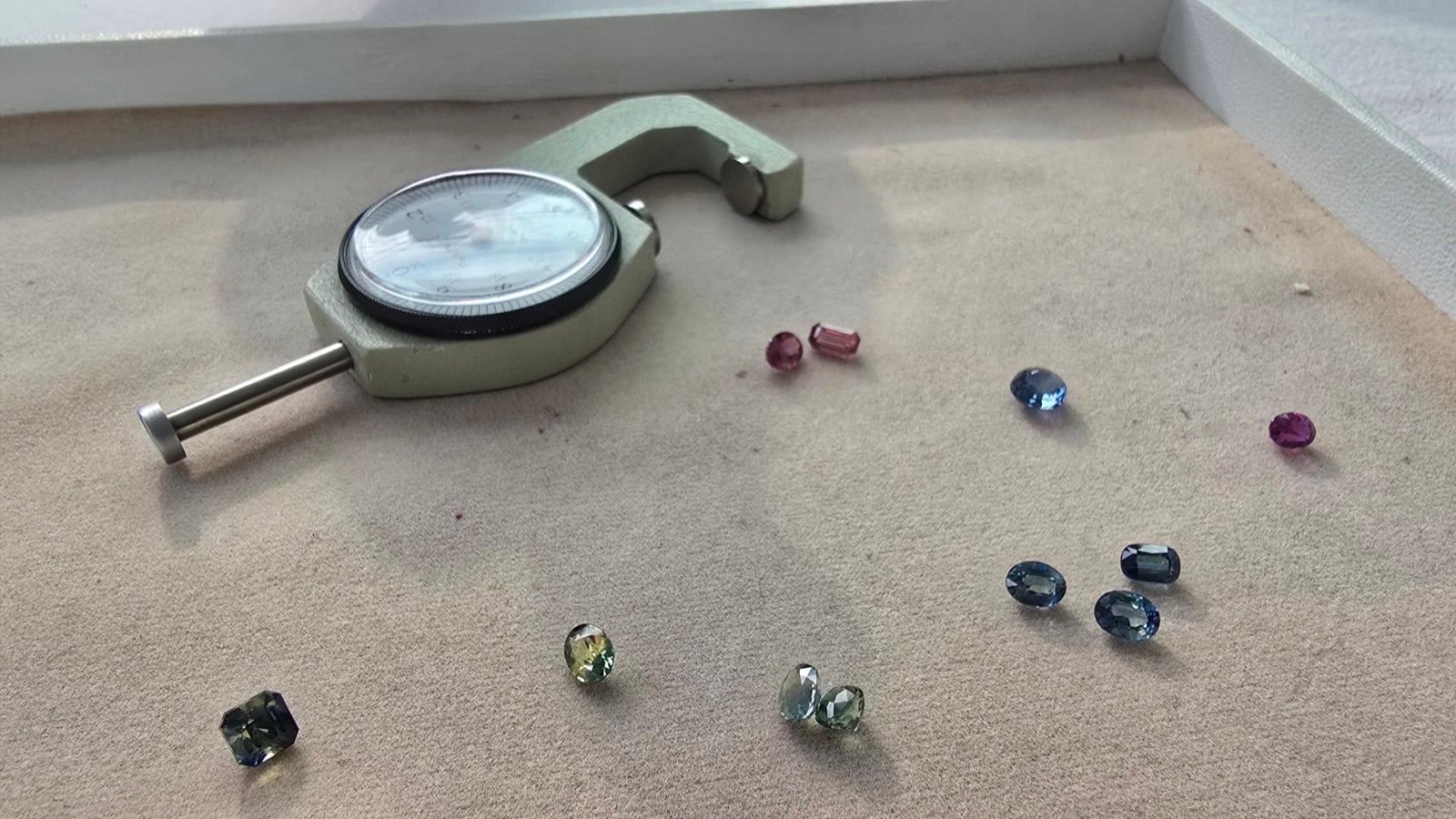
Jewellers talk about durability as if it were one number. It is three, and GIA separates them cleanly: durability is a combination of hardness, toughness and stability. Hardness measures how well a stone resists scratching and abrasion. Toughness is its ability to withstand breaking, chipping and cracking. Stability is how it copes with light, heat and chemicals.
Those three do not move together, which is the whole reason this section exists. A stone can be hard and still chip. A stone can be soft and still take a beating. The Mohs number on a product page tells you about one of the three.
Hardness, toughness and what the stone needs
| Stone | Mohs | GIA toughness | Setting we would use |
|---|---|---|---|
| Sapphire and ruby Corundum | 9 | Excellent | Any setting, an exposed solitaire included |
| Alexandrite Chrysoberyl | 8½ | Excellent, no cleavage | GIA calls it a good choice for daily wear rings |
| Spinel Spinel | 8 | Good | Solitaire or halo, no special precaution |
| Emerald Beryl | 7½ to 8 | Poor to good | Bezel, or a vintage gallery that covers the sides |
| Tanzanite Zoisite | 6 to 7 | Fair to poor | Bezel only, and better still in a pendant |
| Opal Opal | 5 to 6½ | Very poor to fair | Bezel, and not on a hand that works |
Hardness and toughness ratings per GIA Colored Stone Essentials. Corundum toughness is rated excellent except in stones with repeated twinning or large fractures.
Read the table by row, not by column. Sapphire and ruby sit at 9 with excellent toughness, which is why corundum is the stone we recommend most often to people who will never take the ring off. Spinel at 8 with good toughness is close behind and, in our view, still underpriced for what it survives. Alexandrite, at 8.5 with no cleavage, is the quiet winner: GIA notes that its excellent toughness and absence of cleavage make it a good choice for rings and other mountings subject to daily wear.
Then the other half of the table. Emerald is harder than tanzanite and less tough than it in the worst case, because most emeralds carry surface reaching fractures, and those fractures are where a break starts. Tanzanite has cleavage and dislikes thermal shock. Opal can lose moisture and craze into a web of fine cracks. None of that makes them bad stones. It makes them stones that want metal around the edge.
This is also where lifestyle stops being a personality quiz and becomes a technical input. Nurse, chef, climber, potter, anyone whose hands work: that is not a style preference, it is a load case. Pair the load with the stone, then choose from whichever settings clear the bar.
Why Is the Hardest Stone Not the Safest?
Diamond sits at 10 on Mohs, the top of the scale, and people read that as unbreakable. It is not what the scale says. Mohs ranks resistance to scratching, and nothing else.
Every diamond contains internal octahedral planes, and GIA is blunt about what they are: those planes are cleavage planes, and when a diamond is hit just right it will split cleanly along one. Cutters rely on this. It is how they divide awkward rough and remove inclusions. The same property is available to a kitchen worktop.
Corundum has no cleavage of that kind. So on the specific question of surviving a knock, a Ceylon sapphire at 9 is a calmer stone to wear every day than the diamond at 10 that outranks it on the chart. That is a genuinely counter-intuitive result and it is the single most useful thing on this page.
Our own view, and it is a view rather than a fact: on a ring meant to be worn daily, the coloured stone is the better centre and the diamonds are better used as accents. Not because diamonds are bad, but because a stone chosen for how it looks to you and how it holds up beats a stone chosen because it is the default. Two years buying in Sri Lanka did not teach us that colour is superior. It taught us that the default is rarely examined.
What Should You Check Before You Commit?
Three things worth settling before you commit. None of them are about looks, and all three cost money to fix later.
Prongs Wear Out, and the Stone Is What Wears Them
This runs the opposite way to intuition. GIA puts it plainly: precious metals are relatively soft, so a sapphire that is loose in its mounting can easily wear through a prong setting. The stone outlasts the metal holding it. Have prong set rings checked once or twice a year, and understand that retipping is routine maintenance and not a defect. A bezel, by contrast, has no small contact points to fatigue, which is a large part of why it needs so little attention.
Will It Sit Flush With a Wedding Band?
This catches more couples than you would expect. High profile settings, wide baskets and ornate galleries can leave an awkward gap next to a straight band. If a flush fit matters to you, and it usually does eventually, the answers are a curved contour band, a custom fitted band, or a low profile setting chosen from the start. Decide before you buy, not after. While you are at it, get the size right: our ring size chart converts between US, UK, EU and millimetres.
Know What You Are Actually Buying
The setting protects the stone. Only paperwork protects you from the stone not being what you were told. Ask what the certificate covers and who wrote it, because the two are not the same question. Our guide on what a gemstone certificate actually proves goes through this, including what a report deliberately leaves out. Once the ring is on, routine care does the rest of the work.
JOALYS
Everything Begins with the Stone
One stone, chosen by hand at the source. The piece comes afterwards.
Keep the gemstone loose, or commission a ring made around it — made to order, never off the shelf.
Start With the Stone, Not the Setting
Almost every ring shop sells you the setting and lets you slot a stone into it. We think that order is backwards, and not only because we sell stones.
The setting is a manufactured object. It can be made again, resized, replaced, remade in a different metal in twenty years when tastes have moved. The stone cannot. It was pulled out of the ground in Ratnapura or Elahera, cut once, and there is exactly one of it. Choosing the permanent thing second, to fit a decision you made about the temporary thing, is how people end up with a ring they like and a stone they never really chose.
So: find the stone. Hold it, in daylight, and see whether it does anything to you. Check its hardness and toughness against the life it has to survive. Then choose from the settings that clear that bar, and there will still be plenty of them.
Every stone we sell comes certified, and if you want to read the argument for colour over the default before you go further, our sapphire engagement ring guide and the wider engagement ring guide both start from that premise.
Frequently Asked Questions
The bezel, by a clear margin. A continuous metal rim encloses the stone's girdle around its full circumference, so there are no exposed edges and nothing to snag. Vintage galleries come second because their metalwork wraps the sides. A four-prong solitaire protects the least.
Solitaire, halo, three-stone, vintage and bezel. They differ in how much of the stone stays exposed. A solitaire shows everything and shields almost nothing; a bezel covers the girdle entirely. Halo, three-stone and vintage settings sit between the two extremes.
Partly, yes. Hardness and toughness set a floor. Sapphire, ruby and spinel take any setting, including an exposed solitaire. Emerald, tanzanite and opal have low toughness or cleavage and want metal around the edge, which usually means a bezel or a protective vintage gallery.
No. Mohs ranks scratch resistance only. Diamond has octahedral cleavage planes, and GIA notes that a diamond hit just right will split cleanly along one. Corundum has no such cleavage, so a sapphire at 9 often survives daily knocks better than a diamond at 10.
The bezel. It sits low, cannot catch on fabric or gloves, and shields the stone's most vulnerable edge. Nurses, chefs, climbers and anyone working with their hands benefit from it. A low profile solitaire with six prongs is the next best option.
Once or twice a year for a ring worn daily. Prongs are precious metal, which is soft. GIA points out that a stone loose in its mounting can wear straight through a prong. Retipping is routine maintenance, not a sign that the ring was badly made.
The three stones are usually read as a couple's past, present and future, with a larger centre stone flanked by two smaller gems. Practically, the side stones also absorb sideways impacts. Match the hardness across all three so the harder stones do not abrade the softer one.
Yes, and for daily wear it is often the sounder choice. Sapphire and ruby score 9 on Mohs with excellent toughness. Spinel scores 8 with good toughness. All three take an exposed setting comfortably, and all three cost less per carat than a diamond of similar size.
No. High profile settings, wide baskets and ornate galleries can leave a gap against a straight band. If a flush fit matters, plan for a curved contour band, a custom fitted band, or pick a low profile setting from the start. Sort this before you buy.
Design cues borrowed from historical periods: Art Deco geometry from the 1920s and 1930s, Edwardian lacework from 1901 to 1910. Look for milgrain borders, filigree and hand engraved scrollwork. The extra metalwork is decorative and also cushions the stone.
Somewhat, and it is an underrated side effect. The accent stones sit slightly proud of the centre stone's girdle, so a sideways knock tends to land on an accent first. Accent stones can loosen over time, so a halo needs checking as often as prongs do.
The stone. A setting can be resized, remade or replaced in twenty years. The stone was cut once and there is one of it. Choosing the permanent element to fit a decision about the replaceable one is how people end up with a stone they never really picked.
Choosing in the Right Order
Engagement ring styles come down to a single trade, repeated five ways: how much of the stone you show against how much of it you shield. A solitaire shows everything. A bezel shields everything. Halo, three-stone and vintage settings divide the difference in ways that happen to look very different from one another.
What decides where you land on that scale is not taste alone. It is the stone's hardness, its toughness, and the life the ring has to survive. Get that order right and the aesthetic choice opens up rather than closing down, because most settings will clear the bar for a well chosen stone.
At Joalys we start with the stone. You choose a certified gemstone sourced directly in Sri Lanka, it arrives in an authentication case for you to inspect in your own light, and the setting is built around it afterwards. No middlemen, no markup chain.