Engagement Ring Styles: How to Choose the Perfect Setting in 2026
Feeling overwhelmed? Our guide decodes every engagement ring style, from Solitaire to Halo. Learn how each setting impacts sparkle and find the perfect design.
Engagement Ring Styles at a Glance
| Style | Best For | Key Advantage |
|---|---|---|
| Solitaire | Classic minimalists (40% market share) | Puts 100% focus on center stone quality |
| Halo | Budget-conscious sparkle lovers | Makes center stone appear 0.5ct larger (GIA, 2024) |
| Three-Stone | Sentimental romantics | Symbolizes past, present, and future |
| Vintage | History lovers, old souls | Heirloom quality with Art Deco or Edwardian detail |
| Bezel | Active lifestyles (nurses, athletes) | Highest stone protection, snag-free design |

Introduction
Updated April 2026
You have been looking at engagement rings for hours. Every website shows the same styles with different names, and you still cannot tell a halo from a bezel. We get it. We work with couples every week who feel exactly this way.
Engagement ring styles are distinct design categories defined by their setting. The Solitaire, Halo, Three-Stone, Vintage, and Bezel each create a different look, level of sparkle, and stone security. Your choice shapes everything from perceived diamond size to daily wearability.
Here is the thing: the "best" style does not exist. Only the best style for your partner. This guide breaks down each option so you can shop with confidence, not confusion.
The five core engagement ring styles (Solitaire, Halo, Three-Stone, Vintage, Bezel) each affect sparkle, stone security, and perceived size differently. Solitaires remain the most popular at 40% market share in 2025, but halo settings make a center stone look up to half a carat larger. Your partner's lifestyle and personality matter more than trends. A bezel setting suits active hands; a three-stone tells a love story.
What Are the Core Engagement Ring Styles?
Five engagement ring styles account for over 90% of all rings sold worldwide. Each one handles light, security, and aesthetics differently. We will walk through them one by one, starting with the most popular.
Engagement Ring Settings Explained. Engagement ring settings explained: what to look for when choosing your ring.
The Solitaire: Still King After 100 Years
One stone. One band. Nothing else. The solitaire is engagement ring design stripped to its essence. According to The Knot's 2025 Jewelry and Engagement Study, solitaires represent roughly 40% of all engagement rings sold in the US, a number that has barely moved in a decade.
Why does it work so well? A solitaire puts 100% of the visual focus on the center stone. No side diamonds compete for attention. No pave band distracts the eye. If you have invested in a high-quality diamond or colored gemstone, this setting lets it do the talking.
The prong count matters more than people realize. Four prongs show more of the stone but offer less security. Six prongs are safer but can look bulkier on stones under 0.75 carats. We personally prefer a four-prong setting for round brilliants above one carat, where the extra exposure really makes the stone pop.
The Halo: Maximum Sparkle, Smart Budget Move
A ring of tiny diamonds circles the center stone. That is a halo. It does two things at once: adds serious sparkle and makes the center diamond look bigger. How much bigger? According to GIA (2024), a well-proportioned halo can make a center stone appear up to 0.5 carats larger than its actual weight.
Let's be honest, that visual boost matters when budgets are tight. A 0.8-carat diamond in a halo setting can look like a 1.2-carat solitaire. For couples who want maximum visual impact per dollar spent, the halo is hard to beat.
The style works especially well with colored gemstones. A deep blue Ceylon sapphire framed by white diamonds creates a contrast that amplifies both the color saturation and perceived size. We see this combination requested more and more in our bespoke orders.
Modern twists include the "hidden halo," where the diamond circle sits below the center stone, visible only from the side. It is a subtle detail that adds sparkle without changing the top-down silhouette.
The Three-Stone: A Ring That Tells a Story
Three stones. Past, present, future. The symbolism writes itself, which is exactly why this style resonates with sentimental couples. The center stone is flanked by two smaller complementary gems, and the combination possibilities are nearly endless.
Popular pairings include a central diamond with ruby or sapphire side stones. Some couples use birthstones to add a personal layer of meaning. In our experience sourcing from Sri Lanka, we have seen three-stone rings using a Ceylon blue sapphire center flanked by two white diamonds become a signature request.
Drawn to the three-stone style? The next step is choosing stones that tell your story. Talk to a Joalys design consultant about custom gemstone combinations.
Core Engagement Ring Style Comparison
| Style | Defining Feature | Best For | Market Share (2025) |
|---|---|---|---|
| Solitaire | Single center stone | Classic minimalists | ~40% |
| Halo | Center stone + diamond ring | Sparkle lovers on a budget | ~19% |
| Three-Stone | Center + two side stones | Sentimental romantics | ~18% |
| Vintage | Era-specific detailing | Old-soul, history lovers | ~12% |
| Bezel | Metal rim encases stone | Active lifestyles | ~8% |
Vintage and Bezel: For Those Who Want Something Different
Vintage-inspired rings borrow design details from the Art Deco (1920s-1930s) and Edwardian (1901-1910) periods. Think milgrain borders, filigree metalwork, and geometric patterns. These rings feel like heirlooms the day you buy them. If your partner gravitates toward antique shops and one-of-a-kind pieces, this is probably the direction to explore.
The bezel setting takes the opposite approach: pure modern minimalism. A thin metal rim wraps around the gemstone's edge, holding it flush against the band. No prongs means no snagging on sweaters, no catching on gym equipment. For nurses, climbers, chefs, or anyone rough on their hands, a bezel is the practical choice that still looks sharp.
At Joalys, we source gemstones directly from mines in Ratnapura, Sri Lanka, a region our family has worked since 1977. One thing we have learned over three generations: the setting should serve the stone, not the other way around. A perfectly cut Ceylon sapphire with exceptional color saturation does not need a halo to impress. But a lighter-toned stone? A halo can transform it. We always recommend seeing the actual gemstone before choosing a setting, which is why our process starts with stone selection, not ring design.

How Do You Choose the Right Engagement Ring Style?
Picking a ring style is not about what looks best on Instagram. It is about what looks best on your partner's hand, fits their daily routine, and still feels right in 20 years. Here is a practical framework that jewelers actually use.
Match the Style to Personality and Lifestyle
The best engagement ring choices align with how someone actually lives. An ER nurse who washes her hands 40 times a day needs something different from a graphic designer who works at a desk. A rock climber will destroy a pave band in six months. These are real considerations, not style preferences.
When we work with clients at Joalys, the first question is never "what style do you want?" It is "what does your partner do every day?" The answer shapes everything. For a deeper layer of personalization, many couples incorporate meaningful birthstone gems.
| Personality | Key Traits | Go-To Styles |
|---|---|---|
| Classic Minimalist | Clean lines, timeless wardrobe, less-is-more | Solitaire, Bezel |
| Sparkle Lover | Loves statement pieces, bold accessories | Halo, Pave Band |
| Sentimental Romantic | Values meaning over looks, keeps mementos | Three-Stone, Vintage |
| Active Professional | Hands-on job, gym regular, practical first | Bezel, Channel Set |
Does Hand Shape Really Matter?
Yes, but not as much as the jewelry industry wants you to think. That said, some combinations are genuinely more flattering than others:
- Shorter fingers: Elongated shapes (Oval, Pear, Marquise) create a lengthening illusion. The rectangular facets of an emerald cut work beautifully here too.
- Longer fingers: You have the most flexibility. Wider bands and bold vintage settings look proportional rather than overwhelming.
- Slender fingers: Thin, delicate bands keep the ring from looking heavy. A slim solitaire is a natural fit.
- Wider fingers: Slightly thicker bands create balance. Round brilliant and cushion cuts with more surface area tend to complement best.
Timeless vs. Trendy: Will You Still Love It in 2046?
This is the question nobody wants to ask, but everybody should. Oval diamonds on ultra-thin pave bands are everywhere right now. Hidden halos, east-west settings, the moval shape. These are 2025-2026 trends, and some will date quickly.
The safe bet? A round brilliant solitaire diamond has never gone out of style. Neither have classic three-stone rings or simple bezel settings. Their clean lines transcend decades.
A smart middle ground: pair a timeless setting with a trend-forward stone. A classic solitaire featuring a pear-shaped sapphire? Modern enough to feel current, classic enough to age well.

Budget, Durability, and Practical Considerations
A beautiful ring that falls apart in two years is not a good ring. The practical side of engagement ring shopping, budget, durability, and wedding band compatibility, deserves as much attention as aesthetics. Here is what most guides skip.
Which Styles Give You the Best Visual Value?
The halo setting is the undisputed champion of visual value. Those tiny surrounding diamonds cost a fraction of what a larger center stone would, but the visual effect is dramatic. According to jewelry industry data (2025), a 0.8-carat center stone in a halo appears equivalent to a 1.3-carat solitaire, saving the buyer 35-45% on center stone cost.
Vintage-inspired designs with filigree and milgrain detailing involve more labor hours, which increases the setting price. But the metalwork itself adds visual complexity that can make a modest center stone look intentional rather than budget-constrained.
Trying to balance design ambition with a real-world budget? Talk to a Joalys consultant about how to get the look you want at the price you need.
How Durable Is Each Setting Style?
A ring's design directly affects how much abuse it can take. This matters more than most shoppers realize.
| Setting | Protection Level | Maintenance | Ideal For |
|---|---|---|---|
| Bezel | Highest (stone fully enclosed) | Low | Active lifestyles, hands-on work |
| Solitaire (Prong) | High (prongs secure stone) | Medium (check prongs yearly) | Everyday wear, easy cleaning |
| Pave/Halo | Medium (small stones can loosen) | Higher (small stone loss risk) | Careful wearers, sparkle priority |
The center stone's hardness plays a role too. A diamond (10 on the Mohs scale) can handle almost anything. A softer gem like opal (5.5-6.5 Mohs) needs a protective bezel setting to survive daily wear.
Will Your Engagement Ring Sit Flush with a Wedding Band?
This catches more couples off guard than you would expect. Not every engagement ring pairs cleanly with a straight wedding band. High-profile settings, wide baskets, and intricate galleries can leave an awkward gap.
If flush fit matters to you (and it should), think about this before you buy. Some solutions: a curved contour band, a custom-fitted band, or choosing a low-profile engagement ring setting from the start. This is especially worth planning when your ring features a unique colored gemstone like a ruby in an elaborate setting.
JOALYS
Everything Begins with the Stone
A stone of extraordinary character — chosen with the eye, destined for something singular.
Choose your gemstone loose, or let us set it into a piece crafted entirely for you.

Create Your Perfect Ring
Create Your Perfect Ring
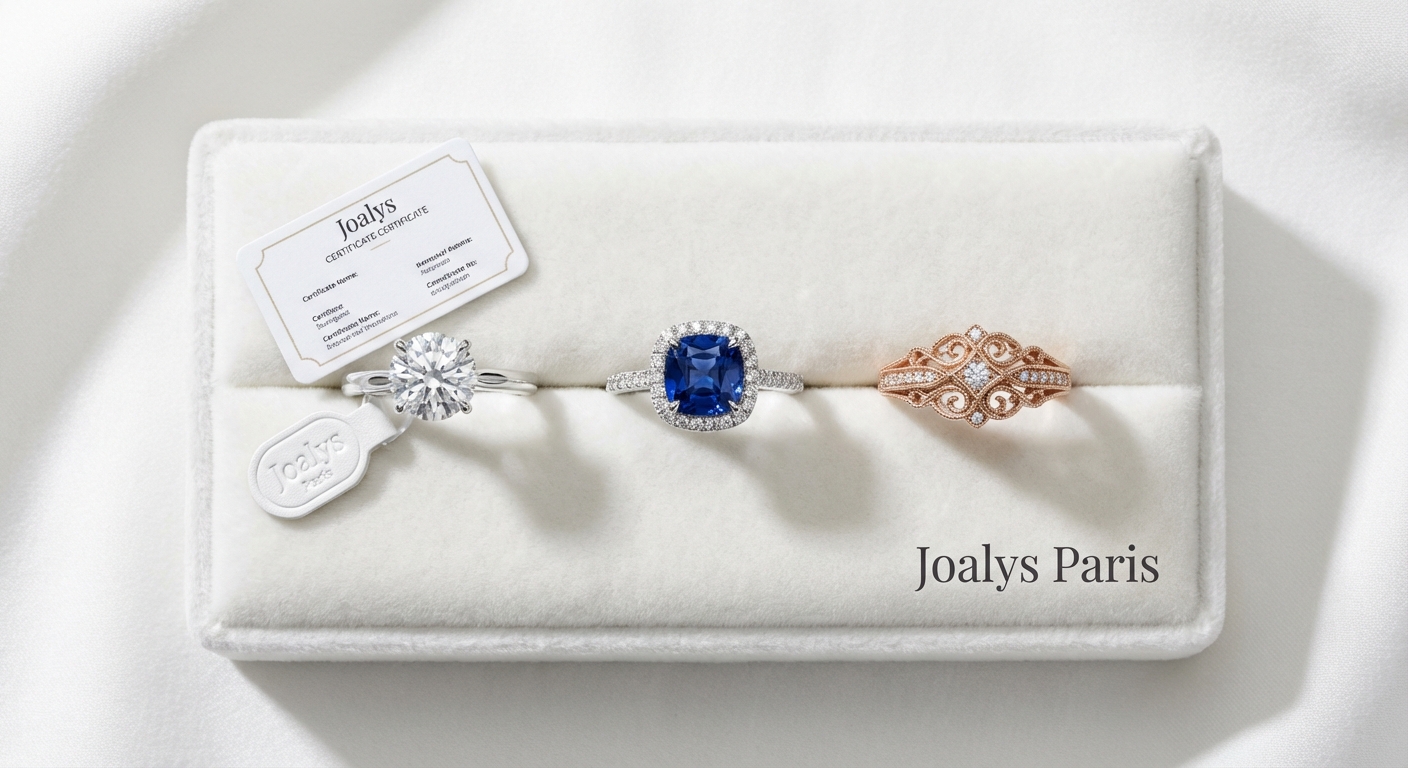
Your ring starts with the stone, not the setting. Here is how it works at Joalys:
- Select Your Stone - Browse certified gemstones from Sri Lanka
- Receive and Inspect - Delivered in a luxury authentication case
- Design Your Setting - Work with our jewelers to bring it to life
Frequently Asked Questions
Finding Your Ring Style
The right engagement ring style comes down to three things: your partner's personality, their daily life, and the stone you choose. A solitaire lets a quality gemstone speak for itself. A halo stretches your budget further. A three-stone tells a love story. A bezel survives an active life. And a vintage setting feels like an heirloom from day one.
At Joalys, we believe the journey starts with the stone. You select your certified gemstone first, sourced directly from Sri Lanka. We deliver it in a luxury authentication case for your inspection. When you are ready, you design the setting around it. No middlemen, no markup chain, just exceptional stones paired with expert craftsmanship.
Ready to start? Schedule a free consultation with one of our gemologists. We will help you find the engagement ring style that fits your story.