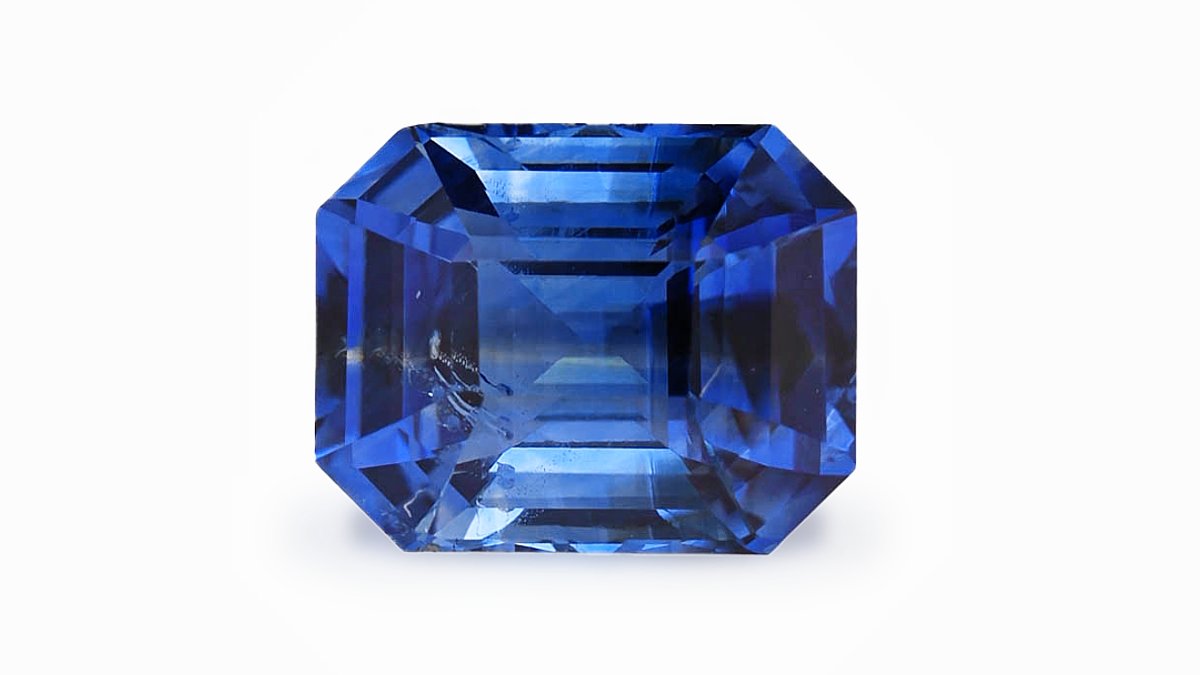
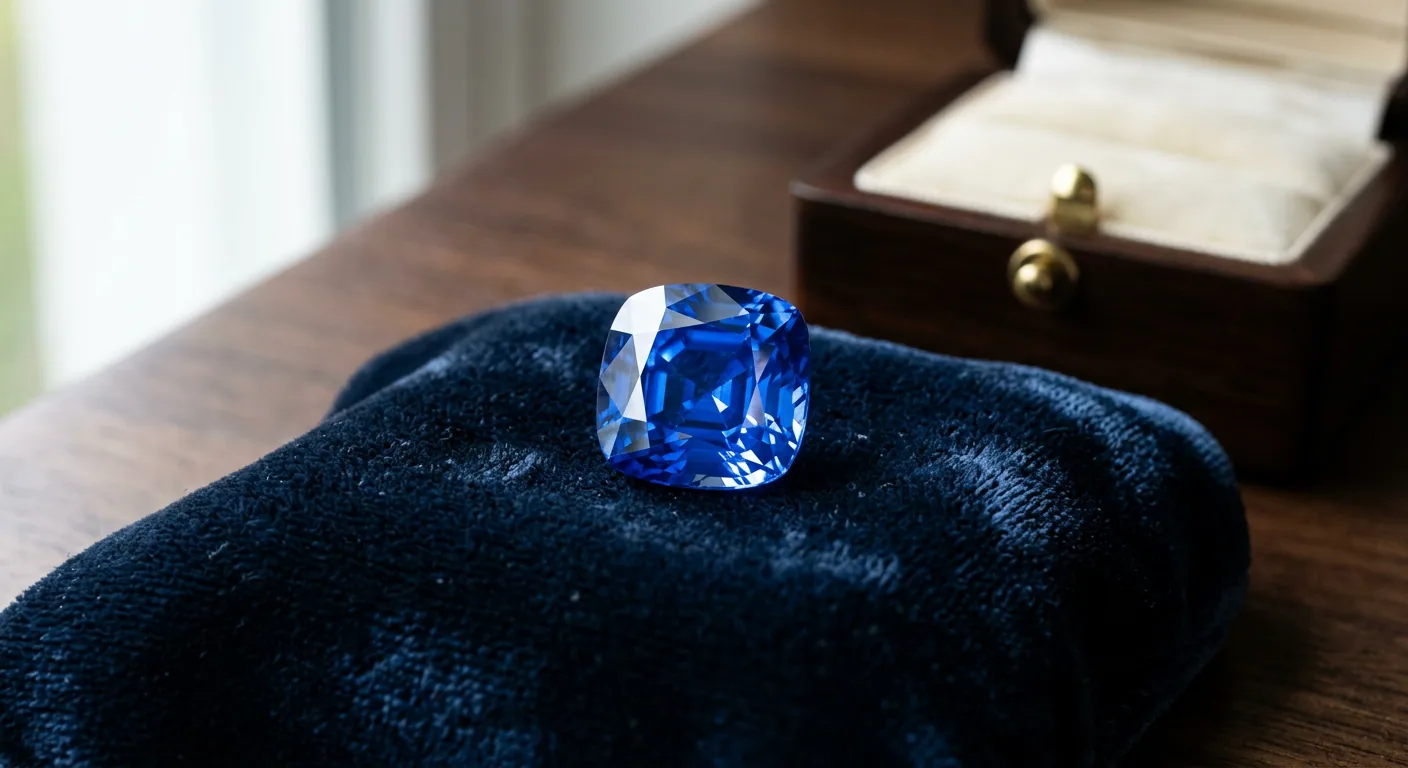
Semiprecious Stones: the Full List of Types, and Why the Label Is a Marketing Myth
Where the words came from, the full list of types with their Mohs hardness, the green, blue and purple stones the label covers, and why a gem fit to crown kings gets filed second-class.
Semi-Precious Stones Meaning: Where the Word Came From
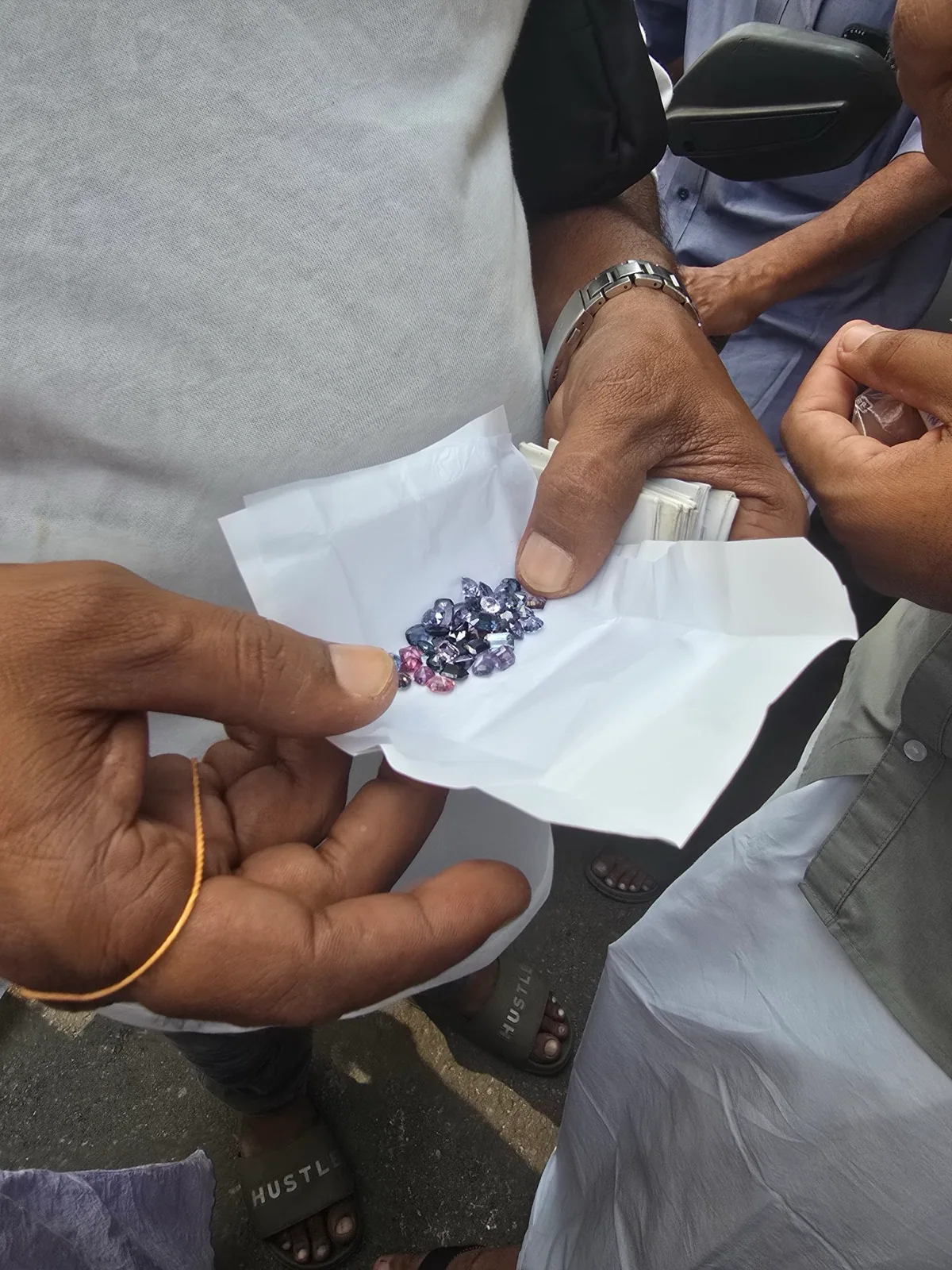
One word does more damage to good colored stones than any scam I saw in two years of sourcing in Sri Lanka. It isn't "fake." It's "semi-precious." A buyer hears it and switches off before the stone is even out of the paper. They have been told, in advance, what to feel.
The meaning, in one sentence: "semi-precious" is a trade nickname for every gemstone that is not a diamond, a ruby, a sapphire or an emerald. It carries no gemological meaning. No laboratory grades on it, no measurable property defines it, and nothing about a stone's hardness, rarity or price follows from which side of the line it lands on.
The spelling wobbles too. You will see it three ways: semi-precious, semi precious, and closed up as semiprecious, which is the common American form. The two documents that actually police the word both hyphenate it, the FTC Jewelry Guides at 16 CFR 23.27 and the CIBJO Gemstone Book at clause 4.1.1.8. Three spellings, one non-category. A word with no settled spelling and no published list of members is not a classification. It is a habit.
The split is younger than most people think. Gemstones were first sorted into "precious" and "semi-precious" around the mid-1800s, and the line was drawn by commerce, not by science. Four stones went on the high shelf: emerald, ruby, sapphire and diamond. Everything else, dozens of beautiful, durable, sometimes far rarer species, got swept into one bin labelled lesser. The reason was supply and selling, not merit.
Modern gemology never adopted the hierarchy. There is no grading scale for "preciousness," no test for it, no line for it on any laboratory report. What follows is where the split came from, what the trade's own rulebooks say about it today, which stones the label covers, and how colored stones are actually valued once you drop the word.
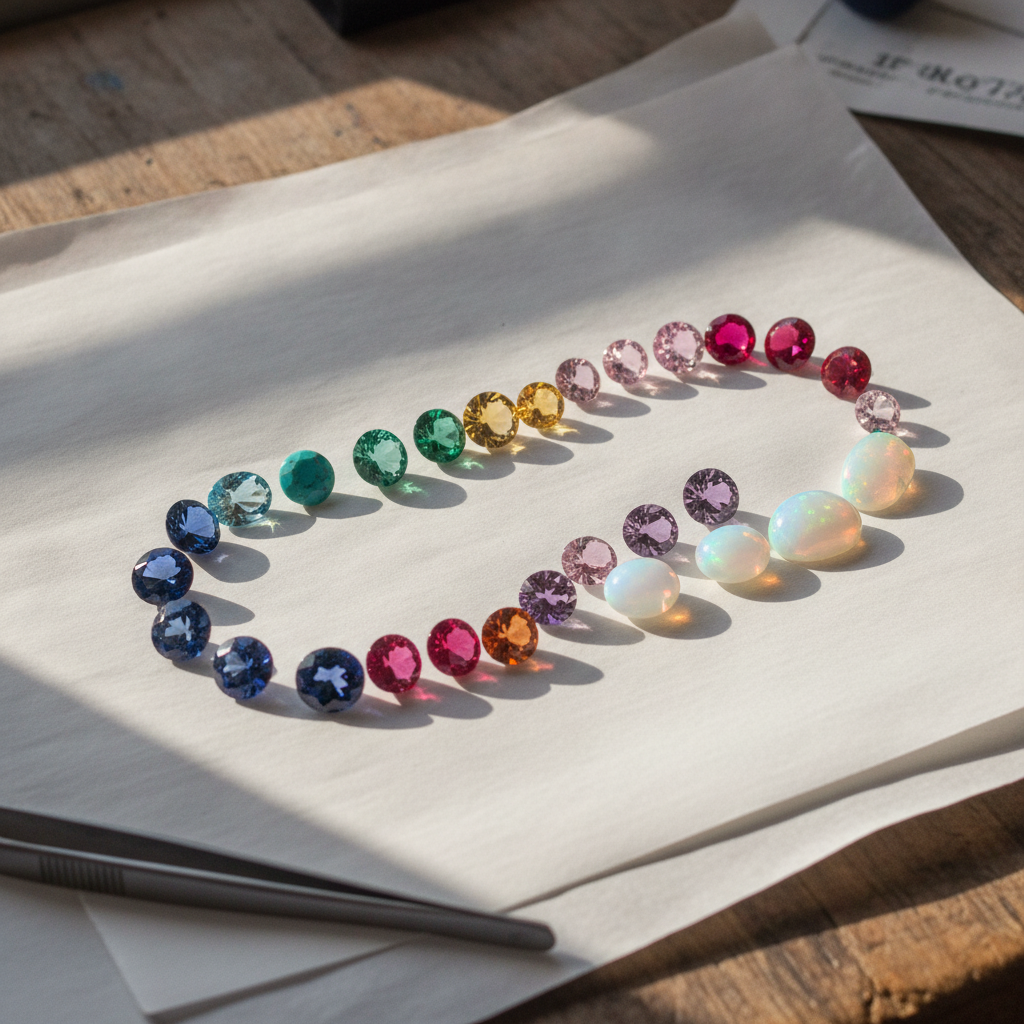
Is "Semiprecious" Misleading? What GIA, CIBJO and the FTC Actually Say
Yes, and the trade's own institutions say so in writing. GIA calls "semi-precious" an outdated and inaccurate term and teaches its students not to use it. CIBJO, the World Jewellery Confederation, rules it misleading and says it shall not be used. The US FTC still polices the words but has never defined the category. Three bodies, three documents, and not one of them will tell you which stones belong on which side.
| Body | Document | What it says about "semi-precious" |
|---|---|---|
| CIBJO (World Jewellery Confederation) | The Gemstone Book, 22 December 2022, clause 4.1.1.8 | "The term ‘semi-precious’ is misleading and shall not be used." |
| CIBJO | Same book, glossary 5.66 | "Precious stones: see gemstones." No separate definition is given. |
| CIBJO | Same book, clause 4.2.2 | "The adjectives ‘real’, ‘precious’, ‘genuine’ or ‘natural’ shall only be used to refer to or designate natural materials." |
| US Federal Trade Commission | Jewelry Guides, 16 CFR 23.27 | Unfair or deceptive to call an artificially produced product "precious" or "semi-precious." |
| US Federal Trade Commission | Jewelry Guides, 16 CFR 23.25 | Still uses "any other precious or semi-precious stone" as a catch-all, and never lists which stones are which. |
| GIA (Gemological Institute of America) | Colored Stone Essentials, Assignment 1, Key Concepts box “Just Say Gem” | "It’s an outdated and inaccurate term that suggests a ranking of gems into superior (precious) and inferior (semi-precious) categories." |
| GIA | Same course, the grading system itself | Grades color, clarity, cut, carat weight, rarity and durability. There is no precious column. |
Every line above was read against the primary document on 14 August 2026: the CIBJO Gemstone Book PDF (© CIBJO 2022), the current text of 16 CFR 23.25 and 23.27 at Cornell Law School, and the GIA Colored Stone Essentials course text, Assignment 1. Quotes are verbatim.
Start with CIBJO, because that is the trade talking to itself. Its Blue Books are the nomenclature standard laboratories and national trade bodies work from, and clause 4.1.1.8 runs to one sentence: the term is misleading and shall not be used. Not discouraged. Shall not. Then read glossary entry 5.66, which is the one that got me. "Precious stones" is defined in three words: see gemstones. A reference book that carefully defines chatoyancy, asterism and some thirty kinds of treatment has no definition of "precious stone" that is anything other than "gemstone." Not because an editor forgot. Because there is nothing to write.
GIA is blunter, and this is the part almost nobody quotes. Its Colored Stone Essentials course stops mid-assignment for a Key Concepts box headed “Just Say Gem,” and the box exists to tell students that "it’s an outdated and inaccurate term that suggests a ranking of gems into superior (precious) and inferior (semi-precious) categories." The example the course reaches for is a $500-per-carat tsavorite, demeaned as semi-precious because it is "just a garnet." Then it tells students what to do instead: talk about quality differences, relative rarity and price ranges, and stick with the words gem and gemstone. The largest gemological body on earth teaches its own students to drop the word, in the first assignment of its colored stone course.
The FTC is the honest complication, and we would rather state it than hide it. American law does still use the phrase, as a catch-all for "any other precious or semi-precious stone." What it never does is publish the list. Read the four provisions together and something quieter shows up: every one of them draws the line between mined and manufactured, never between two mined stones. In the only rulebooks that govern this vocabulary, "precious" means natural, not top-tier. Which makes "semi-precious," read literally, a way of calling a mined stone half natural.
One caution if you go and read the sources yourself. Older coursework and a lot of blog copy cite the precious/semi-precious rule as 16 CFR 23.24. The Guides were renumbered in the 2018 revision, and 23.24 now covers disclosure of treatments. The wording quoted above lives at 23.27.
Types of Semi-Precious Stones: the 17-Species List, With Mohs Hardness
People searching for the types of semi-precious stones usually want the list, so here it is. There is no official one, which is the first clue: no lab publishes a register of "semi-precious" species, because no lab grades on that word. What exists is a habit of the trade, and this is what that habit covers. Next to each stone sits the number that decides whether it survives daily wear, its Mohs hardness (values from GIA's Colored Stone Essentials).
| Stone | Mohs hardness | Typical colors | Everyday wear |
|---|---|---|---|
| Amethyst | 7 | Lilac to deep violet | Daily wear, rings included |
| Citrine | 7 | Yellow to orange-brown | Daily wear, rings included |
| Topaz | 8 | Blue, colorless, imperial yellow | Daily wear, rings included |
| Tourmaline | 7 to 7.5 | Every hue, including neon Paraiba | Daily wear, rings included |
| Aquamarine | 7.5 to 8 | Sea blue to blue-green | Daily wear, rings included |
| Morganite | 7.5 to 8 | Pink to peach | Daily wear, rings included |
| Garnet (tsavorite, rhodolite) | 7 to 7.5 | Green, raspberry, wine red | Daily wear, rings included |
| Spinel | 8 | Red, pink, blue, violet | Daily wear, rings included |
| Chrysoberyl (cat's eye, alexandrite) | 8.5 | Honey, yellow-green, color-change | Daily wear, rings included |
| Jade (jadeite, nephrite) | 6.5 to 7 | Green, lavender, white, red, black | Toughness rated exceptional, the top of the scale |
| Peridot | 6.5 to 7 | Yellow-green | Fine in rings, watch for abrasion |
| Zircon | 6 to 7.5 | Blue, colorless, brown | Facet edges abrade, protect them |
| Tanzanite | 6 to 7 | Violet-blue | Happier in pendants and earrings |
| Moonstone | 6 to 6.5 | Milky white with blue sheen | Has cleavage, pendants and earrings |
| Lapis lazuli | 5 to 6 | Ultramarine blue | Pendants and earrings |
| Turquoise | 5 to 6 | Sky blue to green-blue | Porous, usually treated, pendants |
| Opal | 5 to 6.5 | Play-of-color on a pale or dark body | Pendants and earrings |
Now put the four "precious" stones beside them: diamond 10, ruby and sapphire 9, emerald 7.5 to 8. Spinel and topaz match emerald, chrysoberyl beats it, and emerald is in practice the most delicate of the four, because fissures are common and filling is routine (GIA). A column that runs from 5 to 8.5 and interleaves with the "precious" four is not a grade. It is a list.
Read down that table and the useful split appears, and it is not precious versus semi-precious. It is Mohs 7 and up, which takes a ring on a working hand, versus below 7, which is happier in a pendant or earrings. Opal, turquoise and moonstone need care because of hardness, porosity and cleavage, real properties you can measure. The list also changes shape depending on who writes it: some sellers stretch it to agate and tiger's eye, some push in pearl, coral and amber, which are organic and not minerals at all. A category loose enough to hold amber at Mohs 2.5 and chrysoberyl at 8.5 is not sorting stones. It is sorting a shelf.
Semi-precious stones by color
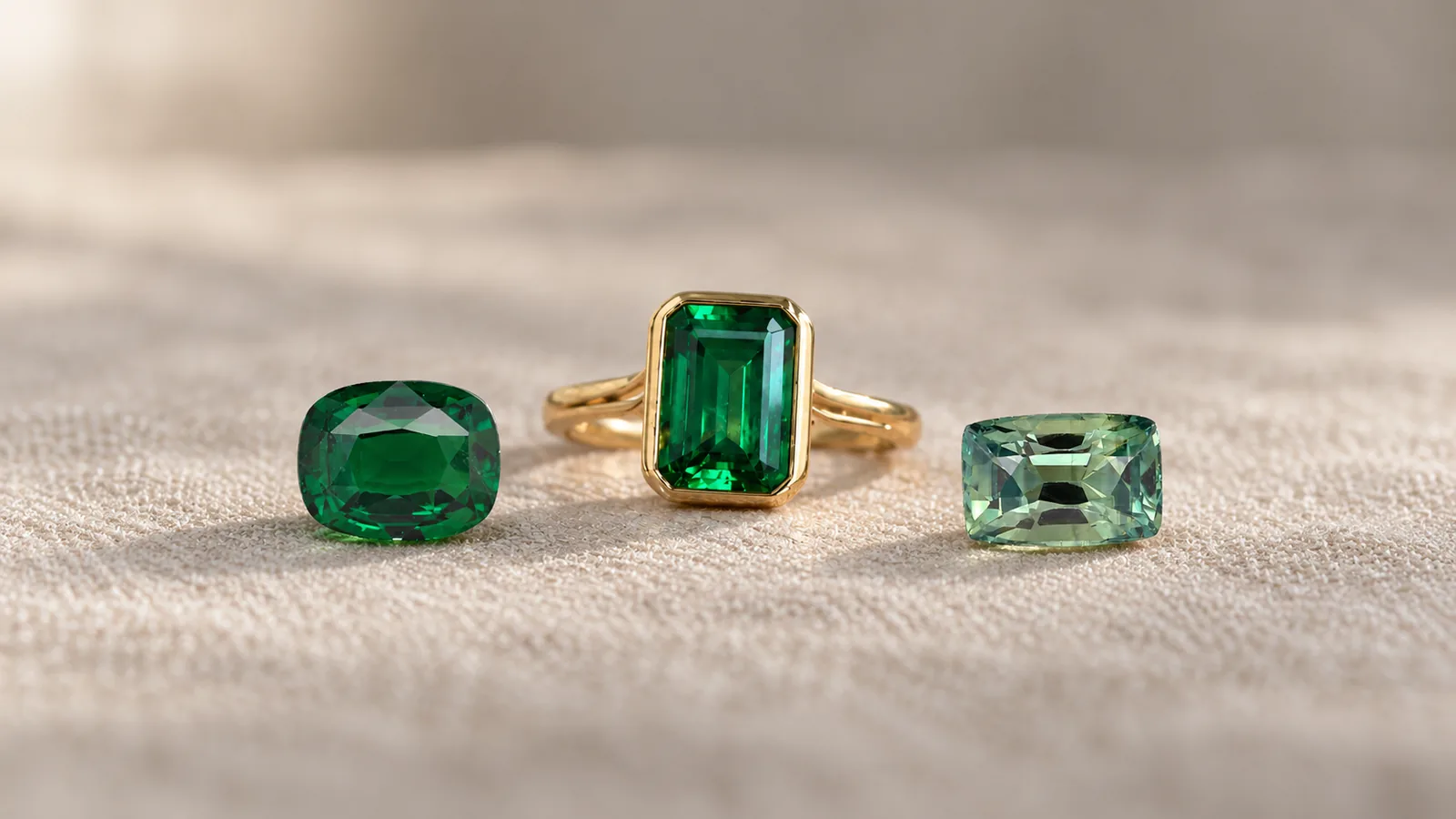
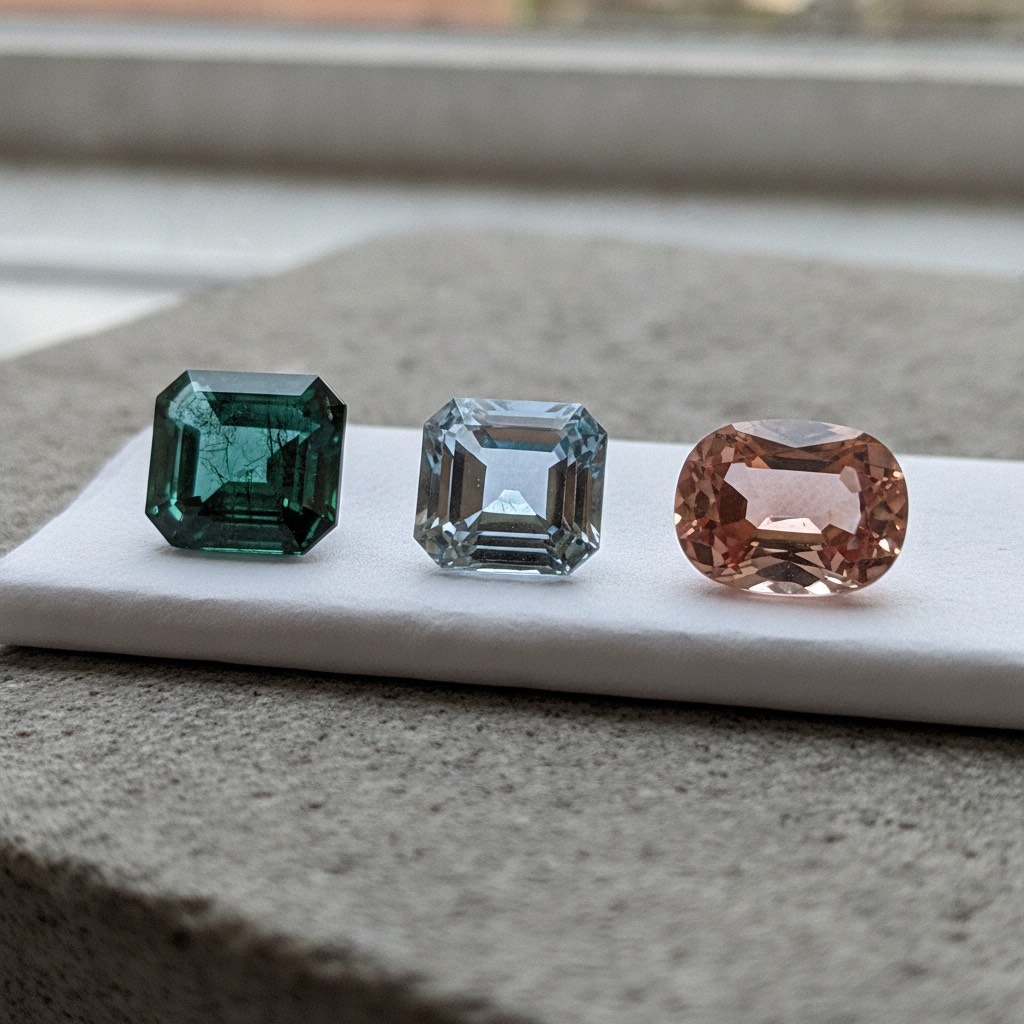
Most people arrive at this word through a color rather than through gemology. Someone wants a green stone that is not an emerald, or a blue one that is not a sapphire. The short lists: green is tsavorite garnet, green tourmaline and peridot; blue is tanzanite, blue spinel, blue zircon, blue topaz and lapis lazuli; purple is amethyst first and mostly, then purple spinel and violet tanzanite. Every one of those colors also exists on the "precious" side, in sapphire, and nothing measurable splits the two rows. GIA's own coursework introduces tsavorite as "an effective and less-expensive emerald alternative" and teaches that its green comes from vanadium, the same element behind a good deal of emerald green. Same coloring agent, same hue, two different shelves. Our green gemstone ring guide and our purple gemstone guide compare them properly.
What gemology sorts instead
Gemology does sort stones. It sorts by species, by variety and by group, and that system cuts nowhere near the old line. Emerald, aquamarine and morganite are one species, beryl. Ruby and every sapphire are one species, corundum. Tsavorite and pyrope are both garnets. Every laboratory report names a species; none of them has ever printed a line that reads "semi." When you want to know what a stone is, read the species line on its gemstone certificate. The prefix names nothing.
The label distorts colour families too. Cream sapphire sits at Mohs 9 and gets called "semi-precious" next to pearl at 2.5 to 4.5, purely because it is not blue. The full comparison is in our guide to cream and beige stones.
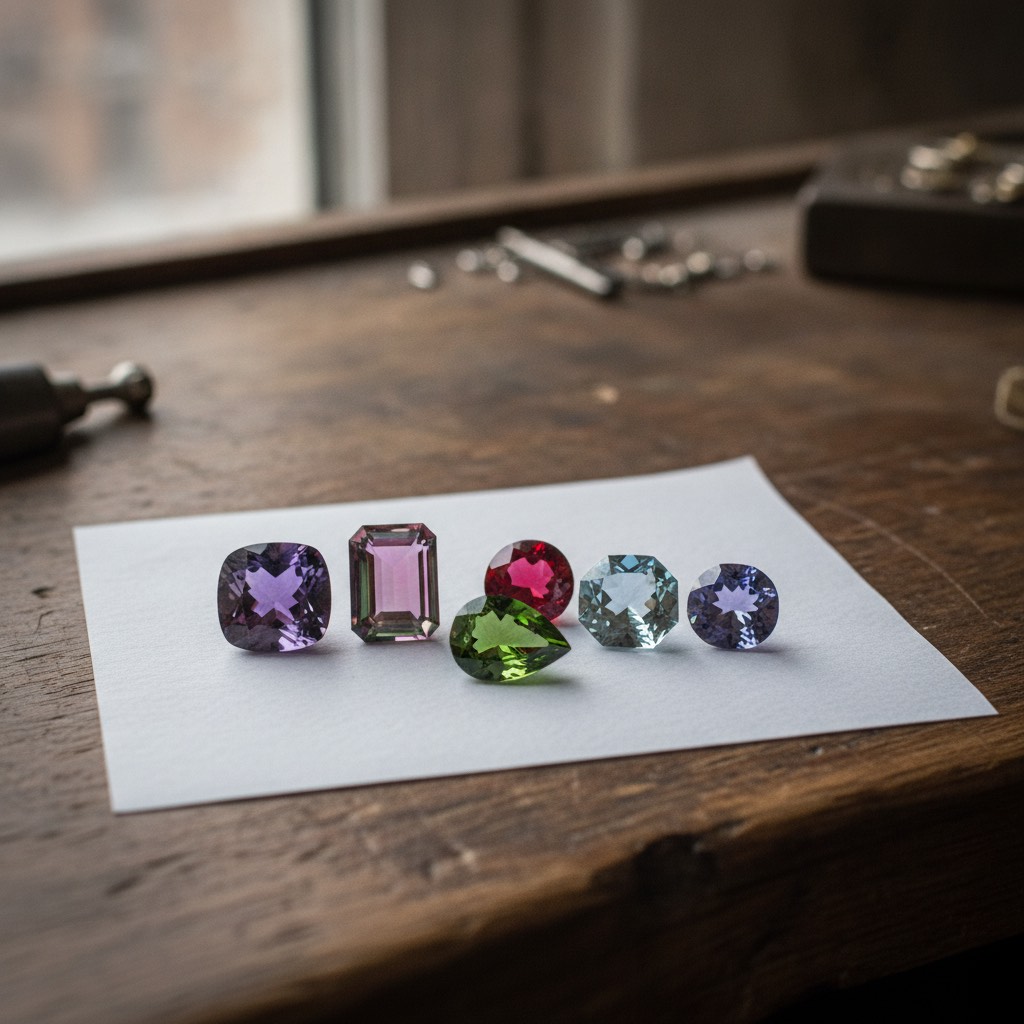
Is Jade a Precious Stone? Is Amethyst? The Verdict, Stone by Stone
The list answers "which stones." Most people arrive with one stone in mind and a narrower question: is mine on the wrong side of the line? Here are the honest verdicts, including the one place the old word accidentally gets something right.
Is amethyst a precious stone?
By the old habit, no. Amethyst sat among the most valued stones in Europe for centuries, until South America opened up. GIA puts more than 75 percent of the commercial-quality calibrated amethyst on the market as South American today, Brazil being the major source. The mineral did not get worse. The supply got bigger, and the label followed the price.
Is jade a precious stone?
By the old label, no, and this is the worst call the word ever made. GIA's course text says fine jadeite "commands some of the highest prices among gems in the international market today", and that the trade judges it with different standards than it uses for "transparent colored stones of comparable value, like ruby, sapphire, and emerald". Those are three of the four stones on the top shelf. Durability tells the same story. GIA rates jade's toughness exceptional, the highest rating in its reference guide, while emerald, one of the four, is rated poor to good. Then jade breaks the label from the inside: jadeite and nephrite share the trade name, and GIA puts nephrite in jewelry sizes at "a few dollars per piece" against jadeite at "several hundred to tens of thousands of dollars per piece". One word, one shelf, four orders of magnitude.
Is garnet a precious stone?
No, and this answer exposes the whole system, because "garnet" is a family rather than a single stone. Dark red pyrope and vivid green tsavorite carry the same name and nothing like the same price. Most tsavorite comes from a narrow strip of East Africa, Tanzania, Kenya and Madagascar (GIA). One bin, two completely different stones.
Is tanzanite precious or semi-precious?
Semi-precious, by a label that ignores the most interesting fact about it. Gem-quality tanzanite comes from just one place on earth, the Merelani area in Tanzania (GIA). Diamond, ruby and sapphire are mined on several continents. The stone with a single source on the planet is the one filed as lesser, and our tanzanite buying guide goes through what that scarcity does to price.
Are aquamarine and morganite precious?
This is the one that should end the argument. Emerald, GIA writes, "is a variety of beryl, a species that includes aquamarine as well as beryls in other colors." Morganite is another of those colors. Same mineral species, three names: the green one goes on the high shelf, the blue and pink ones go on the low one. The line runs straight through the middle of a single mineral. No gemological test can find it, because there is nothing there to find.
Is spinel a precious stone?
No, and this is the answer that embarrasses the whole system. Two of the most famous "rubies" in the British Crown Jewels, the Black Prince's Ruby and the 352-carat Timur Ruby, are spinels. The stone was only separated from ruby in 1783, and the shelf it landed on afterwards was the lower one. At Mohs 8 it is as hard as emerald or harder, and the loose red spinels we sell are the same species that sat in those crowns. The next section takes that history in full, and our complete guide to spinel goes further.
Are turquoise and opal really semi-precious?
Here the caution buried in the word is fair, though not for the reason the word implies. Turquoise is porous, sits around Mohs 5 to 6, and much of what sells is polymer-impregnated, known in the trade as stabilized (GIA). Opal earns careful handling too: high heat or a sudden temperature change can fracture it, and GIA warns that loss of moisture causes crazing. Those are durability and disclosure conversations, handled properly in our turquoise buying guide and opal buying guide. Softness is a real, measurable property. "Semi-precious" is not, and filing opal and spinel under the same word tells you nothing useful about either.
And birthstones?
The birthstone list is the gem list the trade actually sells from, and it settles the argument on its own. Of the twelve months, four carry a "precious" stone: April, May, July and September. The other eight are built entirely from stones the old word files second class, and June opens with a pearl, which is not a mineral at all. Six stones have joined the American list since 1912, alexandrite, citrine, pink tourmaline and zircon in 1952, tanzanite in 2002, spinel in 2016, and all six landed on the "semi-precious" shelf (dates published by Jewelers of America). For 114 years the trade kept enlarging its best-selling list and never once reached up to the top one, because the top one closed in the 1800s and nobody holds the authority to reopen it. Our birthstones by month guide runs through all twelve with hardness and real prices.
Notice what the honest answers have in common. Every one turns on supply, species, treatment or hardness, the things a lab and a market actually measure. Not one turns on the prefix.
The Proof Is Sitting in the Crown Jewels
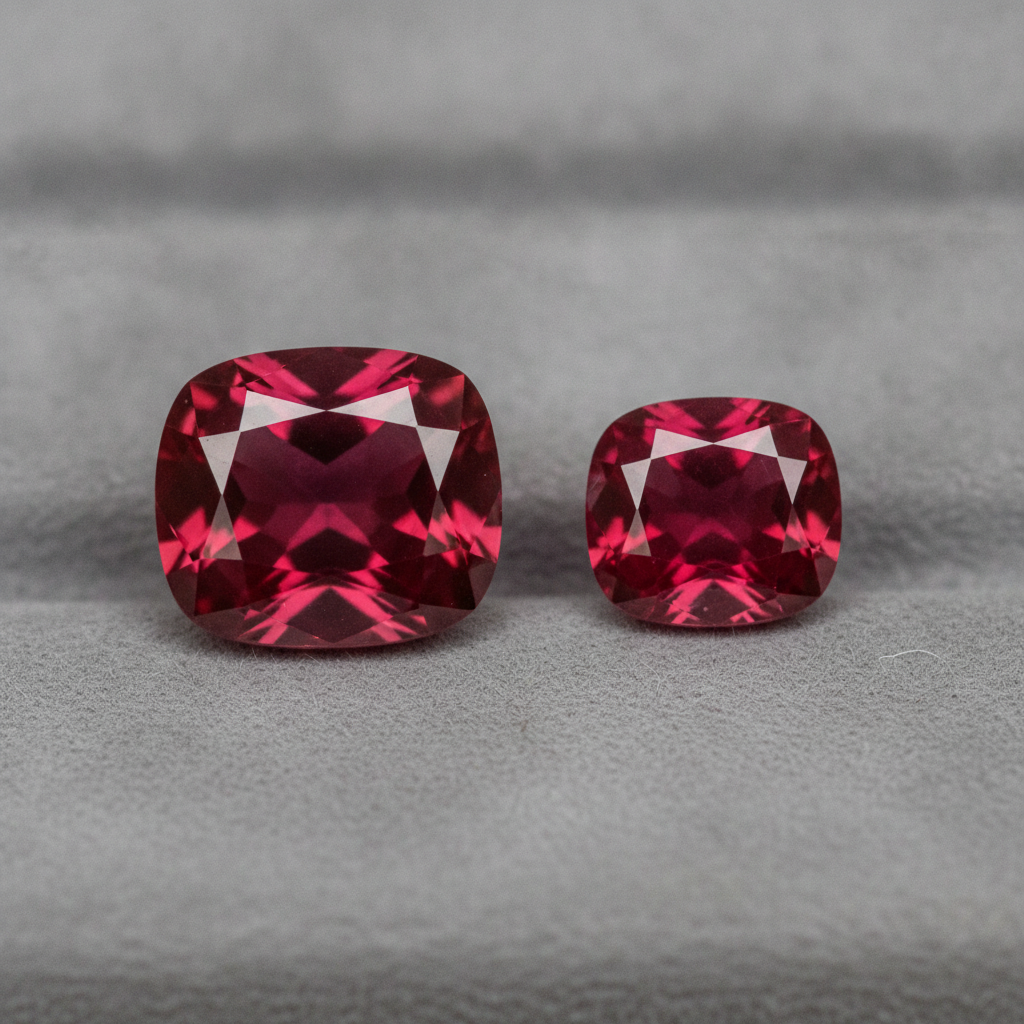
If the word measured quality, this couldn't happen. The "Black Prince's Ruby," set in England's Imperial State Crown and kept in the Tower of London, is not a ruby. It's a red spinel, roughly 170 carats, that passed through the hands of Moorish and Spanish kings before Edward, the Black Prince, received it in 1367 as payment for a battle (GIA). The "Timur Ruby," 352 carats, was set in a necklace for Queen Victoria. It was revealed to be a spinel too, in 1851.
For centuries, the finest spinels were called Balas rubies and treasured as the property of kings and emperors (GIA). They crowned monarchs, survived fires, theft, even wartime bombing raids. Then in 1783 a French mineralogist established spinel as a mineral distinct from ruby, and at some point the marketing shelf reorganized. Today that exact same stone, the one fit for a coronation, gets filed as "semi-precious."
Read that history and the label stops being a grade and starts looking like an accident we kept. The kings didn't care what bin the stone went in. They cared that it was red, alive, and the largest of its kind they could find. That is closer to how a stone should be judged than any line drawn by a 19th-century salesman.
Why a Sourcer Hates This Word
This is personal for me, so I will be honest about where I stand. I source colored stones. The word "semi-precious" tells my buyer to look down on the exact thing I spent two years learning to read. It is a status filter dressed up as a grade, and it does what the worst of the trade always wants done: it gets people to judge by category instead of by the stone.
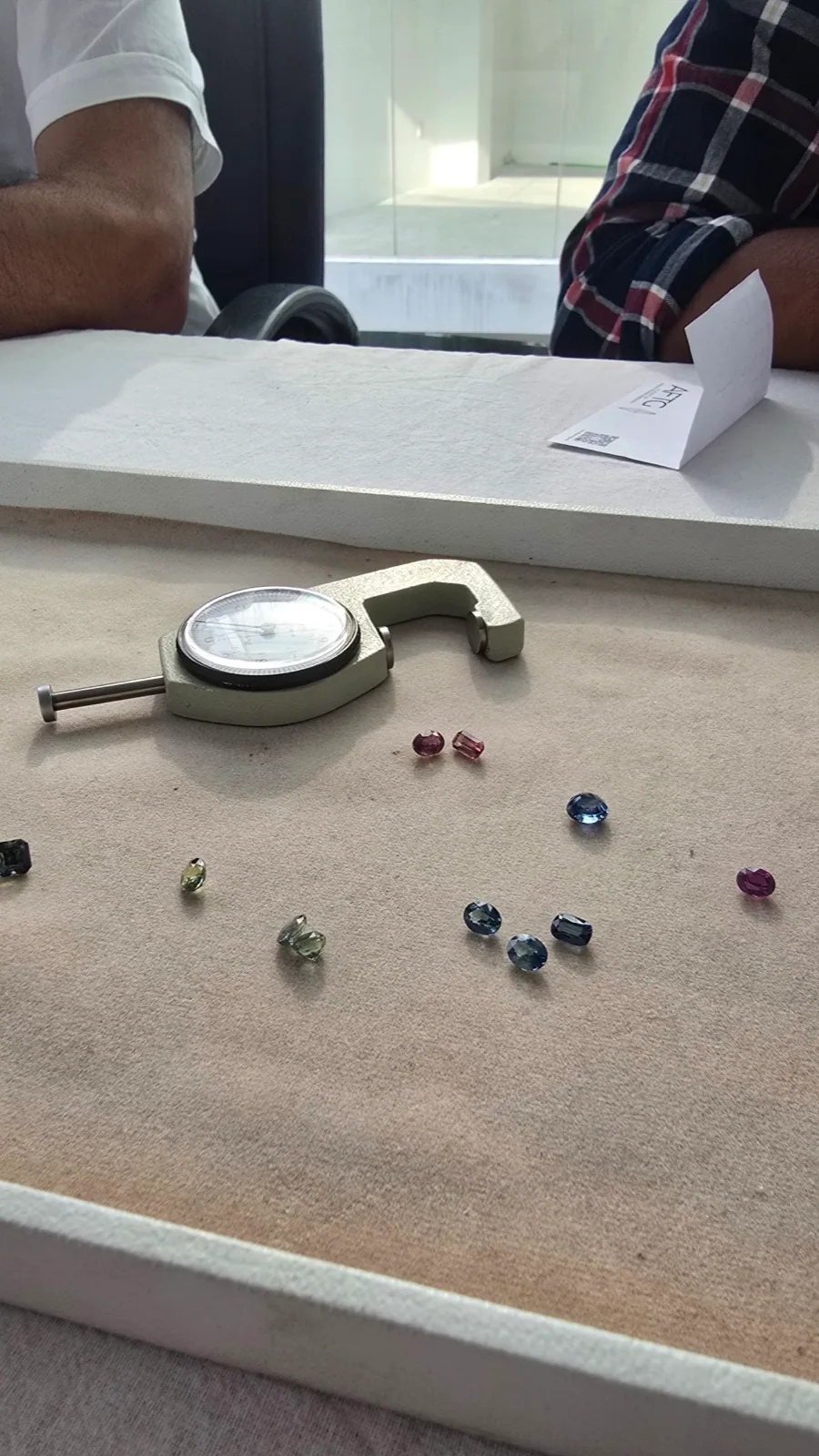
I watched it happen once. A buyer came to me set on a sapphire, and on the tray he kept circling back to one violet stone. He loved it, you could see it. Then I told him it was a spinel, and he put it down on the spot. The stone had not changed in the half-second between him admiring it and dropping it. Only the word had.
Drop the prefix and you are left with the factors that genuinely move a price: color first, then clarity, cut and carat weight, then rarity, durability and treatment, with demand sitting on top of all of it. None of them care which shelf a stone is on (GIA). Color does most of the work. In two years at the market I learned, slowly, that the difference between two prices is often a hint of secondary hue most beginners cannot see, the pull of violet under a blue, the gray that quietly drains value. And the two shelves overlap by orders of magnitude: GIA's own course text puts black sapphire under a dollar a carat and fine blue star sapphire in the thousands, both on the "precious" list, while a red spinel that can pass for a fine ruby is not.
I am not a gemologist, and I will not pretend the eye is enough on its own. What I judge is color, beauty, inclusions, cut and a fair price, learned on the ground in Sri Lanka. The technical verdict belongs to an independent outside laboratory, which certifies every stone we sell. Neither the laboratory nor I have ever needed the word "semi-precious" to do that job, because it does no job. It sorts stones by reputation, and reputation is not a property you can measure.

So Should You Ever Use the Word?
Use it to spot lazy selling, and otherwise let it go. When a listing leans hard on "precious" to justify a number, or waves away a stone as "just semi-precious," it's telling you the seller is grading by category, not by quality. The better questions are simple and have nothing to do with the prefix. What species is it? What's the color, really? Is it treated, and how? Who certified it, and are they independent of the seller?
Ask those and the old word becomes useless, which is the point. A red spinel doesn't get worse because a salesman in 1850 needed diamonds to feel exclusive. If you want to start with the stone the Crown Jewels mistook for ruby for six centuries, our spinel collection is sourced this way and sent to an independent lab before listing, and our complete guide to spinel covers it in full. Prefer the species that did make the old "precious" list? Our Ceylon blue sapphires and the complete guide to sapphire are graded by the same factors, never by the label. Either way, what a lab actually certifies is worth more than any prefix, and we explain that in what a gemstone certificate really proves.
Quick answers
What does "semi-precious" actually mean?
Is it spelled "semiprecious" or "semi-precious"?
Is the precious vs semi-precious distinction real?
Why is spinel called semi-precious if it's so valuable?
Are semi-precious stones valuable?
Which stones are called precious and which are semi-precious?
Does GIA use the term semi-precious?
What is the full list of semi-precious stones?
Are semi-precious stones hard enough for everyday jewelry?
Is amethyst a precious or semi-precious stone?
Is jade a precious or semi-precious stone?
Is the term "semi-precious" banned?
Can a semi-precious stone be worth more than a precious one?
Judge the Stone, Not the Shelf
The word outlived its job. "Precious" and "semi-precious" never measured a stone; they sorted names on a 19th-century sales shelf, and a red spinel fit to crown kings landed on the wrong side of it. Drop the prefix and you're left with the only things that matter: color, clarity, cut, carat, rarity, durability, and what an independent lab actually confirms. That is how every stone we list is judged. The stone earns it, never the label.