What a Gemstone Certificate Actually Proves (and What It Doesn't)
What a lab report genuinely proves, what it quietly does not, and how to verify one, from a sourcer who certifies every stone he buys in Sri Lanka.
The Short Answer
A gemstone certificate is a lab report that proves what a stone is: its identity, whether it is natural or synthetic, any treatment, and sometimes its origin. It does not prove the stone is beautiful, that the price is fair, or that it is a smart buy. The protection is real only when the report comes from a named, independent lab you can verify online, never from the seller's own letterhead.
What a Gemstone Certificate Actually Is
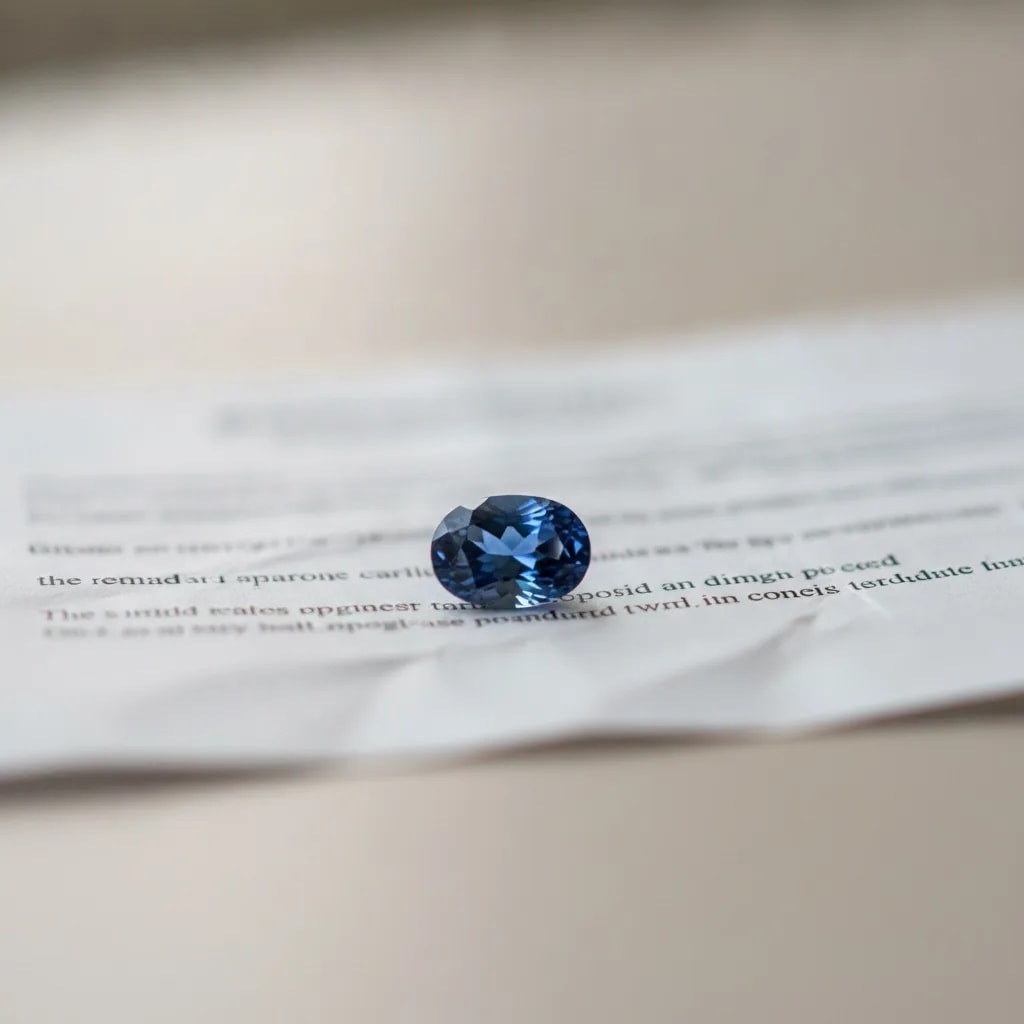
A gemstone certificate is a lab report. Nothing more glamorous than that. A trained gemmologist puts your stone under controlled equipment and writes down what it is: the species, the variety, the weight and measurements, the cutting style, whether it is natural or synthetic, and any treatment they can detect. Most reputable labs call it a report, not a certificate, and that word choice matters. A report describes. A certificate sounds like a guarantee of worth, which it is not.
Here is the thing people get backwards. A gemstone certificate answers what is this stone, not is this a good stone or is this a fair price. Those are different questions, and the report stays silent on the last two. According to the GIA curriculum, a colored stone report records species, variety, the treatment call, refractive index, specific gravity, spectrum and magnification findings (per the GIA Colored Stones course). It is a forensic ID, not a verdict on beauty.
What Does a Gemstone Certificate Actually Prove?
This is the part that earns the fee, and it is genuinely worth paying for. A report from a major independent lab settles the questions you cannot answer with your own eyes.
Identity. Is it a sapphire, a spinel, or glass? Labs separate look-alikes by their physical and optical properties, the parts no seller can fake on a phone screen. The extreme version of this is taaffeite, a stone that spent decades being sold as spinel because nothing but a lab test could tell the difference.
Natural or synthetic. A lab-grown sapphire is chemically real corundum, but it grew in a factory in weeks. A report tells you which one you are holding. For corundum, gemmologists read the inclusions: heat-treated natural stones show altered crystals with a whitish snowball look, broken silk, and disc-shaped fractures with tension halos (GIA Gem Identification Lab Manual).
Treatment. This is the big one for colored stones. The GIA notes that at least 95% of blue sapphires are treated in some way, and that all treatments should be disclosed (GIA). A report states whether the stone was heated, diffused, fracture-filled, or left untouched. If you want to read the treatment line properly, we wrote a full walkthrough in our guide on unheated vs heated sapphire.
Sometimes origin. Some labs add a separate origin opinion. The GIA defines a certificate of origin as a document that indicates a stone's geographic origin based on its inclusions and trace element chemistry (GIA). Notice the word opinion. Origin is the most debated call on any report, and two labs can disagree on the same stone.
What Does a Gemstone Certificate NOT Prove?
This is the section nobody selling you a stone wants to read aloud. A certificate is powerful, but it has a hard edge, and four things sit just past it.
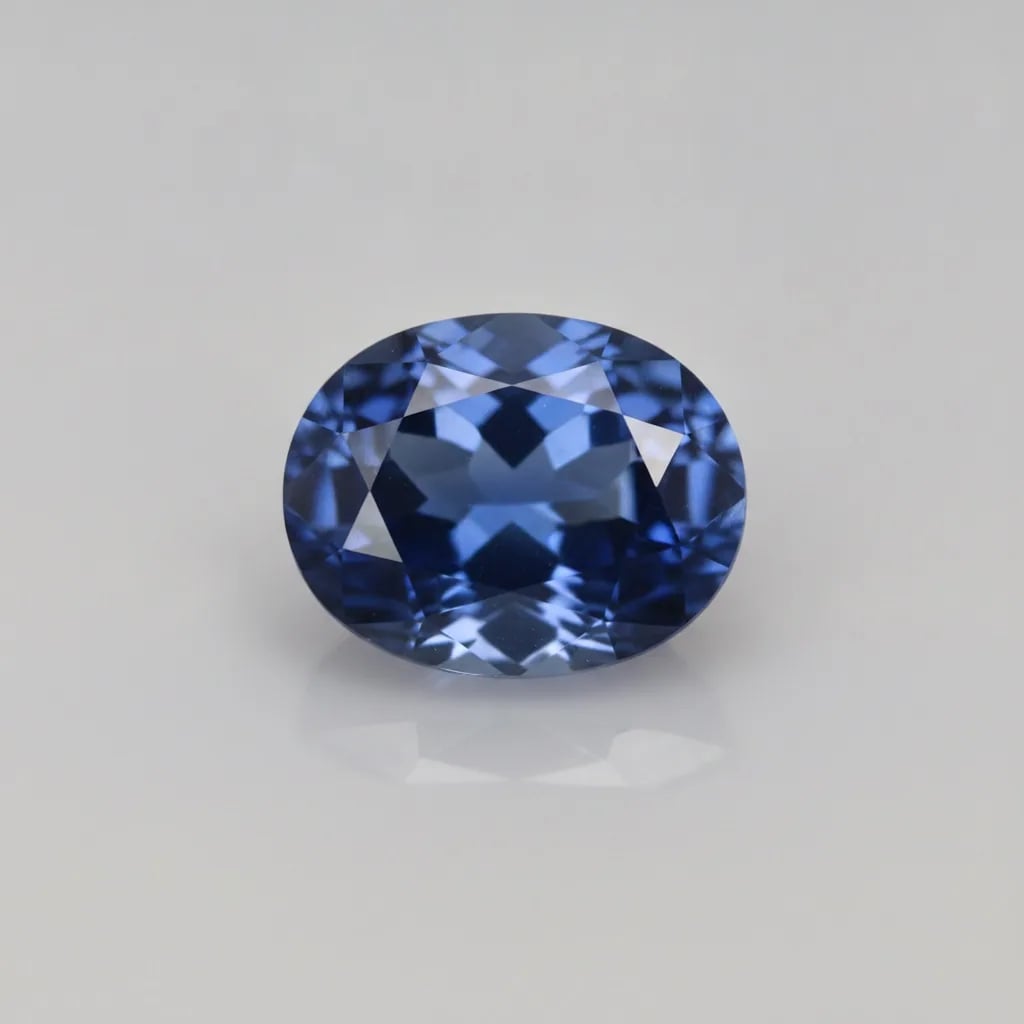
It does not prove the stone is beautiful. Two sapphires can carry near-identical reports and look nothing alike in the hand. The report grades facts, not feeling. A stone can tick every box on paper and still sit dead under the light. We have passed on stones with clean reports because they did nothing. We have bought stones because they did everything, and the paper came second.
It does not prove the price is fair. A grading report from GIA states identity and characteristics, but it does not assign a dollar value. The GIA is explicit that its reports are not appraisals and no value is stated. The number on the price tag is the seller's decision, full stop. A certificate next to a stone is not a receipt for a fair price.
It does not prove it is a good buy. Identity plus treatment plus measurements still leaves out cut quality you can feel, the life in the color, and whether you are overpaying for a name. The report is the floor of the conversation, never the ceiling.
It does not prove ethics or current condition. A report describes a stone on the day it was tested. It says nothing about how the rough was mined, and a stone graded three years ago could have been chipped or recut since. Paper ages. Stones change.
How Do You Read and Verify a Gemstone Certificate?
A real report is verifiable in about two minutes, and a fake one usually falls apart in one. Here is the short version.
First, find the lab name and the report number. Then go to that lab's own website and type the number into its report-check tool. GIA, GRS, Lotus, SSEF and other major labs all keep a public database. If the details on screen match the paper in your hand, the report is real. If the lab has no online check, or the number returns nothing, treat the paper as decoration.
Read three lines before anything else: the identity, the natural-or-synthetic call, and the treatment line. On a colored stone, the treatment line is where the money hides, and it doubles as your cleaning instructions. It is hardest of all to get on an old piece, because the mount can be dated precisely while the stone almost never is, which is the trap we unpack in our guide to vintage engagement rings. Vague wording like "may have been heated" is a different stone from "no indications of heating." The video below from the GIA walks through how a grading report is laid out, which makes the verification habit stick.
The Traps: House Certs, Unnamed Labs, and Inflated Appraisals
Most certificate problems are not forgeries. They are documents engineered to look like proof while proving almost nothing. Three show up again and again.
The in-house certificate. A document on the seller's own letterhead, signed by the seller, grading the seller's own stone. That is not a third-party opinion, it is a sales sheet in a nice font. The whole point of certification is independence. The moment the grader and the seller are the same person, the value of the paper drops to near zero.
The unnamed or unverifiable lab. An impressive-looking report from a lab you cannot find online, with no public report-check, no address you can confirm, no track record. If you cannot verify it, it is not protecting you. A real lab wants to be checked.
The inflated appraisal dressed up as identification. An appraisal estimates value, usually for insurance, and it is often deliberately high. An identification report states facts. They are not the same document, and an appraisal that says your stone is "worth $9,000" is not proof you should pay $9,000. Watch for a value-heavy page wearing the costume of a lab report.
None of this means certificates are a scam. The opposite. It means the opaque ones are the scam, and a clear report from a named, checkable, independent lab is one of the most honest things in this trade.
How We Handle Certification at Joalys
I source the stones. I do not certify them, and I am careful about that line. I spent two years in Sri Lanka learning to read a parcel on a dealer's table, but reading a parcel and signing a lab report are two different jobs. So we split them.
Every Joalys stone is independently certified by Bilal, a GIA Graduate Gemologist, the same way you would say a stone is certified by GRS or by SSEF. He is not selling you the stone, which is the entire point. When you buy a colored gemstone, you should be able to take the report number, run it yourself, and confirm the identity and treatment without trusting a word I say. That separation between the person who sources and the person who certifies is not a weakness. It is the proof. The sourcing half of that arrangement, and the nine hands a stone passes through before anyone certifies it, is described in my account of sourcing sapphire in Sri Lanka.
If you want to see how this plays out across an entire species, our guide to sapphire hardness and durability covers what the species is, why Mohs 9 is not the whole story, and what a report actually settles.
JOALYS
Everything Begins with the Stone
Two sapphires can share the same grade and nothing else. Yours is chosen in hand.
Keep the sapphire loose, or commission a piece made around it — made to order, never off the shelf.
This is also why we tell buyers to settle the stone and its report before commissioning any setting. The reasoning is laid out in our guide to buying the stone first for a gemstone pendant.

Frequently Asked Questions
The Bottom Line on Gemstone Certification
A gemstone certificate from a major independent lab is one of the few honest anchors in this business. It tells you exactly what you are holding, settles the treatment question, and protects you from a confident lie. Use it for that, and only that. It will never tell you a stone is beautiful, that the price is fair, or that you should buy it, and any seller who lets a certificate do their persuading is hiding behind the paper. Verify the report yourself, separate identity from value in your head, and let the stone, not the document, decide whether it makes you feel something.