The Complete Guide to Sapphire: Hardness, Durability, Colors and Value
Where sapphire sits on the Mohs scale, why hardness is not the same as toughness, and what a certificate has to say before any of it matters. From a sourcer who works the mines in Sri Lanka.
The Short Answer
Sapphire is any gem-quality color of corundum except red, which is ruby. It scores 9 on the Mohs hardness scale, so only diamond can scratch it. Hardness is not toughness though: GIA rates sapphire toughness "usually excellent", with large fractures, heavy inclusions or some treatments making a stone less durable. Color drives value, and the lab report settles the rest.
What Is a Sapphire?
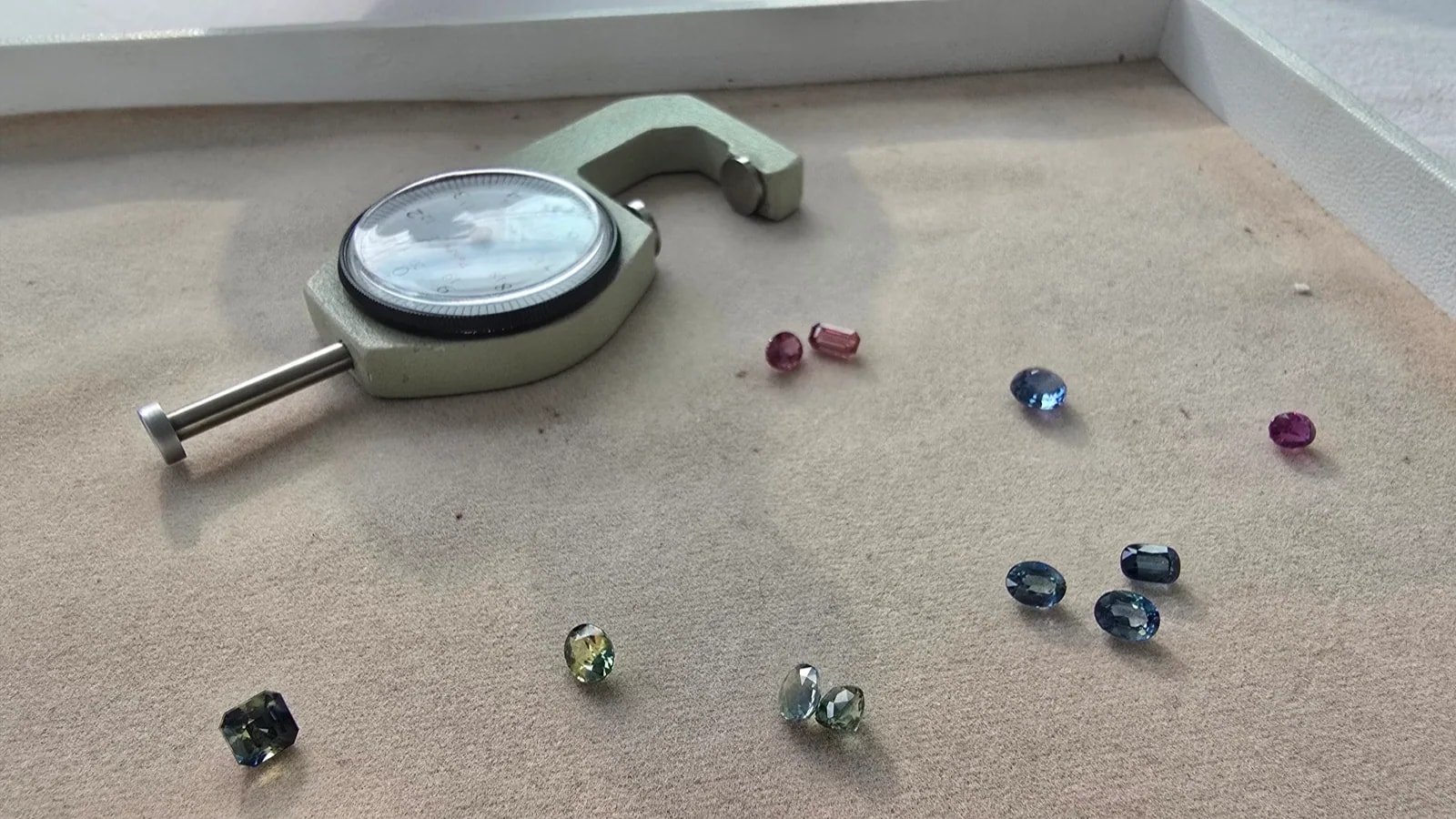
A sapphire is a gem-quality variety of the mineral corundum, the same crystal that gives us ruby. Here is the rule the trade lives by: red corundum is called ruby, and every other color of corundum is called sapphire. So a sapphire is not always blue. It can be pink, yellow, green, purple, teal, or that elusive pinkish orange we will get to later.
The color comes from trace elements trapped in the crystal as it grows. Blue sapphire owes its color to titanium and iron working together. Pink sapphire gets its hue from chromium, the very same element that, in higher concentration, turns corundum into ruby. According to GIA, blue sapphire ranges from very light to very dark, with the most prized stones sitting in a velvety, violetish blue at medium to medium-dark tones.
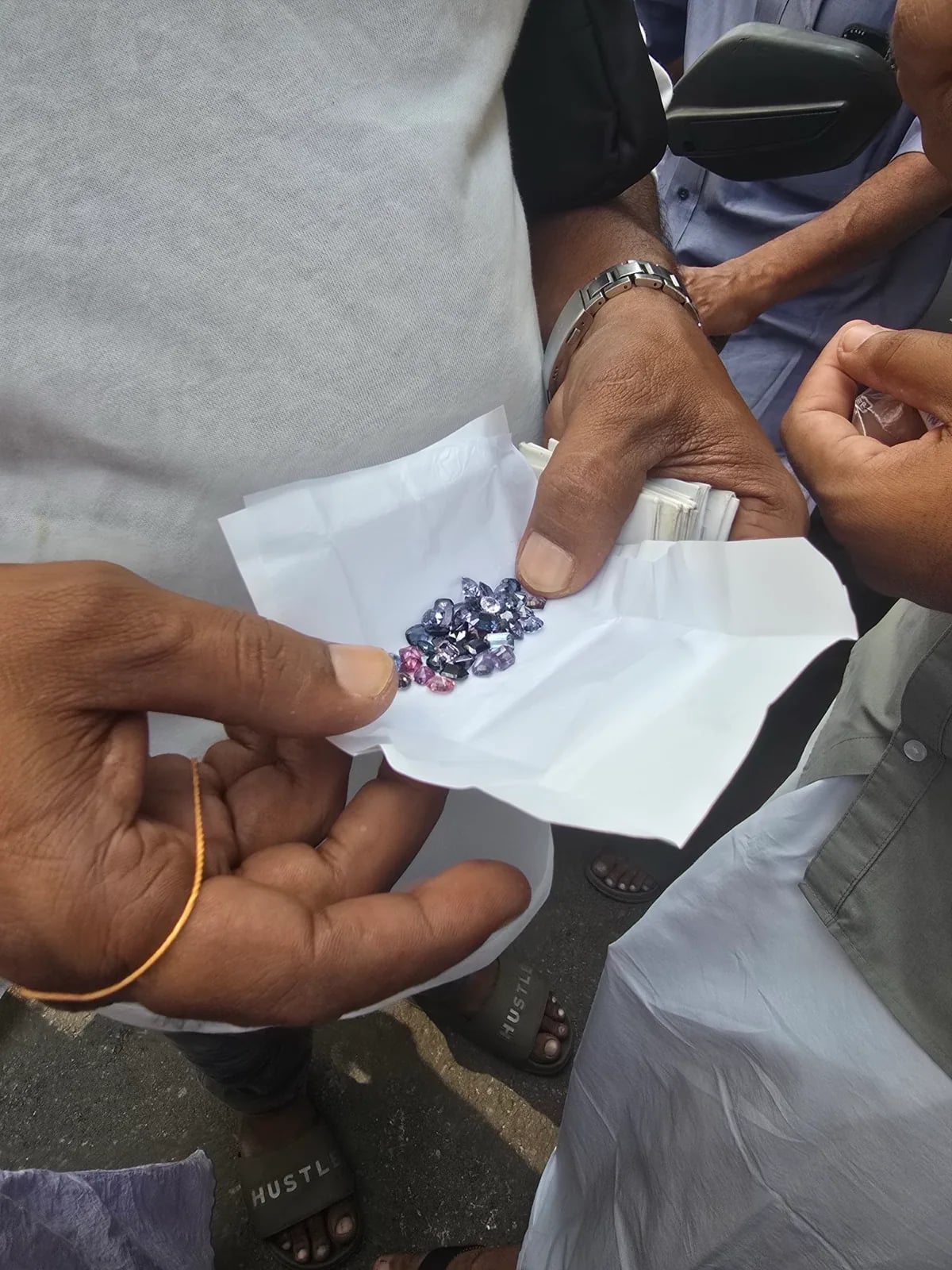
We sort sapphire parcels in Sri Lanka most weeks, and the first thing anyone notices is how wide that color family really is. People walk in expecting blue. They leave talking about teal. If you only know sapphire as the blue stone, you have seen maybe a fifth of what corundum can do. Browse the full sapphire collection to see the spread for yourself.

How Hard Is a Sapphire? Mohs 9 on the Hardness Scale
Sapphire scores 9 on the Mohs hardness scale. Only diamond, at 10, can scratch it. That is not a seller's flourish, it is GIA's own teaching material: both ruby and sapphire score a 9, which "means they can scratch almost anything, and no natural gemstone other than diamond can scratch them" (GIA, Colored Stone Essentials). The same passage points out that non-gem-quality corundum gets used industrially to cut and polish other colored stones. Think about that for a second. The stone in your ring is the same mineral the trade uses as abrasive.
Here is where sapphire sits against the gems it gets compared to. We have put GIA's toughness rating next to the hardness number on purpose, because the second column is the one almost nobody publishes and it is the one that decides whether a stone survives a knock.
| Stone | Mohs hardness | GIA toughness rating |
|---|---|---|
| Diamond | 10 | Not quoted here |
| Sapphire and ruby (corundum) | 9 | Usually excellent |
| Spinel | 8 | Good |
| Emerald | 7.5 to 8 | Good to poor |
| Quartz | 7 | Not quoted here |
Hardness and toughness values as published by GIA in its Colored Stone Essentials reference material. Where we did not have a GIA rating to quote, we say so rather than fill the cell with a number we made up.
Two practical consequences fall out of that 9. First, everyday grit is largely quartz based, and quartz sits at 7. A 7 cannot scratch a 9, which is why a sapphire worn daily for a decade still looks sharp while a softer stone goes cloudy at the facet edges. Second, sapphire will happily scratch nearly everything else in your jewellery box, so it wants its own pouch.
Let's be honest about the limit of this number, though. Hardness only describes resistance to scratching. It says nothing about what happens when a stone meets a tiled floor, and that is the next section.
Toughness, Stability and Care: What Mohs 9 Does Not Tell You
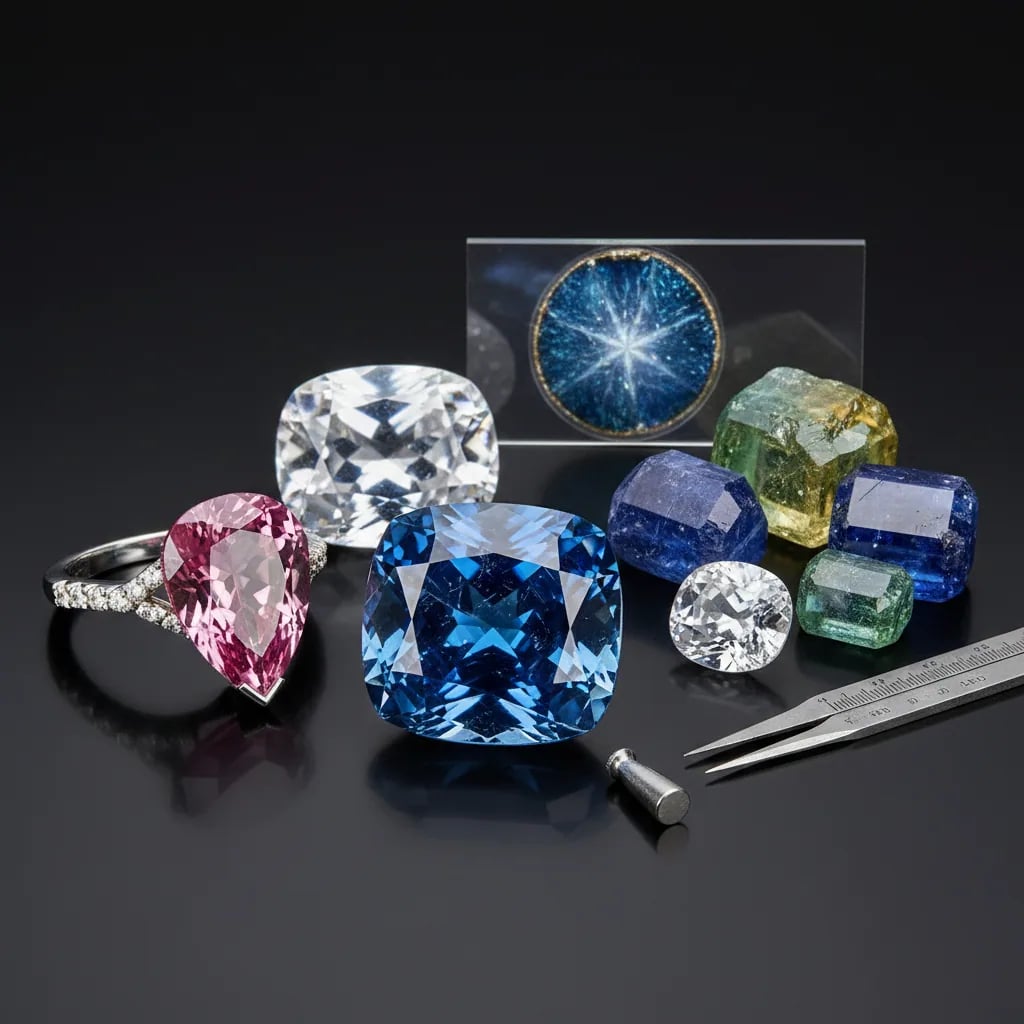
Hardness and toughness are two different properties, and conflating them is the most common piece of misinformation in sapphire selling. Hardness resists scratching. Toughness resists chipping and breaking. A stone can be superb at one and ordinary at the other.
GIA rates sapphire toughness as "usually excellent, but stones with large fractures or inclusions, or some treatments, can be less durable" (GIA, Colored Stone Essentials reference guide). Read that qualifier twice, because it is where the money hides. A heavily included stone, or one whose fractures have been filled, does not inherit the toughness of a clean crystal. This is one of the reasons we push so hard on treatment disclosure: it is a durability question, not only a value question.
GIA's own instruction to the trade on this is refreshingly blunt: "You can sell the durability of a gemstone, but always remember that toughness can be a concern for some stones. So while you can sell durability, don't oversell it." We would rather quote that than pretend a sapphire is indestructible.
How sapphire reacts to heat, light and chemicals
| Environmental factor | GIA reaction |
|---|---|
| Heat | High heat can cause change in color or clarity, and can damage or destroy fracture and cavity fillings |
| Light | Generally stable, but irradiated yellow or orange stones fade quickly |
| Chemicals | Soldering flux containing boron, and firecoat made with boric acid powder, will etch the surface of even untreated stones |
That last line is the one that costs people real money, and almost no buying guide mentions it. Boric acid firecoat will etch an untreated sapphire. If a bench jeweller sizes your ring without removing the stone or protecting it properly, you can lose surface polish on a stone that was flawless when it went in. Ask before the ring leaves your hand.
Cleaning a sapphire safely
| Cleaning method | Advisability (GIA) |
|---|---|
| Ultrasonic cleaning | Usually safe, but never for fracture- or cavity-filled stones |
| Steam cleaning | Usually safe, but never for fracture- or cavity-filled stones |
| Warm, soapy water | Safe, but avoid strong detergents and vigorous scrubbing on oiled stones |
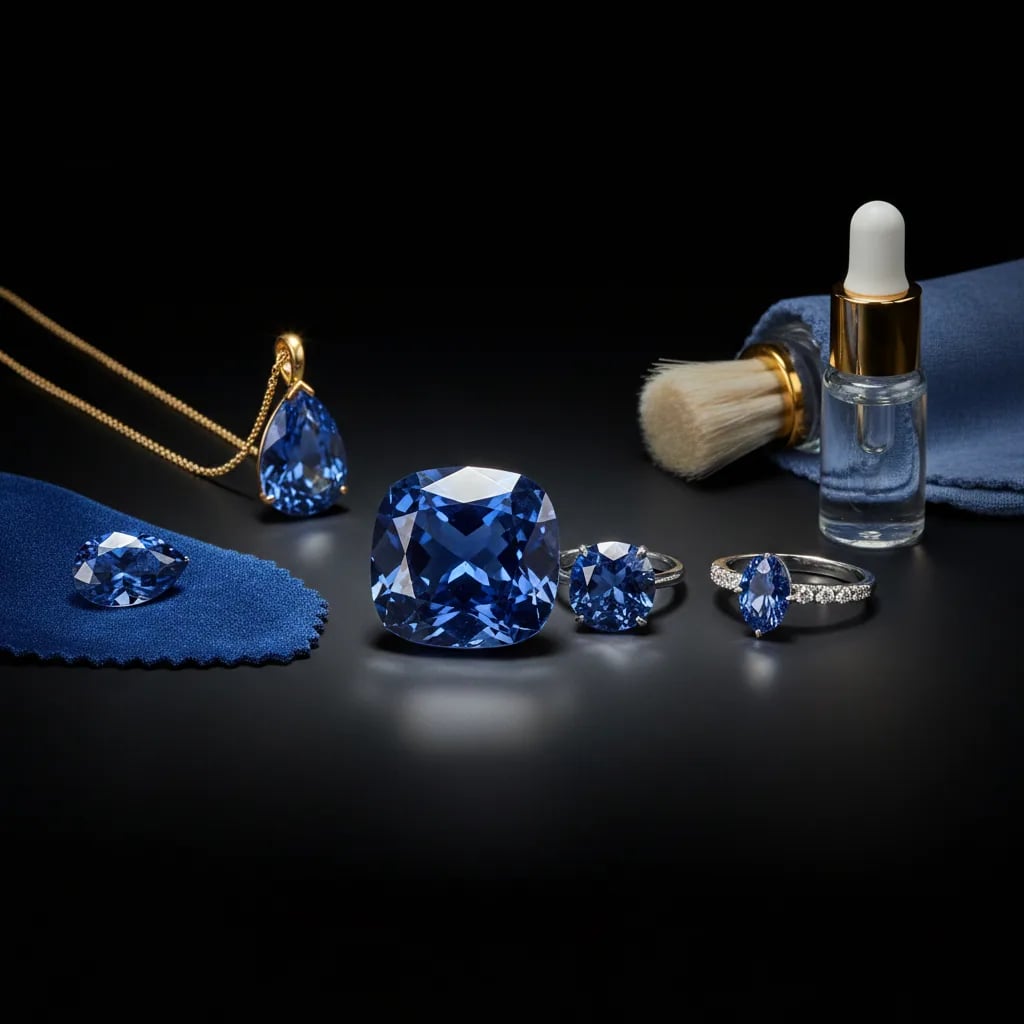
In practice: warm water, a drop of mild dish soap, a soft brush, rinse, pat dry. That handles almost any daily grime and it is safe whatever your stone has been through. The ultrasonic is only a good idea when you know the stone is not filled or oiled, which brings you back to the lab report once again.
Star Sapphire and Asterism: How the Star Forms
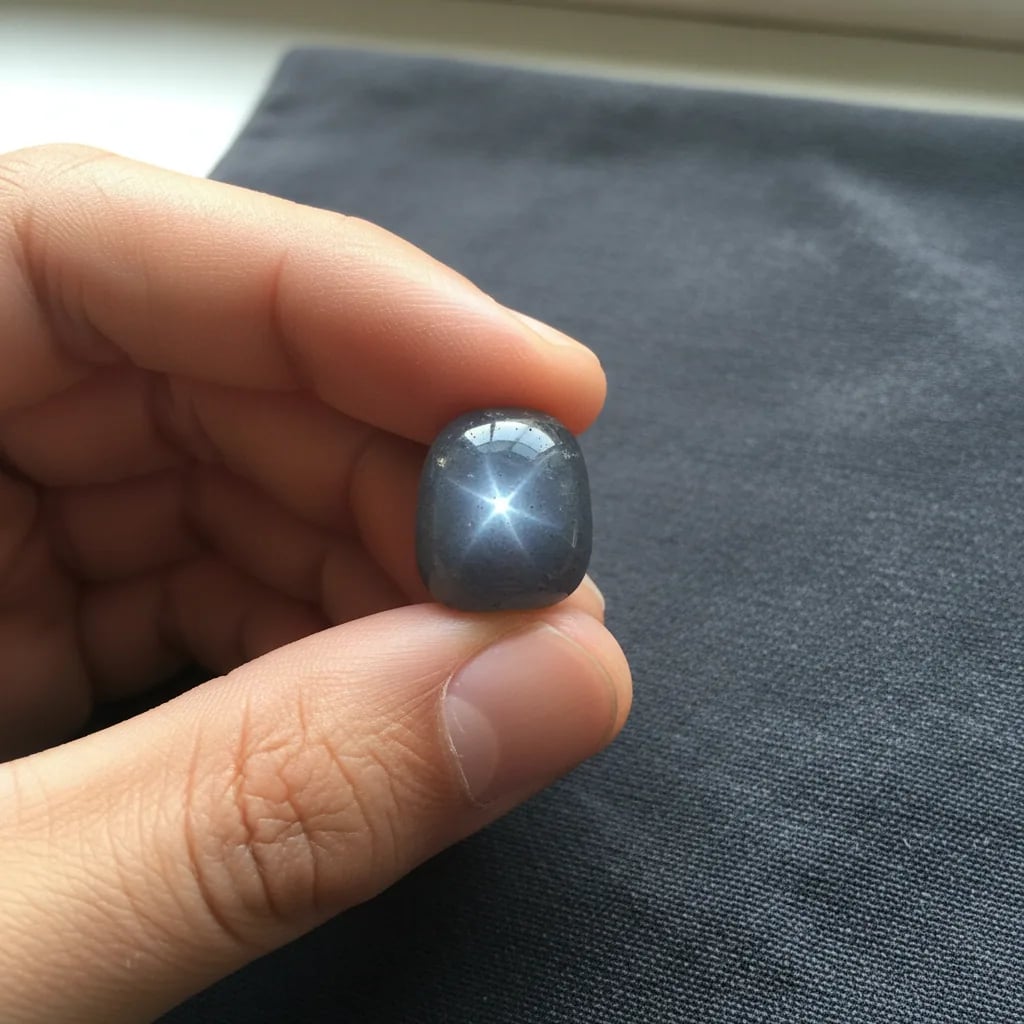
A star sapphire shows a star of light that glides across the dome as you tilt it. The effect is called asterism, and on corundum the star almost always has six rays. Twelve-rayed stones exist and are rare, usually in very dark blue to near-black material.
The cause is structural. Inside the crystal sit millions of microscopic rutile needles, a titanium mineral the trade calls silk, aligned along the crystal's growth directions. Light hits those parallel needles and reflects back as a band. Three sets of bands crossing at 60 degrees give you six rays. Cut the stone as a cabochon with the dome centred on the crystal axis and the star sits upright; get the orientation wrong and it slides off the side, which is why a well centred star costs a multiple of a lopsided one.
Durability has its own footnote here. GIA rates star sapphire toughness as "excellent except in stones with repeated twinning or large fractures", and for cleaning it flags that ultrasonic and steam are "safe except for oiled stones and those with fractures". Star material is more often included by definition, since the silk is the whole point, so treat a star stone with a little more care than a clean faceted one.
Worth knowing: heat treatment is the enemy of asterism. The same heating that dissolves silk to clean up a faceted blue sapphire will kill the star. A strong star is therefore a decent hint that a stone has not been aggressively heated.
Sapphire Colors: The Short Version
Sapphire is any gem-quality corundum except red, which is called ruby. Everything else, from cornflower blue to lilac, is sapphire. The trade splits the family in two: blue sapphire, and everything else, which it calls fancy sapphire. Same mineral, different trace chemistry. Titanium plus iron gives blue, chromium gives pink, iron alone leans yellow or green.
The colour range is genuinely enormous, and it deserves more room than a section inside a general guide. We wrote a dedicated piece on it: every sapphire colour, what causes it and what it is worth. Use the chart below to get your bearings, then go there for the detail.
Color Chart
Sapphire colors and types
Each color described by the colored-gem trio: hue, tone, and saturation.
Blue
- Hue
- Violetish-blue to blue
- Tone
- Medium to dark
- Saturation
- Strong to vivid
Cornflower / Royal Blue
- Hue
- Pure to violetish-blue
- Tone
- Medium
- Saturation
- Vivid
Pink
- Hue
- Purplish-pink to pink
- Tone
- Light to medium
- Saturation
- Medium to strong
Padparadscha
- Hue
- Pink-orange to orange-pink
- Tone
- Light to medium
- Saturation
- Soft to medium
Yellow
- Hue
- Greenish-yellow to orangy-yellow
- Tone
- Light to medium
- Saturation
- Medium to vivid
Orange
- Hue
- Yellow-orange to red-orange
- Tone
- Medium
- Saturation
- Strong to vivid
Green
- Hue
- Yellowish-green to blue-green
- Tone
- Medium to dark
- Saturation
- Fair to medium
Teal
- Hue
- Blue-green to green-blue
- Tone
- Medium to dark
- Saturation
- Medium to strong
Purple
- Hue
- Reddish-purple to purple
- Tone
- Medium to dark
- Saturation
- Medium to strong
Violet
- Hue
- Bluish-violet to violet
- Tone
- Medium
- Saturation
- Medium to strong
Peach
- Hue
- Pinkish-orange to peach
- Tone
- Light
- Saturation
- Soft to medium
White / Colorless
- Hue
- Near-colorless
- Tone
- Very light
- Saturation
- Weak
Black
- Hue
- Near-opaque dark
- Tone
- Very dark
- Saturation
- Low (often with silk)
Color-change
- Hue
- Blue in daylight, purple in incandescent
- Tone
- Medium to dark
- Saturation
- Medium
Parti / Bi-color
- Hue
- Two or more zones (often blue and yellow or green)
- Tone
- Varies by zone
- Saturation
- Varies by zone
Star (asterism)
- Hue
- Any base hue with rutile silk
- Tone
- Medium to dark
- Saturation
- Soft (silk diffuses color)
Montana
- Hue
- Steely teal, silvery-green to blue
- Tone
- Light to medium
- Saturation
- Soft to medium
The shortlist, if you only remember four:
- Blue is the benchmark, and the language around it (cornflower, royal) is trade vocabulary rather than lab grading. We unpack the difference in cornflower versus royal blue.
- Padparadscha is the rarest and most argued-over call in the family, a pink and orange blend named after the lotus flower in Sinhalese. The boundaries are contested between labs, which is exactly why it gets its own guide.
- Teal sits between blue and green and has quietly become the most requested colour we source. See the teal sapphire guide.
- Pink shades into ruby at a boundary set by depth of red, not by a hard line. Covered in the pink sapphire buying guide and in ruby versus pink sapphire.

How to Choose a Sapphire
The most important factor in a sapphire's value is its color, full stop. The most highly valued stones are velvety blue to violetish blue, in medium to medium-dark tones, with strong to vivid saturation. After color, weigh clarity, cut, and carat, in roughly that order.
Here is the checklist we run on every parcel before a stone earns a place in inventory:
- Color first. Look for saturation that stays strong without going so dark that brilliance dies. A stone that is too inky looks black in low light.
- Clarity you can live with. Sapphires almost always have inclusions. A few that you cannot see at arm's length are normal and harmless. Cloudy or heavily included is a different story.
- Cut for life, not just weight. A well-cut sapphire returns light evenly. Stones cut to save carat weight often go dark in the center or window out.
- Carat last. Decide your color and clarity floor first, then buy the biggest stone that still meets it. Never the other way around.
If you want the long version, we wrote a step-by-step on how to buy a sapphire online. And if you would rather see real, certified stones with prices already on them, the full sapphire inventory is the fastest way to calibrate your eye.
Sapphire Prices by Color: A Value-Tier Guide
Nobody in the top guides publishes a straight price table by color and treatment, so here is ours. Treat these as indicative per-carat ranges for clean, well-cut commercial stones around 1 to 2 carats. They are a starting frame, not a quote. Larger sizes, finer saturation, and famous origins climb well above these bands, and the certificate is what decides where a given stone actually lands.
| Color | Heated (per carat, indicative) | Unheated (per carat, indicative) | What drives it |
|---|---|---|---|
| Fine blue (Ceylon, vivid) | $700 to $2,500 | $2,000 to $8,000+ | Saturation, origin, no heat |
| Pink | $400 to $1,500 | $1,200 to $5,000 | Vividness, chromium glow |
| Yellow | $150 to $700 | $500 to $2,000 | Clean golden saturation |
| Green | $100 to $500 | $300 to $1,200 | Underrated, low demand |
| Teal | $300 to $1,200 | $800 to $3,000 | Trend demand, balance |
| Padparadscha | $1,500 to $5,000 | $4,000 to $20,000+ | Rarity of the color band |
| Parti / Montana | $150 to $900 | $400 to $2,500 | Sharp zoning, provenance |
| Star sapphire | $80 to $600 | $300 to $3,000 | Star sharpness and centering |
One honest caveat from years of sorting parcels: a heated stone is not a lesser stone, it is a different value tier with a different price, and that is fine. The premium on unheated material only means anything when an independent certificate proves it. Pay for the paper, not the promise. When you are ready to compare real stones at real prices, this is where the abstract table meets the actual gem.
Where Do Sapphires Come From? Sapphire Origins
Sapphire is mined on several continents, but a handful of origins set the tone for the whole market: Sri Lanka (Ceylon), Myanmar (Burma), Kashmir, Madagascar, Thailand, and Australia. Origin matters because it often correlates with color and clarity, and because some names carry a price premium of their own.
This is the part of the guide I can write in the first person, because I have spent two years sourcing on the ground in Sri Lanka. Most of what gets written about sapphire origin online is copied from the last article. What follows is what the parcels actually look like at the source.
Sri Lanka (Ceylon): where I source
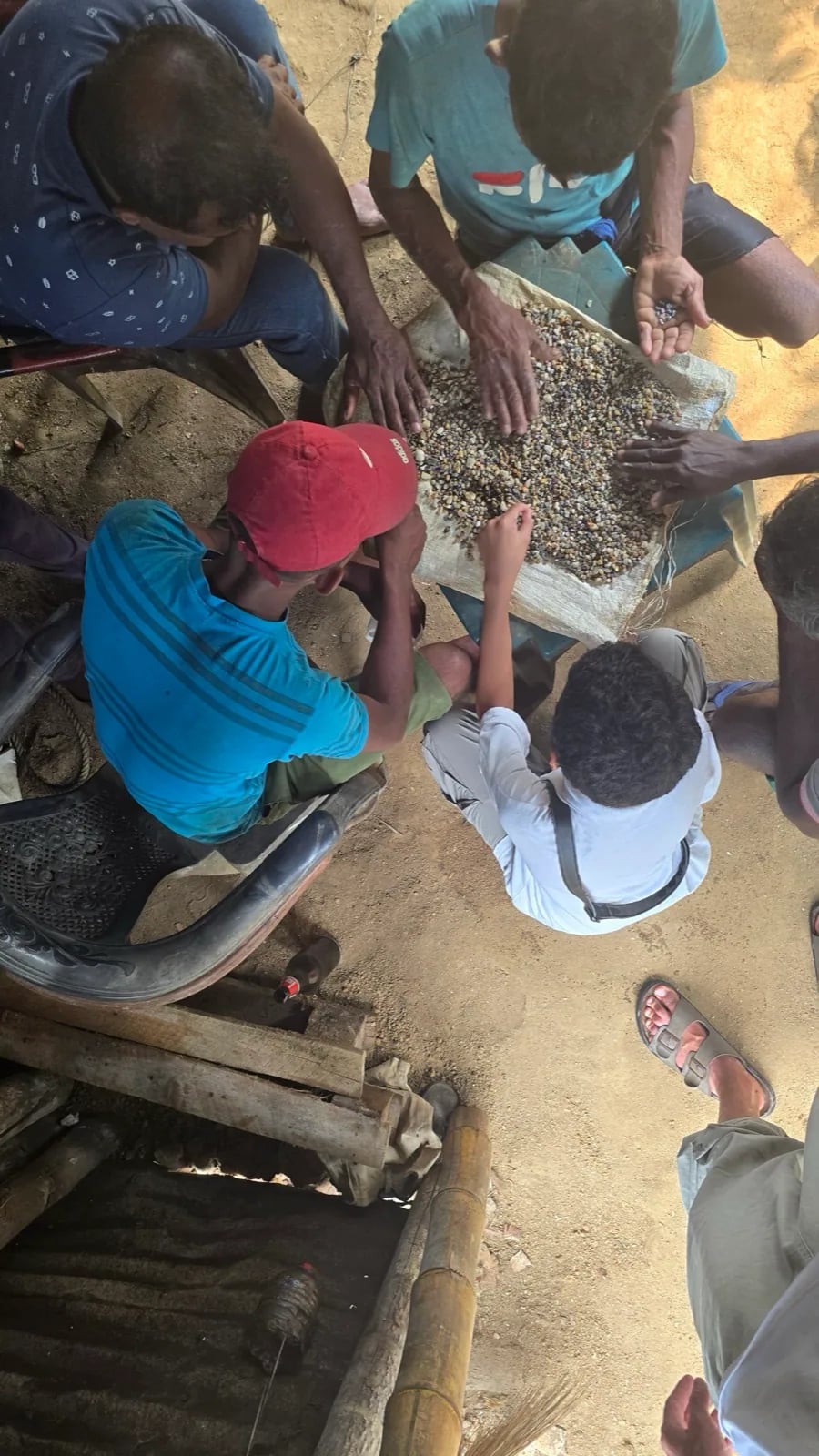
Sri Lanka has one of the largest concentrations of gem deposits on earth, producing ruby and every color of sapphire, plus around 40 other gem species. The corundum here is recovered from river gravel, weathered out of metamorphic rock and washed into the riverbeds over millions of years. That is why so much Sri Lankan rough is rounded and waterworn when it reaches the dealer's table in Ratnapura.
Ceylon sapphire has a reputation for brilliance and that clean, bright blue with life in it. Unlike Kashmir and Myanmar, which have largely run dry, Sri Lanka keeps producing in real volume, which is why it supplies a large share of the world's middle-to-high-end blue sapphire.
Here is the honest lesson I learned the hard way, and it is the opposite of what most people assume. Being at the source does not automatically mean more choice or a lower price. Bangkok, a trading hub with no mines at all, often shows more stones in a day than a week in Ratnapura. The real edge of sourcing on the ground is not the geography. It is being able to see the chain with your own eyes: the miner, the cutter, the rough before it is touched. That transparency is the thing a phone order through three middlemen can never give you. I wrote up that whole route, from the pit to the parcel I actually buy, in how I source sapphire parcels in Sri Lanka.
Other notable origins
Myanmar (Burma) produces deeply saturated blues, often heat-treated to clear the silk and lift the transparency. Kashmir is the legendary velvety blue, now nearly mined out and largely a collector and auction story. Madagascar has become a major modern supplier across many colors. Thailand and Australia lean toward darker, more inky blues that often see treatment to brighten.
One caution worth repeating: stones from different sources can look almost identical, and it is not always possible to get a certificate of origin, especially for Myanmar material. If a seller is certain about origin without lab backing, ask how they know.
Sapphire Certification and Treatment
If you remember one section of this guide, make it this one. Treatment and certification decide a huge part of what a sapphire is actually worth, and the language sellers use around them is where most buyers get quietly misled.
Heat treatment: the standard, accepted enhancement
Most sapphires on the market are heated. Heat treatment removes or reduces the silk inclusions inside the stone, which dramatically improves luster and transparency, and it lightens stones that were too dark in their natural state. The results are stable and permanent, and the practice is openly accepted across the colored stone trade. In Sri Lanka, milky grayish corundum called geuda is routinely heated into fine blue, an entire branch of the local industry.
So heated is not a dirty word. A beautiful heated sapphire is a real, honest stone. The problem is only when heated is sold quietly as if it were not.
What "unheated" really means, and why it costs more
An unheated sapphire reached its color and clarity with no human help, straight from the earth. Because demand for untreated stones keeps growing, they often command prices 10 percent or more above their treated counterparts, and the finest examples go well beyond that. Here is the catch most buyers miss: you cannot prove a stone is unheated by looking at it. The claim is only worth what the certificate behind it is worth.
What a lab certificate actually proves
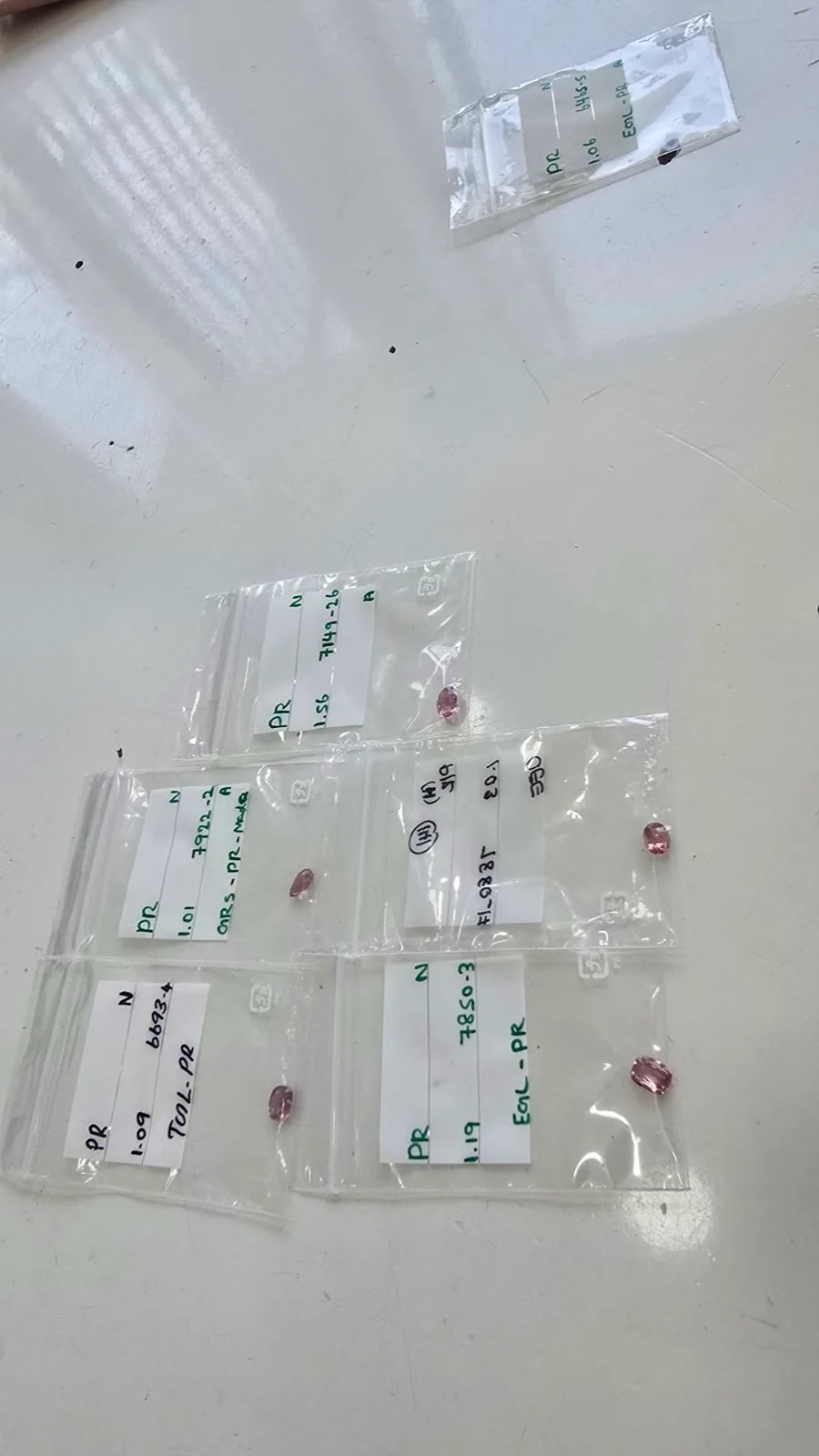
This is where I have to be precise about my own role. I am the sourcer. I travel, I select the parcels, I build the relationships at the mine. I am not the one who certifies. Every Joalys stone is certified by Bilal, a GIA Graduate Gemologist, exactly the way another dealer would say "certified by GRS" or "by AIGS." The certification is independent of the sale, which is the entire point of it.
A serious lab report tells you three things that matter most: whether the stone is natural or synthetic, whether it shows evidence of heat or other treatment, and, when possible, an opinion on geographic origin. It does not set the price and it does not promise an investment return. It removes the two questions you cannot answer yourself. Treat any "unheated Ceylon sapphire" with no lab report behind it as an unverified claim, not a fact.
JOALYS
Everything Begins with the Stone
Two sapphires can share the same grade and nothing else. Yours is chosen in hand.
Keep the sapphire loose, or commission a piece made around it — made to order, never off the shelf.
Frequently Asked Questions
Choosing Your Sapphire
Sapphire rewards the buyer who looks past the blue cliche. The color family is enormous, the durability is unmatched outside of diamond, and the real value lives in the details most sellers gloss over: whether a stone is heated, where it came from, and whether a lab will stand behind those claims. Get those three right and you are buying a sapphire on facts, not on a name.
That is the whole reason we source the way we do. Two years on the ground in Sri Lanka taught me that the edge is not the mine, it is the transparency: seeing the stone before it is treated, knowing the cutter, and putting an independent certificate from Bilal on every piece. When you are ready, browse our certified, prices-on-them sapphire stones, or go straight to the color you came for, whether that is a brilliant blue sapphire or a trending teal sapphire.