Ceylon Sapphire: Why Sri Lankan Origin Changes the Stone and the Price
What 'Ceylon' actually means, the colors the island produces, what a stone is worth per carat, and why two same-grade sapphires can sell for wildly different prices.
The Short Answer
A Ceylon sapphire is a sapphire mined in Sri Lanka, the island formerly named Ceylon. Sri Lankan origin commands a price premium because the source has produced fine blue and fancy sapphires for over 2,000 years, and "Ceylon" on a lab report is a documented origin determination, not just a marketing label. Expect roughly $450 to $1,600 per carat for a good certified 1-carat blue. But origin alone does not guarantee beauty: a Ceylon stone still has to win on color, cut and clarity like any other.
What Is a Ceylon Sapphire, Exactly?
Buy a sapphire long enough and you hit the same wall I did. Two blue stones, side by side. Same size, same color, same clarity to the eye. One is priced at double the other. The only difference written down anywhere is a single word on a certificate: Ceylon.
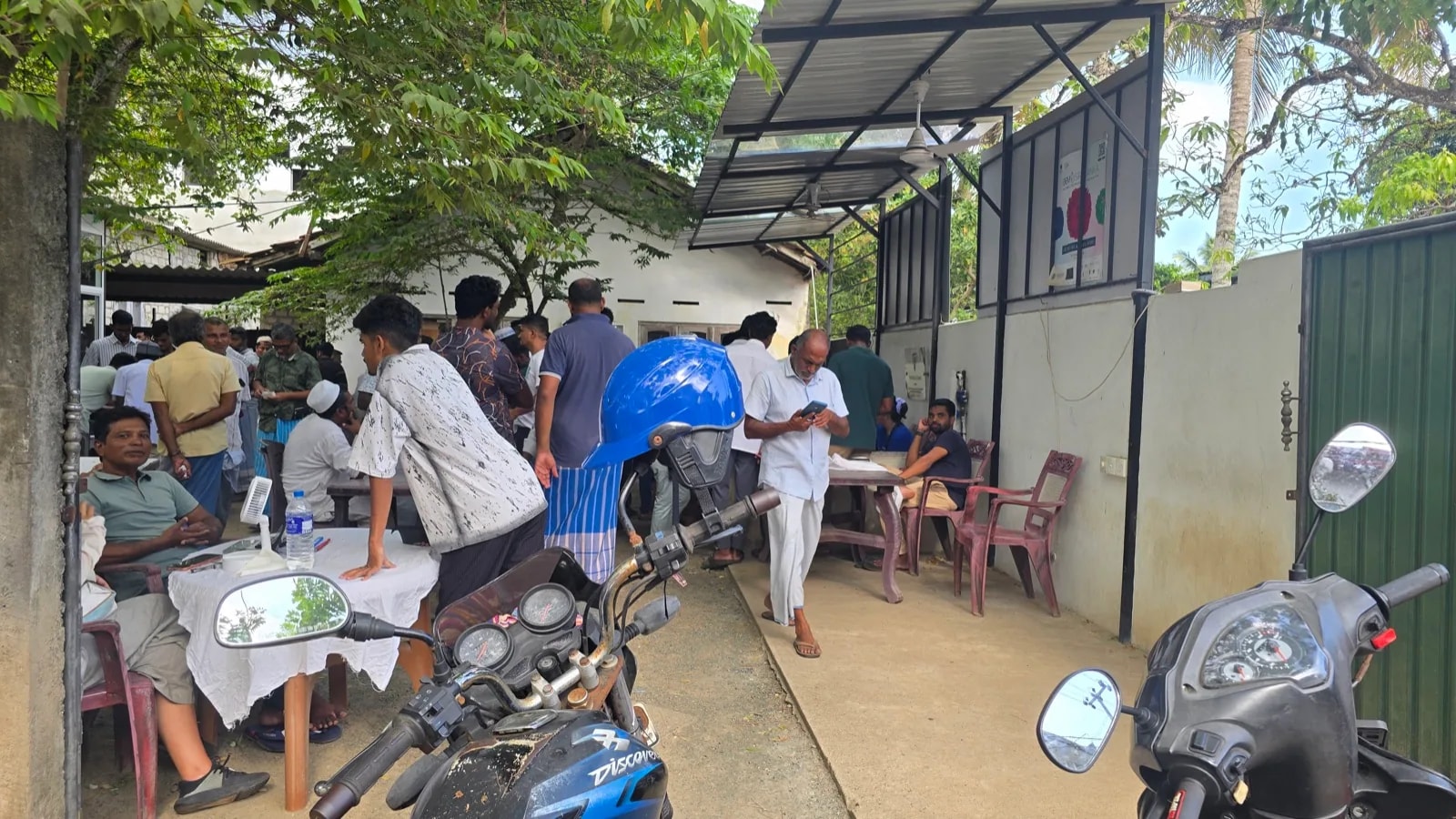
So what is that word actually buying you? Is it the stone, or is it the story? After two years watching parcels move across dealer tables in Beruwala and Ratnapura, I can tell you the honest answer sits somewhere in between, and most buying guides won't say it out loud. Let's fix that.
A Ceylon sapphire is a sapphire that came out of the ground in Sri Lanka. That's the whole definition. "Ceylon" is the colonial-era name for the island, kept in the gem trade long after the country became Sri Lanka in 1972, the way we still say "Burma ruby" decades after the rename.
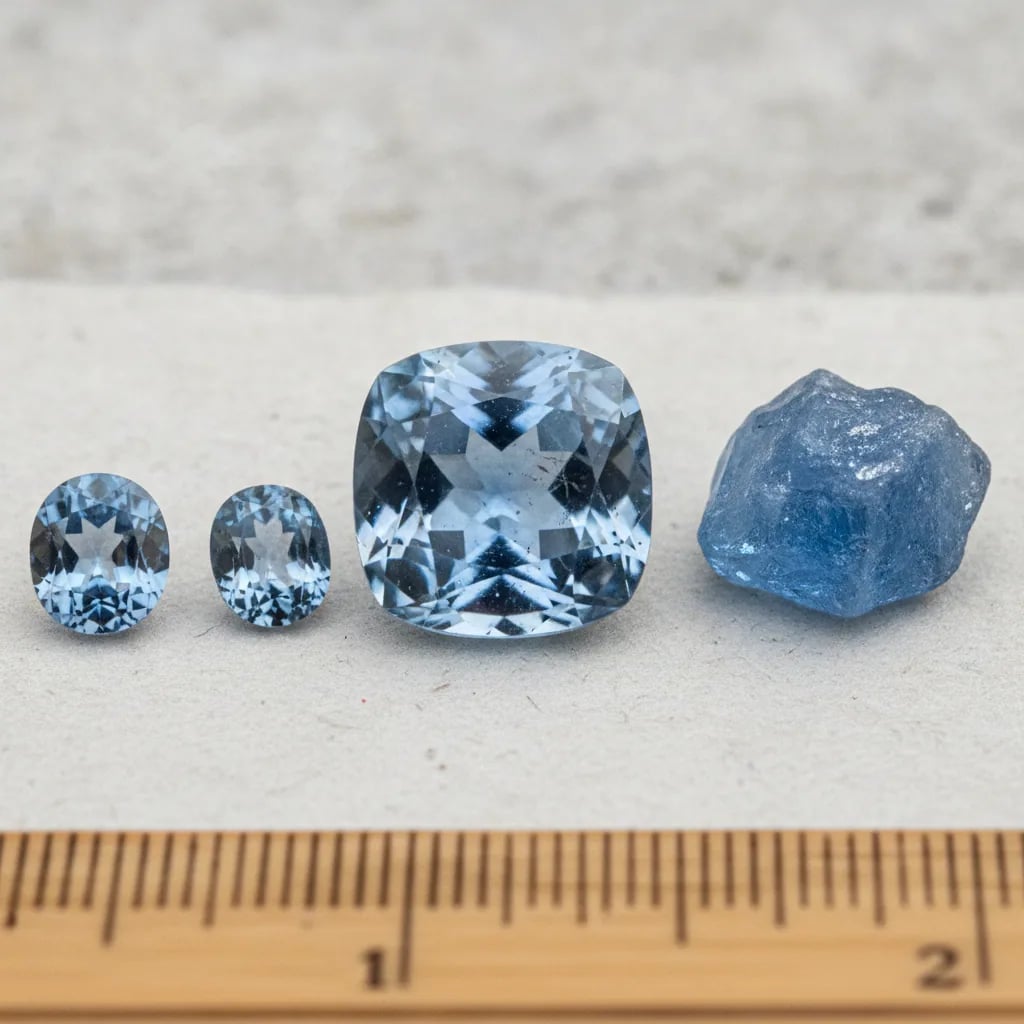
Here's the part most people miss. Ceylon is not a color, a grade, or a treatment status. It's a place. A Ceylon sapphire can be cornflower blue, royal blue, pink, yellow, a soft pastel, or the pinkish orange of a padparadscha. According to the GIA Colored Stones course, Sri Lanka produces virtually every color of fancy sapphire, and none is more coveted than padparadscha. So when someone says "I want a Ceylon sapphire," they've narrowed down the country and nothing else. The actual stone still has to be judged on its own.
Why does the island produce so much? The GIA course calls Sri Lanka the "island of gems," with one of the earth's largest concentrations of gem deposits: ruby, every color of sapphire, and around 40 other gem species. The corundum is recovered from river gravel that washed out of ancient metamorphic rock over millions of years. Walk a working pit east of Ratnapura and you'll see methods that, as GIA notes, have stayed essentially unchanged for centuries. The gem gravel gets dug, washed, and hand-sorted on a mat. That's where a Ceylon sapphire starts: as a dull pebble in a sieve.
For the full picture on how sapphire is graded across all origins, our complete guide to sapphire covers colors, value, and certification in one place.
What Does "Ceylon Sapphire" Actually Mean?
"Ceylon sapphire" means a sapphire from Sri Lanka. Nothing more. Ceylon was the island's name under British rule, dropped in 1972 when the country became Sri Lanka, and the gem trade simply never let go of it. That is the entire meaning, and the gap between that plain fact and what buyers hear is where a lot of money changes hands.
Ask ten shoppers what the word promises and you get answers the word does not cover: a deeper blue, an untreated stone, a better grade, an old-mine pedigree. None of that is in there. The trade kept "Ceylon" for the same reason it kept "Burma ruby": the old name is shorter, older sounding, and it moves stock. A dealer who writes "Sri Lanka" on the ticket and a dealer who writes "Ceylon" are describing the same island, but they are not making the same sale.
There is a real reason the word carries weight, though, and it is worth stating fairly. Sri Lanka has been supplying the world with sapphire for over 2,000 years (GIA Colored Stones course). When a trade term survives a country changing its name, a colonial administration ending, and fifty years of modern gemmology, it usually survived on results. The meaning of "Ceylon" is not mystical. It is a two-thousand-year track record compressed into six letters.
You will also see the island called the "island of gems," and that one is literal rather than poetic: per GIA, Sri Lanka holds one of the earth's largest concentrations of gem deposits, with ruby, every color of sapphire, and roughly 40 other gem species coming out of the same ground. In older trade talk a "Ceylon blue" also came to mean a specific look, a lighter and livelier blue rather than an inky one. That usage is the closest the word gets to describing an actual stone, and we come back to it in the next section.
What "Ceylon" does not mean, in one line: it is not a grade, not a color, not a treatment status, and not a guarantee. It is a passport stamp.
What Colors Do Ceylon Sapphires Come In?
Sri Lanka produces virtually the whole corundum palette, which is exactly why the word Ceylon tells you nothing about color. A single gravel pit can give up a blue, a yellow and a pink in one morning of washing. Here is the range, and what each one means when you are actually shopping.
Swatches are indicative only. No screen reproduces a stone, and any color chart is a starting point rather than a verdict. Each shade links to the Sri Lankan sapphires we currently have in that range.
The Ceylon blue is not the darkest blue, and that surprises almost everyone. Per GIA, blue sapphires from Sri Lanka are often lighter and brighter than stones from Myanmar or Thailand. Read that again if you have been told otherwise, because the practical consequence is large: a lighter Ceylon blue is not a failed sapphire. It is the island's natural register, and that brightness is precisely what very dark stones give up. Thai material, by contrast, tends toward the inky end.
So when a seller pushes a near-black stone at you as "the real deep Ceylon blue," they are describing somewhere else. That is not a subtle distinction. It is the single most common piece of misdirection I run into, and it costs buyers real money because inky stones are cheaper material sold at a Ceylon price.
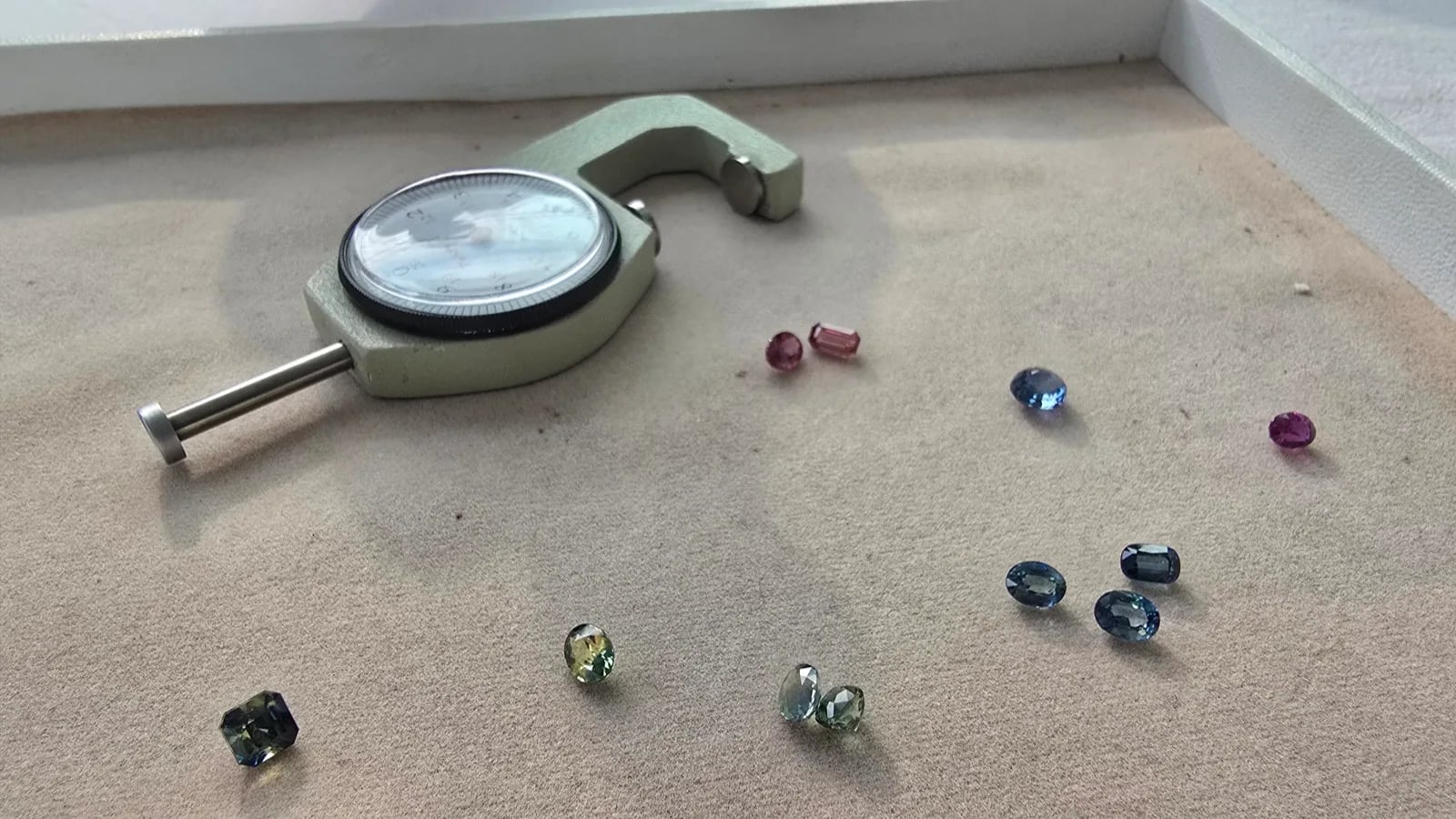
The fancy colors are not a consolation prize either. Sri Lankan pink and purple sapphires are among the finest on the market, per GIA, and padparadscha, that pinkish orange the trade treats as the island's signature, carries a price per carat well above every other fancy sapphire. It is the one case where color beats blue on price outright.
We have written a full guide on each of the two colors moving fastest right now: teal sapphire and padparadscha. Both come overwhelmingly from this one island. For the wider picture across all origins, our guide to sapphire colors maps the full range.
Why Does Ceylon Origin Change the Price?
Ceylon origin raises the price for two reasons that have nothing to do with each other, and confusing them is where buyers overpay. The first reason is real and earned. The second is a label premium you should understand before you pay for it.
Reason one: the material is genuinely good. Some historians believe Sri Lanka was the very first source of blue sapphires, supplying the world for over 2,000 years (GIA Colored Stones course). The best Sri Lankan stones show a brightness and saturation that hold up against anything. Unlike the legendary Kashmir and Myanmar deposits, which are largely tapped out, Sri Lanka still produces in quantity, so a real supply of fine blue sapphire actually exists. The island's pink and purple sapphires are among the finest on the market, per GIA. That reputation is built on centuries of stones, not on a slogan.
Reason two: origin itself carries a premium. This is the honest part. GIA states plainly that stones from sources like Kashmir, Myanmar, and Sri Lanka "command elevated prices in some markets because of their origin." Buyers pay extra for the word. And here's the catch GIA spells out in the same passage: stones from other sources "can exhibit similar color, appearance, and internal characteristics, and might be impossible to tell apart." Translation: a beautiful Madagascar sapphire can look identical to a Ceylon one, but the Ceylon label still costs more.
So you're paying for two things at once: a stone that is often genuinely excellent, and a name that the market has decided is worth a markup. I don't think that markup is a scam. I think it's a fee you should pay with your eyes open, not because a tag told you to.
Price-wise, the spread is enormous, and it is worth seeing the actual numbers rather than a hand-wave. They are laid out per carat in the section on what a Ceylon sapphire is worth, a little further down. Hold on to this much for now: origin is one lever on the price. It is not the biggest one.
Are Ceylon Sapphires Valuable? What They Cost Per Carat
Yes, and the range is wider than almost any buyer expects. "Valuable" covers everything from a few hundred dollars to five figures per carat, on stones that can look similar in a photo. Here are real numbers so you do not walk into a negotiation with none.
| Stone profile | Indicative price per carat |
|---|---|
| Commercial blue, heated, no report | a few hundred dollars |
| Good 1-carat blue, heated, certified | roughly $450 to $1,600 |
| Fine certified material, vivid saturated color | past $11,000 |
| Unheated, several carats, fine color | far higher, with no useful ceiling |
Per-carat ranges for blue Ceylon sapphire, from our own buying records and market data, 2025 and 2026. Order-of-magnitude guidance, not a price list.
Those figures are per carat, not per stone, and that is where half of all buyers trip. A 2-carat sapphire does not cost twice a 1-carat sapphire. The price per carat climbs with size, because large clean rough is rarer, so going from 1 to 3 carats on a good blue can multiply the bill five or six times over. Not three.
What actually moves the number, in the order I see it work on the ground: color first, then size, then clarity, and only then origin. Treatment status slides into the middle and hits hard. A heated Ceylon sapphire typically sits around 30 percent below a comparable unheated stone (market data, 2025 and 2026). On a stone at $1,200 per carat, that is roughly $360 riding on one line of a report you cannot verify yourself.
Are they rare? Less rare than the marketing implies, and that is good news for you. Kashmir and Myanmar are largely tapped out, which is what makes their stones astronomically priced. Sri Lanka still produces in quantity. So a genuinely fine Ceylon sapphire is uncommon, the way a genuinely fine anything is uncommon, but it is not a unicorn, and you should not accept unicorn pricing on an ordinary stone because the word Ceylon appeared on the tag. Rarity in this trade lives in the top of the quality range, not in the country name.
One last thing worth money: a listed Ceylon price almost always has the label premium baked in. Before you sign, price the same stone against a Madagascar sapphire of equivalent color. Our blue sapphires publish price, weight and treatment status on the same line so that comparison is actually possible, and if you want the value drivers broken down across all origins rather than just this one, our sapphire price per carat guide does exactly that.
What Does "Ceylon" on a Certificate Actually Prove?
A "Ceylon" origin call on a lab report proves a laboratory examined the stone and concluded, on the balance of evidence, that it formed in Sri Lanka. That's a real, expensive determination. It is not, however, a guarantee of quality, and it is not infallible.
Origin determination works by reading the stone's internal fingerprint: its inclusions, its trace-element chemistry, its growth features. A lab compares those against reference stones of known origin. When the fingerprint is distinctive, the call is confident. When two deposits overlap, as GIA warns they often do, even the best labs reach for "consistent with" rather than a hard verdict. That nuance, what a certificate proves versus what it implies, is the whole reason we wrote what a gemstone certificate actually proves. Read it before you spend four figures on a word.
The practical takeaway: an origin report from a respected lab is worth having, especially above a couple thousand dollars, because that's where the Ceylon premium gets large enough to be worth verifying. Below that, you're often paying more for the paper than the paper is worth. A report tells you where the stone is from. It does not tell you whether it's a good stone. Those are two different questions, and only your own eye answers the second.
An origin certificate confirms where a sapphire formed. It does not grade its beauty. A documented Ceylon stone can still be mediocre, and an undocumented Madagascar stone can still be gorgeous.
To see how much story Sri Lankan origin carries in this trade, the short film below from the GIA follows a pink sapphire from the island.
Heated or Unheated: The Other Number That Moves the Price
Treatment status moves a Ceylon sapphire's price as hard as origin does, sometimes harder, and the two get tangled together constantly. Most blue sapphire on the market is heat-treated. The technique that made it possible is actually a Sri Lankan story.
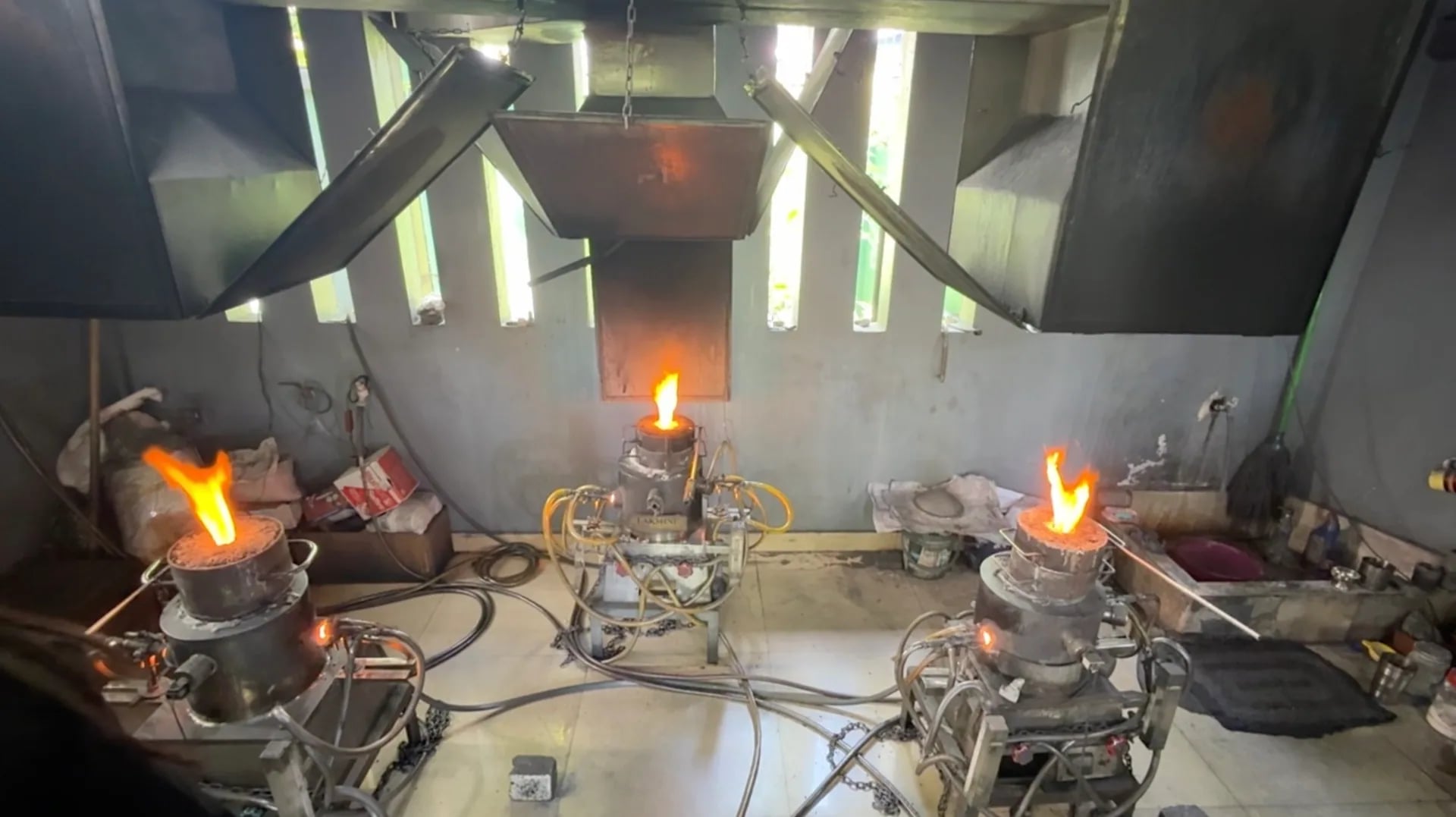
For centuries Sri Lankans dug up a milky, brownish corundum called geuda and threw it in rock gardens, basically useless. Then in the 1970s, Thai experimenters cracked the recipe: heat geuda to about 1600°C (2912°F), and if the iron and titanium are present in the right amounts, that murky rough turns into clean, gem-quality blue sapphire (GIA Colored Stones course). It was, by any honest measure, one of the most lucrative discoveries in gem history. A huge share of the world's "Ceylon sapphires" began life as geuda.
Unheated stones sit at the top of the market. GIA notes that growing demand for untreated material lets it command prices 10 percent or more above heated equivalents, and in fine sizes the gap is far wider than that. But here's the trap: "unheated" is a claim you cannot verify with your eyes. It takes a lab. We unpack exactly how that verification works, and how often the claim is wrong, in unheated vs heated sapphire. If you're paying an unheated premium on a Ceylon stone, the report that confirms "no indications of heating" matters more than the one that says "Sri Lanka."
What I See at the Source That You Can't See in the Listing
Two years on the ground taught me the gap between a Ceylon sapphire on a market mat and the same stone in an online listing, and that gap is where buyers get quietly worked over. Three things in particular almost never make it into the photo.
The cut is built for the scale, not your finger. A lot of Sri Lankan rough gets cut to save weight, not to look its best. That means deep bellies, off-center culets, windows you can read a newspaper through. The stone hits a target carat weight and a price-per-carat bracket, and the proportions suffer for it. On a tray it's obvious the moment you tilt it. In a single front-lit photo, it's invisible. A poorly cut 2-carat Ceylon can look like a great deal and perform like glass.
Color shifts with the light, and the seller picked the light. Sri Lankan blues can lean grayish or wash out under the wrong lamp. A market photo is taken in the lighting that flatters the stone most. I've held sapphires that were cornflower in the shop window and flat steel-gray indoors. The only fix is to see the stone move under several light sources, which a listing never shows you. If you want to understand the color names sellers lean on, cornflower vs royal blue sapphire breaks down what those terms actually mean.
"Ceylon" can be doing a lot of heavy lifting. When a stone is mediocre on cut and color, the word Ceylon becomes the whole pitch. The origin gets pushed to the front precisely because the stone can't carry itself. The strongest sapphires I've sourced barely need the label. The weakest ones lead with it.
None of this requires a gemology degree to catch. It requires seeing the stone in hand, under real light, before money changes hands. That's the entire reason I source the way I do, in person, on the island, and have each stone certified by a third-party lab run by a GIA Graduate Gemologist rather than asking you to trust my word.
JOALYS
Everything Begins with the Stone
Two sapphires can share the same grade and nothing else. Yours is chosen in hand.
Keep the sapphire loose, or commission a piece made around it — made to order, never off the shelf.

How to Buy a Ceylon Sapphire Without Overpaying for the Word
Buying a Ceylon sapphire well comes down to ranking the value drivers correctly, because origin is usually third or fourth on the list, not first. Here's the order I'd hand a friend.
- Judge the stone first, origin last. Color, cut, and clarity decide whether it's beautiful. Score those before you let the word "Ceylon" anywhere near your decision.
- Get the cut right. Ask for the stone's measurements and depth, or a video that tilts it. Reject windows and deep, weight-saving bellies. A well-cut sapphire from anywhere beats a badly cut Ceylon stone.
- See the color move. Daylight, shade, indoor light. If you only ever see it in one perfect photo, assume that photo is the best it will ever look.
- Match the paper to the price. Under roughly $1,500, an origin report is often optional. Above that, get one from a respected lab, and if you're paying an unheated premium, the treatment call matters even more than the origin call.
- Watch the heat-treatment math. Heated Ceylon sapphires typically sit around 30 percent below comparable unheated stones (market data, 2025-2026). Make sure you know which one you're paying for.
- Treat the certificate as proof of fact, not proof of beauty. It tells you where and how. Your eye tells you whether.
Do those six things and the Ceylon premium stops being a tax you pay blind and becomes a feature you choose on purpose. That's the whole game.
Frequently Asked Questions
The Bottom Line on Ceylon Sapphire
A Ceylon sapphire is worth wanting. Sri Lanka has earned its name over two thousand years, and the best stones the island produces are genuinely some of the finest in the trade. But "Ceylon" is a place, not a promise. It tells you a sapphire came from a great source. It does not tell you that this particular sapphire is great.
The buyers who do well are the ones who judge the stone first and read the label second. See it in hand, watch the color move, check the cut, then let origin and certification confirm what your eye already decided. That's how I source every parcel, and it's why each stone we sell is certified by a third-party GIA-trained lab rather than sold on my say-so. Ready to look? Our Ceylon blue sapphires are sourced in person in Sri Lanka and certified before they reach you.