Tanzanite or Sapphire: Which Blue Stone to Choose?
Hardness, color, rarity, heat and price side by side, from a sourcer who buys sapphire in Sri Lanka and sells no tanzanite.

For a ring worn every day, choose sapphire. It rates 9 on the Mohs scale. Tanzanite rates 6 to 7, has one direction of cleavage and fears sudden heat. Choose tanzanite for earrings or a pendant, if its violet blue is the one you love. At similar size and quality, sapphire usually costs more.
| Tanzanite | Blue sapphire | |
|---|---|---|
| Mineral | Zoisite | Corundum |
| Mohs hardness | 6 to 7 | 9 |
| Toughness | Fair to poor | Usually excellent |
| Weak point | Cleavage, sudden heat | Few |
| Where it is mined | One area, Merelani, Tanzania | Many countries |
| Treated | About 95% of blue stones, by heat | At least 95% of blue stones, mostly by heat |
| Daily ring | Only with care | Yes |
| Price at equal quality | Lower | Higher |
Can you wear tanzanite every day?
Not in a ring that takes knocks. Tanzanite rates 6 to 7 on the Mohs scale, and its toughness is fair to poor. Two reasons: one direction of cleavage, and sensitivity to thermal shock. Sapphire rates 9, and its toughness is usually excellent.
Tanzanite sits at or just below quartz. Sapphire is two full steps above it.
Cleavage means a sharp knock in the wrong direction can split the stone. Thermal shock is sneakier: even hot display lights over a cold glass counter can open a cleavage in a tanzanite.
Hardness and toughness, side by side
Hardness resists scratches, toughness resists knocks. A ring worn every day needs both.
Touch a point to read about the stone.
Tanzanite Mohs 6 to 7 · Toughness: Fair to poor
6 to 7 on the Mohs scale. Toughness is fair to poor: one direction of cleavage, and sensitivity to thermal shock.
Quartz Mohs 7 · Toughness: Good
7 on the Mohs scale, good toughness. Tanzanite sits at or just below it.
Topaz Mohs 8 · Toughness: Poor
8 on the Mohs scale, but toughness is poor because of cleavage. Harder than tanzanite, with the same kind of weak point.
Sapphire Mohs 9 · Toughness: Usually excellent
9 on the Mohs scale, toughness usually excellent. Large fractures or inclusions, or some treatments, can lower it in a given stone.
| Stone | Mohs | Toughness |
|---|---|---|
| 1Tanzanite6 to 7 on the Mohs scale. Toughness is fair to poor: one direction of cleavage, and sensitivity to thermal shock. | 6 to 7 | Fair to poor |
| 2Quartz7 on the Mohs scale, good toughness. Tanzanite sits at or just below it. | 7 | Good |
| 3Topaz8 on the Mohs scale, but toughness is poor because of cleavage. Harder than tanzanite, with the same kind of weak point. | 8 | Poor |
| 4Sapphire9 on the Mohs scale, toughness usually excellent. Large fractures or inclusions, or some treatments, can lower it in a given stone. | 9 | Usually excellent |
Points that would overlap are moved apart a little. The exact values are in the table.
Toughness has no number: it is rated in words. A fine line shows a range.
Source: Hardness and toughness as published in standard gemology references, checked on 11 October 2026.
- Tanzanite works in earrings and pendants, or in a ring designed to protect the stone and taken off for sport and chores.
- Cleaning: warm soapy water only. Never an ultrasonic, never steam. Sapphire usually takes both, unless it has filled fractures.
- Repairs: tell your jeweler it is tanzanite before any work that involves heat.
A sapphire ring gets through dishes, door handles and gym bags. Pick its setting for looks, not for protection.
How does tanzanite's color compare to sapphire?
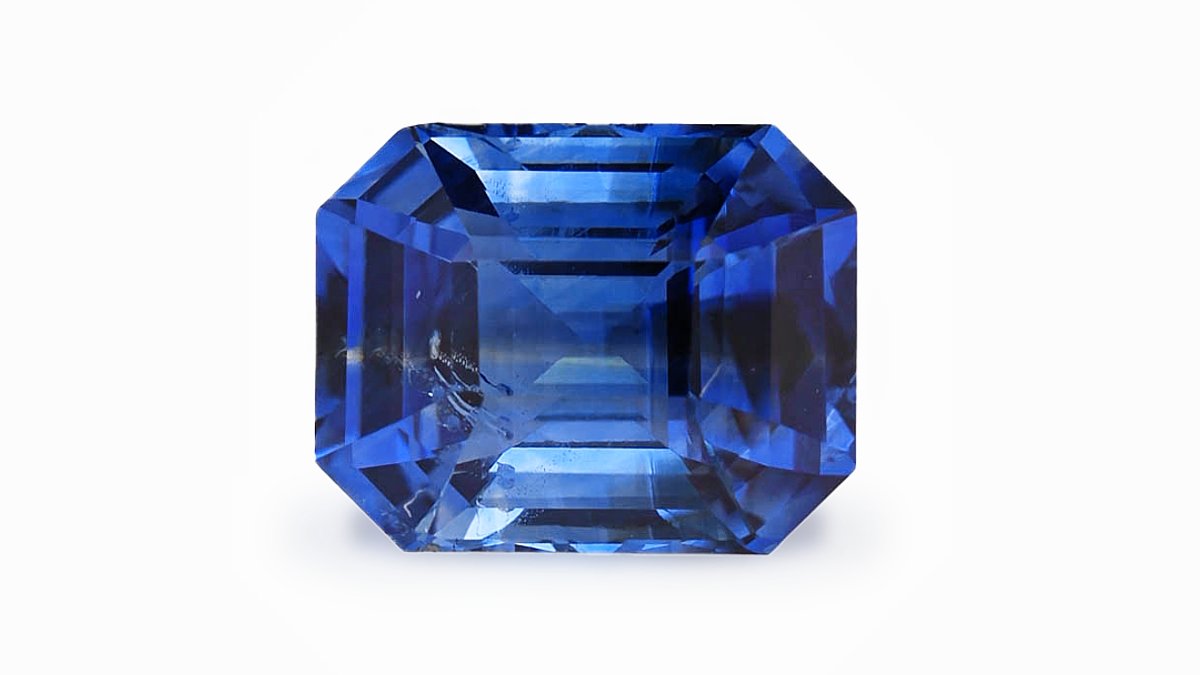
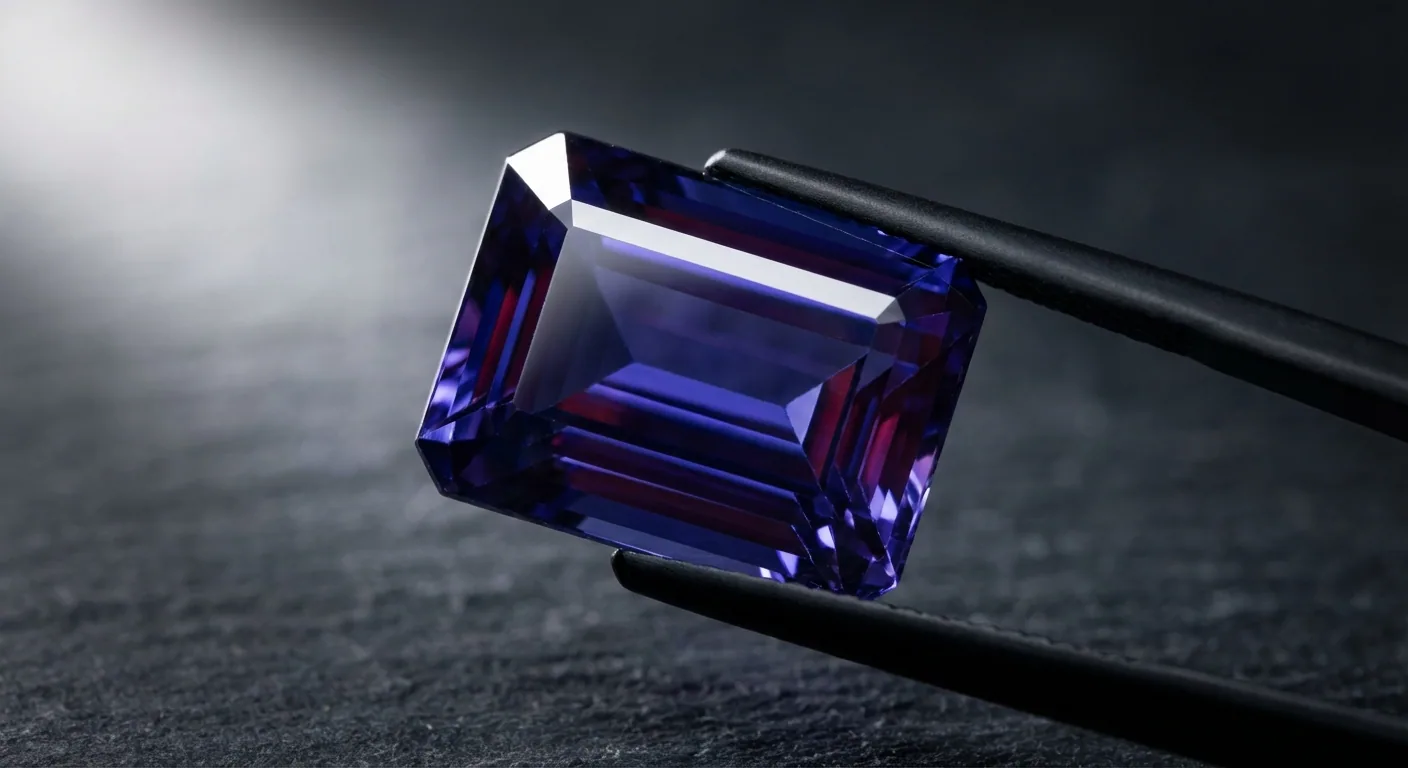
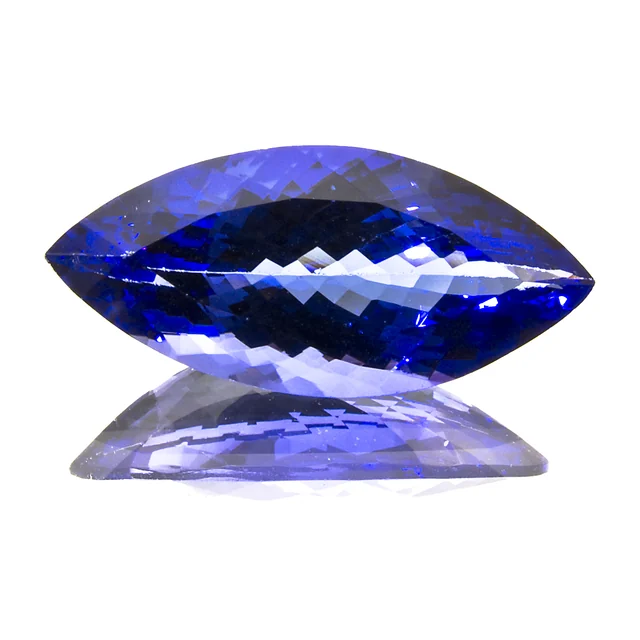
They overlap in the middle and differ at the edges. Tanzanite runs from bluish purple through violetish blue to violet. Blue sapphire runs from violetish blue to greenish blue, and the most prized stones are velvety blue to violetish blue.
The middle band is where the two get confused across a counter, and where a lab report earns its fee.
Tanzanite is strongly pleochroic: violetish blue from one direction, purplish from another, so the cutter picks the face-up color. Cutting for bluish purple wastes less rough. That is why bluish purple is the plentiful tanzanite, and pure blue costs more per carat.
My own view, and plenty of dealers will disagree: the violet-leaning tanzanites are the more interesting stones. The pure blue ones are chasing sapphire.
Two tanzanites, two sapphires
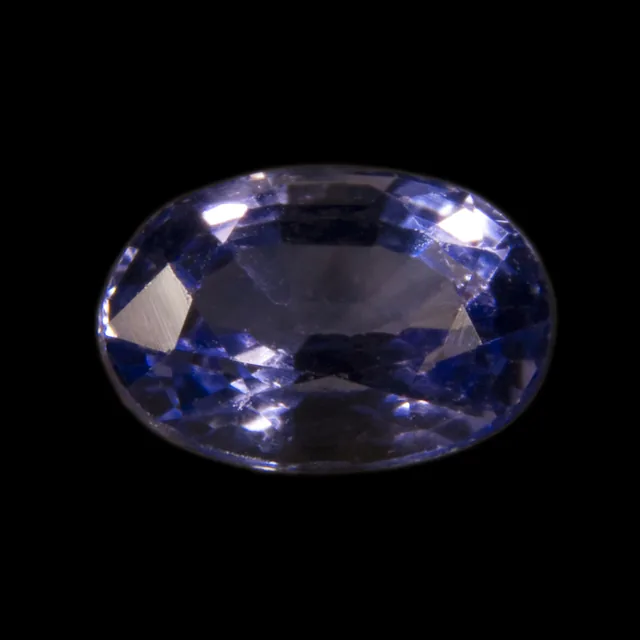
Different cameras and lights: compare the hue, not the exact shade.
Tanzanite
Zoisite
- Mohs
- 6 to 7
- Colored by
- Vanadium
Photo: Wiener Edelstein Zentrum, CC BY-SA 3.0, cropped to a square, margins extended
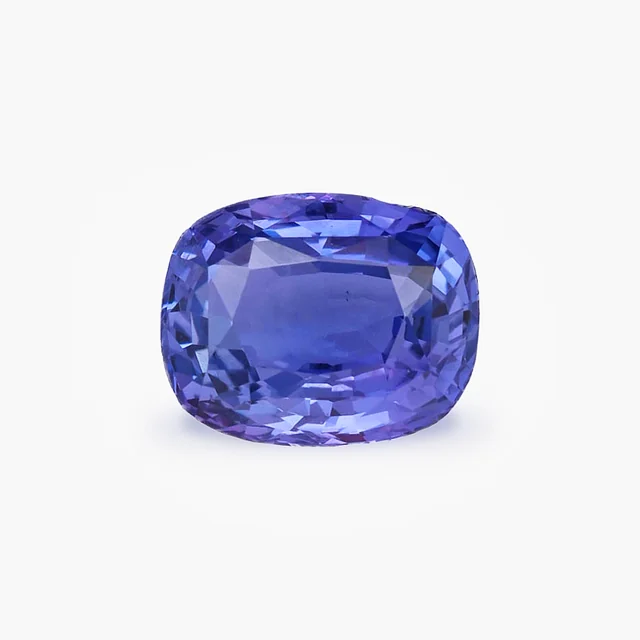
Sapphire
Corundum
- Weight
- 2.01 ct
- Mohs
- 9
- Colored by
- Iron and titanium
Sold as bluish violet. Next to a tanzanite, the eye cannot settle which is which.
Not in this selectionPhoto: a stone from our collection
Tanzanite
Zoisite
- Weight
- 0.38 ct
- Mohs
- 6 to 7
- Colored by
- Vanadium
Photo: Didier Descouens, CC BY 3.0, cropped to a square, margins extended
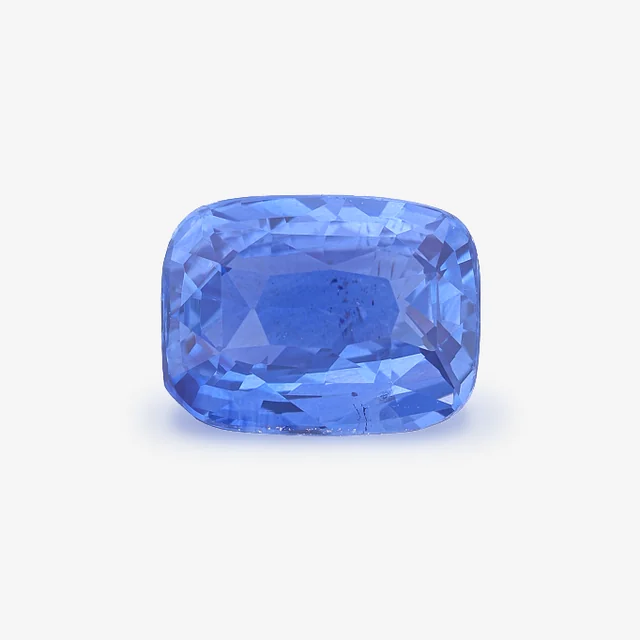
Sapphire
Corundum
- Weight
- 2.03 ct
- Mohs
- 9
- Colored by
- Iron and titanium
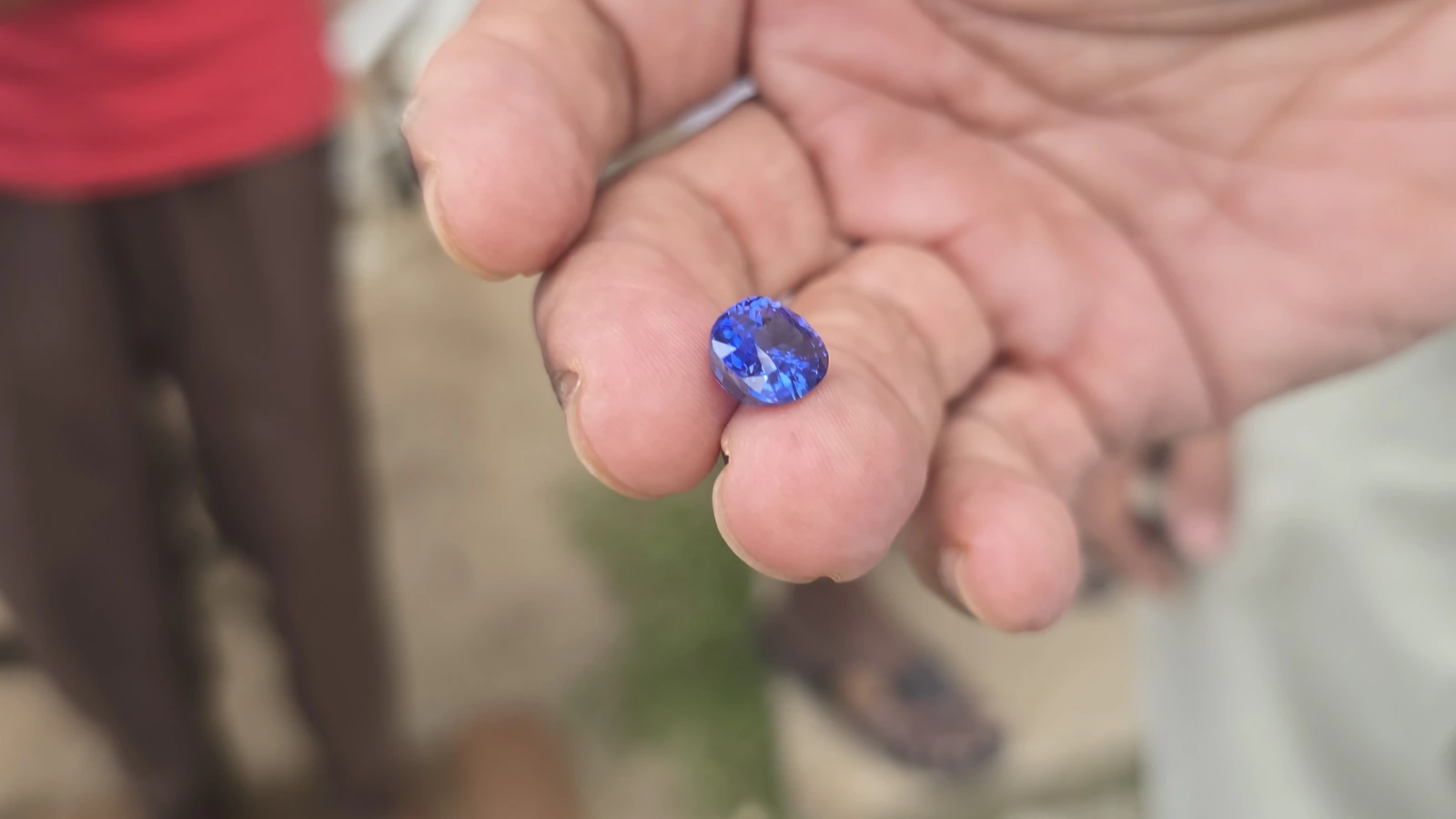
Sold as cornflower blue. Sapphire goes on toward greenish blue, where tanzanite does not go.
Not in this selectionPhoto: a stone from our collection
No stone matches these filters.
Not to scale. The tanzanites are not from our collection: we sell no tanzanite.
Is tanzanite cheaper than sapphire?
Yes, at similar size and quality, fine blue sapphire usually sits in a higher price tier. That is not new. When tanzanite was launched in 1968, it was sold as an affordable, more available alternative to the best blue sapphires.
So the same budget buys a larger, more saturated tanzanite. Not a bargain, a different deal: more color for the money, less durability on the hand.
Tanzanite prices also swing more: one source, so plentiful years push prices down and short years push them up steeply. For what tanzanite costs per carat today, by size and color, see our tanzanite buying guide. For the wider market picture, see our colored gemstone statistics.
Is tanzanite rarer than sapphire?
Geologically, yes. Gem-quality tanzanite comes from one place on Earth: the Merelani area in northern Tanzania. Blue sapphire comes from many countries:
- Historic sources of the finest stones: Kashmir, Myanmar, Sri Lanka.
- Today's bulk supply: Madagascar, Australia, Thailand, Cambodia.
- Others: Montana and many smaller deposits.
One source makes long-term availability uncertain. It does not come with a date: a page announcing that tanzanite runs out in a set number of years is making a forecast, usually while selling tanzanite.
Are tanzanite and sapphire heat treated?
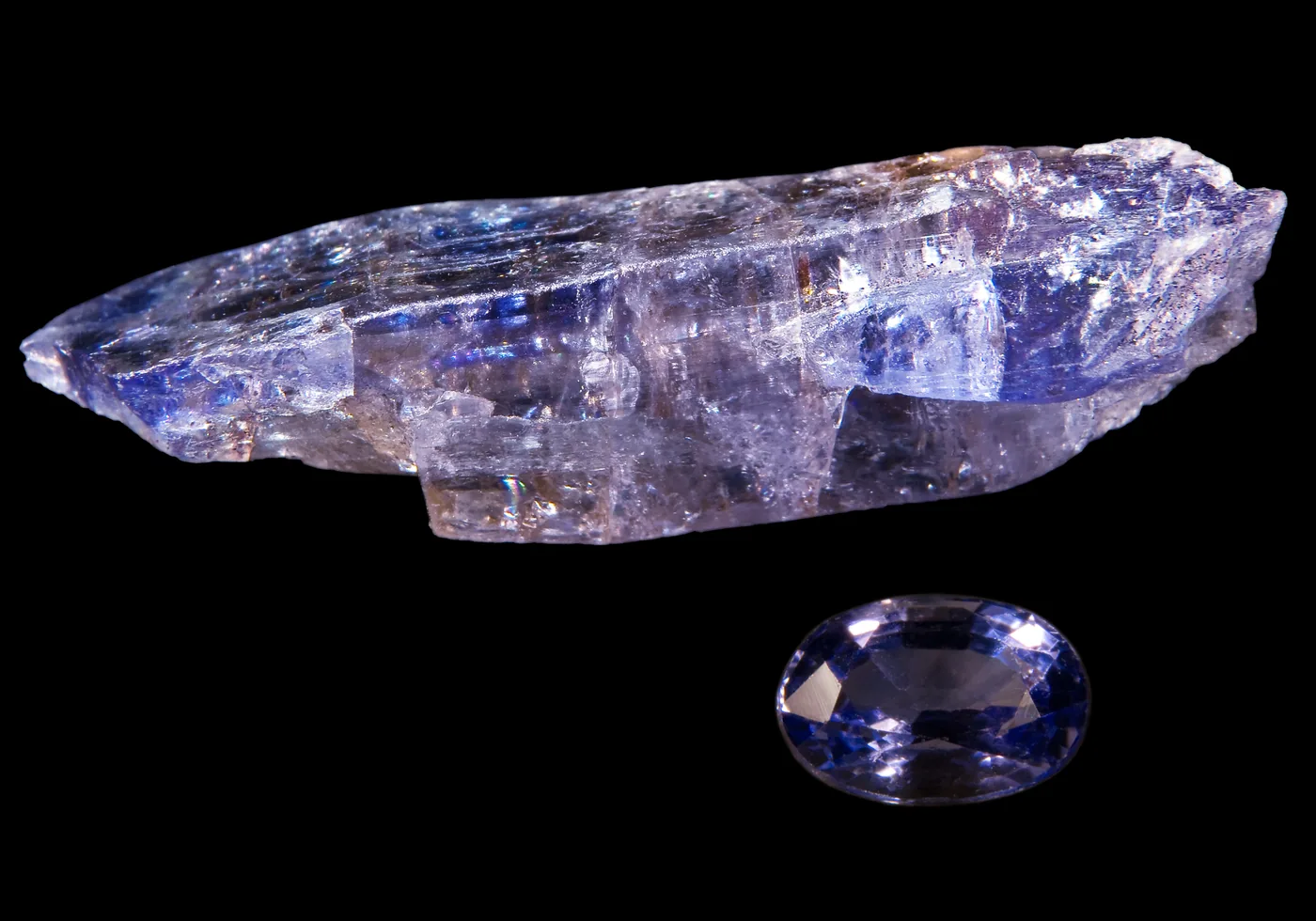
Both, almost always. Untreated tanzanite is typically brownish. About 95 percent of the blue tanzanite for sale owes its color to heat: around 600 to 650°C turns brown into a uniform blue by changing the state of the vanadium in the crystal. That heat is usually undetectable, so a lab report generally cannot confirm it either way.
Sapphire: at least 95 percent of blue stones are treated in some way, and heating is by far the most common treatment. The result is stable and permanent. The difference for a buyer: unheated sapphire is a real category that a lab report can document. Unheated blue tanzanite is the exception.
How can you tell tanzanite from sapphire?
Not by eye. Tanzanite is a zoisite colored by vanadium, sapphire a corundum colored by iron and titanium. Simple instruments separate them.
A refractometer reading lands in one band or the other, never in between.
- Refractive index. 1.691 to 1.700 for tanzanite, 1.762 to 1.770 for sapphire.
- Optic character. Tanzanite is biaxial, with three pleochroic colors: blue, purplish red and greenish yellow. Sapphire is uniaxial.
- Density. 3.35 for tanzanite against 4.00 for sapphire. At equal carat weight, a tanzanite looks a little larger.
Quiz
Tanzanite, sapphire, or both?
Eight facts about the two stones. For each one, say whether it belongs to tanzanite, to sapphire, or to both.
“Can be violetish blue.”
Fact 1 of 8
“Can be violetish blue.”Tanzanite, sapphire, or both?
Answer: both.
Tanzanite runs from bluish purple to violet, blue sapphire from violetish blue to greenish blue. Violetish blue is where they meet.
“Owes its color to vanadium.”Tanzanite, sapphire, or both?
Answer: tanzanite.
Tanzanite is a zoisite colored by vanadium. Sapphire is a corundum colored blue by iron and titanium.
“Rates 9 on the Mohs scale.”Tanzanite, sapphire, or both?
Answer: sapphire.
Sapphire rates 9. Tanzanite rates 6 to 7, at or just below quartz.
“Gem quality comes from a single area on Earth.”Tanzanite, sapphire, or both?
Answer: tanzanite.
Gem tanzanite comes from the Merelani area in northern Tanzania. Blue sapphire is mined in many countries.
“Most blue stones for sale have been heated.”Tanzanite, sapphire, or both?
Answer: both.
About 95 percent of blue tanzanite owes its color to heat. At least 95 percent of blue sapphires are treated, and heat is by far the most common treatment.
“Shows blue, purplish red and greenish yellow from different directions.”Tanzanite, sapphire, or both?
Answer: tanzanite.
Tanzanite is biaxial, with three pleochroic colors. Sapphire is uniaxial.
“Weighs more than the other at the same size.”Tanzanite, sapphire, or both?
Answer: sapphire.
Sapphire has a density of 4.00, tanzanite 3.35. At equal carat weight, a tanzanite looks a little larger.
“Its unheated blue form is a category a report can document.”Tanzanite, sapphire, or both?
Answer: sapphire.
Unheated sapphire is a real category, documented by a report. In tanzanite the heat is usually undetectable, and unheated blue stones are the exception.
They share a color, not a mineral. Hardness, origin and optics set them apart, and a report from an independent laboratory names the species.
Values for blue tanzanite and blue sapphire.
None of this happens across a counter. Ask for the report from an independent laboratory: it names the species.
Seven questions before you buy a tanzanite or a sapphire
7 points
A message ready to send to the seller, with all the questions.
See the message
Hello, I am interested in this blue stone. Before I decide, could you answer a few questions?

1. Is this stone a tanzanite or a sapphire, and is the species written on the invoice?
2. Does it come with a report from an independent outside laboratory, and does that report name the species?
3. Has the stone been heated, and is that written on the invoice or the report?
4. If the stone is sold as unheated, which report documents it?
5. Does the stone have filled fractures or cavities, or any treatment other than heat?
6. Could you send a photo in daylight, face up, and a second one from the side?
7. If a report from an independent laboratory disagrees with the listing, can the stone be returned?

Thank you for your time.
Quick answers
Is tanzanite a type of sapphire?
No. Tanzanite is a variety of zoisite, colored by vanadium. Sapphire is corundum, colored blue by iron and titanium. They share a color, not a mineral, and a refractometer separates them in one reading.
Is tanzanite more expensive than sapphire?
No. At similar size and quality, fine blue sapphire usually costs more. Tanzanite was launched as an affordable alternative to the best blue sapphires, and the same budget still buys a larger tanzanite.
Can tanzanite be used in an engagement ring?
It can, with care: a protective setting, and a ring that comes off for sport and chores. At 6 to 7 on the Mohs scale, with cleavage and sensitivity to thermal shock, it is not a stone to forget about. Sapphire is.
Is tanzanite rarer than sapphire?
Yes, geologically. Gem tanzanite comes from a single area in northern Tanzania, sapphire from many countries. Rarity does not set the price alone: sapphire still costs more.
The bottom line
Sapphire for a ring worn every day, or a stone that may be reset one day. Tanzanite for earrings, pendants and rings that come off, if its violet blue is the one you keep coming back to. Ask where the piece will live, then choose the blue that stops you.