How to Choose Birthstone Jewelry: The Expert Guide
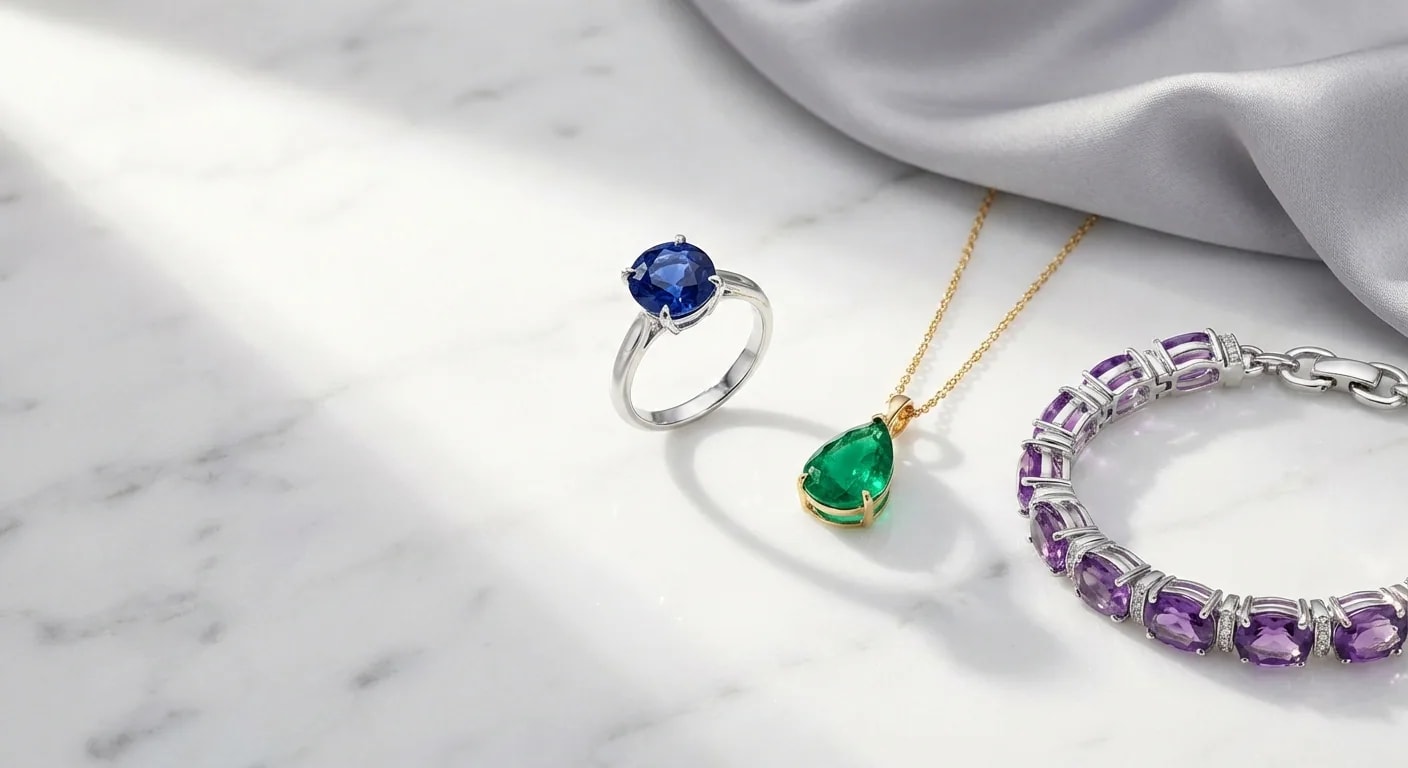
Selecting birthstone jewelry is the art of choosing a personal emblem, a story captured in a single, meaningful gemstone.
How to Choose Birthstone Jewelry: Quick Facts
| Property | Details |
|---|---|
| Key Topics | Complete Birthstone Chart (Modern & Traditional), How to Choose a Personal Gift, Quality Assessment (4 Cs for Colored Gems), Natural vs Lab-Created Comparison |
| Read Time | 10 minutes |
| Expert Tip | Color accounts for 50-70% of a colored gemstone's value (GIA, 2025) |
| Price Range | $150 (garnet pendant) to $5,000+/ct (top ruby or sapphire) |
Introduction
Updated April 2026
You want to pick birthstone jewelry that actually means something. Not just a generic pendant from a mall kiosk. We get it.
To choose birthstone jewelry well, start by identifying the right stone for the birth month (modern or traditional list). Then evaluate quality, with color being the single most important factor for colored gems. Finally, pick a setting and metal that match the wearer's style.
That three-step process sounds simple, but the details matter. We've helped over 2,000 clients at JOALYS select stones from Sri Lanka, and the difference between a forgettable gift and a piece someone wears every day comes down to knowing what to look for.
The Essentials at a Glance
TL;DR: Birthstone jewelry starts with choosing the right gem for the month. Prioritize color vibrancy and cut quality over carat weight. Natural stones from known origins (like Sri Lankan sapphires or Burmese rubies) hold their value best. Budget anywhere from $150 for a garnet pendant to $5,000+ per carat for top rubies. Always ask for independent certification from GIA or a comparable lab.
The Complete Birthstone Chart: Modern and Traditional
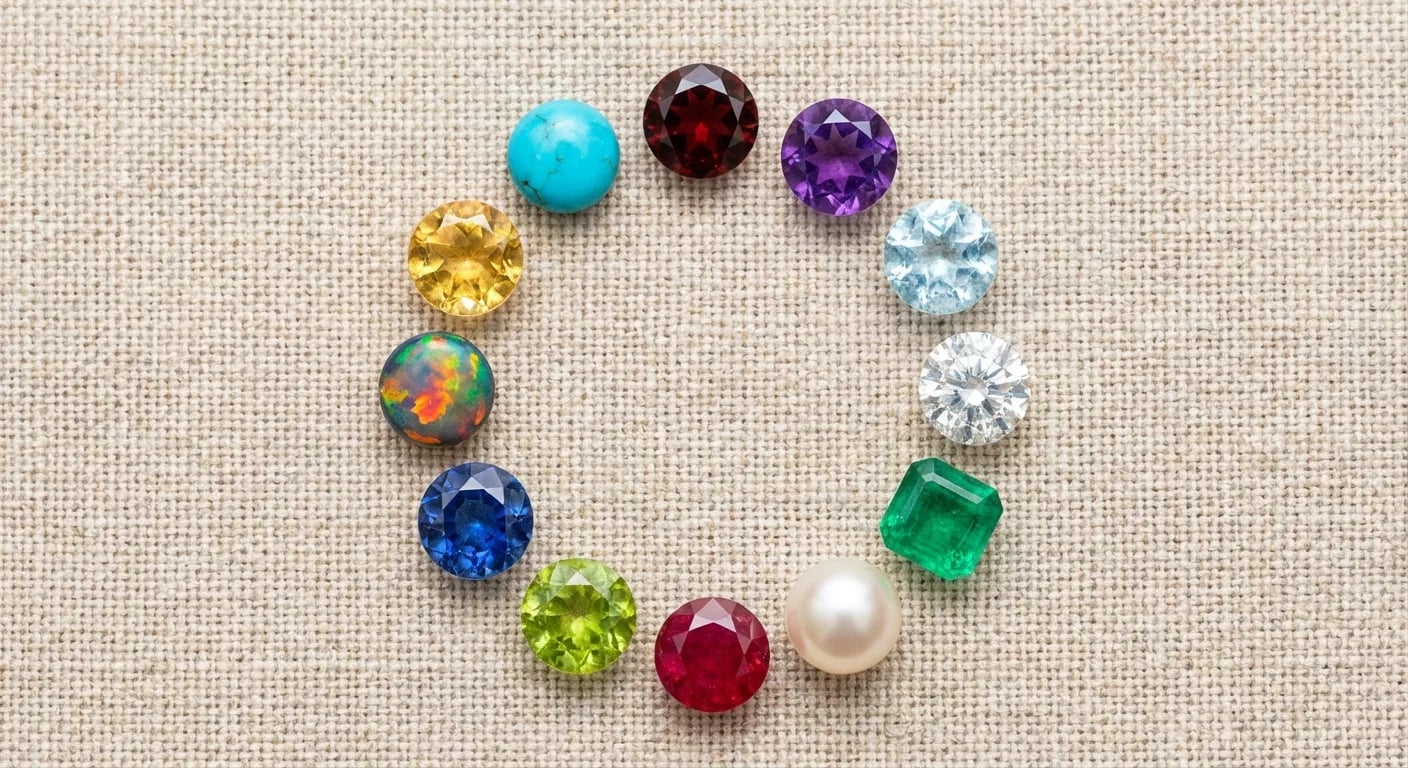
Here's the thing about birthstones: there are two lists, and most people only know one. Traditional birthstones trace back centuries to biblical and ancient texts. The modern list was standardized by the Jewelers of America in 1912, and it's been tweaked a few times since. The 1912 update swapped in more commercially available stones, which means more options and more accessible price points.
Birthstone Guide: Choosing the Right Gemstone. Video by GIA (Gemological Institute of America).
For a deeper dive into each gem's story, check our guide to birthstones by month.
Birthstones by Month at a Glance
This chart covers both lists plus the core symbolism. Use it as your starting point.
| Month | Traditional | Modern Option(s) | Meaning |
|---|---|---|---|
| January | Garnet | Garnet | Protection, Love, Loyalty |
| February | Amethyst | Amethyst | Wisdom, Peace, Tranquility |
| March | Bloodstone | Aquamarine | Serenity, Clarity, Courage |
| April | Diamond | Diamond | Strength, Everlasting Love |
| May | Emerald | Emerald | Hope, Renewal, Growth |
| June | Pearl | Pearl, Alexandrite | Purity, Wisdom, Luck |
| July | Ruby | Ruby | Passion, Vitality, Courage |
| August | Sardonyx | Peridot, Spinel | Strength, Felicity, Protection |
| September | Sapphire | Sapphire | Wisdom, Loyalty, Nobility |
| October | Opal | Opal, Tourmaline | Hope, Creativity, Innocence |
| November | Topaz | Topaz, Citrine | Joy, Abundance, Healing |
| December | Turquoise | Turquoise, Tanzanite, Zircon | Friendship, Success, Happiness |
Want to see these stones in person? Browse our curated collection of certified birthstones to find your starting point.
How to Choose a Birthstone That Actually Means Something
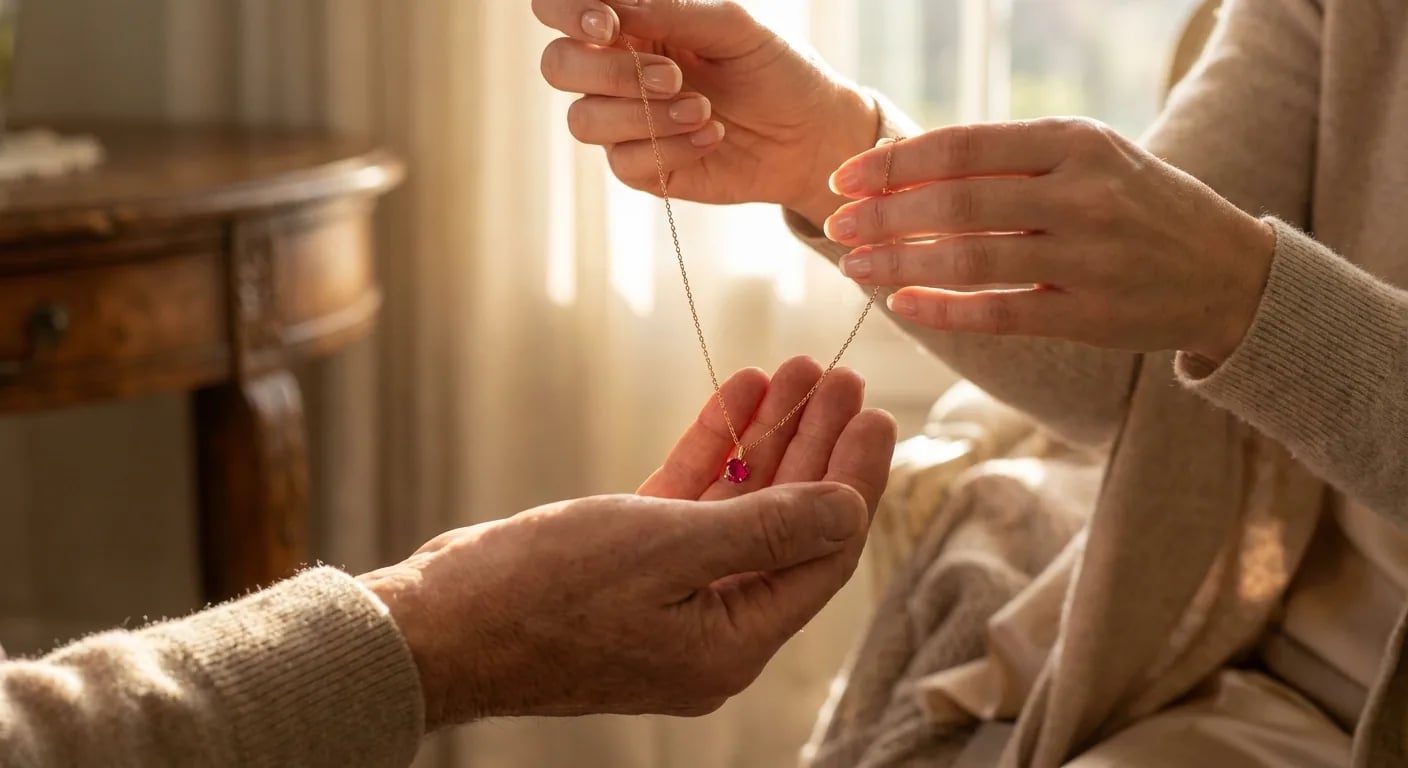
Let's be honest: buying someone "their" birthstone without thinking about it is the jewelry equivalent of a gift card. The real magic happens when you match a stone's meaning to the person wearing it.
Matching Stone Symbolism to Personality
Each birthstone carries centuries of symbolism. A deep blue sapphire has represented wisdom and loyalty since medieval kings wore them as protection. That makes it a powerful choice for a mentor or lifelong partner. Amethyst, with its cool purple tones, has been linked to clarity and calm since the ancient Greeks believed it prevented intoxication. Perfect for someone who values inner peace.
We've found that the most-worn pieces in our clients' collections are the ones where the symbolism clicked. The stone becomes more than decoration. It becomes a personal emblem.
What If They Don't Like Their Birthstone?
This happens more than you'd think. Here are three solid workarounds:
- Alternate modern stones: Several months have two or three options. June offers pearl, alexandrite, and moonstone. December has turquoise, tanzanite, and zircon. Plenty of room to find something they love.
- Zodiac stones: Astrological gems give you a completely different set of options tied to the same person. A Scorpio born in November might prefer deep red garnet over yellow citrine.
- Just pick their favorite color: The most practical approach. If someone born in August hates peridot green, a beautiful emerald or ruby will be far more appreciated. We personally prefer this approach at JOALYS because the wearer's joy matters more than calendar accuracy.
How to Assess Birthstone Quality and Value
You've picked the stone. Now you need to know if you're looking at a good one. Here's where most buyers get it wrong: they apply diamond rules to colored gems. Don't do that. Colored gemstones play by different rules, and color is king.
The 4 Cs for Colored Gemstones (Not the Same as Diamonds)
Yes, colored gems use the same four terms. But the priorities flip completely.
Color (most important): According to GIA (2025), color accounts for 50-70% of a colored gemstone's value. Gemologists break it into three parts: hue (the actual color), tone (light to dark), and saturation (intensity). You want vivid saturation without the stone going so dark it looks black. A top Ceylon sapphire shows that "cornflower blue" everyone talks about.
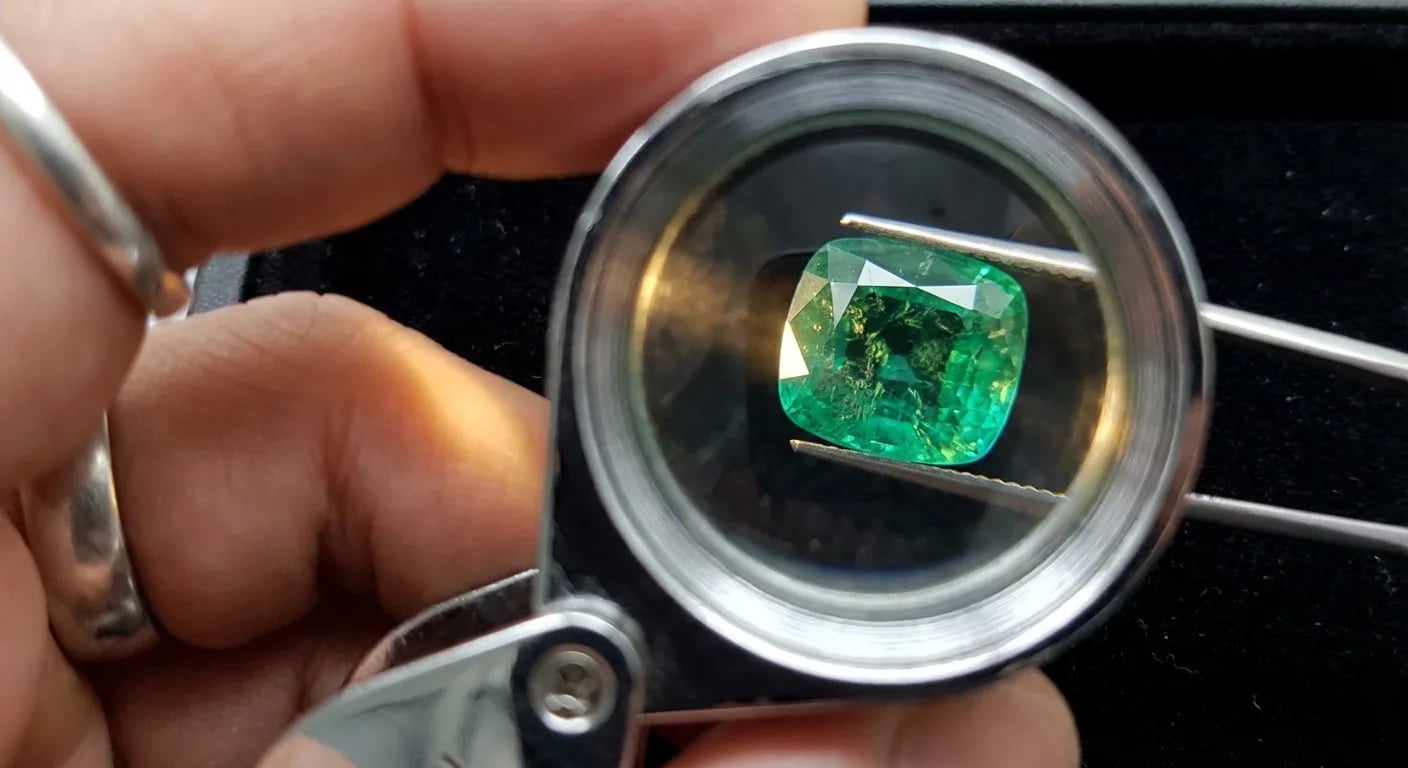
Clarity: Forget diamond logic here. Most colored stones have inclusions, and that's fine. The "jardin" (garden) inside an emerald is part of its identity. What matters: can you see the inclusions with the naked eye, and do they threaten durability? If no to both, you're good.
Cut: A skilled lapidary can make a medium-color stone look incredible. A bad cut kills even the best rough material. Look for even color distribution across the face and good light return. We've sourced stones in Ratnapura where the rough looked average, but the cutter turned them into showstoppers.
Carat: Weight, not size. A 1-carat ruby (density 4.0) looks smaller than a 1-carat emerald (density 2.7). Always check millimeter dimensions alongside carat weight.
JOALYS Expert Insight: In our experience sourcing directly from Sri Lankan mines since 1977, we've learned that origin matters as much as the 4 Cs. A Ceylon sapphire or Burmese ruby carries provenance that affects both beauty and long-term value. We always recommend buying stones with documented origin, ideally backed by a GIA or SSEF certificate. It costs a bit more upfront but protects your investment.
Natural vs. Lab-Created: An Honest Comparison
Both are real gems, chemically speaking. Lab-created stones are identical in composition and hardness. The difference? Origin and rarity. Here's how they stack up:
| Factor | Natural Gemstone | Lab-Created Gemstone |
|---|---|---|
| Origin | Mined from earth, millions of years old | Grown in a lab over weeks to months |
| Price (1ct sapphire) | $800 to $3,000+ depending on quality | $75 to $300 for equivalent appearance |
| Resale value | Holds and often appreciates over decades | Minimal resale market currently |
| Inclusions | Natural fingerprint, unique to each stone | Near-flawless, can look "too perfect" |
The truth is, neither choice is wrong. If budget matters and you want visual impact, lab-created delivers. If provenance and long-term value matter, go natural with certification.
Explore quality firsthand. Our collection of certified birthstones ships with full documentation so you can verify exactly what you're getting.
Create Your Perfect Jewelry
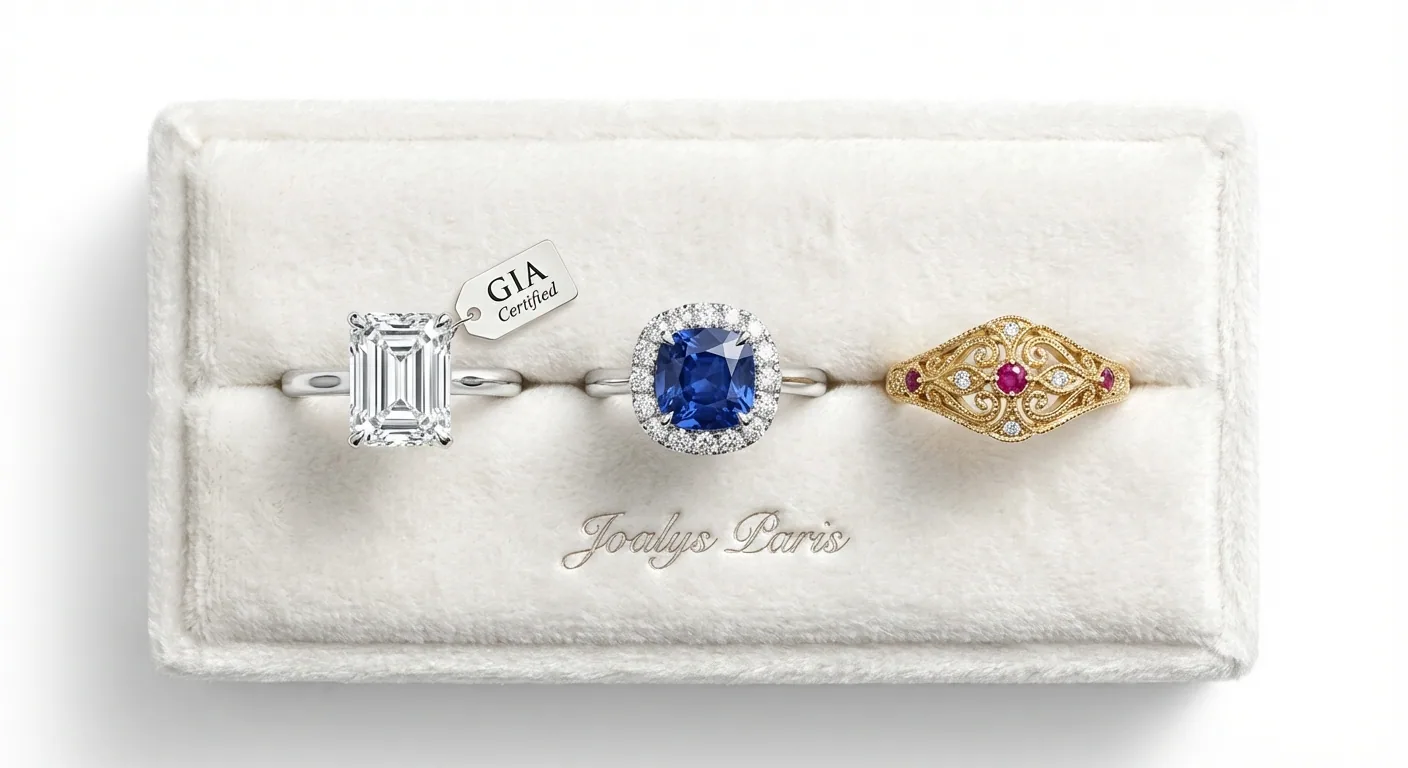
Your unique piece starts here. At JOALYS, we keep it simple with three steps:
- Select Your Stone - Browse certified gemstones with full provenance data
- Receive and Inspect - Your stone arrives in a luxury authentication case so you can see it before committing to a setting
- Design Your Setting - Work with our jewelers to create something that fits your vision
JOALYS
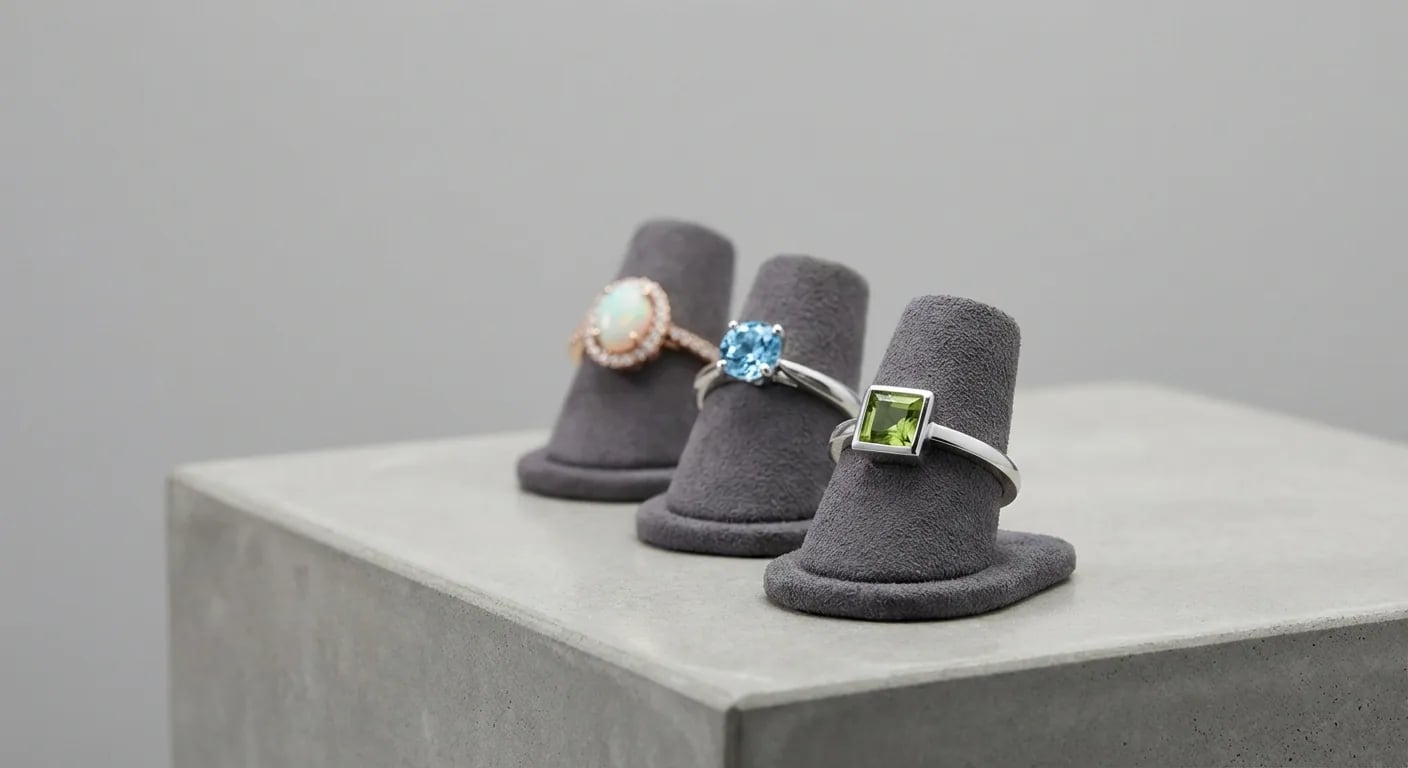
Everything Begins with the Stone
One stone, chosen by hand at the source. The piece comes afterwards.
Keep the gemstone loose, or commission a piece made around it — made to order, never off the shelf.
Frequently Asked Questions
Conclusion
Choosing birthstone jewelry well means going beyond the calendar. Match the stone's meaning to the wearer. Prioritize color and cut over carat size. And always, always get independent certification.
At JOALYS, we've built our process around this philosophy. First, select your certified gemstone from our curated collection, sourced directly from Sri Lankan mines. Your stone ships in a luxury authentication case so you can inspect it before deciding on a setting. When you're ready, design your custom piece with our team. For personal guidance on choosing birthstone jewelry that tells the right story, talk to one of our gemologists.