Something Old, Something New, Something Borrowed, Something Blue: The Tradition, and the Version You Keep
The Victorian rhyme takes two minutes to explain. Choosing a blue stone that outlives the wedding day takes a little longer, and nobody writes that part down.
Something old, new, borrowed, blue: the short version
| The line | What it stands for | A version that lasts |
|---|---|---|
| Something old | Continuity with your family and your past | An inherited stone, a reset heirloom |
| Something new | Optimism for the chapter starting today | A stone chosen and bought for the day itself |
| Something borrowed | Luck lent by a happily married woman | A sapphire borrowed from a relative, returned after |
| Something blue | Fidelity, love and purity | A blue stone, which becomes the "something old" one generation later |
| A sixpence in her shoe | Prosperity (mostly dropped, the coin went out of circulation) | Any small blue coin-sized keepsake |
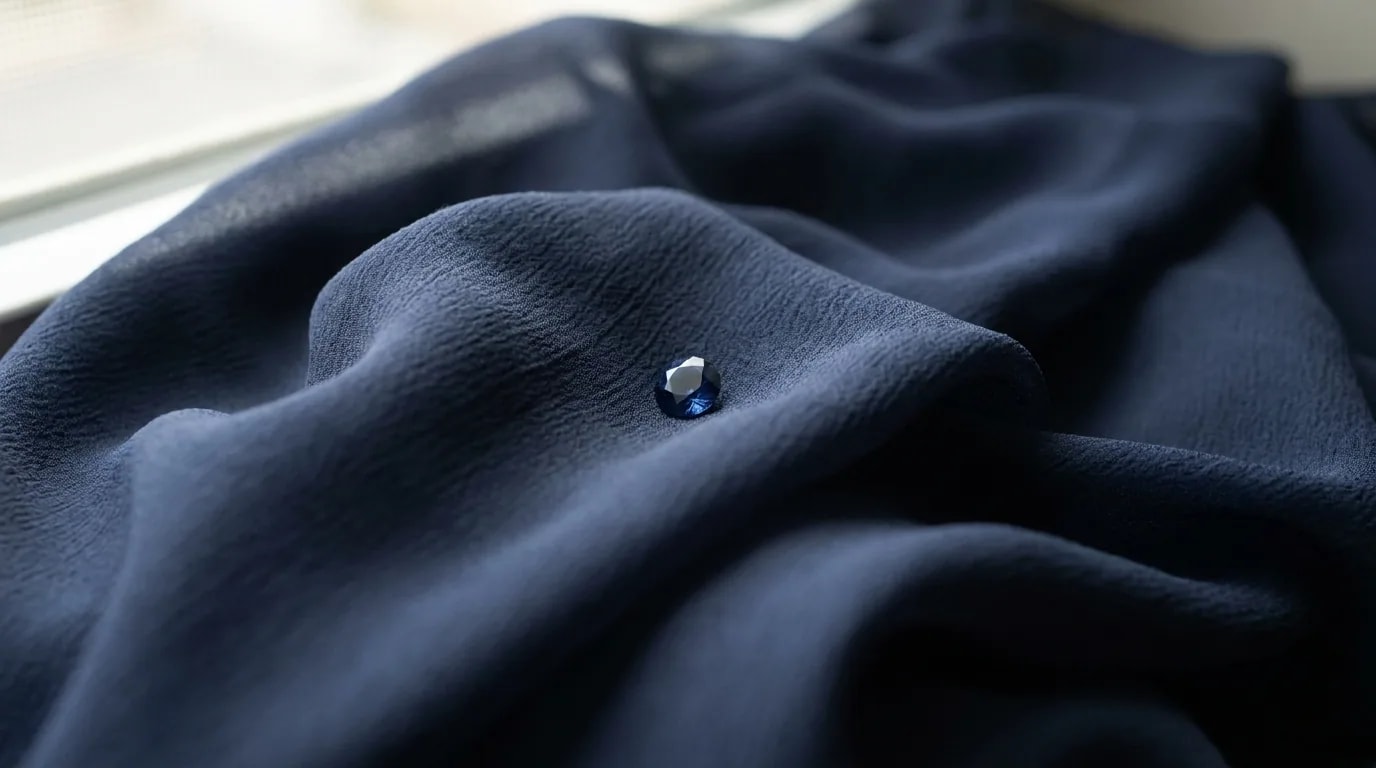
Something old, something new, something borrowed, something blue: what it actually means
You have probably read it a dozen times by now. Something old, something new, something borrowed, something blue, and a sixpence in her shoe. A Victorian English good luck charm, roughly 150 years old, and every wedding site explains it the same way.
So this guide covers that part quickly, then does the thing the wedding blogs cannot. I source coloured stones for a living: two years living in Sri Lanka, mostly around Ratnapura, buying parcels off dealers’ tables. Every year people write to me looking for their something blue, and almost none of them have been told what the word "blue" actually means once money is involved. Two stones can both be sold honestly as "blue sapphire" and sit at 250 EUR and 2,500 EUR. Nobody explains why.
Short version first, then the part that matters.
Where does the rhyme come from, and what does each piece mean?
The full version is longer than the one people quote: something old, something new, something borrowed, something blue, and a sixpence in her shoe. It surfaced in Victorian England, and the earliest printed traces point to Lancashire in the 1870s. A good luck charm, not a rule.
- Something old stands for continuity, carrying your family's past forward rather than cutting it off.
- Something new is optimism, the chapter that starts on the day.
- Something borrowed is borrowed luck, traditionally lent by a woman whose own marriage was happy.
- Something blue is fidelity, love and purity.
- The sixpence was prosperity. It faded out along with the coin.
Blue was doing this work before the rhyme existed. Until white became standard in the 1840s, plenty of brides simply married in blue, and the colour already carried associations with constancy. That is the history, and every article on this subject covers it. The useful part starts now.
Why do most "something blue" ideas end up in a drawer?
The standard list is the same everywhere: a blue garter, a ribbon in the bouquet, nail polish, shoes, a thread stitched into the hem. All of these work. All of these are also, if we are honest, temporary. The garter comes off that night. The polish grows out in three weeks. The shoes get worn twice.
That is not a complaint. A beautiful disposable gesture is a perfectly good way to keep a tradition.
The dress is its own version of this. Plenty of brides put the blue there instead, in an embroidered detail or a hem, and plenty leave it to what the guests wear. That is not my trade and I will not pretend otherwise — if it is the route you are taking, this guide to blue dresses for a wedding works through the shades properly.
But look at what the rhyme is built around. "Something old" only exists because an object survived long enough to be handed to somebody. Three of the four lines are about things that last. Blue is the one line most people answer with something that will not exist in ten years.
A stone is the version that stays, and there is a loop in that I find genuinely lovely: a blue stone bought for your wedding becomes the something old at somebody else's, one generation later.
One caveat before anyone feels pressured into spending. If an aunt will lend you her sapphire, take the sapphire. Borrowed and blue in a single object beats anything you can buy, and it costs nothing.
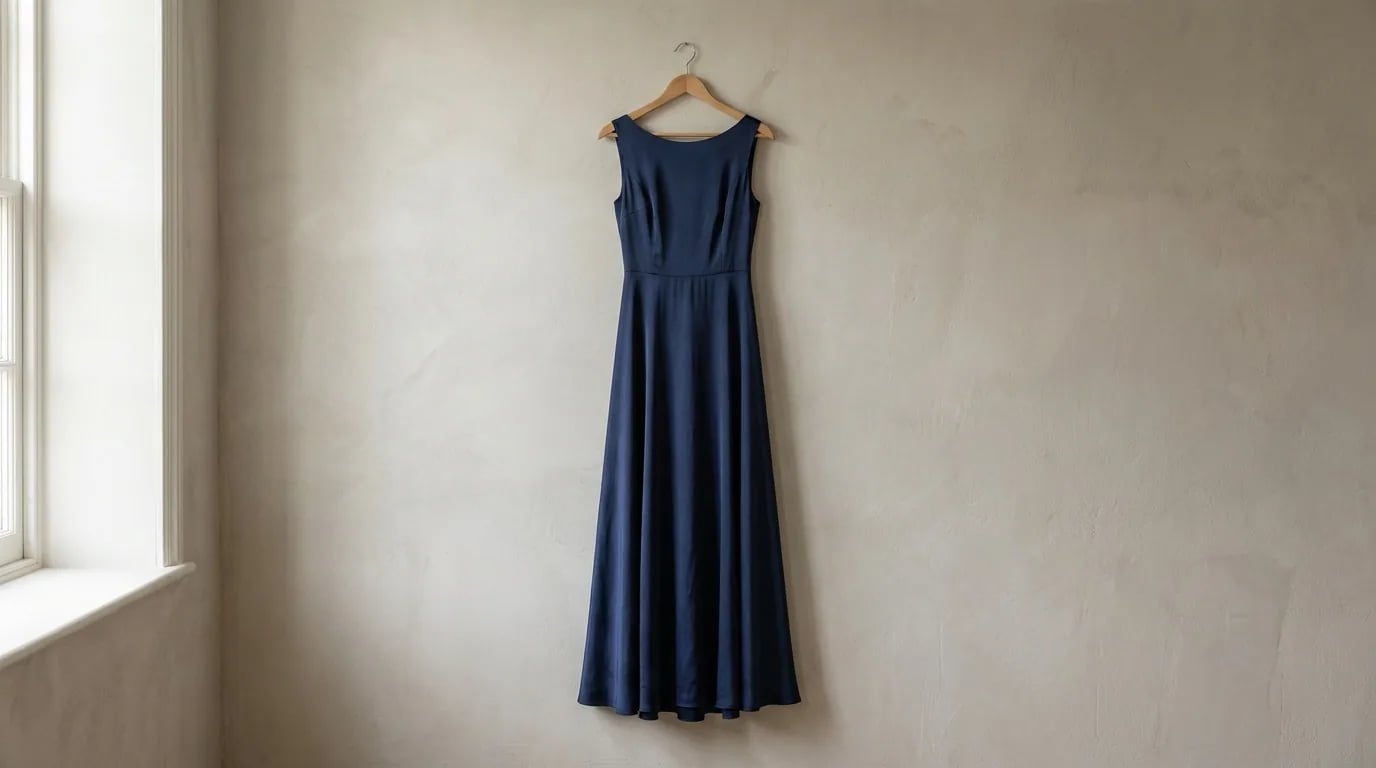
What does "blue" actually mean when you are buying a stone?
This is the part the wedding industry cannot write, because it belongs to the stone trade rather than to weddings.
"Blue sapphire" is not a colour, it is a range. The trade sorts that range with names that sound poetic but are really descriptions of how a stone looks. Four of them will get you through almost any conversation.
These are trade descriptions of appearance, not graded categories. No laboratory certifies the word "cornflower" on a report. Colours shown are indicative.
Cornflower blue. A soft, slightly violet blue with a velvety quality, as though it is lit from inside. The term attached historically to sapphires from Kashmir, where minute inclusions scatter light and produce that softness (GIA). It describes a look, not a passport.
Royal blue. Deeper and more saturated. The term grew out of Burmese material, which GIA describes as running slightly violetish blue to blue in medium to dark tone, more intense than cornflower but without the velvet. Worth knowing before you commit: a very dark royal blue can read as inky under warm restaurant lighting.
Vivid blue. Saturation is the headline. Strong colour that stays bright, pushed as far as it goes without the tone darkening and killing the brilliance.
Pastel or ice blue. Light in tone, airy, more sky than ink. Because it is light it returns a lot of light, so it reads livelier on the hand than the gentle colour suggests.
Two things to take away, and they are the two that save people money:
- These are trade descriptions, not grades. No laboratory stamps "cornflower" on a report as a certified quality. Nobody is standing behind that word. When a listing leads with it, work out which part is the colour and which part is the marketing.
- The old names started as origins and became appearances. "Kashmir", "Burmese" and "Ceylon" began as places and are now used to describe how a stone looks (GIA). A sapphire sold as royal blue is not necessarily Burmese, and a Sri Lankan stone can be honestly, accurately cornflower.
If you want the long version of this, with the value differences laid out side by side, it is in our guide to cornflower versus royal blue sapphire.
Seeing the two side by side does more than reading about them. This walkthrough puts cornflower and royal blue next to each other.
Why is one blue sapphire 250 EUR and another 2,500 EUR, and what should you pay?
Colour does most of the work. Per GIA, colour is the single most important influence on a blue sapphire's value, and the stones commanding the highest prices per carat sit in medium to medium-dark tone with strong to vivid saturation. Slide toward grey, toward greenish, toward too dark or too pale, and the price falls away fast. Treatment sets the next tier. Clarity, cut and size fill in the rest.
The spread is wider than most people expect. GIA notes that melee sapphires from Australia can sell for under 5 dollars per carat, while a five carat untreated sapphire from Myanmar can command more than 15,000 dollars per carat. Same species, same word on the label.
My complaint is not about the prices. The spread is legitimate, because rarity is real and colour is real. The problem is that the vocabulary never tells you where on that scale you are standing. "Blue sapphire, 1.5 carat" is not a description, it is a category spanning roughly three thousand to one. A seller comfortable with what they are selling can give you the tone, the saturation, whether the stone has been heated, and which laboratory wrote the report. If those four questions produce vagueness, the vagueness is your answer.
Real numbers, from stones currently on our own table, loose and before any setting. Around 220 to 500 EUR buys entry level, roughly half a carat to one and a quarter, mostly pastel and lighter violetish blues. 500 to 1,200 EUR is the widest band and where most people land, mid-tone blues of one to two carats. 1,200 to 2,900 EUR reaches cornflower and deep royal blue with better saturation, up to about five carats.
Which brings me to the thing that saves people the most money: you do not need a big stone for this. Some of the nicest versions I have seen were a 0.8 carat sapphire set inside a band, where nobody knows it is there but the two people who chose it. Good colour small beats tired colour large, at any budget. If you are weighing this against the ring itself, our guides to wedding rings with gemstones and sapphire engagement rings cover that decision.
Heated or unheated: does it matter for your something blue?
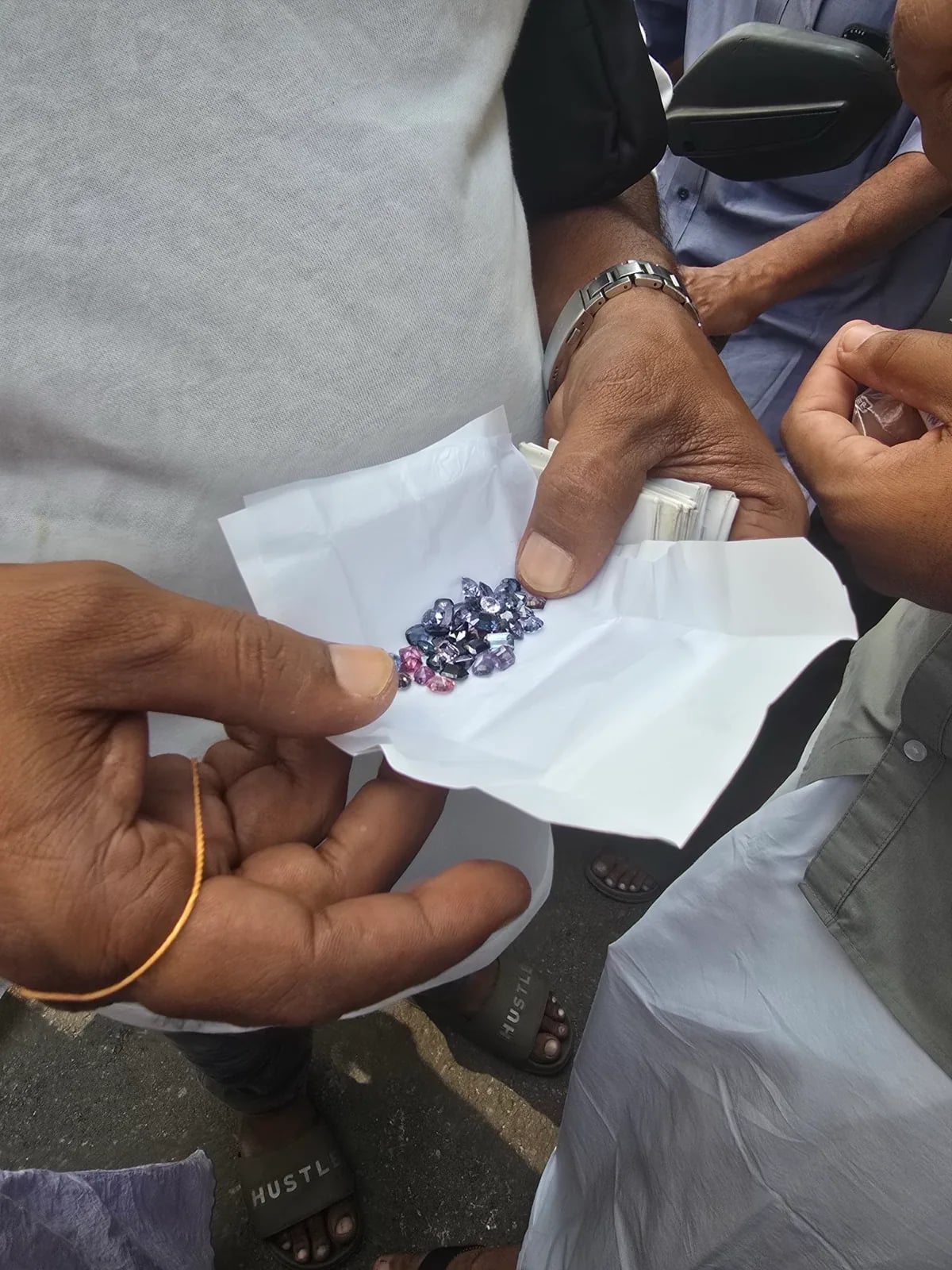
Per GIA, at least 95 percent of blue sapphires have been treated in some way, and heating is by far the most common. Rough goes to somewhere between roughly 450 and 1,900 degrees Celsius to improve colour and clarity. The results are stable and permanent, and the practice is openly accepted across the trade.
So heated is not a scandal. Heated is the norm. What matters is that it gets disclosed every time, without being asked.
Untreated stones are a small slice of the market, and because they are scarce, fine untreated material commands substantially more per carat (GIA). That premium is paid for rarity, not for beauty. A heated sapphire and an unheated sapphire that look alike today will look alike in forty years.
My position is the same one I give people in Ratnapura: buy the colour you actually fall for. If unheated is within reach and the idea of an untouched stone means something to you, that is a lovely reason to choose one. If it is not, a well-heated Ceylon sapphire is a beautiful, permanent, entirely legitimate stone, and nobody looking at your hand will know or care. What you should never accept is not being told which one you are holding. The detail is in unheated versus heated sapphire, and the origin side in our Ceylon sapphire guide.
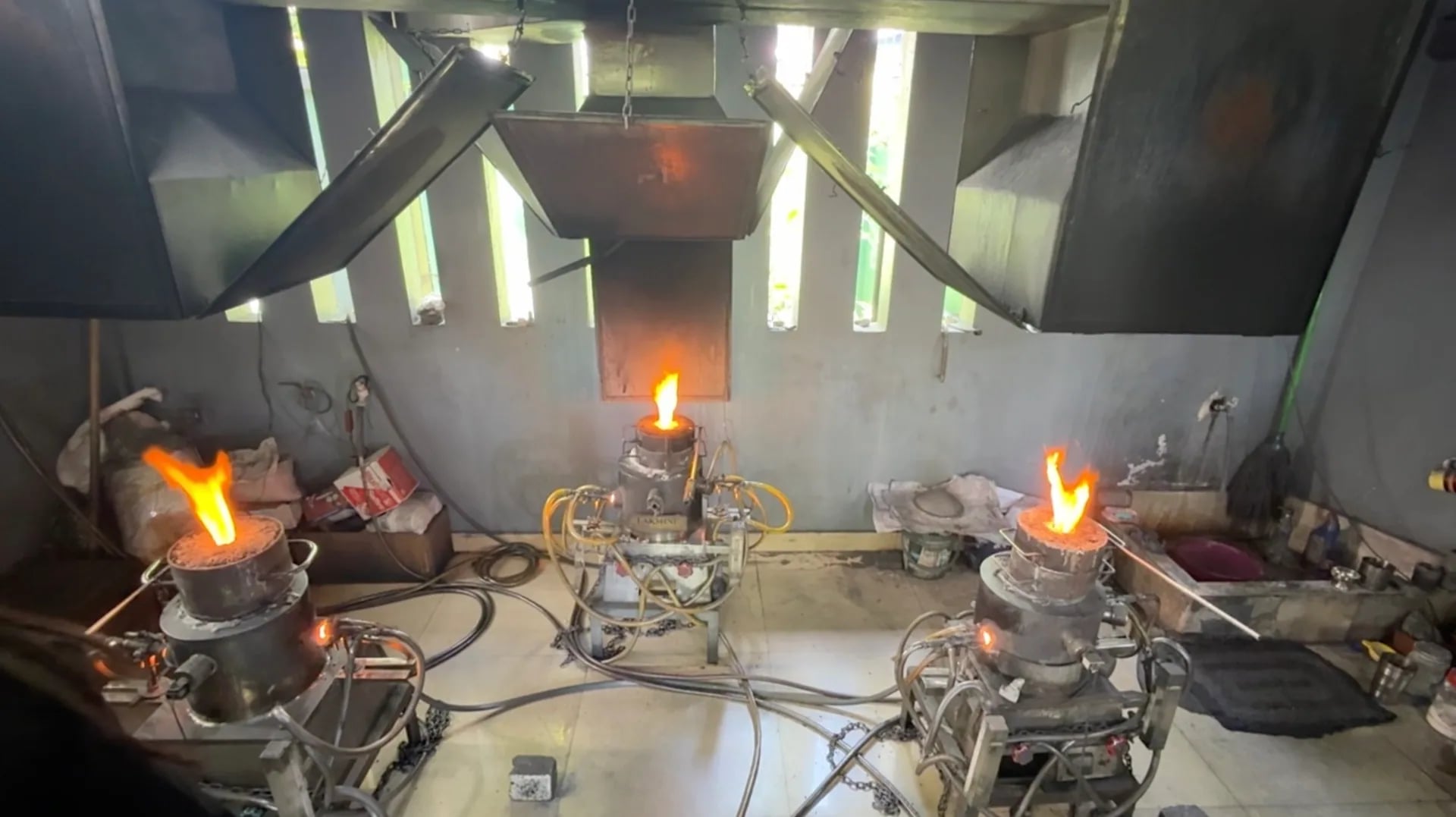
If sapphire is out of reach, what else is genuinely blue?
Three real answers. I will not pretend they are interchangeable with sapphire, because the durability numbers say otherwise, but "not equivalent" is a long way from "not worth having".
Blue spinel. Mohs 8, toughness rated good. Singly refractive with no pleochroism, so the colour reads the same from every angle, a quiet advantage in a ring. Spinel spent centuries misidentified as ruby and has never fully recovered its reputation, which is precisely why people who know stones keep buying it. Cobalt-blue spinel is genuinely rare and priced accordingly. Ordinary blue spinel is not.
Aquamarine. A beryl, 7.5 to 8 on the Mohs scale. Expect a lighter, cooler, sea-toned blue rather than a deep one. A different mood, not a cheaper sapphire. Nearly all the blue aquamarine in jewellery has been heat-treated to strip out the yellow component, which is standard and stable. If you want the untreated greenish-blue, ask for it by name; some dealers keep material that way on purpose.
Blue topaz. Here I have to be straight with you. Blue topaz is real topaz, it is properly blue, and it is the most affordable way to do this. Two things to know. Essentially all of it begins as colourless topaz and is irradiated then heated to turn blue; the colour is stable, but it is not one the stone arrived with. And this matters if it will live on your hand: topaz rates 8 on Mohs, but its toughness is poor because it has basal cleavage. A hard knock can split it, and jewellers compensate with protective settings (GIA). For a pendant that barely matters. For a ring worn daily, it does.
Sapphire, by contrast, is Mohs 9 and excels in toughness and stability as well as hardness, which is why GIA describes it as ideal for jewellery worn every day. That gap is the honest reason sapphire costs what it costs.
So how do you choose yours?
Five steps. The order is the useful part.
- Decide where it lives before you decide what it looks like. Ring, pendant, hidden inside the band, sewn into the dress. That choice sets your durability requirement, and durability rules some stones out before colour enters the conversation at all.
- Choose a tone before you choose a name. Look at stones in daylight and again in warm indoor light. A royal blue that sings in a bright shop can go flat and inky over dinner. This is the mistake I watch people make most often.
- Ask three questions. Has it been heated. What does the report say. Who issued the report. I source stones, I do not grade them; every stone we sell is certified by an independent laboratory, and you should want those two roles held by different people.
- Buy the stone, not the adjective. If the colour moves you and the paperwork is straight, the label is the least important thing in the transaction.
- Size last. Always last.
And then the loop closes. Something old, something new, something borrowed, something blue. Three of those four lines are about carrying the past into a marriage, and only the blue is usually bought new and thrown out by Monday. Choose a stone instead and you have quietly turned the last line of the rhyme into the first line of somebody else's, for a person who is not born yet. Better souvenir than a garter.

Blue sapphires, sourced in the open
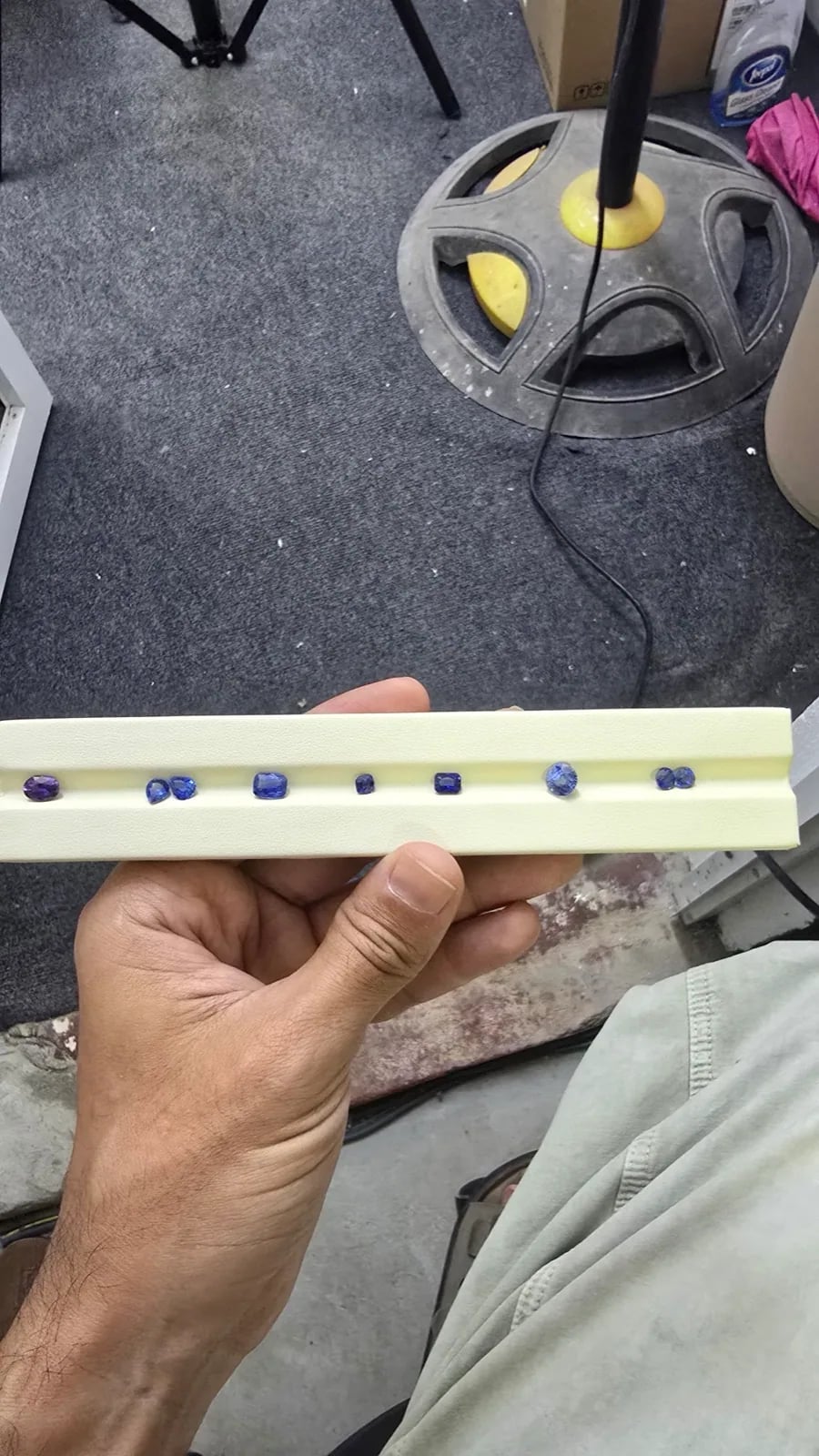
We keep loose blue sapphires across every tone described above, from pastel through cornflower to deep royal blue, sourced directly in Sri Lanka and certified by an independent laboratory. Each is listed with its real colour, weight and treatment status, because those are the three things that should never be left vague.
We sell stones, not finished rings. If you already have a jeweller, take the stone straight to them. If you do not, we can arrange a bespoke setting.
JOALYS
Everything Begins with the Stone
One stone, chosen by hand at the source. The piece comes afterwards.
Keep the gemstone loose, or commission a piece made around it — made to order, never off the shelf.
Frequently Asked Questions
The version you keep
Most of what is written about something old, something new, something borrowed, something blue explains the rhyme and then hands you a list of props. The rhyme is worth knowing and the props are fine. The choosing is the part nobody writes down, and that is the part I have tried to give you here.
If you want to see what real blue looks like across the range, our blue sapphire stones are listed individually with their colour, weight and certification, sourced directly in Sri Lanka. We sell loose stones. If you already have a jeweller, take the stone to them; if you do not, we can arrange a bespoke setting. Either way the stone comes first.