Gemstone Hardness: the Mohs Scale Chart, and Why 7 Is the Line That Matters
The full Mohs chart, the GIA toughness rating beside it, and the threshold that decides daily wear
Gemstone Hardness at a Glance
| Question | Short answer |
|---|---|
| What the Mohs scale measures | Scratch resistance only, from talc at 1 to diamond at 10 |
| Hardest gemstones | Diamond 10, moissanite 9.25, sapphire and ruby 9, chrysoberyl 8.5 |
| Minimum for daily wear | Mohs 7, because airborne dust is mostly quartz (7) |
| Is the scale linear? | No. Diamond is about 140x harder than corundum (GIA) |
| Toughest gem material | Jade, at only Mohs 6 to 6.5 |
| Hard but fragile | Topaz: Mohs 8, poor toughness, perfect cleavage |
| Third property to check | Stability: light, heat and chemicals (kunzite fades, opal crazes) |
Introduction
Gemstone hardness is the one number every buyer looks up, and the one number that gets misread most often. On the Mohs scale it means exactly one thing: how well a stone resists scratching. It says nothing about whether that stone will chip when you knock it against a door frame.
That gap is where expensive mistakes live. Topaz sits at 8, harder than emerald, and it splits along a cleavage plane if you look at it wrong. Jade sits at 6 and is the toughest gem material we know of. Two numbers, two opposite outcomes.
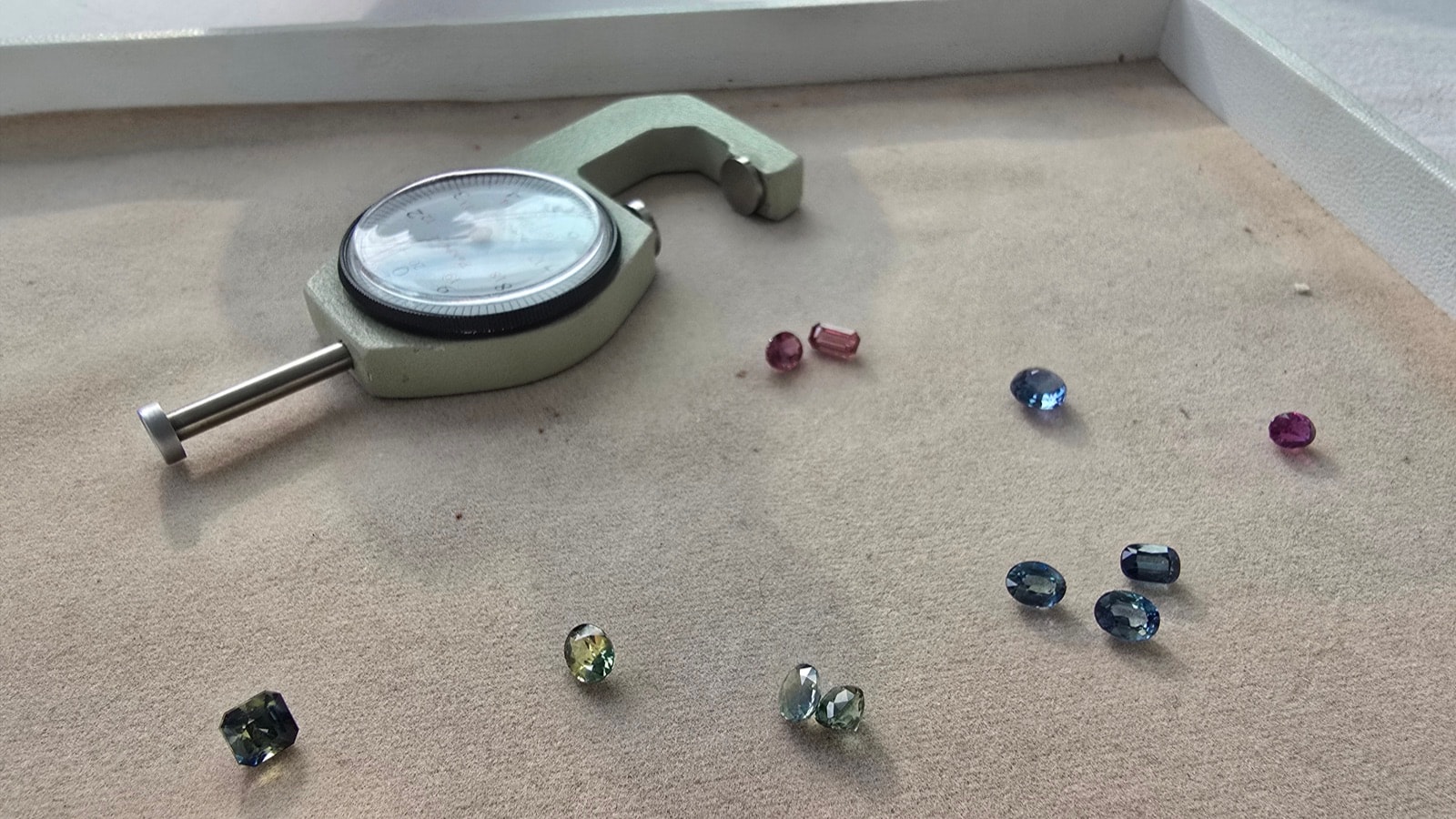
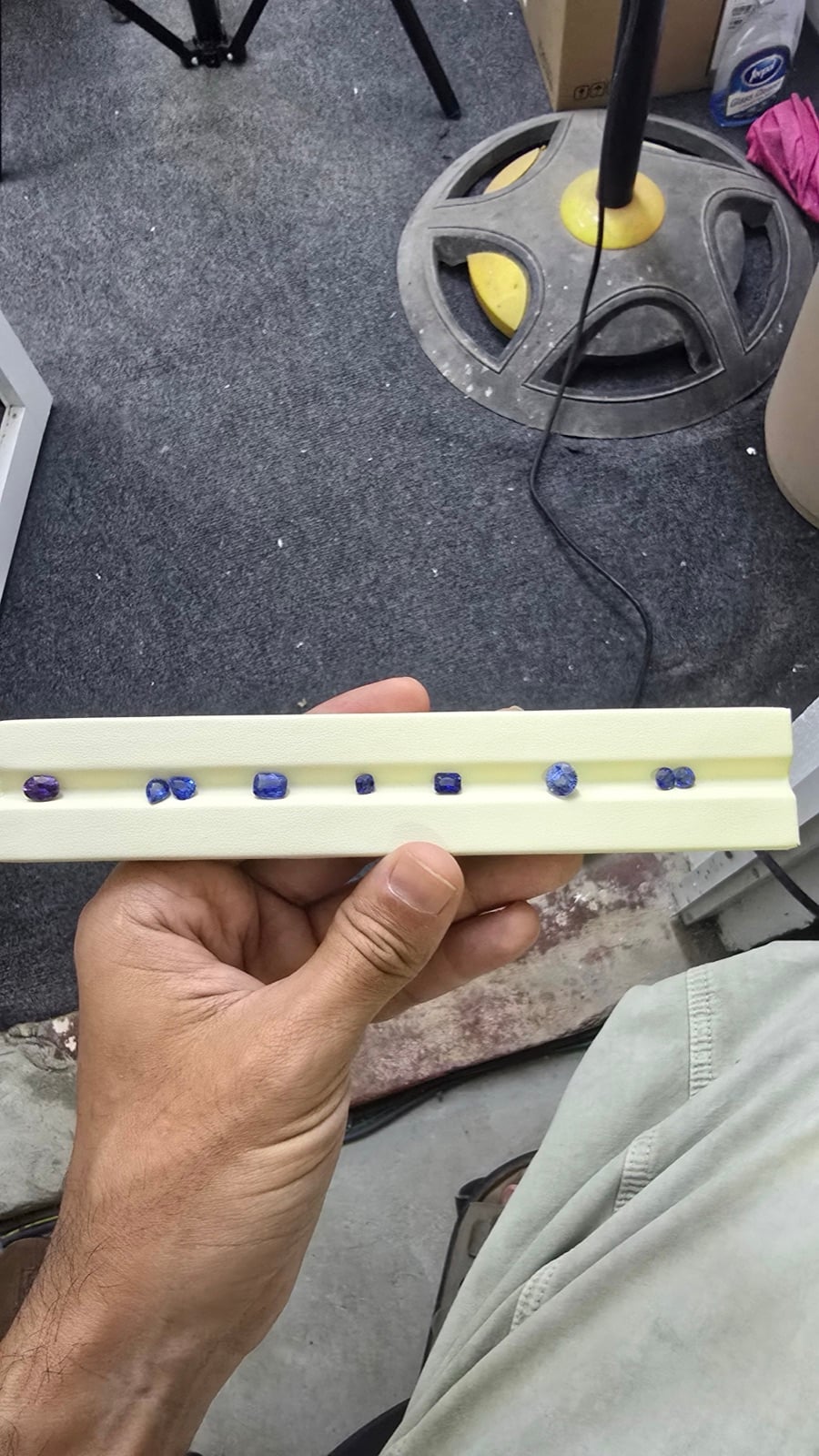
We source sapphire, ruby and spinel out of Ratnapura in Sri Lanka, so we handle these stones loose, before anyone sets them. You learn quickly which ones survive a parcel bag and which ones arrive with a fresh chip. This guide gives you the full Mohs hardness chart, the GIA toughness rating next to it, and the practical threshold that actually decides whether a stone can be worn every day.
The Bottom Line
The Bottom Line: Gemstone hardness on the Mohs scale runs 1 to 10 and measures scratch resistance only. Diamond is 10, corundum (sapphire and ruby) is 9, quartz is 7. Because airborne dust is mostly quartz, Mohs 7 is the practical floor for a stone worn daily. Above that line, toughness decides the rest: topaz is an 8 with poor toughness, jade is a 6 and the toughest gem known.
What Does Gemstone Hardness Actually Measure?
Friedrich Mohs, a German mineralogist working in Vienna, published his scale in 1812. The method was almost insultingly simple, and that is exactly why it survived two centuries: take ten common minerals, rank them by which one scratches which. Talc at 1. Diamond at 10. Everything else falls between.
The Mohs scale, its ten reference minerals
Each mineral scratches everything below it and is scratched by everything above it. The steps are not equal: per GIA, diamond is 140 times harder than corundum, and almost 124,000 times harder than talc.
Here is the part most charts leave out. The Mohs scale is ordinal, not linear. The step from 9 to 10 is not the same size as the step from 1 to 2. Destructive scratch tests with a weighted, diamond-tipped lever put diamond at roughly 140 times harder than corundum, and almost 124,000 times harder than talc (GIA). So when a chart shows sapphire one rung below diamond, that rung is a cliff.
Hardness comes from the strength of the chemical bonds holding the crystal together. Stronger bonds, harder stone. That same bond strength is why a hard stone takes a better polish: per GIA, a sapphire holds sharper facet edges and a cleaner surface reflection than a softer stone like peridot. You can see it across a tray without a loupe, once you know to look.
The Complete Gemstone Hardness Chart (Mohs Scale)
Most gemstone hardness charts give you a number and stop. Ours puts the GIA toughness rating in the next column, because on their own, the Mohs values mislead. Read the two together and the chart starts telling you something useful.
Gemstone hardness chart, Mohs scale
| Gemstone | Mohs hardness | Toughness (GIA) | What the number hides |
|---|---|---|---|
| Diamond | 10 | Good | |
| Moissanite (lab-grown) | 9.25 | Good | |
| Sapphire | 9 | Excellent | |
| Ruby | 9 | Excellent | |
| Alexandrite / chrysoberyl | 8.5 | Excellent | |
| Spinel | 8 | Good | |
| Topaz | 8 | Poor | |
| Emerald | 7.5 to 8 | Poor to good | |
| Aquamarine | 7.5 to 8 | Good | |
| Morganite | 7.5 to 8 | Good | |
| Tourmaline | 7 to 7.5 | Fair | |
| Garnet (incl. tsavorite) | 7 to 7.5 | Fair to good | |
| Amethyst / quartz | 7 | Good | |
| Zircon | 6 to 7.5 | Fair to good | |
| Peridot | 6.5 to 7 | Fair to good | |
| Kunzite | 6.5 to 7 | Poor | |
| Tanzanite | 6 to 7 | Fair to poor | |
| Moonstone | 6 to 6.5 | Poor | |
| Jade (jadeite, nephrite) | 6 to 6.5 | Exceptional | |
| Opal | 5 to 6.5 | Very poor to fair | |
| Turquoise | 5 to 6 | Fair to good | |
| Pearl | 2.5 to 4.5 | Usually good |
Hardness and toughness ratings per GIA reference data. Toughness is a separate property from hardness, which is why topaz at 8 sits below jade at 6.
Scan the toughness column and the pattern jumps out. Corundum, sapphire and ruby, is the only common gem family that scores excellent on toughness while sitting at 9 for hardness. Alexandrite matches it at 8.5. After that, every step down the chart trades away something.
If you want the species-level detail, we have gone deeper on sapphire hardness and durability, on emerald hardness and why toughness matters more, and on spinel, which is the most underrated row in this table.
What Are the Hardest Gemstones?
Six materials sit at 8.5 or above on the gemstone hardness scale. That is the entire list worth memorising.
- Diamond, 10. Nothing else scratches it. It still cleaves in four directions, which is how cutters split rough in the first place.
- Moissanite, 9.25. Lab-grown silicon carbide. Harder than sapphire, and its dispersion (0.104) is more than double diamond's (0.044), which is why some people find it too flashy.
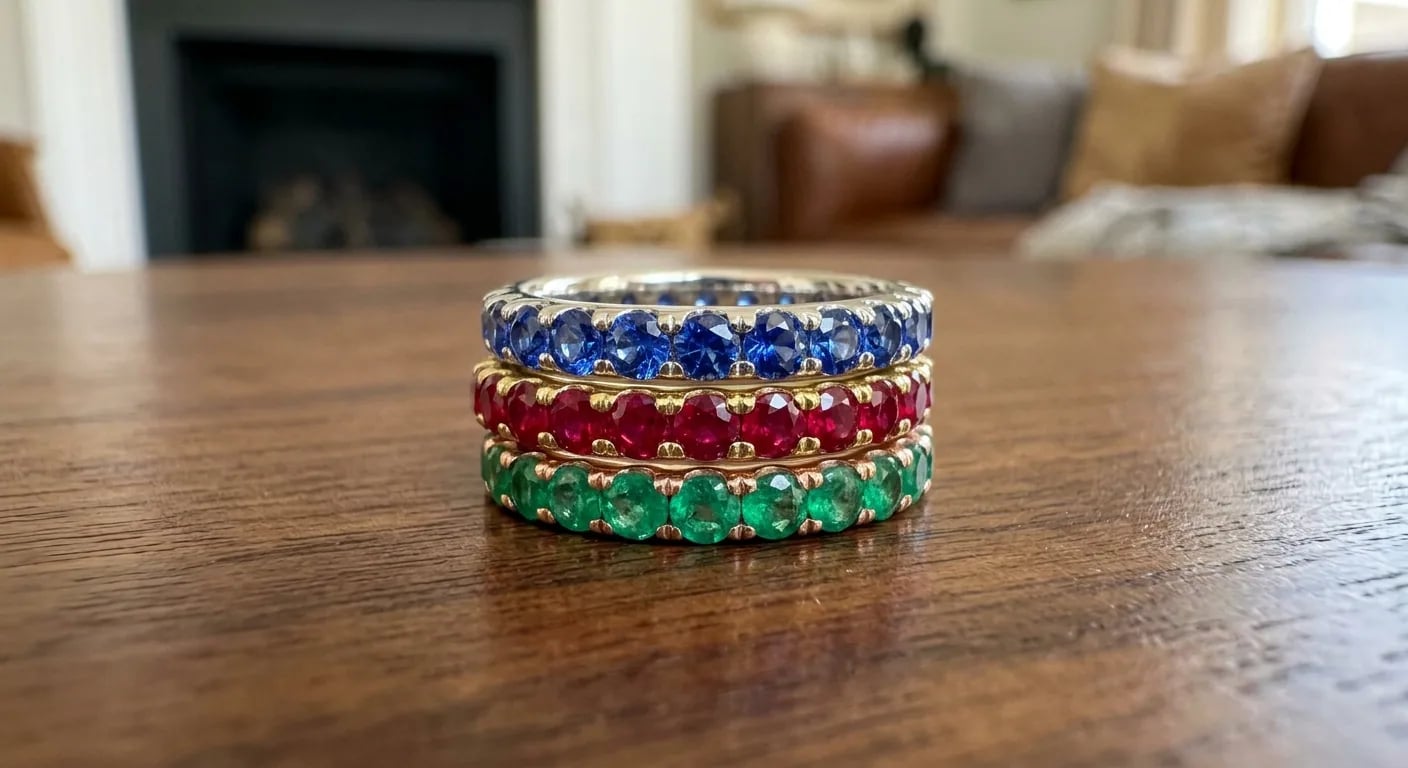
- Sapphire, 9. Corundum. Excellent toughness, chemically resistant, and the colour does not fade in light.
- Ruby, 9. The same mineral as sapphire, coloured red by chromium. Identical durability.
- Alexandrite and chrysoberyl, 8.5. Excellent toughness too. Fine alexandrite is rarer than diamond and priced like it.
- Spinel, 8. Good toughness, no cleavage, and it is rarely treated. Our honest opinion: gram for gram it is the best value on the chart.
Notice what is missing. Topaz is also an 8, and it does not make this list, because the hardest gemstones that are actually wearable are the ones that pair a high Mohs number with decent toughness. Topaz fails the second test.
Why Hardness, Toughness and Stability Are Three Different Things
Durability is not one property. Per GIA it is three, and a stone can ace one while failing another.
- Hardness is resistance to scratching. This is the Mohs number.
- Toughness is resistance to breaking and chipping. It depends on crystal structure, cleavage and what is already inside the stone.
- Stability is resistance to heat, light, humidity and chemicals.
The numbers make the point better than any explanation. On fracture toughness, GIA puts nephrite jade at 225,000 and jadeite at 120,000, while corundum sits at 600 and diamond ranges from 5,000 to over 8,000 depending on direction. Jade is four Mohs points softer than diamond and dramatically harder to break. Its interlocking fibrous crystals are why Neolithic toolmakers chose it over anything prettier.
Stability catches people out even more quietly, because nothing visibly breaks. Kunzite fades in bright light. Some amethyst does too. Tanzanite fractures under abrupt temperature change. Opal can craze if it dries out. None of that shows up anywhere in a Mohs rating, and all of it shows up eventually on a finger.
Why Mohs 7 Is the Real Line for Anything You Wear Daily
There is a specific, physical reason the threshold sits at 7 and not at some rounder number.
Most of the dust in the air is quartz, and quartz is a 7. Per GIA, many everyday items land right around that mark. Wipe a stone softer than 7 with a cloth that has picked up household dust, and you are sanding it. Slowly, invisibly, over years. Even wool can strip the nacre off a pearl.
So the rule we give people is blunt. Below 7, keep it for earrings, pendants and occasional pieces. At 7 to 8, a ring works if the setting protects the girdle and you take it off for the gym and the garden. At 8.5 and above, wear it and forget about it. That last group is small: corundum, chrysoberyl, diamond, moissanite.
Two stones break the rule in opposite directions, and both are worth knowing. Jade at 6 to 6.5 outlasts most of the chart because nothing chips it. Topaz at 8 does not, because one bad knock along the cleavage plane and it is two pieces. The Mohs number would have told you the reverse.
How Treatments Quietly Change a Stone's Durability
This is the column no hardness chart has, and it is the one we see up close. A treatment does not move the Mohs number. It can absolutely move the toughness.
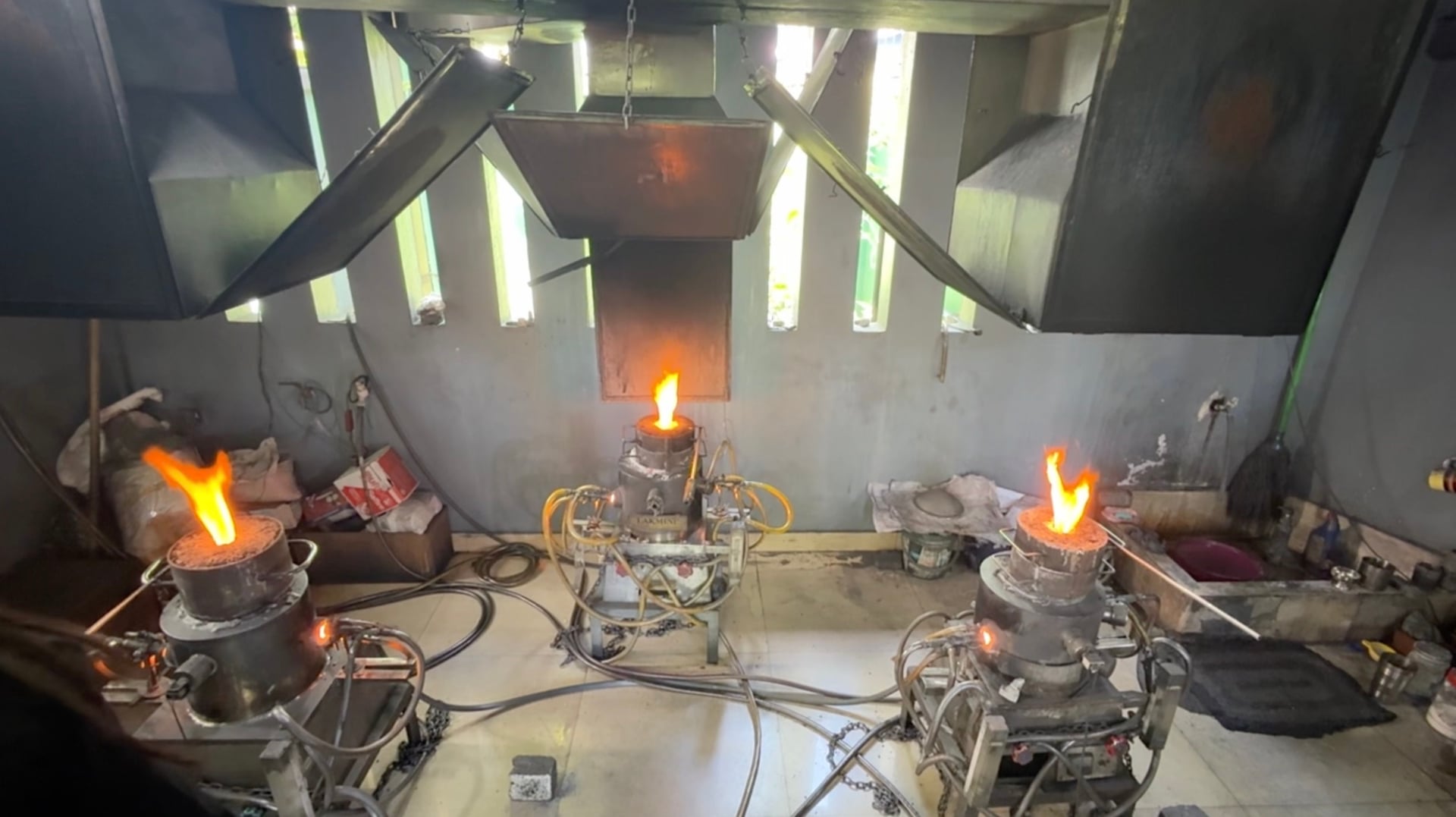
Heat. Standard on most sapphire and ruby on the market, stable, and disclosed on any competent lab report. It improves colour without weakening the corundum. The photograph above is the real thing, shot in a Sri Lankan workshop. We wrote up what changes and what does not in our guide to unheated versus heated sapphire.
Fracture filling. A different story. Per GIA, most emeralds reach the market with surface-reaching fractures filled with oil or resin, chosen because the filler's refractive index is close to the emerald's and makes the fracture disappear. Those fractures are still there. The stone is exactly as breakable as it was, it just stopped looking it. Fillers also dry out, and heat or solvents pull them straight back out.
Heat-treated zircon is the sleeper case: per GIA reference data it can turn brittle and abrade at the facet edges, which is why a zircon that looked crisp two years ago can look tired now.
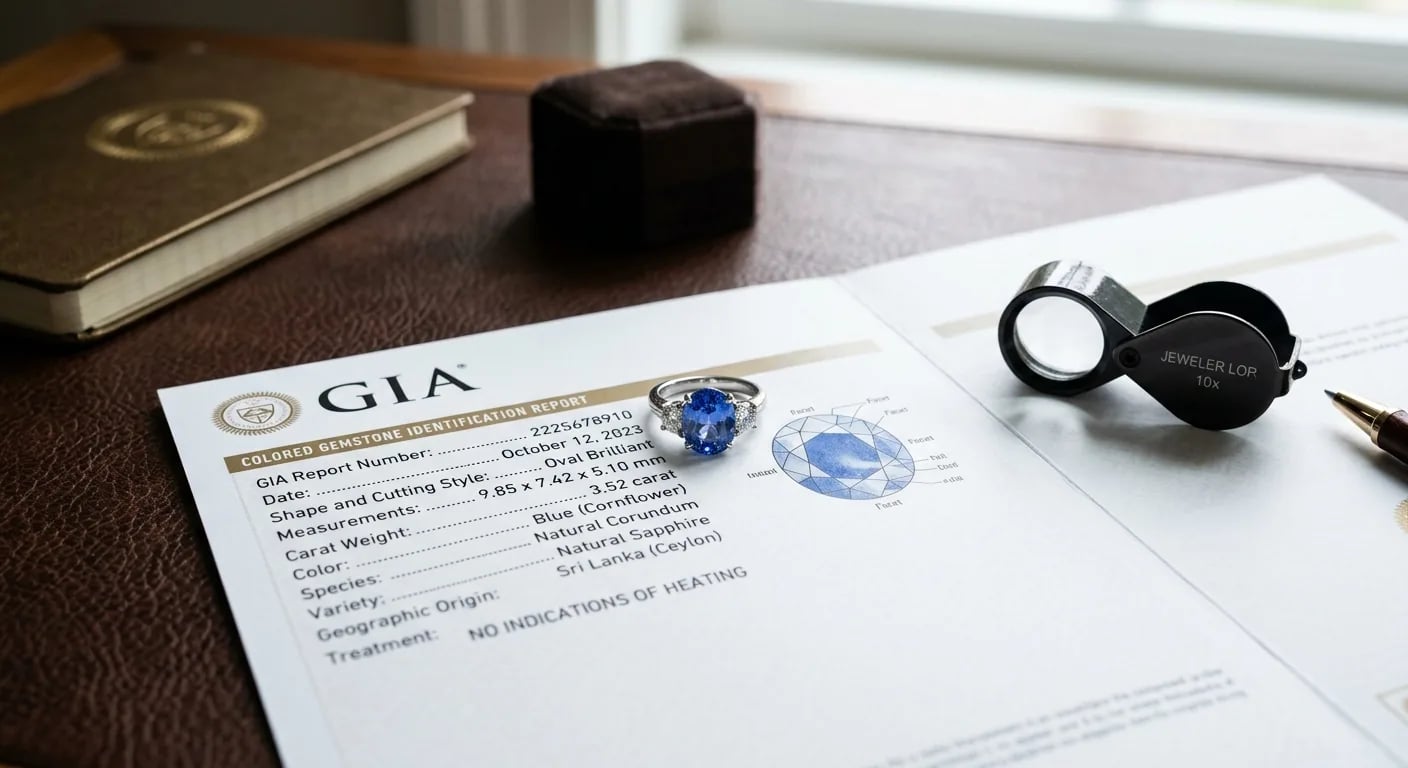
Everything above is why a lab report matters more than a hardness number. Ours come from an independent GIA Graduate Gemologist who does not work for Joalys, and you can read exactly how that works in our certification policy, or in our guide to what a gemstone certificate actually proves.
JOALYS Expert Insight
JOALYS Expert Insight: Two years buying parcels in Ratnapura and Beruwala taught me one thing about hardness that no chart does. Dealers hand you sapphire and spinel loose, in paper, jumbled together. Nobody worries. Hand someone a parcel of tanzanite or kunzite and the whole table slows down, because those stones have cleavage and everyone knows it. The trade sorts stones by toughness long before it sorts them by Mohs number. That is the instinct this chart is trying to give you.
Which Settings and Care Routines Match Which Hardness?
Once you know where a stone sits on the gemstone hardness chart, the setting choice writes itself.
Bezel: for anything under Mohs 8
A band of metal wraps the whole girdle, which is the widest and most exposed edge. This is the default for emerald, opal, moonstone, tanzanite and kunzite. It is not about looks, it is insurance on a cleavage plane.
Halo: sparkle that doubles as a bumper
Small stones ringing the centre gem take the hits that would otherwise land on it. Works well from 7 upward.
Prong: only from Mohs 9 up
Maximum light, minimum protection. Reserve it for corundum, moissanite and diamond, where scratch resistance covers for the exposure.
Cleaning, by durability and not by habit
Warm water, mild soap and a soft brush is safe for essentially everything on the chart. Ultrasonic cleaners are not: keep emerald, opal, turquoise, pearl, tanzanite and any fracture-filled stone well away from them. Store softer stones separately, because a Mohs 9 sapphire loose in the same pouch will scratch a Mohs 6 moonstone every single time.
Conclusion
Gemstone hardness on the Mohs scale answers one question well: will this stone scratch. It answers nothing about chipping, cleavage, fading or heat. Read the hardness number, then read the toughness rating next to it, and you will stop being surprised by your own jewellery.
If you want a stone you can stop thinking about, stay at 8.5 and above. Sapphire and ruby at 9 with excellent toughness, chrysoberyl at 8.5, spinel just below at 8 with no cleavage to worry about. Everything softer is still worth owning, it just needs a bezel and a bit of attention.
We sell the stones, not the settings. Browse our certified Ceylon sapphires and spinels, sourced in Sri Lanka and reported by an independent lab, or see the full collection and pick by the gemstone hardness you actually need.
JOALYS
Everything Begins with the Stone
Two sapphires can share the same grade and nothing else. Yours is chosen in hand.
Keep the sapphire loose, or commission a ring made around it — made to order, never off the shelf.
Frequently Asked Questions
Pick by Hardness, Then by Toughness
Read the Mohs number, then read the toughness rating beside it. That pair tells you whether a stone belongs on a finger every day or in a pendant you wear on occasion. We stock the top of the chart: Ceylon sapphire and ruby at 9, spinel at 8, each reported by an independent lab with full treatment disclosure.