Teal Sapphire: The Trending Color, Explained by a Sourcer
What teal really means, why heat treatment can quietly erase the green, and where the best stones actually come from.
The Short Answer
A teal sapphire is a natural sapphire whose color blends blue and green in roughly equal measure. "Teal" is a trade term, not a gemological grade: the balance comes from iron and titanium inside the crystal. It scores 9 on the Mohs scale, costs a fraction of fine blue sapphire, and is strongly affected by heat treatment, which can reduce the very green that makes a teal a teal.
What Is a Teal Sapphire?
Five years ago almost nobody was asking for teal. Now it's one of the first words out of a buyer's mouth, right after "Montana" and "engagement ring." The color exploded, the marketing caught up, and somewhere in the rush a lot of half-truths got repeated until they sounded like facts. Let me clear those up.
I source colored sapphires in Sri Lanka, in person, by the parcel. I'm not a gemologist, so I won't pretend to be one. Every stone we sell is certified by a third-party lab run by a GIA Graduate Gemologist before it reaches anyone. What I can give you is the thing the buying guides skip: what teal actually is, what heat does to it, and why two stones sold as "teal" can be very different things.
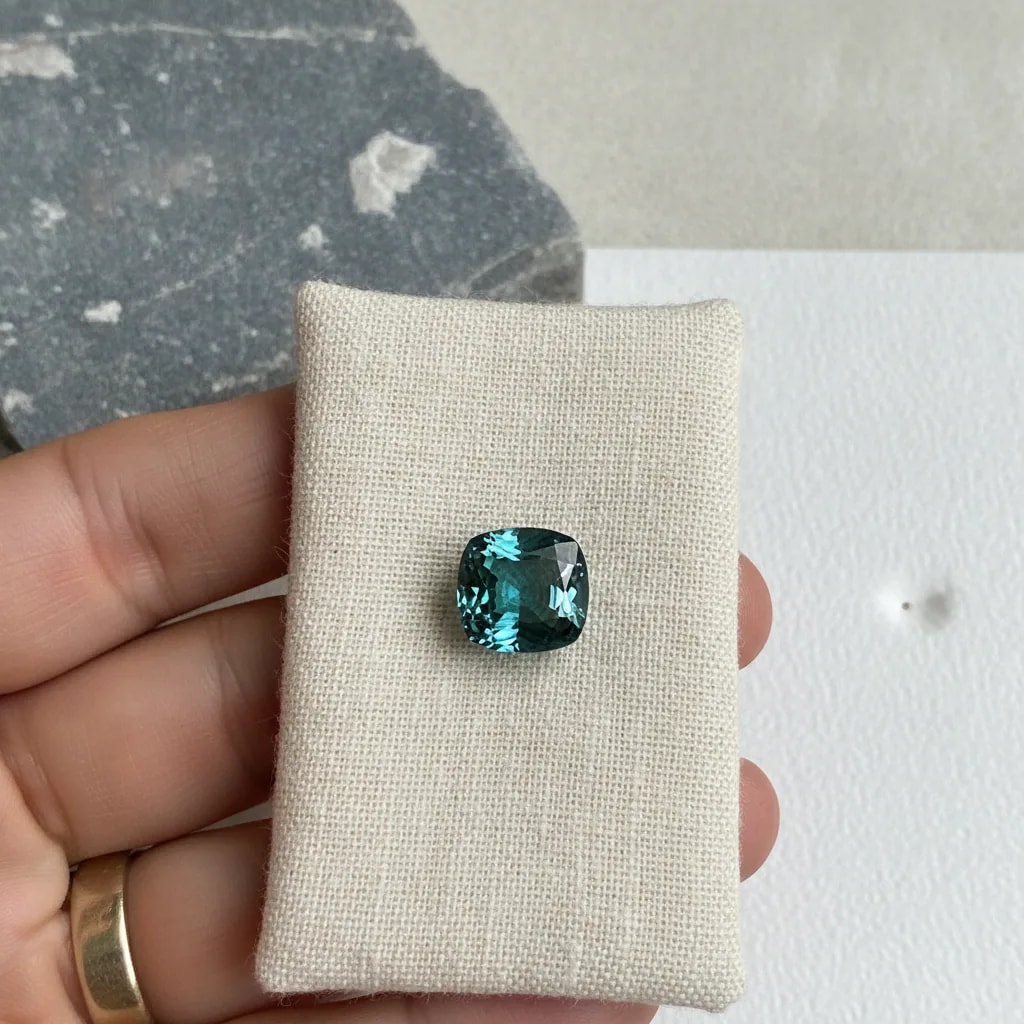
A teal sapphire is a sapphire whose color sits between blue and green, in roughly equal measure. It's still corundum, the same mineral as every other sapphire, scoring 9 on the Mohs hardness scale (GIA). The word "teal" isn't a gemological grade. It's a trade and market term that took off in the last decade, mostly driven by the bridal world looking for something off the beaten path. You'll also see lighter, seafoam-toned versions marketed as "mermaid sapphires," which is the same idea: a pastel teal with more green and a softer tone. It's a nickname, not a separate stone.
Here's the part that matters. The blue in a sapphire comes from tiny amounts of iron and titanium working together. According to GIA, only a few hundredths of a percent of those two elements produces the blue, and the more iron present, the darker and the greener it pushes. Green sapphire is what you get when two mechanisms run side by side: yellow caused by iron, and blue caused by an iron-titanium charge transfer (GIA). Teal lives in the overlap. It's a sapphire with enough green pull to leave pure blue behind, but not enough to land in true green.
That's why teal feels so alive in some lights and flat in others. You're looking at two color engines competing inside one crystal.
The Blue-Green Ratio: What "50/50" Really Means
Sellers love to talk about ratios: 70/30, 60/40, the prized 50/50. It's a useful shorthand and worth understanding before you spend money.
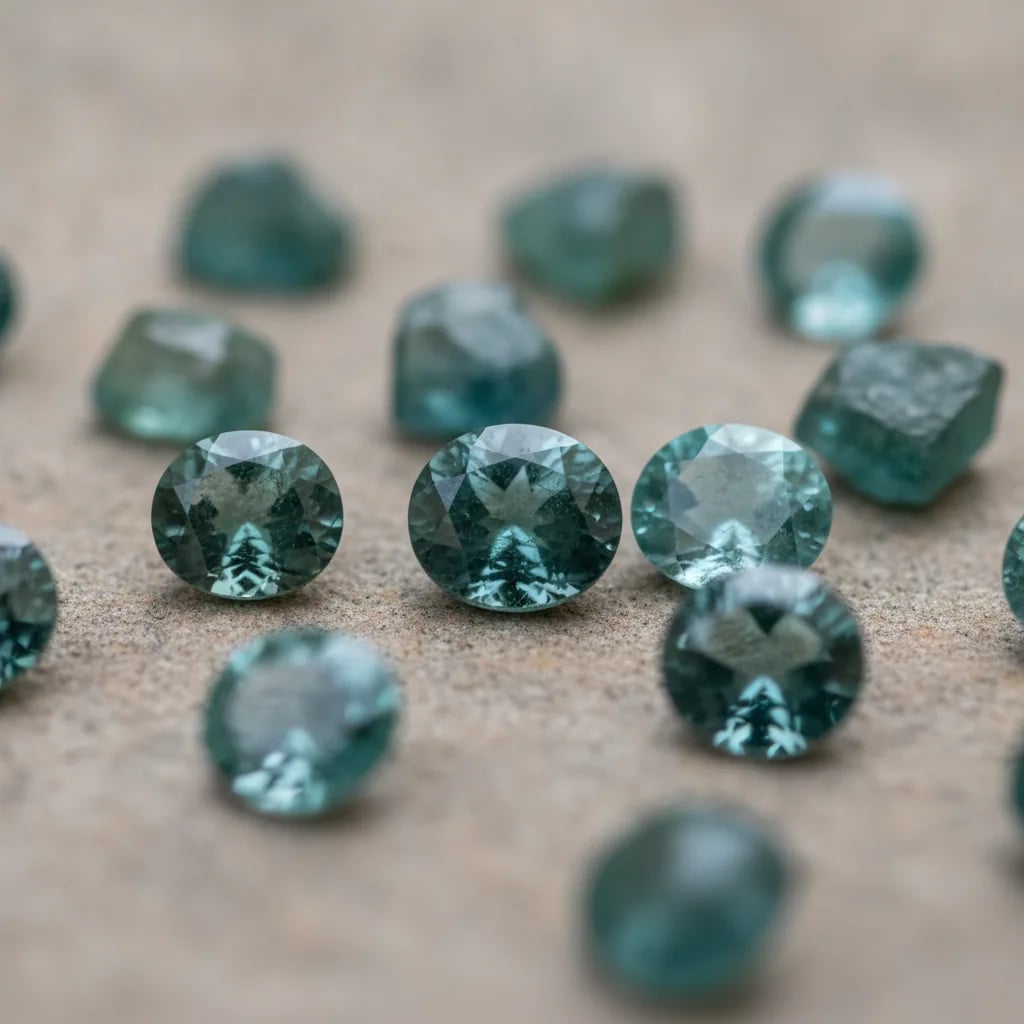
The ratio describes how much of the face-up color reads as blue versus green. A 50/50 teal, balanced blue and green with strong saturation and no grey, is genuinely rare and priced accordingly. Most stones in the market lean: 70/30 toward blue, or 60/40 toward green. Neither is "wrong." A blue-leaning teal photographs more like a moody sapphire. A green-leaning teal reads almost like the ocean. The 50/50 is the unicorn everyone chases, and most "50/50" stones online are closer to 60/40 once you see them in daylight.
My take after handling a lot of these: chase saturation and a clean grey-free color before you chase the perfect ratio. A vivid 65/35 teal beats a muddy 50/50 every single time.
Why Heat Treatment Is the Question Nobody Answers
Here's the gap in almost every teal guide I've read. The most popular reference articles on teal sapphire don't mention heat treatment at all. Not once. For a color that lives or dies on its blue-green balance, that silence is a problem, because heat is exactly what moves that balance.
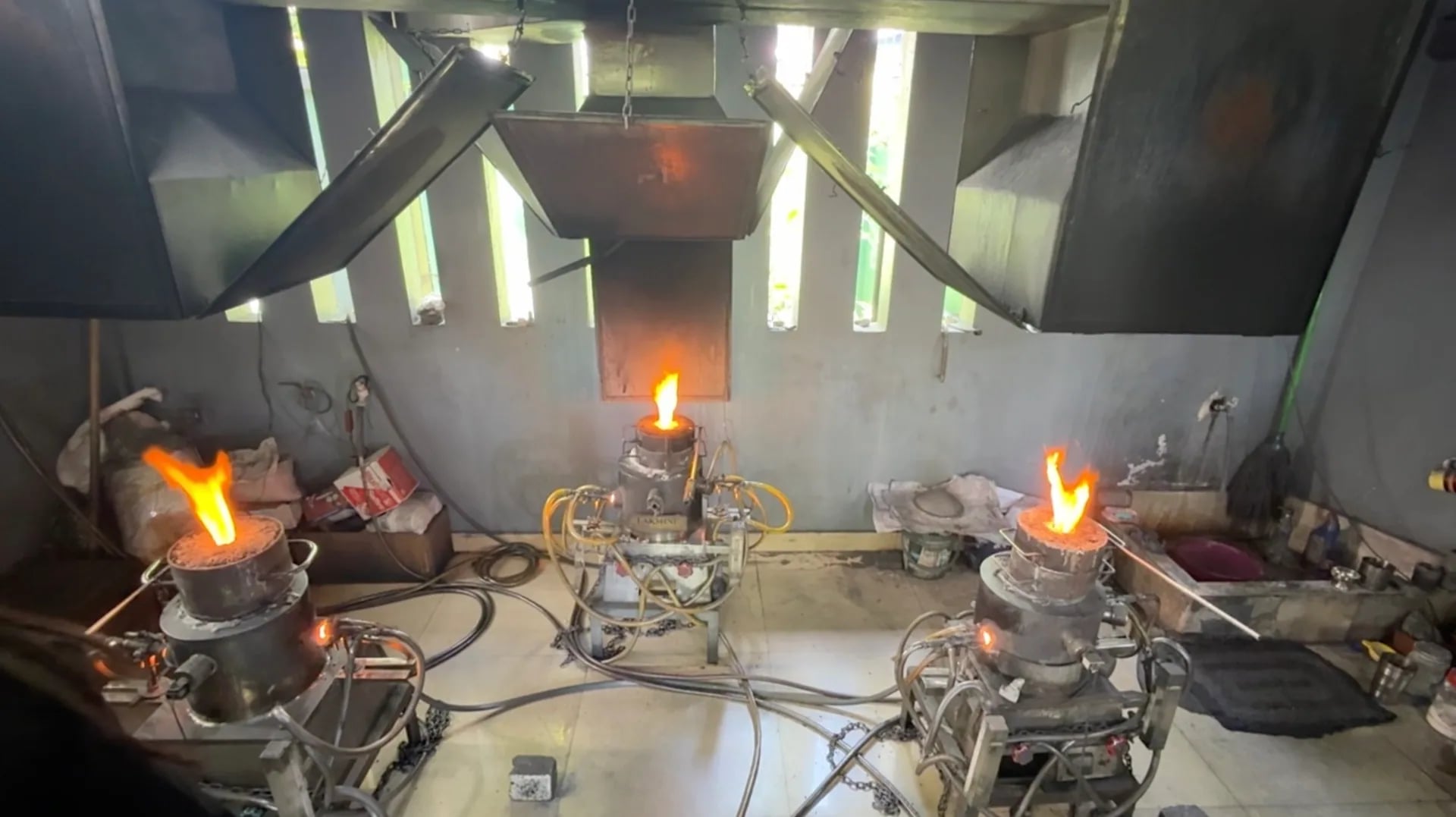
GIA estimates that at least 95 percent of blue sapphires are treated in some way, and heating to improve color and clarity is by far the most common treatment. Stones are heated from roughly 850°F to 3500°F (450°C to 1900°C) for anywhere from under an hour to two weeks. Now read what heat actually does, in GIA's own words: it can cause "an increase in blue coloration" and "a reduction of greenish tints."
Sit with that for a second. The green is precisely what makes a teal a teal. Heat it hard, and you can push a green-leaning teal toward plain blue, or wipe out the green entirely. So a stone that started life as a lovely 50/50 teal can come out of the furnace as an ordinary blue sapphire. The reverse happens too: rough that looked muddy and unsellable gets heated into a cleaner, more saturated teal.
This is why "is it heated?" is not a trivia question for teal buyers. It changes what you're actually holding. An unheated teal kept its blue-green balance by nature. A heated teal had that balance engineered. Both are legitimate, both are sold openly by honest dealers, and disclosure is the line that separates the two. If you want the full picture on what the furnace does and how labs detect it, read our guide on unheated versus heated sapphire.
Where Do Teal Sapphires Actually Come From?
This is where the popular guides and I part ways. Most of them crown Australia or Montana as the home of teal and barely mention Sri Lanka. I source in Sri Lanka, so I'll give you the version I see on the ground.
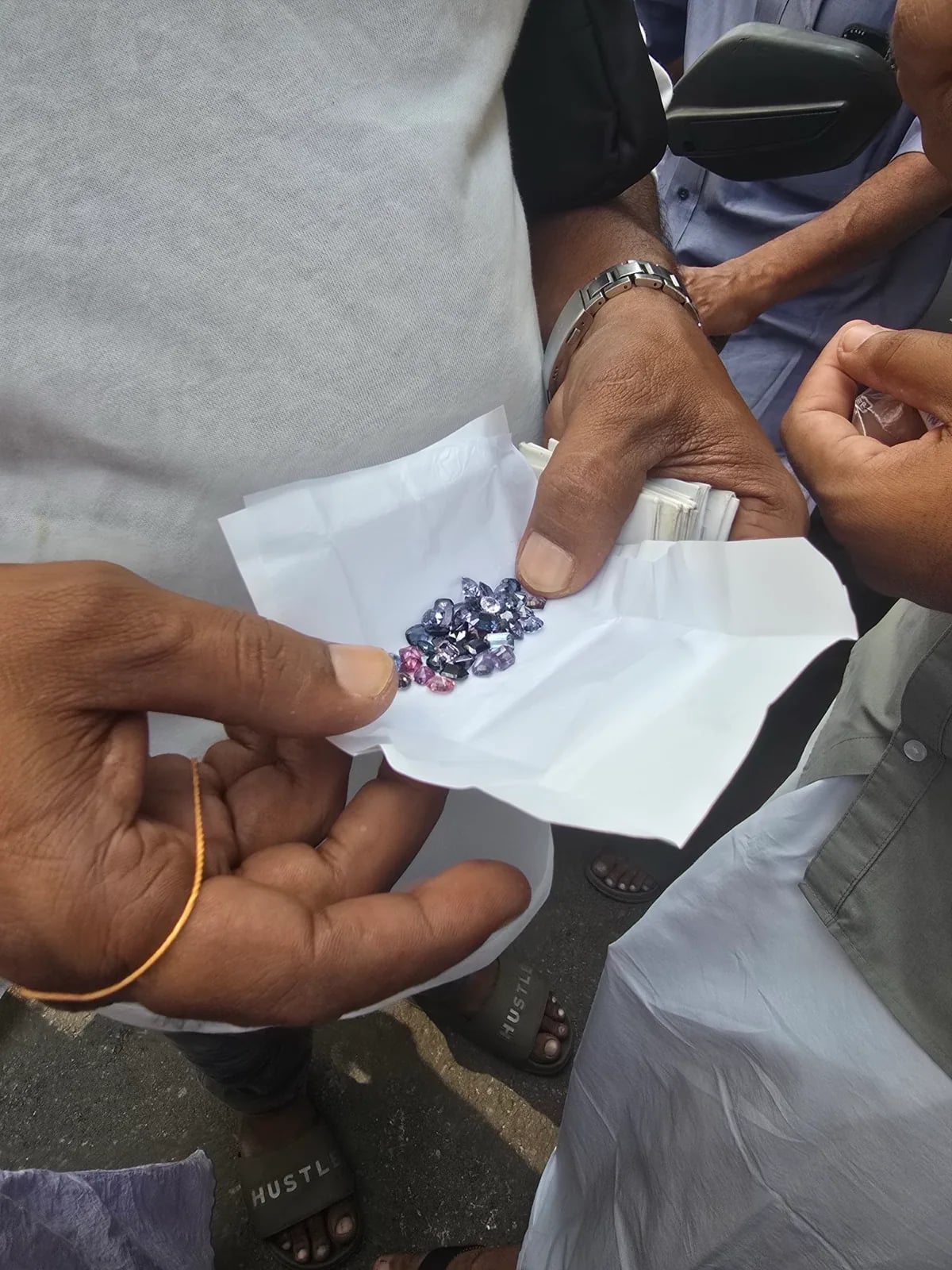
Sri Lanka (Ceylon). GIA calls Sri Lanka the "island of gems," and for good reason: it produces the full color range, blue, pink, yellow, purple, and the blue-greens that get cut as teal. Ceylon teal tends to be brighter and more transparent than the moody Montana look, with that bright crystal Ceylon is known for. A real share of it is heated, which loops straight back to the section above. The origin and what it does to value is its own subject, covered in our Ceylon sapphire origin guide.
Montana, USA. Montana teal is the cult favorite, earthy and muted, often with a mossy, grey-touched character and natural inclusions buyers actually want. It carries a domestic-sourcing premium in the US market. Many Montana stones are sold unheated, which is part of the appeal.
Australia. Long the workhorse source of blue-green corundum, Australian material runs darker and more strongly green. It's the backbone of a lot of commercial teal, often heated to lift it.
Madagascar and East Africa. Newer, abundant, and varied. Madagascar in particular can produce balanced, bright teal at accessible prices.
There's no single "correct" origin for teal. There's a look you're after and a budget you're working with, and origin is one input into both. Anyone telling you only Australian or only Montana stones count as "real" teal is selling you a story, not a fact.
Teal Versus Green Versus Parti Sapphire
These three get mixed up constantly, and the difference is simple once you see it.
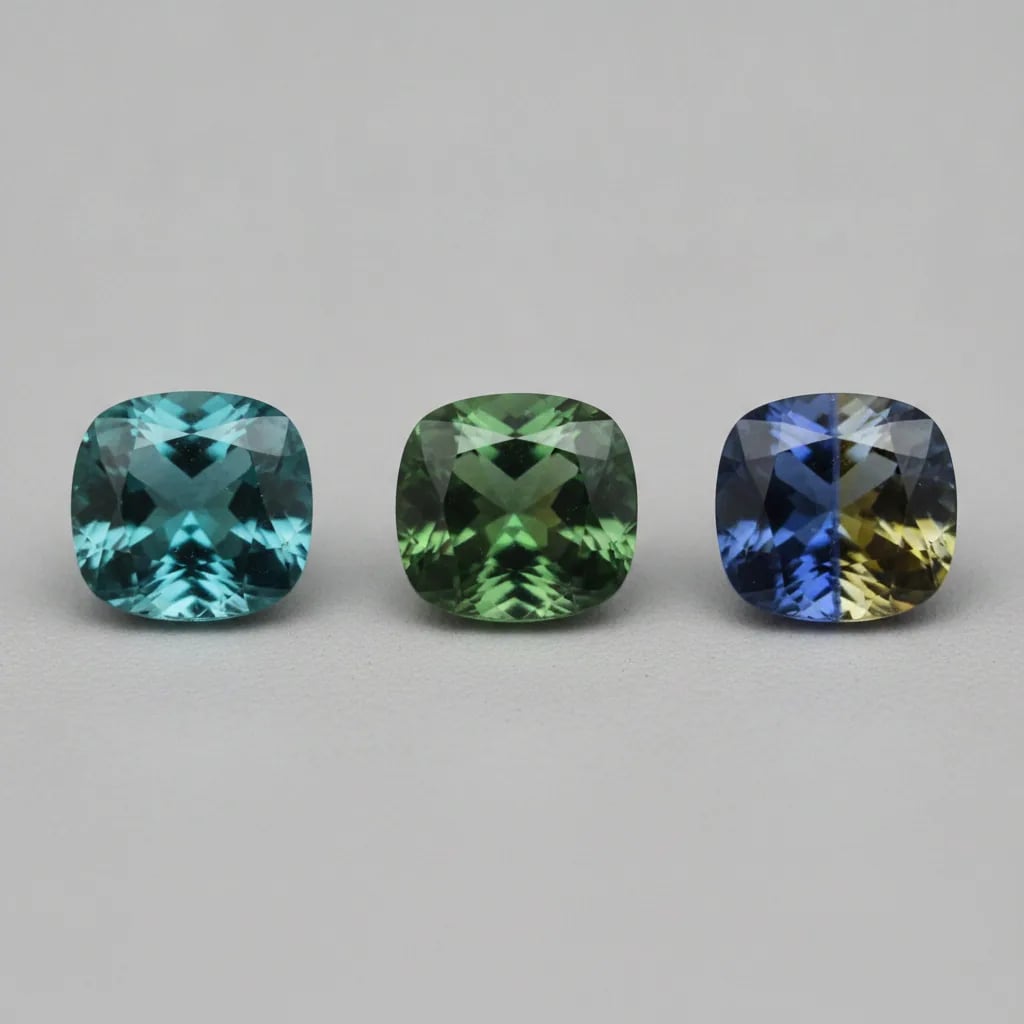
A teal sapphire is a blended blue-green: the two colors melt into one hue across the whole stone. A green sapphire has tipped past the balance point, dominated by yellow-and-blue mixing into green, usually lower in saturation and, frankly, less commercial than teal. If you're weighing the two, our green sapphire collection shows where the line falls in real stones.
A parti sapphire (also called bicolor) is different in kind, not degree. Parti means partition: the colors sit in distinct, separated zones rather than blending. A Montana parti might show a band of blue, a band of green, and a flash of yellow, all visibly divided. People routinely mislabel zoned parti stones as "teal." They aren't the same thing. Teal is blended; parti is banded. The distinction is trade convention, not a GIA grade, but every serious dealer respects it.
Two color engines, one sliding scale
blue dominatesTeal
the balanced blendGreen sapphire
green dominates
More iron pushes a stone toward green. The balance point is what the market calls teal.
For the wider blue-to-blue-green continuum and how teal connects to classic blue sapphire, the complete guide to sapphire maps the whole color family.
Is There Such a Thing as a Lab-Grown Teal Sapphire?
Yes, and it's worth understanding before you buy. Lab-grown sapphire is real corundum, chemically identical to natural sapphire, grown in a factory instead of the earth. It can absolutely be made in teal colors, and it's far cheaper than natural stones.
There's nothing wrong with a lab-grown stone as long as you know that's what you're buying and you pay a lab-grown price for it. The problem is when a synthetic gets sold as natural. Trained labs separate the two using inclusions, growth structure, and other features (GIA), which is exactly why an independent report matters here. Everything we source is natural, mined teal, and the lab report says so in writing. If a teal sapphire's price looks too good to be true for its size and color, that's usually your first clue it's lab-grown.
What Does a Teal Sapphire Cost?
Teal is one of the better-value sapphire colors, and that's a big part of why it caught on. It comes at a fraction of the price of fine cornflower blue, pink, or padparadscha sapphire.
As a rough market guide for natural teal in 2026: smaller stones under a carat often land around $400 to $800 per carat. A clean, well-saturated one-carat teal commonly runs $800 to $1,800 per carat, and fine stones with a balanced 50/50 color reach $1,500 to $3,000 per carat or more. Two-carat-plus stones climb from there, roughly $2,000 to $4,000 per carat for good quality.
One number worth knowing: unheated teal carries a real premium right now, commonly 30 to 50 percent over a comparable heated stone, because untouched blue-green balance is genuinely scarce. That premium is the whole reason "heated or unheated?" belongs at the top of your questions, not the bottom.
These are ranges, not quotes. Cut quality, the exact ratio, clarity, and whether the stone is heated all move the final price more than the carat weight alone. A well-cut, vivid, unheated one-carat teal can outprice a flat, heated three-carat one.
How to Buy a Teal Sapphire Without Getting Burned
A short checklist from someone who buys these for a living:
- See it in daylight and indoor light. Teal shifts more than most colors. A stone that's gorgeous under a jeweler's lamp can go grey and dull by a window. Always judge it in the light you'll actually wear it in.
- Check the cut for a "window." Tilt the stone under a light. If you can see straight through the middle to whatever's behind it, that's a window, and it means the cut is leaking light and color. Teal shows this more cruelly than a dark blue sapphire, because the color is mid-toned to begin with. A well-cut teal stays lively and saturated face-up across the whole stone.
- Ask "heated or unheated?" and expect a clear answer. Vague replies are a red flag. Heat is fine and standard; hiding it is not.
- Get an independent lab report for anything serious. Origin and treatment claims should come from a third-party lab, not the seller's word. Here's what a gemstone certificate actually proves, and what it doesn't.
- Prioritize saturation over the perfect ratio. A clean, vivid color beats a "textbook 50/50" that looks washed out.
- Match origin to the look you want, not to hype. Bright and crisp leans Ceylon; earthy and muted leans Montana. Neither is objectively better.
Thinking about a finished piece? See our sapphire jewellery guide.
JOALYS
Everything Begins with the Stone
Two sapphires can share the same grade and nothing else. Yours is chosen in hand.
Keep the sapphire loose, or commission a piece made around it — made to order, never off the shelf.
Frequently Asked Questions
A Sourcer's Bottom Line on Teal Sapphire
Teal earned its moment honestly. It's a beautiful, durable, well-priced color with a genuine story. But "teal" is a word the market invented, not a fixed standard, and that's exactly why you have to look past the label. Ask about heat. Look at it in real light. Get the lab report. Do those three things and you'll buy a teal sapphire you actually love, not one that was sold to you.
When you're ready to see real stones with their treatment and origin disclosed up front, browse our teal sapphires.