Are Lab Grown Diamond Rings Worth It? (Expert Guide)
Discover the sparkling truth about lab grown diamond rings. Explore their ethical benefits, identical properties, and cost savings in our complete expert guide.
Quick Facts: Lab-Grown Diamond Rings
| Property | Details |
|---|---|
| Composition | Crystallized carbon (identical to natural diamonds) |
| Hardness (Mohs) | 10 (extremely durable) |
| Creation Methods | CVD (Chemical Vapor Deposition) and HPHT (High Pressure High Temperature) |
| Cost Comparison | Typically 30-50% less than natural diamonds |
| Certification | Independent grading reports available (e.g., IGI, GIA) |
| Ethics | 100% conflict-free and traceable origin |
| Environmental Impact | Significantly reduced land disturbance and carbon emissions compared to mining |

Introduction
Imagine a diamond, chemically identical to one mined from the earth, sparkling with the same fire and brilliance, yet created with cutting-edge technology and a significantly smaller environmental footprint.
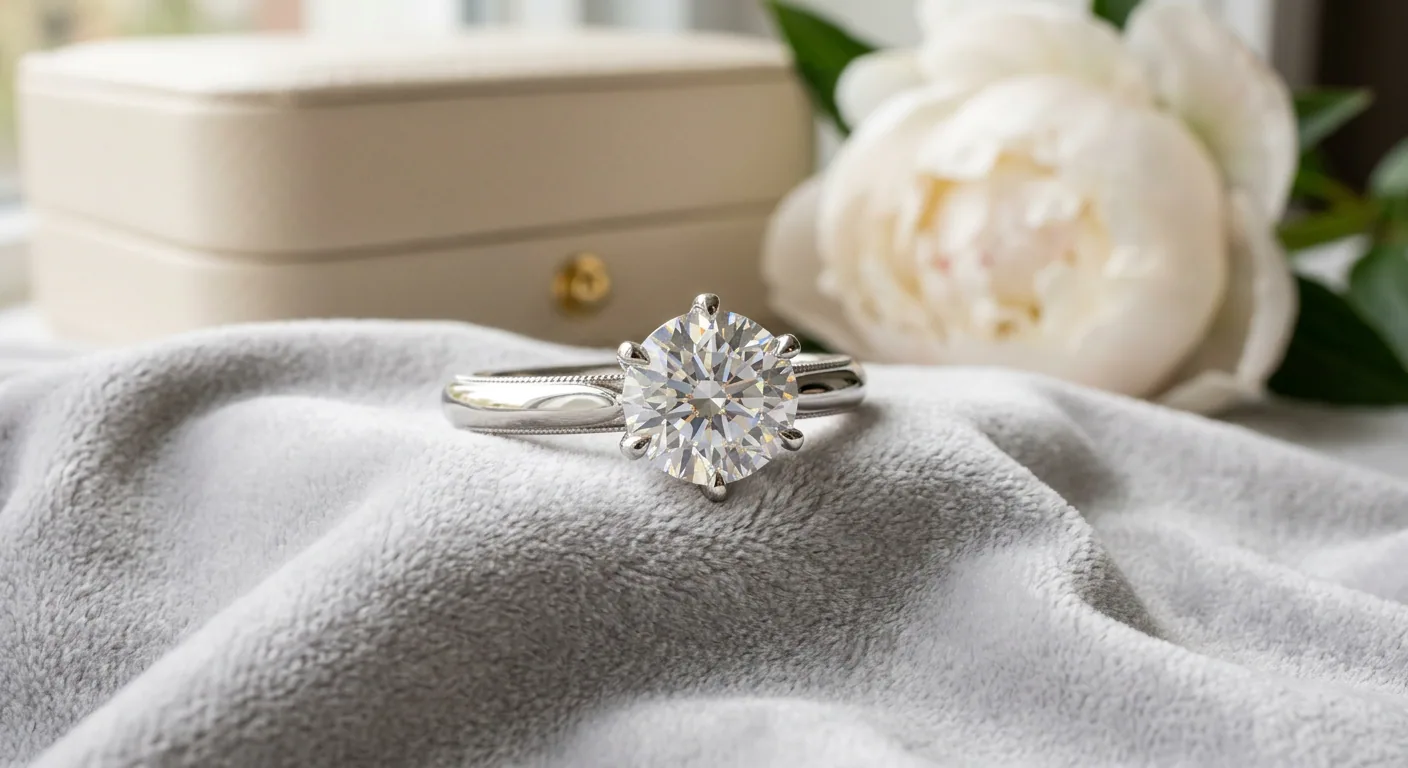
A lab grown diamond ring features a diamond created in a laboratory setting rather than mined. These diamonds possess identical physical, chemical, and optical properties to natural diamonds, offering a sustainable, ethical alternative with significant cost savings.
For decades, natural diamonds held a monopoly on engagement rings and significant jewelry pieces. However, a significant shift is occurring. Consumers increasingly seek alternatives that align with their values of sustainability, ethical sourcing, and value transparency. Beyond the obvious benefits, profound questions remain about their long-term value, the intricate science behind their creation, and the nuanced differences that only experts can detect.
Are Lab-Grown Diamonds "Real"? Understanding the Science and Certification
The most common question surrounding a lab grown diamond ring is whether the center stone is a "real" diamond. To answer this definitively: yes, lab-grown diamonds are authentic diamonds. They are not simulants like cubic zirconia or moissanite; they are chemically, physically, and optically identical to geological diamonds. The only difference lies in their point of origin. One is grown over billions of years beneath the Earth’s crust, while the other is grown over weeks or months in a controlled laboratory environment that replicates those natural conditions.
Lab Grown vs Natural Diamonds , What You Need to Know. Video: GIA.
Identical in Every Way That Matters
A lab-grown diamond consists of the same pure carbon structure as a mined diamond. Because they share this identical crystal lattice, they possess the exact same optical and physical properties. This means a lab-grown diamond exhibits the same fire, brilliance, and scintillation that consumers expect from high-quality gemstones.
Beyond that, lab-grown diamonds achieve a 10 on the Mohs scale of mineral hardness, making them the hardest known substance and exceptionally durable for everyday wear in engagement rings. Traditional jewelers’ tools, such as loupes or standard thermal diamond testers, cannot distinguish between a high-quality lab-grown diamond and a mined one. Differentiation requires highly specialized, advanced gemological equipment that detects subtle growth patterns.
| Property | Lab-Grown Diamond | Mined Diamond |
|---|---|---|
| Chemical Composition | Pure Carbon (C) | Pure Carbon (C) |
| Crystal Structure | Cubic | Cubic |
| Hardness (Mohs) | 10 | 10 |
| Refractive Index | 2.42 | 2.42 |
| Dispersion (Fire) | 0.044 | 0.044 |
The Importance of Independent Certification
Just as with any significant purchase of diamonds or other precious stones, independent verification is essential. A reputable lab grown diamond ring should always be accompanied by a grading report from a respected gemological laboratory. This certificate is not just a proof of authenticity; it provides an objective evaluation of the diamond’s quality based on the established 4Cs: Cut, Color, Clarity, and Carat weight.
Leading international laboratories, such as the International Gemological Institute (IGI) and the Gemological Institute of America (GIA), provide thorough grading for lab-grown diamonds. These reports explicitly state that the stone is laboratory-grown and detail its specific characteristics. The GIA, for instance, uses a digital-only report format for lab-grown stones to differentiate them further, ensuring full transparency in the luxury market. This independent certification ensures that consumers know exactly what they are purchasing and guarantees the stone’s quality matches its stated specifications.
Ready to find your perfect, independently certified stone? Explore our collection of lab-grown diamonds to view a curated selection of high-quality options.

How Lab-Created Diamonds are Made: CVD vs. HPHT Methods
The sophisticated technology used to create diamonds in a laboratory setting mimics the natural geological processes that occur deep within the Earth. While geological diamonds form over billions of years under immense pressure and heat, technological advancements now allow scientists to grow identical diamond crystals in a matter of weeks or months. Two primary methods dominate the industry for producing gem-quality diamonds suitable for a high-end lab grown diamond ring: High Pressure High Temperature (HPHT) and Chemical Vapor Deposition (CVD).
HPHT (High Pressure High Temperature)
The HPHT method is the original technology developed to create diamonds, dating back to the 1950s. This process directly replicates the extreme conditions found in the Earth's mantle. A small diamond "seed," a tiny fragment of a pre-existing diamond, is placed into a specially designed press. This press subjects the seed and a highly refined graphite carbon source to temperatures exceeding 1,500°C and pressures of approximately 1.5 million pounds per square inch. Under these intense conditions, the carbon melts and begins to dissolve into a molten metal catalyst. It then precipitates out of the molten solution and deposits onto the diamond seed, crystallizing layer by layer to grow a larger, rough diamond. This method is also sometimes used to enhance the color of certain gemstones or lower-quality diamonds after they have been grown or mined.
CVD (Chemical Vapor Deposition)
CVD is a more modern technique that offers remarkable control over the diamond's growth environment, often resulting in higher clarity stones. This process does not require high pressure; instead, it utilizes a vacuum chamber. A diamond seed crystal is placed in the chamber, which is then filled with a carbon-rich gas mixture, typically methane and hydrogen. A microwave beam or hot filament creates a plasma ball, heating the gases to extreme temperatures (around 800°C to 1,000°C). This intense heat breaks down the chemical bonds of the gas molecules. The freed carbon atoms then precipitate out of the plasma and deposit onto the cooler surface of the diamond seed, growing the crystal atom by atom, similar to how snowflakes form on a windowpane. The CVD method allows for precise introduction of gases, which can influence the final color or properties of the diamond, much like trace elements influence the color of an emerald or a sapphire during natural formation.
| Feature | HPHT Method | CVD Method |
|---|---|---|
| Primary Mechanism | High Pressure & High Temperature | Chemical Gas Deposition |
| Pressure Required | Extremely High (~1.5 million psi) | Low (Vacuum) |
| Temperature | Extremely High (~1,500°C) | Moderate High (800°C - 1,000°C) |
| Growth Habit | Cuboctahedron (Grows in multiple directions) | Tabular (Grows mostly upwards) |
| Common Clarity | Often contains metallic inclusions from catalyst | Often higher clarity; may have non-diamond carbon |
| Color Control | Can produce colorless, but often used for fancy colors | Excellent control for colorless and near-colorless |
| Post-Growth Treatment | Often required to improve color | Sometimes required to improve color |
While both methods produce authentic diamonds, they result in different growth patterns and potentially different types of characteristic inclusions. For the consumer, the specific method used is less critical than the final quality of the stone, as both CVD and HPHT can yield stunning, high-grade diamonds for fine jewelry. Independent grading reports will specify the creation method, ensuring full transparency.

The Advantages of Lab-Grown Diamond Rings: Price, Ethics, and Environment
Selecting a lab grown diamond ring offers several compelling advantages that align with the values and budgets of modern consumers. While geological diamonds have long been the traditional choice, their technologically grown counterparts provide an identical product with significant benefits in terms of cost, ethical assurance, and environmental impact.
Unbeatable Value and Cost Savings
One of the most significant advantages of lab-grown diamonds is their exceptional value proposition. Consumers can typically expect to save between 30% and 50% when purchasing a lab-grown diamond compared to a mined diamond of identical quality (considering the 4Cs: Cut, Color, Clarity, and Carat weight). This price differential does not reflect a difference in quality, as the stones are chemically identical. Instead, it is the result of a shorter, more efficient supply chain and the avoidance of costly mining operations.
| Feature | Lab-Grown Diamond (1.0ct, F color, VS1, Ideal Cut) | Mined Diamond (1.0ct, F color, VS1, Ideal Cut) |
|---|---|---|
| Chemical Composition | Pure Carbon | Pure Carbon |
| Visual Appearance | Identical Brilliance & Fire | Identical Brilliance & Fire |
| Certification | IGI or GIA (e.g., LG12345678) | GIA (e.g., 21567890) |
| Origin Transparency | 100% Traceable (Lab) | Varies (often difficult to trace to specific mine) |
| Approximate Price Range | €1,500 - €3,000 | €5,000 - €10,000+ |
This cost efficiency allows consumers to maximize their budget, potentially opting for a larger carat weight, a higher color grade, or a cleaner clarity for the same investment. When comparing gemstones for an engagement ring, the value offered by lab-grown diamonds is unparalleled.
Ethical Sourcing and Conflict-Free Assurance
Ethical considerations matter most for many contemporary buyers. The traditional diamond mining industry has historically faced significant challenges, including issues related to conflict diamonds (diamonds used to fund armed conflict) and human rights concerns. While initiatives like the Kimberley Process have made substantial progress, fully tracing a mined diamond's journey from the mine to the market remains complex.
In contrast, lab-grown diamonds offer a 100% conflict-free guarantee. Their origin is entirely transparent and traceable to the specific laboratory where they were grown. This eliminates any association with conflict funding or unethical labor practices, providing peace of mind to socially conscious consumers seeking responsible luxury.
Reduced Environmental Impact
The environmental footprint of traditional diamond mining is substantial, involving significant land disruption, habitat destruction, water usage, and carbon emissions. Moving tons of earth to find a single carat of gem-quality diamond has a lasting impact on local ecosystems.
Lab-grown diamonds, while requiring energy for the growth process, have a significantly lower environmental impact. They do not require earth extraction, thereby avoiding land degradation and mine waste. Beyond that, technological advancements are consistently improving the energy efficiency of the growth processes (both CVD and HPHT), and an increasing number of diamond-growing facilities are utilizing renewable energy sources, such as solar or hydropower. Choosing a lab-grown diamond ring is generally considered a more sustainable and environmentally responsible option within the luxury jewelry market.
Ready to design your own ethical masterpiece? Learn about the Joalys custom design process and begin crafting your unique ring.

Choosing the Perfect Lab-Grown Diamond Ring: The 4Cs and Beyond
Selecting a lab grown diamond ring involves the same careful consideration of quality characteristics as choosing a geological diamond. The universally accepted standard for evaluating any diamond is the 4Cs, Cut, Color, Clarity, and Carat weight, established by the GIA. Understanding how these factors influence the appearance and value of a lab-grown stone empowers consumers to make an informed decision. While the origin differs, the criteria for brilliance and beauty remain identical.
Mastering the 4Cs (Cut, Color, Clarity, Carat)
The 4Cs provide a structured framework for assessing diamond quality. For lab-grown diamonds, certain Cs warrant specific attention to maximize beauty and value.
- Cut: This is the most critical factor determining a diamond's sparkle and brilliance. The cut refers to how well the stone's facets interact with light, not its shape. Professional gemologists strongly recommend prioritizing an "Ideal" or "Excellent" cut grade. A well-cut diamond will reflect light internally and disperse it with maximum fire, potentially masking slight imperfections in color or clarity.
- Color: Lab-grown diamonds are available in a full range of colors, from colorless to varying degrees of yellow or brown. The GIA color scale ranges from D (colorless) to Z (light color). For the best value, color grades in the G-J range appear colorless to the untrained eye, especially when set in yellow or rose gold, which can complement slight warmth. For platinum or white gold settings, grades D-F are often preferred for their icy white appearance.
- Clarity: This measures the presence of internal characteristics called inclusions and surface details called blemishes. Because lab-grown diamonds are created in controlled environments, they often achieve high clarity grades. However, they are rarely perfect. Consumers should look for "eye-clean" stones, meaning no inclusions are visible to the naked eye. This is typically achieved at VS2 (Very Slightly Included 2) clarity or higher.
- Carat: This refers to the diamond's weight, not its size. As established in previous sections, lab-grown diamonds offer significant cost savings, which often allows consumers to purchase a larger carat weight diamond for their budget compared to a mined stone.
| 4C Parameter | Priority for Lab-Grown Diamonds | Recommended Grade for Value |
|---|---|---|
| Cut | Highest Priority (Maximizes Sparkle) | Excellent / Ideal |
| Color | High Priority (Influences Overall Look) | G-H (Near Colorless) |
| Clarity | Moderate Priority (Aim for Eye-Clean) | VS1 - VS2 (Very Slightly Included) |
| Carat | Budget-Dependent (Maximize Size) | Varies based on preference |
Selecting the Right Setting and Metal
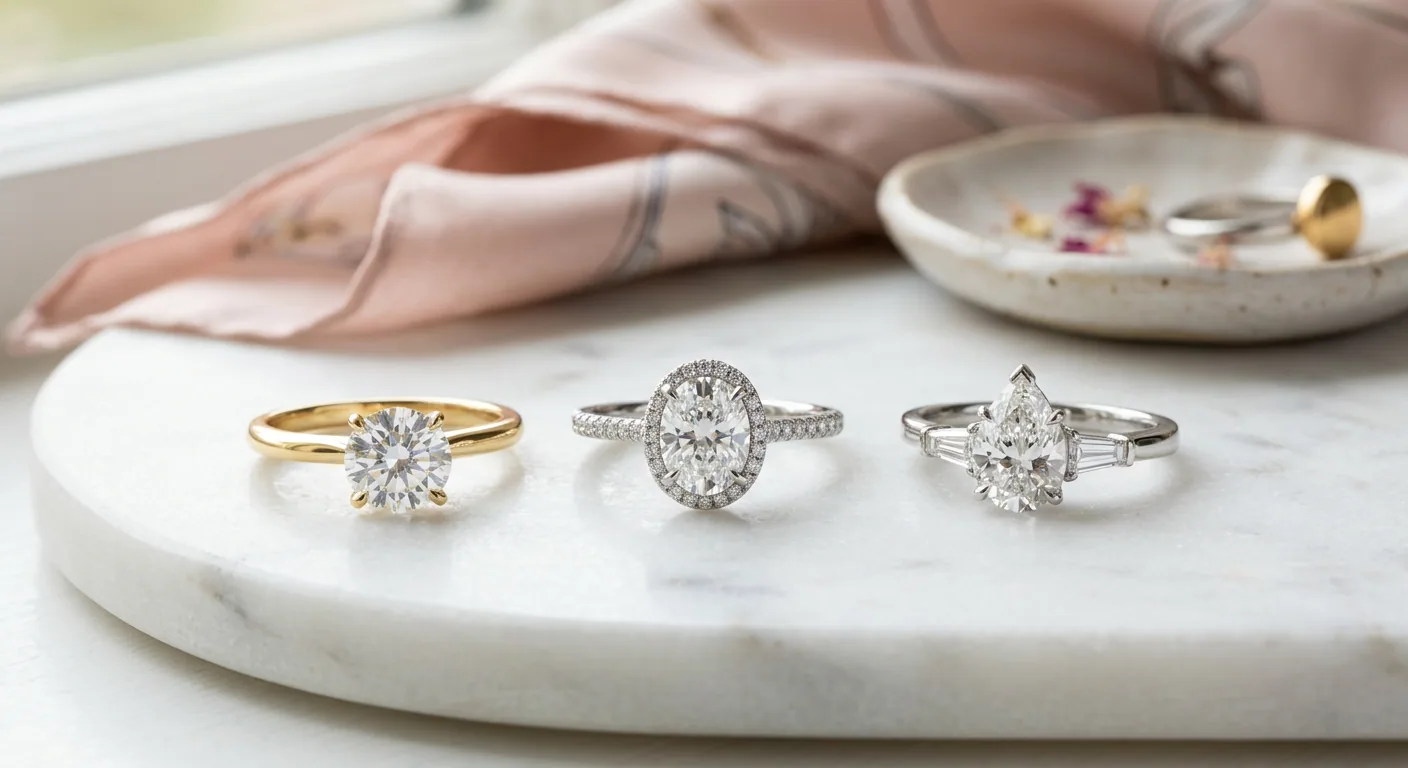
The setting secures the diamond and defines the ring's overall aesthetic. Popular choices include the classic solitaire, which highlights a single stone; the halo setting, which surrounds the center diamond with smaller stones for added brilliance; and the three-stone setting, symbolizing past, present, and future.
The choice of metal also significantly impacts the ring's appearance and durability. Platinum offers superior strength and a naturally white sheen that does not fade. Gold, available in white, yellow, and rose hues, provides versatility and a traditional look. White gold is often rhodium-plated to enhance its whiteness and durability. When selecting a setting and metal, consider personal style, lifestyle, and how the metal color will interact with the diamond's color grade. For thorough advice on matching a ring to a partner’s style, consumers often consult the ultimate guide to choosing the perfect engagement ring.

The Joalys Difference: Quality, Design, and Exquisite Craftsmanship
While the market for a lab grown diamond ring continues to expand, discernible differences exist in the quality of stones and the level of craftsmanship available. Joalys distinguishes itself not merely as a retailer but as a curator of exceptional laboratory-grown diamonds, applying the same rigorous standards to these modern marvels as one would to the finest geological gemstones. This commitment ensures that every piece of jewelry, particularly engagement rings, possesses enduring beauty and structural integrity.
Meticulous Curation and Uncompromising Quality
The philosophy at Joalys centers on the belief that a lab-grown origin should never compromise quality. Professional gemologists meticulously inspect each diamond, looking beyond the specifications listed on a grading report. While independent certification from laboratories like IGI or GIA provides essential verification of the 4Cs, the human eye is required to assess nuances such as the stone's actual brilliance, fire, and presence of any undesirable undertones.
Joalys selects only a fraction of the lab-grown diamonds reviewed, prioritizing those with "Excellent" or "Ideal" cut grades, as these maximize light performance. This unwavering commitment to quality ensures that every lab grown diamond ring in the collection exhibits maximum sparkle and life.
| Quality Parameter | Joalys Standard | Minimum Market Standard |
|---|---|---|
| Cut Grade | Excellent / Ideal | Very Good / Good |
| Color Range | D - H (Colorless to Near Colorless) | D - M (Includes noticeable warmth) |
| Clarity Range | FL - VS2 (Eye-Clean) | FL - I3 (Includes visible inclusions) |
| Certification | IGI or GIA | Various or Self-Certified |
| Gemologist Inspection | Mandatory for every stone | Often automated or batch-checked |
Bespoke Design and Expert Guidance
Beyond the curation of high-quality diamonds, Joalys specializes in creating bespoke jewelry that reflects individual style and sentiment. The custom design process is collaborative and transparent, guided by experienced design professionals. Whether a client seeks a contemporary interpretation of a classic solitaire or a complex, vintage-inspired halo setting, the design team works to bring that vision to fruition with precision and artistry.
This bespoke capability allows for complete personalization, from selecting the specific lab-grown diamond to choosing the ideal precious metal and setting style. Joalys offers expert guidance throughout, ensuring the final design not only looks stunning but is also structurally sound for lifetime wear. For individuals exploring various aesthetics, find the perfect engagement ring style with this thorough expert guide.
Joalys' signature 3-step bespoke process streamlines the journey to a custom piece:
- Select a Certified Gemstone: Begin by choosing a hand-selected lab-grown diamond or other precious gemstones from the curated collection.
- Receive in a Luxury Case: The chosen stone is presented in a signature luxury case, allowing for a memorable proposal or viewing before the final setting is crafted.
- Design the Custom Setting: Collaborate with Joalys designers to create a unique setting that perfectly complements the stone and the wearer's style.
This approach emphasizes the stone's intrinsic beauty while providing a truly personalized experience.
Ready to find your perfect gemstone? Explore the certified collection of hand-selected lab-grown diamonds.

JOALYS
Everything Begins with the Stone
The sapphire you choose says everything before a single word is spoken.
Choose your sapphire loose, or let us set it into a piece crafted entirely for you.
Create Your Perfect Ring

Your unique ring starts here. Joalys' 3-step process:
- Select Your Stone - Browse certified gemstones
- Receive & Inspect - Luxury authentication case
- Design Your Setting - Work with expert jewelers
Frequently Asked Questions
Conclusion
Lab grown diamond rings offer an intelligent convergence of identical brilliance and durability with significant cost savings, ethical assurance, and a reduced environmental footprint. As authentic diamonds certified by leading gemological laboratories, they represent a modern standard for sustainable luxury. By understanding the creation process and mastering the 4Cs, a high-quality stone can be confidently selected to align perfectly with both personal values and budget.
The journey to acquiring the perfect lab grown diamond ring is streamlined through a unique three-step process designed for confidence and personalization. Select a certified lab-grown diamond from the curated collection, receive it securely within a luxury authentication case for inspection, and then design a custom setting when fully ready. For personalized guidance at any stage, speak with expert gemologists to ensure the creation of something truly extraordinary.