585 Gold and 750 Gold: What the Stamp Means, 14k vs 18k, and What It Is Worth
A sourcer's read on gold ring jewelry: what the karat number actually buys you, why white gold drifts back to yellow, and how to read the stamp inside the shank before you pay.
Quick Facts: Gold Ring Karats and Hallmarks
| Property | Details |
|---|---|
| Hallmark Stamps | 417 = 10k (41.7% gold), 585 = 14k (58.5%), 750 = 18k (75%) |
| Full Stamp Ladder | 999 = 24k, 916 = 22k, 750 = 18k, 585 = 14k, 417 = 10k, 375 = 9k, 333 = 8k |
| 925 Is Not Gold | 925 is the sterling silver mark. A gold coloured ring stamped 925 is vermeil or plated |
| Common Purities | 10k (41.7%), 14k (58.5%), 18k (75%), 24k (99.9%) |
| Best for Daily Wear | 14k gold, the hardest of the common purities and still well over half gold |
| Richest Colour | 18k gold, softer but deeper yellow, and easier on nickel-sensitive skin |
| Popular Colors | Yellow, White (rhodium plated, needs replating), Rose |
| Sustainable Choice | Recycled gold, chemically identical to newly mined once refined |
| Affordable Alternatives | Gold filled beats vermeil beats plated, in that order of durability |
| Melt Value of 585 | Grams x 0.585 x the gold price per gram. A 4 g ring holds 2.34 g of pure gold |
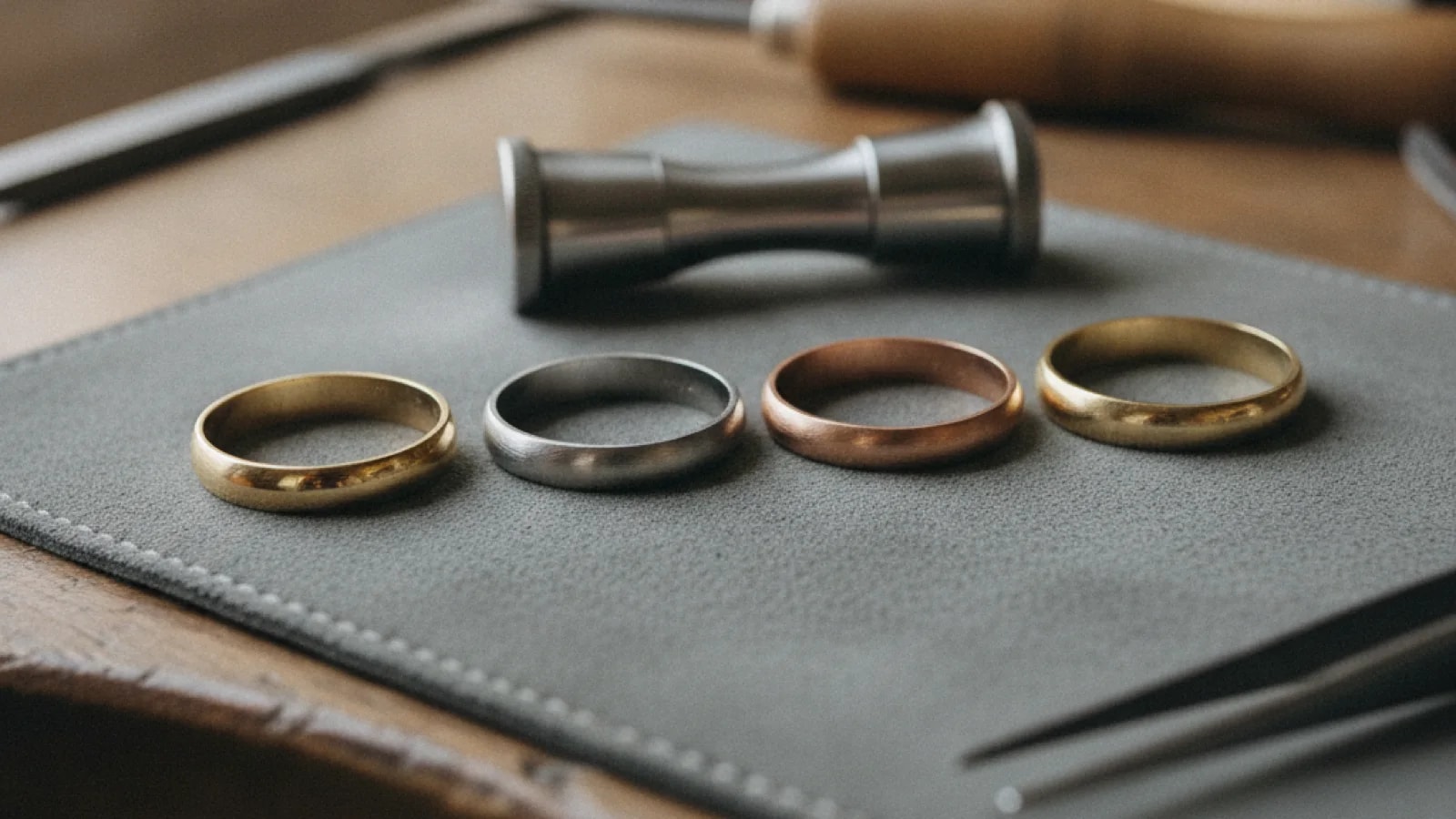
Introduction
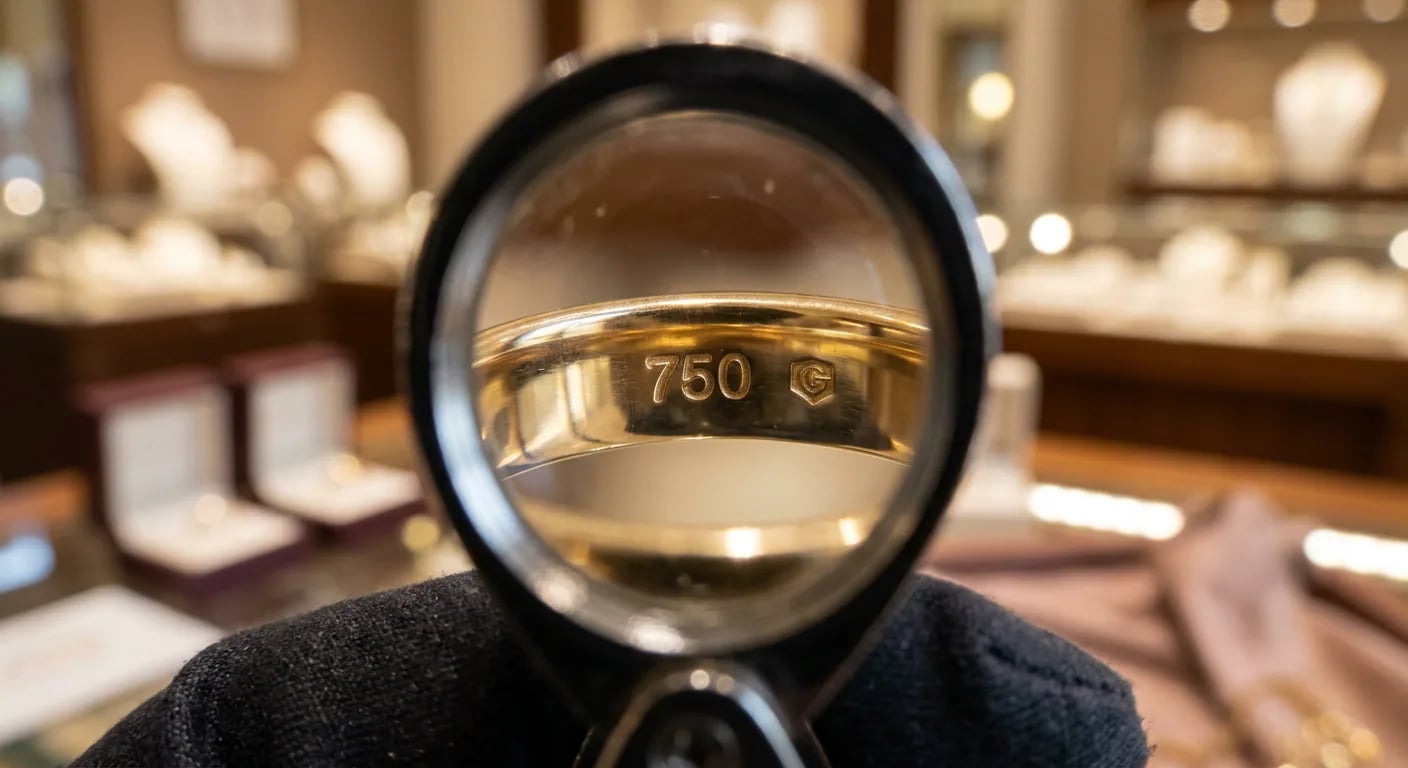
Squint at the inside of a gold ring and you will usually find a tiny three-digit number. 585 means 14k gold, 58.5% pure. 750 means 18k, 75% pure. 417 means 10k, 41.7%. That stamp is the single most useful thing on the ring, and most buyers walk past it.
Two things follow from that number, and most guides only tell you one. It sets how the ring holds up to daily wear. It also sets what the metal is actually worth, which is why a 585 ring and a 750 ring of the same weight are not the same purchase. And if the stamp reads 925, you are not holding gold at all.
We sell stones, not metal, so we have no stake in the 14k versus 18k argument. What we do have is the buyer's side of it: people pick the richer colour, wear it every day for two years, and come back with a shank worn thin under the finger. Nobody warned them. So here is what the karat number actually buys you, why white gold drifts yellow, where gold filled and vermeil really sit, and how to read a hallmark before you pay for a gold ring.
Decoding Gold Purity: Understanding Karats
When selecting a gold ring, understanding gold purity is the first step in ensuring a purchase that aligns with both aesthetic preferences and lifestyle requirements. The gold used in fine jewelry is rarely 100% pure; instead, it is an alloy, a blend of pure gold and other metals like copper, silver, or zinc. The term "karat" (often abbreviated as "k" or "K") is the universal measurement system for this purity, representing the ratio of pure gold to these other alloys out of 24 parts.
What a stamp inside a piece of jewelry actually tells you. Video: Jewelers Mutual Group.
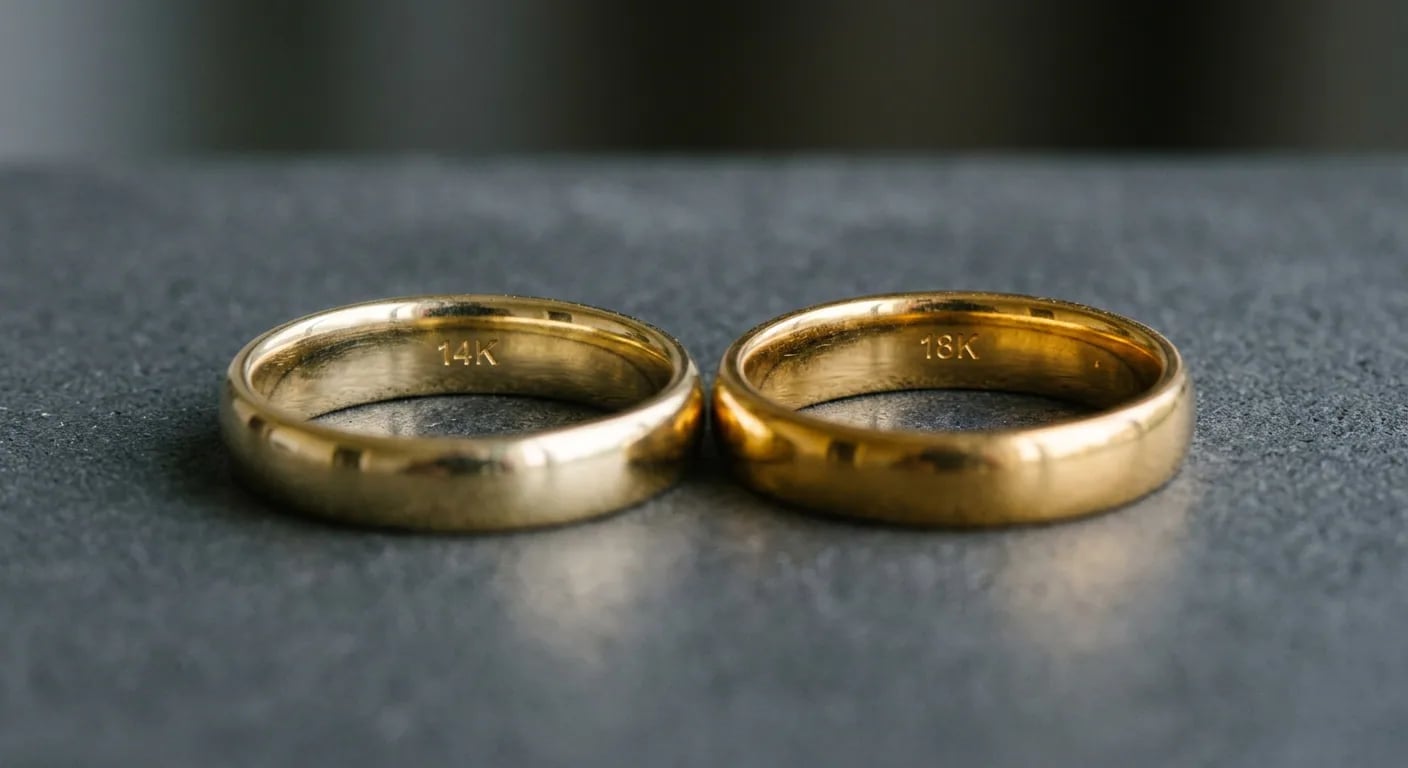
10k, 14k, 18k, 24k: What's the Difference?
The karat number moves three things at once: colour, hardness, and price. Raise the gold content and the yellow gets deeper and the metal gets softer. Lower it and the ring survives more knocks but reads paler. There is no winner here, only a trade you should make on purpose.
- 24k Gold (99.9% Pure): This is gold in its most natural state. It possesses a distinct, rich yellow orange hue. However, 24k gold is highly malleable and soft, making it impractical for everyday ring wear, as it scratches and bends easily. It is mostly kept as bullion or worked into ceremonial pieces, not rings.
- 18k Gold (75% Pure): Comprised of 18 parts gold and 6 parts alloy, 18k gold strikes a prestigious balance. It retains much of the rich, warm color of pure gold while benefiting from the added strength of the alloys. It is a frequent choice for high-end engagement rings and fine jewelry, particularly for those with sensitive skin, as the high gold content minimizes allergic reactions to base metals like nickel.
- 14k Gold (58.5% Pure): Often considered the "perfect balance" for rings, 14k gold consists of 14 parts gold and 10 parts alloy. This composition offers significant durability, making it highly resistant to everyday wear and tear, while maintaining a beautiful, classic gold color. It is the most popular choice for wedding bands and engagement rings in many markets due to this robust nature and its relative affordability compared to 18k.
- 10k Gold (41.7% Pure): With 10 parts gold and 14 parts alloy, this is the minimum standard for jewelry to be called "gold" in many countries, including the US. 10k gold is exceptionally durable and the most affordable option. However, its lower gold content can result in a slightly more muted color, and it may trigger sensitivities in individuals allergic to specific alloy metals.
The following table provides a concise comparative overview:
| Gold Karat | Gold Percentage | Relative Durability | Common Use |
|---|---|---|---|
| 24k | 99.9% | Very Low (Soft) | Bullion, ceremonial pieces |
| 18k | 75.0% | Moderate-High | High-end rings, fine jewelry |
| 14k | 58.5% | High | Everyday rings, wedding bands |
| 10k | 41.7% | Very High | Budget-friendly, high-wear items |
Choosing the Right Karat for Your Lifestyle
Selecting the appropriate karat involves a careful assessment of how the ring will be worn. Lifestyle is a pivotal factor in this decision.
For rings intended for daily, active wear, such as engagement rings or male gold wedding rings, durability matters most. 14k gold is frequently recommended by experts for its ability to withstand the rigors of daily life without excessive scratching or deformation. 18k gold is also suitable, offering a richer color and prestige, but may require slightly more care to avoid surface marks, especially in intricate designs.
Shape changes this calculation more than most buyers expect. A pointed cut concentrates every knock on one small piece of metal instead of spreading it around a girdle, which is why we weigh karat differently for a pear engagement ring in gold than we would for a plain band.
Occasional or fashion rings provide more flexibility. 10k gold is a pragmatic choice for pieces exposed to significant wear or for those adhering to a stricter budget. Conversely, 18k gold might be preferred for statement pieces where the depth of color is a primary consideration, or for individuals prioritizing hypoallergenic properties.
Budget naturally influences the choice. 10k and 14k gold offer excellent value, providing the look and feel of solid gold at a more accessible price point than 18k. Understanding these distinctions ensures that the selected gold ring not only looks exceptional but is also practically suited for its intended purpose and lifestyle.
The Gold Color Palette: Yellow, White, and Rose Gold
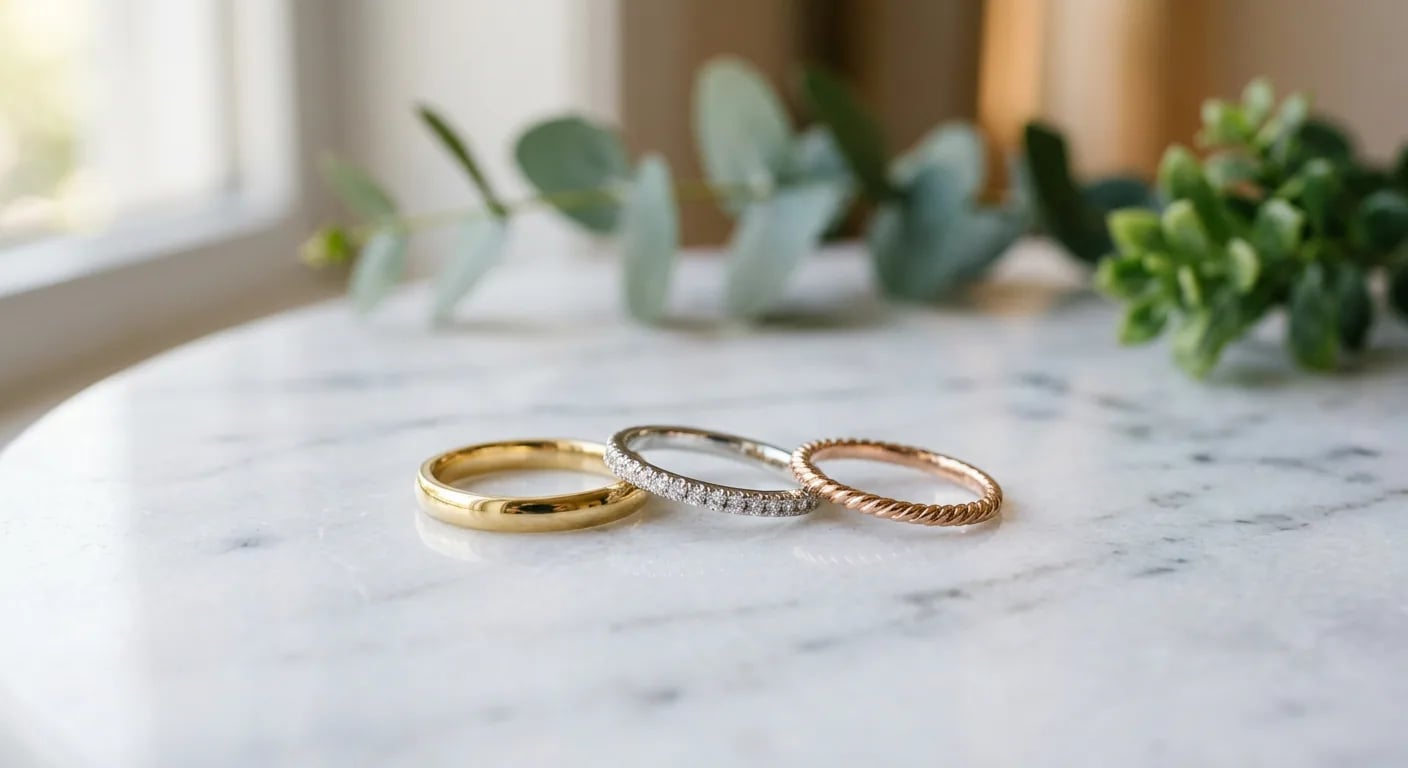
While purity determines a ring's integrity and value, the choice of color defines its aesthetic character and how it complements the wearer's style. The diverse palette of gold available today, classic yellow, sophisticated white, and romantic rose, is achieved not through the gold itself, but through the precise artistry of alloying. Pure gold is always yellow, yet by blending it with specific percentages of other metals, jewelers create distinct hues that cater to varied tastes and design requirements. This section explores the composition and unique appeal of these three primary gold colors.
Classic Yellow Gold: The Traditional Choice
Yellow gold remains the quintessential choice for jewelry, evoking a sense of timeless tradition and warmth. Its rich hue is achieved by alloying pure gold with silver and copper. The specific balance of these metals is critical: copper adds strength and a slight reddish tint, while silver counteracts the redness with a greenish-white tone, resulting in the warm, bright yellow color associated with fine gold jewelry.
Professional jewelers often recommend yellow gold for its ability to patina beautifully over time, developing a unique character. Its warm undertones make it exceptionally complementary to a wide array of gemstones, enhancing the vibrant colors of rubies, emeralds, and loose sapphires. Yellow gold is also particularly flattering on warmer skin tones, making it a perennial favorite for both contemporary fashion pieces and traditional engagement rings.
Modern White Gold and the Rhodium Plating Factor
White gold offers a sleek, modern alternative, prized for its brilliant white sheen that provides a neutral backdrop, allowing diamonds and colored gemstones to take center stage. This color is created by alloying pure gold with white metals, typically nickel, silver, or palladium. While these alloys significantly bleach the gold's natural yellow, the resulting metal often retains a subtle yellowish or greyish tint.
To achieve the bright, mirror-like white finish expected of white gold jewelry, an essential final step is applied: rhodium plating. Rhodium is a rare, precious metal from the platinum family that is exceptionally hard and white. A thin layer is electroplated onto the white gold piece. It is important for consumers to understand that this plating is not permanent; it will naturally wear away over time, especially on rings, revealing the slightly warmer tone of the underlying white gold alloy. Periodic re-plating is required to maintain the ring's pristine white appearance, a maintenance factor that distinguishes white gold from other options.
Romantic Rose Gold: The Trendy Alternative
Rose gold, sometimes referred to as pink or red gold, has experienced a significant resurgence in popularity, offering a romantic and vintage-inspired aesthetic. This distinct, warm hue is achieved by increasing the proportion of copper in the alloy while reducing or eliminating silver. The depth of the pink color depends on the copper content; a higher percentage of copper results in a deeper red, while less copper yields a softer pink.
This composition makes rose gold naturally durable, as copper is a robust metal. Its soft, warm tone is exceptionally versatile, complementing all skin tones and pairing beautifully with both white metals and yellow gold in multi-color designs. Rose gold’s unique warmth provides a sophisticated contrast when set with colorless diamonds or softer-hued gemstones like morganite or aquamarine, making it a compelling choice for those seeking a ring with a distinct personality.
Beyond "Solid Gold": Understanding Affordable Alternatives
While the allure of solid gold rings is undeniable, the desire for the aesthetic of gold often intersects with practical budget considerations. The jewelry market addresses this through several alternatives, each utilizing different manufacturing processes to apply a layer of gold over a non-gold base metal. Understanding the precise distinctions between gold plated, gold vermeil, and gold filled is essential for consumers to make informed purchasing decisions based on durability, composition, and value.
Gold Plated vs. Gold Vermeil vs. Gold Filled
These alternatives are categorized by the thickness of the gold layer and the method used for its application.
- Gold Plated: This process involves electroplating a very thin layer of gold (typically less than 0.5 microns) onto a base metal, such as brass or copper. While this provides an accessible price point, the gold layer is highly susceptible to wear, tarnishing, and flaking over time, especially on high-contact jewelry like rings.
- Gold Vermeil: Vermeil is a specific quality standard. It requires a base of sterling silver, which is then plated with a significantly thicker layer of gold (at least 2.5 microns). This combination offers a superior quality and longevity compared to standard gold plating, making it a popular choice for accessible luxury jewelry.
- Gold Filled: Gold filled jewelry is constructed by mechanically bonding a thick sheet of gold (usually 12k or 14k) to a base metal core (like brass) using heat and pressure. The gold layer must constitute at least 5% of the item's total weight. This results in a product that is significantly more durable than plated or vermeil options, often lasting for years with proper care.
The following table outlines the key technical differences:
| Feature | Gold Plated | Gold Vermeil | Gold Filled |
|---|---|---|---|
| Base Metal | Brass, Copper, Nickel | Sterling Silver (925) | Brass or Bronze |
| Gold Thickness | Very Thin (<0.5 microns) | Thick (≥2.5 microns) | Very Thick (Bonded sheet) |
| Gold Content | Negligible | Varies by thickness | ≥ 5% of total weight |
| Durability | Low (Wears quickly) | Moderate (Good with care) | High (Long-lasting) |
| Value | Low (Fashion jewelry) | Moderate (Affordable luxury) | Moderate-High (Durable alternative) |
Selecting the Appropriate Alternative
The choice between these options depends heavily on the intended use of the ring. Professional jewelers often advise that gold plated rings are best suited for trendy, occasional-wear pieces rather than daily jewelry. The thin layer will inevitably wear off, particularly on rings due to constant friction and exposure to elements.
For those seeking a balance of quality and affordability for more frequent wear, gold vermeil is a compelling option. The sterling silver base adds intrinsic value, and the thicker gold layer provides better resistance to wear, though periodic replating may still be required.
Gold filled rings offer the highest durability among these alternatives, making them suitable for near-daily wear. However, it is essential to understand that even the thickest alternative does not equal the permanence of solid gold. For a ring meant to be worn every day, such as an engagement ring often featuring precious stones like diamonds or sapphires, solid gold remains the industry standard for its enduring value and integrity.
Spotting Quality: How to Read 585, 750 and Other Gold Hallmarks
Evaluating the quality and authenticity of a gold ring matters most, particularly when addressing the natural consumer fear of purchasing counterfeit or substandard pieces. Beyond the immediate visual appeal, several objective markers and structural details distinguish genuine, well-crafted gold rings from inferior alternatives. Expert jewelers rely on a combination of official certifications, physical hallmarks, and meticulous inspection of construction to verify integrity.
What 585, 750 and 417 Mean on a Gold Ring
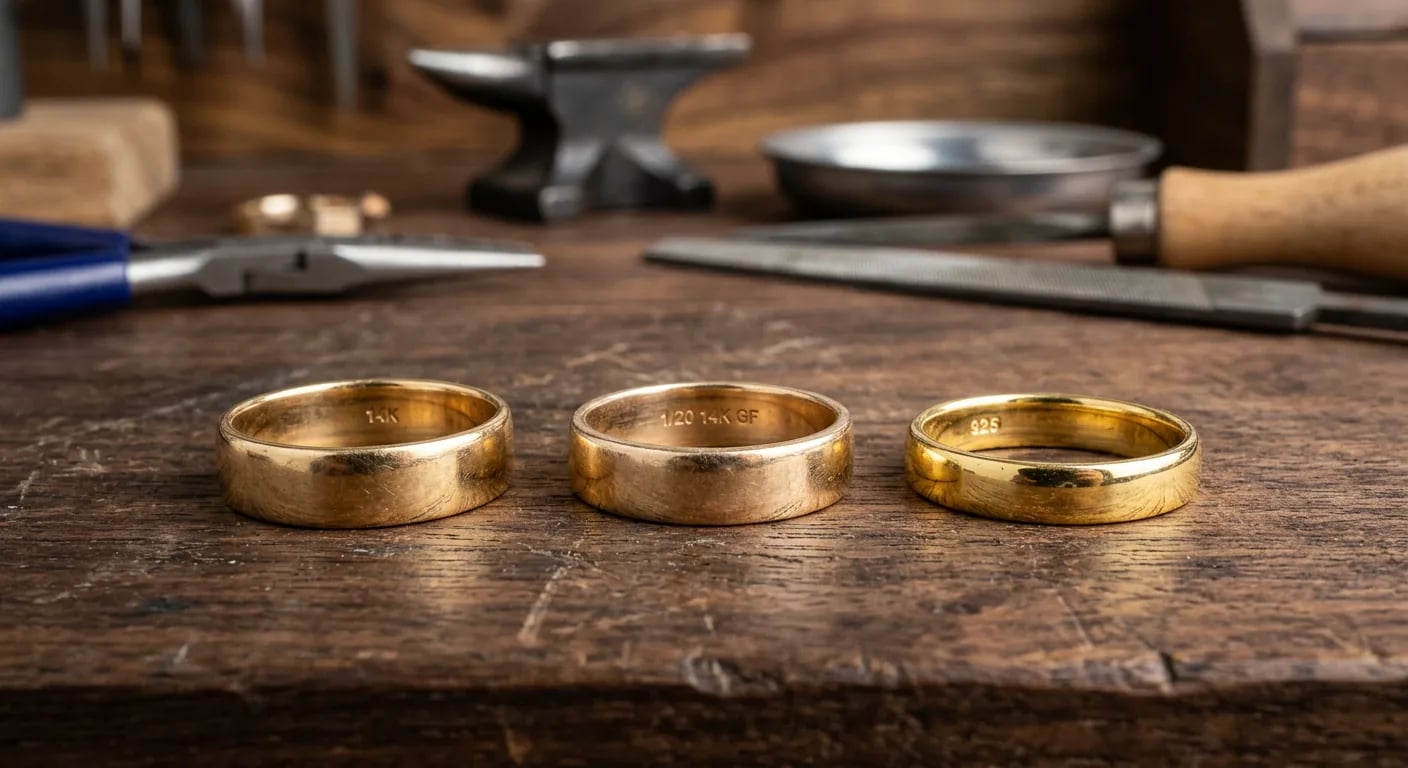
585 gold is 14k gold: 58.5% pure gold by weight. 750 is 18k, 75% pure. 417 is 10k, 41.7%. The three-digit form is the European convention, a decimal of purity out of 1000; the karat form counts parts of gold out of 24. Both describe the same alloy, so a ring stamped 585 and a ring stamped 14K are identical in gold content.
The stamp sits on the inner shank, usually next to a maker's mark, and it is the fastest honest check you can run in a shop. No stamp at all on a ring sold as solid gold is a reason to walk away, or at least to ask for it in writing.
Consumers should look for specific numeric or karat stamps that correspond to the gold's purity. Common hallmarks include:
| Stamp | Karat mark | Gold content | Where you usually meet it |
|---|---|---|---|
| 999 | 24k | 99.9% | Bullion and ceremonial pieces, almost never a ring |
| 916 | 22k | 91.6% | India, the Gulf, much of South East Asia |
| 750 | 18k | 75% | European fine jewelry, high end bridal everywhere |
| 585 | 14k | 58.5% | The default for rings in the US and much of Europe |
| 417 | 10k | 41.7% | The legal floor to call a piece gold in the US |
| 375 | 9k | 37.5% | The UK and Ireland, where 9k is a normal high street option |
| 333 | 8k | 33.3% | Germany, Denmark and Greece, not recognised as gold in the US |
| 925 | not gold | 0% | Sterling silver. On a gold coloured ring it means vermeil or plating |
That last row catches more people than any other. 925 is the sterling silver mark, not a gold mark. A yellow ring stamped 925 is silver wearing a coat of gold, which is the vermeil case covered above, and it is worth a fraction of a 585 ring of the same size.
One small precision, since buyers do the maths and get confused. Fourteen parts out of twenty four is 58.33%, but the European stamp reads 585, meaning 58.5%. Standards round to the safe side, so a piece stamped 585 carries at least its 14k worth of gold rather than a hair under.
In addition to purity stamps, reputable manufacturers often include a maker's mark or trademark. While these hallmarks are strong indicators of authenticity, they are not infallible. For high-value items, especially those featuring significant gemstones like diamonds, professional appraisal or independent laboratory certification remains the gold standard for verification.
What Is 585 Gold Worth?
The melt value of a 585 piece is arithmetic you can do standing in the shop: weight in grams, times 0.585, times the current gold price per gram. A 4 gram ring stamped 585 holds 2.34 grams of pure gold. The same ring stamped 750 holds 3 grams. That gap, near enough a third more gold, is most of why the 18k version costs more before anyone has set a single stone.
Two honest caveats. Melt value is not what anyone will hand you: a scrap buyer pays under melt because refining costs money, and a jeweller selling you the ring prices design, labour and margin on top of it. And melt says nothing at all about what is set in the ring. On a piece holding a decent Ceylon sapphire, the gold is usually the cheapest thing in your hand, which is the whole reason we sell the stone and let you choose the metal after.
Evaluating Craftsmanship and Setting Quality
Authenticity extends beyond the metal purity to the overall structural integrity and craftsmanship of the piece. A high-quality gold ring exhibits a level of finish that mass-produced, lower-quality items cannot replicate.
When inspecting a ring, several key areas demand attention:
- Surface Finish: The metal should be smooth, consistent, and free of pitting, scratches, or casting imperfections. In white gold, the rhodium plating should be uniform, covering all areas, including between prongs and inside intricate details.
- Structural Integrity: The ring shank should feel substantial and not overly thin or flimsy, especially at the bottom where wear is most significant. A quality ring maintains its shape and does not bend easily under reasonable pressure.
- Gemstone Settings: This is a critical area, especially for engagement or statement rings. Prongs must be evenly spaced, smooth, and tightly securing the gemstone. Bezel settings should be uniform and completely surround the stone without gaps. Poorly set stones, common in inferior craftsmanship, risk loss. For detailed information on different setting types and their security, referring to an expert guide on engagement ring styles and settings is highly recommended.
- Assembly: In multi-stone or intricate designs, components should be precisely aligned. Solder joints must be clean, strong, and virtually invisible, with no excess solder material present.
By meticulously examining these details, the clarity of the hallmarks, the smoothness of the finish, and the security of the settings, you can judge a gold ring in about a minute, standing at the counter, without taking anyone's word for it.
The Ethical Context: Sustainable Gold Practices
Beyond purity and color, the origin of the metal is a critical consideration for the modern, conscious consumer purchasing gold rings. Traditional gold mining methods often involve significant environmental disruption and complex social challenges. Consequently, the jewelry industry is experiencing a necessary shift toward more sustainable practices, with recycled gold emerging as a leading ethical alternative that does not compromise quality or beauty.
The Impact of Traditional Mining vs. Recycled Gold
Understanding the distinction between newly mined gold and recycled gold is key to making an informed, ethical choice. Traditional mining requires extensive land excavation and often utilizes chemical processes that can impact ecosystems if not managed rigorously.
Recycled gold, conversely, is sourced from existing metal that has already been refined. This includes existing jewelry, industrial metals, or electronic components. This gold is melted down, refined back to its pure element state, and then re-alloyed to the desired purity (such as 14k or 18k). The resulting metal is chemically and visually identical to newly mined gold. Once it has been refined back to the pure element, no test can separate recycled gold from freshly mined gold: same metal, same durability, same value.
The following table outlines the key differences in impact:
| Feature | Traditionally Mined Gold | Recycled Gold |
|---|---|---|
| Source | Newly extracted from the earth | Existing jewelry, industrial byproduct |
| Environmental Impact | Significant land and water usage | Minimal new disruption |
| Carbon Footprint | Higher due to mining and transport | Lower footprint from refining existing metal |
| Quality & Purity | 100% pure (before alloying) | 100% pure (after refining, before alloying) |
| Appearance | Identical | Identical |
Ethical Sourcing and Responsible Practices
For consumers prioritizing sustainability, verifying a jeweler's commitment to ethical sourcing is essential. This extends beyond just the metal. A truly ethical approach ensures that every component of the ring, especially significant gemstones like diamonds or emeralds, is sourced through transparent, conflict-free channels.
Reputable jewelers increasingly adhere to strict environmental and social standards, often seeking third-party certifications to verify their supply chains. This commitment ensures that the creation of a beautiful gold ring does not come at an unacceptable cost to people or the planet. Choosing recycled gold and ethically sourced gemstones allows consumers to wear their jewelry with complete confidence, knowing it aligns with their values.
Gold Ring Buying Guide: Making a Decision
Acquiring a gold ring, whether for a significant occasion or personal collection, requires synthesizing several key factors to ensure a purchase that aligns with both aesthetic desires and practical needs. This section provides a structured approach to making that final decision, consolidating expertise on purity, color, and quality into actionable considerations.
Key Factors for an Informed Purchase
Before finalizing any selection, several critical elements must be evaluated. Professional jewelers recommend a systematic review to ensure the chosen ring provides lasting satisfaction.
- Define a Realistic Budget: Gold jewelry pricing is influenced by the current market price of gold, the complexity of the design, craftsmanship, and the inclusion of any gemstones. Establishing a clear budget beforehand helps narrow options effectively without compromising on essential quality markers like hallmarks.
- Assess Lifestyle Suitability: The intended wear frequency matters most. For daily-wear rings, such as engagement rings or wedding bands, durability is essential. 14k gold is often favored for its superior scratch resistance compared to 18k, which, while richer in color, is softer. For occasional fashion pieces, 18k or even high-quality gold vermeil may be suitable alternatives.
- Determine Color Preference: The choice between yellow, white, and rose gold is primarily aesthetic. Consider which hue best complements the wearer's skin tone and existing jewelry collection. Remember that white gold requires periodic maintenance, specifically rhodium replating, to maintain its brilliant white finish.
- Prioritize Correct Sizing: An accurate fit is essential for comfort and security. It is highly recommended to use a professional ring size chart or consult a jeweler for precise measurement, accounting for factors like temperature and finger shape, before ordering.
- Evaluate Gemstone Integration: If the ring features stones, ensure they are securely set. The warmth of yellow or rose gold can beautifully enhance gemstones like rubies or emeralds, while white gold offers a classic, neutral backdrop for diamonds or sapphires.
- Select a Reputable Source: Choose a seller who will tell you the karat, the alloy and the stone origin without being pushed. If a ring holds a coloured stone, ask for the lab report by name. Our own loose sapphires ship with theirs, which is the standard to hold anyone to.
By addressing each of these points systematically, you end up choosing a gold ring on purpose rather than by default, which is the only part of this that really matters.
Design a Gold Setting Around Your Own Stone
JOALYS
Everything Begins with the Stone
Two sapphires can share the same grade and nothing else. Yours is chosen in hand.
Keep the sapphire loose, or commission a ring made around it — made to order, never off the shelf.
Custom Ring Creation Process
The process for creating a custom ring involves three primary steps:
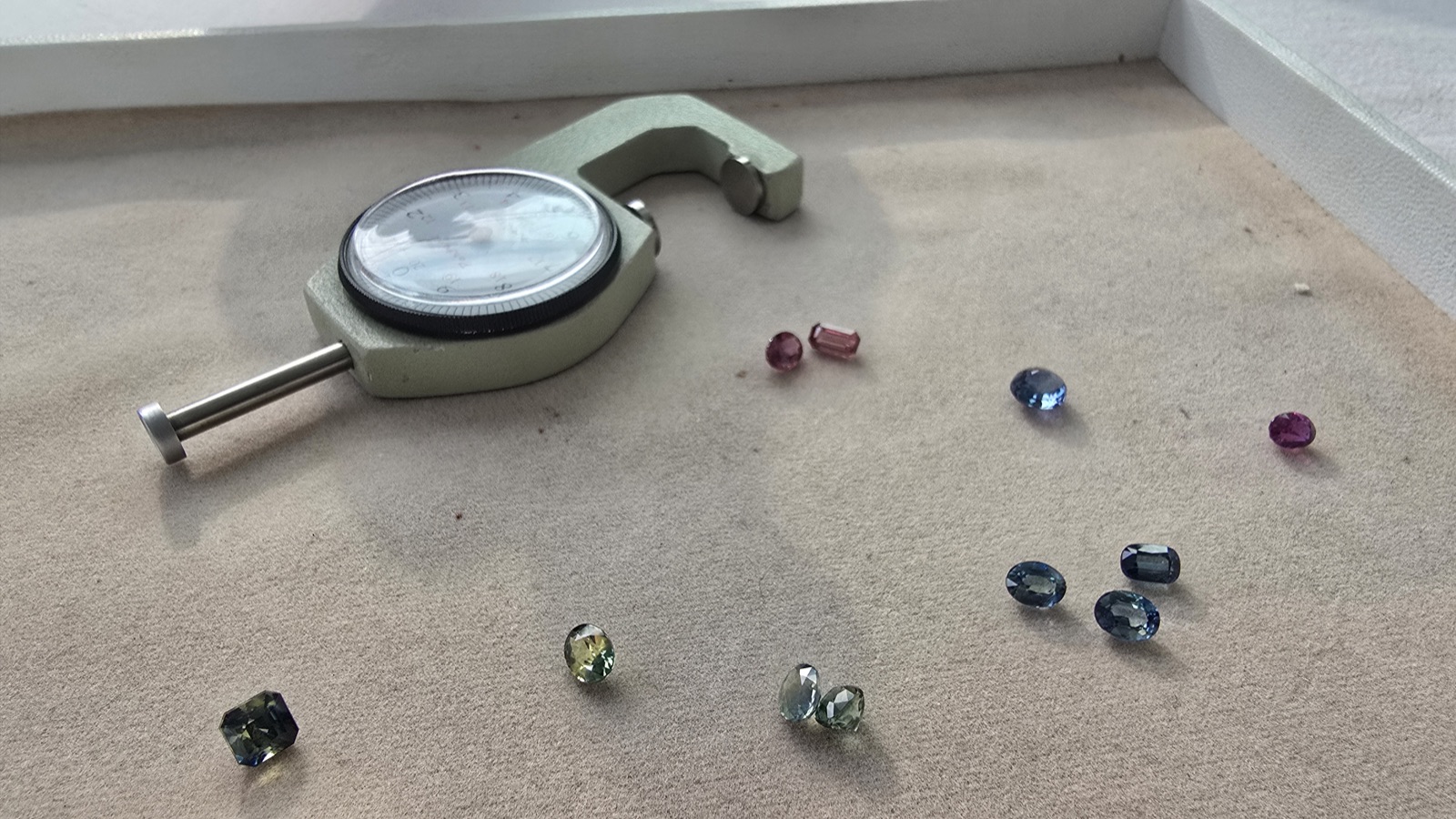
- Stone Selection - Browse certified loose sapphires
- Inspection - Gemstones are provided in an authentication case for review.
- Setting Design - Talk through the setting to finalize the design.
Frequently Asked Questions
Conclusion
Read the stamp first. 585 is 14k at 58.5% gold, 750 is 18k at 75%, 417 is 10k at 41.7%, and that one number sets the colour, the hardness and most of the price. 14k takes daily knocks better. 18k gives the deeper yellow and, carrying less alloy, sits easier on skin that reacts to nickel. Neither is the right answer for everybody.
The rest follows the same logic. White gold is rhodium plated, so it drifts back toward warm and needs replating every few years. Rose gold gets its colour from copper, which is also what makes it tough. Gold filled beats vermeil beats plated, and none of the three equals solid gold on a ring worn every day.
One honest caveat about us: we are stone people, not metal people. Two years of buying parcels in Sri Lanka teaches you stones, not alloys, and every Joalys stone is certified by Bilal, an outside GIA gemmologist. So we would rather you start where the meaning actually sits, which is the stone, and build the gold around it.