JOALYS PARIS

Language & Currency

EUROPE

🇫🇷France
🇧🇪Belgium
🇨🇭Switzerland
🇬🇧United Kingdom
🇩🇪Germany
🇮🇹Italy
🇪🇸Spain
🇵🇹Portugal
🇱🇺Luxembourg
🇷🇺Russia

AMERICA

🇺🇸United States
🇨🇦Canada

ASIA-PACIFIC

🇨🇳China
🇯🇵Japan
🇦🇺Australia

MIDDLE EAST

🇦🇪United Arab Emirates
🇶🇦Qatar
🇸🇦Saudi Arabia
🇴🇲Oman
🇧🇭Bahrain

OTHER LOCATIONS

🌍Other
Buying Guide

Gemstones Shop Near Me: How to Find a Real One (and Not Get Burned in 2026)

Four trust checks that work whether the shop is around the corner or six time zones away, from the Joalys Paris gemology team.

gemstones shop near me — Joalys Paris
Four trust checks that work whether the shop is around the corner or six time zones away, from the Joalys Paris gemology team.

Introduction

You typed "gemstones shop near me" into Google. Be honest: you were probably hoping for one clean answer, a shop, a map pin, done.

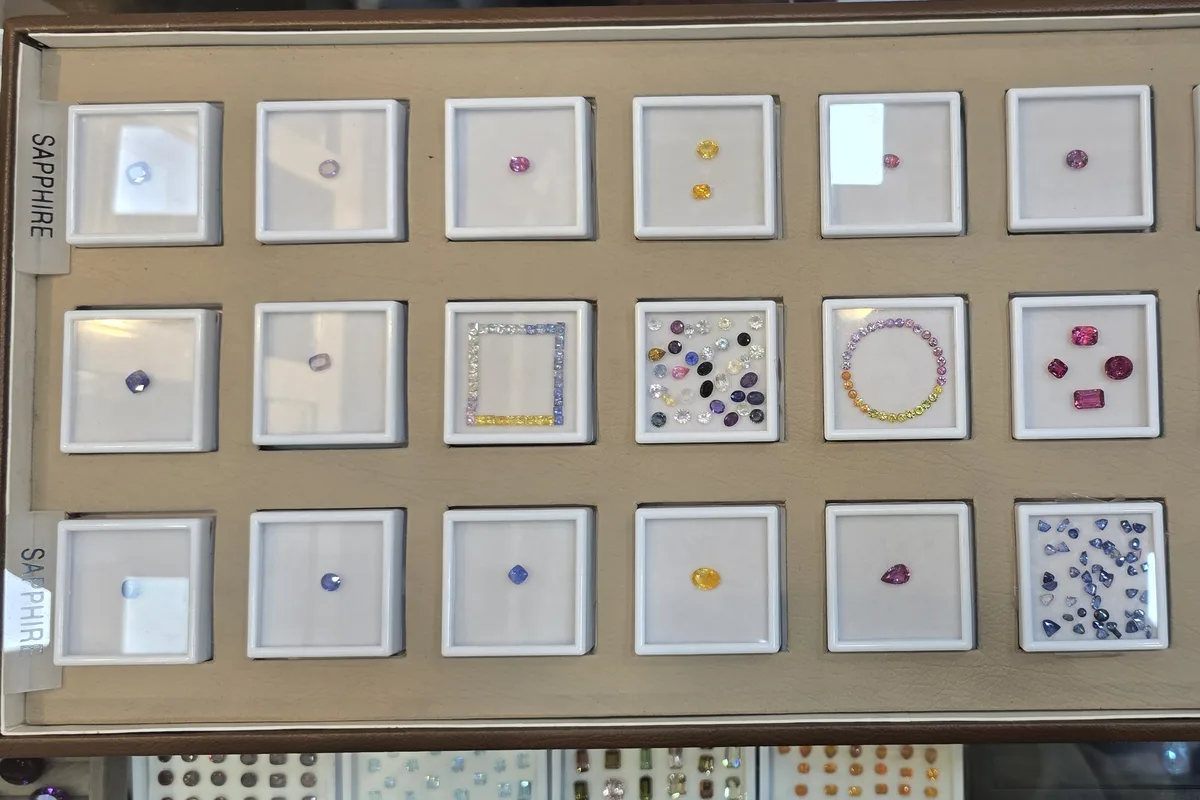
The truth is messier. That search usually hides three different questions, and the right answer depends on which one you actually need. Are you looking for a brick-and-mortar shop you can walk into? A trustworthy online retailer who ships to your door? Or a way to know which of the dozens of shops nearby is the legitimate one and which one will hand you a heated stone with a homemade certificate?

We have spent the last six years sourcing colored stones directly from Ratnapura, Mogok, and Muzo, and we have watched too many buyers get burned by the wrong shop, regardless of distance. So here's the criteria we use ourselves. It works whether the shop is across the street or six time zones away. Updated May 2026, by the Joalys Paris gemology team.

Why "Gemstones Shop Near Me" Is a Misleading Search in 2026

Because the colored gemstone market is no longer geographic. A specialty online dealer in Bangkok can show you 400 unheated Ceylon sapphires by Tuesday afternoon. Your nearest local jeweler, however charming, might stock four. Proximity gives you trust by handshake. The internet gives you depth of inventory and full disclosure on video. The smart shoppers blend both.

The numbers back this up. The global gemstone market will grow from USD 38.4 billion in 2026 to USD 72.8 billion by 2036, a 6.6% CAGR (Future Market Insights, 2026). The United States imported $25 billion in gemstones in 2023, making it the world's largest demand market (Future Market Insights, 2024). The vast majority of that volume now flows through online channels, with local boutiques shifting toward custom setting and aftercare rather than raw stone sales.

One trend matters more than any other: by 2026, 360-degree HD video has become the baseline transparency standard for serious online gemstone retailers (Africagems industry data, 2026). If a shop, online or local, cannot show you the stone moving under direct light, that is a flag. You can read more about the basics of gemstones on our pillar page if you are starting from zero.

So forget "near me" for a minute. Ask "trustworthy" instead.

Why "Gemstones Shop Near Me" Is a Misleading Search in 2026 — gemstones shop near me

What Makes a Gemstones Shop Trustworthy?

A trustworthy gemstones shop discloses everything that affects the stone's value before you ask. That means independent lab certification on request, plain-language treatment disclosure, a written return policy, and a clear sourcing story. If any of those four is missing or vague, walk away. Distance is irrelevant when one of these is broken.

Here are the four pillars in detail.

1. Independent Lab Certification (the non-negotiable)

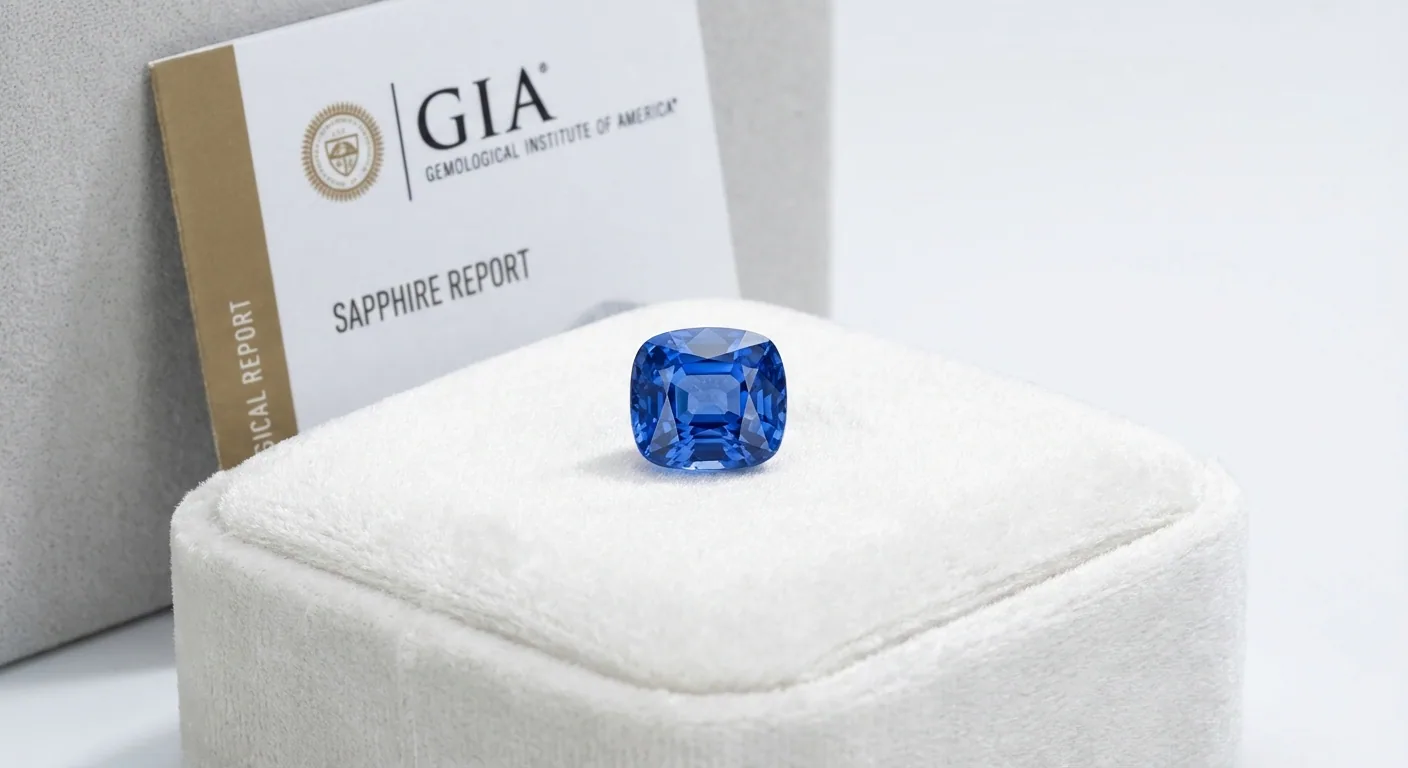
The accepted labs in 2026 are GIA, AGL, SSEF, Gübelin, GRS, and AIGS. For stones above $1,000, ask for a report from one of these. Seller-issued in-house certificates from a shop's own gemologist are not accepted gem trade practice and should not replace independent lab reports (Frank Darling buyer guide, 2026). They are fine as a courtesy document, but they are not a grading credential.

2. Treatment Disclosure in Writing

Heat, oil, fracture filling, irradiation, diffusion. Most stones on the market are treated in some way, and that is not the problem. The problem is when a shop hides it. The Federal Trade Commission requires US retailers to disclose treatments that affect value or durability. If your shop does not put it in writing on the invoice, that is not a shop, that is a risk.

3. A Real Return Policy

7 days minimum, 14 to 30 days standard. The stone must come back in original condition with the certificate. Any shop that refuses returns on loose stones is telling you they do not expect their customers to verify the merchandise. Skip them.

4. Chain of Custody

Where was the stone mined? Where was it cut? Where did the shop buy it? A serious shop can answer at least the first two questions for any stone over $2,000. They may not name the exact mine for trade reasons, but they can name the country, the cutting workshop region, and the supplier tier. Vagueness here usually means the shop does not know either. Fair Trade and Fairmined certifications, plus membership in the Responsible Jewellery Council (RJC), are useful proxies but never a substitute for a direct sourcing story.

What Makes a Gemstones Shop Trustworthy? — gemstones shop near me

Local Shop, Online Retailer, or Trade Show: Which Channel Fits Your Need?

These three channels are not interchangeable. We use all three at Joalys depending on what we are sourcing.

The Local Jeweler

Best for: setting a stone you bought elsewhere, repairs, appraisals, choosing a mounting in person, building a long-term relationship.

Limits: tiny inventory. A typical neighborhood jeweler stocks maybe 5 sapphires, 3 rubies, a handful of semi-precious stones. If you want choice, that is not enough. They also tend to mark up heavily, sometimes 200% to 300%, to cover the rent on a high-street location. None of that makes them dishonest, it just makes them expensive.

The Online Specialty Retailer

Best for: depth of inventory, price transparency, 360-video, comparing 50 sapphires side by side in an evening. Names like Brilliant Earth (40+ US showrooms, hybrid model), Blue Nile, Stuller (850,000+ stones wholesale), GemSelect (130+ gem types), and direct-to-consumer cutters fall here. The good ones publish lab reports, treatments, origin, and a precise return window on every product page. The bad ones use Photoshop and hide behind stock images.

If sapphires are your target, our long-form guide on how to buy sapphire online walks through the exact checks we apply on every supplier.

The Trade Show (Tucson, Hong Kong, Bangkok)

Best for: serious collectors, jewelers, and buyers looking for rare pieces at trade prices. The Tucson Gem Show 2026 runs January 31 to February 8 with over 275 exhibitors across the GLW main mall (TGMS, 2026). Some require a wholesale badge or tax ID. Pricing is negotiable, especially early in the show, and the variety is staggering. The catch: vetting vendors is on you, and some questionable sellers do show up.

For most retail buyers, trade shows are overkill. Stick with channels 1 and 2.

Local Shop, Online Retailer, or Trade Show: Which Channel Fits Your Need? — gemstones shop near me

How to Verify a Gemstone Certificate Before You Pay

Every reputable lab issues a certificate with a unique report number you can verify online in under a minute. The process is the same wherever you shop: take the report number, go to the issuing lab's website, paste it in their verification tool, and check that color, clarity, weight, dimensions, and treatments match what the seller is showing you.

For GIA, use the report check tool on gia.edu. For AGL, request a verification through their official portal. SSEF and Gübelin both offer online lookup. If the certificate is from a lab you cannot verify online or whose name you do not recognize, that is a red flag regardless of how official the paper looks.

Watch for three classic warning signs. First, photocopied or scanned certificates without an online lookup match. Second, certificates dated more than 2 years old without a re-grade, since lab standards evolve. Third, a stone whose dimensions or weight do not match the certificate within 0.01 carat tolerance, which means the certificate was issued for a different stone.

JOALYS Expert, In our sourcing trips to Ratnapura, we always carry a GIA loupe and a basic gem scope to spot-check stones before purchase, even when the certificate looks clean. We have personally caught two cases where a Sri Lankan dealer tried to pass off a heated sapphire on an "unheated" Gübelin paper that had been swapped from another stone. The certificate was real, the stone was not. Verification on a portal catches that in 30 seconds.

For deep dives into grading specifics, our guide on natural ruby identification, grading, and value breaks down the same logic for rubies.

How to Verify a Gemstone Certificate Before You Pay — gemstones shop near me

Gemstone Prices in 2026: What's Fair and What's a Red Flag

Pricing is where most first-time buyers get lost, because the same-looking stone can vary 10x in price based on the 4Cs (color, clarity, cut, carat), origin, and treatment. Here's where the market sits in 2026, based on Gemval per-carat charts published February 2026 and our own purchase records from the past 12 months.

Ruby (per carat, 1ct fine quality, 2026)

  • Sri Lankan heated: $800 to $4,000
  • Sri Lankan unheated: $2,000 to $10,000
  • Mozambican heated: $400 to $2,500
  • Burmese (Mogok) unheated: $10,000 to $100,000+

Unheated Sri Lankan rubies sell at roughly 2 to 3 times the price of heated equivalents at retail in 2026 (Gemval, February 2026).

Sapphire (per carat, 1ct fine quality, 2026)

  • Commercial Sri Lankan: $500 to $1,500
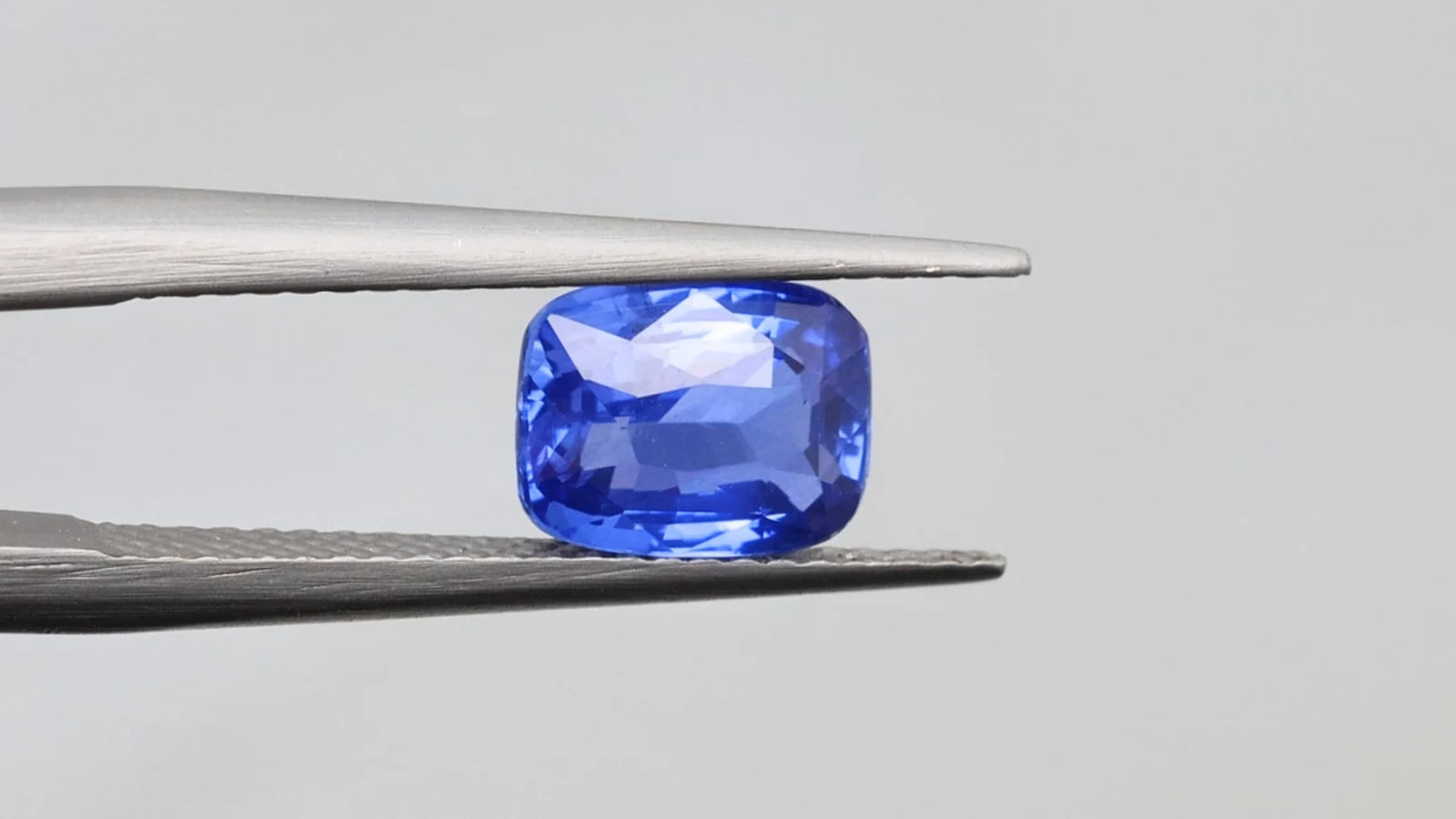
  • Fine Ceylon blue, heated: $1,500 to $4,000
  • Cornflower or Royal Blue, unheated: $4,000 to $11,000+

Emerald (per carat, 1ct, 2026)

  • Commercial grade: $50 to $500
  • Mid-grade Colombian: $1,000 to $4,000
  • Top Colombian, minor oil: $10,000 to $100,000+

Emeralds account for 30% of total US gemstone demand, the most popular colored stone in America (Future Market Insights, 2026).

A red flag is any "Ceylon sapphire" priced at $50 per carat. It is either synthetic, glass-filled, or misrepresented. A second red flag is a "fine Colombian emerald" with zero oil disclosure. Untreated Colombian emeralds exist, but they are 1% of the market and they cost what fine art costs.

Loose stones tend to give better value than pre-set jewelry because you are paying for the gem, not for a setting you may not even want. If that is your route, our breakdown on loose gemstones for jewelry shows you exactly how to compare.

Gemstone Prices in 2026: What's Fair and What's a Red Flag — gemstones shop near me

10 Questions to Ask a Gemstones Shop Before Buying

Use these whether you are at a counter in your neighborhood or chatting with an online retailer on video. The shop's tone matters as much as the answers. If they get defensive, you have your answer already.

  1. What lab certified this stone, and can I look up the report online? A good shop names the lab and walks you to the verification page.
  2. What treatments has this stone received? "None disclosed" is acceptable only if a lab certificate confirms it.
  3. Where was the stone mined? Country answer minimum. Region for stones over $2,000.
  4. Where was it cut? Bangkok, Geneva, Jaipur, and New York all have very different cutting reputations.
  5. What's your return policy on this exact stone? Written, in days, no restocking fee for full refund.
  6. Is the price negotiable? If yes, by how much, and on what basis (carat, certificate, repeat customer).
  7. Can I get this stone set by another jeweler? A confident shop says yes without hesitation.
  8. Do you offer a written appraisal? Should be free or low-cost on stones bought from them.
  9. What's the resale market for this stone? Real shops give honest answers including "limited" or "good".
  10. Who do I contact if a problem appears in 6 months? Phone, name, written commitment.

Bonus 11th: "How long have you been in business?" Helpful but not decisive. Plenty of new shops are excellent, plenty of old ones coast on reputation.

10 Questions to Ask a Gemstones Shop Before Buying — gemstones shop near me

See What a Real Gem Lab Looks Like (Video)

This is the GIA Knowledge Sessions webinar showing how a gemstone moves through their lab from intake to certificate. It is 45 minutes but worth watching at 1.5x if you are spending serious money on a stone. You will understand what "GIA certified" actually means in practice, which makes spotting fake certificates much easier.

The reason we recommend this video over the dozens of "buying tips" clips on YouTube is simple. It shows you the process, not opinions. When a shop tells you "this is GIA certified", you will know exactly what that means and what it does not.

See What a Real Gem Lab Looks Like (Video) — gemstones shop near me

Where Joalys Sources Its Stones (and Why "Near Me" Misses the Point)

We are based in Paris, but our sapphires come from Sri Lanka, our rubies from Mozambique and Mogok, and our emeralds from Colombia. We buy direct from cutting workshops we have visited, sometimes from the cutters themselves, sometimes from a small ring of mid-tier dealers we have worked with since 2019.

Why does that matter for you, sitting somewhere reading this? Because the question of "near me" matters less than the question of "near the source". When we ship a sapphire to a customer in Chicago, that stone has traveled mine to Ratnapura cutter to our Paris atelier to your door. Three steps. Most retail stones in the US travel 6 to 8 steps through importers, wholesalers, and middlemen, each one adding markup and removing context. Each step also makes it harder to trace where the stone really came from.

That is why we publish photos from our sourcing trips, why we keep cutter contact details on file, and why we will tell you on request whether a stone is from the Elahera or Balangoda area of Sri Lanka. That level of detail is normal in serious gem trade, but it is rare in retail because most shops genuinely do not know.

If you want a piece built around a specific stone, our bespoke service lets us source to your color, carat, and budget brief, then set it in our Paris atelier. The lead time runs 6 to 12 weeks depending on what we have on hand.

JOALYS

Everything Begins with the Stone

The sapphire you choose says everything before a single word is spoken.

Choose your sapphire loose, or let us set it into a piece crafted entirely for you.

Where Joalys Sources Its Stones (and Why "Near Me" Misses the Point) — gemstones shop near me

Frequently Asked Questions

Search Google Maps for "GIA certified jeweler" or "AGL gem dealer" plus your city, then cross-check the top 3 results on Google reviews, BBB, and the Jewelers of America member directory. The best local shop is one that issues independent lab certificates, not in-house papers. Cities with stronger gem trades include New York, Los Angeles, Houston, Chicago, and Miami.
Online is typically 20% to 40% cheaper for comparable quality, because online retailers carry lower overhead than high-street boutiques. Local shops add value through hands-on viewing and aftercare, not pricing. For loose stones above $1,000, online specialty retailers with 360-degree HD video and lab reports usually win on value.
Look for membership in the Jewelers of America, the American Gem Society, or the Responsible Jewellery Council. Confirm they issue independent lab reports on stones above $1,000. Read at least 20 recent Google reviews. Ask for two customer references on stones over $5,000. Three confirmations in a row means the shop is solid.
For colored stones, request reports from GIA, AGL, SSEF, Gübelin, GRS, or AIGS. These six labs are the global standard in 2026. Avoid shops that rely only on in-house gemologist papers. For diamonds, GIA and AGS are the gold standard. Lab-grown diamonds typically use IGI reports, which is acceptable for that segment.
Use it as a courtesy document, never as your grading source. Seller-issued certificates are not accepted gem trade practice and carry no independent value. For any stone above $1,000, insist on a separate report from GIA, AGL, SSEF, or Gübelin. Reputable shops are happy to send a stone for independent grading at your request.
A fine 1ct heated Ceylon blue sapphire runs $1,500 to $4,000 retail in 2026. Unheated Ceylon stones in Cornflower or Royal Blue range from $4,000 to $11,000 per carat depending on color saturation and clarity. Anything labeled "Ceylon sapphire" under $500 per carat is either synthetic, glass-filled, or misrepresented origin.
Yes, as long as the treatment is disclosed in writing on the invoice and the price reflects it. Heat is the most common ruby and sapphire treatment and is widely accepted. Oiling is standard for emeralds and accepted up to "minor" or "moderate" levels. Walk away from any shop that hides treatments or refuses to put disclosure on paper.
14 to 30 days is the retail standard, with the stone returned in original condition with the original certificate. Online specialty retailers often offer 14 to 30 days. Custom-set pieces usually have shorter windows of 7 days or zero returns. Always get the policy in writing before you pay. Verbal promises mean nothing here.

A Final Word

The phrase "gemstones shop near me" is a useful first search. Treat it as that, a first search, not a final answer. The shop that earns your business may sit 3 streets away or 3 time zones away. What matters is whether they hand you the same four things every time: an independent lab certificate, a written treatment disclosure, a real return window, and a credible sourcing story.

We personally prefer working with a small number of trusted sources over a sprawling network, both as sellers and as buyers. It is slower. The selection is narrower. The trust compounds. That is the part Google Maps cannot tell you.

Find your shop the same way. The right one is not always near. It is always honest.

Expert Certification

Bilal Mahir - GIA Graduate Gemmologist
GIA

Bilal Mahir

GIA Graduate Gemmologist GIA

Bilal Mahir is the GIA-graduate gemmologist who independently certifies every Joalys stone, verifying origin, treatment and authenticity before it is sold.

GIA Certified Professional
Expert in Colored Gemstones
Independent Stone Certifier
Expert-Verified ContentThis article has been reviewed and certified by a qualified gemological professional
Gemstones Shop Near Me: How to Pick a Real One | Joalys