Bezel vs Prong vs Basket: Which Setting for Your Stone?
Three ways to hold a stone, and how to choose by the stone you love.

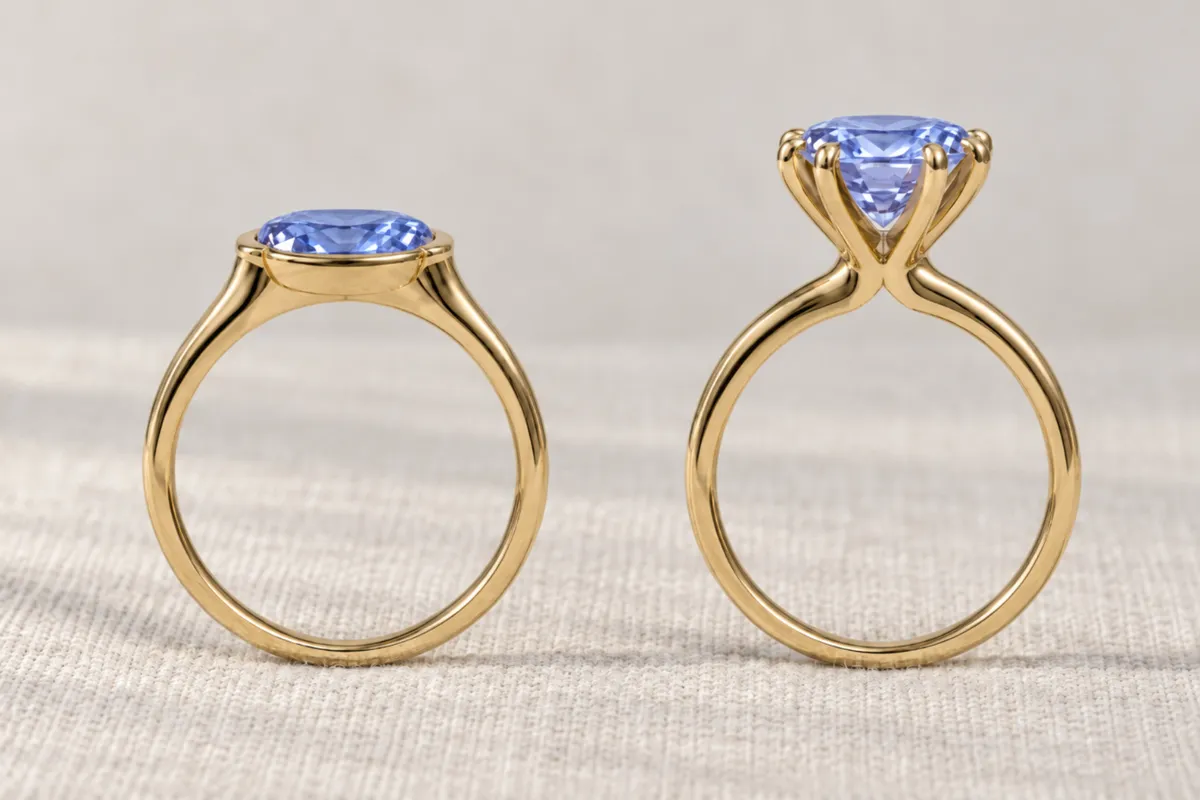
Prongs show the most of your stone and let in the most light. A bezel wraps its edge in metal: the best protection, and nothing to snag. A basket is prongs tied together underneath, so they bend less. For a colored stone, let the stone decide: the more easily it chips, the more metal it needs around it.
- Prongs
- Most light, most of the stone on show
- Bezel
- Best edge protection, nothing to snag
- Basket
- Prongs braced underneath, so they bend less
- Sapphire, ruby, spinel
- Tough: any of the three
- Emerald, tanzanite
- Fragile: the bezel
What's the difference between a bezel, prong and basket setting?
All three hold your stone, each in its own way.
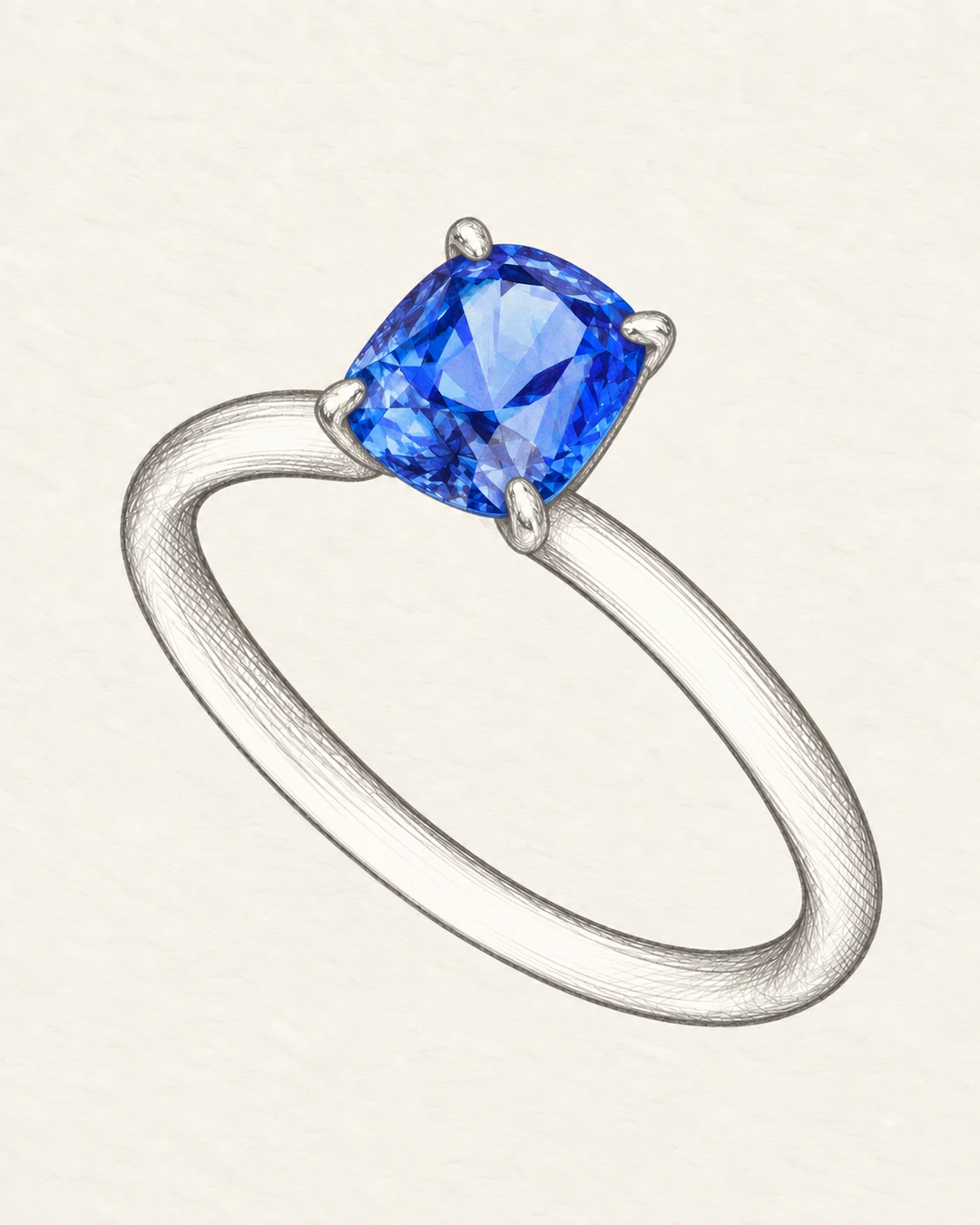
1Prongs
Metal tips hold the stone by its edge, and its sides stay visible.
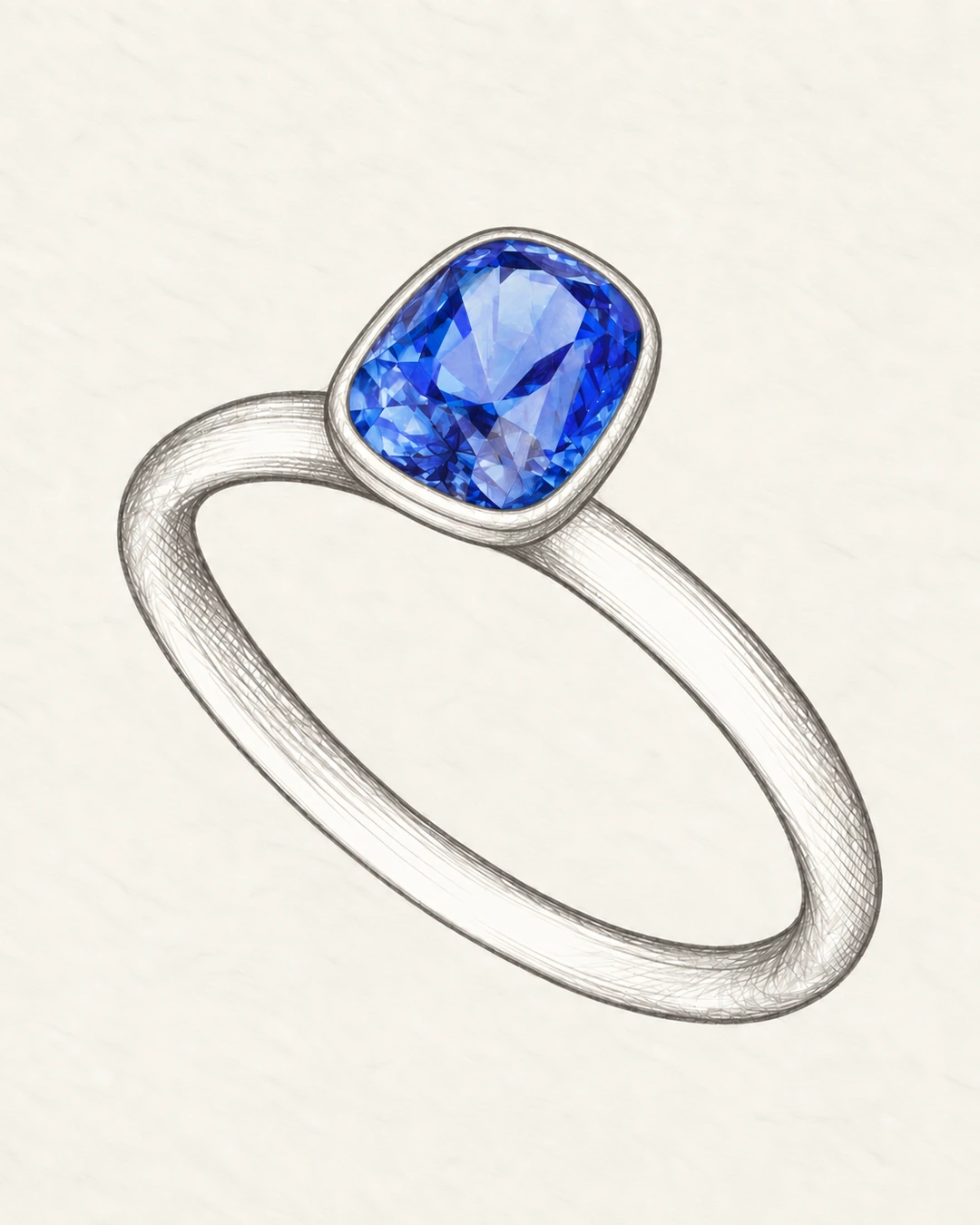
2Bezel
A thin rim of metal surrounds the stone's edge.
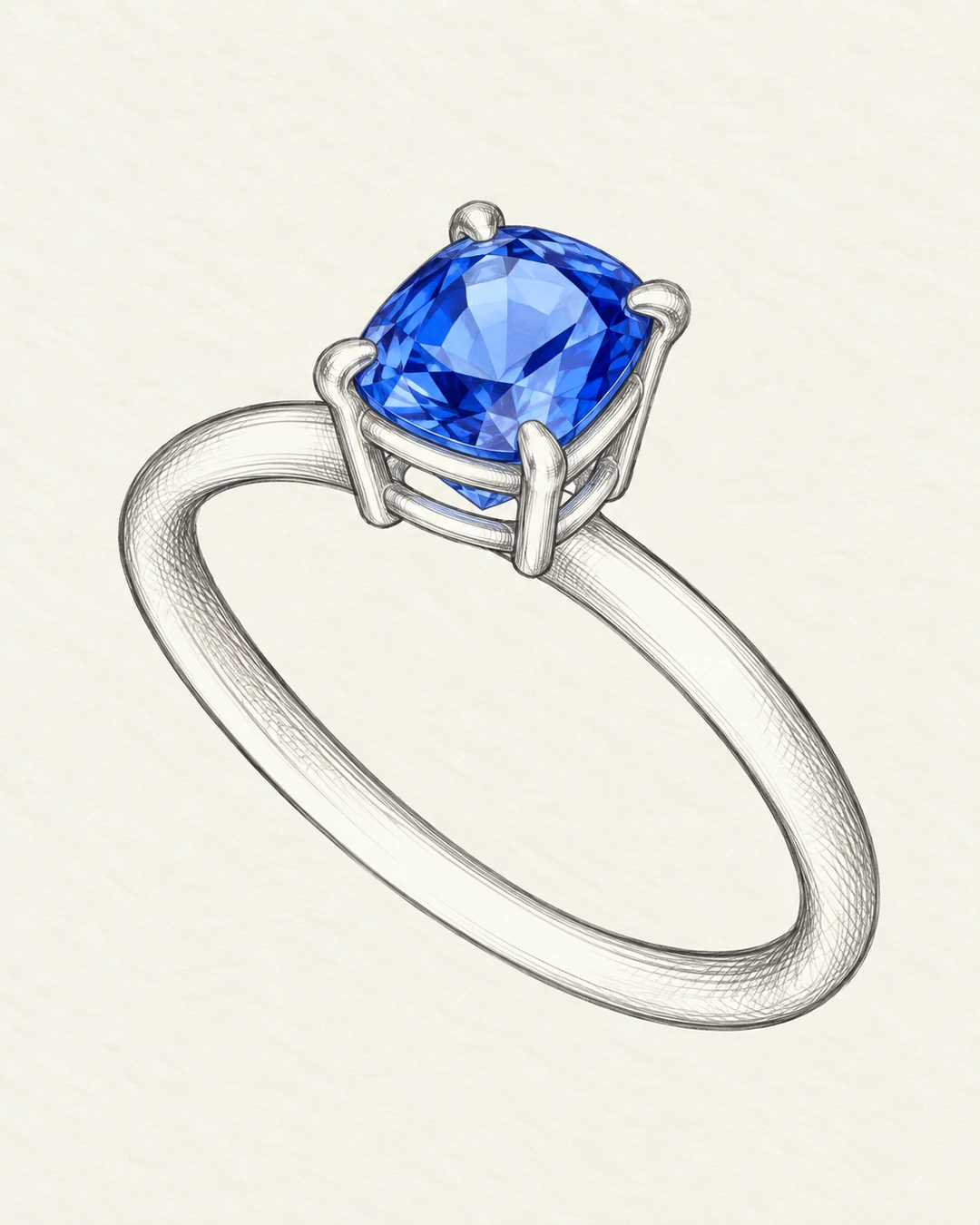
3Basket
Prongs joined by horizontal supports, forming a basket.
- Prongs. Four or six metal tips grip the stone by its edge. Pointed shapes, like a pear or a marquise, get V-shaped prongs that wrap the point.
- Bezel. A thin rim of metal runs around the edge. A full bezel closes the whole perimeter, a partial bezel leaves parts of it open.
- Basket. Still prongs, joined by horizontal supports under the stone. The supports stop them bending or spreading over time.
To see where each one fits in a ring, read our guide to engagement ring styles for colored gemstones.
Bezel vs prong vs basket: which one wins on what?
Each setting wins on something different. Start with what matters most to you.
| If you want | Choose | Why |
|---|---|---|
| The most light | Prongs or basket | Very little metal covers the stone |
| A protected edge | Bezel | Metal covers the whole perimeter |
| Nothing to catch | Bezel | A smooth rim, no raised tips |
| Prongs that stay put | Basket | The supports brace them |
| The least upkeep | Bezel | No tips to check |
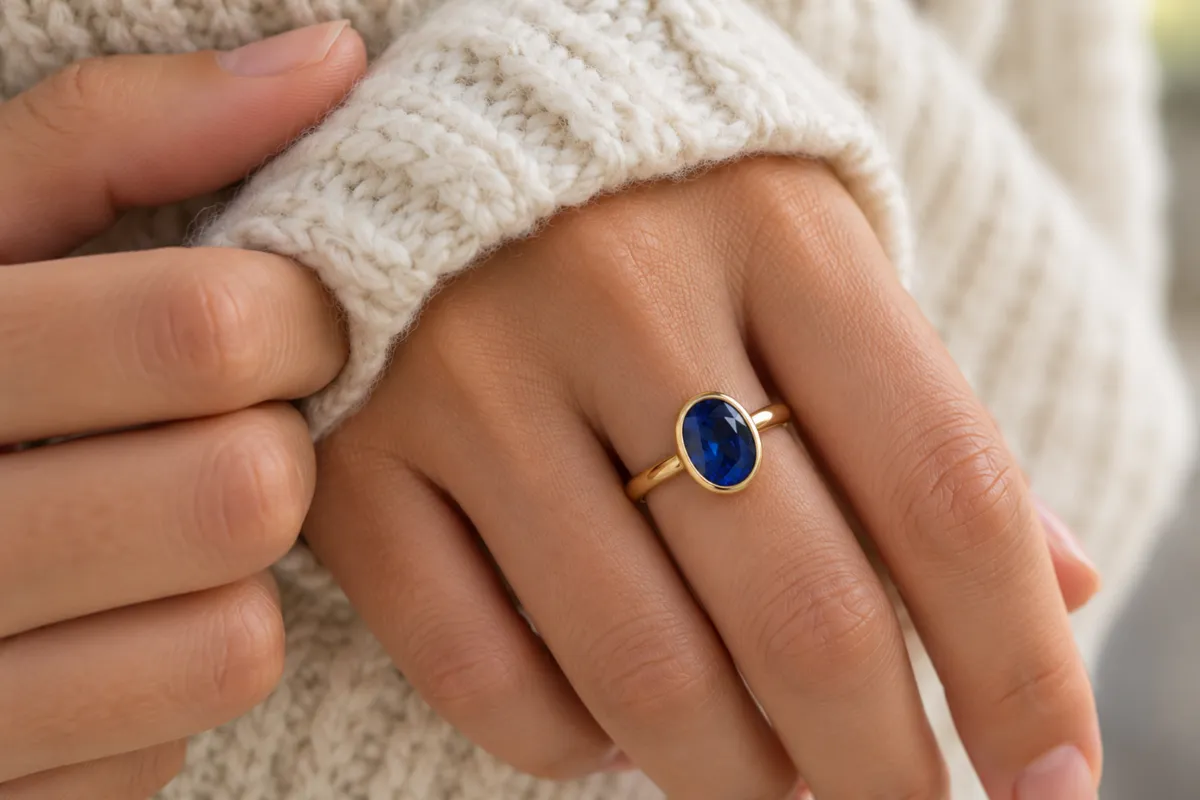
On light, here's the nuance the diamond guides miss. A bezel closes the sides, but the top stays open, and in a well-cut stone most of the light comes in through the top and bounces back out through it. That return comes from the cut.
Which bezel styles are people searching for?
On Pinterest, prongs and baskets are barely searched by name. The bezel is searched by style. Here are the 10 bezel setting styles most searched on Pinterest in the US (September-October 2026).
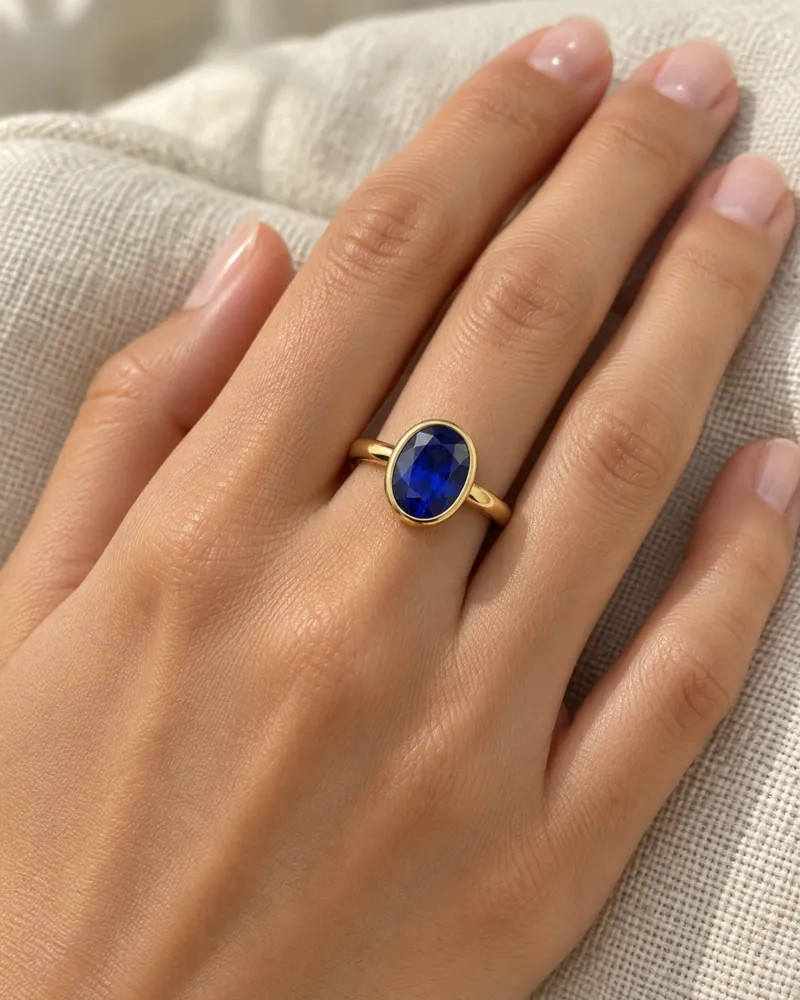
1 / 10Oval
An oval in a thin, smooth rim on a slim band.
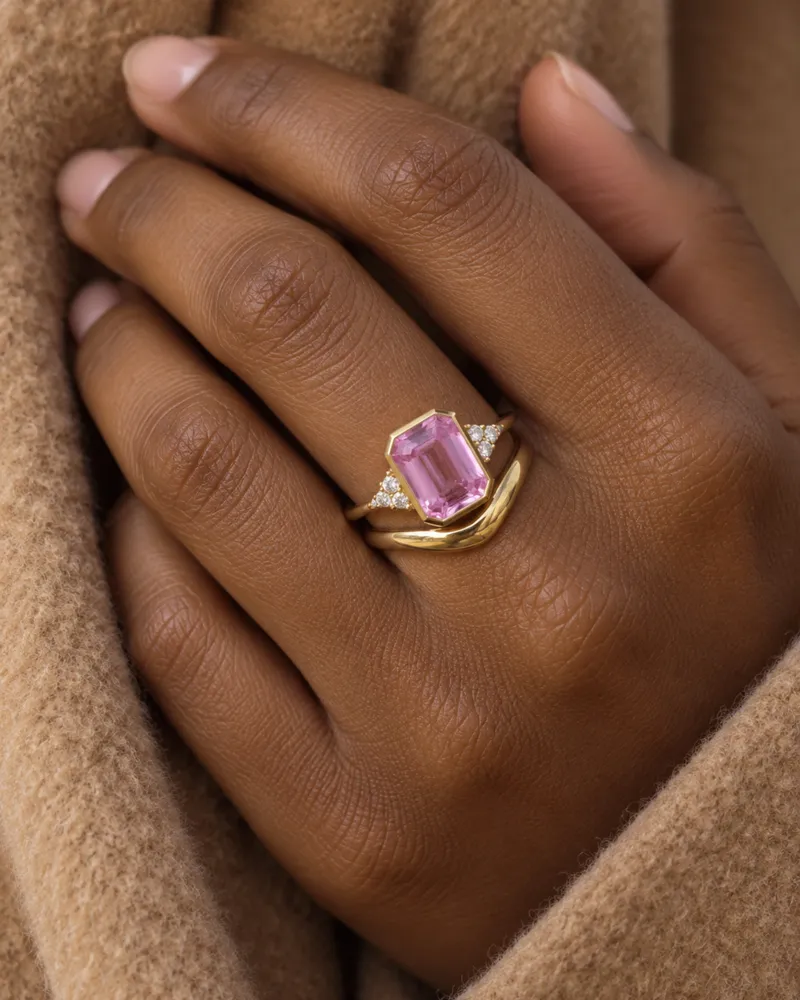
2 / 10Stacked
A bezel ring worn with a curved band that follows its outline.
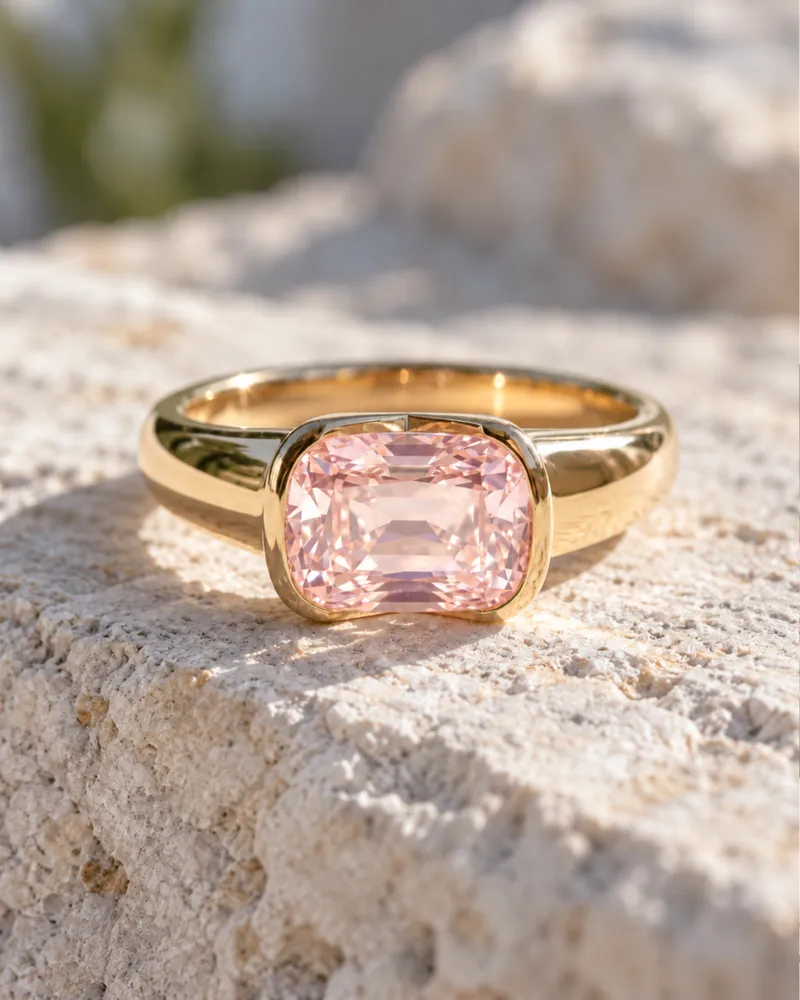
3 / 10Half bezel
A rim of metal left open at two small gaps, on a wide band.
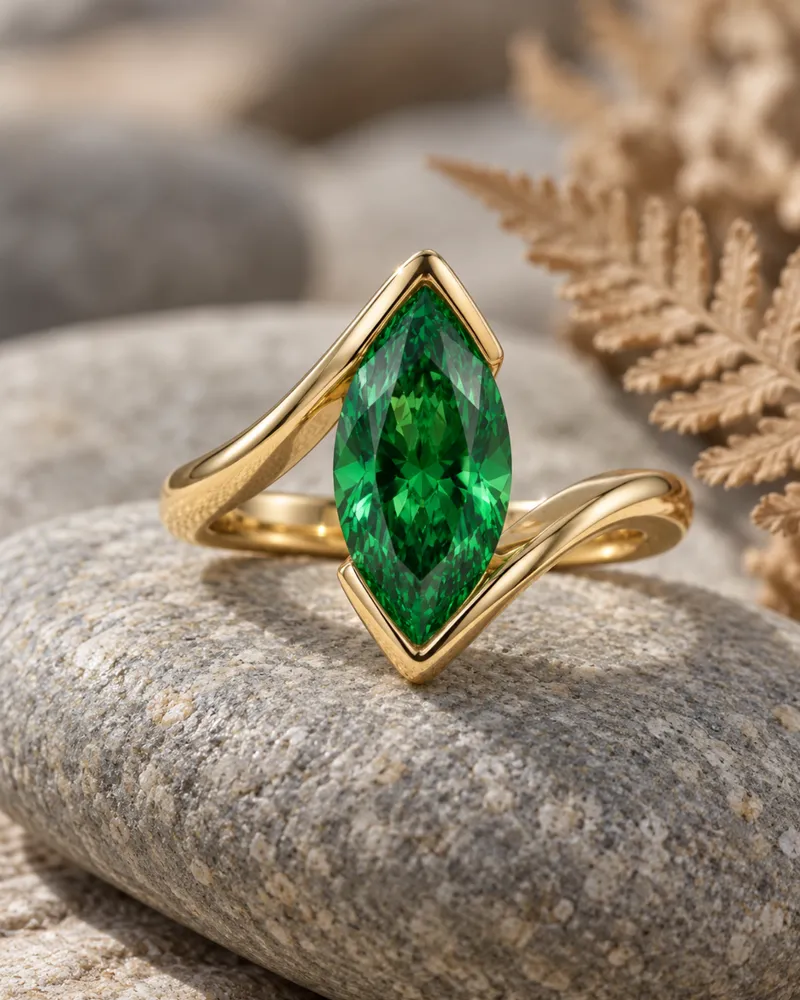
4 / 10Marquise
A marquise held by metal at both points, its sides open, on a crossover band.
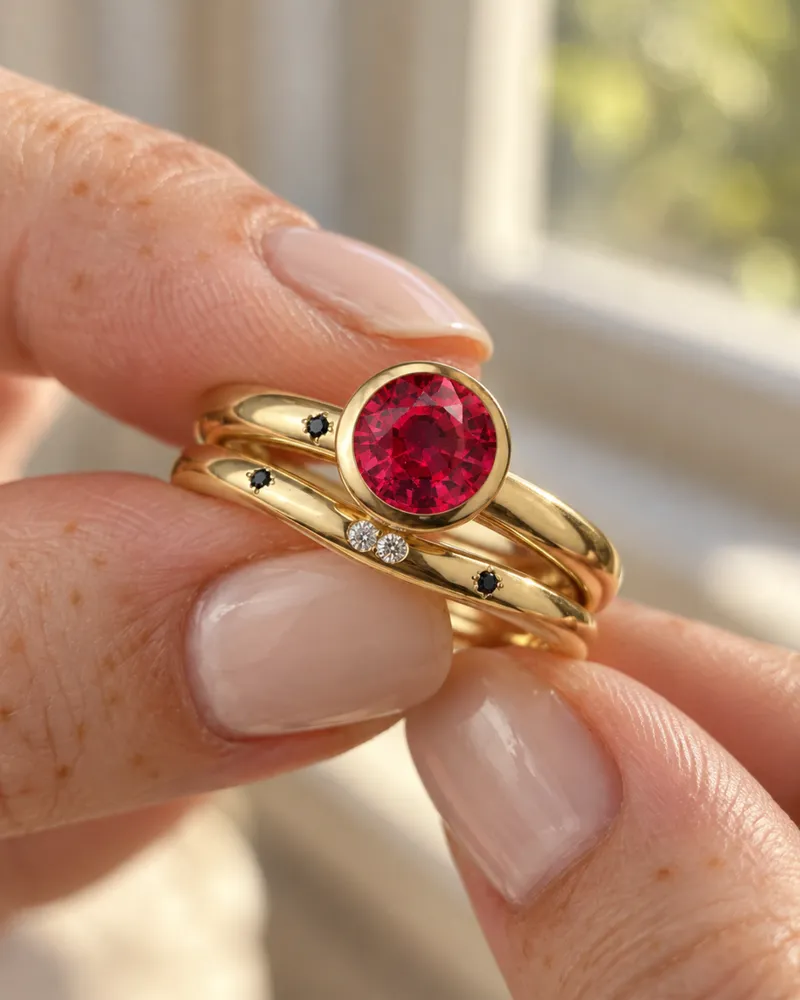
5 / 10With a wedding band
A round stone in a bezel, stacked with thin bands set with tiny stones.
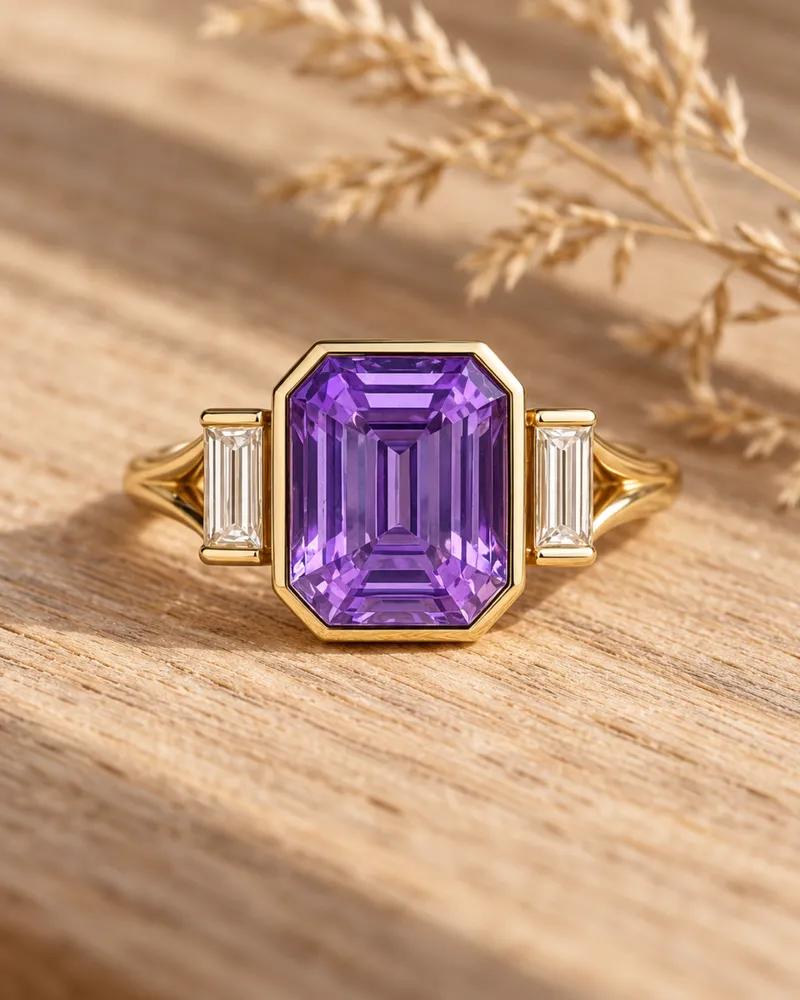
6 / 10Emerald cut
An emerald cut in a bezel, with a slim baguette on each side.
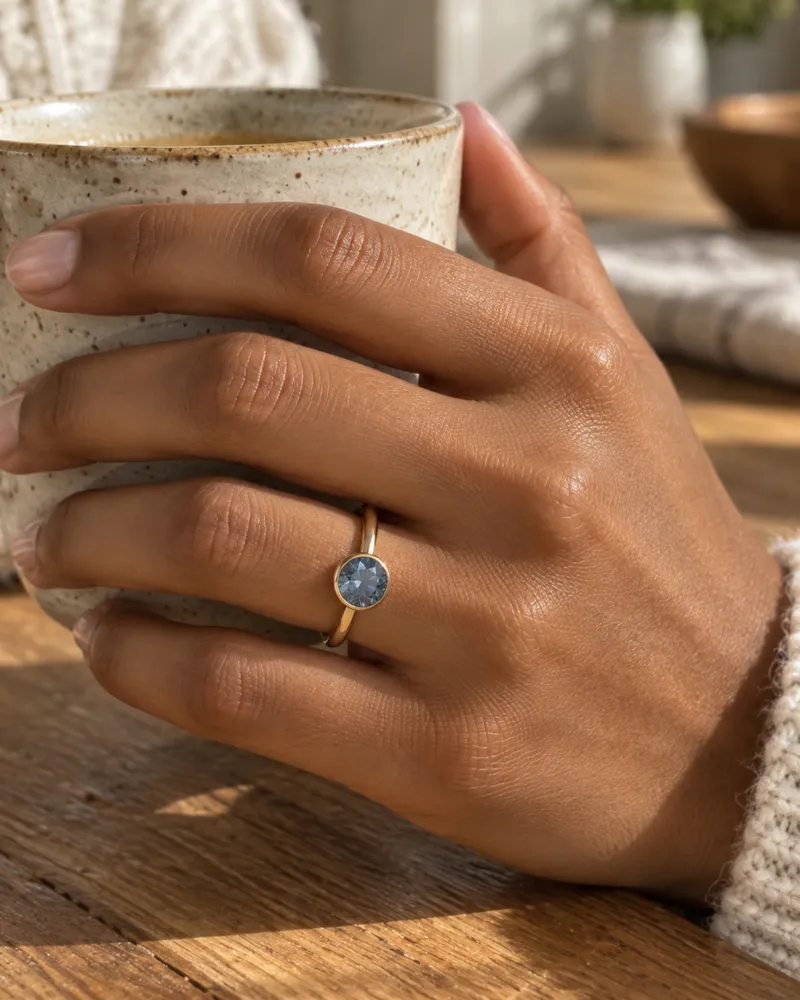
7 / 10Round
A round stone in a rim of metal, on a slim band.
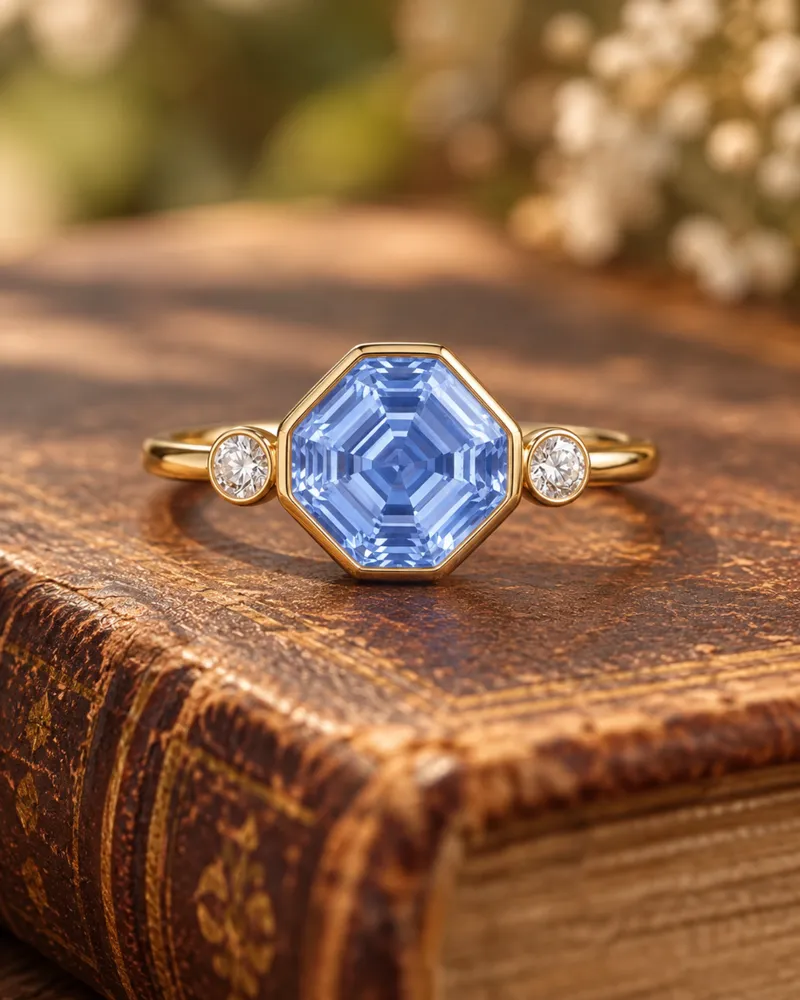
8 / 10Vintage
An octagonal stone in a rim, between two small bezel-set stones. Searches up 200% in a year.
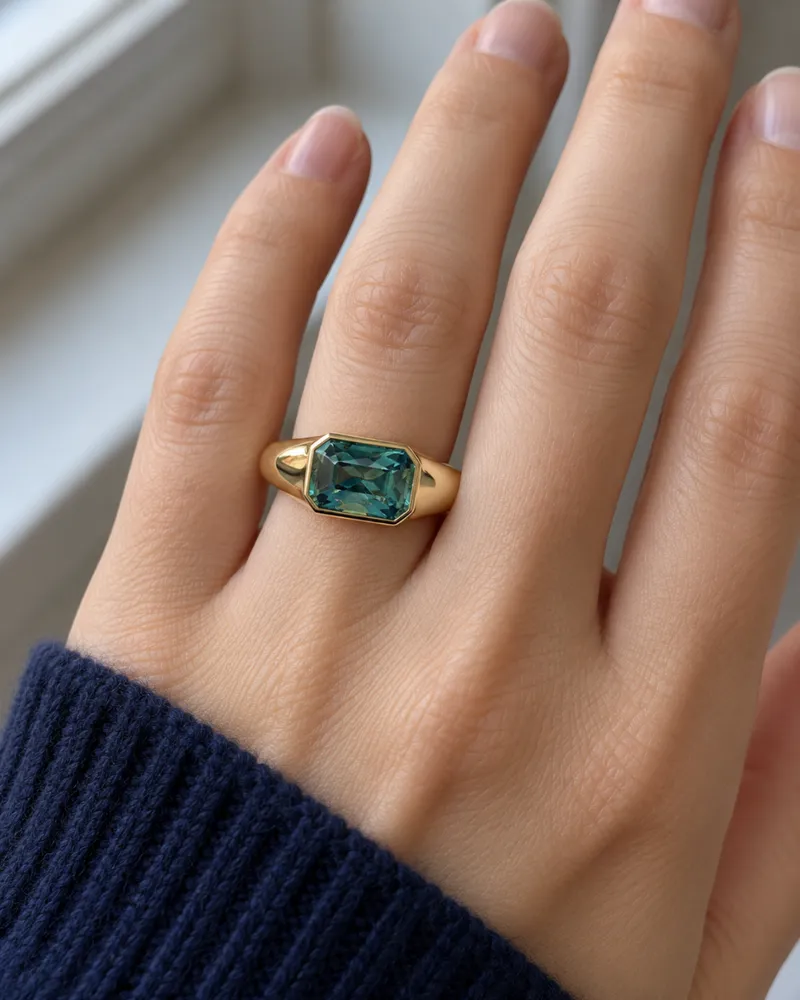
9 / 10East-west
An emerald cut set across the finger, on a wide band. Searches up 200% in a year.
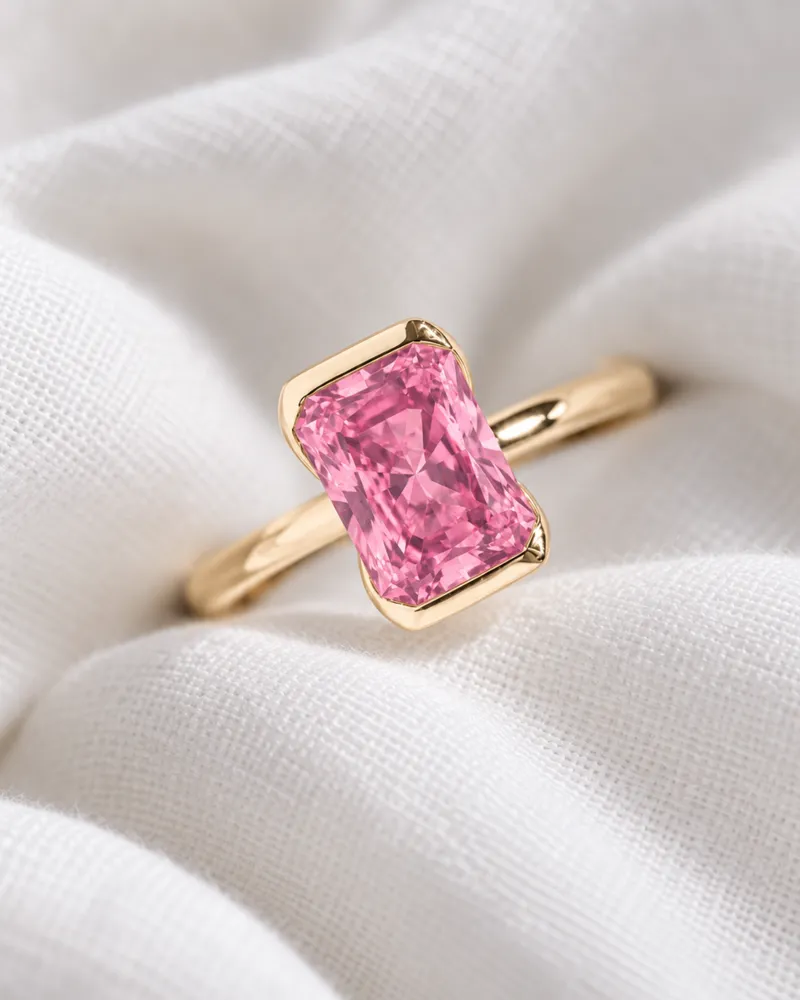
10 / 10Radiant
A radiant cut held by metal on its two short sides, the long sides open.
Which setting suits your sapphire, ruby or emerald?
Hardness is how well a stone resists scratches. Toughness is how well it resists chipping and breaking, and that's the one a setting answers.
Toughest
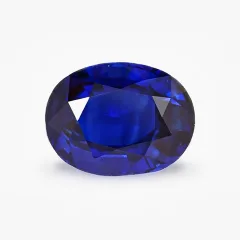
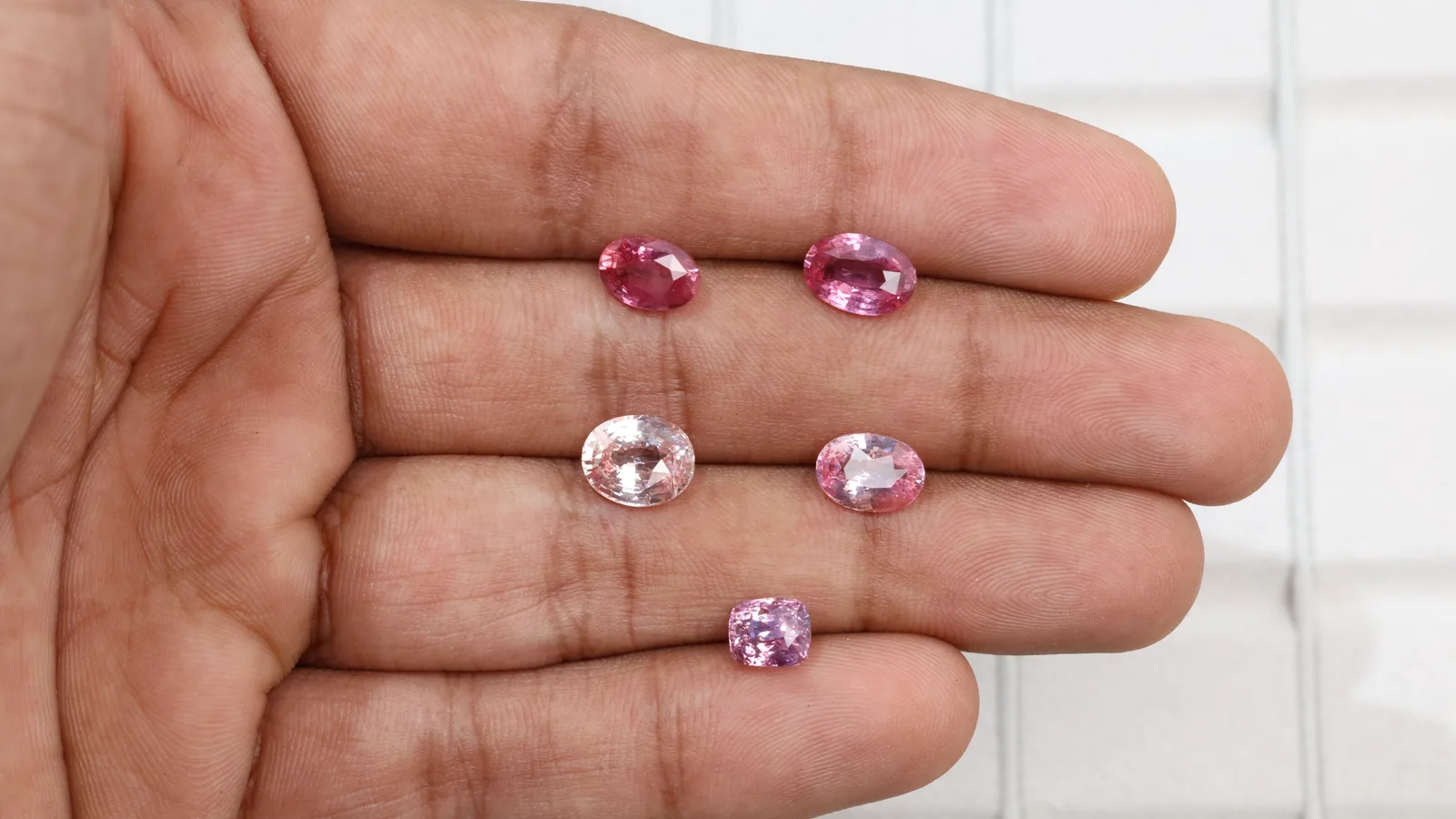
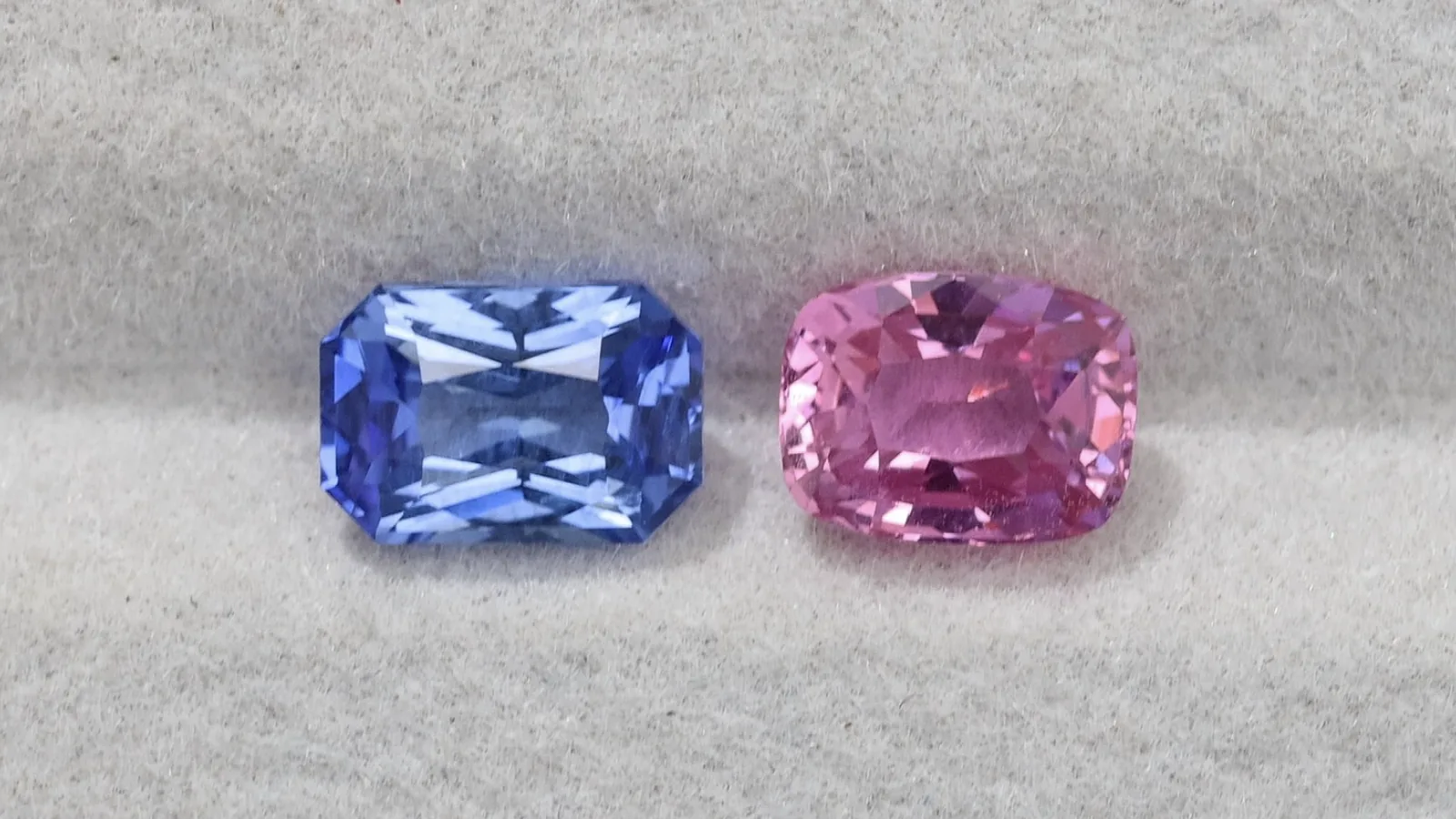
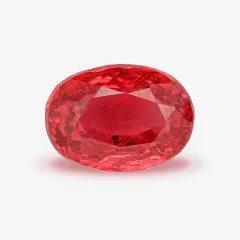 Sapphire, rubyToughness usually excellent. Prongs, basket or bezel.
Not careless-proof: large fractures, or some treatments, make a sapphire less durable.
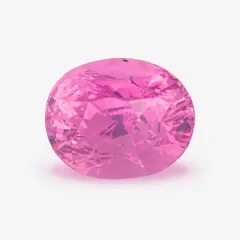 SpinelToughness good. Prongs, basket or bezel.
Hardness 8 on the Mohs scale.
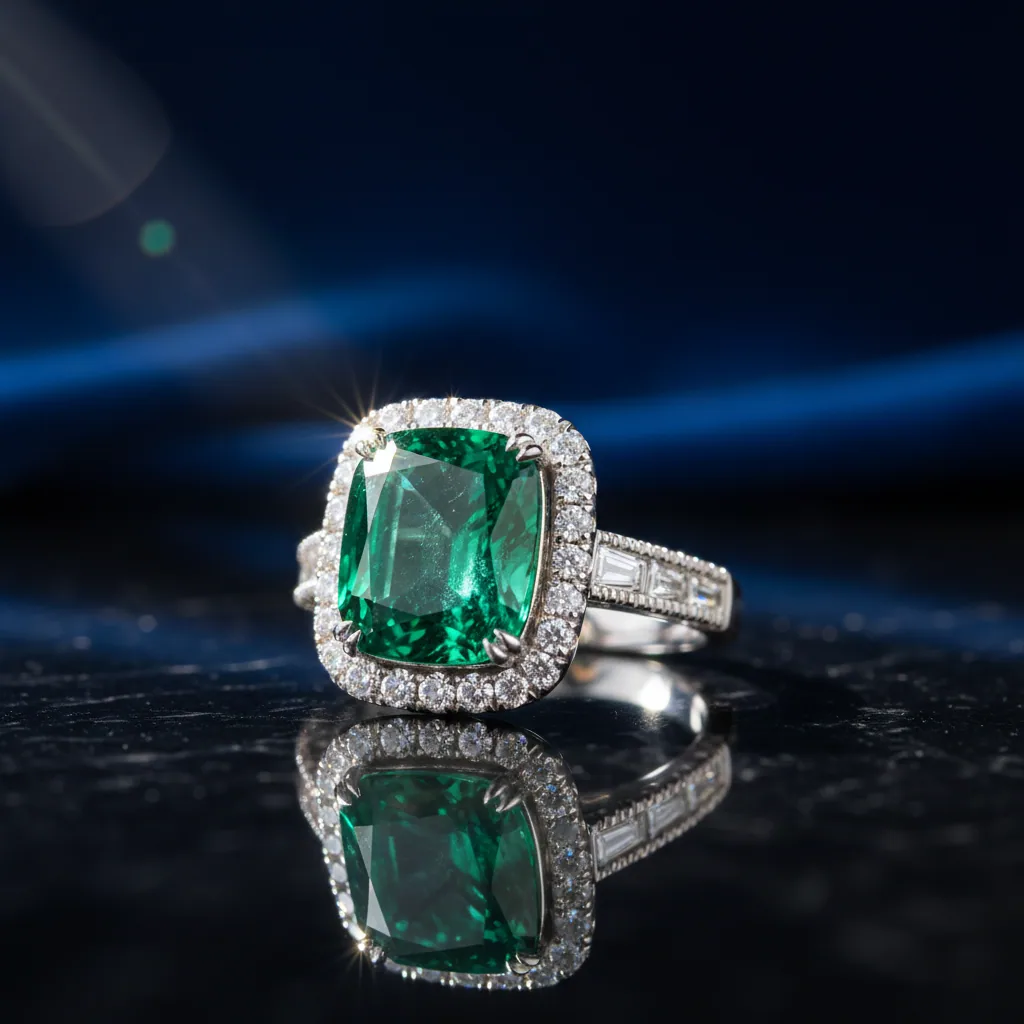
EmeraldToughness poor to good. Bezel, or metal over the corners.
Most emeralds carry fractures that reach the surface.
TanzaniteToughness fair to poor. Bezel.
Its toughness suffers from cleavage and from sudden changes of temperature.
Chips most easily
Ordered by toughness, how well a stone resists chipping and breaking. The setting on each rung is our recommendation, not a trade rule. Photos: real loose stones.
Stones that chip or split easily need mountings that cover their corners and points. Most emeralds also carry fractures that reach the surface, so an emerald is the stone that most needs the bezel. More in our guide to emerald hardness and wear.
How high will your stone sit?
A bezel usually holds the stone lowest, close to the finger. Prongs and baskets can be built high or low. The higher your stone sits, the more it catches on sweaters and hair and takes knocks.
A ring takes far more knocks than a pendant or earrings. If you work with your hands, keep the stone low, or choose a bezel.
How do you look after each setting?
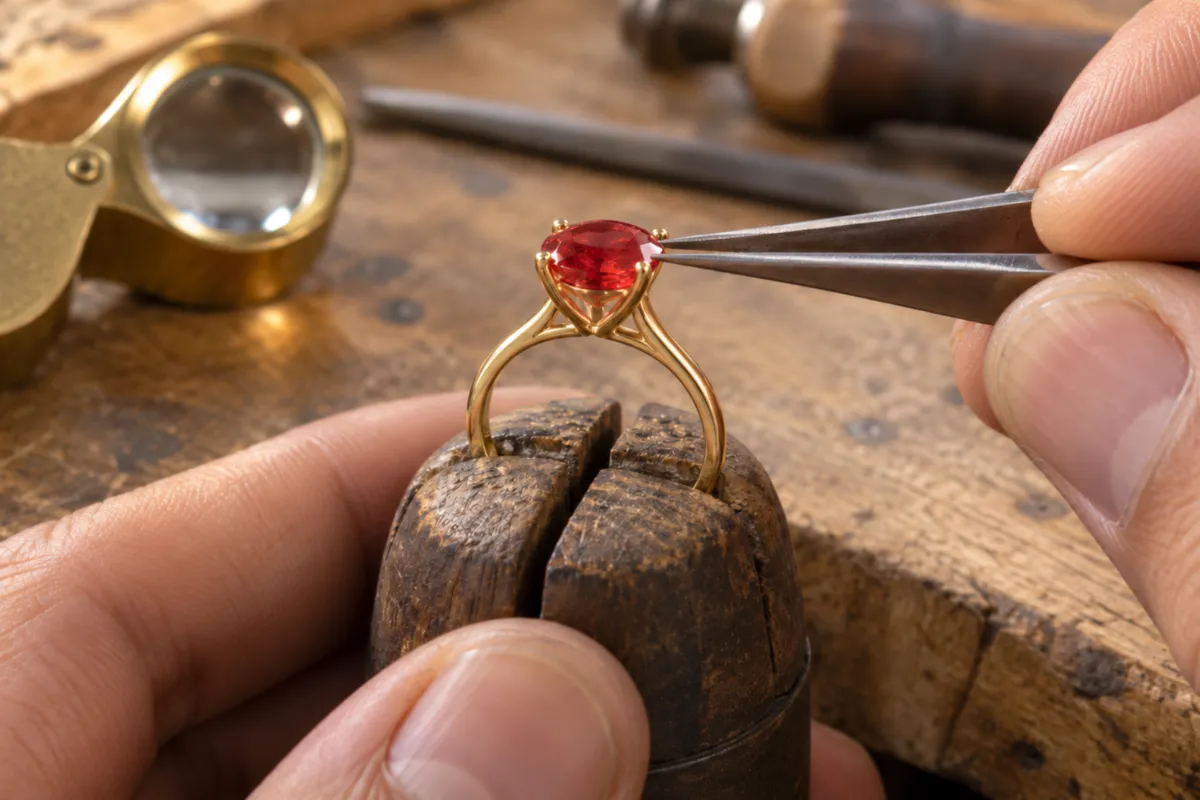
- Prongs and basket. Have the tips checked from time to time, and re-tipped once worn. Precious metals are fairly soft: a sapphire that sits loose can wear through a prong.
- Bezel. No tips to check or tighten. It needs the least upkeep of the three.
- An emerald, whatever the setting. Never a steam or ultrasonic cleaner, just warm soapy water. Heat can crack it, so tell the workshop what the stone is before any repair or resizing.
Quick answers
Is a bezel setting more secure than prongs?
Does a bezel setting make a stone look smaller?
Is a basket setting more secure than prongs?
Which setting is best if you work with your hands?
Choose the stone, then the setting
Start with what your stone can take, then pick the look you love. Browse our loose stones, or describe the one you want: the ring is made around it in our workshop, at your size.