Emerald Hardness: 7.5 to 8 on Mohs, and Why Toughness Matters More
A sourcer's straight answer on emerald hardness: the Mohs number, why toughness is the real risk, the settings that protect the stone and the care that keeps the green alive.

Emerald hardness is 7.5 to 8 on the Mohs scale. That sits above quartz, the mineral in ordinary household dust, and below sapphire and ruby at 9. Hardness is only half the answer. Emerald toughness is fair to good, because the fractures that create its garden also let it chip. Protect it in a bezel, keep it away from ultrasonic cleaners, and it lasts generations.
How hard is an emerald on the Mohs scale?
Emerald hardness is 7.5 to 8 on the Mohs scale. Harder than quartz. Softer than sapphire. Comfortably inside the range the trade treats as wearable every day. Per GIA (2024), that number describes exactly one property: how well the crystal resists being scratched.
Seven is the line that actually matters, and almost nobody bothers to explain why. Ordinary household dust carries quartz, and quartz sits at 7. Any stone below that gets quietly sanded dull by the simple act of living in a house, which is why opal and turquoise go cloudy on a hand and emerald does not. At 7.5 to 8, emerald clears the line with room to spare.
| Stone | Mohs hardness | What that means on a hand |
|---|---|---|
| Diamond | 10 | Nothing in daily life scratches it |
| Sapphire and ruby | 9 | The benchmark for a stone worn every day |
| Emerald | 7.5 to 8 | Scratch-safe, chip-sensitive |
| Aquamarine, the same mineral | 7.5 to 8 | Identical hardness, far fewer fractures |
| Quartz, and the dust in your house | 7 | The line every ring stone has to clear |
| Opal | 5 to 6.5 | Goes cloudy from ordinary wear |
Mohs is a scratch ranking, not a strength scale. It says nothing at all about chipping.
Look at the company emerald keeps in that table. It shares its exact Mohs range with aquamarine, and that is no accident. Both are beryl, the same mineral wearing a different trace element: chromium and vanadium turn one green, iron turns the other blue. Same hardness, same crystal structure, very different behaviour on a finger. Hold on to that, because the next section is where the difference comes from. Meanwhile the practical numbers that actually predict how your stone will live, exact millimetre dimensions and stated treatment level, sit on every stone in our certified emerald collection.
Hardness or toughness: which one actually breaks an emerald?
Hardness is not what breaks emeralds. Toughness is. Hardness measures resistance to scratching, and emerald passes that test at 7.5 to 8. Toughness measures resistance to breaking, and on that axis emerald rates fair to good, because most stones carry fractures that reach the surface. A sapphire shrugs off a corner knock against a door frame. An emerald with an open fissure under the girdle can chip at the same impact. So emerald hardness tells you the stone will stay bright, and tells you almost nothing about whether it will stay whole. The ring survives when the setting protects it. It does not survive if you treat it like a diamond.
Here is the thing most jewellers skip. An emerald is not a tougher, greener diamond. It is its own animal. The deep green you fell for comes from trace chromium, vanadium and iron inside the crystal, according to GIA (2024). Those same growth conditions trap tiny fractures and crystals, what the French trade poetically calls the jardin, the garden. A clean emerald with no internal life is almost always a red flag for synthetic or heavily treated material.
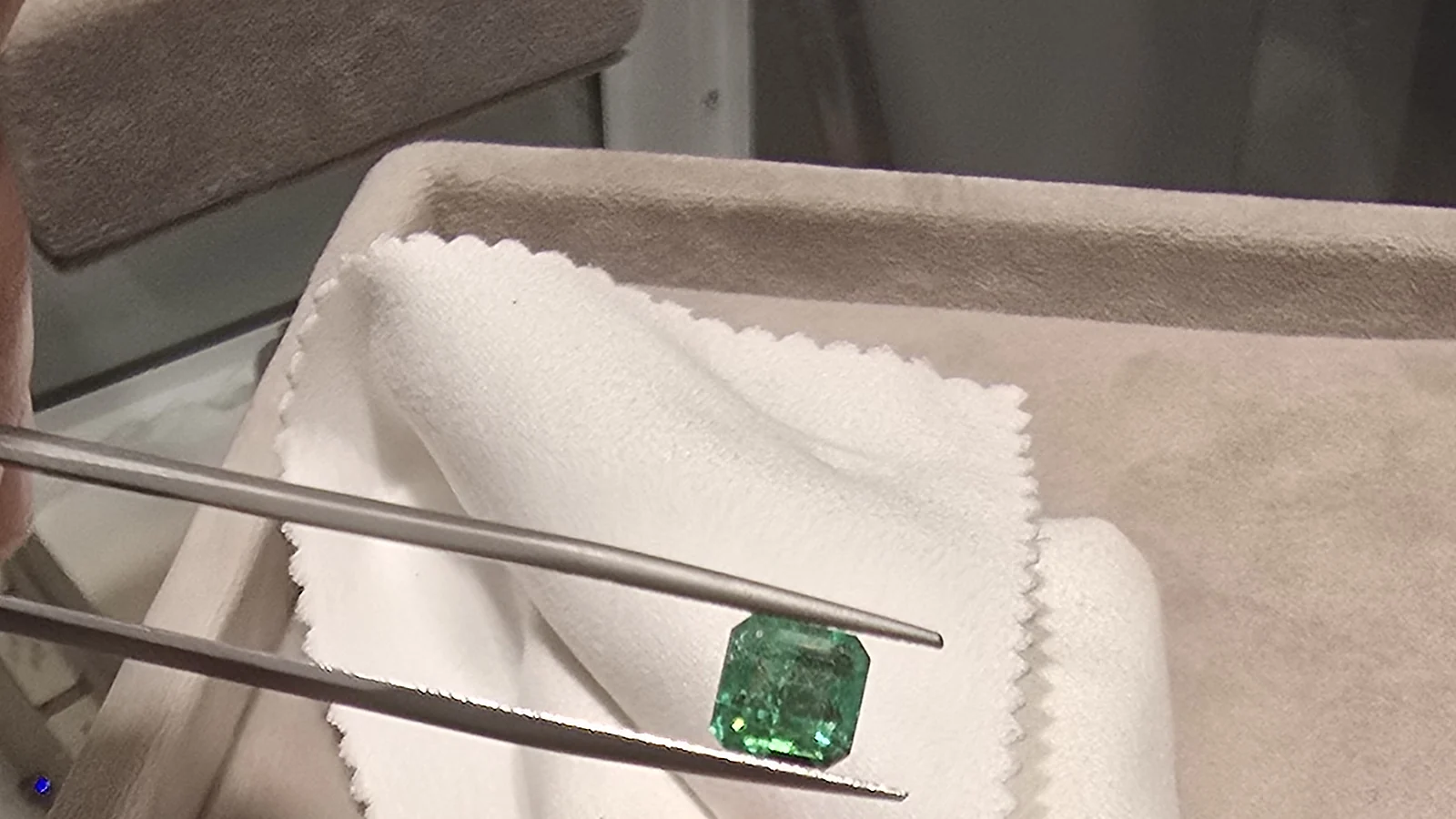
We have spent two years sourcing colored stones out of Ratnapura and Beruwala in Sri Lanka, watching merchants turn rough on a folded paper under hard light. The lesson stuck fast. A great emerald is not the flawless one. It is the one whose green stops you mid-sentence. That is the stone you want on a hand for the next fifty years.
So is it good? For a couple who wants colour over a colourless cliché, absolutely. The diamond solitaire proves something to other people. A green stone, chosen because it moved you, says something to one person. We know which conversation we would rather start.
What setting protects an emerald engagement ring best?
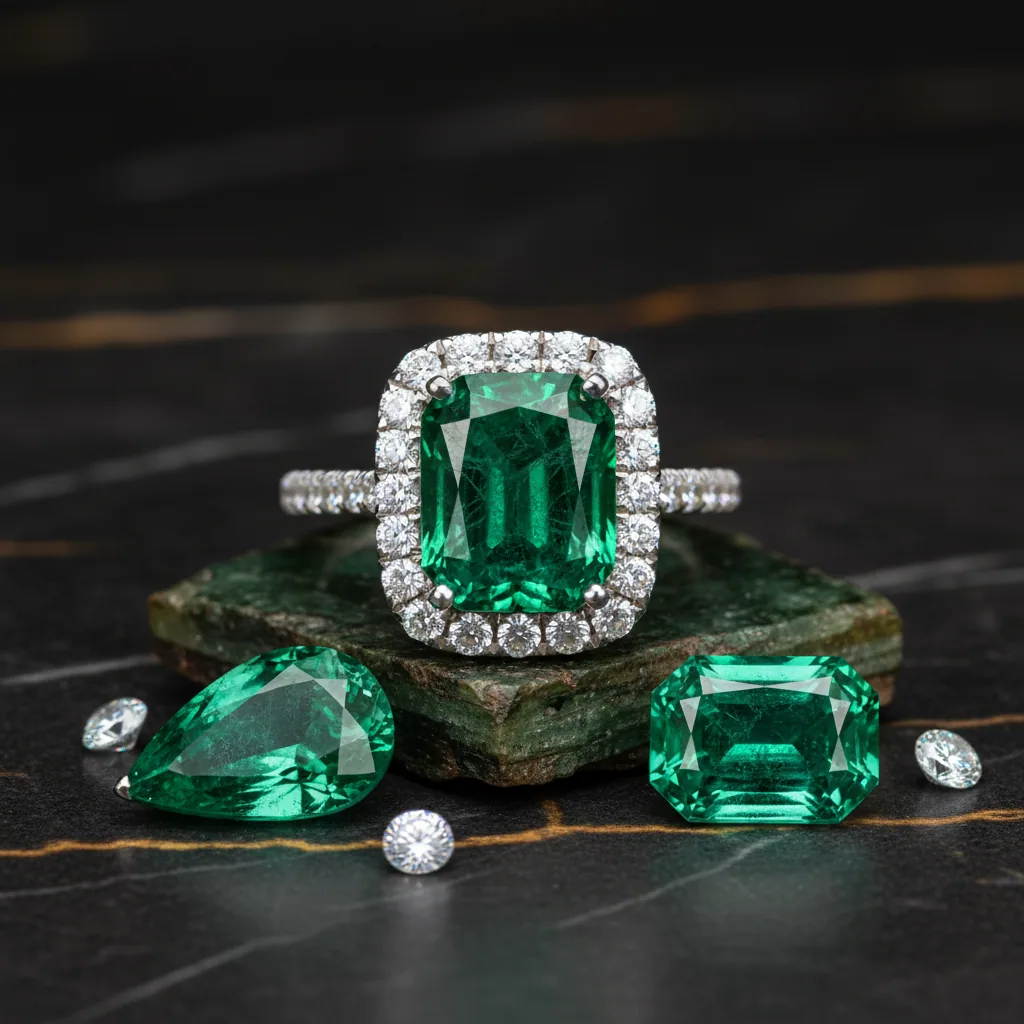
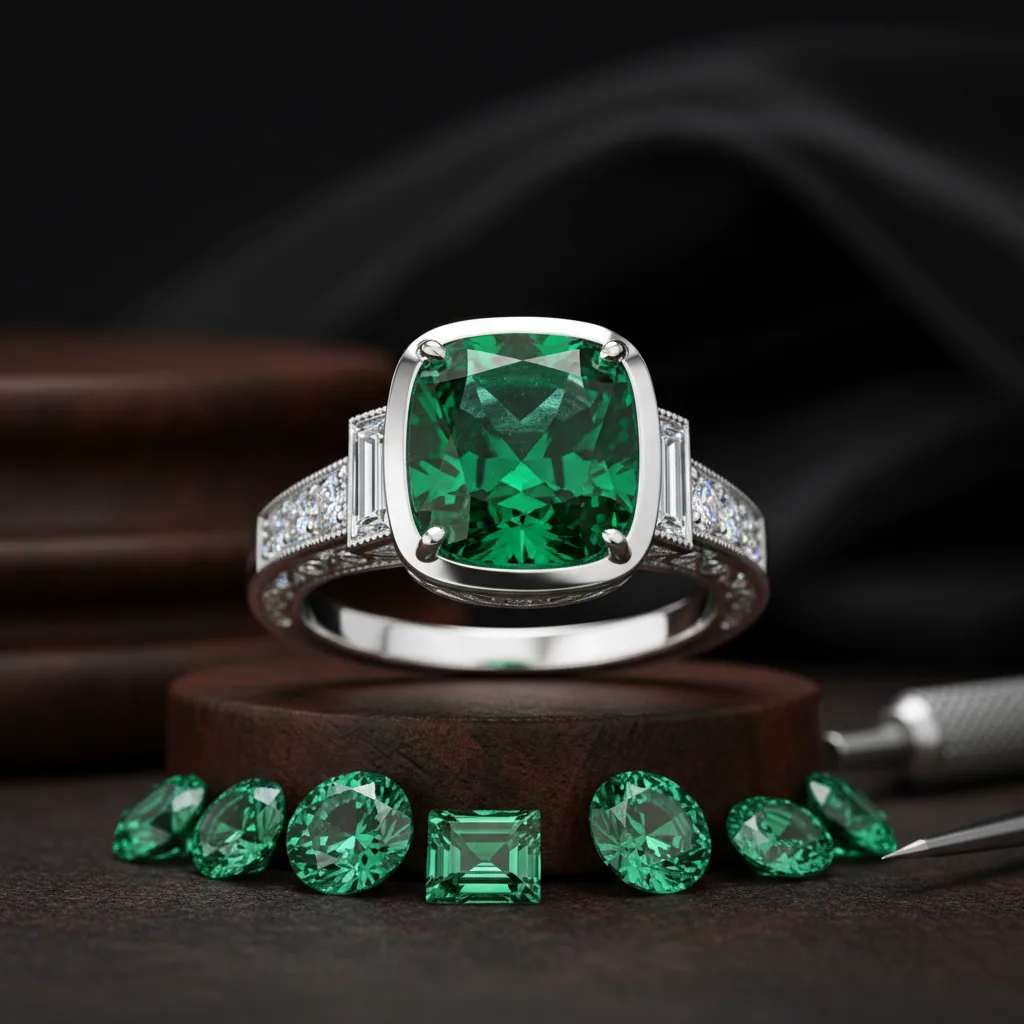
A bezel setting protects an emerald engagement ring best, with a diamond halo a close second. The bezel wraps a thin wall of metal fully around the stone's girdle, shielding the vulnerable edges from knocks. A halo rings the emerald with small diamonds that act as bumpers. Both beat a bare prong setting for everyday wear.
Why does this matter more for emeralds than for sapphires, when emerald hardness is only one point behind? Toughness. A sapphire at Mohs 9 shrugs off a corner hit. An emerald, with its internal fractures, can chip at the same impact. The setting is not decoration here. It is structural insurance.
If you love the open look of prongs, go for them, but choose a cut with protected corners. The emerald cut, those long step facets you picture when you hear the word, was practically designed for this. Its clipped corners remove the most fracture-prone points and the calm, hall-of-mirrors facets flatter the colour rather than fighting it. A four-prong or V-prong setting on an emerald cut gives you openness without leaving the corners naked.
One more honest note from handling stones daily. The lower the emerald sits, and the more metal hugging it, the longer it survives a real life of door handles, gym bags and toddlers. If your partner works with their hands, lean bezel. If they want maximum sparkle around the green, lean halo. For a deeper walk through mounting choices, look at how each stone in our certified emerald collection is cut before you pick a mount.
Colombian or Zambian: does origin really matter?
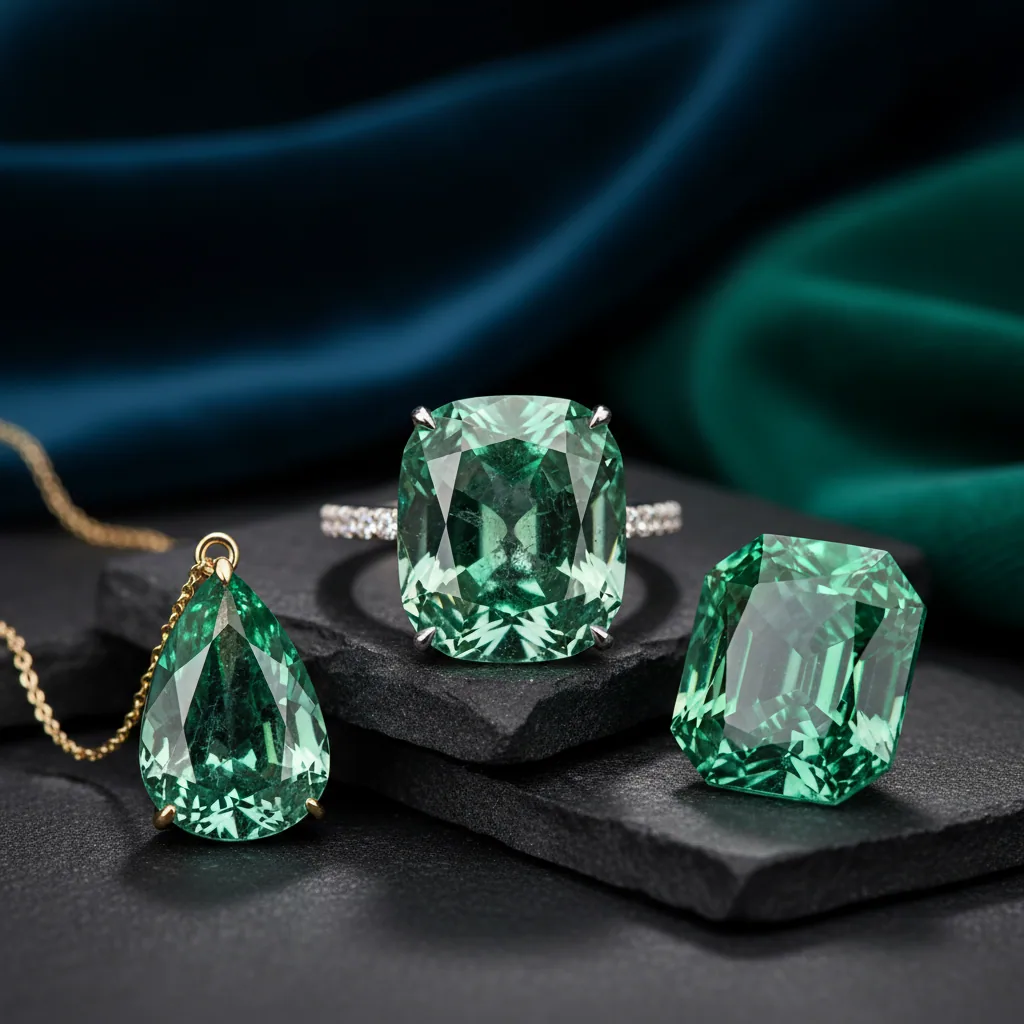
Origin matters for colour and price, but not for whether your ring is beautiful. Colombia has been the world's reference for fine emeralds since the 1500s and its stones lean pure, warm green. Zambian emeralds tend toward a slightly bluish, cooler green and often show better clarity, per GIA (2024). A famous origin can add roughly 30% to the price of an otherwise comparable stone.
Let's be honest about what that premium buys. It buys a name, and sometimes a slightly more coveted hue. It does not buy a different mineral. Both are beryl. Both get their green from the same trace elements. We have lost count of the times a "lesser origin" Zambian out-sparkled a pricier Colombian on the same tray, simply because its clarity let more light travel through.
This is the part of the trade we care about. The mythology of origin gets sold harder than the stone itself. The truth Sri Lanka taught us is that source is not the real lever, transparency is. Who pulled it from the ground, who cut it, what was done to it after. A stone with a clear, documented chain beats a stone with a glamorous postcode and a foggy history, every single time.
Our take, for what it is worth. Pick the green you cannot stop looking at, then ask for the origin on the report rather than choosing the report first. If you want the full breakdown of grading and value, our guide to emerald as the May birthstone goes deep on the four Cs for this stone specifically.
Why every emerald is treated, and what to ask before you buy
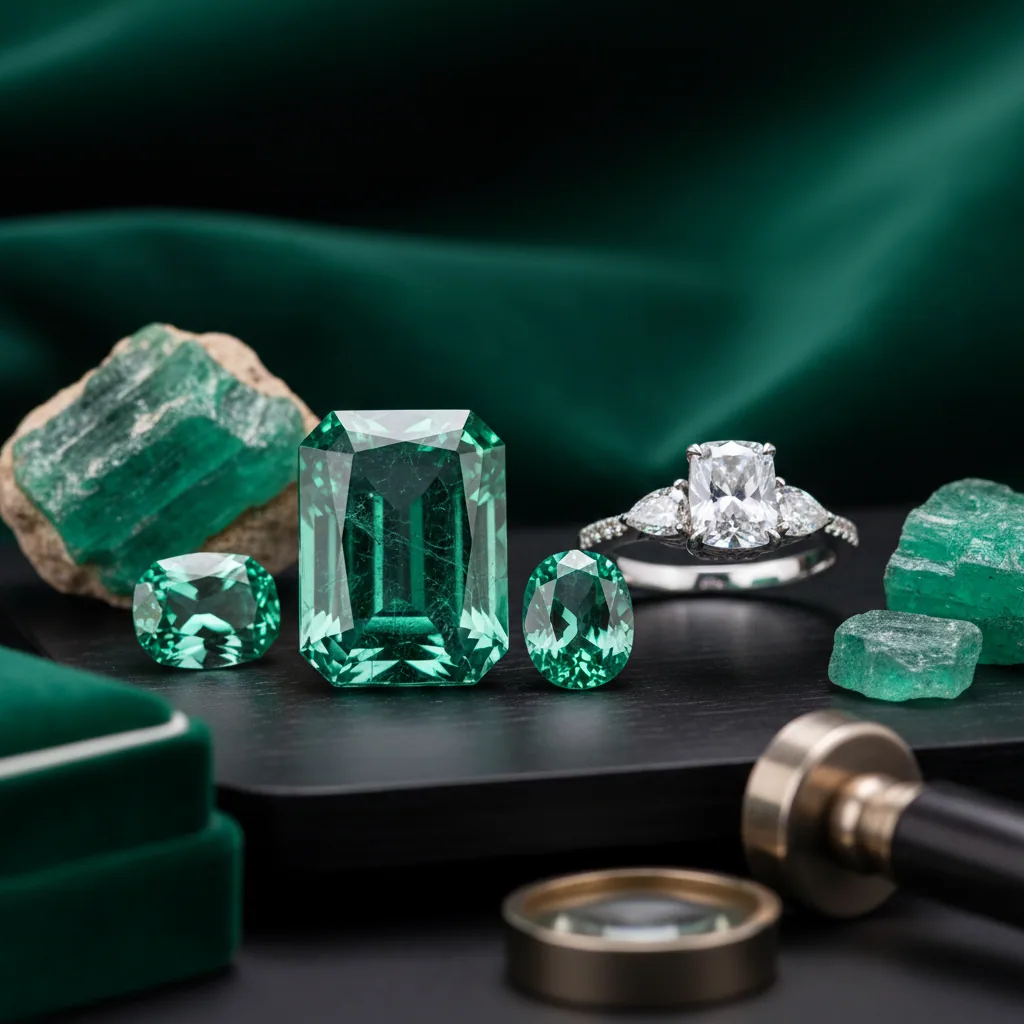
Here is the fact the industry whispers instead of saying out loud. Most emeralds on the market today are treated, and that is normal. People have been soaking emeralds in oil almost as long as they have been cutting them, according to GIA (2024). Oil or resin seeps into the surface-reaching fractures and makes them nearly vanish, so the green reads cleaner to the eye.
Two things you need to internalise. First, treatment is not fraud, it is convention, and a lightly oiled emerald is perfectly buyable. Second, the filling is not permanent. GIA is blunt on this. An emerald's appearance can change over time as the filler ages, and stones can be re-treated by a professional. That is why care rules for emeralds are stricter than for almost any other ring stone.
So what do you actually ask? Three questions, word for word:
- "What is the treatment level?" The trade scales it from none, to minor, moderate, or significant filling. Less is more valuable and more stable.
- "Is the filler colourless or dyed?" Colourless oil is standard. Dyed filler used to fake colour in cheap material is a hard no.
- "Is it on the lab report?" A reputable seller discloses treatment in writing. No disclosure, no deal.
At Joalys every coloured stone is certified by an independent outside laboratory before it ever reaches a client, treatment level stated plainly. We would rather lose a sale than hide an oiling. The whole reason we left the opaque way of doing things is that a stone you understand is a stone you can love without a nagging doubt.
How much should an emerald engagement ring cost?
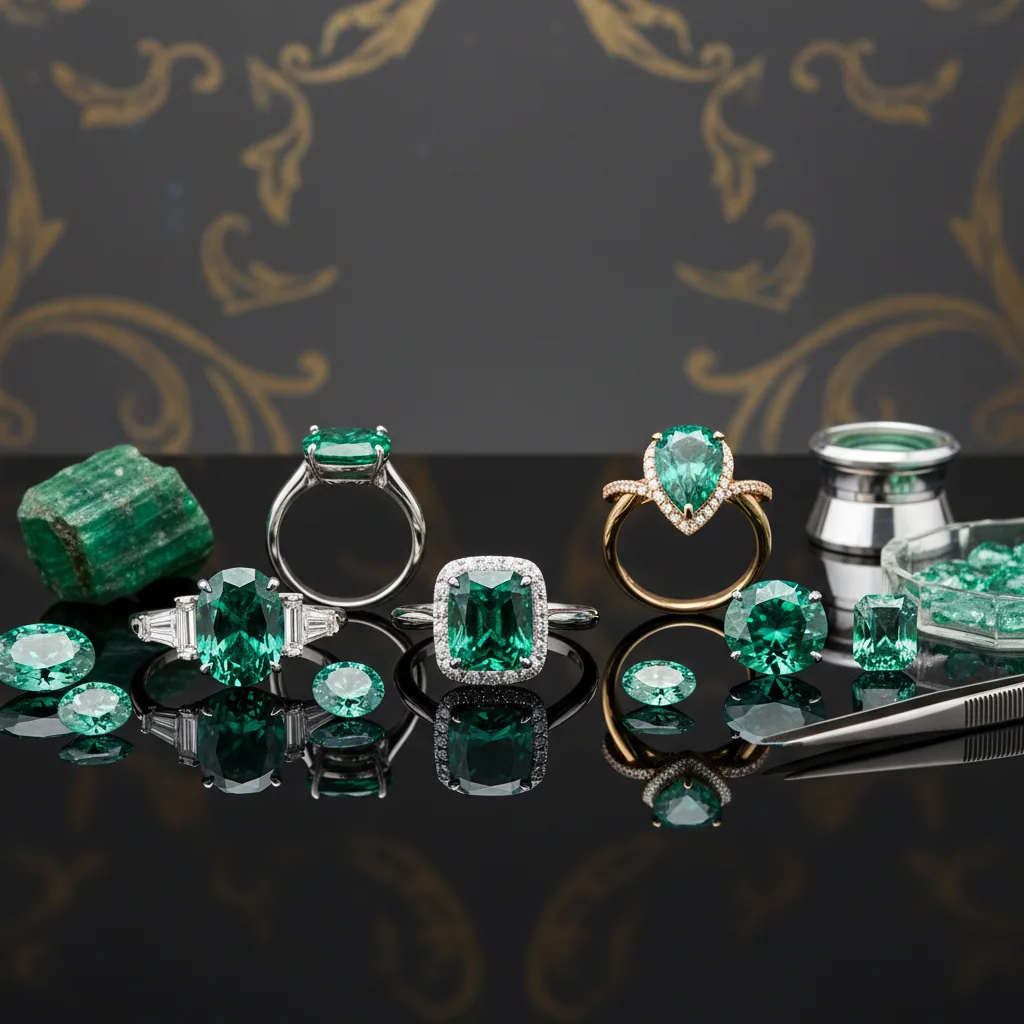
A natural emerald engagement ring with genuinely good colour runs roughly $2,000 to $8,000 per carat for the stone, before the setting. Zambian emeralds in the 1 to 2 carat range sit around $3,000 to $4,000 per carat, climbing to $5,000 to $6,000 per carat from 2 to 6 carats, based on 2026 market guides. Colombian material commands its premium on top.
Colour drives the number more than size does. GIA's own key concepts for emerald state that slight differences in hue, tone and saturation create large differences in value when everything else is equal. We have watched a half-carat jump in saturation erase a thousand dollars of difference at the wholesale table. Two stones, same weight, the greener one worth double.
Where can you save without regret? A few real levers:
- Choose Zambian over Colombian at the same visible quality and pocket 30 to 50% of the difference.
- Accept honest, eye-visible inclusions. The trade considers them normal in fine emeralds, and they cut the price of a vivid stone hard.
- Go slightly under a round carat weight. A 1.85 ct reads identical on the finger to a 2.00 ct but skips the round-number premium.
- Let diamonds play accent, not co-star. A modest halo costs far less than matched diamond side stones and still protects the emerald.
One word we will never use about this purchase is investment. An engagement ring is not a portfolio. Buy the green that makes your person's face do the thing, inside a number that lets you sleep. That is the only return that matters here.
What cut and carat suit an emerald center stone best?
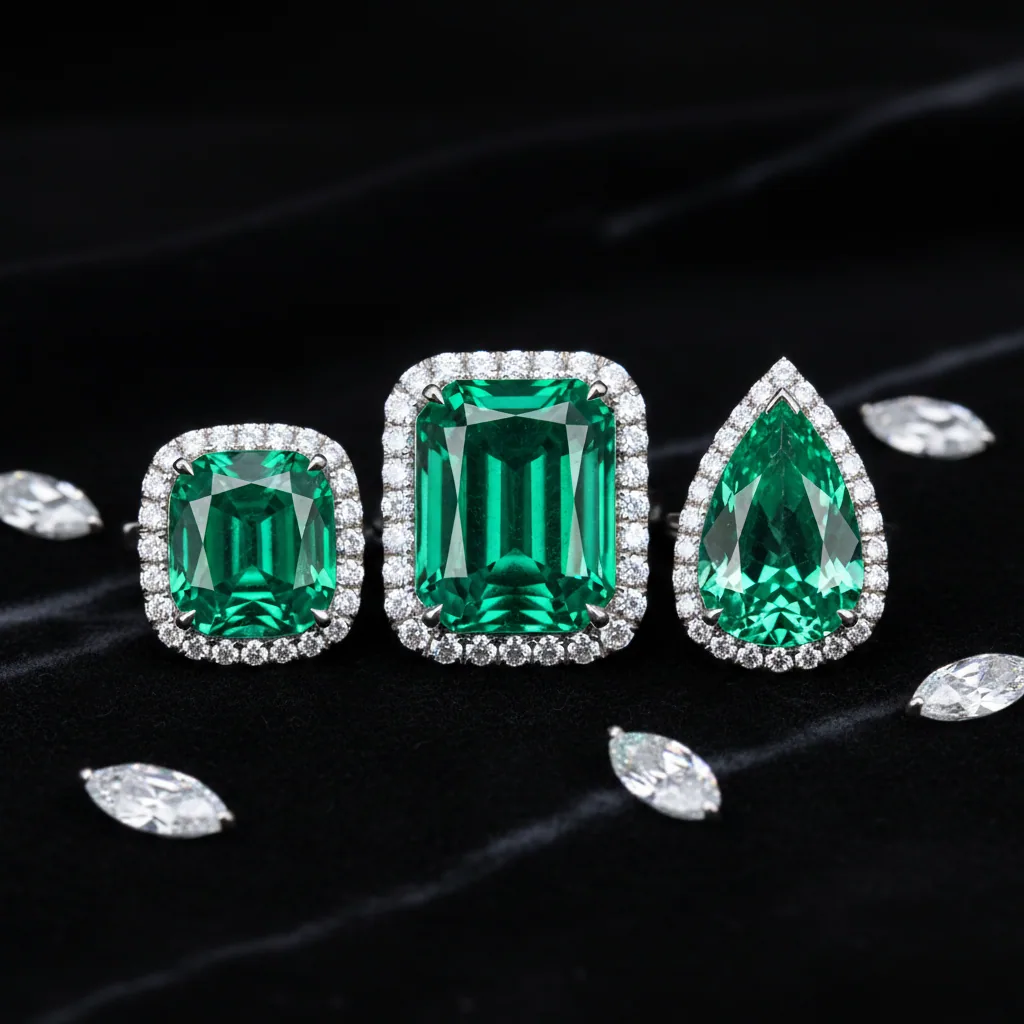
The emerald cut suits an emerald center stone best, with oval and cushion as strong runners-up. The emerald cut's long step facets and clipped corners do two jobs at once. They calm the eye so the colour reads deep and even, and they remove the fragile sharp corners that chip. It is the rare case where the most popular cut is also the most protective.
That said, the cut should answer the rough, not a trend. Emerald rough is often long and columnar, so it yields beautifully to emerald and oval shapes with less waste, which means more carat weight kept in your stone for your money. A round brilliant fights the crystal and the inclusions both, which is why you rarely see it done well.
On carat, think about coverage, not just weight. A medium-dark, vividly saturated 1 carat emerald can look richer and more present than a pale, washed-out 2 carat. Colour first, size second. If the green is right, a 0.9 to 1.5 carat center reads as a serious, grown-up stone on most hands.
Get the finger measurement right before you commit to proportions, because an emerald cut elongates the finger and a hair of length looks different across sizes. Measure the finger before you commit to proportions, because a resize later puts heat and pressure on a stone that tolerates neither. Every stone in our emerald collection lists its exact millimetre dimensions for that reason.
Natural or lab-grown emerald for your ring?
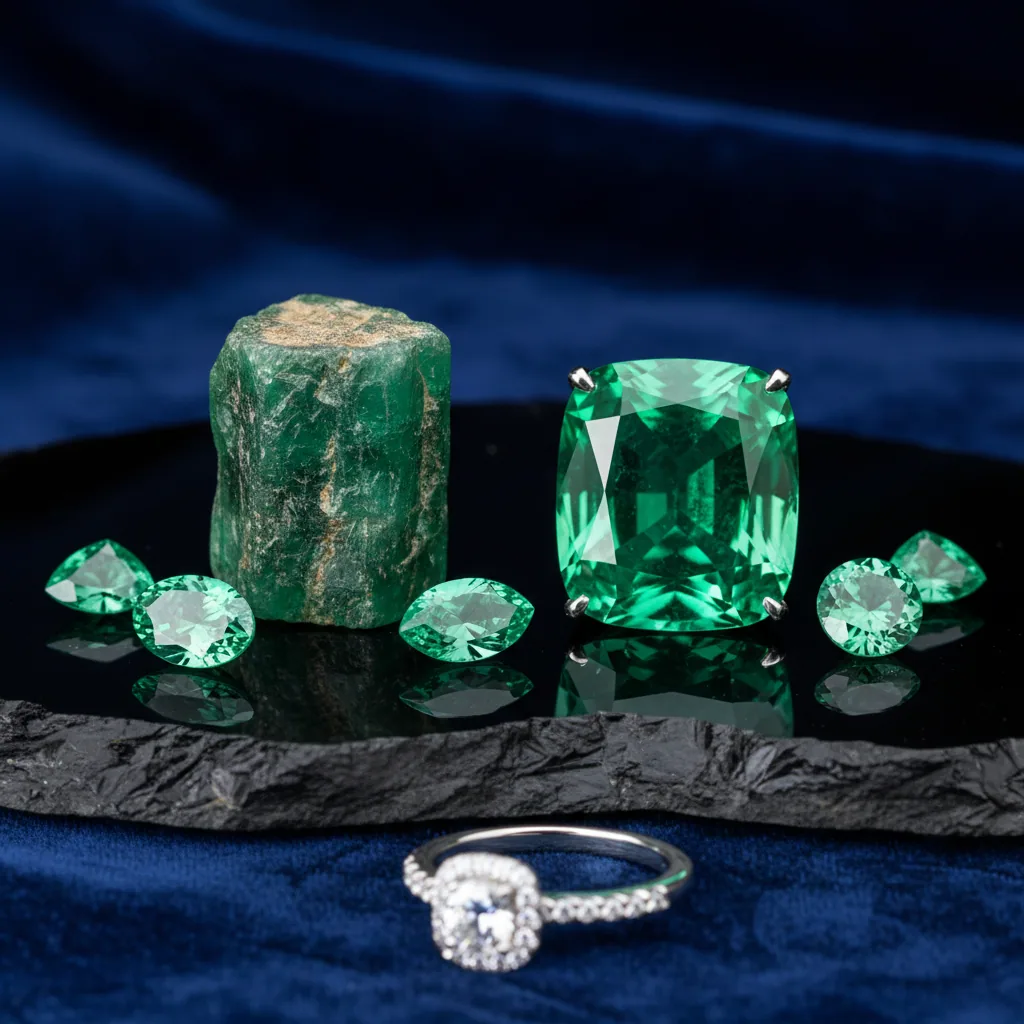
Choose a natural emerald if you want a one-of-a-kind stone with real provenance, and lab-grown if budget and near-flawless clarity matter most. Both are true emerald, the same beryl, the same chromium-green, chemically and optically identical. The only real difference is where it grew, in the earth over millions of years or in a controlled chamber over months.
Emerald hardness is identical either way, 7.5 to 8, because the mineral is identical. Lab-grown stones typically cost 20 to 40% less than mined material of similar look, and they tend to carry fewer inclusions, which can make them slightly tougher in daily wear. Tougher, not harder. The distinction is the whole point of this article. For a couple who wants the green without the price and is relaxed about origin, that is a clean, honest choice. No shame in it.
What the lab cannot grow is the story. A natural emerald passed through specific hands, a miner near Kafubu or in the Boyacá hills, a cutter who read the rough and decided where to place the facets, a setter who fit it to metal. That chain of human decisions is the thing we sell, not just the carbon-and-beryllium. A grown stone is real and beautiful. It is simply newer, and it has no biography.
Our honest steer. If the ring is a milestone you want to feel rooted in something older than both of you, go natural and certified. If you would rather put the saved budget into a bigger, brighter green, lab-grown is not a compromise, it is a different, valid story.
How do you care for an emerald when hardness will not save it?
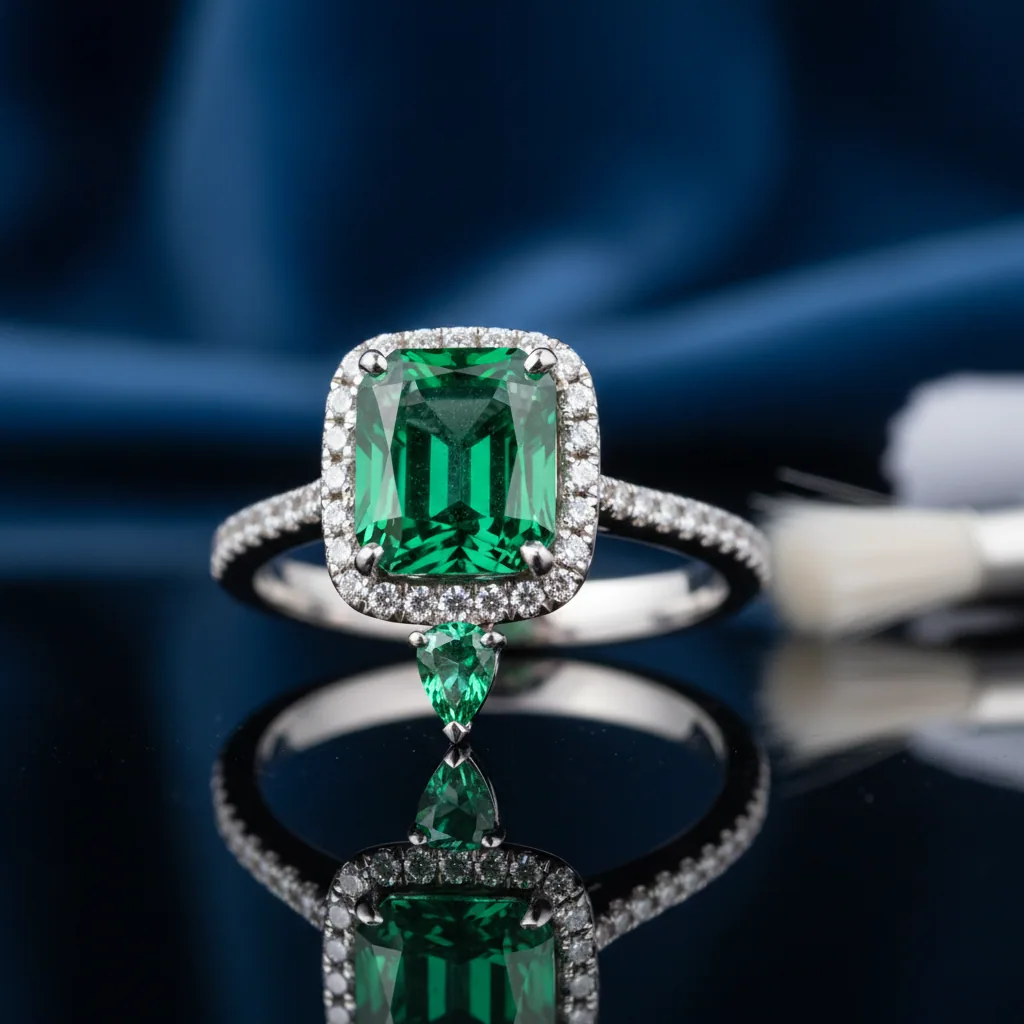
Care for an emerald engagement ring with warm soapy water and a soft brush, and never with steam or ultrasonic cleaners. GIA is unambiguous here. Steam cleaning is never safe for emeralds and ultrasonic baths are risky to forbidden, because both can drive the oil out of the fractures and even open them. Warm, soapy water is the safe method, with no vigorous scrubbing.
A few habits keep the green alive for decades:
- Take the ring off for the gym, gardening, dishes and DIY. Most emerald damage is one hard knock, not slow wear.
- Keep it away from chemicals. Bleach, chlorine and even some perfumed soaps strip the oil treatment and dull the stone over time.
- Store it alone. Emerald hardness of 7.5 to 8 protects it from dust, not from its neighbours. Diamonds and sapphires sit higher on the scale and will scratch it in a shared jewellery box.
- Have it checked yearly by a jeweller, and re-oiled if a professional sees the filler drying out. This is routine maintenance, not a defect.
None of this is a burden once it becomes habit. We tell every client the same thing we learned on the table in Beruwala. An emerald is a living, breathing stone with a garden inside it. Treat it with a little ceremony and it will outlast the marriage paperwork. For the full routine across all gem types, see our jewellery care and maintenance guide.
JOALYS Expert, from the merchant's table
The single trick we use to judge an emerald in seconds: tilt it under hard, direct light, not a soft showroom spotlight. Soft light hides everything. Hard light shows the true saturation, the open fractures, the windows where colour leaks out. If a seller only lets you see a stone under flattering light or in a photo, walk. We never bought a single stone in two years in Sri Lanka that we had not first rolled under the worst possible light, in our own hand.
And if the green you want does not exist on a shelf, that is exactly what bespoke is for. We source the rough, certify it through an independent outside laboratory, and build the ring around the one stone that moved you.
Watch: what separates a great green from an average one
If you take in colour and value better by watching than reading, this short guide walks through emerald origins, pricing and what separates a great green from an average one. It pairs well with everything above.
One caveat as you watch. Treat any "investment" framing in third-party videos with a raised eyebrow. A ring is a thing you wear and love, not a line on a balance sheet.
Quick answers
What is the hardness of an emerald on the Mohs scale?
Is an emerald harder than a diamond?
What is the difference between emerald hardness and emerald toughness?
Is emerald hard enough to wear every day?
Is aquamarine harder than emerald?
Is an emerald durable enough for an everyday engagement ring?
What is the best setting for an emerald engagement ring?
How much does an emerald engagement ring cost?
Are Colombian or Zambian emeralds better for a ring?
Why are most emeralds treated, and is that a problem?
Should I choose a natural or lab-grown emerald?
What cut is best for an emerald engagement ring?
How do I clean an emerald engagement ring safely?
Why is an emerald cheaper than a diamond of the same size?
What the Mohs number is really telling you
Emerald hardness is 7.5 to 8, and that single fact settles less than people expect. It settles the scratching question: your emerald will not go dull from dust, sleeves, keyboards or the ordinary friction of a decade. It does not settle the breaking question, and that is the one that ends rings. Fractures reaching the surface are what make the green so alive and what make a corner knock expensive.
So use the number correctly. Read emerald hardness as permission to wear the stone every day, then read its toughness as instructions for how. Bezel or halo over bare prongs. Warm soapy water, never steam or ultrasonic. Off the hand for the gym and the garden. Treatment level stated in writing before you pay. We have rolled thousands of stones under hard light on merchants' tables in Sri Lanka, and the ones that came back damaged were never the soft ones. They were the unprotected ones.