Yellow Sapphire Ring: How to Choose the Stone
Which yellow, which treatment, which cut and which metal.

A yellow sapphire makes a ring you can wear every day: it is corundum, 9 on the Mohs scale, among the best ring stones there are. Choose the color first, a clear yellow to golden with a medium tone. Then get the treatment in writing, and pick the metal that suits your yellow.
| Choice | Look for | Why |
|---|---|---|
| Color | Yellow to golden, medium tone | The finest yellow sits there |
| Light | A warm lamp, then daylight | Yellow shows best in warm light |
| Treatment | In writing, then a lab report | Irradiated yellow can fade |
| Cut | A cleaner stone for an emerald cut | Step cuts show inclusions more |
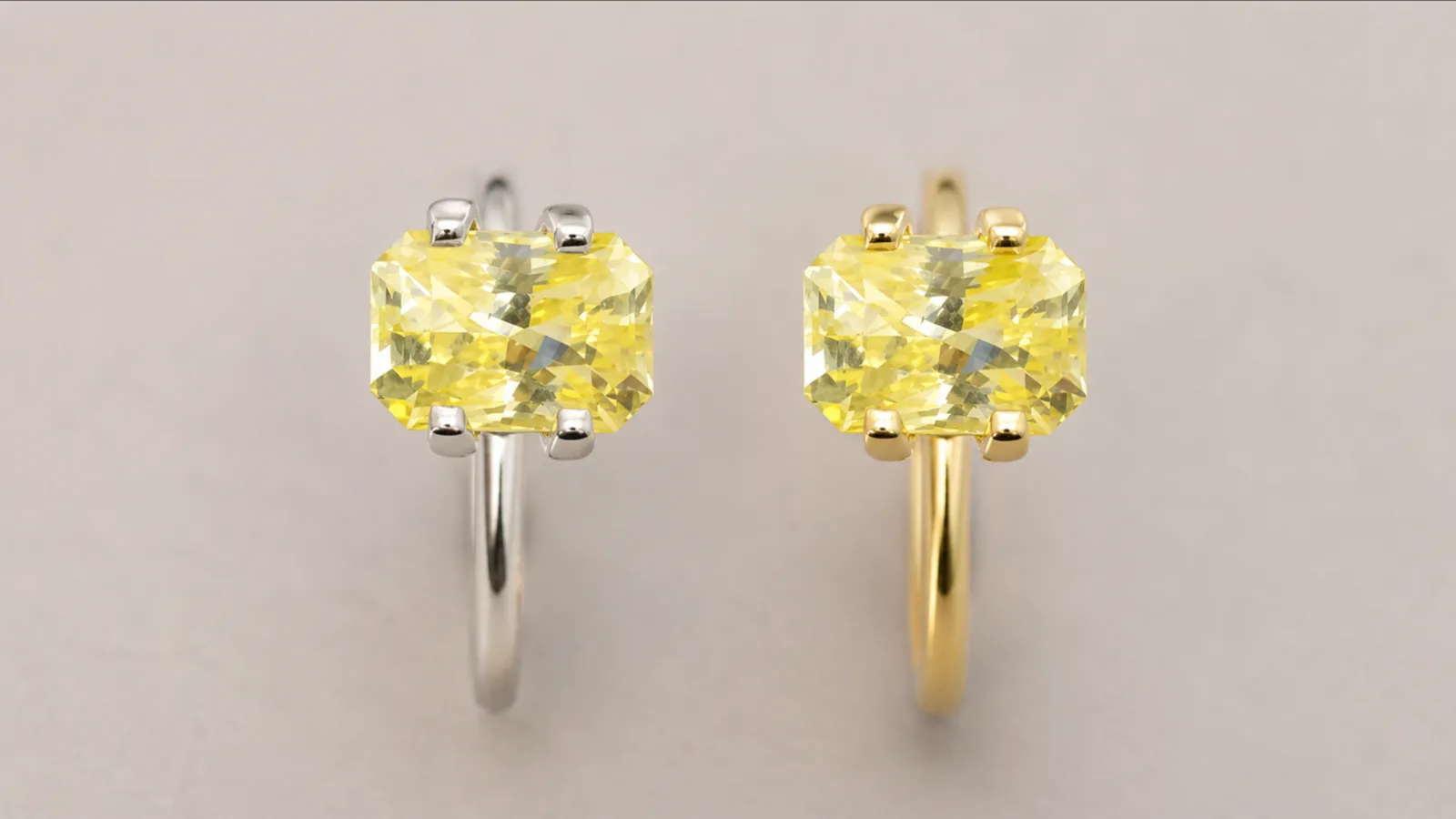
| Metal | White for lemon, yellow gold for golden | The metal changes how yellow reads |
Is a yellow sapphire good for an engagement ring?
Yes. Yellow is a color, not a different stone: a yellow sapphire is corundum, like a blue one, so it wears the same way. Sapphire is 9 on the Mohs scale and its toughness is usually excellent, which makes it one of the best stones for a ring you never take off. Only diamond, at 10, is harder.
Two habits keep it that way. Most precious metals are fairly soft, so a sapphire that sits loose can wear through a prong: have the prongs checked now and then. Warm soapy water is always a safe way to clean it. Ultrasonic and steam cleaners are usually fine too, except on a stone with filled fractures or cavities.
Next to a yellow diamond, the real difference is fire. Diamond splits light into flashes of color more than twice as strongly as sapphire, so it sparkles more. Most yellow diamonds are light and soft in color, though, and a vivid canary one is rare. A yellow sapphire shows its color with less fire.
Fire and brightness, side by side
Dispersion is the splitting of white light into colors: the flashes called fire. Pick a stone.
The figures in a table
| Stone | Dispersion | Refractive index |
|---|---|---|
| Yellow sapphire | 0.018, weak | 1.762 to 1.770 |
| Yellow diamond | 0.044, moderate | 2.417 |
The 10 most searched engagement ring styles, in yellow sapphire
Which ring styles are people looking at right now? We read Pinterest's search trends for the United States, from 15 October to 13 November 2026. Yellow sapphire alone had too little data to rank, so these are the ten most searched engagement ring styles, marquise first, each pictured with a yellow sapphire.
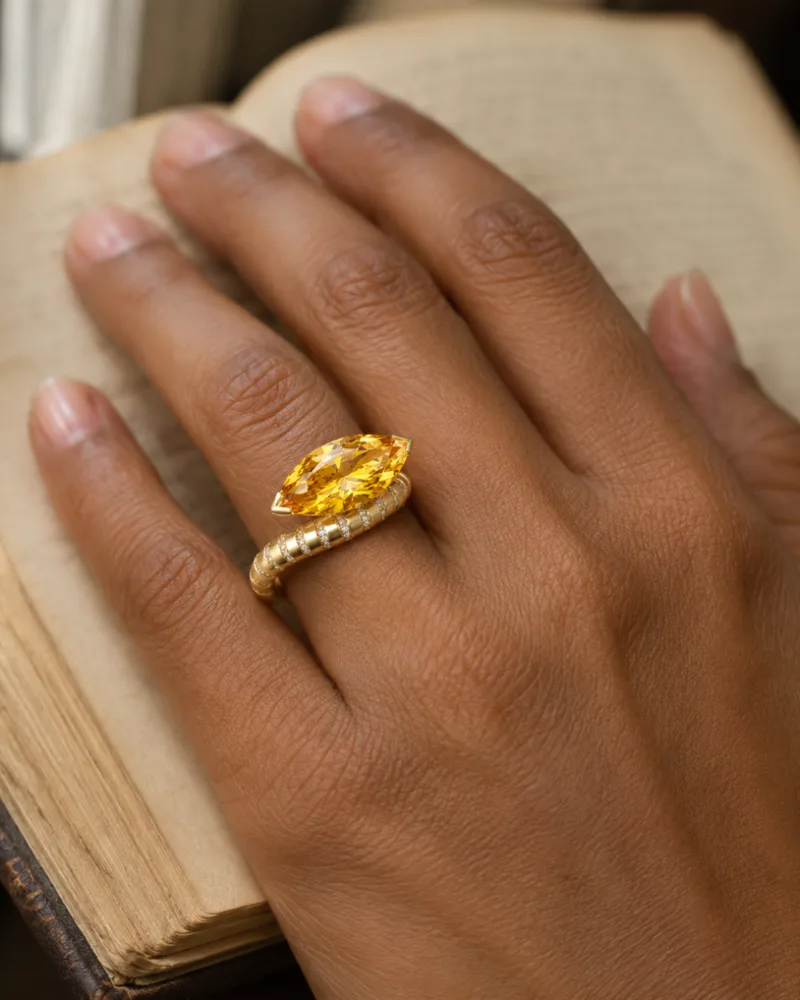
1 / 10Marquise
A long oval pointed at both ends, set at a slant on a ribbed band that wraps around the finger.
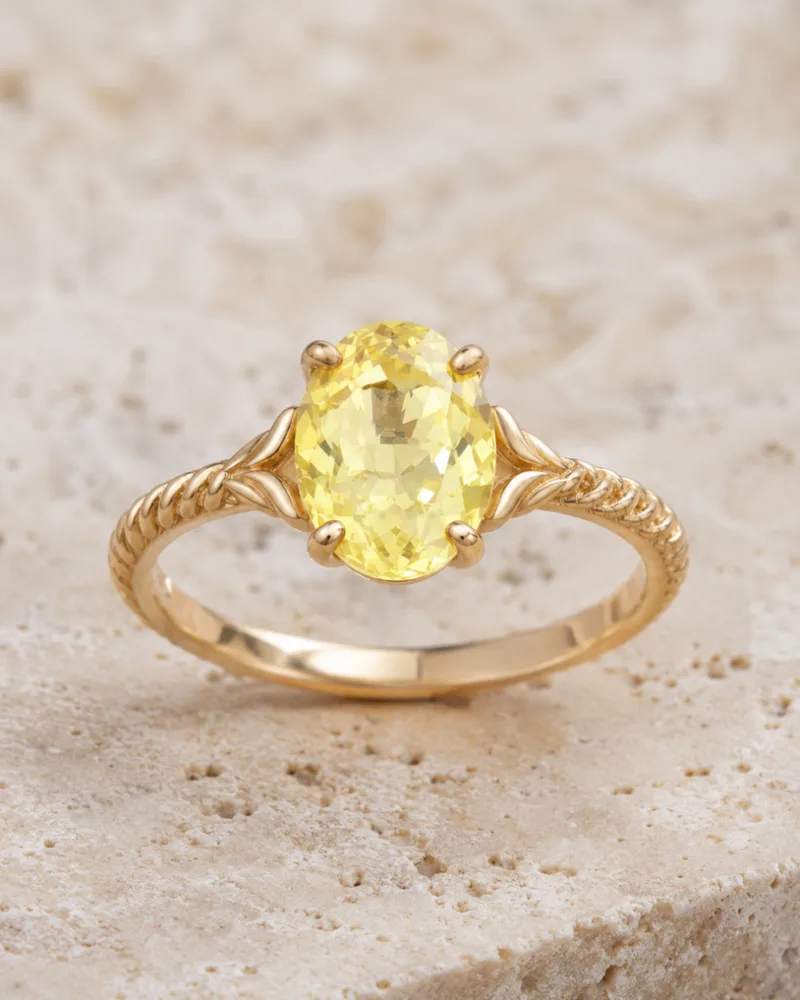
2 / 10Oval
A rounded, elongated outline with no corners, on four prongs and a twisted band.
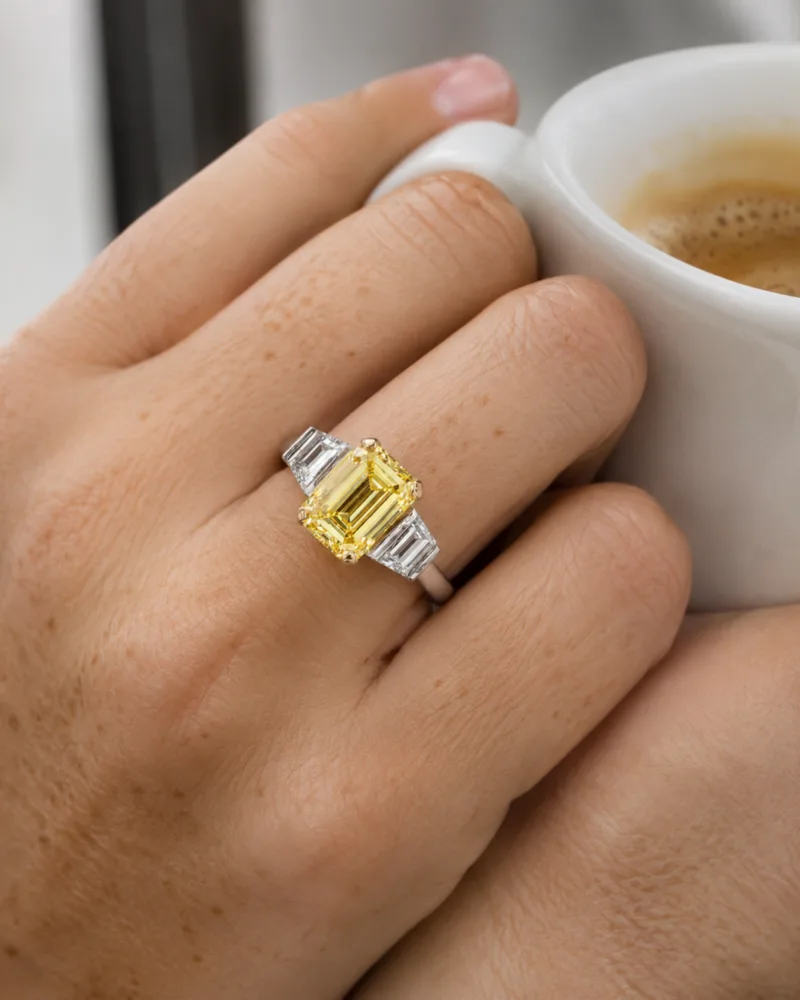
3 / 10Emerald cut
A rectangle with cut corners and long, parallel facets, between two trapezoid side stones.
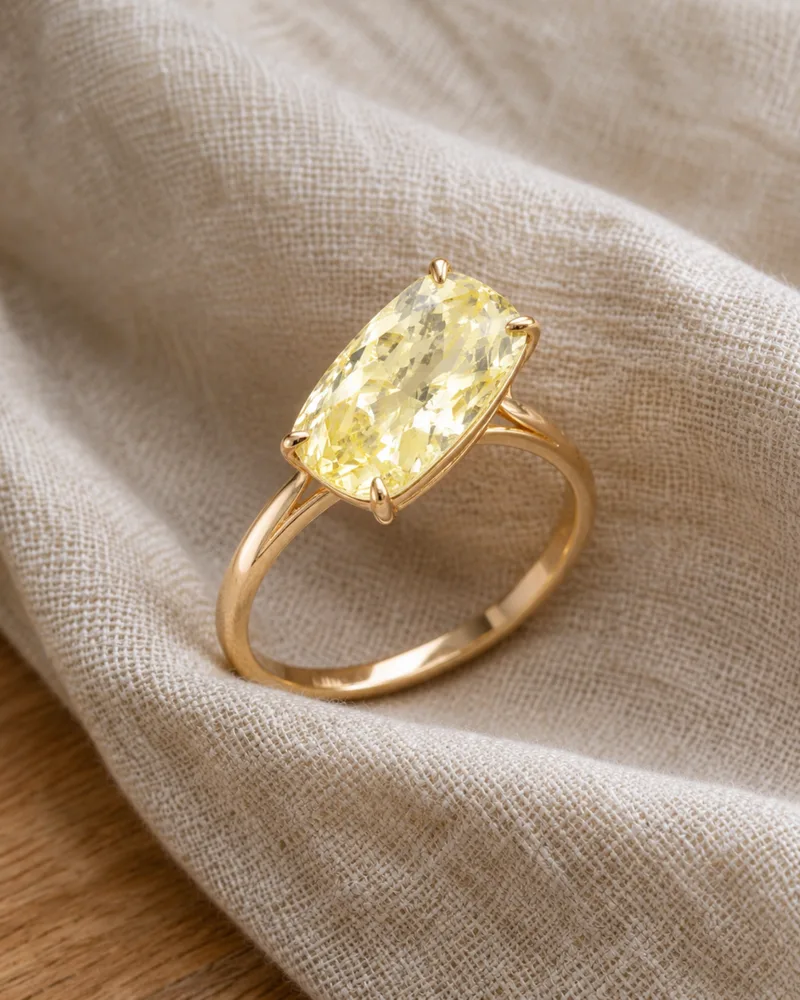
4 / 10Elongated cushion
A long rectangle with rounded corners and curved sides, on four claws and a slim band.
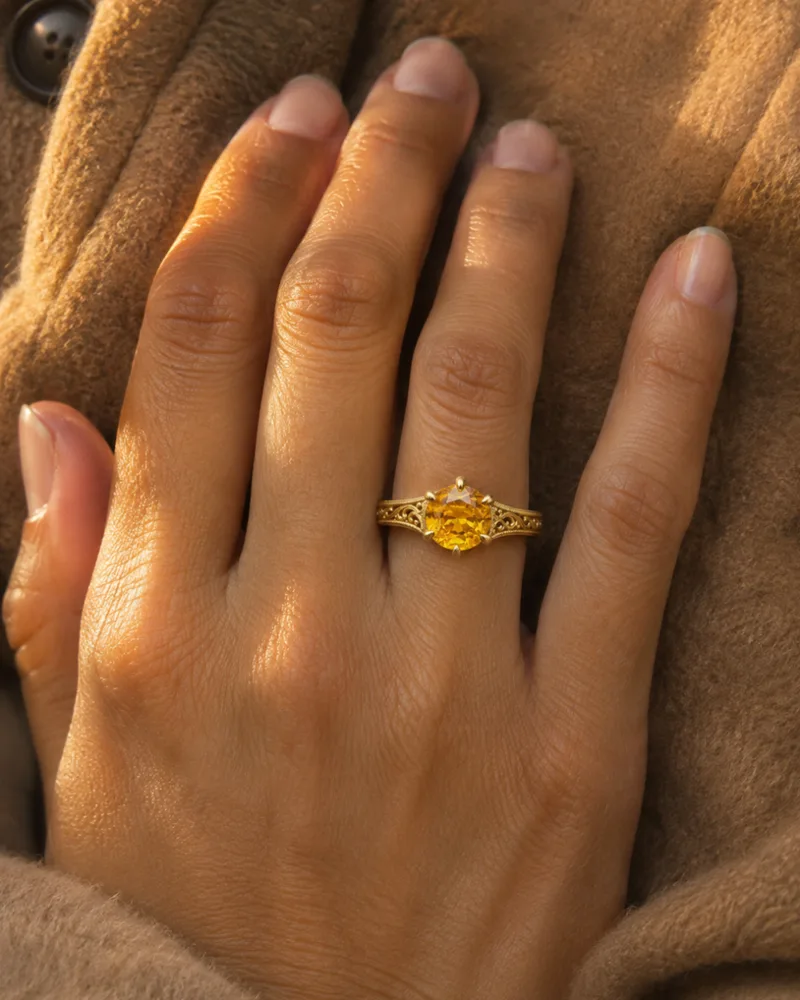
5 / 10Vintage
Openwork scrolls on the shoulders and a raised six-prong head, like an heirloom.
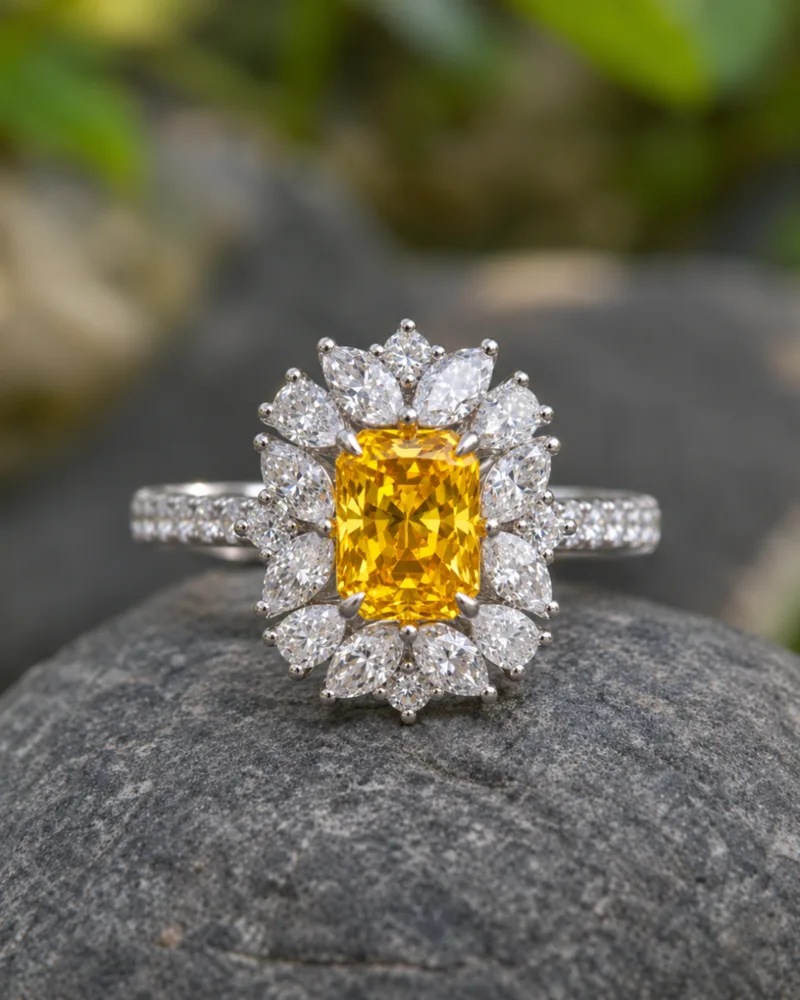
6 / 10Radiant
A rectangle with cropped corners and many small facets, inside a halo of pear and marquise shaped stones.
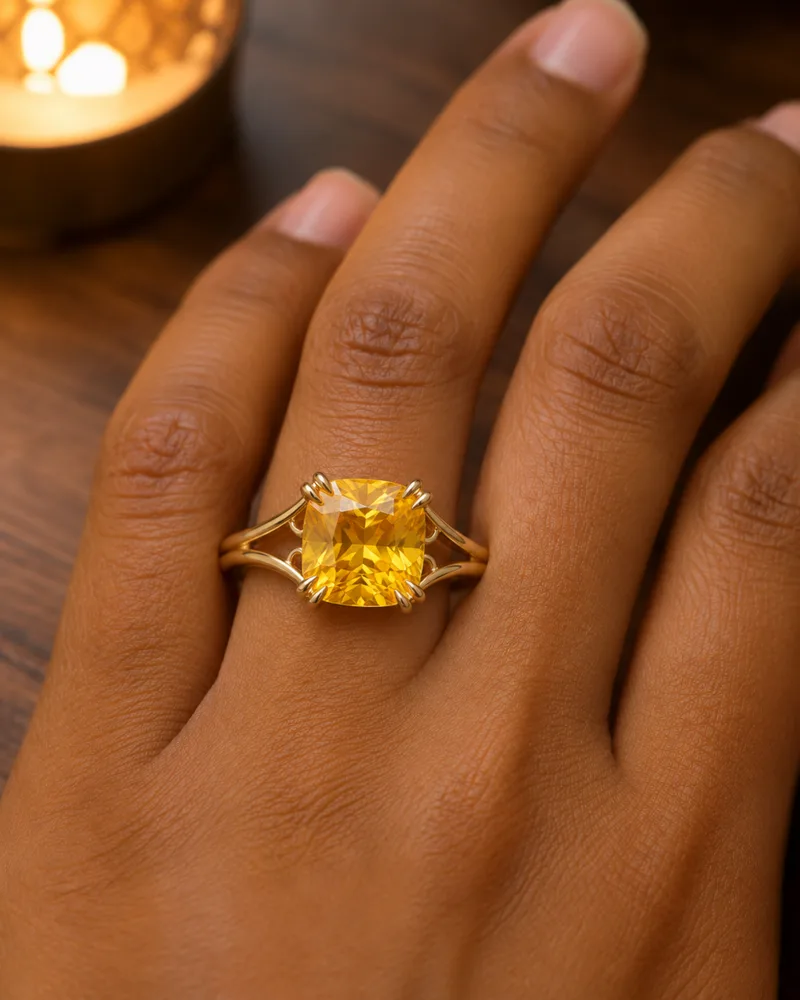
7 / 10Cushion
A soft square with rounded corners, held by claws on a split band.
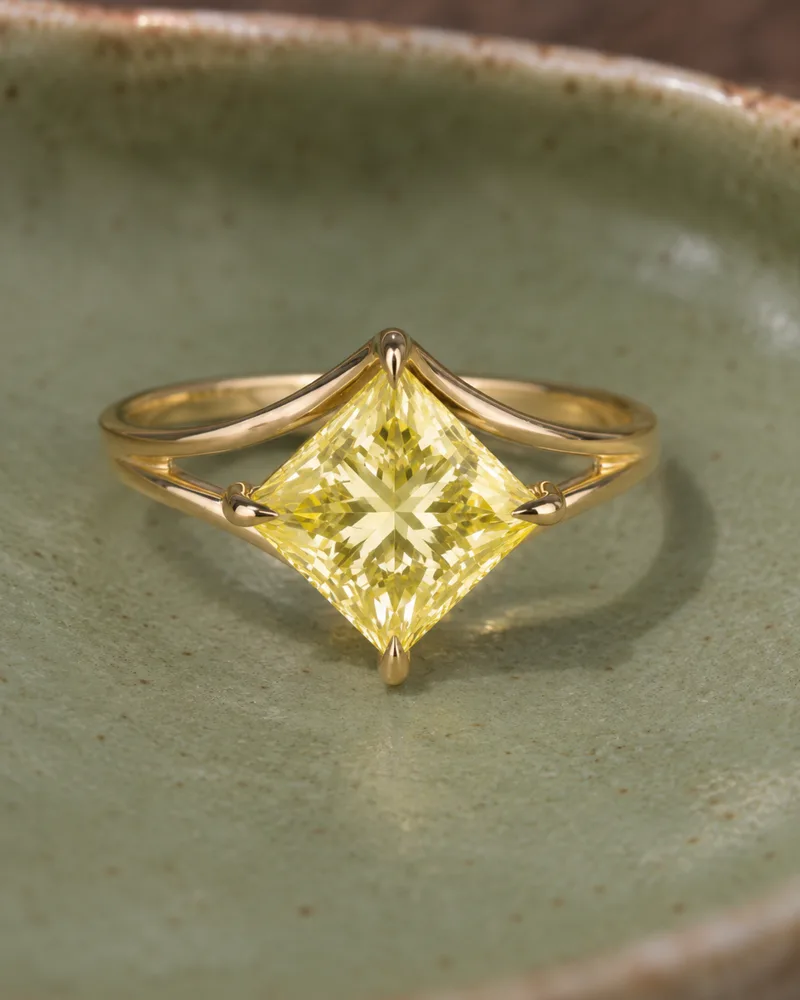
8 / 10Princess
A square with marked corners, set point up between the two branches of a V-shaped band.
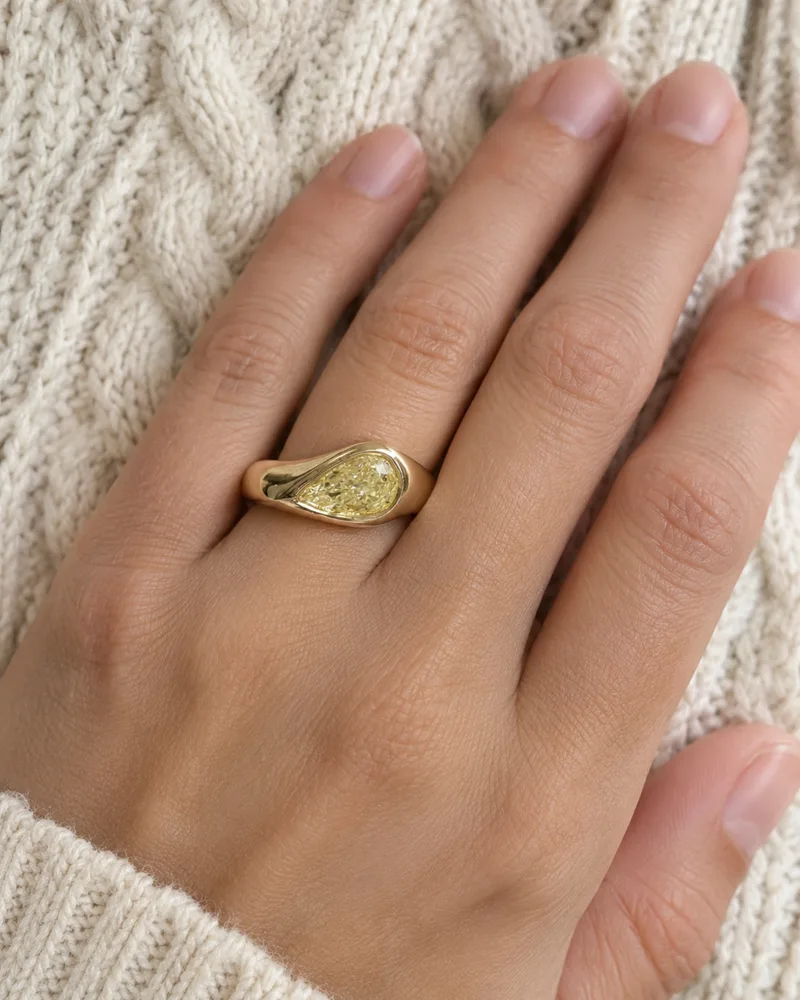
9 / 10Pear
A teardrop laid across the finger in a rim of metal, on a domed band.
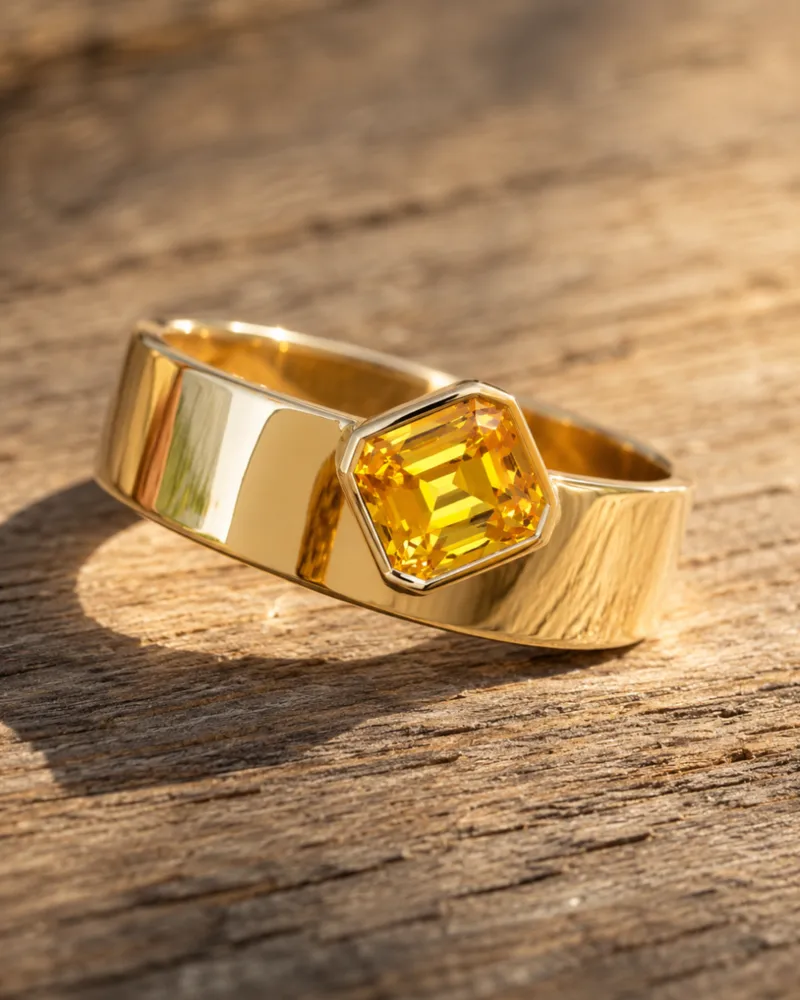
10 / 10Bezel
A rim of metal wraps the whole edge of an octagonal stone, on a wide, flat band.
A style is only a frame: choose the yellow first, then the shape that suits it.
Lemon or golden: which yellow should you choose?
Yellow sapphire runs from greenish yellow to orangy yellow, mostly in light tones, at every level of saturation. The finest is yellow to orangy yellow with a medium tone and vivid saturation, the rich color the trade calls golden sapphire. Push further and the stone turns orange: another color, with its own market.
Most yellow sapphire sits at the light, lemon end. The golden end is the one people look for, and a greenish yellow ranks below both. My view: a lively lemon beats a dull gold. Saturation counts for more than the name on the label.
Choose a swatch to see the real sapphire
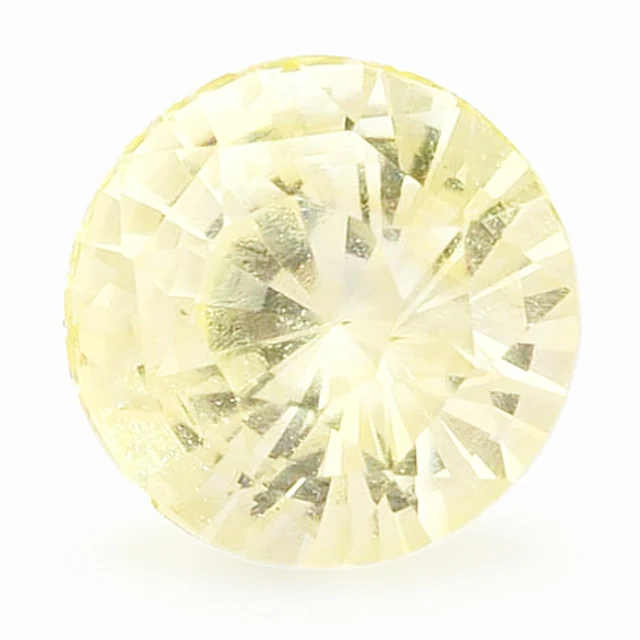
Yellow
Sapphire
Listed as yellow. 1.39 ct, round cut
Joalys catalogue photo
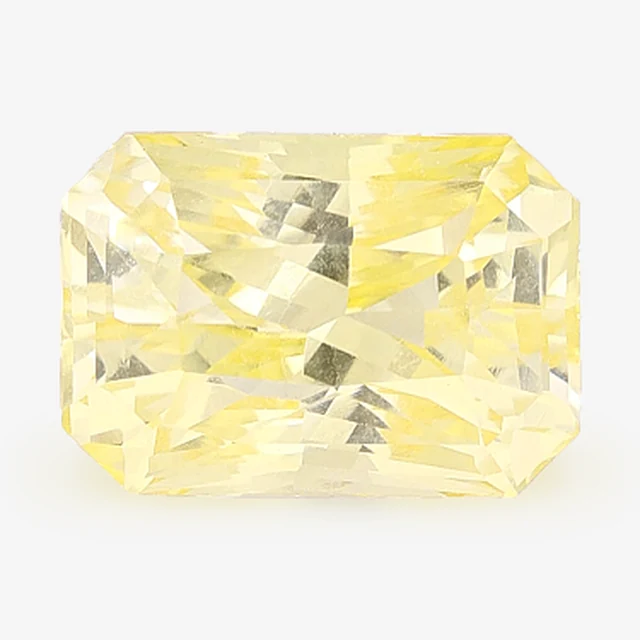
Yellow
Sapphire
Listed as yellow. 2.13 ct, radiant cut
Joalys catalogue photo
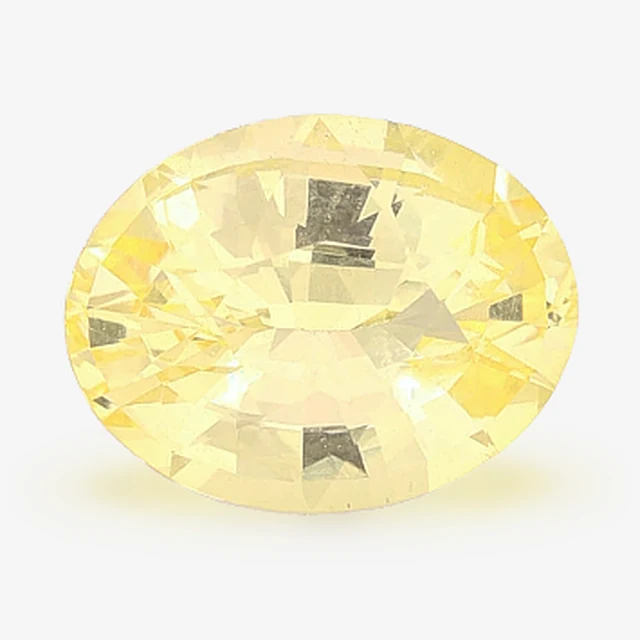
Yellow
Sapphire
Listed as yellow. 1.23 ct, oval cut
Joalys catalogue photo
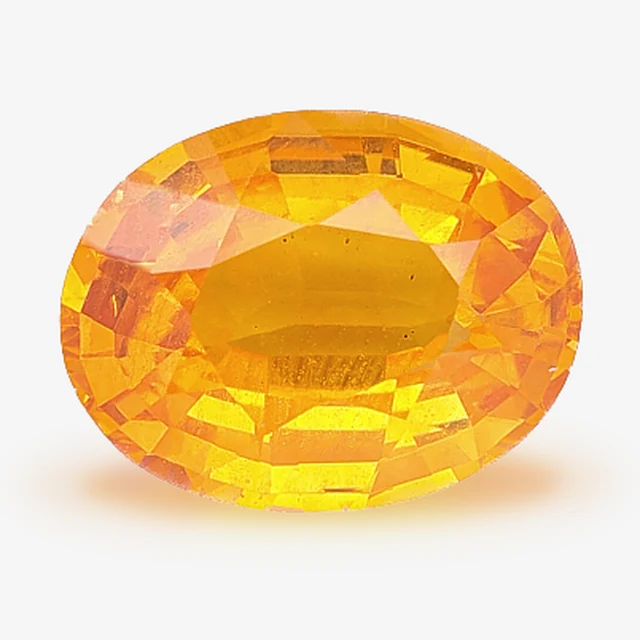
Yellowish orange
Sapphire
Listed as yellowish orange. 2.02 ct, oval cut
Joalys catalogue photo
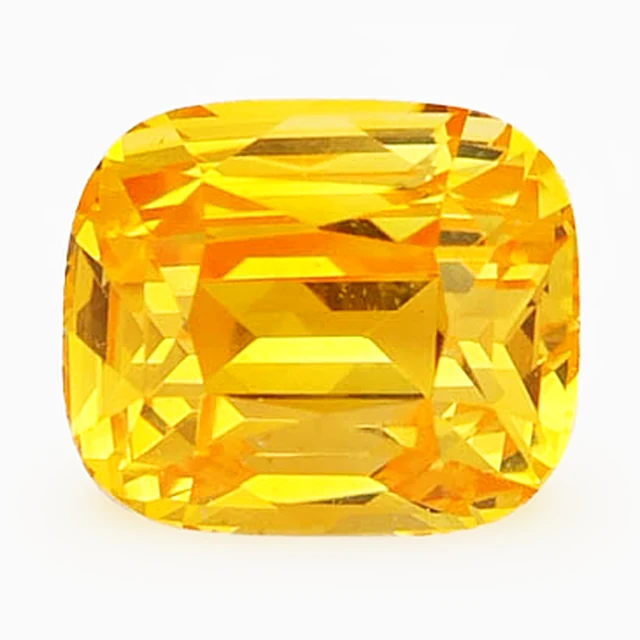
Golden yellow
Sapphire
Listed as golden yellow. 1.02 ct, cushion cut
Joalys catalogue photo
Five sapphires from our collection on 17 November 2026, catalogue photos on a pale ground, ordered from the palest to the richest color measured on each photo. Each swatch is that measured color, not one chosen by hand. The names are the ones we list the stones under: three as yellow, one as golden yellow, one as yellowish orange. A photo is not daylight, and the stones are not shown to scale.
See the stone under a warm lamp. Yellow gems show their color best in incandescent light, candlelight or a sunset, which is good news for a ring worn at dinner. Then look at it in daylight, so you know both faces of the stone before you choose.
Heated, irradiated or beryllium-treated: what should you ask?
Heat is normal for yellow sapphire. Stones from Sri Lanka usually come out of the ground very light, and heating takes them to the deeper golden yellow people want. It brightens the hue, raises the saturation, and the color stays. Heated golden sapphire is common; untreated stones sit at the top of the market and cost the most, as our sapphire price per carat guide shows.
Top of the market
Accepted by the trade
UntreatedThe top of the market, and the most costly.
Nothing beyond cutting and polishing. A laboratory report can confirm it.
 HeatedThe norm. The color is stable.
Yellow sapphires from Sri Lanka usually come out of the ground very light. Heat takes them to a deeper golden yellow: it brightens the hue and raises the saturation.
Ask in writing
IrradiatedRare. The color fades.
It can turn a pale stone vivid yellow or orange, but sunlight or heat takes that color away, within minutes to days. A fade test, a couple of days under a bright light, reveals it.
Beryllium diffusionDeep in the stone, harder to detect.
Beryllium diffused into the stone can produce very saturated yellow and orange. It goes deep, which makes it harder to detect than other treatments: ask for a laboratory report.
Ask in writing
Untreated stones sit at the top of the market and heat is the norm. The last two are the treatments to ask about in writing: their order here is not a price ranking.
Synthetic yellow sapphire exists too. So ask in writing what was done, and read our guide to heated and unheated sapphire. Every stone we offer goes to an independent laboratory once you have chosen it, and the report comes with the stone.
Oval, round or emerald cut: which shape suits a yellow sapphire?
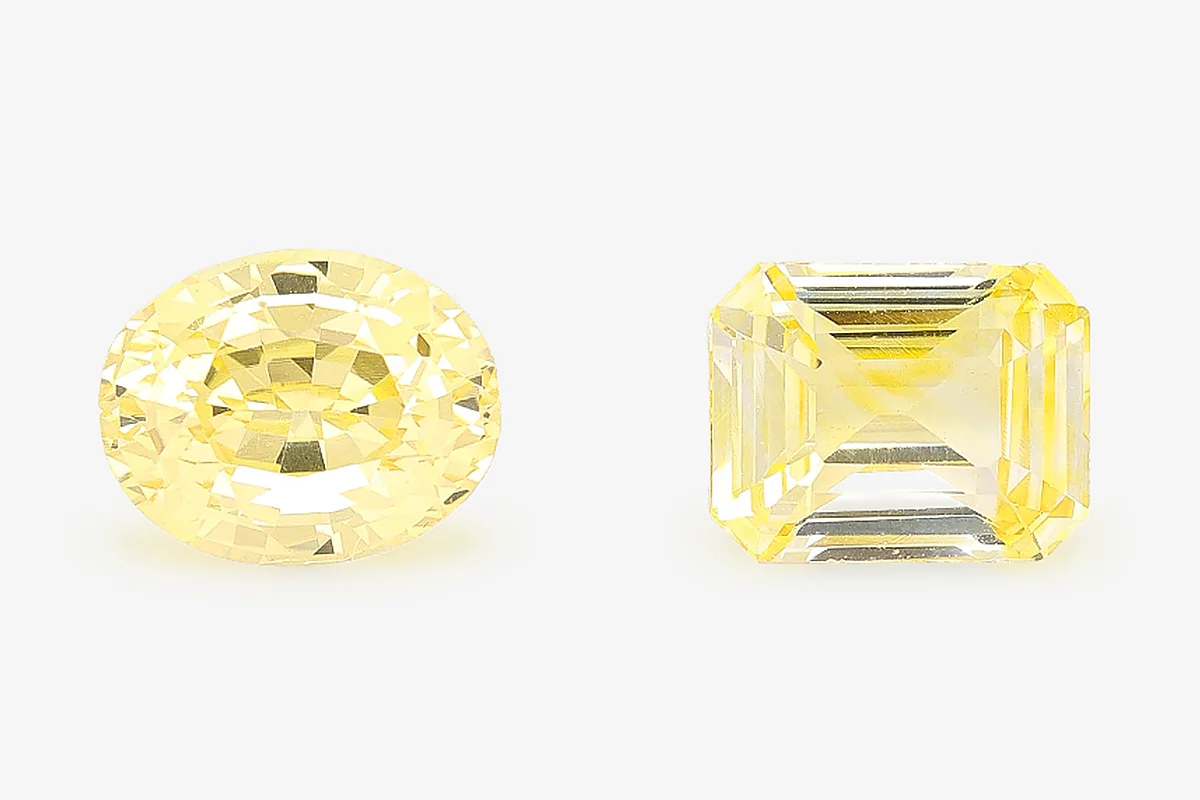
Sapphire typically shows a few inclusions you can see with the naked eye, and the cut decides how much they show. Facets that radiate from the center, as on most ovals, rounds and cushions, hide inclusions better than the straight rows of a step cut such as the emerald cut. And an inclusion under the large top facet shows more than one under the smaller facets around it.
So the emerald cut is the most demanding shape for a yellow sapphire: its long, open facets show what is inside. Choose a cleaner stone for it, or go oval if the stone you love has a small inclusion.
Prongs show the most of the stone and let in the most light, and sapphire is tough enough for them. A bezel wraps the edge in metal and protects it best. Our comparison of bezel, prong and basket settings goes further.
Yellow gold, white gold or platinum for a yellow sapphire?
The metal around a stone changes how its color reads, yellow gold most of all. Yellow gold blends with yellow: it even masks a slight yellow tint in a near-colorless diamond. Platinum and white gold do the opposite and make color stand out.
My view: a pale lemon stone gains in platinum or white gold, where its yellow shows against the white. A deep golden one glows in yellow gold. And if you want diamonds beside it, yellow gold forgives a slightly warm diamond, while white metal shows it.
Our sapphire engagement ring guide covers the other colors and ring styles.
Quick answers
Is a yellow sapphire as good as a yellow diamond for a ring?
Do yellow sapphires fade?
Where do the best yellow sapphires come from?
How much does a yellow sapphire ring cost?
Choose the yellow first, then the ring
Pick a clear yellow to golden with a medium tone, see it under a warm lamp and in daylight, and get the treatment in writing. Then choose the cut for its clarity and the metal for its color.