Bespoke · coloured stones
Custom gemstone engagement ring, for a colour that is yours
Beyond sapphire and ruby, there are stones whose colour you will not see on anyone else's hand. We find the one you want, check it will hold up to daily wear, and draw the ring around it.
A short brief in three steps. It commits you to nothing.
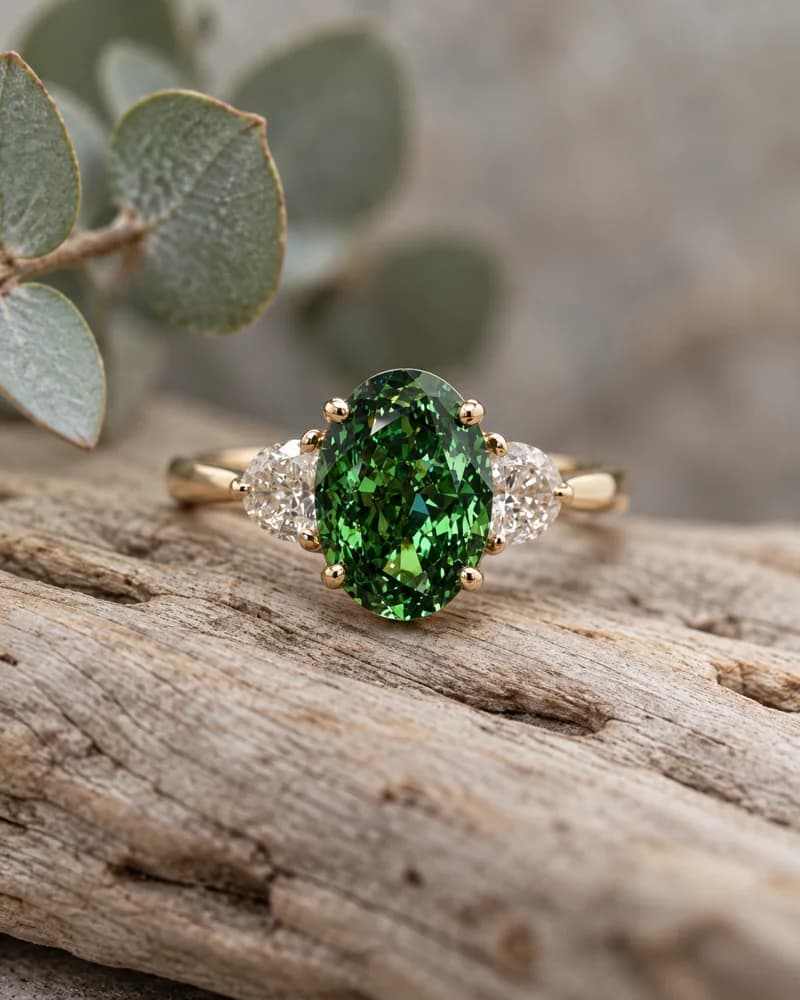
Spinel, emerald, aquamarine, tourmaline, alexandrite: each has its own colour, and its own needs in a ring. Choosing one for an engagement ring means weighing that colour against hardness and toughness.
That is where a custom ring makes sense. The setting is not taken from a catalogue: it is chosen to protect that particular stone, its corners, its depth, its weak points.
Three ways to begin
A stone from our catalogue
You choose a stone we already hold. I film it for you, turning under the lamp, and the ring is drawn around it.
A stone found for you
You describe a colour, a size, a feeling. I go and look for it at the source, in Sri Lanka, and show you what I find before anything is decided.
Your complete project
You already know the ring you want, down to the setting. We take the project as it is and make it, with a stone chosen for it.
Which coloured stones wear well every day
Alexandrite (8.5, excellent toughness) and spinel (8, good toughness) are the safest choices after corundum. Aquamarine, at 7.5 to 8 with good toughness, wears well too.
Emerald (7.5 to 8) has a toughness that ranges from poor to good, because of its inclusions and fractures: it asks for a protective setting and some care. Tourmaline (7 to 7.5, fair toughness) suits a ring that is worn with attention.
- Alexandrite
- 8.5 · excellent toughness
- Spinel
- 8 · good toughness
- Aquamarine
- 7.5 to 8 · good
- Emerald
- 7.5 to 8 · poor to good
- Tourmaline
- 7 to 7.5 · fair
Settings that protect the stone
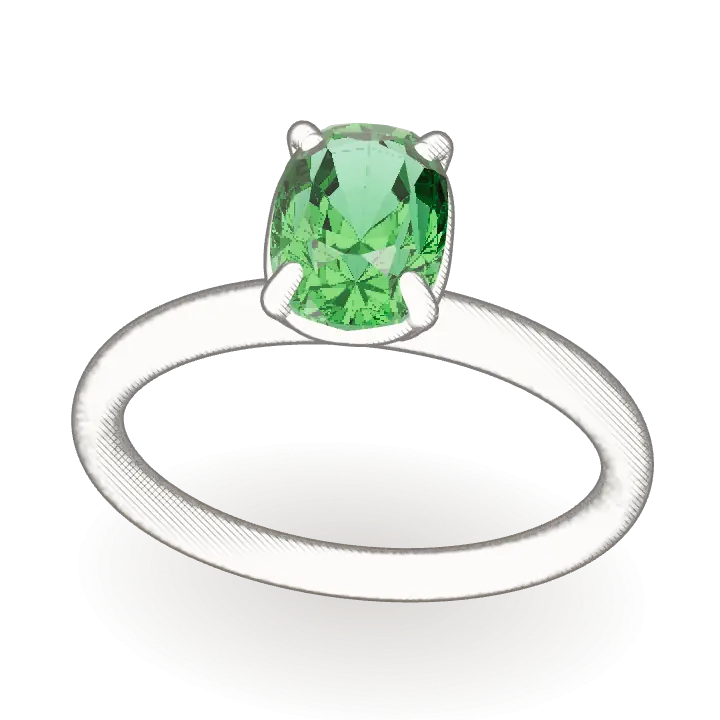
The softer the stone, the more the setting matters: a bezel wraps the edges, a raised halo takes the knocks. Compare the styles below.
How your ring is made
The choice
From the catalogue, or found for you. Nothing starts before your stone.
The live look
A photo cannot tell you the colour: it changes when the stone moves. I turn it in front of you, live, under the lamp.
The drawing
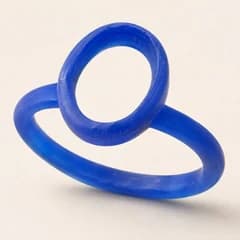
The empty centre is drawn first, cut to your stone. Everything else follows around it.
The hands
It passes through hands that have a name: the cutter, then the jeweller.
The parcel
It leaves tied, sealed with wax, with its laboratory report.
What makes the price
Four things: the stone, the metal, any small stones around it, and the work at the bench. The stone weighs most, which is why we settle it first. You receive a precise figure once the stone and the drawing are agreed, never an estimate from a menu.
Your questions
Which coloured stone is best for an engagement ring?
After sapphire and ruby, alexandrite and spinel hold up best to daily wear. Emerald and tourmaline are possible with a protective setting and some care.
Is emerald too fragile for an engagement ring?
Not too fragile, but more demanding. Its hardness is 7.5 to 8, and its toughness ranges from poor to good because of its inclusions. A bezel or well-placed claws make the difference.
Can I bring my own stone?
No. We set only stones we have chosen: one from our catalogue, or one we find for you.
Will I see the stone before it is set?
Yes, live and on video, under the lamp.
A short brief in three steps. It commits you to nothing.