Green Gemstone Rings: Which Green Stone Can You Wear Every Day?
Emerald, green sapphire, tsavorite, tourmaline or peridot: what each one tolerates in a ring, from knocks and dust to the cleaner and the jeweler's torch, and the ten most searched ring styles, pictured in green.

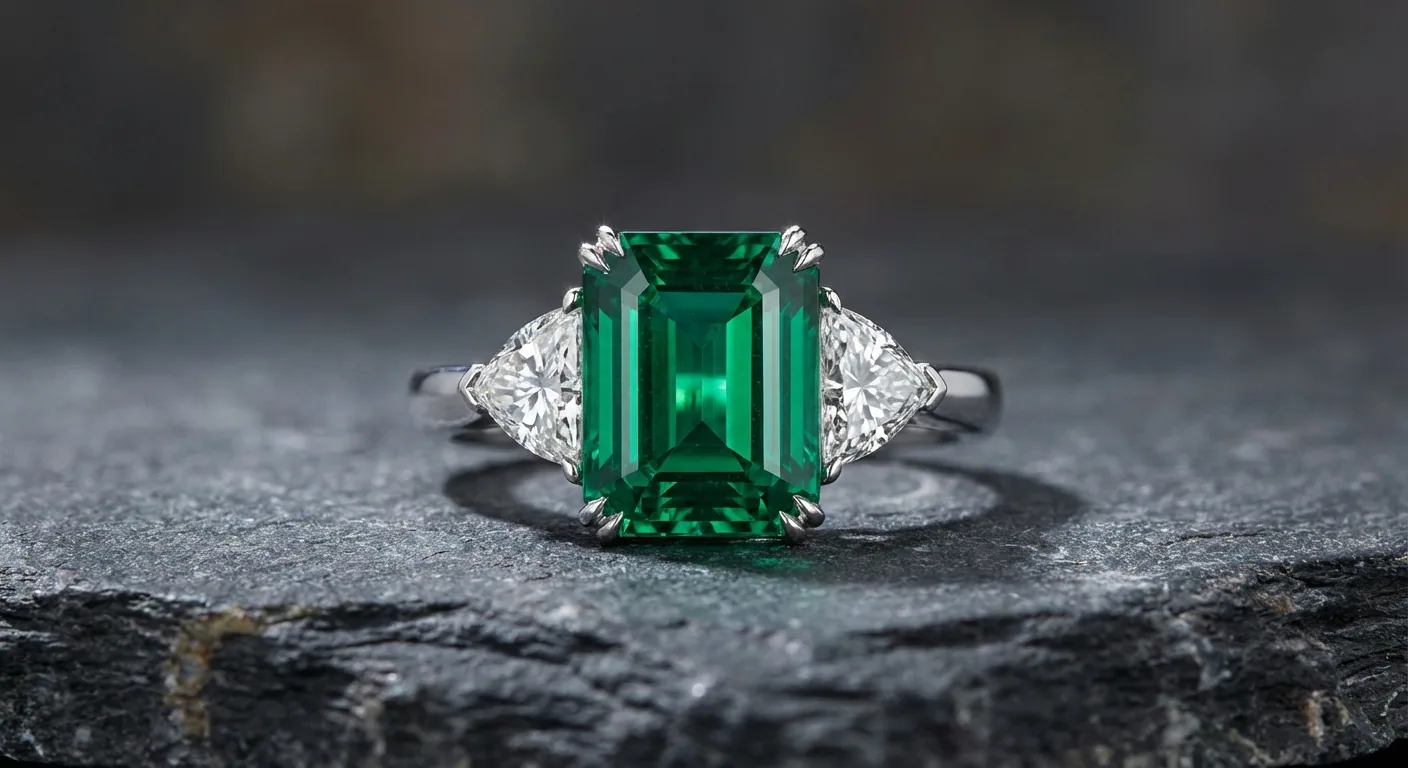
For a ring worn every day, pick green sapphire or tsavorite garnet, then green tourmaline. Emerald can be worn daily too, in a setting that guards its edges and with gentle cleaning. Peridot belongs in a ring you wear now and then. Our tsavorites are below.
- Toughest everyday green
- Green sapphire: 9 on the Mohs scale
- Good ring stones
- Tsavorite and green tourmaline: 7 to 7.5
- Emerald
- 7.5 to 8, usually filled: bezel, gentle cleaning
- Peridot
- 6.5 to 7: occasional wear
- Usually untreated
- Tsavorite garnet
- Safe cleaning for all
- Warm, soapy water
Which green gemstone can you wear every day?
A ring takes knocks, soap, hand cream and dust all day. Two things decide whether a stone lives with that. Hardness is resistance to scratches. Toughness is resistance to chips and breaks. And most of the dust in the air is quartz, 7 on the Mohs scale: anything softer gets abraded by wear and cleaning.
- Green sapphire. 9 on the Mohs scale, toughness usually excellent. An excellent ring stone.
- Emerald. 7.5 to 8, a very good ring stone by hardness. Its weak points are its inclusions and treatments, and its toughness runs from poor to good.
- Tsavorite and green tourmaline. 7 to 7.5. Good ring stones.
- Peridot. 6.5 to 7, no harder than the dust. Better in earrings or a pendant; in a ring, it needs care.
Six green stones: hardness and toughness
Hardness is resistance to scratches, toughness is resistance to knocks. A ring needs both.
Touch a point to read about the stone.
Green sapphire Mohs 9 · Toughness: Usually excellent
9 on the Mohs scale and usually excellent toughness: an excellent ring stone.
Emerald Mohs 7.5 to 8 · Toughness: Poor to good
7.5 to 8 on the Mohs scale, but its inclusions make toughness run from poor to good. A ring stone that needs care.
Tsavorite garnet Mohs 7 to 7.5 · Toughness: Fair to good
7 to 7.5 on the Mohs scale, fair to good toughness: a good ring stone.
Green tourmaline Mohs 7 to 7.5 · Toughness: Fair
7 to 7.5 on the Mohs scale, fair toughness: a good ring stone, worn with some care.
Peridot Mohs 6.5 to 7 · Toughness: Fair to good
6.5 to 7 on the Mohs scale. Best in earrings or a pendant; in a ring it needs care.
Jadeite Mohs 6 to 7 · Toughness: Exceptional
6 to 7 on the Mohs scale, yet extremely tough: its interlocked grains resist breaking, so it makes a good ring stone.
| Stone | Mohs | Toughness |
|---|---|---|
| 1Green sapphire9 on the Mohs scale and usually excellent toughness: an excellent ring stone. | 9 | Usually excellent |
| 2Emerald7.5 to 8 on the Mohs scale, but its inclusions make toughness run from poor to good. A ring stone that needs care. | 7.5 to 8 | Poor to good |
| 3Tsavorite garnet7 to 7.5 on the Mohs scale, fair to good toughness: a good ring stone. | 7 to 7.5 | Fair to good |
| 4Green tourmaline7 to 7.5 on the Mohs scale, fair toughness: a good ring stone, worn with some care. | 7 to 7.5 | Fair |
| 5Peridot6.5 to 7 on the Mohs scale. Best in earrings or a pendant; in a ring it needs care. | 6.5 to 7 | Fair to good |
| 6Jadeite6 to 7 on the Mohs scale, yet extremely tough: its interlocked grains resist breaking, so it makes a good ring stone. | 6 to 7 | Exceptional |
Points that would overlap are moved apart a little. The exact values are in the table.
Toughness has no number: it is rated in words, and one stone can sit on two lines. Inclusions, fractures or some treatments lower it for any single stone.
Source: Hardness and toughness as published in standard gemology references, checked on October 9, 2026.
One exception breaks the order. Jadeite is about as soft as peridot, yet it makes a good ring stone: its tightly interlocked grains make it extremely tough. The full list of green stones, fourteen of them, is in our guide to green precious stones.
The 10 most searched engagement ring styles, in green
Which shapes are people looking at right now? We read Pinterest's search data for the United States (Pinterest Trends, 30 days to 29 September 2026), kept the ten most searched styles and pictured each one with a green stone. Marquise leads, with searches up 50% in a year. Oval and emerald cut follow.
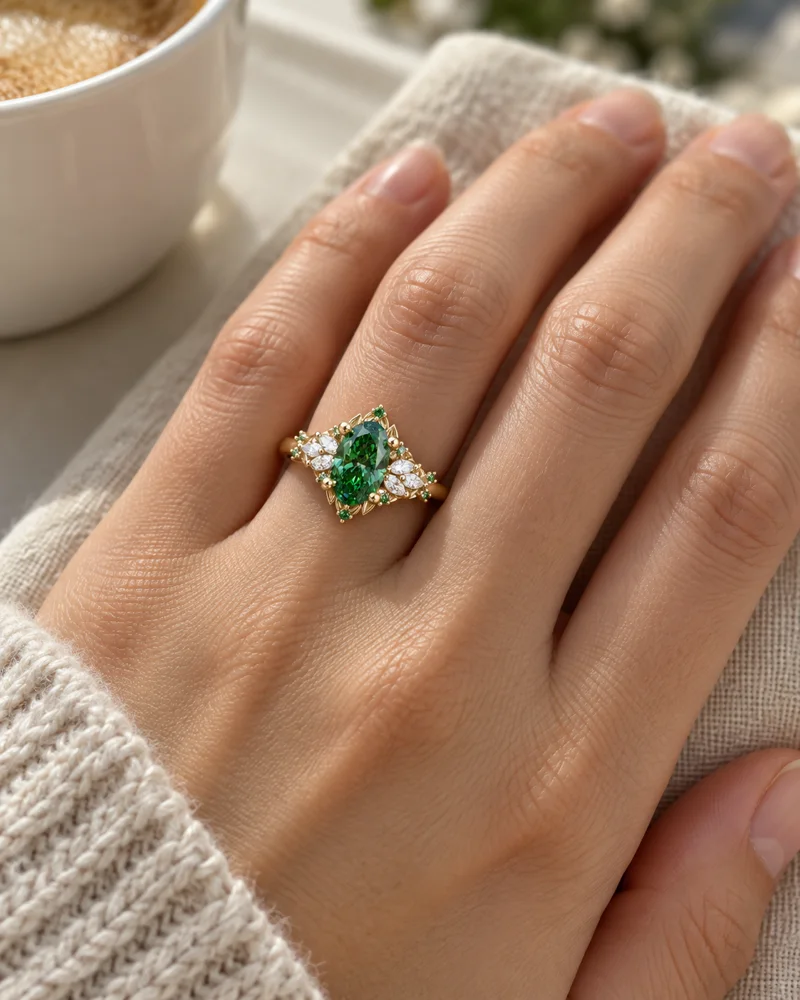
1Marquise
A long oval pointed at both ends. Searches are up 50% in a year.
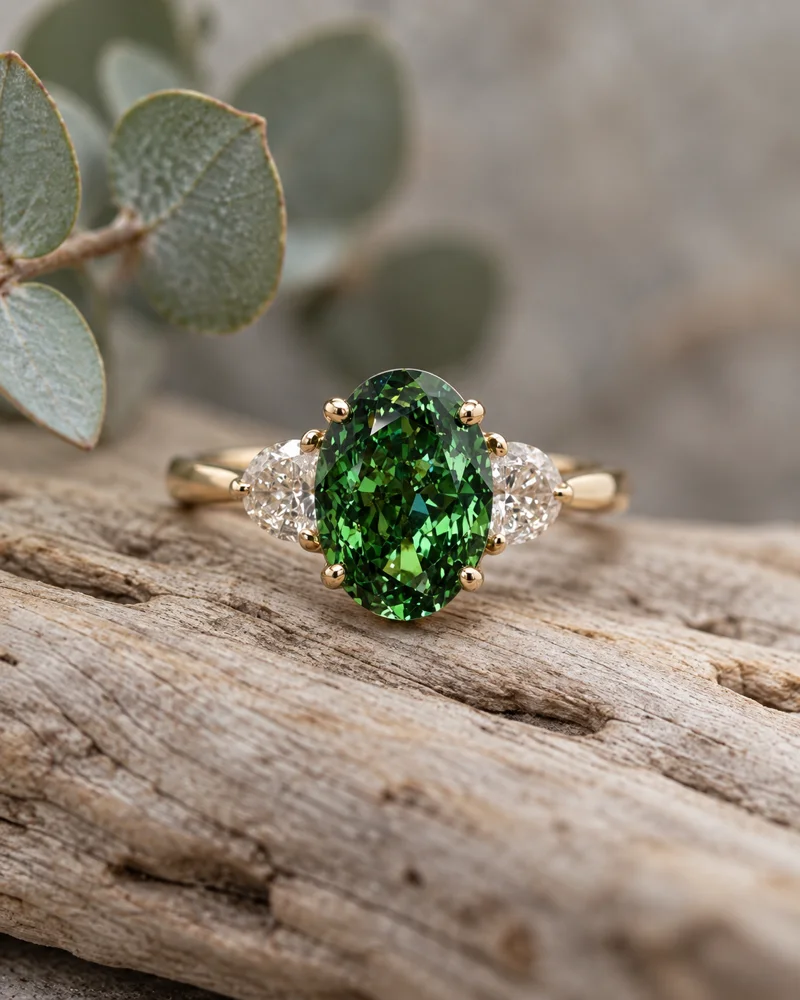
2Oval
A rounded, elongated outline with no corners.
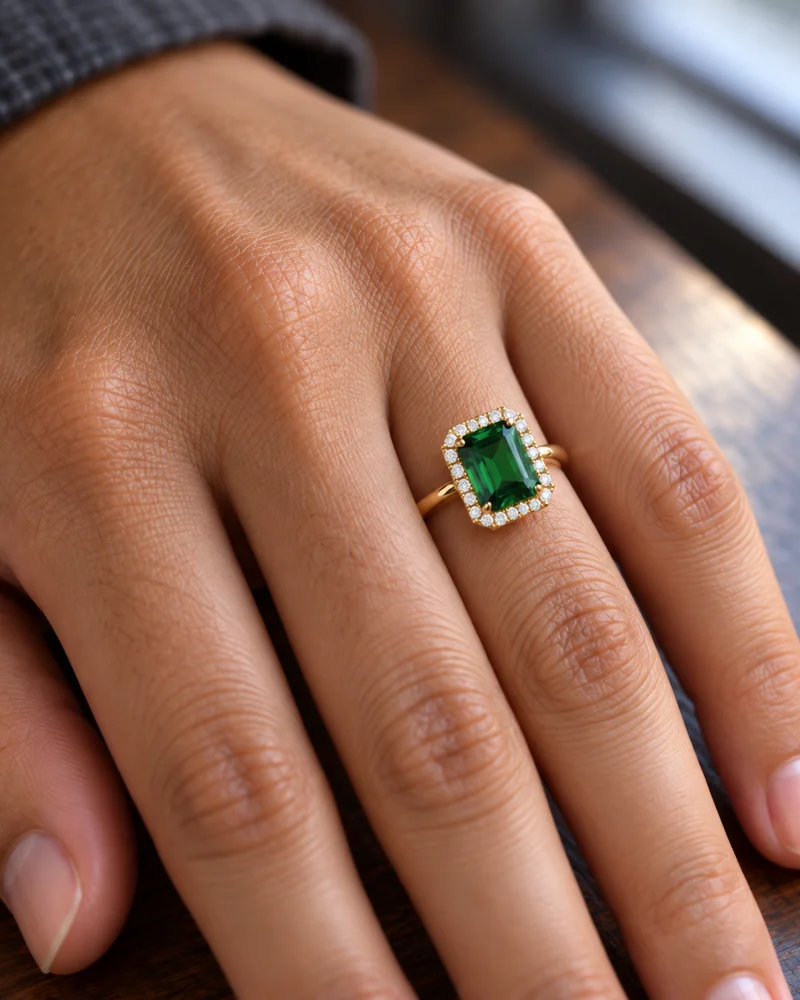
3Emerald cut
A rectangle with cut corners and long, parallel facets.
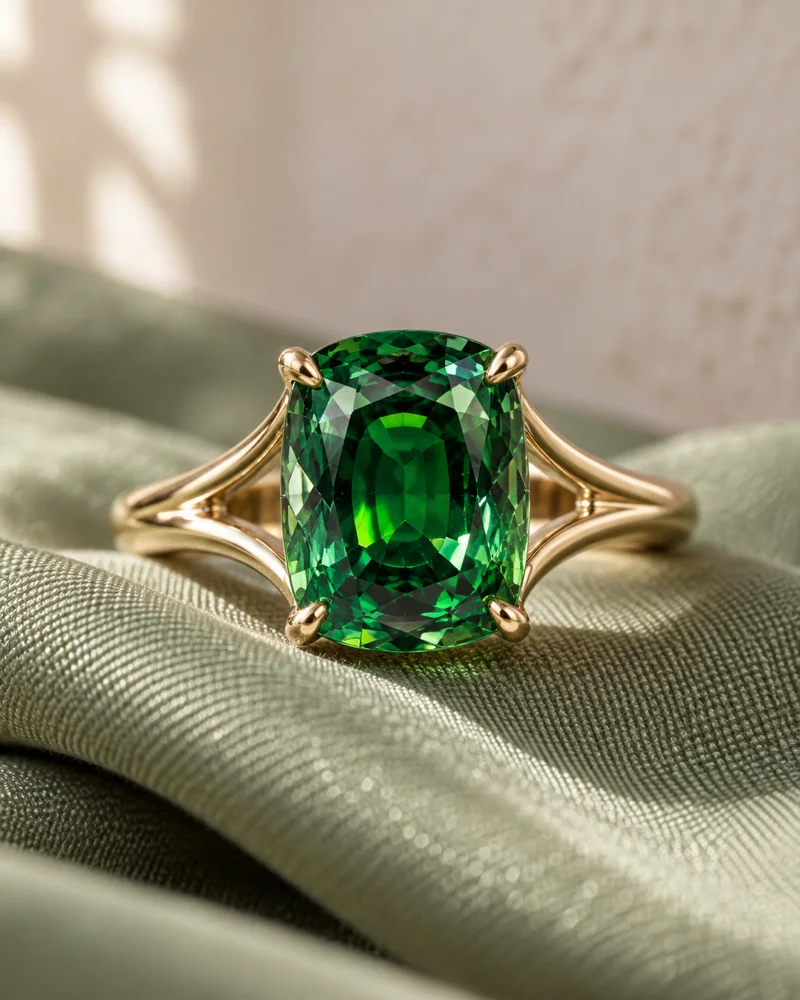
4Elongated cushion
A long rectangle with rounded corners and curved sides.
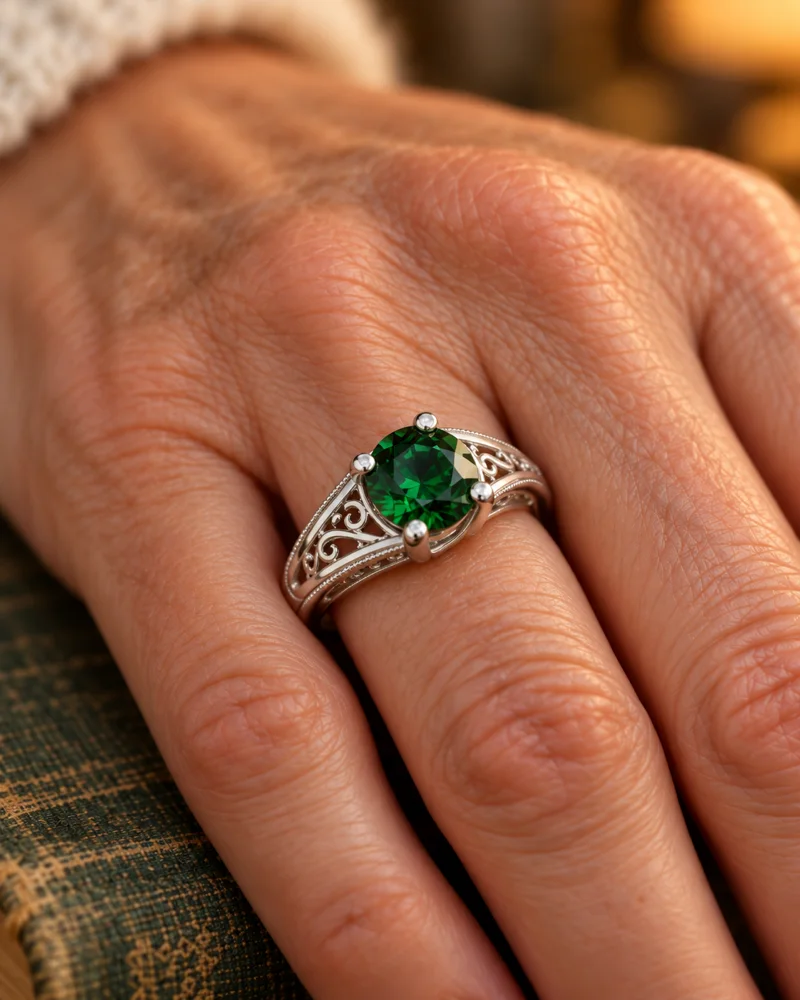
5Vintage
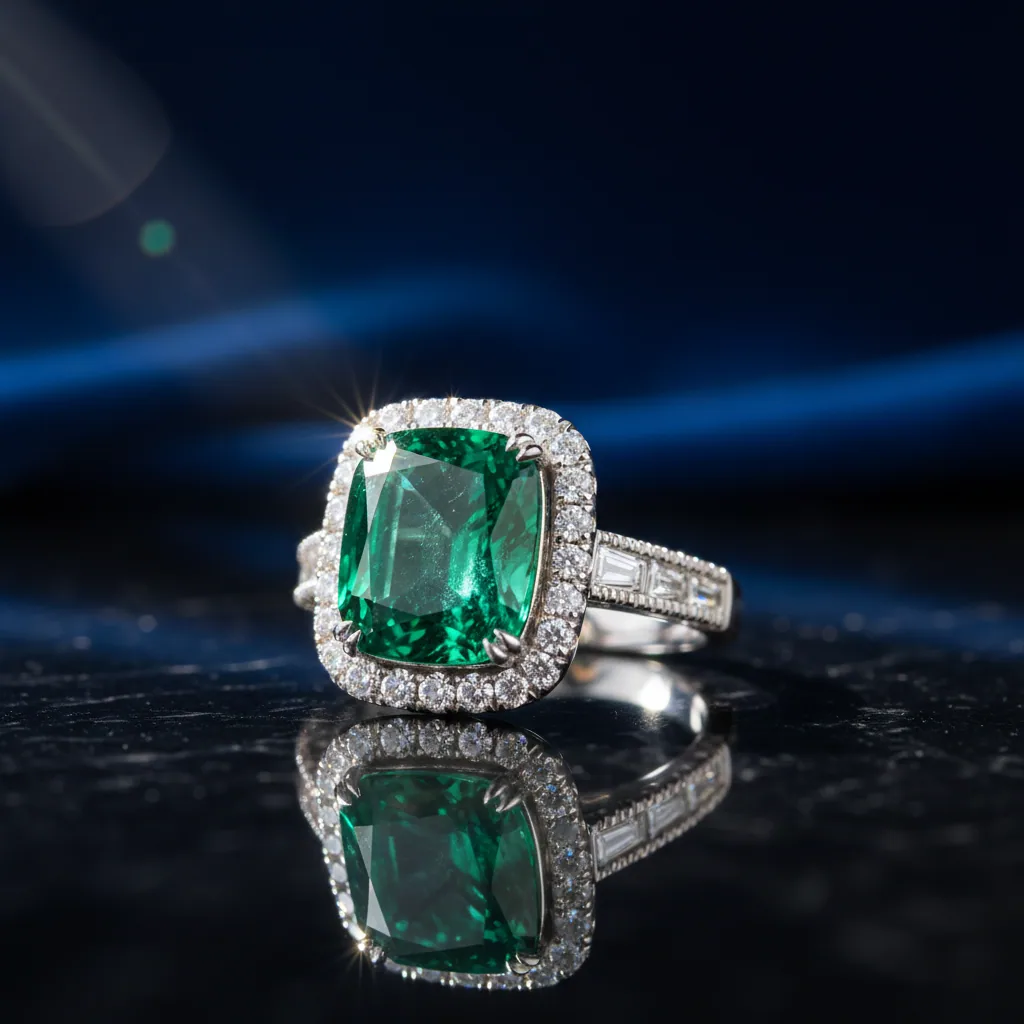
Openwork metal, a beaded edge and pierced shoulders, like an heirloom.
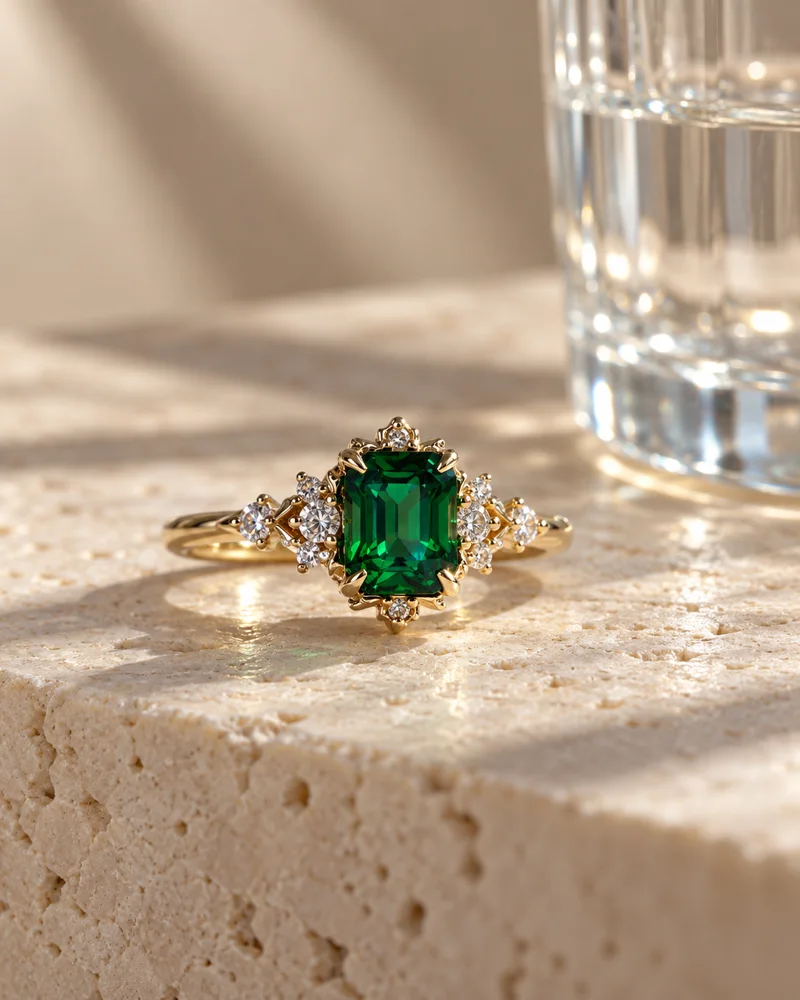
6Radiant
A rectangle with cropped corners and many small facets.
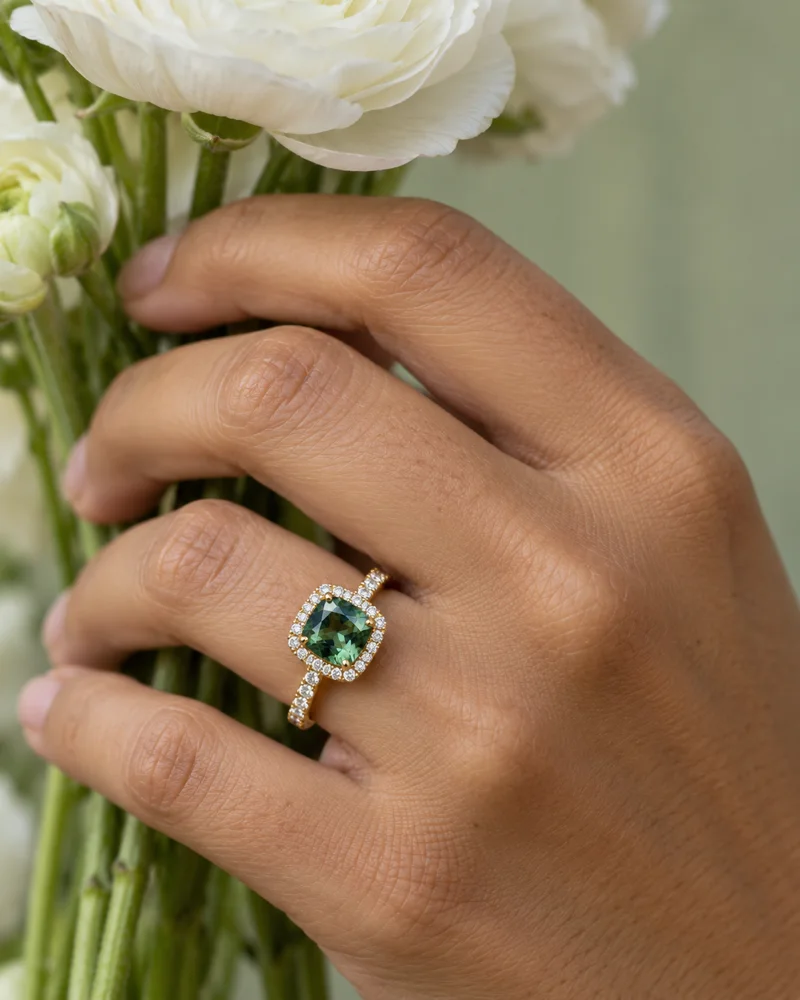
7Cushion
A soft square with rounded corners.
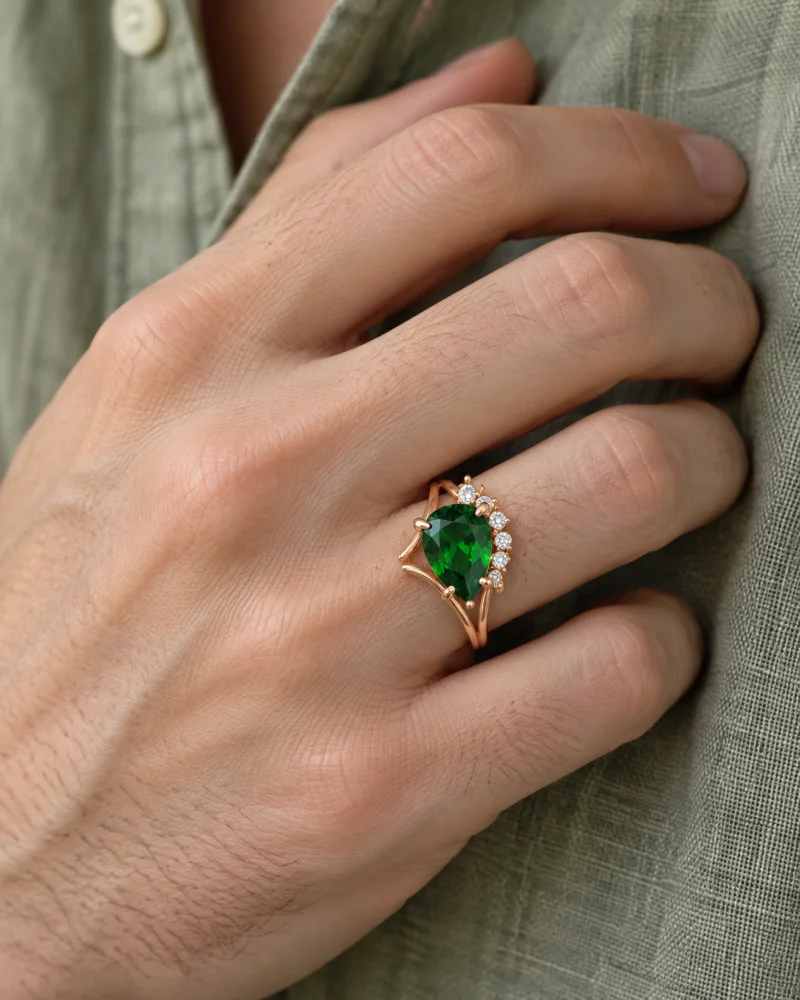
8Pear
A teardrop: one rounded end, one point.
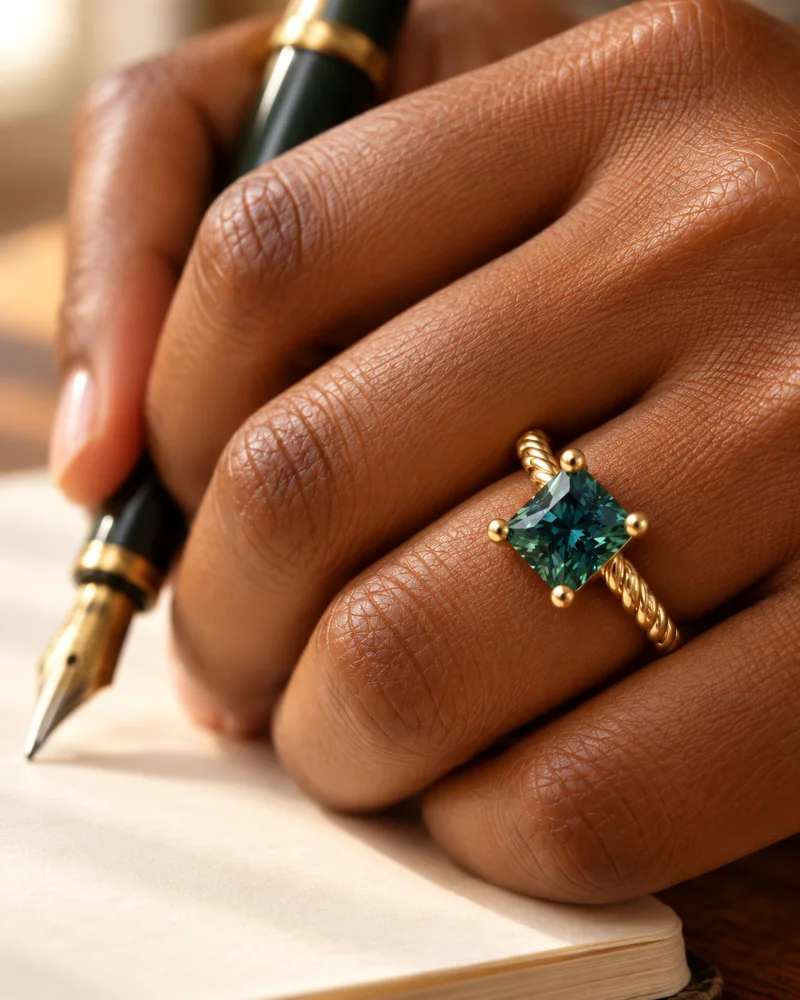
9Princess
A square outline with marked corners.
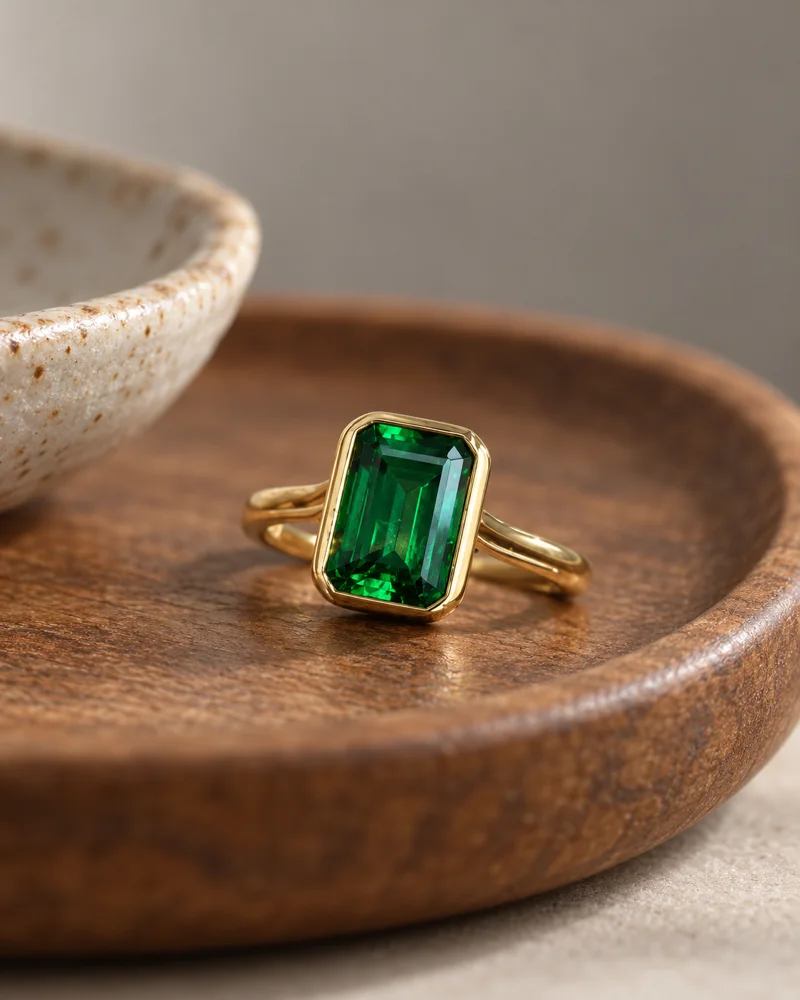
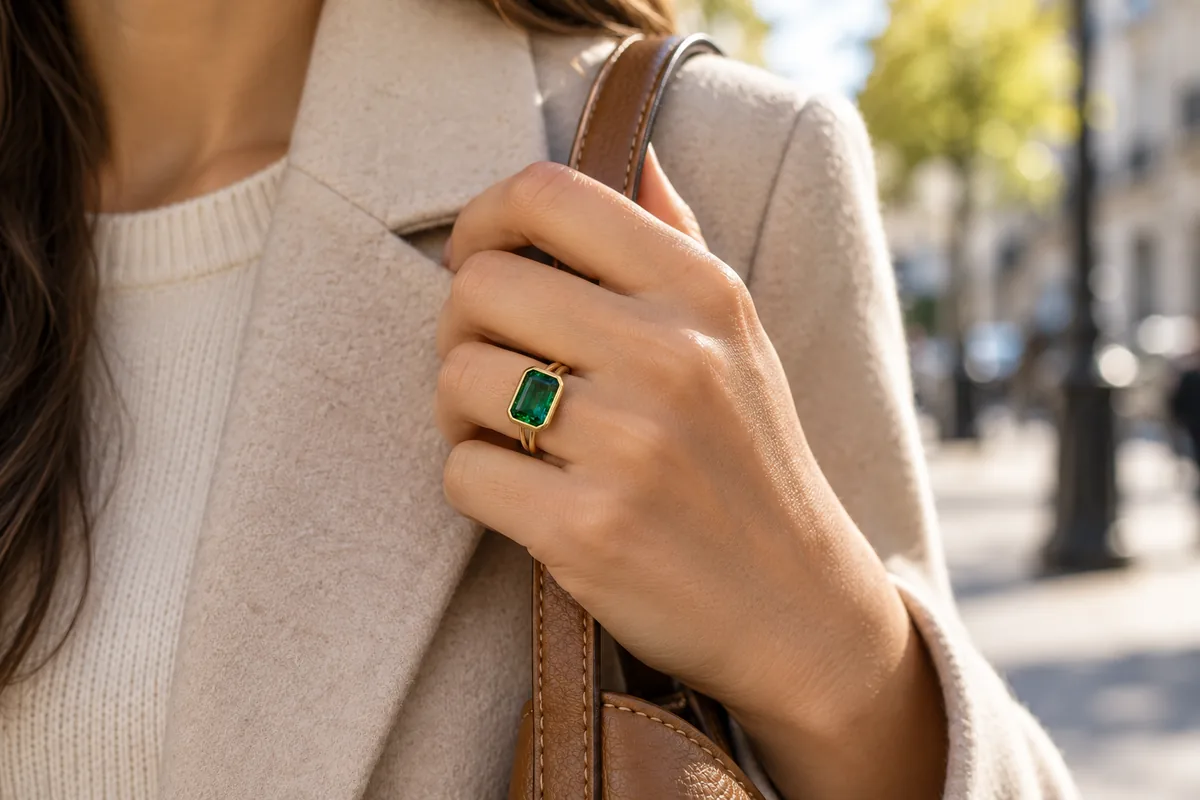
10Bezel
A rim of metal wraps the whole edge of the stone, with no prongs.
Illustrations, not rings from our stock. A style is only a frame: choose the green first, then the shape that suits it.
Green sapphire: the toughest green, if you find a bright one
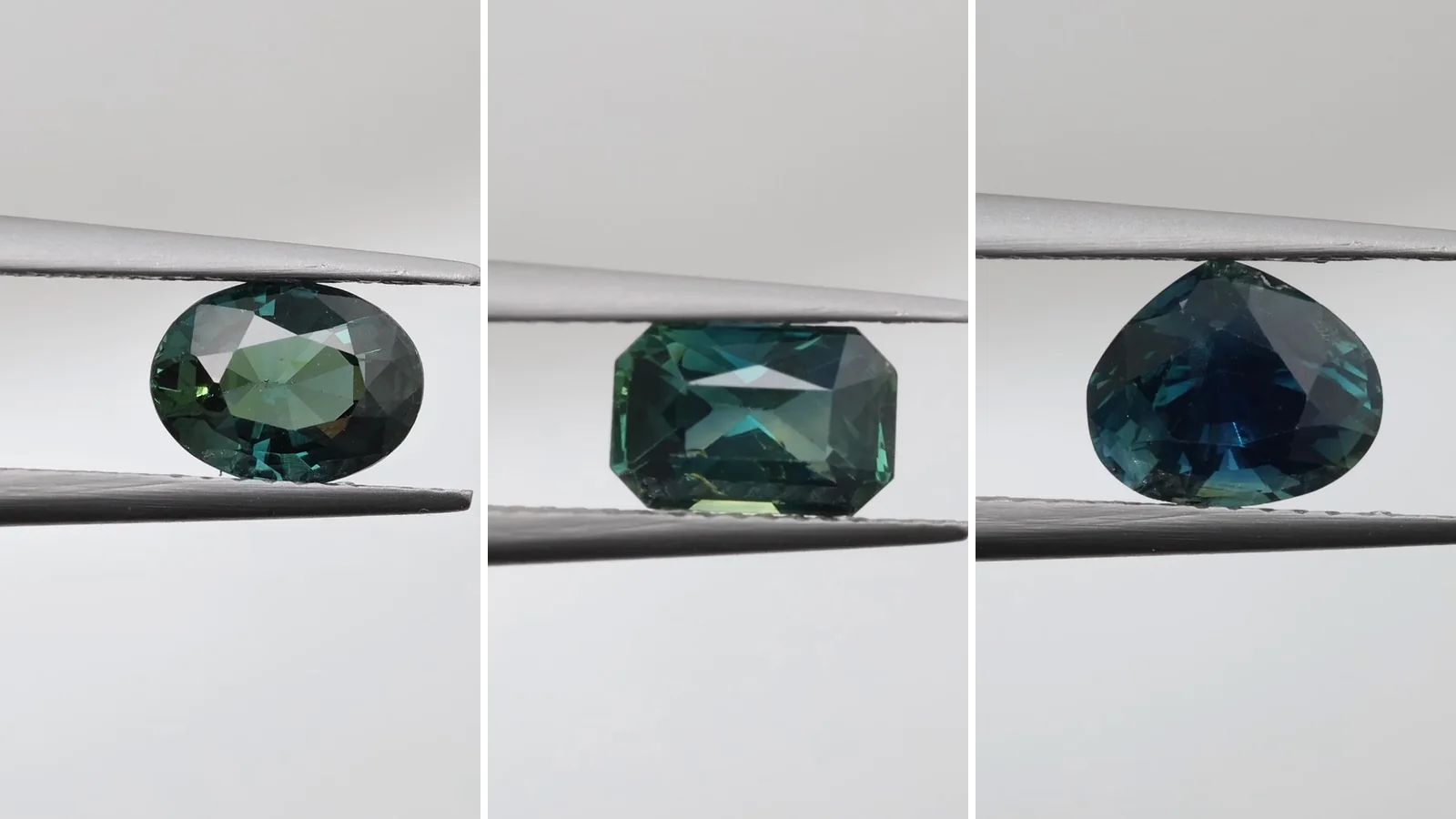
On wear, green sapphire wins everything. It is corundum, like ruby and blue sapphire, and among natural stones only diamond scratches it. Its green is a mix of two colors in one crystal: yellow from iron, blue from iron and titanium together.
Here's the catch. Most green sapphires are low in saturation, with a color the trade calls khaki or olive, and uneven color zones are common. Emerald and tourmaline give stronger greens. So judge it by eye, in daylight, and expect to look at many before one catches you.
When the blue side wins, the stone slides toward teal: our teal sapphire color guide shows where that line sits. To see real ones, browse our green sapphires.
Can you wear an emerald ring every day?
Yes, if you accept what comes with it. Almost every emerald has fractures, and the great majority have them filled with oil or resin to hide them. Emerald is also more brittle than sapphire, so it can be damaged in setting or simply in careless everyday wear.
Three things protect it in a ring:
- The emerald cut. Its vulnerable corners are faceted off, which gives the prongs a comparatively safe place to hold.
- A bezel. A rim of metal around the whole edge resists chips and everyday wear.
- No ultrasonic, no steam. Both are risky for a filled stone, and steam can make the oil sweat out. Warm, soapy water and a gentle scrub are enough.
Oil is not permanent: it can dry out, and a professional can remove it and oil the stone again. Our page on emerald hardness goes further. For price, we read five sellers on 7 October 2026: most natural emeralds of 1 to 3 carats were asked $1,000 to $6,000 per carat. The detail is in our emerald price guide, and the wider market, with sources, in our colored gemstone statistics.
We have no emerald for sale today, and I'd rather say so. If you want one, I look for it. Most of them come from Colombia. Depending on what I need, I find some in Sri Lanka through partners who have them. Otherwise Bangkok is easier.

Tsavorite or green tourmaline: greens that ask less of you
Both sit at 7 to 7.5 on the Mohs scale, a notch under emerald, and both are good ring stones.
Tsavorite is a green garnet colored by vanadium, the same element behind the green of some emeralds. Garnet is rarely treated, and tsavorite is generally sold untreated, where most emeralds are filled. It costs less than emerald for a comparable look. Size is its limit. Stones of 7 × 5 mm and up get progressively rarer, and a tsavorite of two or three carats is a gem in its own right, not a substitute.
Green tourmaline comes in softer, often very clean greens that can be very bright. Heating is common and stable: it lightens stones that are too dark. Toughness is fair, a step below tsavorite. The richest ones, colored by chromium and vanadium, are sold as chrome tourmaline and can rival tsavorite. More in our tourmaline buying guide, and you can see our loose tsavorites.
Cleaning and resizing a green ring: what each stone tolerates
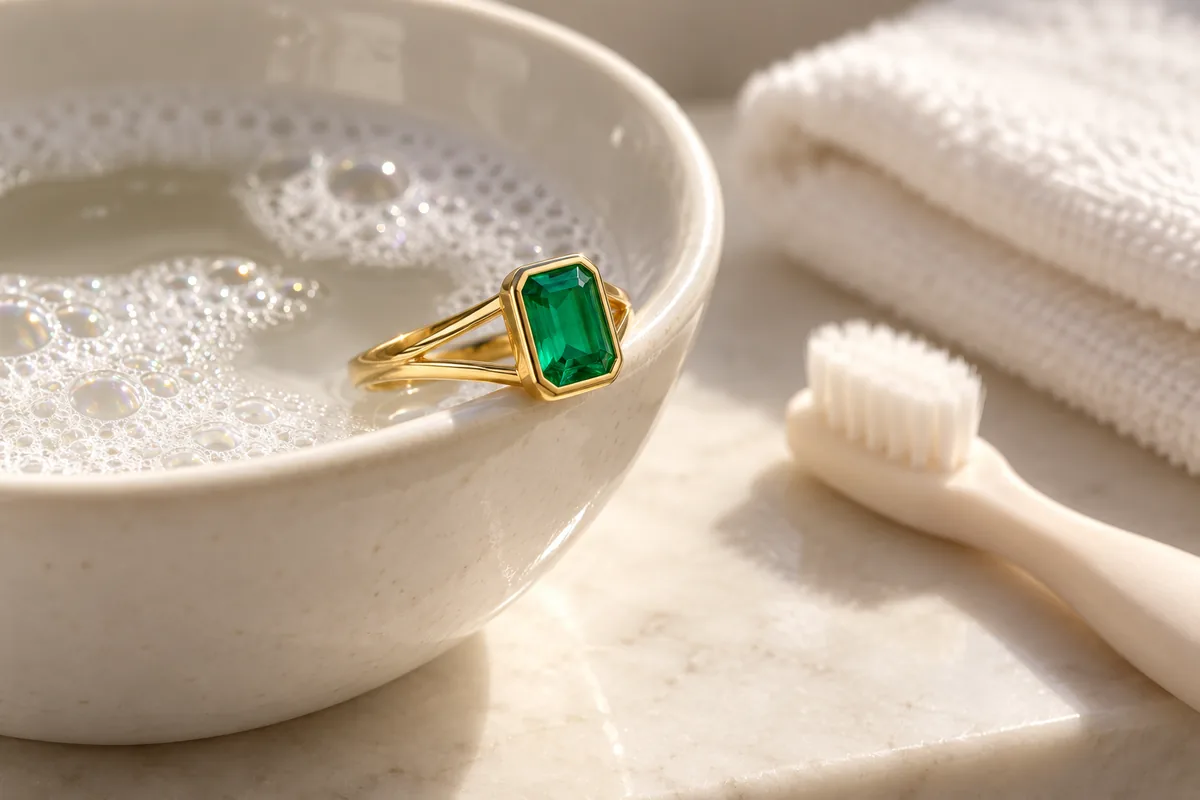
Warm, soapy water is the safe method for every stone on this page, gently for emerald. The trouble starts with machines and with the jeweler's torch.
| Stone | Ultrasonic or steam | Before resizing, the jeweler should know |
|---|---|---|
| Green sapphire | Usually safe, never if filled | Boron flux can etch its surface |
| Emerald | Never | Torch heat makes the oil sweat out |
| Tsavorite | Ultrasonic usually safe, steam never | A sudden temperature change can crack it |
| Green tourmaline | Both risky | A sudden temperature change can crack it |
| Peridot | Ultrasonic risky, steam never | A cold dip after soldering can crack it |
What each green stone tolerates
General care rules for each stone, not a guarantee for one stone. Tell the jeweler which stone it is, and whether it is filled, before any work starts.
Peridot has one more enemy: acids, including, over a long time, acid perspiration. So before any resizing, say which stone it is and whether it is filled. Better still, get it right the first time: measure your ring size before the ring is made.
Quick answers
What is the best green gemstone for an engagement ring?
Is emerald good for an engagement ring?
Is green sapphire better than emerald?
Is tsavorite better than emerald?
Is peridot good for a ring?
Choose the green, then protect it
Green sapphire if the ring never comes off. Tsavorite or tourmaline for a brighter green that asks little. Emerald if its color is the point, with a bezel and gentle care. Browse our loose green stones; if the one you want isn't there, describe it and we'll look for it. Then we make the ring around it, at your size.