Black Colored Gemstones: Which Black Stone Lasts in a Ring
Three kinds of black, the stones that survive daily wear, and the blacks that come from a dye bath.

For a black stone in a ring you wear every day, choose black sapphire, black spinel or black diamond. Tourmaline, jade and onyx hold up with care. Keep opal, obsidian, hematite, pearl and jet for earrings and pendants. Then ask one question: is the black natural? Black onyx almost never is.
| Black stone | Hardness (Mohs) | Everyday ring? |
|---|---|---|
| Black diamond | 10 | Yes, in a protective setting |
| Black sapphire | 9 | Yes |
| Black spinel | 8 | Yes |
| Black tourmaline, jade | 6 to 7.5 | Yes, with care |
| Onyx | 6.5 to 7 | Tough, scratches over time |
| Opal, hematite, obsidian, pearl, jet | 2.5 to 6.5 | Earrings and pendants |
Which Gemstones Are Black?
Black means three different things in a stone, and each changes what you are looking at.
- Black all the way through. Onyx, jet, obsidian and hematite let little or no light through: what you see is the surface.
- So dark it reads black. Some stones that are normally transparent grow so dark they look black. Hold one to a strong light and the color comes through.
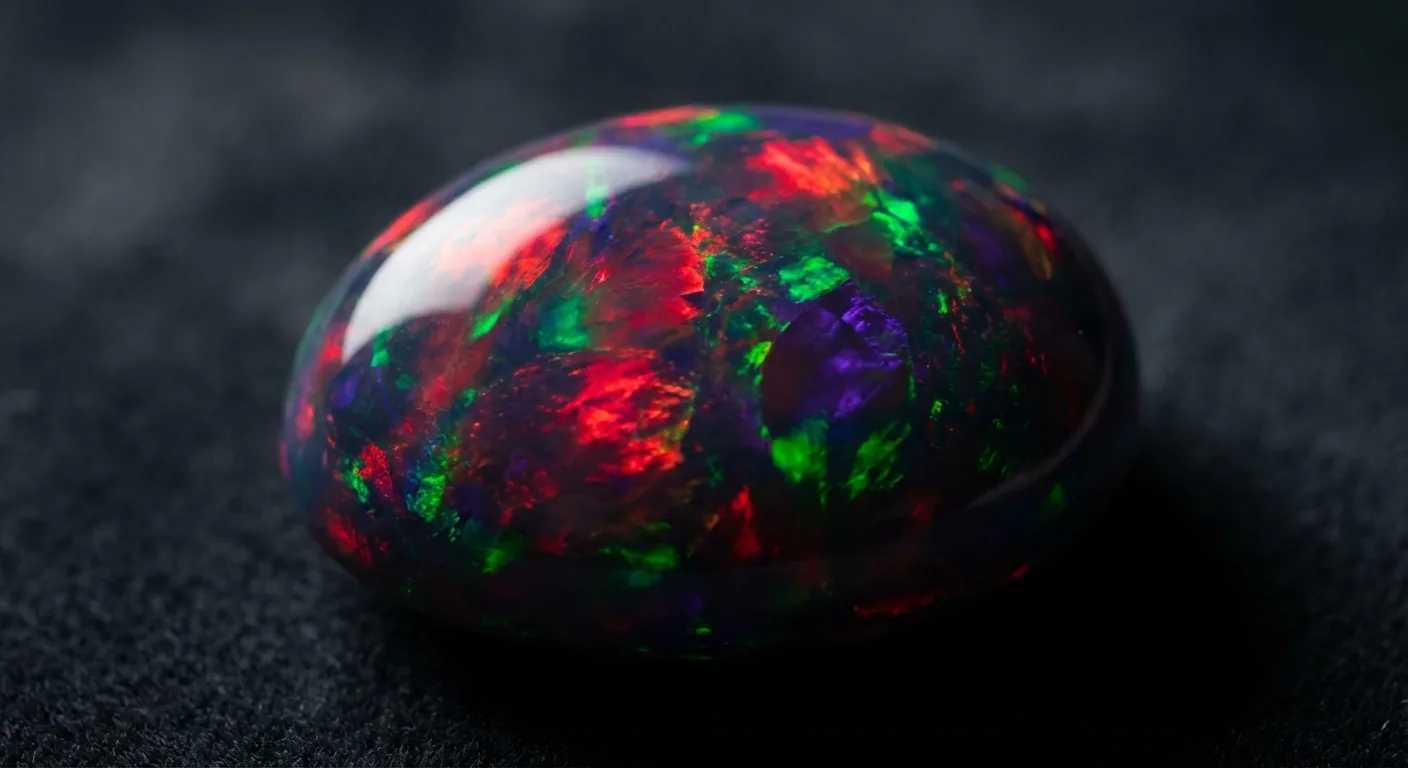
- Black as a background. In black opal, a dark body sets off flashes of color.
Ten black gemstones, one picture each
Grouped by kind of black. The last line says whether it suits a ring worn every day.
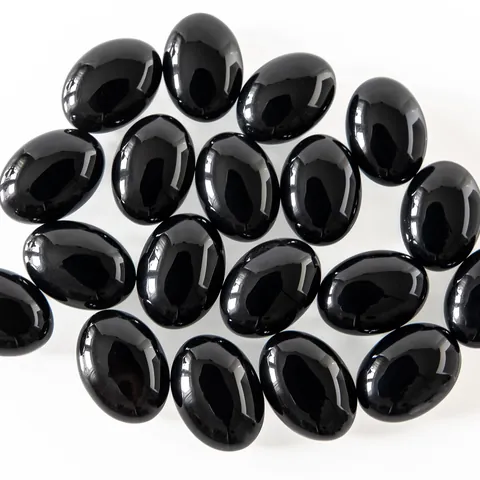
Black onyx
Little or no light gets through
- Everyday ring
- Tough, scratches over time
Almost always dyed: see the questions below.
Photo: W.carter, CC BY 4.0, via Wikimedia Commons (cropped).
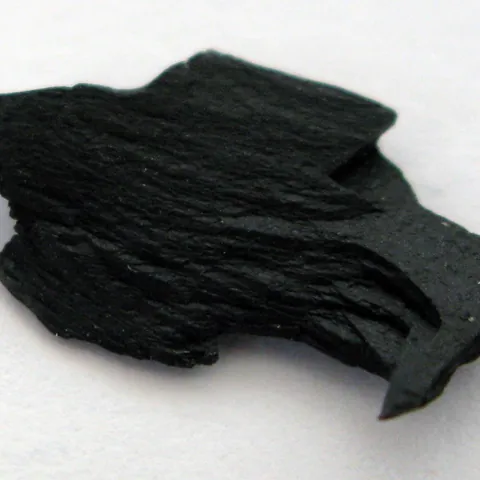
Jet
Little or no light gets through
- Everyday ring
- Earrings and pendants
Shown here as a rough piece.
Photo: Konto na chwilę, CC BY-SA 4.0, via Wikimedia Commons (cropped).
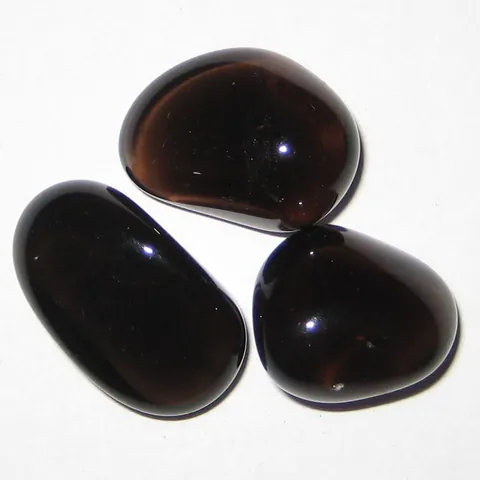
Obsidian
Little or no light gets through
- Everyday ring
- Earrings and pendants
Natural glass. Thin edges can let a little light through.
Photo: Stephanie Clifford, CC BY 2.0, via Wikimedia Commons (cropped).
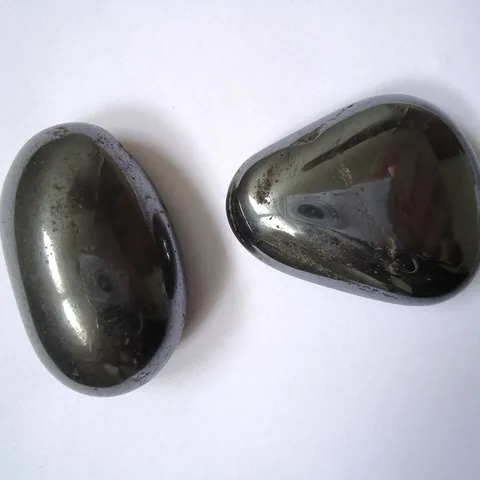
Hematite
Little or no light gets through
- Everyday ring
- Earrings and pendants
Hematite adds a metallic shine and a surprising weight in the hand.
Photo: Mauro Cateb, CC BY-SA 3.0, via Wikimedia Commons (cropped).
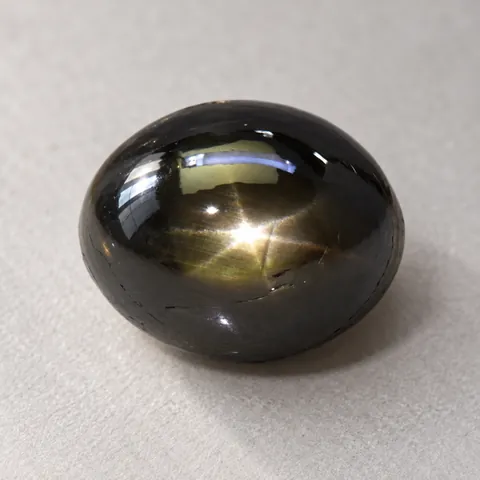
Black sapphire
So dark it reads black
- Everyday ring
- Yes
Often a very dark greenish blue. The one shown is a black star sapphire.
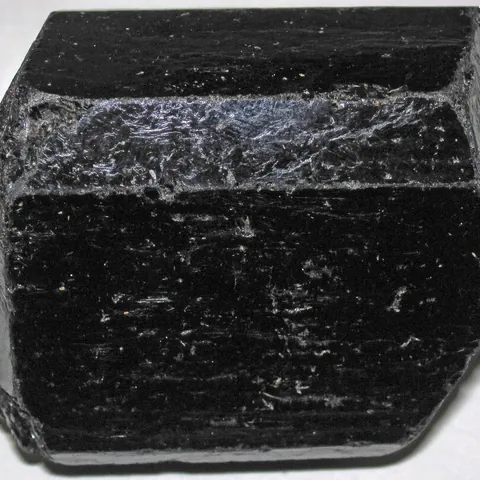
Black tourmaline
So dark it reads black
- Everyday ring
- Yes, with care
Often a very dark green or brown. Shown here as an uncut crystal.
Photo: James St. John, CC BY 2.0, via Wikimedia Commons (cropped).
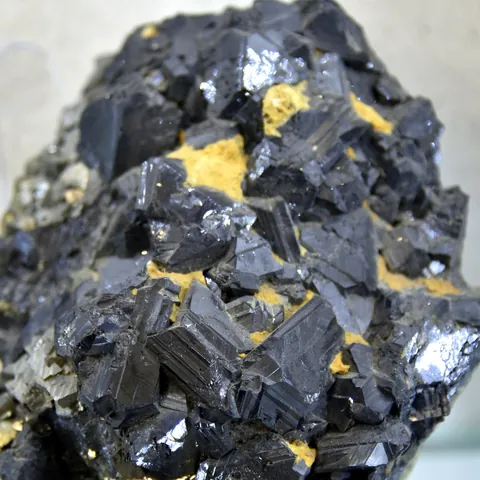
Black spinel
Black by nature
- Everyday ring
- Yes
Uncut crystals from Sri Lanka, in a museum collection.
Photo: Osama Shukir Muhammed Amin, CC BY-SA 4.0, via Wikimedia Commons (cropped).
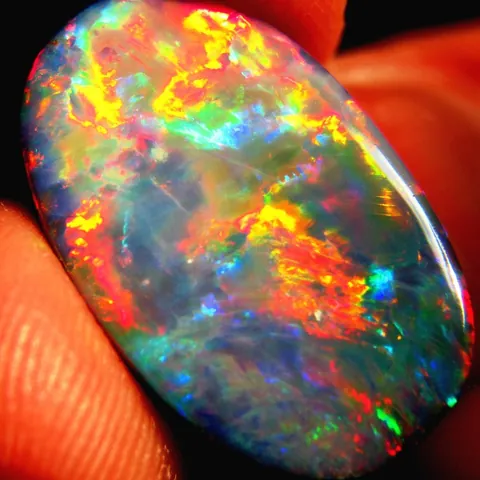
Black opal
Black as a background
- Everyday ring
- Earrings and pendants
Cut and polished black opal from Lightning Ridge, Australia.
Photo: Daniel Mekis, CC BY-SA 3.0, via Wikimedia Commons (cropped).
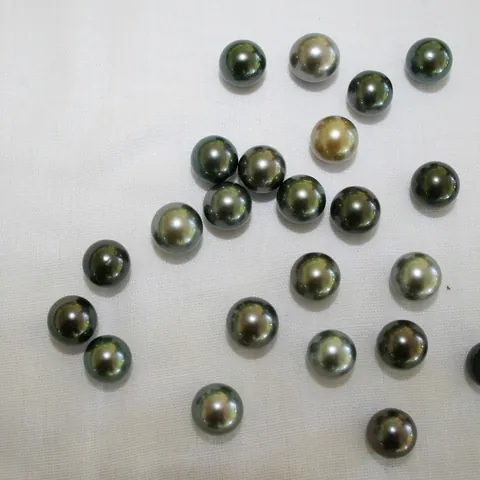
Tahitian cultured pearl
Black as a background
- Everyday ring
- Earrings and pendants
A Tahitian cultured pearl can be truly black, with a near-metallic luster.
Photo: Remi Jouan, CC BY-SA 3.0, via Wikimedia Commons (cropped).
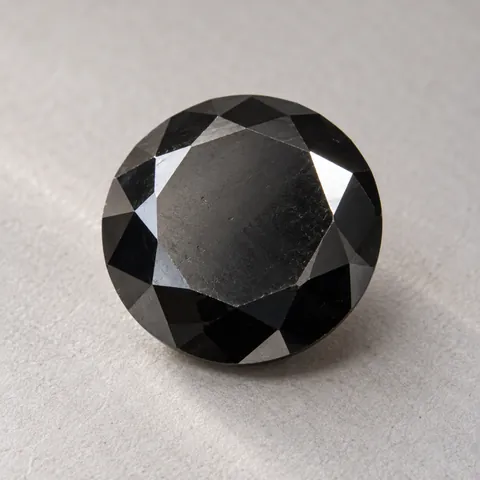
Black diamond
A case of its own
- Everyday ring
- Yes, in a protective setting
Countless tiny black inclusions line the cracks inside a natural black diamond, and that is its color.
Each card shows an example of the stone, not a standard. Uncut crystals and rough pieces are marked as such.
Source: Names, kinds of black and ring use: gemological reference sheets, checked on 27 October 2026. Photo credits are under each card.
Which Black Stones Are Safe in a Ring?
A ring takes scratches and knocks. Dust in the air is mostly quartz, hardness 7, so a stone below 7 slowly loses its polish.
Hard is not always tough
Hardness is resistance to scratches. Toughness is resistance to chips and breaks. Tap a stone.
Toughness (chips and breaks)
Mohs hardness (scratches)
Touch a point to read about the stone.
Black diamond Mohs 10 · Toughness: Good in the cleavage directions, exceptional in all others
The hardest. A natural black commonly carries fractures, and any diamond can split along a cleavage plane.
Black sapphire Mohs 9 · Toughness: Usually excellent
The easy choice. Black star sapphire is the exception: the inclusions that make its star make it prone to parting.
Black spinel Mohs 8 · Toughness: Good
Hard, with good toughness: a very good ring stone.
Black tourmaline Mohs 7 to 7.5 · Toughness: Fair
A good ring stone: as hard as the dust in the air, with only fair toughness.
Jade Mohs 6 to 7 · Toughness: Exceptional
Softer than dust, yet exceptionally tough: nephrite is the toughest known gem.
Onyx Mohs 6.5 to 7 · Toughness: Good
Tough, which is why it sits in so many signet rings, but years of wear will scratch it.
Opal Mohs 5 to 6.5 · Toughness: Very poor to fair
Softer than dust: keep it for earrings and pendants.
Pearl Mohs 2.5 to 4 · Toughness: Usually good, but variable
Very soft and easily scratched; its toughness varies with age and processing.
| Stone | Mohs | Toughness |
|---|---|---|
| 1Black diamondThe hardest. A natural black commonly carries fractures, and any diamond can split along a cleavage plane. | 10 | Good in the cleavage directions, exceptional in all others |
| 2Black sapphireThe easy choice. Black star sapphire is the exception: the inclusions that make its star make it prone to parting. | 9 | Usually excellent |
| 3Black spinelHard, with good toughness: a very good ring stone. | 8 | Good |
| 4Black tourmalineA good ring stone: as hard as the dust in the air, with only fair toughness. | 7 to 7.5 | Fair |
| 5JadeSofter than dust, yet exceptionally tough: nephrite is the toughest known gem. | 6 to 7 | Exceptional |
| 6OnyxTough, which is why it sits in so many signet rings, but years of wear will scratch it. | 6.5 to 7 | Good |
| 7OpalSofter than dust: keep it for earrings and pendants. | 5 to 6.5 | Very poor to fair |
| 8PearlVery soft and easily scratched; its toughness varies with age and processing. | 2.5 to 4 | Usually good, but variable |
Points that would overlap are moved apart a little. The exact values are in the table.
Toughness has no number: these are the words gemmologists use. Hematite (5.5 to 6.5), obsidian (5 to 5.5) and jet (2.5 to 4) are not placed: no single toughness grade is given for them. All three are softer than dust.
Source: Hardness and toughness as published in standard gemology references, checked on October 27, 2026.
Opal, hematite, obsidian, pearl and jet belong in earrings and pendants. If an opal is the one you love, read our opal guide first. If black spinel tempts you, see spinel in every color.
Is Your Black Stone Black by Nature?
Several black stones owe their color to treatment. Ask, in writing, before you choose.
Is the black natural? Six questions, ready to send
Tick them as you get answers. The button copies all six, ready to send.
6 points
A message ready to send to the seller, with all the questions.
See the message
Hello, I am interested in this black stone. Before I choose, could you confirm a few points in writing?

1. If it is onyx: is the black natural, or was the stone dyed?
2. If it is a diamond: is it natural or lab-grown, and is its black natural or the result of irradiation or heating?
3. If it is a pearl: which kind is it, and is its color natural, dyed or irradiated?
4. If it is an opal: is it one solid piece, a doublet or a triplet, and has it been treated with sugar or smoke?
5. If it is jadeite: has it been heated, impregnated with polymer, or dyed?
6. Will it come with a report from an independent laboratory that names the stone and any treatment?

Thank you for your time.
Black diamond also has look-alikes. Black cubic zirconia arrived in the early 1990s to imitate it, and hematite also goes by the false name “black diamond”. For any black stone that matters to you, the answer comes from a report by an independent laboratory: what a lab report proves.
Quick answers
What gemstones are naturally black?
Which black gemstone is best for an engagement ring?
Is black onyx a natural stone?
What is the rarest black gemstone?
How can you tell if a black gemstone is real?
Choose the black that lasts, then ask where it comes from
For a ring worn every day: sapphire, spinel or diamond. For earrings and pendants, the softer blacks open up, from opal to jet. Whatever the stone, ask whether its black is natural before you choose it.