White Sapphire: An Honest Guide to the Icy Diamond Alternative
A near-colorless corundum, Mohs 9, at a fraction of a diamond's price. Here is what it does well, what it doesn't, and how to pick one, from someone who buys them at the source.
White sapphire in one paragraph
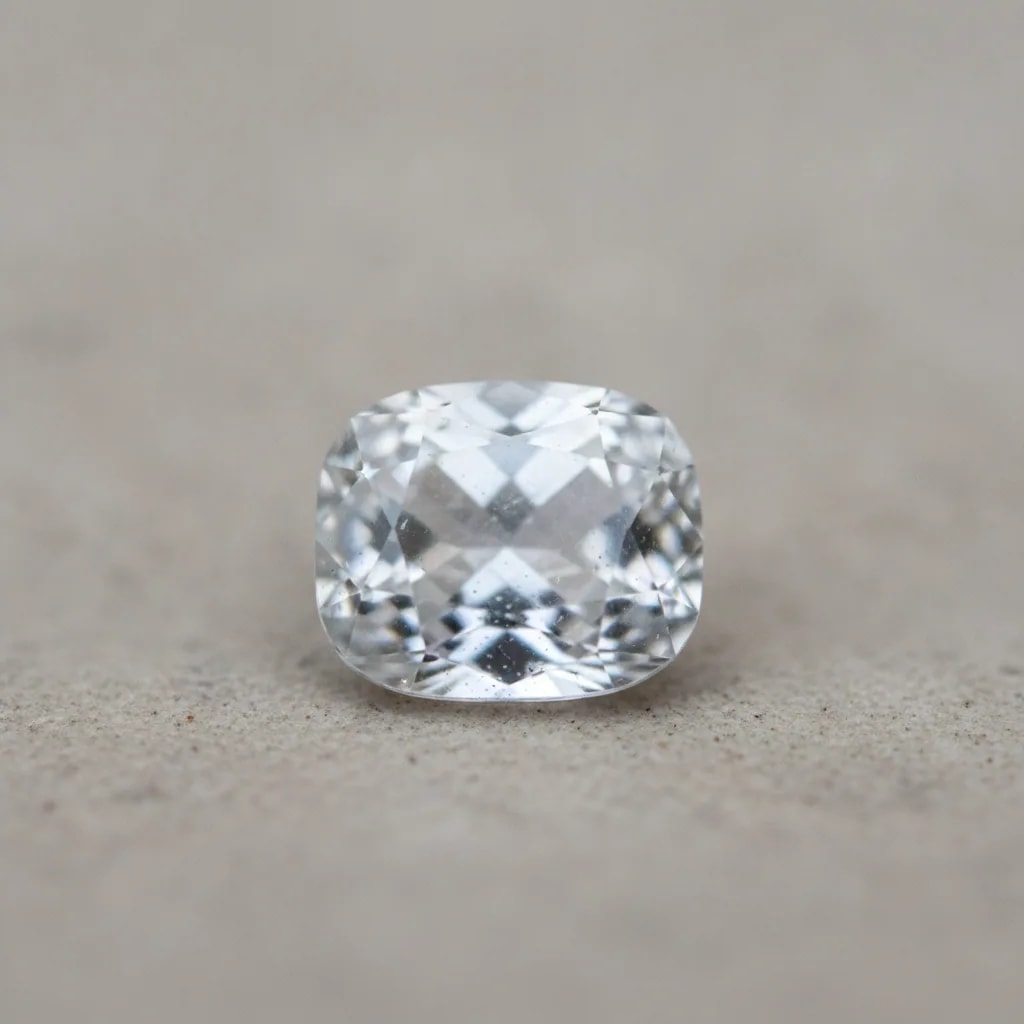
What is a white sapphire?
Let's start plain. A white sapphire is corundum with nothing added. Blue sapphire gets its color from iron and titanium. Pink and red get theirs from chromium. White sapphire is the one that skipped the trace elements, so it stays colorless, or close to it. Per GIA, colorless sapphire has long been sold as an inexpensive natural substitute for diamond. It is one branch of the corundum family, and we cover what Mohs 9 means for a stone you wear every day separately.
That single fact drives almost everything people love and hate about the stone. No color means no color grade to argue over. It also means clarity carries the whole show. Any cloudiness, any faint yellow or grey tint, shows up at once, because there is no color to hide behind.
On hardness it is genuinely tough. Corundum sits at 9 on the Mohs scale, with toughness the trade rates as usually excellent (GIA). That is one notch below diamond and above almost everything else you would set in a ring. It takes daily wear without complaint.
Two years buying stones in Sri Lanka taught me to read "white sapphire" as a spec, not a promise. It tells you the species and the absence of color. It says nothing about whether the cut, the clarity, or the price in front of you is any good. Those you still check, one stone at a time.
Not every near-colourless sapphire reads as icy. Some lean warm, closer to ivory than to white, which puts them in the cream coloured gemstone family rather than the diamond-alternative one. Worth knowing before you judge a stone as "off".
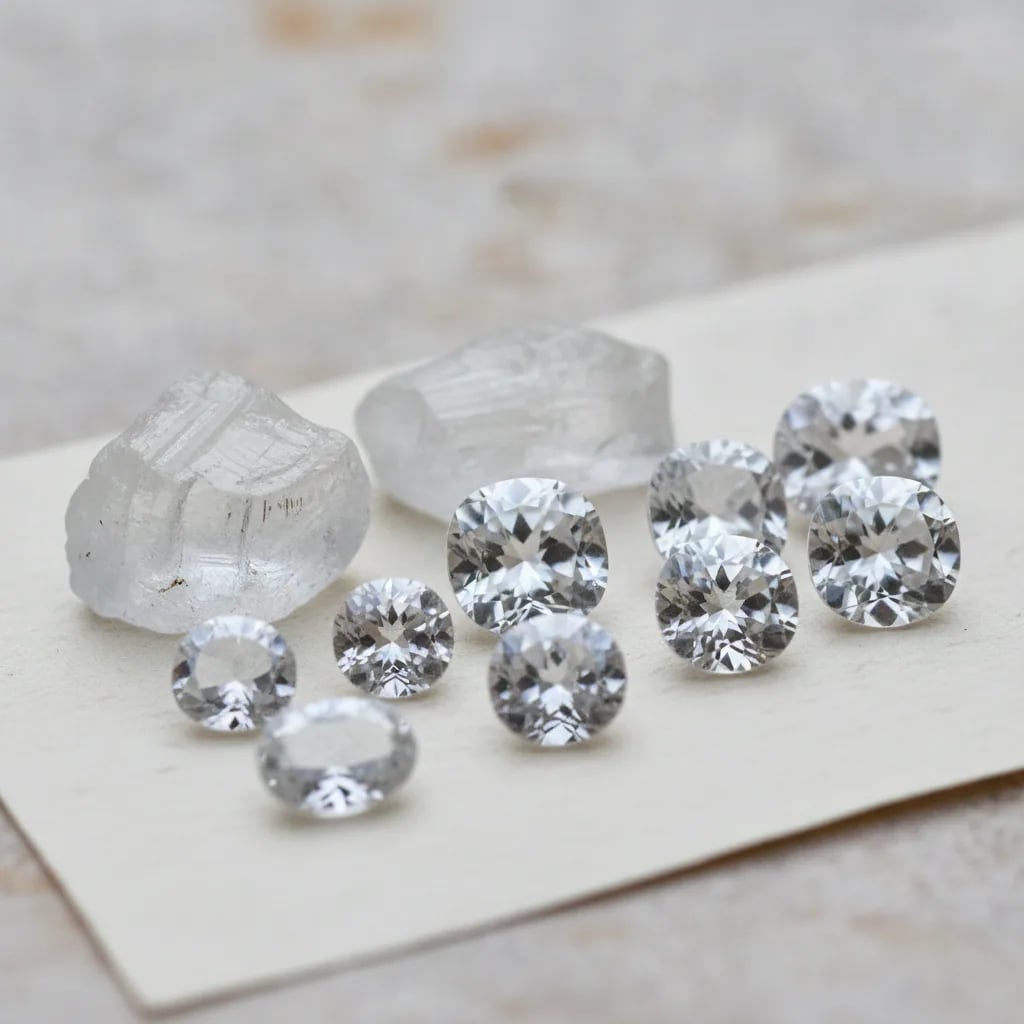
White sapphire vs diamond: where each one wins
A diamond wins on sparkle and scratch resistance. A white sapphire wins on price, and it ties on everyday durability. The gap comes down to optics: a diamond bends and splits light far more sharply, so it throws brilliance and rainbow fire a white sapphire simply cannot match.
White sapphire vs diamond, at a glance
| Property | White sapphire | Diamond |
|---|---|---|
| Mineral | Corundum | Carbon |
| Mohs hardness | 9 | 10 |
| Dispersion (fire) | ~0.018, soft | ~0.044, strong |
| Refractive index | ~1.76 | ~2.42 |
| Typical 1 ct price | A few hundred dollars | A few thousand dollars |
| Best for | Icy look on a budget | Maximum sparkle |
The number that matters most is dispersion, the stone's ability to split white light into color. A diamond's is roughly 0.044. Corundum's is about 0.018, less than half. That is the whole reason a diamond flashes rainbow fire across a room and a white sapphire gives a softer, glassier shimmer. Refractive index tells the same story: diamond around 2.42, corundum around 1.76, so a diamond returns more light to your eye.
Does that make white sapphire worse? Only if you wanted a diamond. If you wanted an icy, near-colorless stone that reads clean and holds up to daily wear, it does the job at a small slice of the cost. What I tell people at the market is simple. Don't buy a white sapphire hoping nobody notices it isn't a diamond. Somebody eventually will. Buy it because you actually like the quieter, icier look.
Why does a white sapphire look cloudy, and does it really?
Two things. Lower-clarity stones genuinely read milky, because with no color to mask them, inclusions and haze show. And on the finger, a white sapphire's softer light return means dirt and skin oil dull it faster than they dull a diamond. It can look cloudy long before it is dirty enough to bother a diamond.
This is the complaint you see most online, and it is half real, half fixable. The real half: buy a milky, over-included stone and it will look milky forever. No cleaning fixes low clarity. That is why, with white sapphire, clarity is the whole game. I pass on more white sapphires at the source for haze than for any other reason.
The fixable half: a good, eye-clean white sapphire that goes dull after a few weeks is almost always just filmed with soap, lotion and skin oil. Because it bends less light back at you than a diamond, a thin greasy film that a diamond would shrug off reads as a grey veil on a sapphire. A two minute clean brings the ice back. More on that below.
How much does a white sapphire cost?
Most natural white sapphires sell for roughly $25 to $300 per carat, with clean, well cut, larger, unheated stones climbing well above that. For comparison, a decent one carat diamond runs into the thousands, and a 3 carat diamond starts around $25,000. That price gap, not the sparkle, is why white sapphire exists in the jewelry trade at all.
Natural white sapphire, working price map (2026)
| Tier | Per carat | What you get |
|---|---|---|
| Commercial | $25 to $80 | Small, some haze or tint, fine for accents |
| Good | $150 to $300 | Eye-clean, decent cut, everyday center stone |
| Fine | $300 to $600 | Bright, well cut, cleaner and larger |
| Fine unheated / 2 ct+ | $600 to $1,500+ | Clean, larger, untreated with a report |
A map, not a quote. Cut and clarity move the number more than carat weight does.
One thing I will say straight, because you will read the opposite everywhere: a white sapphire is not a place to park money. It does not appreciate, it is not rare in small clean sizes, and reselling a colorless stone is hard. That is not a knock. It is the honest reason it is affordable. If a seller pitches a white sapphire as a smart financial hold, walk. The appeal of this stone is that you get real, durable, natural corundum for the price of a nice dinner, and you wear it because you like it.
Colored stones, white sapphire included, are valued by beauty and rarity, not by a label. We took apart how that "precious versus semi-precious" framing is mostly marketing, and white sapphire is a clean example of a real, natural gem that the label game quietly underrates.
How to choose a white sapphire: a sourcer's checklist
After enough parcels, choosing a white sapphire comes down to four checks, in this order.
Clarity first, always. Hold it to a bright light and look for haze, milkiness, and any inclusion you can see without a loupe. With no color to hide behind, eye-clean is the floor, not a bonus. If it looks slightly milky in the shop, it will look worse on your hand.
Cut second. This is where cheap white sapphires die. A colorless stone lives or dies on how well it is cut, because a good cut is the only way to squeeze brilliance out of a stone with low fire. A shallow, windowed, weight-saving cut looks like glass. A precise cut looks icy and alive. I would take a smaller, better cut stone over a bigger dull one every time.
Tint third. Many "white" sapphires carry a faint yellow, grey or brown cast. On its own you might not notice. Next to a truly colorless stone you will. Ask to compare.
Treatment and paper fourth. A lot of colorless and near-colorless sapphire is heat treated to clean up its look, which is normal and stable. Untreated stones cost more and should say so on a report. If that difference matters to you, read what unheated really means and insist on a report from an independent lab. A certificate confirms the stone is natural corundum and flags treatment. It does not promise the stone is pretty or fairly priced, which is a limit worth knowing before you lean on it, as we explain in what a gemstone certificate actually proves.
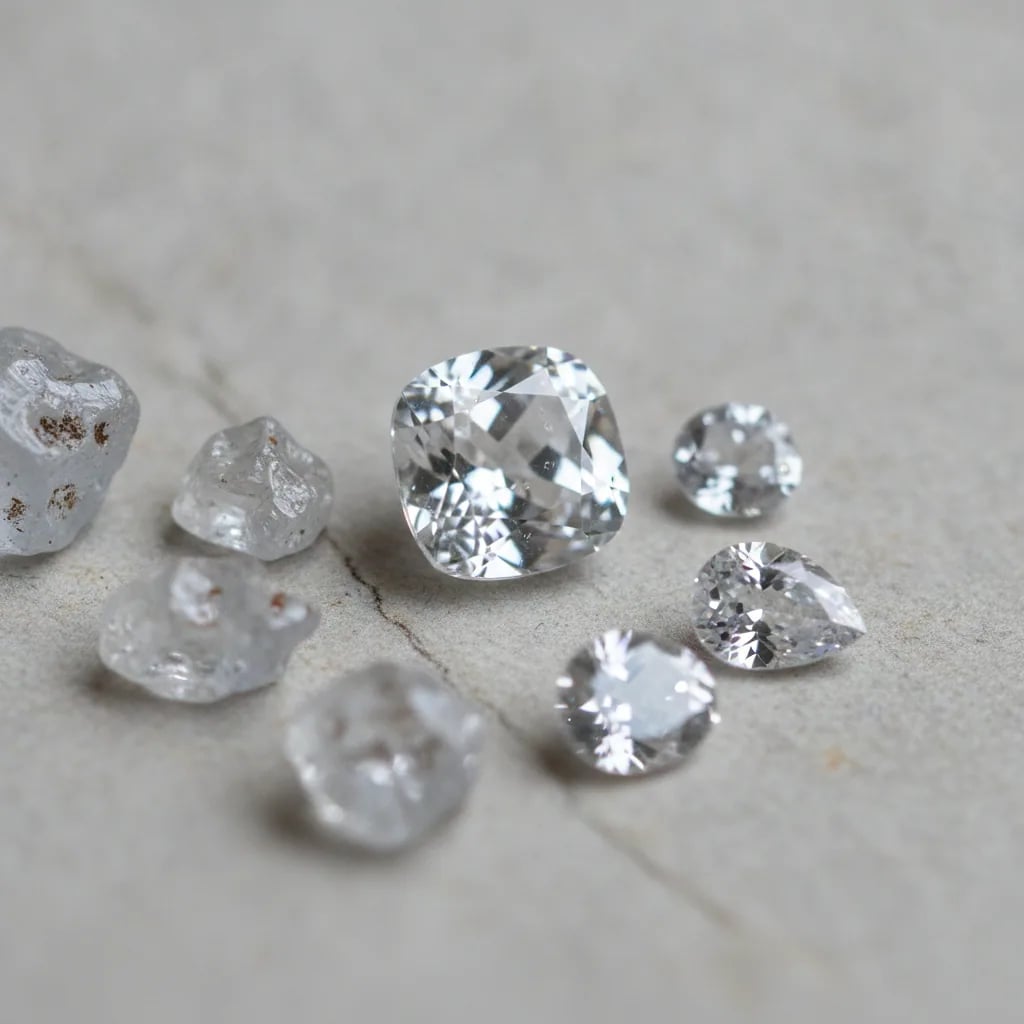
Where white sapphire comes from
Most of the clean white sapphire in the trade comes out of Sri Lanka, my main sourcing ground. The island's gem gravels produce corundum in every color, and colorless and near-colorless material has been part of that mix for centuries. Much of what starts as pale, milky Sri Lankan rough, the trade calls it geuda, gets heat treated toward blue, so the stones that stay truly colorless are a specific, sorted category by the time they reach a parcel.
I will be honest about what "sourced in Sri Lanka" does and does not buy you. It does not make a hazy stone clean or a dull cut bright. Origin is not a quality grade for white sapphire the way it can be for a fine blue. What the source gives you is a shorter, more visible chain: I see the parcel, I see who cut it, and there is one less layer of markup between the gravel and you. Australia, Madagascar and East Africa produce colorless material too. If Sri Lankan origin matters to you for other stones, we go deeper in our Ceylon sapphire guide.

See white sapphire and diamond side by side
Reading about dispersion is one thing. Seeing a white sapphire next to a diamond under the same light makes the difference obvious in a second. This comparison walks through sparkle, price and everyday wear for anyone weighing the two.
How to keep a white sapphire icy
Keeping a white sapphire icy is easy once you know it films faster than a diamond. Soak it in warm water with a drop of dish soap, brush gently behind the stone with a soft toothbrush, rinse and dry. Every week or two is plenty for a ring in daily wear. That single habit answers most of the "my white sapphire went cloudy" regret you read about. The stone did not change. The film did.
At Mohs 9 it shrugs off day to day knocks, so you do not need to baby it. Just don't store it loose against harder stones, and take it off for anything really abrasive like sanding or heavy gardening. That is genuinely the whole care routine.
White sapphires, sourced in the open
We keep loose white and near-colorless sapphires that pass the same checks I use at the market: eye-clean first, honestly cut, tint noted, treatment disclosed. No diamond cosplay, just the stone described for what it is.
Frequently Asked Questions
The honest bottom line
A white sapphire is not a lesser diamond. It is a different, honest stone: real corundum, tough enough for daily wear, icy rather than fiery, at a price that lets you actually wear it without a second thought. Choose it clean, choose it well cut, and skip anyone selling it as a place to park money or a diamond in disguise. If you want to see loose white sapphires picked for exactly that, browse our white sapphires.