Is a Lab Grown Diamond Ring Worth It? The Honest Answer
A straight answer from a house that doesn't sell them: what a lab diamond is, what it costs you, and where it falls short.
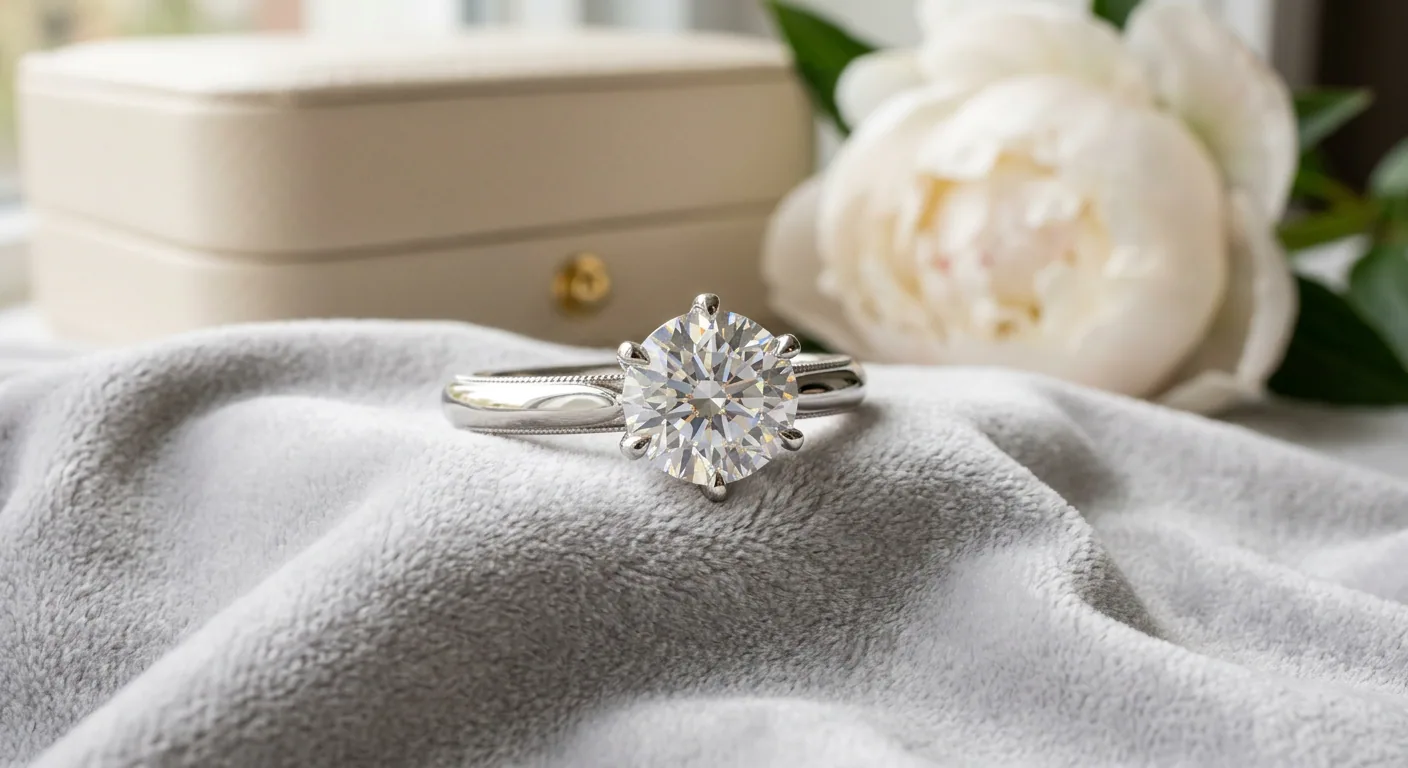
Yes, a lab grown diamond ring is worth it if you want a real diamond to wear every day for a fraction of what a mined stone of the same grade costs. It is not worth it if you expect to sell it later: the resale market is thin.
Full disclosure: we don't sell lab diamonds. We source natural coloured stones in Sri Lanka. So here's the straight answer, without a sales pitch attached.
- Real diamond?
- Yes, same carbon crystal as a mined diamond
- Looks
- Same brilliance and fire (RI 2.417, dispersion 0.044)
- Hardness
- 10 on the Mohs scale
- Price
- A fraction of a mined diamond of the same grade
- Resale
- Weak: buy it to wear, not to sell
- Must have
- An independent lab report stating "laboratory-grown"
Is a lab grown diamond a real diamond?
Yes. A lab grown diamond has essentially the same chemical composition and crystal structure as a mined one. It is not a simulant like cubic zirconia or moissanite, which are different materials made to imitate diamond.
| Property | Lab grown | Mined |
|---|---|---|
| Material | Crystallised carbon | Crystallised carbon |
| Hardness (Mohs) | 10 | 10 |
| Refractive index / dispersion | 2.417 / 0.044 | 2.417 / 0.044 |
Same numbers, same fire. With a loupe, you won't tell them apart. Separating the two reliably takes a gem lab's instruments, which read growth patterns and trace elements the eye can't see. That is why the grading report matters more than the seller's word.
How are lab diamonds made? HPHT vs CVD
Synthetic diamonds have existed since the 1950s, first for industry. Two methods now make the gem-quality ones:
- HPHT (high pressure, high temperature): a small diamond seed sits in a press with carbon and a molten metal catalyst. Under extreme pressure and heat, the carbon crystallises on the seed. Tiny metallic inclusions from the catalyst can be a giveaway.
- CVD (chemical vapour deposition): a carbon-rich gas, typically methane with hydrogen, is broken down in a plasma inside a vacuum chamber, and carbon settles on a diamond seed plate layer by layer.
Here's the thing: for a buyer, the method matters far less than the grades on the report. Both produce real diamonds, and a proper report states that the stone is laboratory-grown.
Do lab grown diamond rings hold their value?
No, and this is the whole trade-off. Lab prices have kept falling as production scales up, so a secondhand lab diamond competes with a cheaper new one. Expect little interest from resellers.
Our opinion, and it's the same one we give about natural stones: don't buy a ring as a placement. Buy it because you love wearing it. Judged that way, the lower price is the point. The money saved can go into a better cut, a finer setting, or simply stay in your pocket.
On ethics, keep it factual. No mine means no link to conflict diamonds. But growing diamonds uses a lot of electricity, so the footprint depends on the grower's power source. Ask for it rather than trusting a green label.
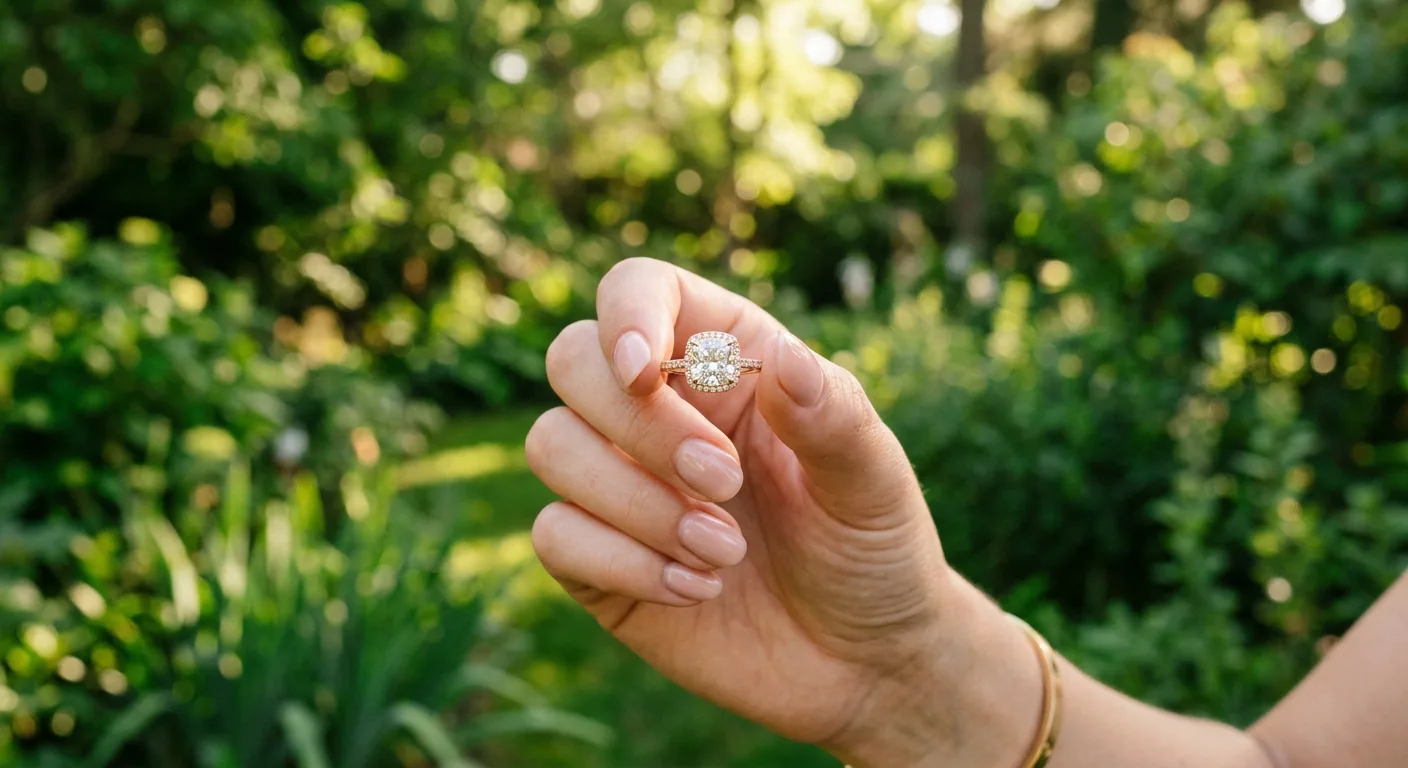
How to choose a lab grown diamond ring
Same rules as a mined diamond, the 4Cs, with one twist: since price is lower, people over-reach on size and under-invest in cut.
- Cut first. It drives the sparkle. Ask for the top cut grade before anything else.
- Colour. The D-to-Z scale runs from colourless to light yellow. D to F is colourless; the near-colourless grades just below look white face-up, especially in yellow or rose gold.
- Clarity. Aim for eye-clean. Check the report and a magnified photo, not only the grade.
- Carat. Weight, not size. Pick the size you love, then put the rest into cut.
Then the non-negotiable: an independent lab report that names the stone as laboratory-grown. For setting shapes, our engagement ring styles guide covers solitaire, halo and three-stone, and the ring size chart settles the size.
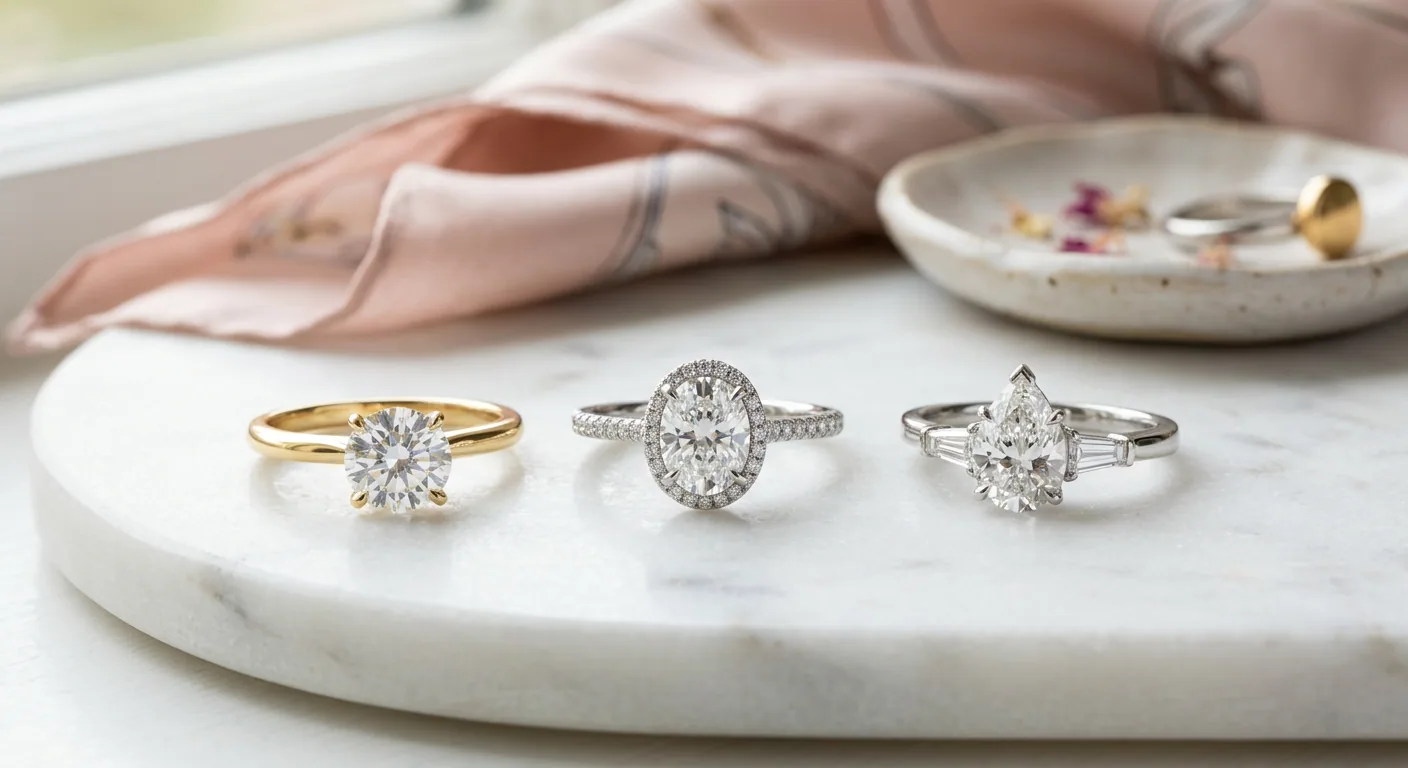
Prefer a natural stone? Make the diamond the accent
Let's be honest, some buyers land on lab diamonds because a natural diamond centre is out of budget, not because they want a lab stone. There's a third route: a natural coloured centre with small diamonds as accents. A white sapphire gives a near-colourless look in a hard, natural stone, and our sapphire engagement ring guide walks through the coloured options. That is the route we know best, from the cutting tables of Ratnapura.
Quick answers
Can a jeweler tell a lab grown diamond from a mined one?
Do lab grown diamond rings hold their value?
Is moissanite the same as a lab grown diamond?
Are lab grown diamonds as durable as natural diamonds?
So, is it worth it?
If you want a real diamond to wear, at a price that leaves room for a better cut or setting, a lab grown diamond ring is worth it. If you want something that holds value, it isn't. And if what you really want is a natural stone, a coloured centre with diamond accents is the route we can help with.