Taaffeite: Why It's So Rare, What It Costs, and How to Tell It From Spinel
A gem so close to spinel that the first one was offered as a spinel. What sellers ask today, and the one test that separates them.

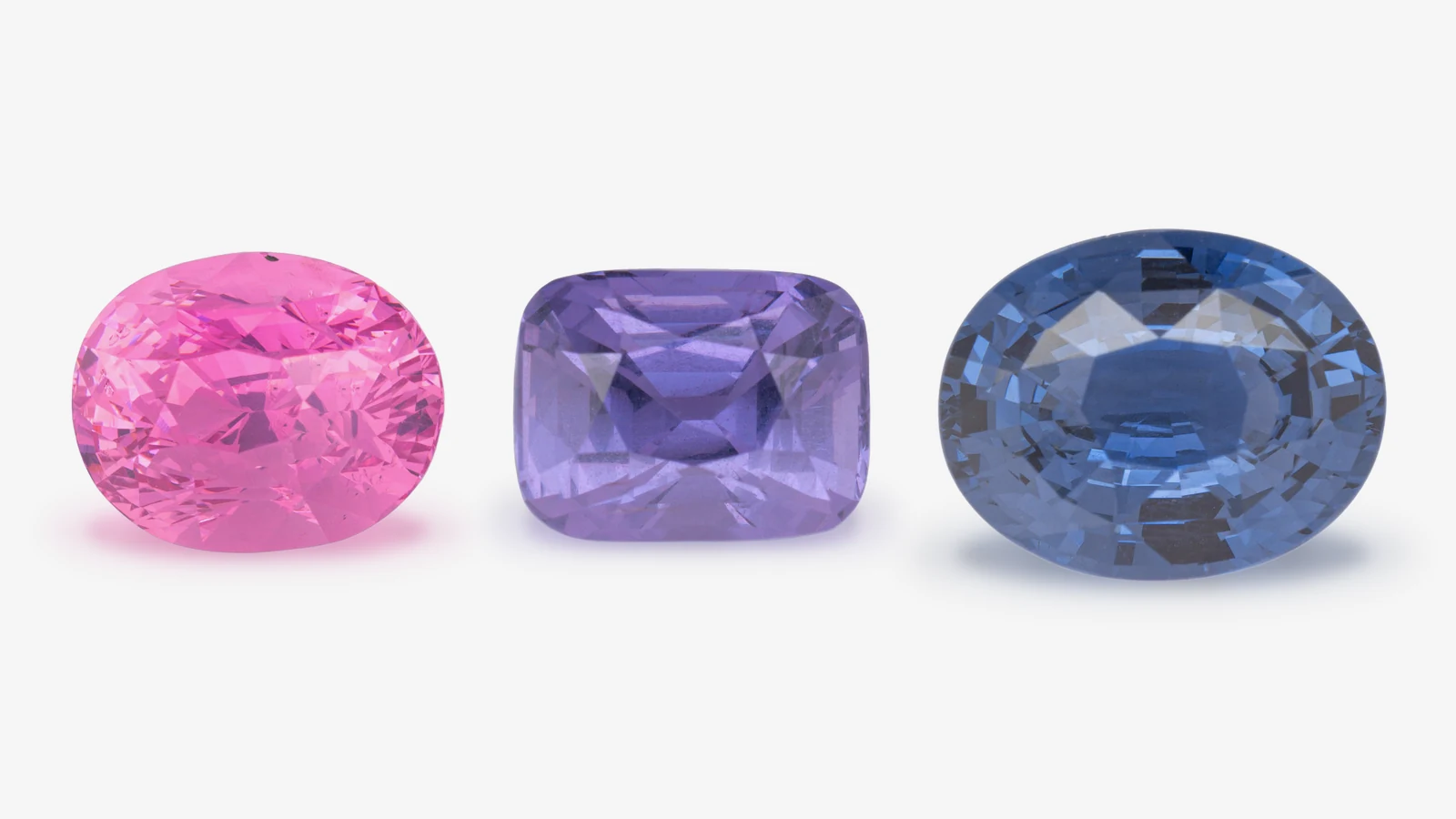
Taaffeite is a very rare gem, a beryllium, magnesium and aluminium oxide that looks so much like spinel that the first one was offered as a spinel. Cut stones are usually small, and most of the listings we read ask $1,000 to $3,000 per carat. We do not stock it. The closest stone we do sell is purple spinel, shown below.
| Taaffeite | Spinel | |
|---|---|---|
| Refraction | Double | Single |
| Refractive index | 1.719 to 1.723 | Around 1.718 |
| Birefringence | 0.004 to 0.005 | None |
| Specific gravity | 3.61 | 3.60 |
| Hardness (Mohs) | 8 to 8.5 | 8 |
| Crystal system | Hexagonal | Cubic |
| Under UV light | Inert to weak green | Weak to strong red or orange |
| Asked per carat | Mostly $1,000 to $3,000 | Purple: about $70 to $900 |
How much does taaffeite cost per carat?
Most cut taaffeite is listed between $1,000 and $3,000 per carat. Stones of 3 carats and more with a report from a major laboratory are asked $3,000 to $10,700 per carat. Here is what three sellers showed on 7 October 2026, in US dollars.
| Seller | Asked per carat |
|---|---|
| A gem marketplace, 33 listings from 7 sellers | $207 to $10,726. 23 of the 33 sit between $1,000 and $3,000 |
| Same marketplace, 3 carats and more with a major laboratory report (5 listings, 3 sellers) | $3,015 to $10,726 |
| One dealer, one 3.05 carat pink-purple stone with a report | $5,881 ($17,936 for the stone) |
| Another dealer, price chart for 0.5 to 2 carats | $1,500 to $10,000 |
What we counted
33 taaffeite listings, by price per carat
Asking prices per carat (the price asked divided by the declared weight), read on October 7, 2026 on one gem marketplace, from seven sellers. Asked, not sold.
These are asking prices, not sale prices. In these listings, the highest asks go to stones of 3 carats and more that carry a report from a major laboratory. On colour, purple is the most appreciated.
For scale, the purple spinel it resembles is asked about $70 to $900 per carat at three sellers. See our spinel price per carat page, and our colored gemstone market statistics for the wider picture.
Taaffeite vs spinel: how do you tell them apart?
Not by eye. The two share the same pinks and purples, and their refractive index and density overlap. One property separates them: taaffeite is doubly refractive, spinel is singly refractive.
That is how the first one was caught. In 1945, Richard Taaffe found it in a jeweller's shop in Dublin, already cut, offered to him as a spinel. Taaffeite is still the only mineral first discovered as a faceted gem.
- Polariscope. Turned between crossed filters, a spinel stays dark. A taaffeite blinks from light to dark.
- Refractometer. Taaffeite reads 1.719 to 1.723, with a birefringence of 0.004 to 0.005. Spinel reads around 1.718, with none.
- Laboratory. Musgravite, the closest relative of taaffeite, has overlapping properties. Only Raman spectroscopy or X-ray diffraction separates the two.
Try the first test yourself:
Try it
Turn the stone
Two stones between crossed filters: one spinel, one taaffeite. Turn them and watch the light.
Stone ADark
Stone BDark
Which one is the taaffeite?
- Singly refractive: dark at every angle
- Doubly refractive, at 0°: dark
- The same stone, turned to 45°: bright
Taaffeite is doubly refractive: turned between crossed filters, it blinks from light to dark. Spinel is singly refractive and stays dark.
Two traps
- Seen down its optic axis, a doubly refractive stone stays dark too. It has to be tilted and turned again.
- Some singly refractive stones, synthetic spinel above all, show moving bands of shadow.
A bench test narrows it down. It does not name the stone.
Illustration. These drawings show the principle: they are not real stones and not stones from our stock.
Two traps with the polariscope. Seen down its optic axis, a doubly refractive stone also stays dark, so it has to be tilted and turned again. And some singly refractive stones, synthetic spinel above all, show moving bands of shadow that can pass for blinking. A bench test narrows it down. It does not name the stone.
Quiz
Taaffeite, spinel, or both?
Eight facts about the two stones. For each one, say whether it belongs to taaffeite, to spinel, or to both.
“Comes in pinks and purples.”
Fact 1 of 8
“Comes in pinks and purples.”Taaffeite, spinel, or both?
Answer: both.
Both share the same pinks and purples. That is why the eye cannot settle it.
“Blinks from light to dark when turned between crossed filters.”Taaffeite, spinel, or both?
Answer: taaffeite.
Taaffeite is doubly refractive, so it blinks. Spinel is singly refractive and stays dark.
“Can glow red or orange under long-wave UV light.”Taaffeite, spinel, or both?
Answer: spinel.
In these colours, spinel shows weak to strong red or orange under long-wave UV. Taaffeite stays inert or shows a weak green.
“Reads about 1.72 on the refractometer.”Taaffeite, spinel, or both?
Answer: both.
Taaffeite reads 1.719 to 1.723, spinel around 1.718. What differs is the birefringence: 0.004 to 0.005 for taaffeite, none for spinel.
“Was first found already cut, offered in a jeweller's shop.”Taaffeite, spinel, or both?
Answer: taaffeite.
Dublin, 1945: it was offered as a spinel. Taaffeite is still the only mineral first discovered as a faceted gem.
“Belongs to the cubic crystal system.”Taaffeite, spinel, or both?
Answer: spinel.
Spinel is cubic. Taaffeite is hexagonal.
“Has a specific gravity close to 3.6.”Taaffeite, spinel, or both?
Answer: both.
3.61 for taaffeite, 3.60 for spinel. Weighing the stone will not tell them apart.
“Sits at about 8 on the Mohs scale.”Taaffeite, spinel, or both?
Answer: both.
Taaffeite 8 to 8.5, spinel 8. Hardness does not separate them.
Colour, refractive index, density and hardness are shared. What separates them is how they refract light, and only a laboratory names the stone.
Values for the pink, red and purple stones of both species.
Is yellow taaffeite real?
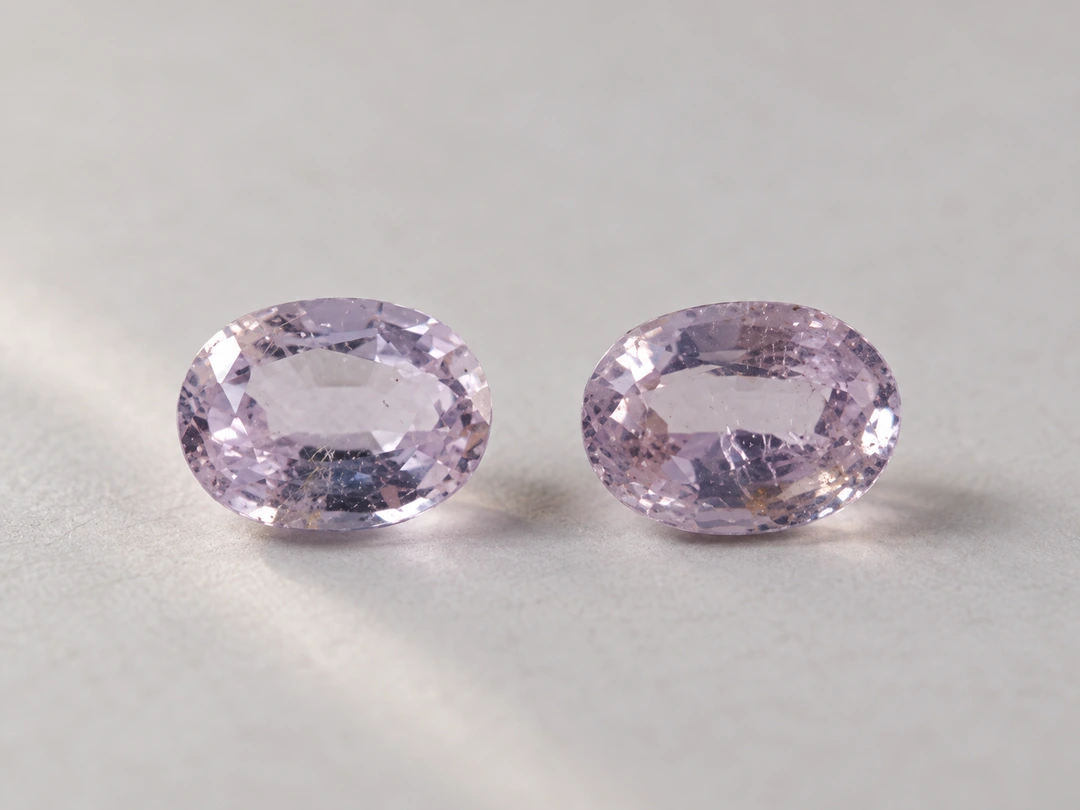
Yellow is not in the usual colour range. Taaffeite runs from pink to red and purple, also blue, violet, brown, greenish grey and colourless.
Yet stones are sold under that name. We found three listings: a 0.55 carat stone from Mogok, described by its seller as very pale yellow, almost colourless, a 1.36 carat yellow stone from Myanmar, and a 1.60 carat yellow stone from Tanzania.
So a yellow taaffeite can be offered to you, and the one seller who describes the colour closely calls it almost colourless. The name alone proves nothing. Before you pay, ask for a report from an independent outside laboratory that names taaffeite. Our guide explains what a gemstone certificate proves.
Six questions before you buy a taaffeite
6 points
A message ready to send to the seller, with all the questions.
See the message
Hello, I am interested in this taaffeite. Before I decide, could you answer a few questions?

1. Does the stone come with a report from an independent outside laboratory, and does that report name it taaffeite?
2. Was the stone tested in a way that separates taaffeite from musgravite, and does the report say so?
3. How would you describe the colour in daylight, in your own words?
4. What are the exact weight in carats and the measurements in millimetres?
5. Is the price for the whole stone, and does it include the report, shipping and insurance?
6. If an independent laboratory does not confirm taaffeite, can I return the stone, and on what terms?

Thank you for your time.
How rare is taaffeite, and where is it found?
Very rare, and typically very small. Of the 33 listings we counted, 23 weighed 2.5 carats or less. Gem-quality stones come from four places:
- Sri Lanka: where the first rough fragments turned up, long after the first cut stone.
- Myanmar: Chaunggyi, a few kilometres north-west of Mogok.
- Tanzania.
- Madagascar.
What we counted
33 taaffeite listings, by weight
Listings read on October 7, 2026 on one gem marketplace, from seven sellers, one of whom posted most of them. Weights as declared by the sellers. The largest listing is a lot of several cabochons.
Keep those sizes in mind when you shop. Be wary of a very large stone offered as taaffeite. A stone that size needs a laboratory report before it needs a buyer.
Taaffeite or purple spinel: which should you buy?
My view: decide what you are paying for.
- The rarity. Buy taaffeite only with a report from an independent outside laboratory that names it, and expect a small stone.
- The colour. Purple spinel gives you a similar violet at 8 on the Mohs scale, with good toughness. Spinel is rarely treated, and purple is one of its less sought-after colours, which keeps the price down.
Here are six purple spinels from our stock, ranked by the colour saturation measured on each photo:
Choose a swatch to see the real stone
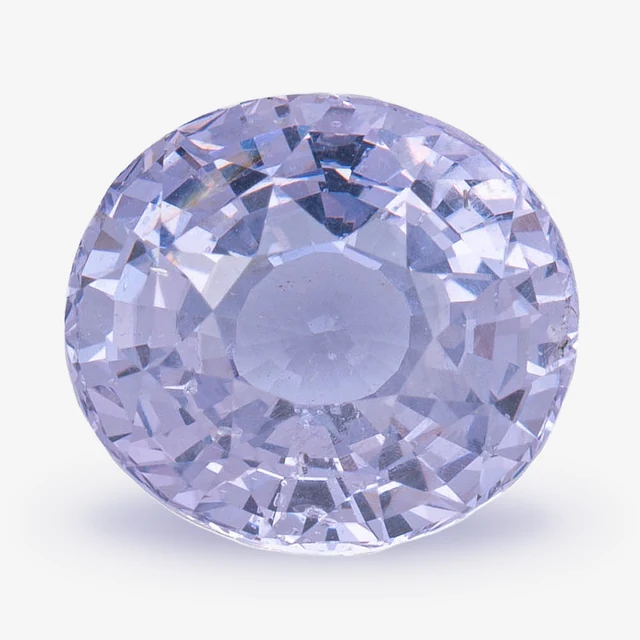
Lavender
Spinel
Listed as lavender. 3.04 ct, oval cut
Joalys catalogue photo
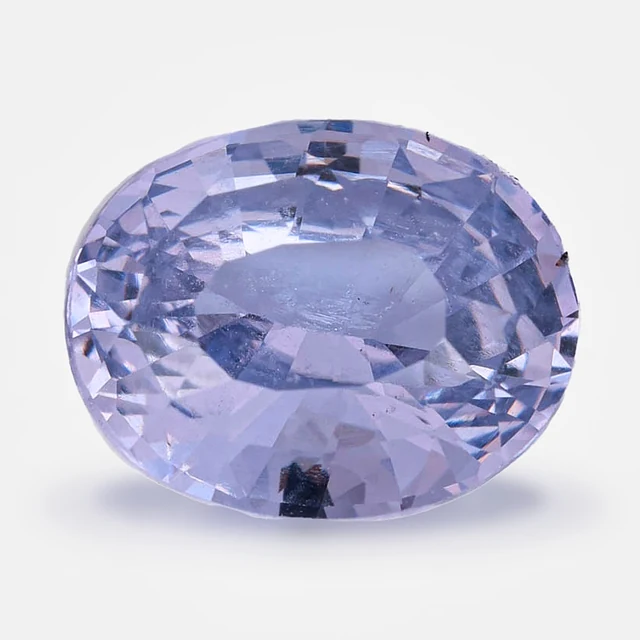
Violetish Purple
Spinel
Listed as violetish purple. 4.04 ct, oval cut
Joalys catalogue photo
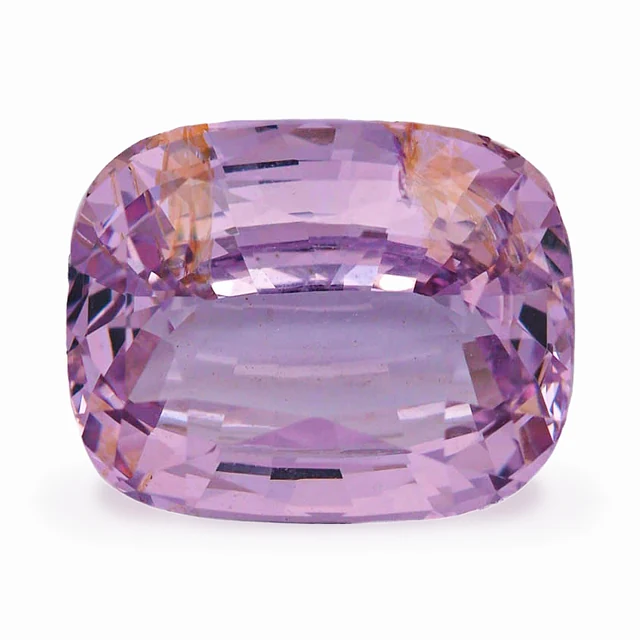
Purple
Spinel
Listed as purple. 5.06 ct, cushion cut
Joalys catalogue photo
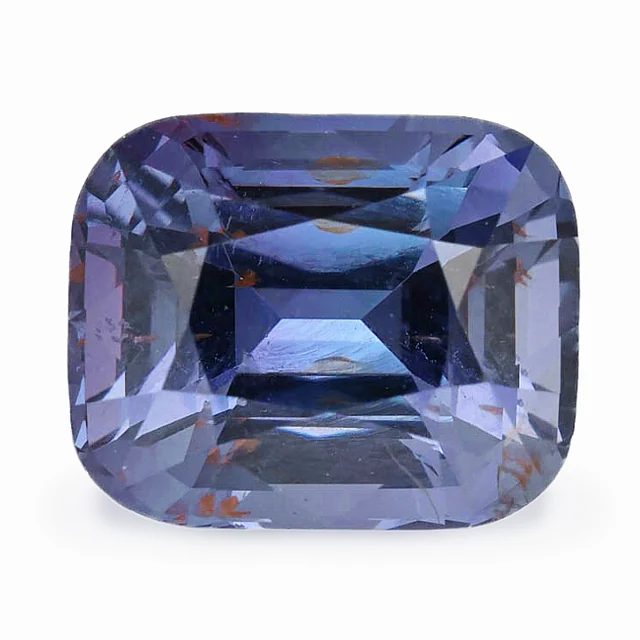
Bluish Purple
Spinel
Listed as bluish purple. 4.18 ct, cushion cut
Joalys catalogue photo
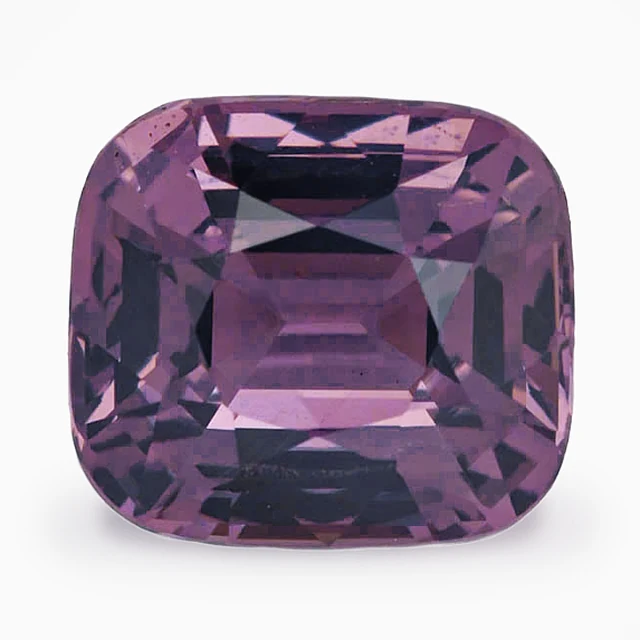
Brownish Purple
Spinel
Listed as brownish purple. 2.63 ct, cushion cut
Joalys catalogue photo
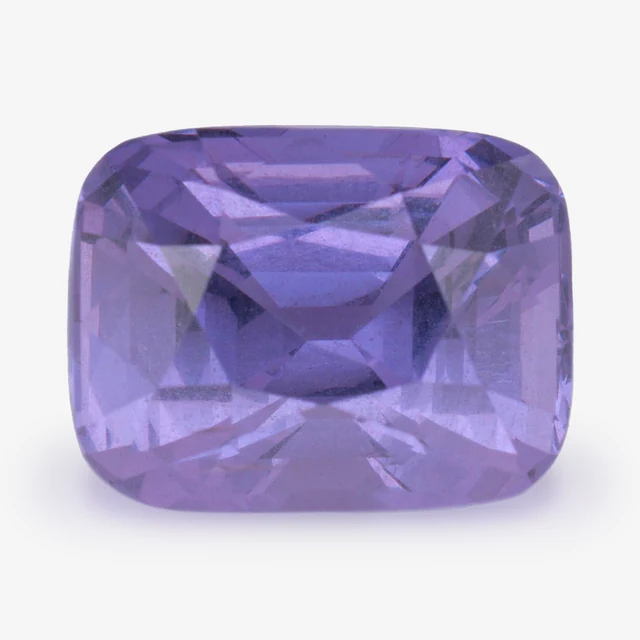
Purple
Spinel
Listed as purple. 4.10 ct, cushion cut
Joalys catalogue photo
Each swatch is the median colour measured on the stone in its photograph, not a colour chosen by hand. Lighting and camera change from one photo to the next, and the stones are not shown to scale.
We do not stock taaffeite, and I would rather say so than take a deposit on a maybe. What we do have is loose purple spinel, chosen one stone at a time. A report from an independent outside laboratory can follow your purchase. To go further, read our guide to spinel.
Quick answers
Is taaffeite a spinel?
How hard is taaffeite?
How much is a 1 carat taaffeite?
Can you identify taaffeite at home?
The bottom line
Taaffeite is rare, small and easy to confuse with spinel. Pay for the name only with a laboratory report in hand. If it is the violet you love, a purple spinel gives it to you for far less.