Teal Sapphire Engagement Ring: How to Choose the Stone
Which teal, in which light, with which treatment, metal and setting.

Yes, a teal sapphire makes a fine engagement ring: it is a natural sapphire between blue and green, as hard and tough as any sapphire. Choose it face up, in more than one light. Take a lively medium tone over a dark one, get any treatment in writing, then let the metal pull it bluer or greener.
| Choice | Look for | Why |
|---|---|---|
| Hue | A clear lean, blue or green | A vivid lean beats a dull split |
| Tone | Medium, not dark | Dark tones go inky in soft light |
| Light | Daylight, warm lamp and shade | Teal shifts with the light |
| Treatment | In writing, then a lab report | Heat, diffusion and synthetics exist |
| Metal | White for blue, yellow for green | The metal changes how the color reads |
Is a teal sapphire good for an engagement ring?
Yes. Teal is a color, not a different stone: it is corundum, like every sapphire, so the name changes nothing about how it wears. Sapphire is 9 on the Mohs scale and does well on toughness and stability, which puts it among the best stones for a ring you never take off.
Two things to know. Most precious metals are fairly soft, so a sapphire that sits loose can wear through a prong: have the prongs checked now and then. And cleaning is simple. Warm soapy water is always safe. Ultrasonic and steam cleaners are usually fine too, except on a stone with filled fractures or cavities.
Which teal looks best in a ring: bluer, greener or half and half?
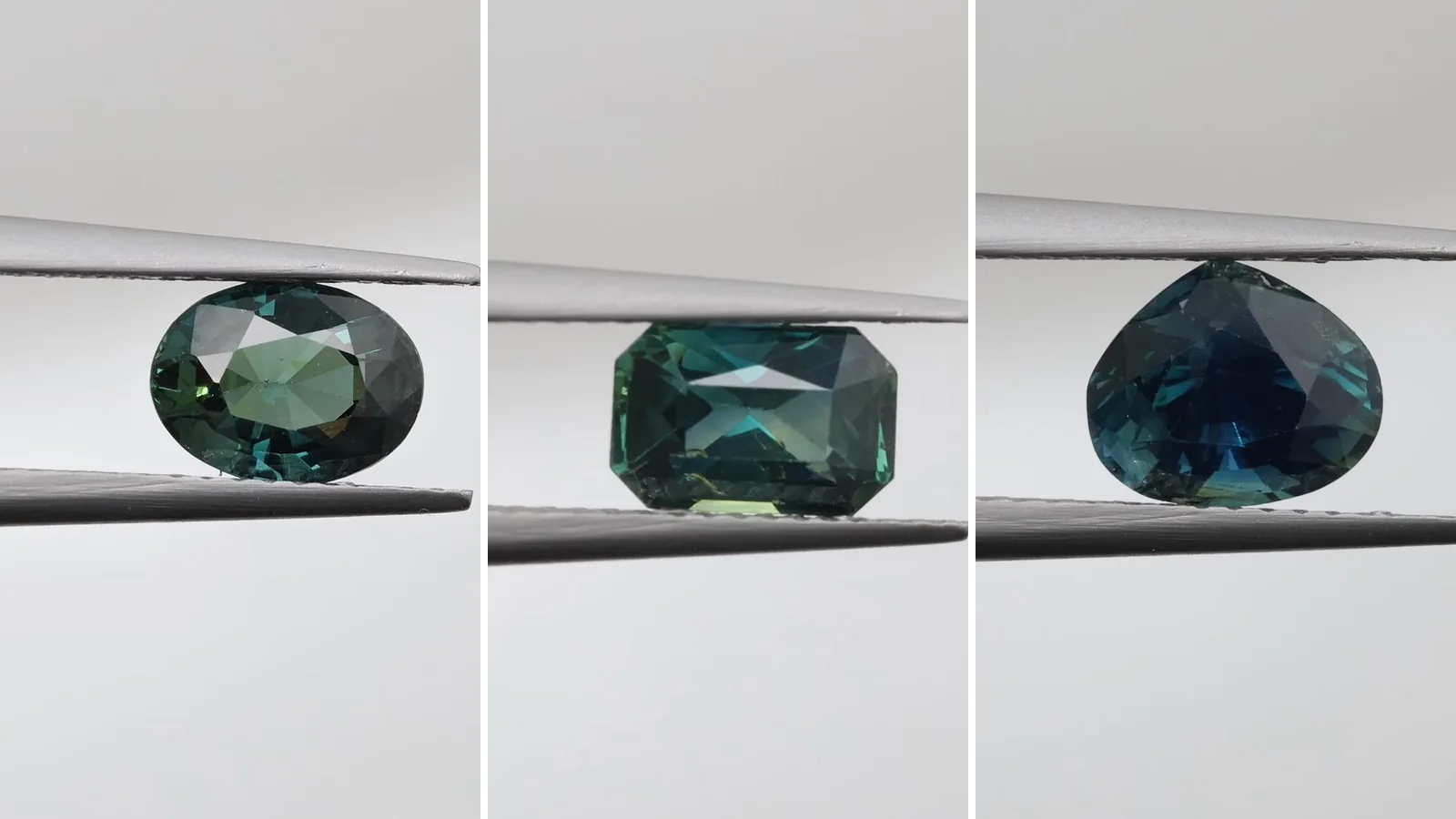
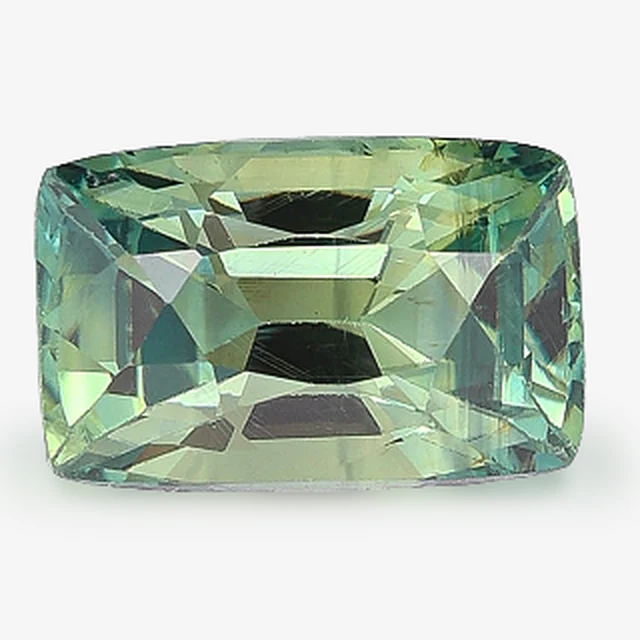
Teal is a trade name, not a grade. The standard color vocabulary has seven steps between pure green and pure blue, from bluish green to greenish blue, and no rule says where teal starts or stops. Our teal sapphire color guide walks through that scale.
Choose a swatch to see the real sapphire
Green
Sapphire
Listed as green. 1.32 ct, cushion cut
Joalys catalogue photo
Green
Sapphire
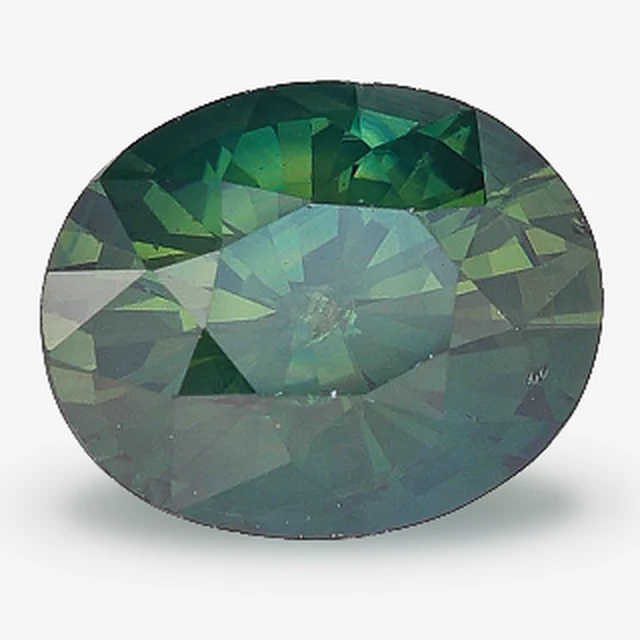
Listed as green. 1.37 ct, oval cut
Joalys catalogue photo
Teal
Sapphire
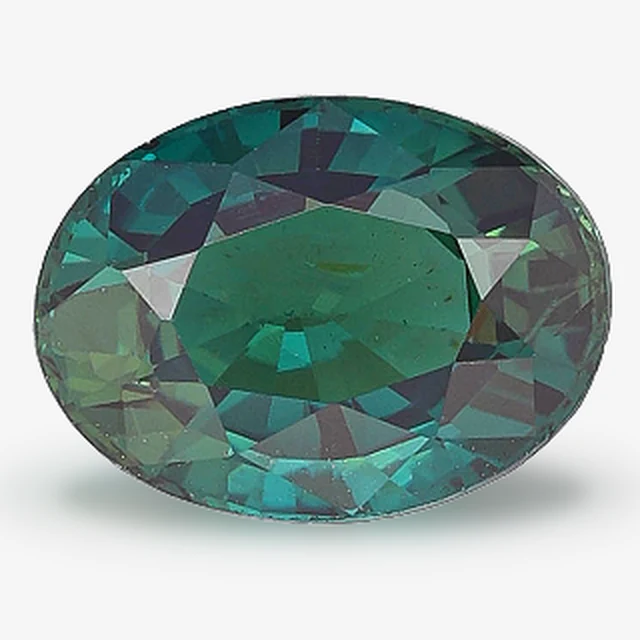
Listed as teal. 1.28 ct, oval cut
Joalys catalogue photo
Teal
Sapphire
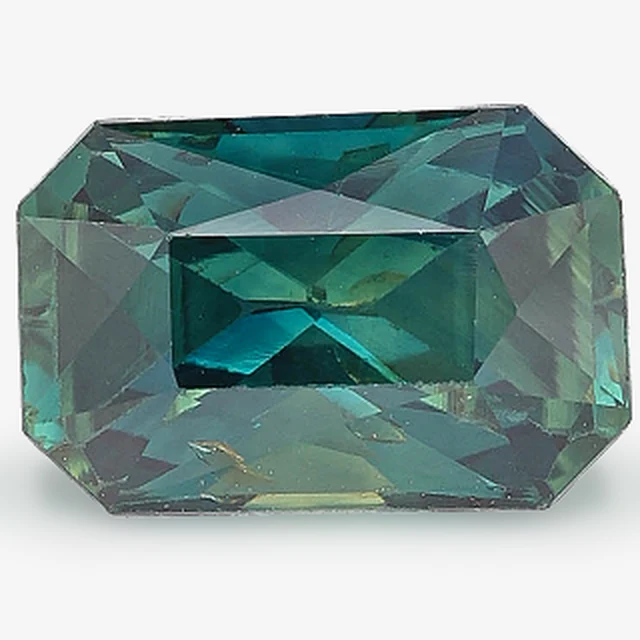
Listed as teal. 1.61 ct, radiant cut
Joalys catalogue photo
Teal
Sapphire
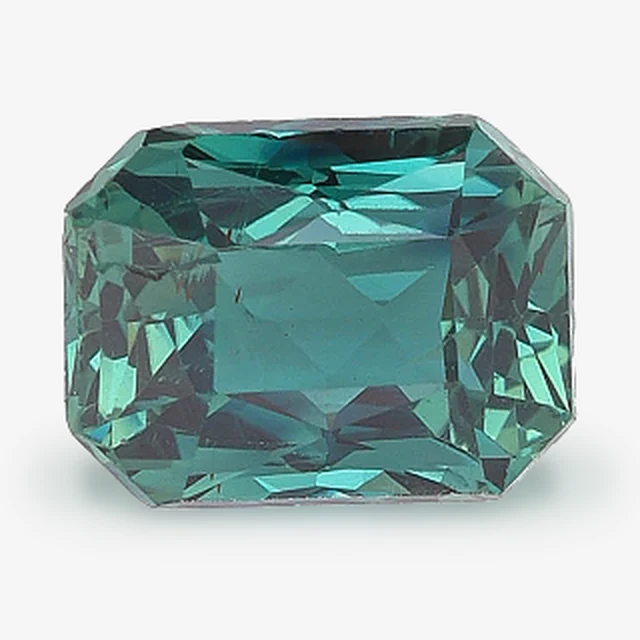
Listed as teal. 1.29 ct, radiant cut
Joalys catalogue photo
Teal
Sapphire
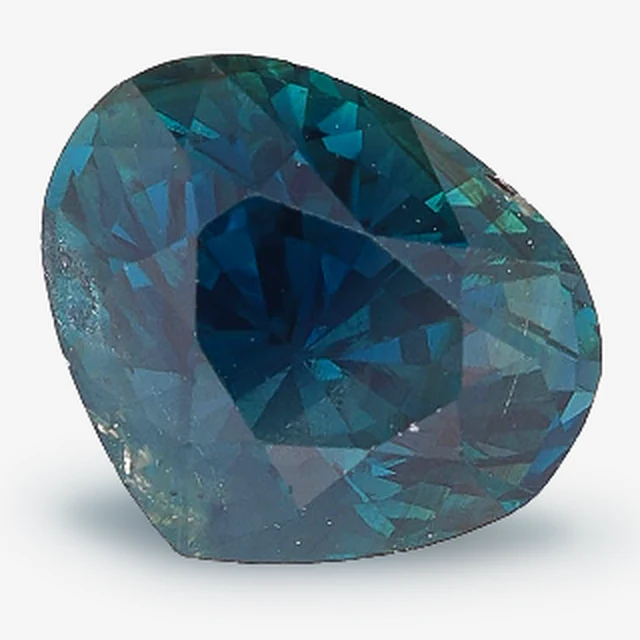
Listed as teal. 1.98 ct, pear cut
Joalys catalogue photo
Six sapphires from our collection on 2 November 2026, catalogue photos on a pale ground, ordered by the hue measured on each photo. Each swatch is that measured color, not one chosen by hand. The names are the ones we list the stones under: four as teal, two as green. All six are heated. A photo is not daylight, and the stones are not shown to scale.
A sapphire also shows two colors depending on the direction you look through it, one bluer and one greener. The cut decides which one faces up. For a long time cutters aimed for the violetish blue and buried the greenish one, because greenish stones sold for less. Teal is that greener color, now chosen on purpose.
What spoils the family is rarely the hue. It is low saturation, which turns green sapphire khaki or olive, and a dark tone, which cuts brilliance and hides the color. My view: a vivid stone that leans blue or green beats a dull, even split.
Why does a teal sapphire look different from room to room?
Because light changes, not the stone. Blue and green gems look their best under the fluorescent light of most offices, which gives off a lot of blue and green. A warm bulb, a candle or a sunset favors red, orange and yellow instead, so a teal there can look quieter.
Tone moves with the light too. A sapphire that looks slightly dark under a strong equatorial sun will probably look inky, close to black, in the softer light of a city like London or New York.
One teal, two lights
The same stone, by a window and then outside in the sun. The stone does not change, the light does. See a stone in several lights before you decide.
Two separate photographs of the same stone, taken by us: one indoors by a window, one outdoors in direct sun. No filter.
So see the stone face up in daylight, under a warm lamp and in shade before you choose. If the ring will live under grey skies, lean toward a slightly lighter tone than the one that wins in bright sun.
Heated, untreated or diffused: what matters for a teal?
Most costly
Accepted by the trade
UntreatedA tiny share of the market, at the top.
Nothing beyond cutting and polishing. A report can confirm it.
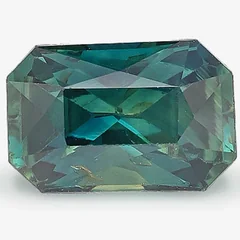 HeatedThe norm. Stable and durable.
Heat can reduce greenish tints, so the furnace can push a teal toward plain blue.
Ask in writing
Lattice diffusionThe lowest level of the market.
Green can come from beryllium diffused into the stone. With titanium, the color can be a surface layer up to 0.5 mm thick, and in some stones it can go if the stone is repolished or recut.
Least costly
The three levels the sapphire market sorts stones into, from the most costly to the least.
Heating is the norm for blue sapphire. The result is stable and durable, and the trade accepts it. For a teal it has one twist: heat can reduce greenish tints, so the furnace can push a teal toward plain blue.
So ask in writing what was done, and read our guide to heated and unheated sapphire. Every stone we offer goes to an independent laboratory once you have chosen it, and the report comes with the stone.
Which metal and setting suit a teal sapphire?
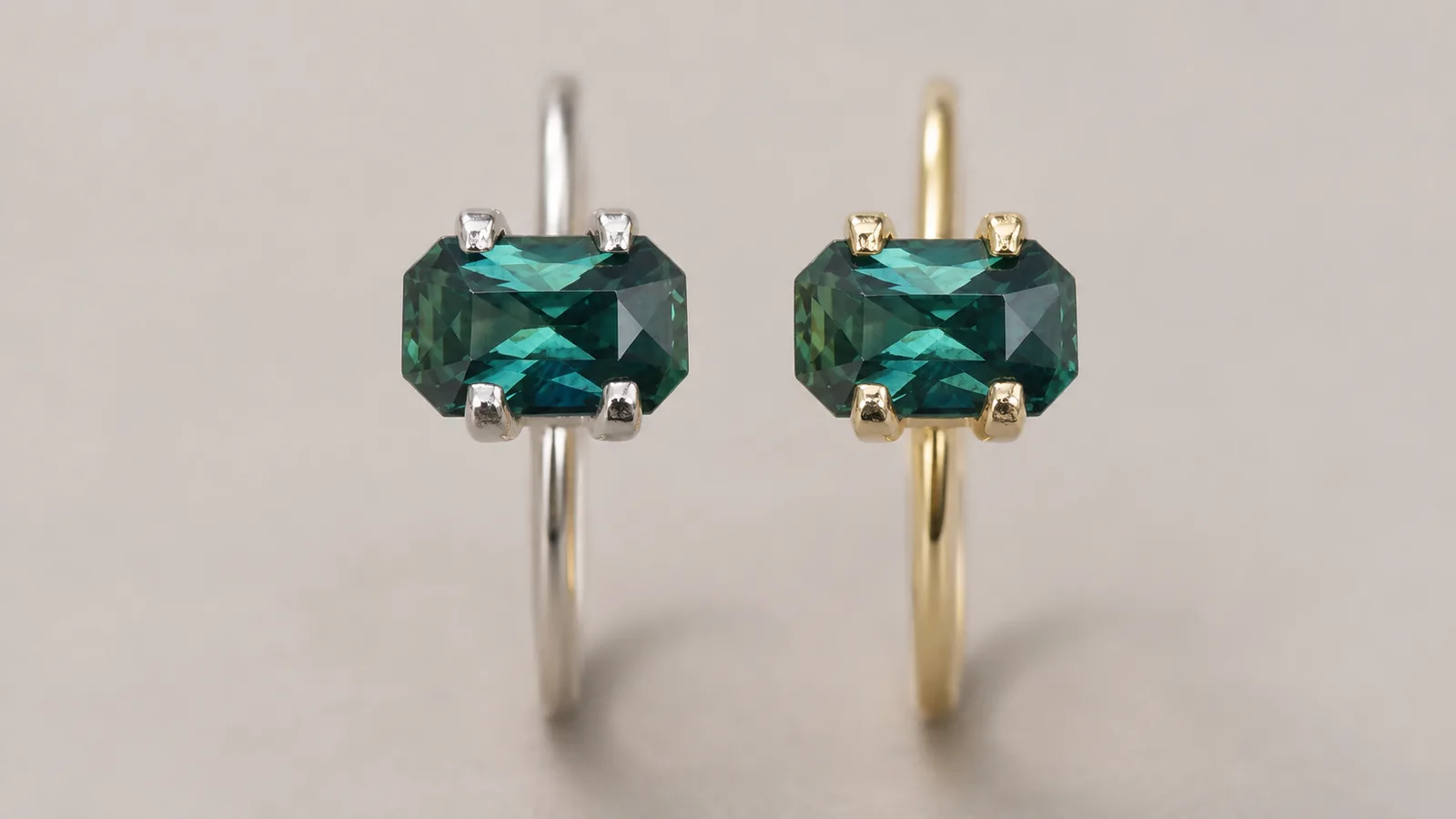
The metal around a stone can change how its color reads, yellow gold most of all. Blue sapphire sits naturally in cool platinum and works with white and yellow gold, and warm gold flatters a yellowish green.
My view: hold the stone against both. If your teal leans blue, platinum or white gold keeps it cool and bright. If it leans green, yellow gold warms it up.
For the setting, prongs show the most of the stone and let in the most light, and sapphire is tough enough for them. A bezel wraps the edge in metal: the best protection, nothing to snag, the stone sits lower. Our comparison of bezel, prong and basket settings goes further, and the guide to colored stone engagement rings covers ring styles.
Quick answers
Is a teal sapphire a real sapphire?
Where do teal sapphires come from? Montana, Australia?
Do teal sapphires change color?
How much does a teal sapphire cost?
Choose the teal first, then the ring
Pick a teal with a clear lean and a medium tone, check it in more than one light, and get the treatment in writing. Then choose the metal that pulls it the way you like.