Pink Precious Stones: Names, Shades and Which Last in a Ring
The pink stones that survive daily wear, why a pale or brownish pink is a grade and not a style, and which pinks fade or come from a treatment.

For a pink stone in a ring you wear every day, choose pink sapphire or pink spinel. Morganite and pink tourmaline also make good ring stones, a step softer. Keep kunzite, rose quartz and coral for earrings and pendants. Then ask two questions: is the pink strong, or pale and brownish? And will it hold its color in daylight?
| Pink stone | Hardness (Mohs) | Everyday ring? |
|---|---|---|
| Pink sapphire | 9 | Yes |
| Pink spinel | 8 | Yes |
| Morganite | 7½ to 8 | Yes |
| Pink tourmaline | 7 to 7½ | Yes, in a protective setting |
| Rose quartz | 7 | With care: often fractured |
| Pink topaz, kunzite | 6½ to 8 | With care: they cleave |
| Rhodochrosite, coral | 3 to 4 | Earrings and pendants |
Which Gemstones Are Pink?
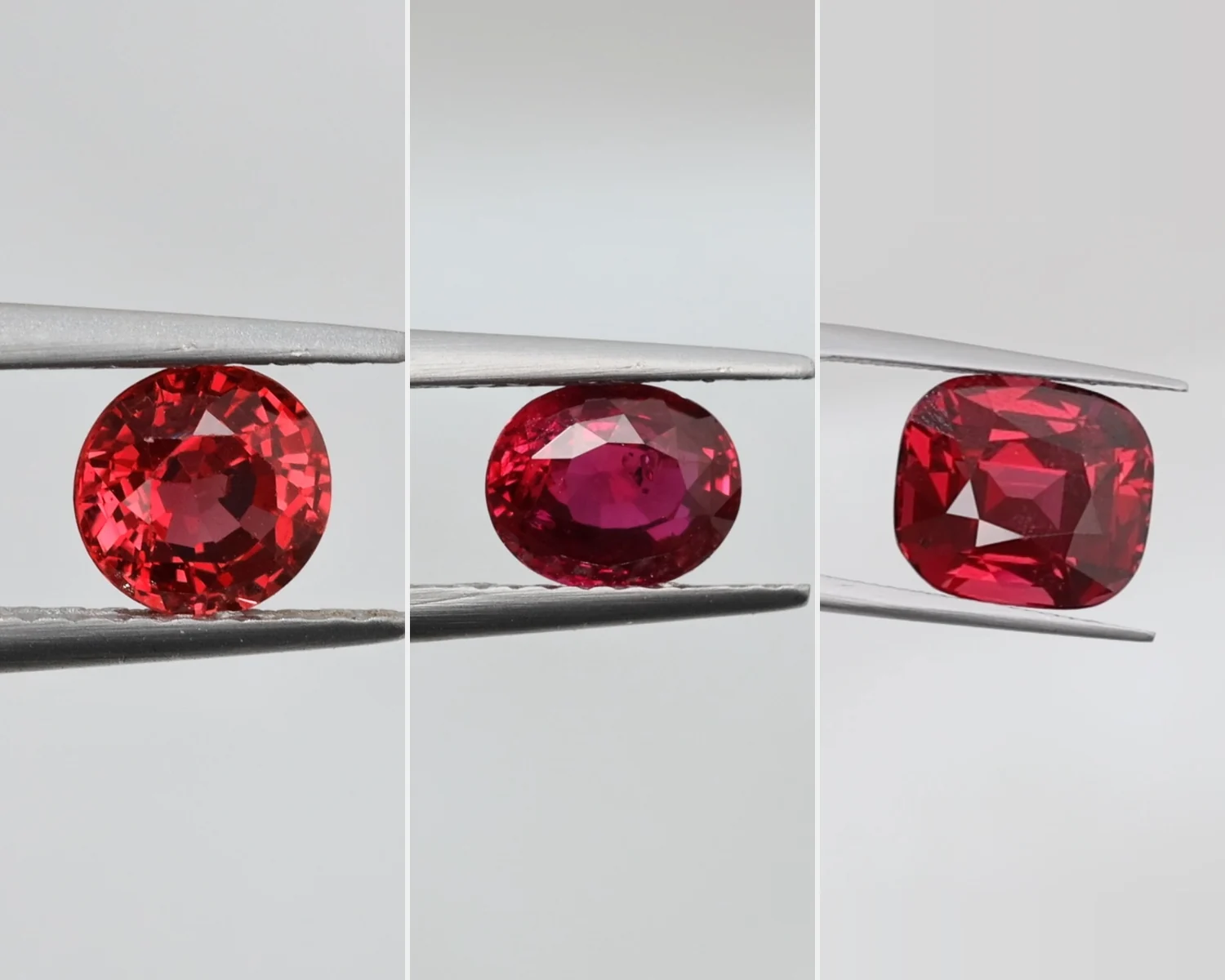
Pink is red in a light tone: the corundum that is ruby when dark enough becomes pink sapphire when lighter.
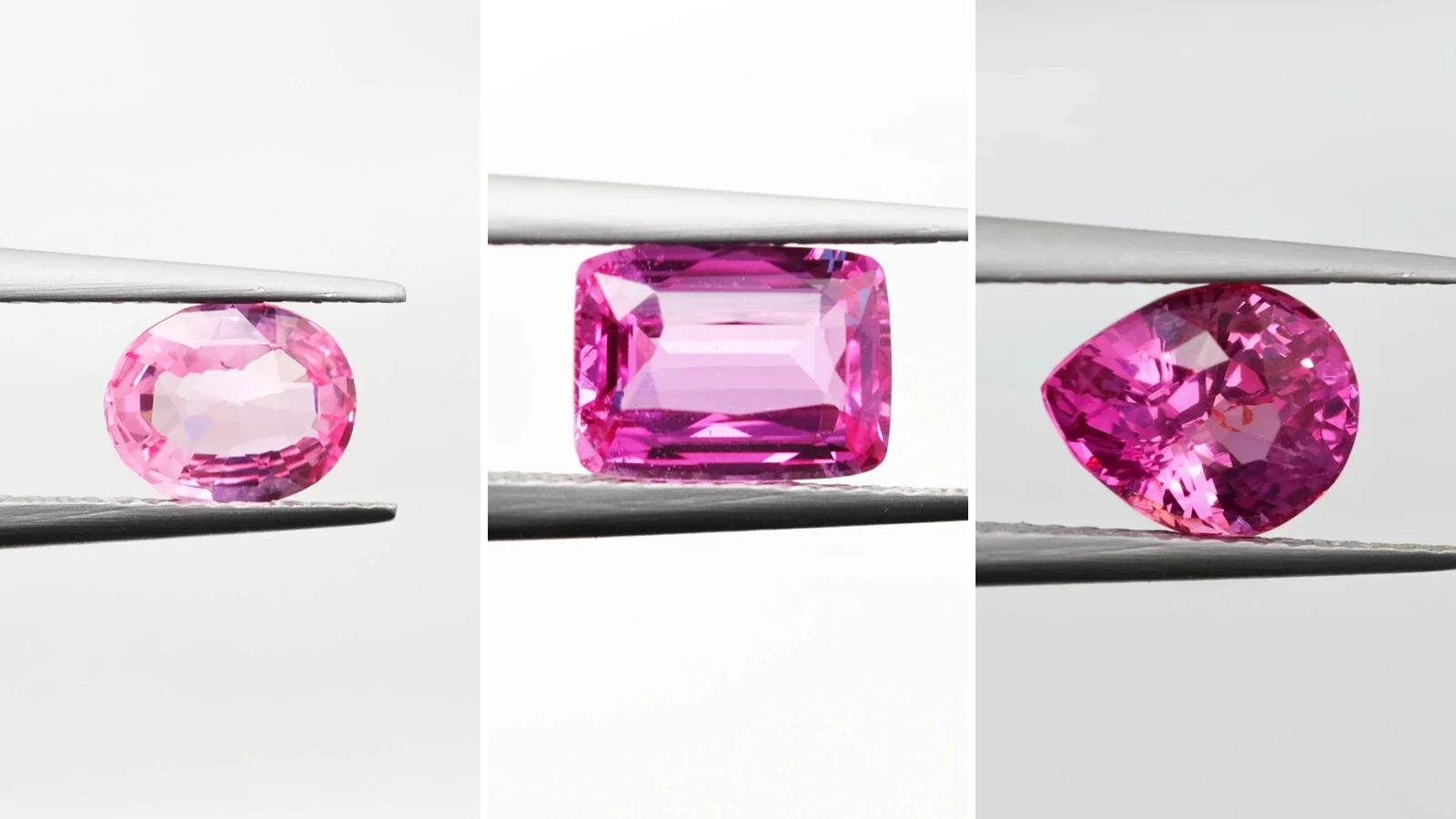
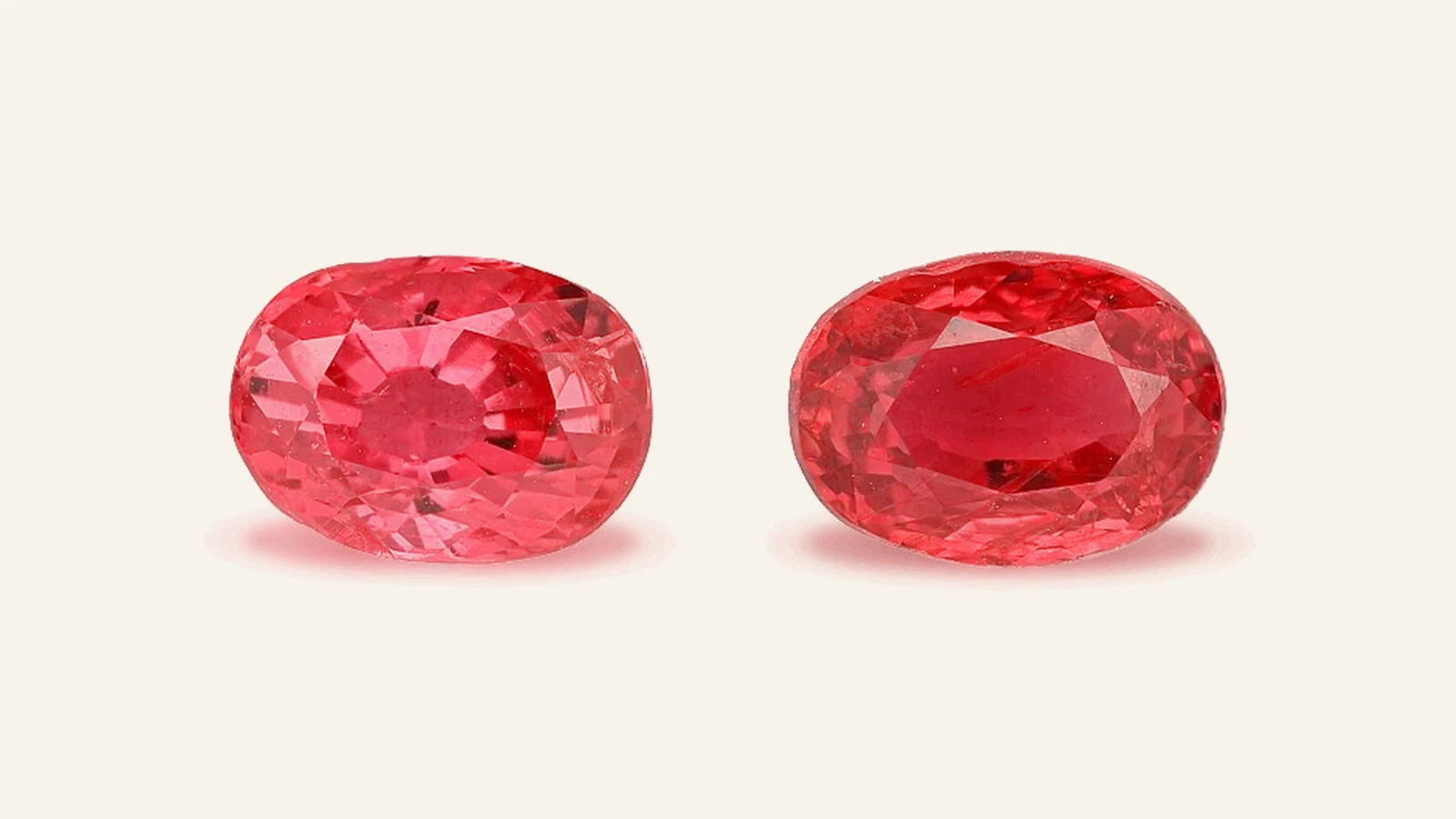
- Transparent pinks. Pink sapphire runs from red to purple hues in light tones; where it stops being ruby is still debated, and between pink and orange it becomes padparadscha. Pink spinel is rare and durable, yet little known. Pink tourmaline goes from pastel to a vivid “hot pink”, and at its strongest takes the trade name rubellite (red precious stones). Natural pink topaz is rare.
- Translucent and opaque pinks. Rhodonite runs from pink to red.
- Rarities. A naturally pink diamond is so rare that you will probably never see one; pink cubic zirconia often stands in for it.
Nine pink gemstones, one picture each
Grouped by kind of pink. The last line says whether it suits a ring worn every day.
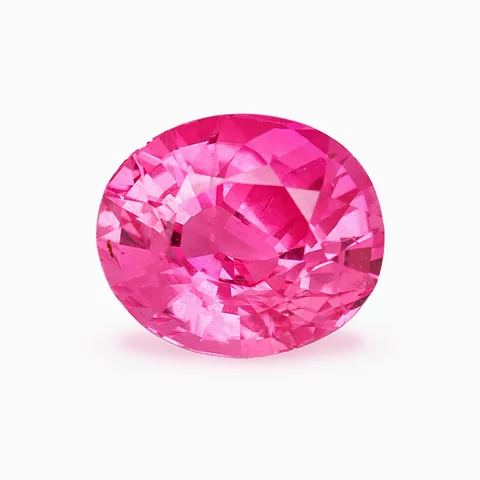
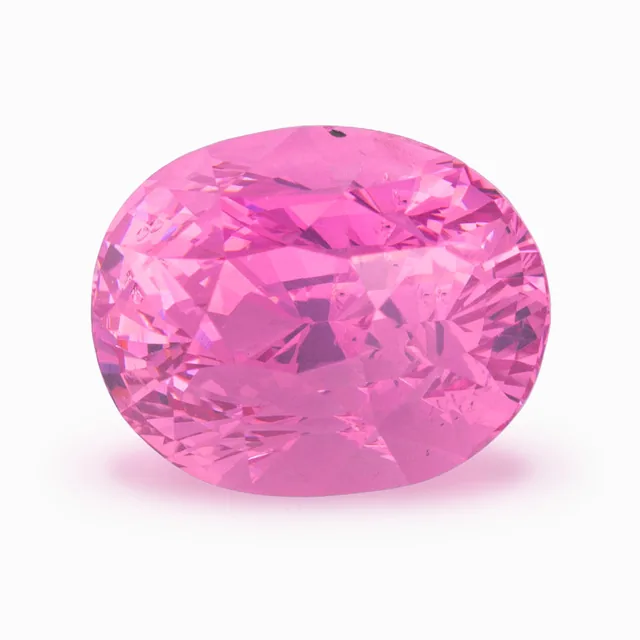
Pink sapphire
Transparent pink
- Everyday ring
- Yes
This one, 2.01 ct, is from our collection.
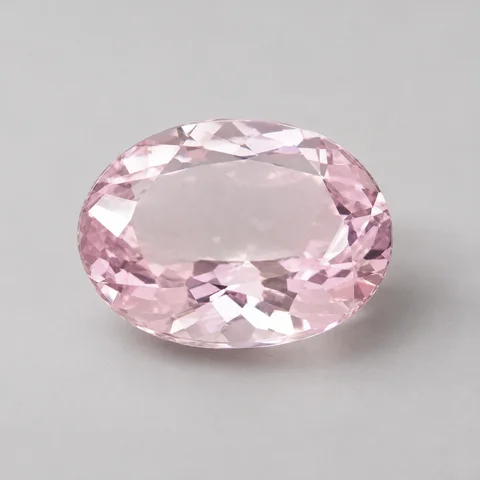
Pink spinel
Transparent pink
- Everyday ring
- Yes
This one, 4.03 ct, is from our collection.
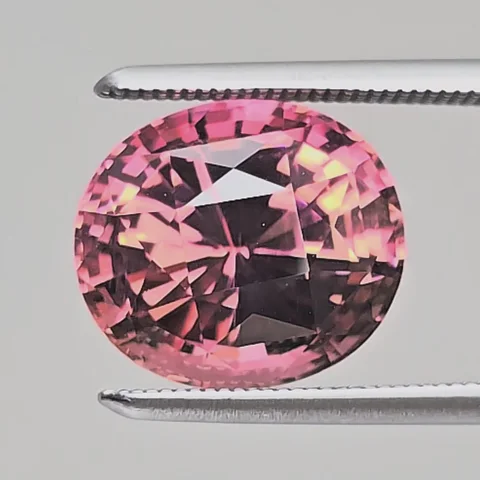
Morganite
Transparent pink
- Everyday ring
- Yes
Morganite is pink to purplish pink beryl, often light in tone.
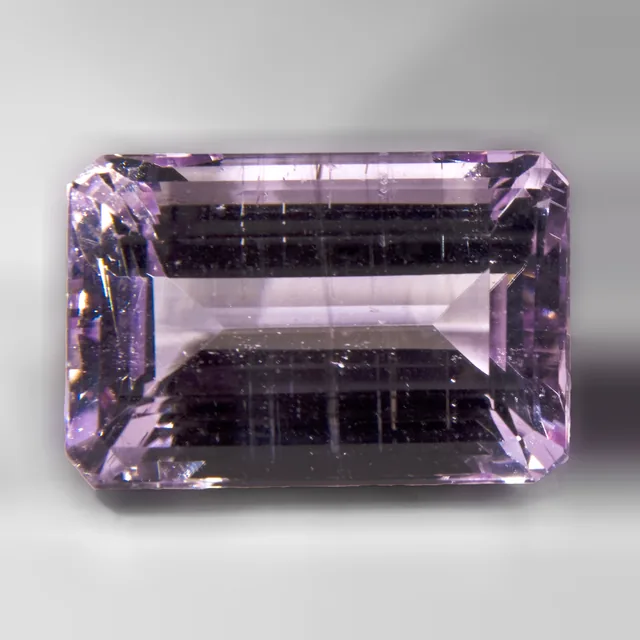
Pink tourmaline
Transparent pink
- Everyday ring
- Yes, in a protective setting
Kunzite
Transparent pink
- Everyday ring
- With care: they cleave
Kunzite shows a delicate rose pink to lilac.
Photo: Didier Descouens, CC BY-SA 3.0, left-hand stone only, cropped to a square, margins extended
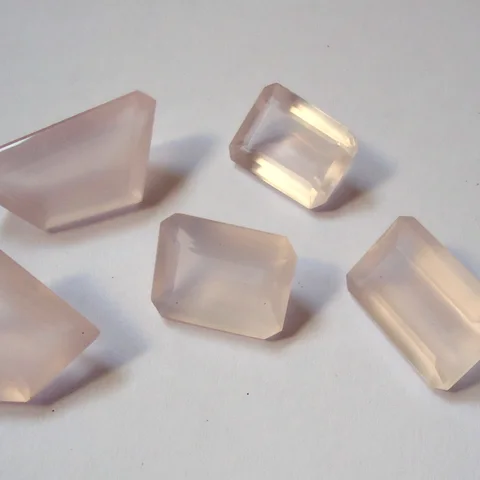
Rose quartz
Translucent or opaque pink
- Everyday ring
- With care: often fractured
Rose quartz is often cloudy, rarely clear enough to facet.
Photo: Mauro Cateb, CC BY-SA 3.0, via Wikimedia Commons (cropped).
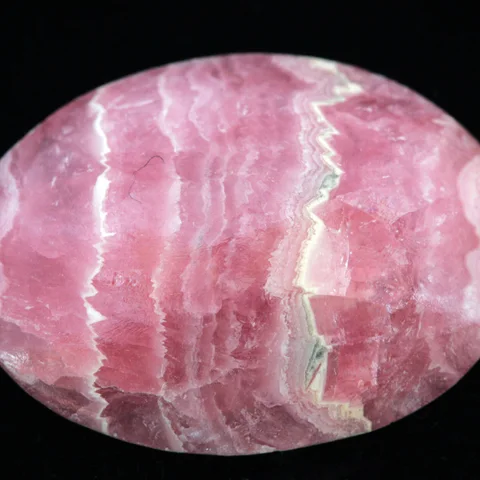
Rhodochrosite
Translucent or opaque pink
- Everyday ring
- Earrings and pendants
Rhodochrosite runs from pink to deep red.
Photo: Tiit Hunt, CC BY-SA 4.0, via Wikimedia Commons (cropped).
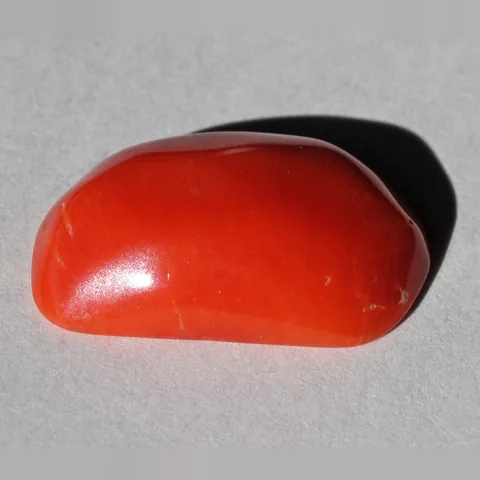
Coral
Translucent or opaque pink
- Everyday ring
- Earrings and pendants
Coral runs from light pink to dark red.
Photo: James St. John, CC BY 2.0, via Wikimedia Commons (cropped).
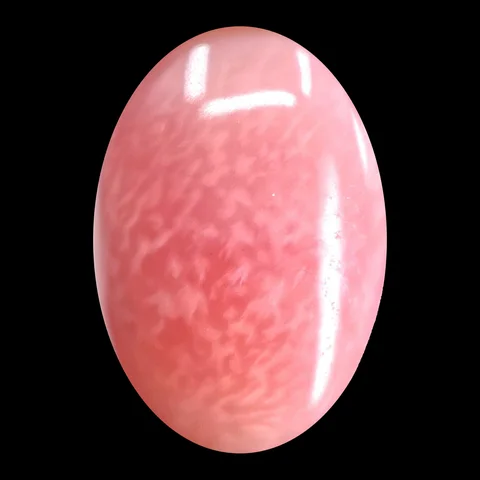
Conch “pearl”
Translucent or opaque pink
The conch “pearl” has a porcelain-like pink sheen, without the coating of a true pearl.
Photo: GlobalGemology, CC BY-SA 4.0, via Wikimedia Commons (cropped).
Each card shows an example of the stone, not a standard. Each photo fills its tile: the stones are not to scale.
Source: Names, kinds of pink and ring use: gemological reference sheets, checked on 22 November 2026. Photo credits are under each card.
Which Pink Stones Are Safe in a Ring?
Dust in the air is mostly quartz, hardness 7. A stone below 7 slowly loses its polish on the hand.
Hard is not always tough
Hardness is resistance to scratches. Toughness is resistance to chips and breaks. Tap a stone.
Toughness (chips and breaks)
Mohs hardness (scratches)
Touch a point to read about the stone.
Pink sapphire Mohs 9 · Toughness: Usually excellent
Hard and usually very tough: the easy choice for daily wear.
Pink spinel Mohs 8 · Toughness: Good
Hard, with good toughness: a very good ring stone.
Morganite Mohs 7.5 to 8 · Toughness: Good
Good toughness: a sound ring stone.
Pink topaz Mohs 8 · Toughness: Poor, because of cleavage
Cleaves easily: in a ring, it needs care.
Pink tourmaline Mohs 7 to 7.5 · Toughness: Fair
A good ring stone in a setting that guards its edges: its toughness is only fair.
Rose quartz Mohs 7 · Toughness: Good
Tough, but often fractured: better as a cabochon.
Kunzite Mohs 6.5 to 7 · Toughness: Poor, because of cleavage
Cleaves easily: in a ring, it needs care.
Rhodochrosite Mohs 3.5 to 4 · Toughness: Poor (transparent crystals)
Very soft, and its transparent crystals have poor toughness: earrings and pendants.
Coral Mohs 3 to 4 · Toughness: Fair to good
Fairly tough, but very soft: earrings and pendants.
| Stone | Mohs | Toughness |
|---|---|---|
| 1Pink sapphireHard and usually very tough: the easy choice for daily wear. | 9 | Usually excellent |
| 2Pink spinelHard, with good toughness: a very good ring stone. | 8 | Good |
| 3MorganiteGood toughness: a sound ring stone. | 7.5 to 8 | Good |
| 4Pink topazCleaves easily: in a ring, it needs care. | 8 | Poor, because of cleavage |
| 5Pink tourmalineA good ring stone in a setting that guards its edges: its toughness is only fair. | 7 to 7.5 | Fair |
| 6Rose quartzTough, but often fractured: better as a cabochon. | 7 | Good |
| 7KunziteCleaves easily: in a ring, it needs care. | 6.5 to 7 | Poor, because of cleavage |
| 8RhodochrositeVery soft, and its transparent crystals have poor toughness: earrings and pendants. | 3.5 to 4 | Poor (transparent crystals) |
| 9CoralFairly tough, but very soft: earrings and pendants. | 3 to 4 | Fair to good |
Points that would overlap are moved apart a little. The exact values are in the table.
Toughness has no number: these are the words gemmologists use. Most dust in the air is quartz, hardness 7: a stone below it slowly loses its polish. For rhodochrosite, the grade given is that of its transparent crystals.
Source: Hardness and toughness as published in standard gemology references, checked on 22 November 2026.
- Pink sapphire: the easy choice for daily wear.
- Pink spinel: a very good ring stone (spinel in every color).
- Morganite: a sound ring stone.
- Pink tourmaline: a good ring stone in a setting that guards its edges.
- Rose quartz: tough, but often fractured: better as a cabochon.
Pink topaz and kunzite both cleave easily: in a ring, they need care. Rhodochrosite and coral belong in earrings and pendants.
Strong Pink or Pale Pink?
In pink, much of the value lies in the strength of the color. A weak pink looks washed out or brownish, and “brownish pink” on a listing is a grade, not a style: it sits at the inexpensive end of the market. Vivid, strongly saturated pinks are the ones in demand, in sapphire as in tourmaline.
A pale tone has a second cost: inclusions show much more in a light, weak stone than in a saturated one. Pink sapphire and pink tourmaline can reach a strong color without going dark, which is their quality. And a corundum dark enough can cross into ruby, a line dealers still argue about: how a pink sapphire is judged.
Choose a swatch to see the real sapphire
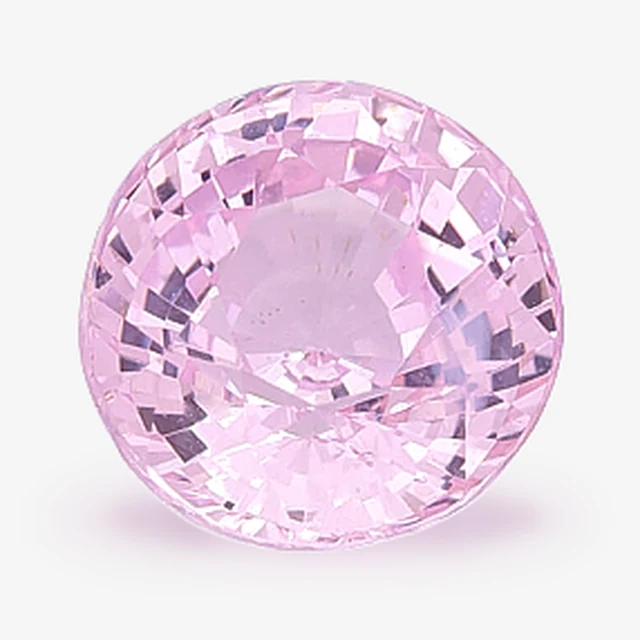
Pastel baby pink
Sapphire
Listed as pastel baby pink. 1.05 ct, round cut
Joalys catalogue photo
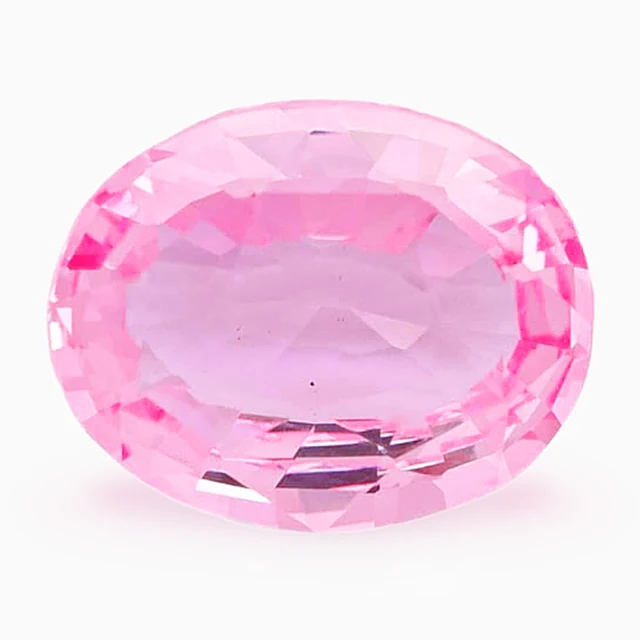
Pink
Sapphire
Listed as pink. 1.13 ct, oval cut
Joalys catalogue photo
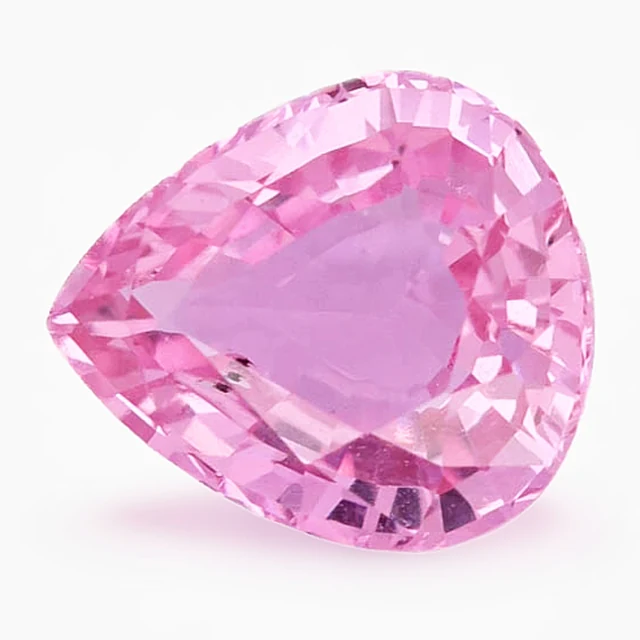
Pink
Sapphire
Listed as pink. 1.33 ct, pear cut
Joalys catalogue photo
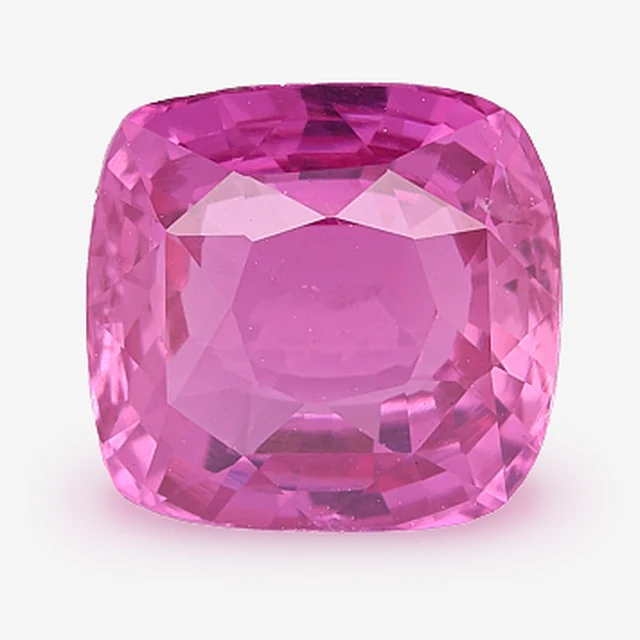
Vivid hot pink
Sapphire
Listed as vivid hot pink. 1.41 ct, cushion cut
Joalys catalogue photo
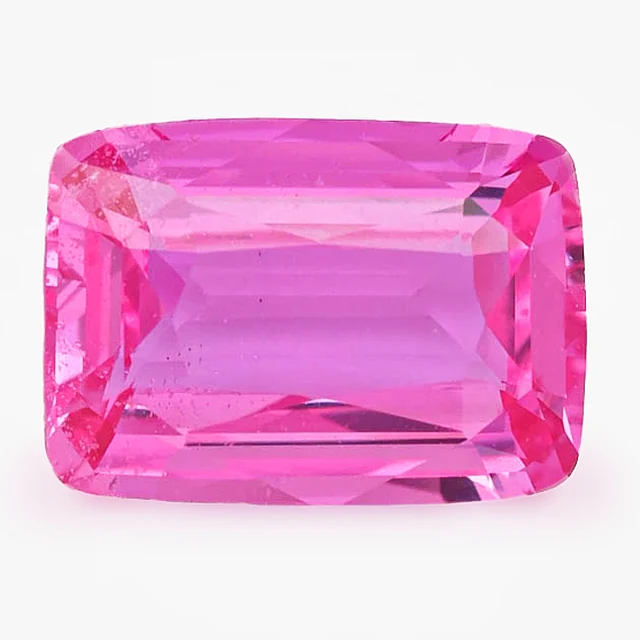
Pink
Sapphire
Listed as pink. 2.04 ct, cushion cut
Joalys catalogue photo
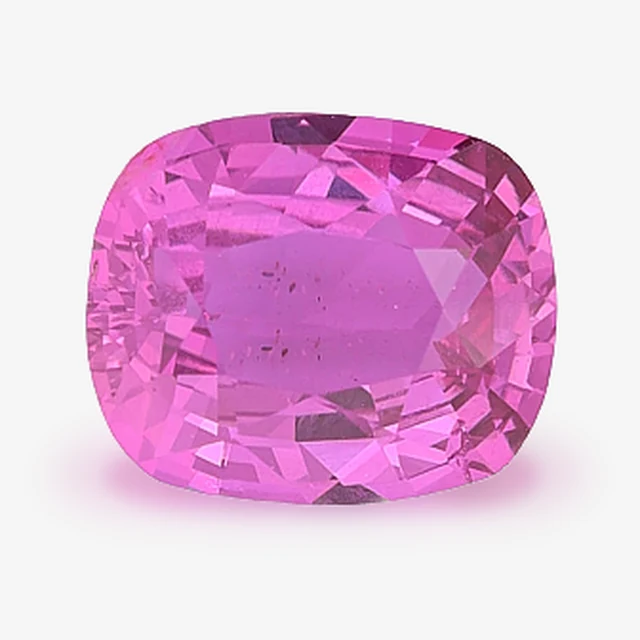
Pink
Sapphire
Listed as pink. 1.04 ct, cushion cut
Joalys catalogue photo
Six sapphires from our collection on 22 November 2026, catalogue photos on a pale ground, ordered from the softest to the strongest pink measured on each photo. Each swatch is that measured color, not one chosen by hand. The names are the ones we list the stones under: one as pastel baby pink, four as pink, one as vivid hot pink. A photo is not daylight, and the stones are not shown to scale.
Is the Pink Natural, and Will It Last?
Ask two things in writing before you choose: was the color treated, and does it hold in light?
Is the pink natural? Six questions, ready to send
Tick them as you get answers. The button copies all six, ready to send.
6 points
A message ready to send to the seller, with all the questions.
See the message
Hello, I am interested in this pink stone. Before I choose, could you confirm a few points in writing?

1. If it is a pink sapphire: has it been heated, or treated by diffusion?
2. If it is a pink tourmaline: has it been irradiated?
3. If it is a kunzite: was its color treated, and will it hold in daylight?
4. If it is a pink topaz: is the color natural, from heat, or from a surface coating?
5. If it is coral: is the pink natural, or was it dyed?
6. Will it come with a report from an independent laboratory that names the stone and any treatment?

Thank you for your time.
- Spinel: stable in light, and rarely treated.
- Morganite: almost always heated to drive off a yellow or orange tinge, which cannot be detected. Stable in light.
- Rose quartz and conch: rose quartz can fade in prolonged bright light, and a conch “pearl” fades over time.
Glass, synthetic sapphire and synthetic spinel imitate these pinks. For a stone that matters to you, the answer comes from an independent laboratory: what a lab report proves.
Quick answers
What is the most valuable pink gemstone?
Which pink gemstone is best for an engagement ring?
Do pink gemstones fade?
Is morganite a good stone for a ring?
What is the difference between pink sapphire and ruby?
Choose the pink you mean, then ask if it will last
For a ring worn every day: pink sapphire or pink spinel, then morganite and pink tourmaline. Kunzite, rose quartz and coral are happier in earrings and pendants. Whatever the stone, check that its pink is strong rather than brownish, and ask whether it was treated.