Ruby vs Pink Sapphire: Where Pink Turns Red, and What It Costs
Same mineral, same chromium, two names. Where the line falls on real stones, why markets draw it in different places, and what the word ruby adds to the price, from someone who buys corundum in Sri Lanka.

Is a pink sapphire a ruby? Same mineral, not the same name. Both are corundum colored by chromium. When red dominates, in a medium to dark tone, it is ruby. Lighter, it is pink sapphire, even when the color is vivid. The name moves the price: from 1 to 3 carats, rubies typically ask $1,760 to $10,230 a carat, pink sapphires $1,280 to $2,710.
| Ruby | Pink sapphire | |
|---|---|---|
| Mineral | Corundum | Corundum |
| Color from | Chromium | Chromium |
| Name rule | Red dominates, medium to dark tone | Lighter tone, even if vivid |
| Mohs hardness | 9 | 9 |
| Typical ask, 1 to 3 ct | $1,760 to $10,230 per carat | $1,280 to $2,710 per carat |
Where does pink sapphire end and ruby begin?
Chromium makes both colors. A tiny amount gives a delicate pink. More gives a strong red. Nature draws no step between them: Mogok, in Myanmar, produces the whole run, from light pinkish red to very dark purplish red.
Slide to compare real stones
Drag the marker
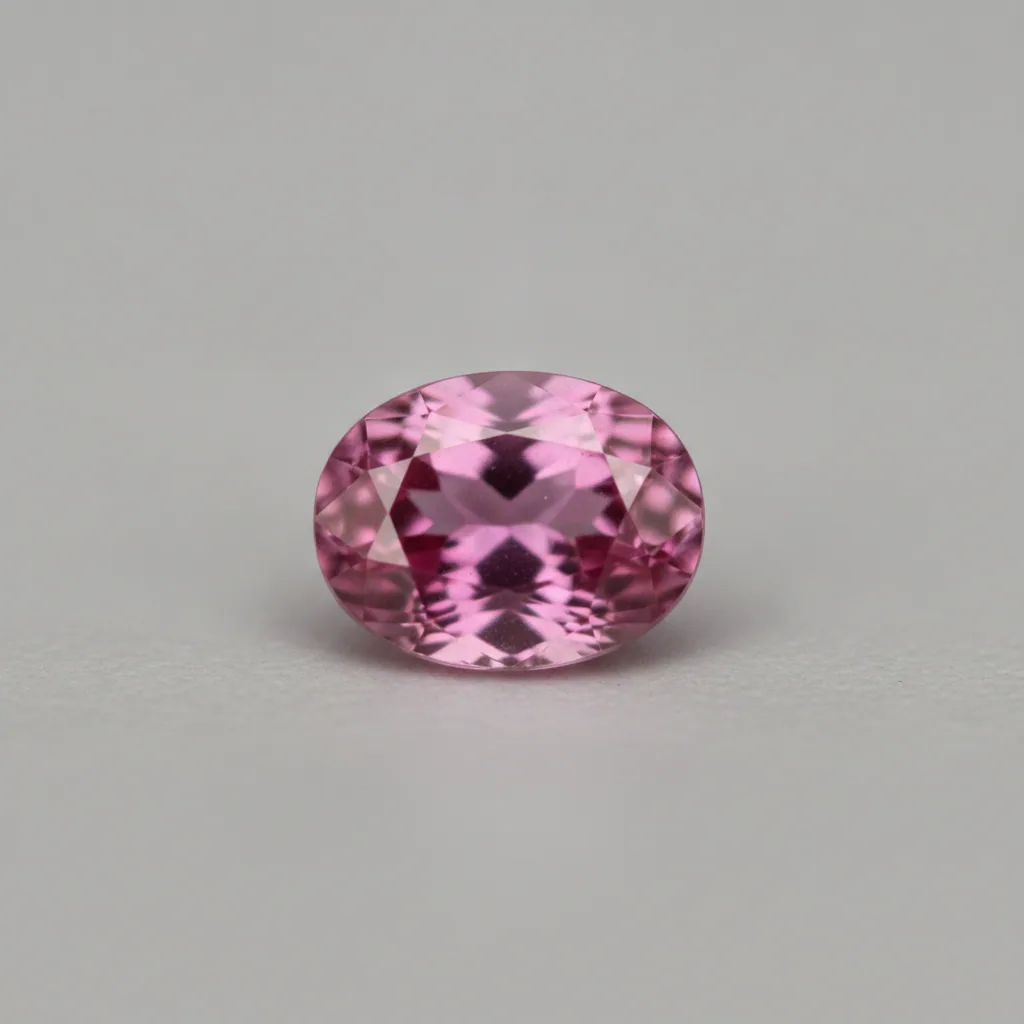
Real stones from our catalogue, each sold with a laboratory report before it ships. Photos are not to scale. The scale is schematic: there is no fixed line between the two names.
Slide across our stones. Hue alone does not decide. Tone does. Red must dominate, in a medium to dark tone, before corundum is called ruby. Too light, and it is pink sapphire, however vivid.
Then the trade disagrees. The word ruby once covered shades of red that included pink. In Bangkok, dealers may call pink corundum ruby and ask more for it. In the United States, the same stone usually sells as pink sapphire, for less. The usual tests don't settle it: both glow red under ultraviolet light, and both show the same chromium spectrum. The call is made by eye. One major laboratory compares each stone with carefully chosen reference stones.
Why Sri Lankan corundum sits right on the line
I buy corundum in Sri Lanka, and the island lives on this line. Rubies sold as Ceylon run from purplish red to pinkish red, medium to very light in tone. That light tone makes them brighter than darker rubies. It also makes many of them look more like pink sapphires than rubies.
Size plays too. A larger stone is more likely to reach the depth of color a ruby needs. And the island's pink sapphires are among the finest on the market, often highly saturated.
On the slider, two of our stones sit side by side: a 0.95 carat reddish pink we sell as pink sapphire, and a 1.04 carat crimson red we sell as ruby. Those names are ours, not a laboratory's. Take them to another market and one of them could change name.
Blind test
Ruby or pink sapphire?
Eight stones from our stock, no labels. Pick ruby or pink sapphire for each one, then see the name it is listed under.
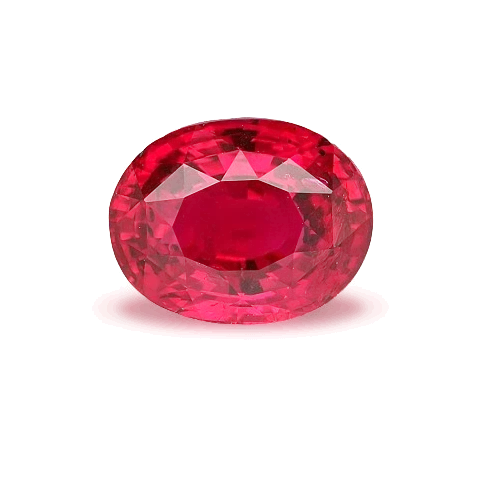
Stone 1 of 8
1.03 ct, oval cut
- 1.03 ct, oval cutRuby or pink sapphire?
Listed as ruby. See this stone
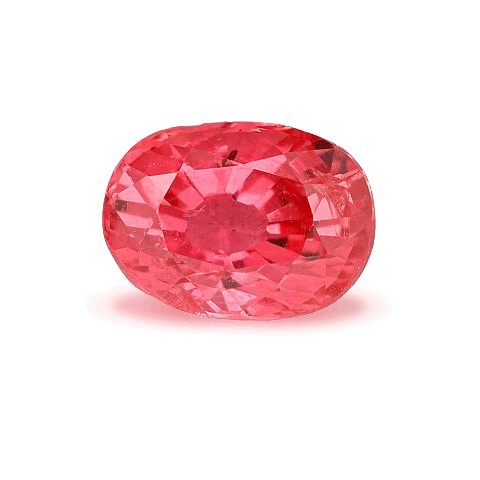 0.95 ct, oval cutRuby or pink sapphire?
Listed as pink sapphire. See this stone
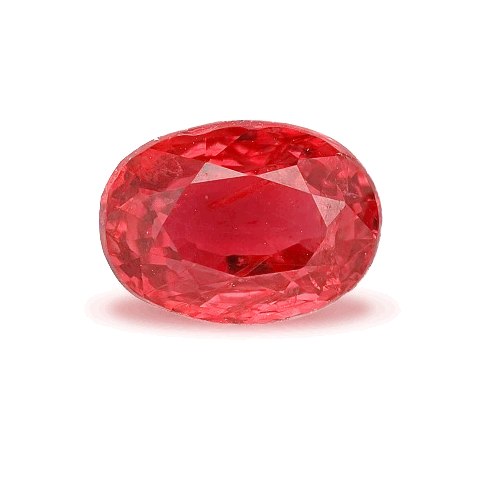 1.04 ct, oval cutRuby or pink sapphire?
Listed as ruby. See this stone
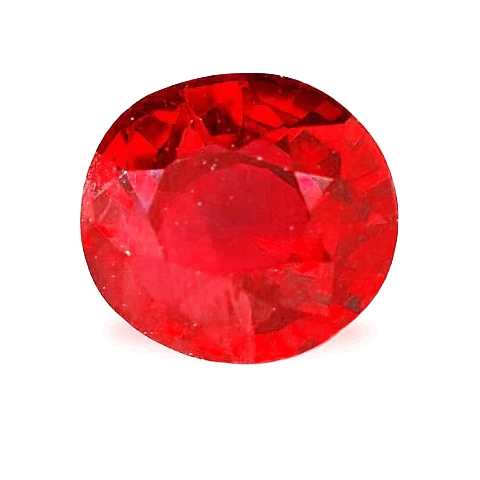 1.11 ct, oval cutRuby or pink sapphire?
Listed as ruby. See this stone
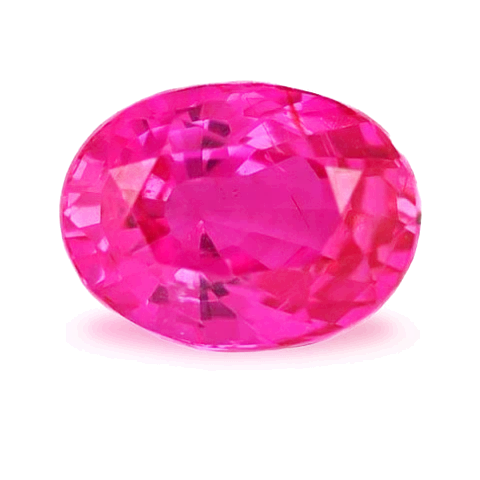 1.05 ct, oval cutRuby or pink sapphire?
Listed as pink sapphire. See this stone
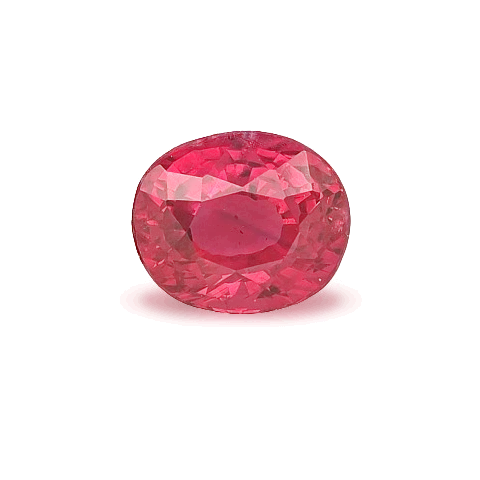 0.98 ct, oval cutRuby or pink sapphire?
Listed as ruby. See this stone
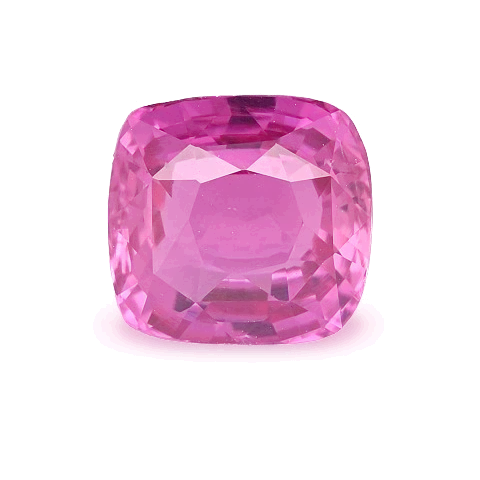 1.41 ct, cushion cutRuby or pink sapphire?
Listed as pink sapphire. See this stone
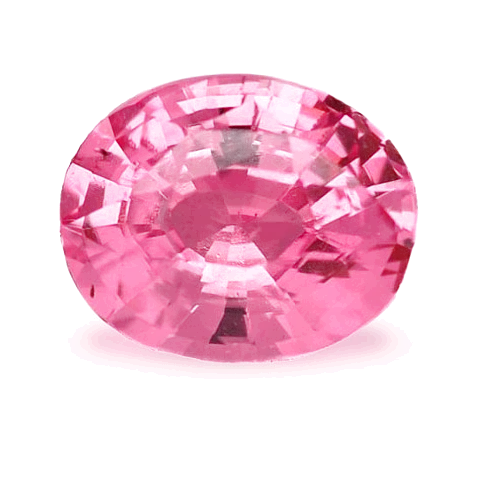 1.01 ct, oval cutRuby or pink sapphire?
Listed as pink sapphire. See this stone
Ruby and pink sapphire are one mineral, and the trade does not draw the line in one place. Read the stone, not the tag.
Real stones from the Joalys stock, Joalys catalogue photos. Names as listed on October 13, 2026. Not to scale.
Ruby vs pink sapphire: what does the name cost?
On 7 October 2026 we read 3,313 asking prices for single stones of 1 to 3 carats, at five independent sellers for each stone, heated and unheated together.
| Per carat, 1 to 3 ct | Pink sapphire | Ruby |
|---|---|---|
| Typical ask | $1,280 to $2,710 | $1,760 to $10,230 |
| Full span | $150 to $8,670 | $235 to $50,000 |
| Stones read | 1,904 | 1,409 |
At the top of the typical asks, ruby runs almost four times higher. At the bottom, they nearly meet. And the ranges overlap: 508 of the 1,409 rubies asked less per carat than $2,710, the top of the typical pink sapphire asks. These are asking prices, not sale prices.
Why the gap? Ruby can command the highest price per carat of any colored stone. So, given the choice, a seller would rather write ruby on the label. Our full grids: ruby price per carat and sapphire price per carat; the wider picture in our colored gemstone market statistics.
Are rubies and pink sapphires heated?
Assume yes. Almost all rubies today are heated, and heating is not always detectable. In Sri Lanka, heat turns rubies a more intense red. Pink can come from the furnace too: purple sapphire is often heated toward a more wanted pink or red. On a report, heat reads like this:
On the report
The line to read
No indications of heating
In plain words. The laboratory looked and found none.
Indications of heating
In plain words. Heated. The standard case.
Indications of heating with residues
In plain words. Heated, and something from the process stayed in the healed fissures. It is graded minor, moderate or significant.
Illustration. The wording laboratories use, set by us in a neutral layout: not a real report, and not the layout of any laboratory.
Fillings are another story: high heat can damage or destroy them. Get the treatment in writing and, for a stone that matters, a report from an independent outside laboratory. Here is what a gemstone certificate proves, and what unheated really means.
Ruby or pink sapphire: which should you choose?
For wear, it's a tie. Both rate 9 on the Mohs scale, and both take a ring worn every day.
- Choose ruby if you want red and nothing else. The most valued is red to slightly purplish red, medium to medium-dark tone, vivid saturation. Our natural ruby guide shows how it is graded.
- Choose pink sapphire if pink is the color that stops you. You pay for the color, not for a word. Read our pink sapphire buying guide.
My view: pick the color first, then read the name on the report. Never the other way round. Browse our loose rubies and pink sapphires, each with its weight and its price.
Quick answers
Is a pink sapphire a ruby?
Is ruby more expensive than pink sapphire?
How can you tell a ruby from a pink sapphire?
Is pink sapphire good for an engagement ring?
Is pink sapphire rare?
The honest bottom line
Ruby and pink sapphire are one stone with two names, and the line between them moves with the market you buy in. Choose the color you love, then read the name and the treatment on the report. The name sets the price. The color is what you wear.