White Gemstones: 12 Types, What They Cost, and Which Ones Survive a Ring
Twelve white and colourless stones by name, sorted by what a ring does to them, with what sellers ask today.

Ask for white gemstones and you will be shown two opposite things. Colourless stones you look through: diamond, white sapphire, white topaz, goshenite, rock crystal and zircon. White stones you look at: moonstone, opal, pearl, jade, milky chalcedony and mother-of-pearl. For a ring you wear every day, choose diamond or white sapphire. Our white sapphires are below.
- Colourless, you look through
- Diamond, white sapphire, white topaz, goshenite, rock crystal, zircon
- White, you look at
- Moonstone, white opal, pearl, white jade, milky chalcedony, mother-of-pearl
- Hardest
- Diamond (Mohs 10), white sapphire (9)
- Softest
- Pearl (2.5 to 4)
- For a daily ring
- Diamond or white sapphire
- Asked per carat
- White sapphire, 1 to 3 carats: mostly $500 to $1,300
White or colourless: which one are you looking for?
The trade often says white for both. Your eye will not: one is a window, the other a screen.
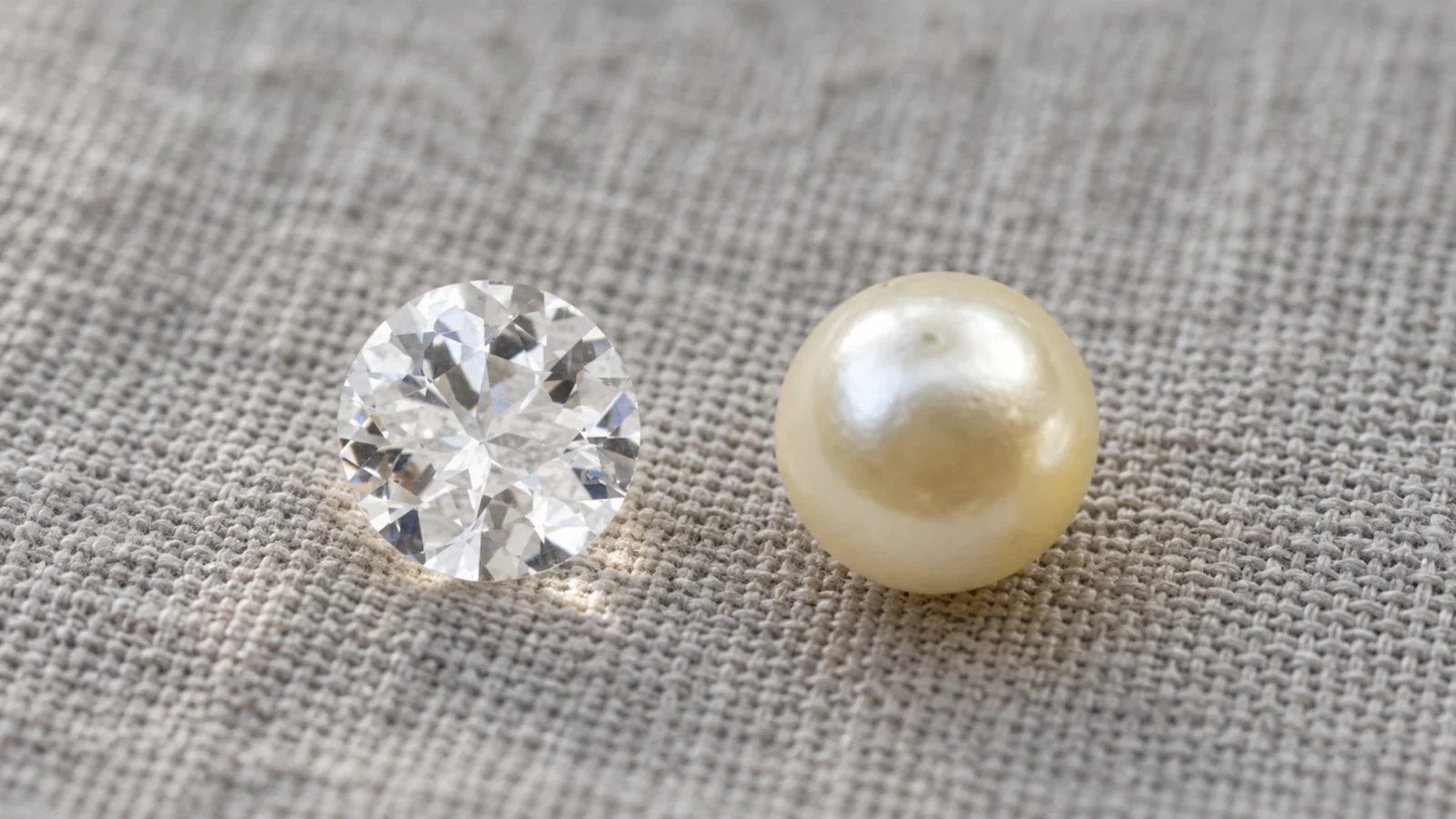
Through it, or at it?
- Colourless stones are transparent. Light passes through them with little or no distortion. In white sapphire, the closer to no colour, the more valuable: traces of grey, yellow, brown or blue are common, and they lower the value.
- White stones run from semitransparent to opaque. Light diffuses inside them, or does not pass at all, so you look at the surface: the sheen of a moonstone, the play-of-colour of an opal, the lustre of a pearl.
Ivory and champagne, just off white, are another family: see our guide to cream and beige gemstones.
White gemstone names: the 12 to know
Twelve white gemstone names worth knowing: six colourless, six white.
Twelve white gemstones, one picture each
Six you look through, six you look at. Pick a family.
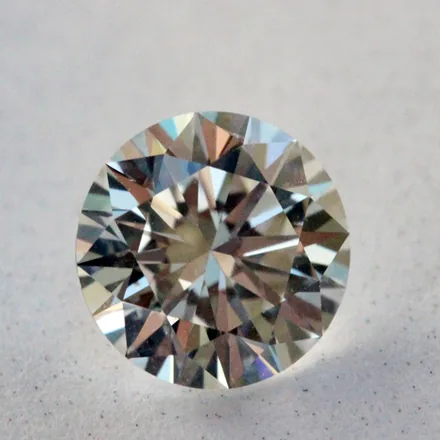
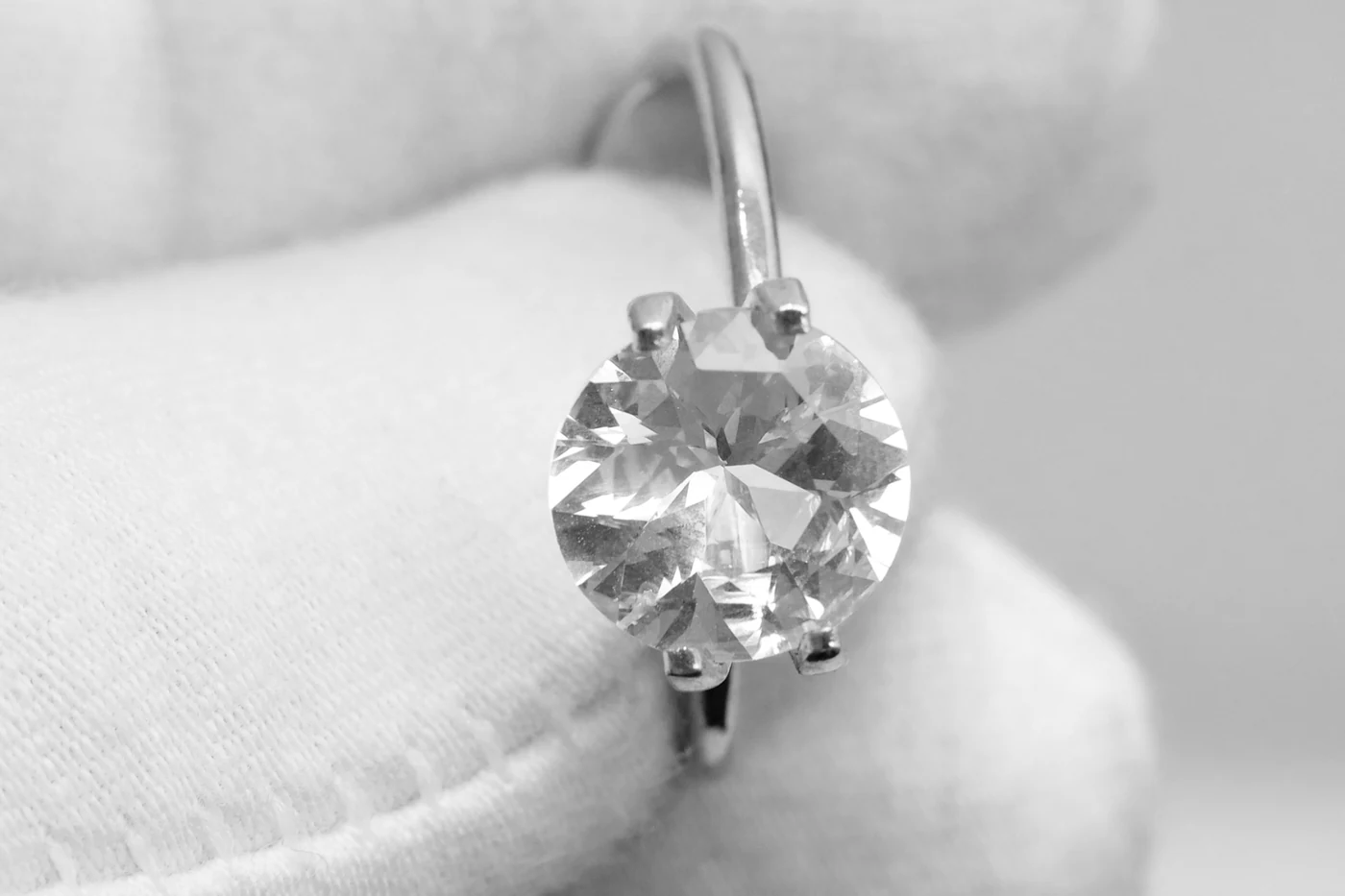
Diamond
- What it is
- The hardest gem
- Mohs hardness
- 10
Photo: Petragems, CC BY-SA 4.0, via Wikimedia Commons (cropped).
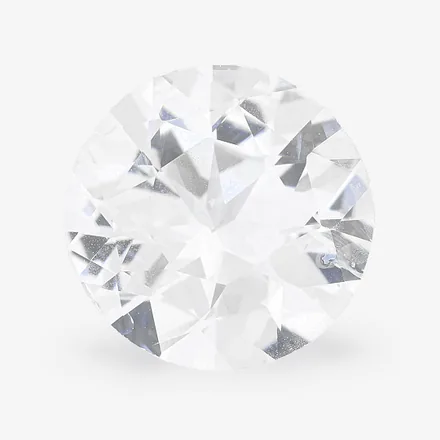
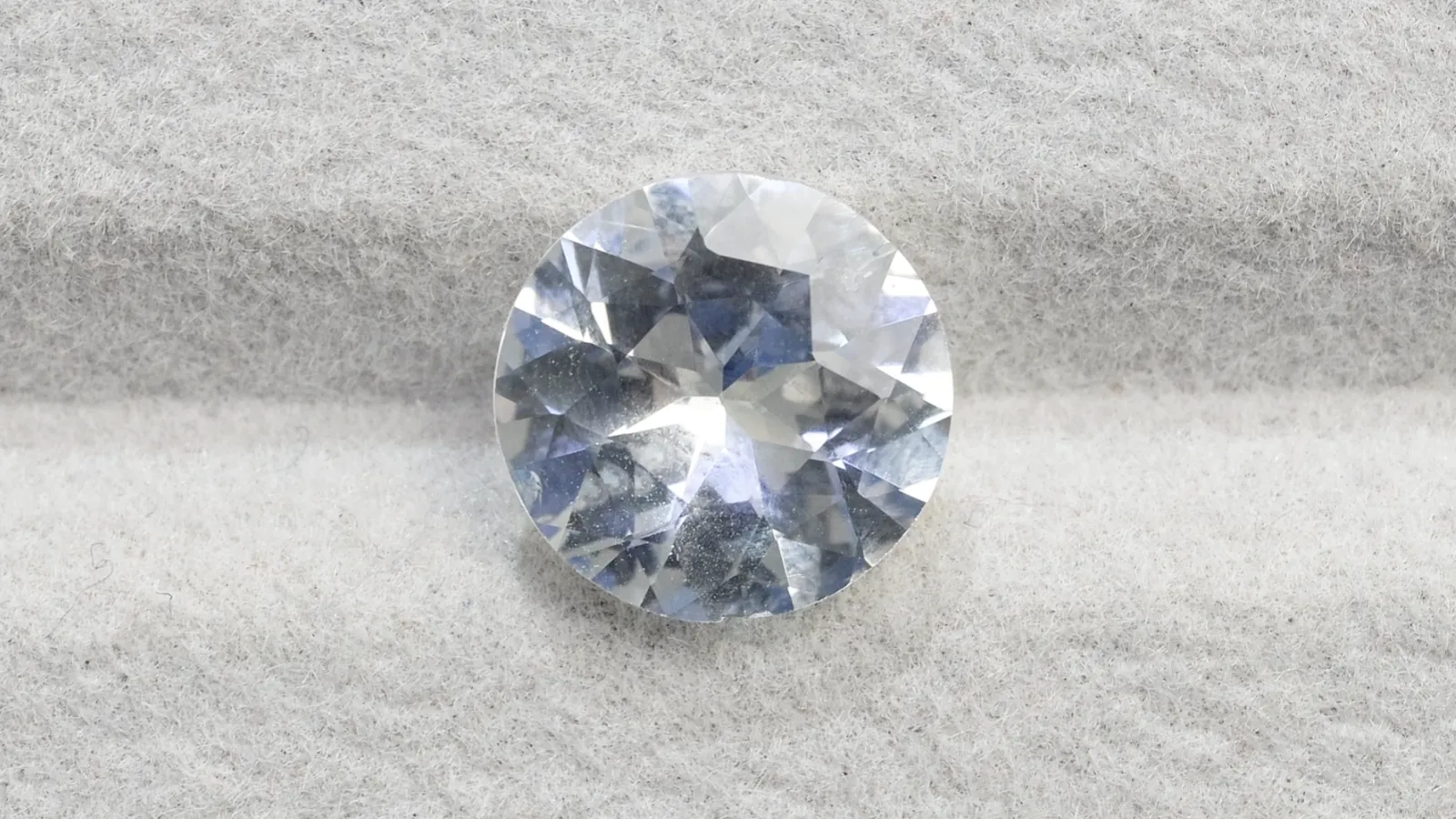
White sapphire
- What it is
- Corundum in its purest form
- Mohs hardness
- 9
White sapphire, 3.00 ct. Photo from the Joalys catalogue.
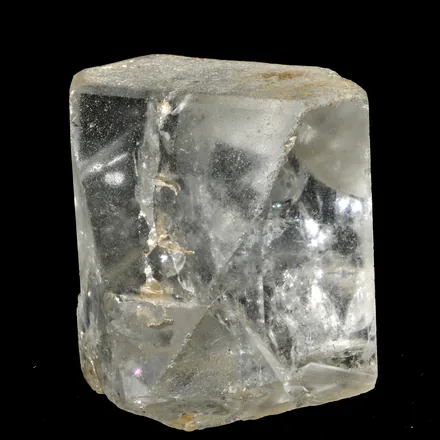
White topaz
- What it is
- Topaz in its most common colour
- Mohs hardness
- 8
Uncut topaz crystal, not a cut stone. Photo: Géry PARENT, public domain, via Wikimedia Commons (cropped).
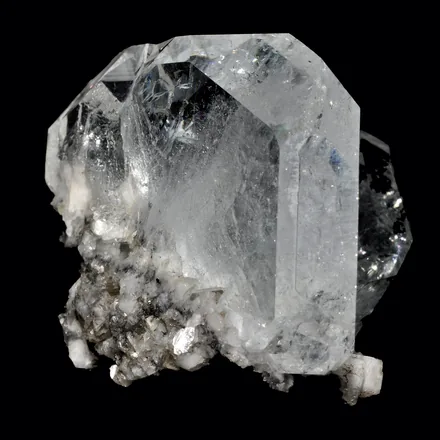
Goshenite
- What it is
- Colourless beryl
- Mohs hardness
- 7.5 to 8
Uncut goshenite crystal, not a cut stone. Photo: Géry PARENT, public domain, via Wikimedia Commons (cropped).
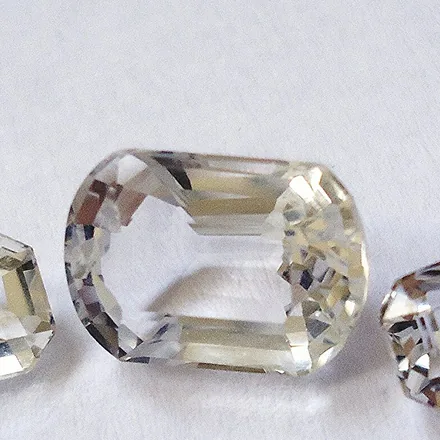
Rock crystal
- What it is
- Colourless, transparent quartz
- Mohs hardness
- 7
Cut rock crystal from Myanmar. Photo: MAURO CATEB from Brazil, CC BY 2.0, via Wikimedia Commons (cropped).
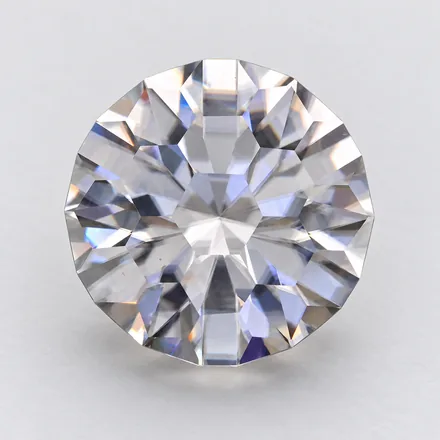
Colourless zircon
- What it is
- Natural zircon, usually heated
- Mohs hardness
- 6 to 7.5
Illustration, not a photograph of a real stone.
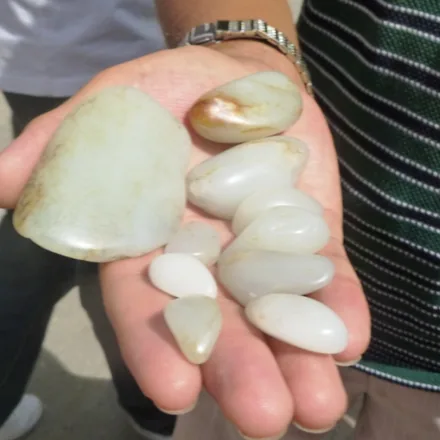
White jade
- What it is
- Nephrite or jadeite
- Mohs hardness
- 6 to 7
White nephrite pebbles at a jade market in Khotan. Photo: John Hill, CC BY-SA 3.0, via Wikimedia Commons (cropped).
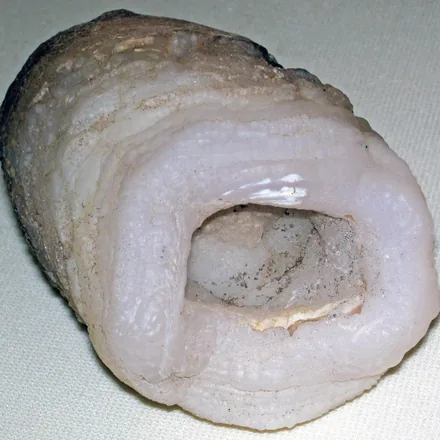
Milky chalcedony
- What it is
- Translucent, white to light grey
- Mohs hardness
- 6.5 to 7
Rough white chalcedony, not a cut stone. Photo: James St. John, CC BY 2.0, via Wikimedia Commons (cropped).
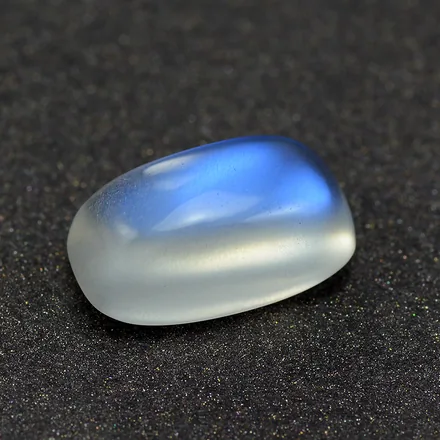
Moonstone
- What it is
- Feldspar with a floating sheen
- Mohs hardness
- 6 to 6.5
Moonstone cabochon with a blue sheen. Photo: Gemsphoto, CC BY-SA 4.0, via Wikimedia Commons (cropped).
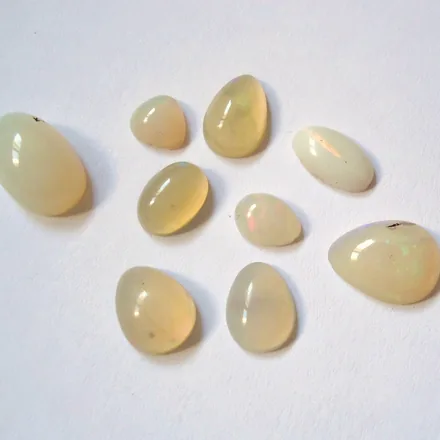
White opal
- What it is
- Play-of-colour on a white body
- Mohs hardness
- 5 to 6.5
White opal cabochons from Brazil. Photo: Mauro Cateb, CC BY-SA 3.0, via Wikimedia Commons (cropped).
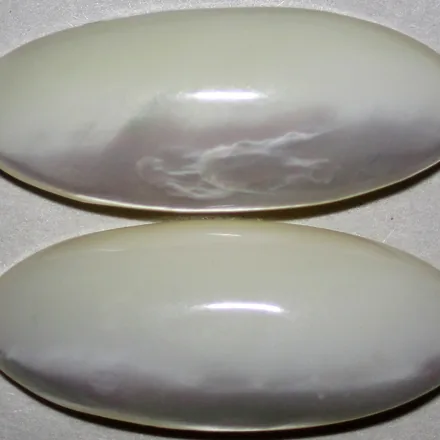
Mother-of-pearl
- What it is
- Lining of a pearl-producing shell
- Mohs hardness
- 3.5
Mother-of-pearl cabochons from freshwater mussels. Photo: James St. John, CC BY 2.0, via Wikimedia Commons (cropped).
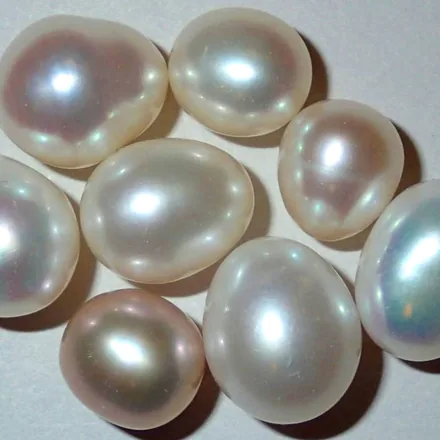
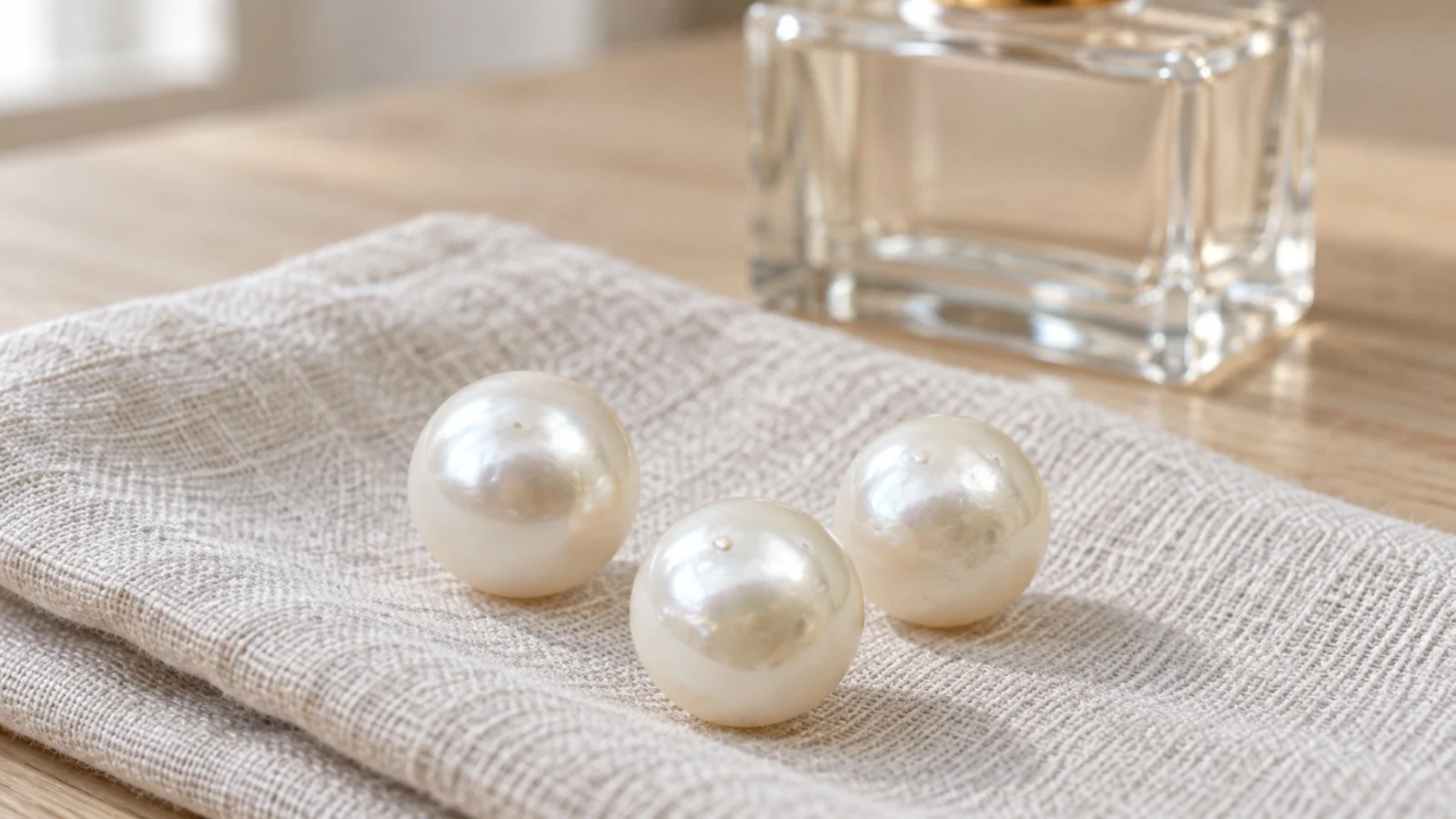
Pearl
- What it is
- Organic gem, formed in a mollusc
- Mohs hardness
- 2.5 to 4
Cultured pearls, white to pink. Photo: James St. John, CC BY 2.0, via Wikimedia Commons (cropped).
No stone matches these filters.
Eleven photos show a real example of the stone, not a standard; the colourless zircon is an illustration. Crystals and rough pieces are marked as such.
Source: Names and hardness: gemological reference sheets, checked on 9 October 2026. One photo is from the Joalys catalogue; the other photos and the illustration are credited under each card.
| Colourless stone | What it is | Mohs |
|---|---|---|
| Diamond | The hardest gem | 10 |
| White sapphire | Corundum in its purest form | 9 |
| White topaz | Topaz in its most common colour | 8 |
| Goshenite | Colourless beryl | 7.5 to 8 |
| Rock crystal | Colourless, transparent quartz | 7 |
| Colourless zircon | Natural zircon, usually heated | 6 to 7.5 |
| White stone | What it is | Mohs |
|---|---|---|
| White jade | Nephrite or jadeite | 6 to 7 |
| Milky chalcedony | Translucent, white to light grey | 6.5 to 7 |
| Moonstone | Feldspar with a floating sheen | 6 to 6.5 |
| White opal | Play-of-colour on a white body | 5 to 6.5 |
| Mother-of-pearl | Lining of a pearl-producing shell | 3.5 |
| Pearl | Organic gem, formed in a mollusc | 2.5 to 4 |
Two names catch people out. Zircon is not cubic zirconia: one is a natural gem, the other is man-made. And milky chalcedony is often sold as an alternative to moonstone.
You will also see them sold as white precious and semi-precious stones. Ignore the split: it is outdated and inaccurate, and it ranks stones without describing them. Read why semi-precious is a marketing myth.
Which white gemstones survive a ring?
A ring gets knocked, so hardness is only half the answer. Hardness resists scratches, toughness resists chips and breaks, and a hard stone is not always a tough one. Tap a stone on the map.
Hard is not the same as tough
Hardness is resistance to scratches. Toughness is resistance to chips and breaks. A ring needs both. Tap a stone.
Touch a point to read about the stone.
Diamond Mohs 10 · Toughness: Good in the cleavage directions, exceptional in all others
The hardest of the twelve. Hit just right, a diamond can still split along a cleavage plane.
White sapphire Mohs 9 · Toughness: Usually excellent
Mohs 9 and usually excellent toughness: it takes a ring worn every day.
White topaz Mohs 8 · Toughness: Poor, because of cleavage
An 8 for scratches, yet a hard blow can split it along its cleavage. In a ring, a protective setting.
Rock crystal Mohs 7 · Toughness: Good
Mohs 7 with good toughness.
Colourless zircon Mohs 6 to 7.5 · Toughness: Fair to good; heat-treated stones can be brittle
Heat-treated zircon can be brittle and its facet edges abrade. Set it so the edges are protected.
White jade Mohs 6 to 7 · Toughness: Exceptional
Softer than quartz, and exceptionally tough: hardness and toughness are two different things.
Milky chalcedony Mohs 6.5 to 7 · Toughness: Good
Mohs 6.5 to 7 with good toughness.
Moonstone Mohs 6 to 6.5 · Toughness: Poor, because of cleavage
It has cleavage in two directions. In a ring, a protective setting.
White opal Mohs 5 to 6.5 · Toughness: Very poor to fair
It can craze if it dries out. Earrings and pendants.
Mother-of-pearl Mohs 3.5 · Toughness: Fair
Mohs 3.5: soft. Earrings and pendants.
Pearl Mohs 2.5 to 4 · Toughness: Usually good, but variable
Very soft and easily scratched. Perfume, cosmetics, hair spray and perspiration damage the nacre.
| Stone | Mohs | Toughness |
|---|---|---|
| 1DiamondThe hardest of the twelve. Hit just right, a diamond can still split along a cleavage plane. | 10 | Good in the cleavage directions, exceptional in all others |
| 2White sapphireMohs 9 and usually excellent toughness: it takes a ring worn every day. | 9 | Usually excellent |
| 3White topazAn 8 for scratches, yet a hard blow can split it along its cleavage. In a ring, a protective setting. | 8 | Poor, because of cleavage |
| 4Rock crystalMohs 7 with good toughness. | 7 | Good |
| 5Colourless zirconHeat-treated zircon can be brittle and its facet edges abrade. Set it so the edges are protected. | 6 to 7.5 | Fair to good; heat-treated stones can be brittle |
| 6White jadeSofter than quartz, and exceptionally tough: hardness and toughness are two different things. | 6 to 7 | Exceptional |
| 7Milky chalcedonyMohs 6.5 to 7 with good toughness. | 6.5 to 7 | Good |
| 8MoonstoneIt has cleavage in two directions. In a ring, a protective setting. | 6 to 6.5 | Poor, because of cleavage |
| 9White opalIt can craze if it dries out. Earrings and pendants. | 5 to 6.5 | Very poor to fair |
| 10Mother-of-pearlMohs 3.5: soft. Earrings and pendants. | 3.5 | Fair |
| 11PearlVery soft and easily scratched. Perfume, cosmetics, hair spray and perspiration damage the nacre. | 2.5 to 4 | Usually good, but variable |
Points that would overlap are moved apart a little. The exact values are in the table.
Toughness has no number. These are the words gemmologists use, and one stone can span two of them. Goshenite is not on the map: our sources give its hardness (7.5 to 8) but no toughness.
Source: Gemological reference sheets, checked on 9 October 2026.
- Every day. Diamond and white sapphire, at 10 and 9, and sapphire's toughness is usually excellent. White jade is softer but exceptionally tough. Rock crystal and milky chalcedony both have good toughness.
- With a protective setting. White topaz is an 8, yet one hard blow can split it along its cleavage. Zircon can turn brittle after heating, and its facet edges abrade. Moonstone has cleavage in two directions.
- Earrings and pendants. Opal runs from very poor to fair in toughness, and it can craze if it dries out. Pearl is very soft: perfume, cosmetics, hair spray and perspiration damage its nacre. Mother-of-pearl is 3.5.
My view: white topaz is sold on its 8, and the 8 is not the number that matters. For the one I would put on a ring, read our white sapphire guide.
Moonstone or rainbow moonstone?
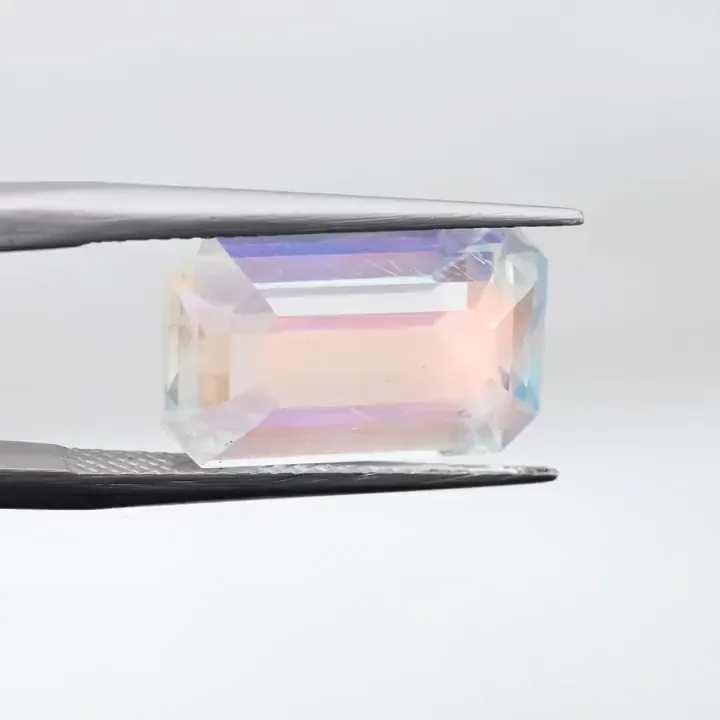
Two different stones share the name. Tilt a moonstone and a sheen seems to roll across it: that is adularescence, light scattered by thin, flat layers inside the stone. The finest moonstones are colourless and nearly transparent, with a vivid blue sheen, and Sri Lanka is a major source of that top quality. In a ring, moonstone needs a protective setting.
Rainbow moonstone is a labradorite, another feldspar, with a multicoloured sheen on a light body. Rainbow moonstone is only its trade name. Watch the sheen cross one below.
What do white gemstones cost?
From a few dollars a carat to more than a thousand. Here is what sellers asked on 7 October 2026, in US dollars per carat: asking prices, not sale prices.
- White sapphire, 1 to 3 carats: $58 to $1,500 across 59 listings at four sellers. 52 of the 59 sit between $500 and $1,300.
- Colourless zircon: $14 to $220 across 34 listings from 10 sellers on one marketplace. 30 of the 34 are at $60 or less.
- Moonstone and rainbow moonstone: $1 to $430 across 16 listings from 8 sellers. 14 of the 16 sit between $49 and $430.
White topaz we found at one dealer only, so we give no figure. Pearl has its own scale: seven factors set its value, from size and shape to lustre, surface and nacre.
For the wider picture, see our colored gemstone market statistics.
How do you choose a white gemstone?
- Colourless or white? They are two different purchases.
- What is it for? A daily ring points to diamond or white sapphire. Earrings and pendants open up the rest.
- Has it been treated? Ask, and get the answer in writing. Virtually all colourless zircon has been heated, and most akoya and Chinese freshwater pearls are bleached.
- Is there a report? On any stone that matters, ask for one from an independent outside laboratory. Our guide explains what a gemstone certificate proves.
We sell loose stones, chosen one at a time. Browse our white sapphires, or choose the stone first and design the piece around it.
Quick answers
What gemstone is milky white?
What is the hardest white gemstone?
Which white gemstone looks most like a diamond?
Is zircon the same as cubic zirconia?
Are white gemstones expensive?
The bottom line
Name the stone before you price it: colourless or white. Then read its toughness, not only its hardness. Diamond and white sapphire take a ring every day, and the softer white gemstones are happier in earrings and pendants.