Green Gemstones: Names, Shades and How to Tell Them Apart
The greens by name, the ones that last in a ring, and the color line where an emerald becomes a green beryl.

The green gemstones you will meet most are emerald, tsavorite garnet, tourmaline and peridot, then green sapphire, chrysoberyl, demantoid and jade. Emerald has the finest green, and asks for care. For a ring worn every day, green sapphire and chrysoberyl are the safest choices. Before you choose, ask two things: does the stone deserve its name, and was it treated?
| Green stone | Hardness (Mohs) | Everyday ring? |
|---|---|---|
| Green sapphire | 9 | Yes |
| Chrysoberyl | 8½ | Yes |
| Emerald | 7½ to 8 | Yes, with care: often filled |
| Tsavorite, tourmaline | 7 to 7½ | Yes |
| Jade | 6 to 7 | Yes: very tough |
| Peridot, demantoid | 6½ to 7 | Earrings, pendants, or with care |
What Are the Green Gemstones Called?
Green gemstones fall into three groups, and the shade is often your first clue to the name.
- Bluish green to pure green. Emerald, tsavorite garnet, chrome tourmaline (the tourmaline guide) and, at the blue end, teal sapphire.
- Yellowish green. Peridot (the August birthstone), chrysoberyl, demantoid garnet and green sapphire (how to find a bright green sapphire).
- Translucent to opaque. Jadeite and nephrite jade, green chalcedony, malachite.
Ten green gemstones, one picture each
Grouped by kind of green. The last line says whether it suits a ring worn every day.
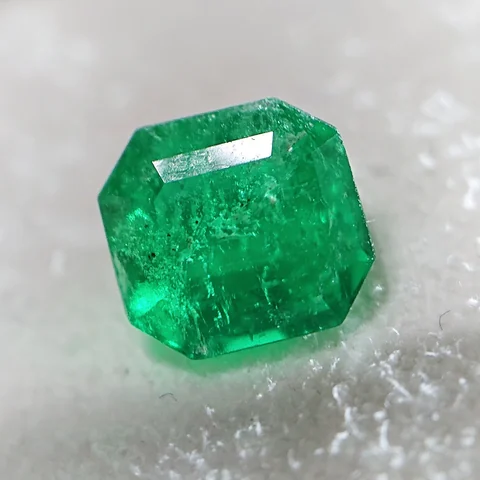
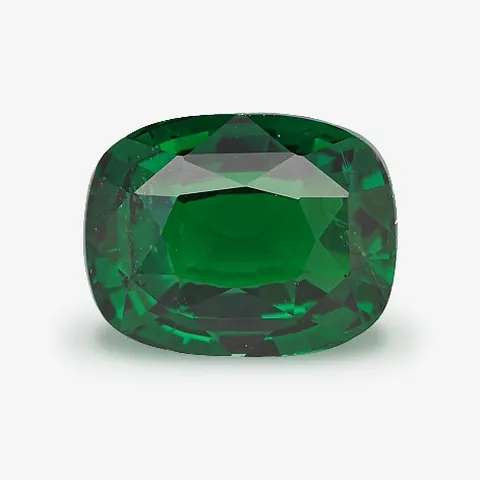
Emerald
Bluish green to pure green
- Everyday ring
- Yes, with care: often filled
The green the trade rates finest.
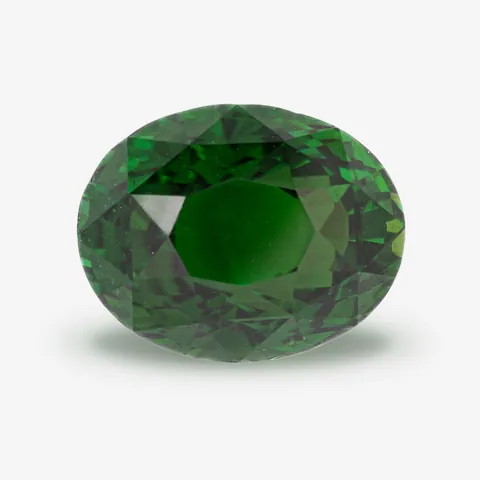
Tsavorite garnet
Bluish green to pure green
- Everyday ring
- Yes
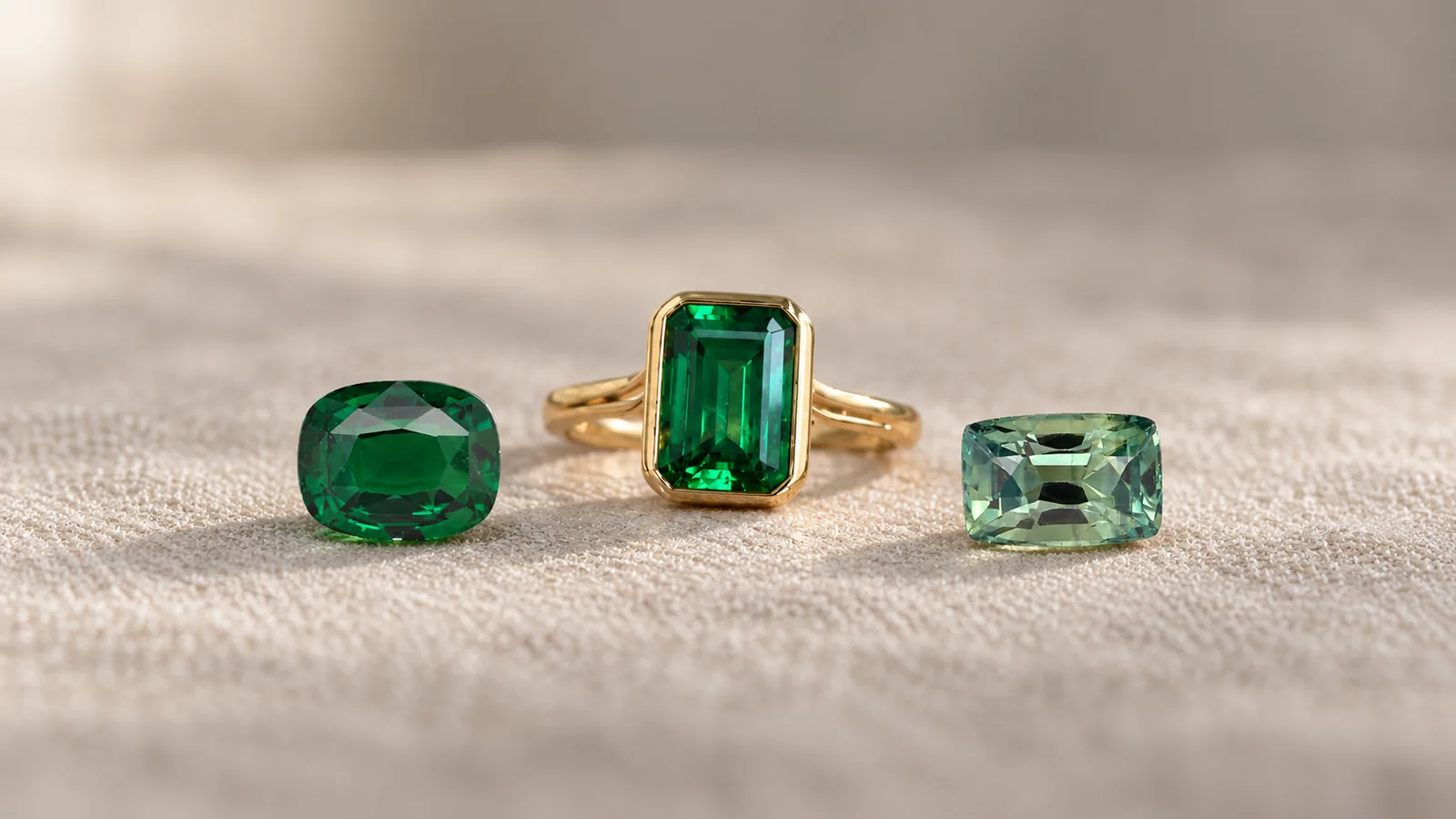
A vivid green garnet, mined mostly in East Africa. This one, 1.57 ct, is from our collection.
Green tourmaline
Bluish green to pure green
- Everyday ring
- Yes
Its richest greens, sold as chrome tourmaline, rival tsavorite and now and then emerald. This one, 10.52 ct, is from our collection.
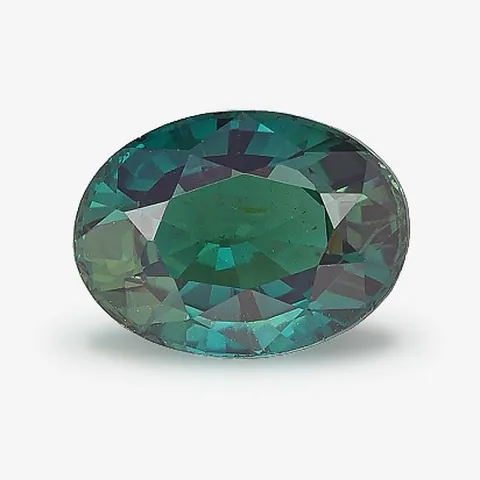
Teal sapphire
Bluish green to pure green
- Everyday ring
- Yes
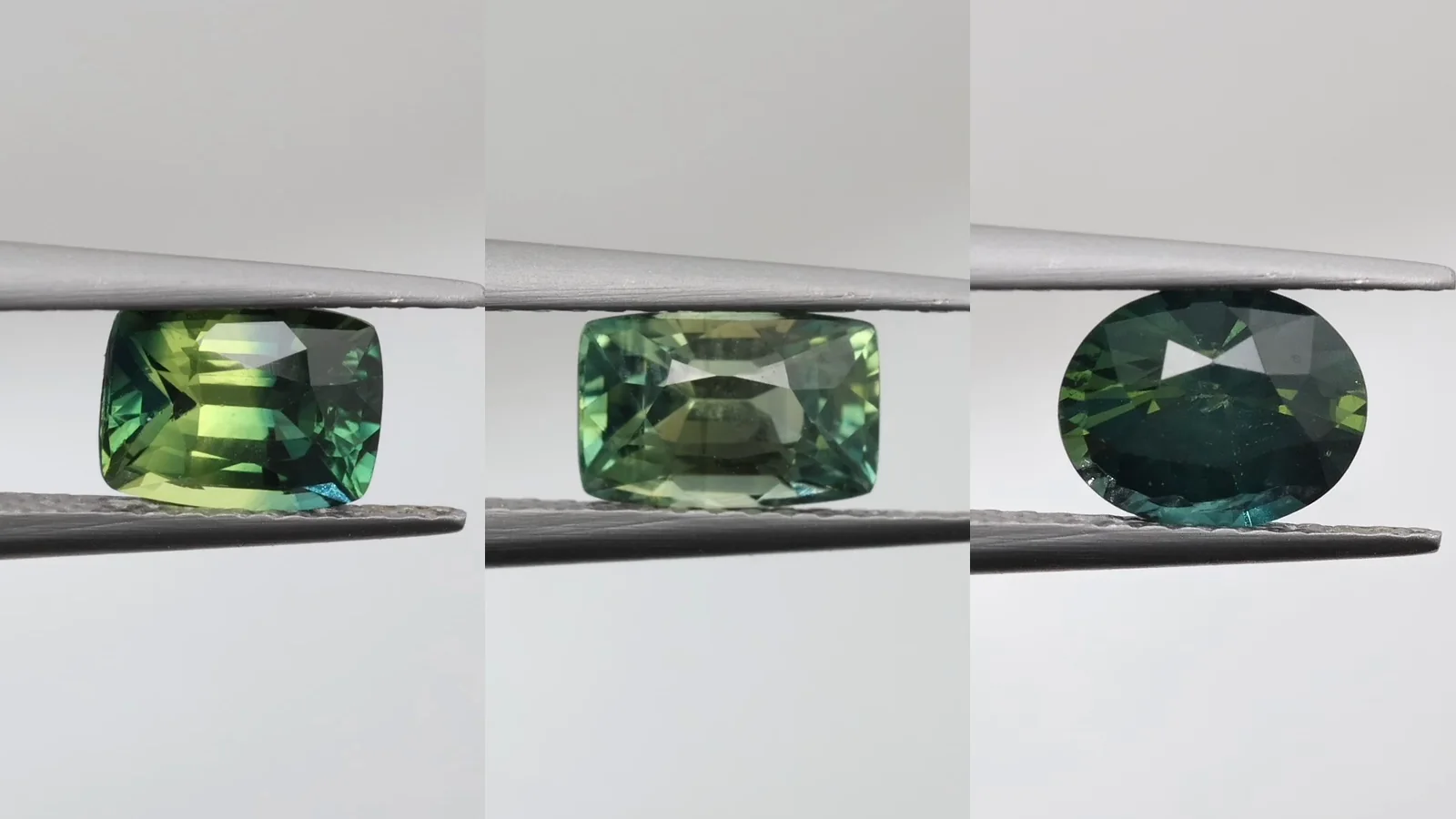
A blue-green sapphire, at the blue end of green. This one, 1.28 ct, is from our collection.
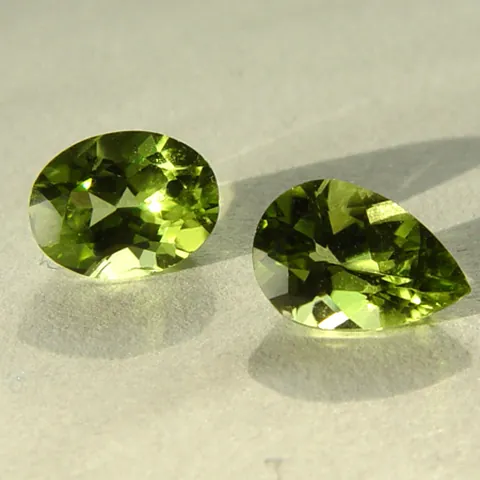
Peridot
Yellowish green
- Everyday ring
- Earrings, pendants, or with care
From yellowish to brownish green. The August birthstone.
Photo: DonGuennie (G-Empire The World of Gems), CC BY-SA 4.0, via Wikimedia Commons (cropped).
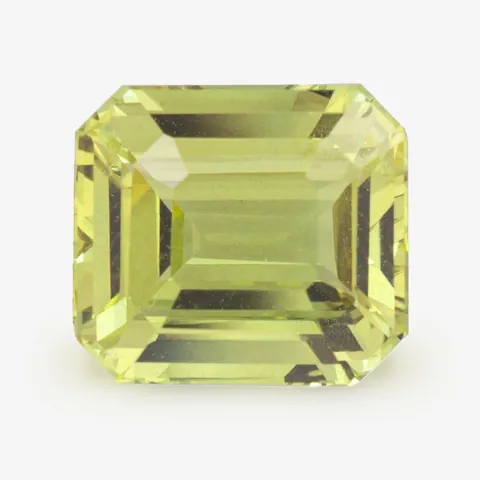
Chrysoberyl
Yellowish green
- Everyday ring
- Yes
Yellow through yellowish green. This one, 3.58 ct, is from our collection.
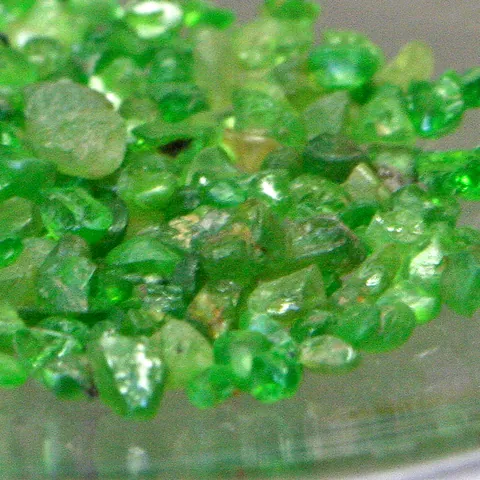
Demantoid garnet
Yellowish green
- Everyday ring
- Earrings, pendants, or with care
Almost always touched with yellow, and full of fire once cut. Shown: rough grains.
Photo: Elke Wetzig (Elya), CC BY-SA 3.0, via Wikimedia Commons (cropped).
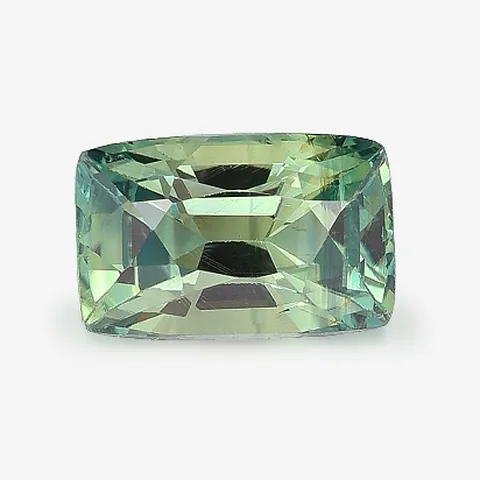
Green sapphire
Yellowish green
- Everyday ring
- Yes
Runs from blue-green to yellow-green, usually muted: the olive or khaki shade. This one, listed as bluish green, 1.32 ct, is from our collection.
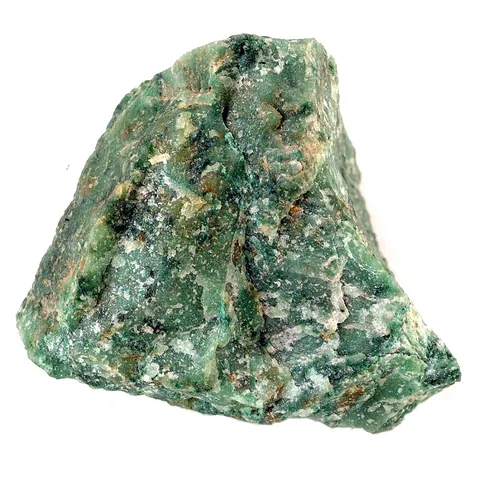
Jade
Translucent to opaque
- Everyday ring
- Yes: very tough
Jadeite or nephrite. The finest green jadeite owes its color to chromium. Shown: rough jadeite.
Photo: Shannon Heinle, CC0, via Wikimedia Commons (cropped).
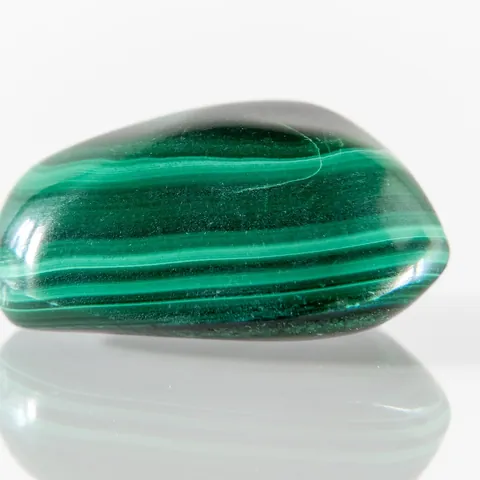
Malachite
Translucent to opaque
- Everyday ring
- Earrings and pendants
Opaque green, often in bands. Shown: a tumbled stone.
Photo: W.carter, CC BY 4.0, via Wikimedia Commons (cropped).
Each card shows an example of the stone, not a standard. Each photo fills its tile: the stones are not to scale.
Source: Names, kinds of green and ring use: gemological reference sheets, checked on 3 November 2026. Photo credits are under each card.
Diopside and sphene turn up less often, and zircon comes in green too.
Why do two greens look so different? Chromium and vanadium make the richest greens: emerald, tsavorite, chrome tourmaline, demantoid, the finest jadeite. Iron makes green too, in peridot, and with titanium in green sapphire, but a more muted one.
Which Green Gemstones Last in a Ring?
Dust in the air is mostly quartz, hardness 7. A stone below 7 slowly loses its polish on the hand.
Eight green stones: hardness and toughness
Hardness is resistance to scratches, toughness is resistance to knocks. A ring needs both.
Touch a point to read about the stone.
Green sapphire Mohs 9 · Toughness: Usually excellent
9 on the Mohs scale and usually excellent toughness: an excellent ring stone.
Chrysoberyl Mohs 8.5 · Toughness: Excellent
8.5 on the Mohs scale and excellent toughness: a very good ring stone.
Emerald Mohs 7.5 to 8 · Toughness: Poor to good
7.5 to 8 on the Mohs scale, but its inclusions make toughness run from poor to good. A ring stone that needs care.
Tsavorite garnet Mohs 7 to 7.5 · Toughness: Fair to good
7 to 7.5 on the Mohs scale, fair to good toughness: a good ring stone.
Green tourmaline Mohs 7 to 7.5 · Toughness: Fair
7 to 7.5 on the Mohs scale, fair toughness: a good ring stone, worn with some care.
Jade Mohs 6 to 7 · Toughness: Exceptional
6 to 7 on the Mohs scale, softer than dust at the low end, yet extremely tough: a good ring stone.
Peridot Mohs 6.5 to 7 · Toughness: Fair to good
6.5 to 7 on the Mohs scale. Best in earrings or a pendant; in a ring it needs care.
Demantoid garnet Mohs 6.5 to 7 · Toughness: Fair to good
6.5 to 7 on the Mohs scale. Best in earrings or a pendant; in a ring it needs care.
| Stone | Mohs | Toughness |
|---|---|---|
| 1Green sapphire9 on the Mohs scale and usually excellent toughness: an excellent ring stone. | 9 | Usually excellent |
| 2Chrysoberyl8.5 on the Mohs scale and excellent toughness: a very good ring stone. | 8.5 | Excellent |
| 3Emerald7.5 to 8 on the Mohs scale, but its inclusions make toughness run from poor to good. A ring stone that needs care. | 7.5 to 8 | Poor to good |
| 4Tsavorite garnet7 to 7.5 on the Mohs scale, fair to good toughness: a good ring stone. | 7 to 7.5 | Fair to good |
| 5Green tourmaline7 to 7.5 on the Mohs scale, fair toughness: a good ring stone, worn with some care. | 7 to 7.5 | Fair |
| 6Jade6 to 7 on the Mohs scale, softer than dust at the low end, yet extremely tough: a good ring stone. | 6 to 7 | Exceptional |
| 7Peridot6.5 to 7 on the Mohs scale. Best in earrings or a pendant; in a ring it needs care. | 6.5 to 7 | Fair to good |
| 8Demantoid garnet6.5 to 7 on the Mohs scale. Best in earrings or a pendant; in a ring it needs care. | 6.5 to 7 | Fair to good |
Points that would overlap are moved apart a little. The exact values are in the table.
Toughness has no number: it is rated in words, and one stone can sit on two lines. Inclusions, fractures or some treatments lower it for any single stone.
Source: Hardness and toughness as published in standard gemology references, checked on November 3, 2026.
- Green sapphire. An excellent ring stone.
- Chrysoberyl. Hard, with excellent toughness.
- Emerald. Hard enough, but inclusions and fillings make it fragile.
- Tsavorite and tourmaline. Good ring stones.
- Jade. Softer than dust at the low end, yet so tough it still makes a good ring stone.
Peridot and demantoid suit earrings and pendants, or a ring worn with care. Diopside and malachite belong in earrings and pendants. Settings and cleaning, stone by stone: green gemstone rings.
Is a Green Gemstone a Precious Stone?
By trade custom, four stones are called precious: diamond, ruby, sapphire and emerald. In green, that means emerald, green sapphire and green diamond. Nothing else.
The label is outdated, and the ranking it suggests is inaccurate. Large, fine tsavorite and demantoid are among the rarest and most valuable colored gems, and neither is on the list. Here is what “semi-precious” really says about a stone.
When Does a Green Stone Lose Its Name?
Two green names stop at a color line. An emerald too light in color is sold as green beryl, for less. A tsavorite too light or too weak in color is sold as green grossular.

Where is the line? Experts disagree. Some in the trade call any green beryl colored by chromium an emerald; most laboratories and dealers call a stone too light for emerald green beryl, and even they differ on how light is too light. So the name on a listing is the seller’s reading. Check it on an independent laboratory report before you accept an emerald’s price (what an emerald is worth).
“Emerald green” on a listing is a color, not a stone. Synthetic green spinel, for one, is widely used in birthstone jewelry to pass for peridot and tourmaline.
Has Your Green Stone Been Treated?
Ask, in writing, before you choose.
Has your green stone been treated? Eight questions, ready to send
Tick them as you get answers. The button copies all eight, ready to send.
8 points
A message ready to send to the seller, with all the questions.
See the message
Hello, I am interested in this green stone. Before I choose, could you confirm a few points in writing?

1. If it is an emerald: are its fractures filled with oil or resin, and to what degree?
2. If it is a sapphire: has it been heated, and has it been diffused with beryllium?
3. If it is a tourmaline: has it been heated?
4. If it is jade: is it untreated, bleached and filled with polymer, or dyed?
5. If it is green chalcedony, quartz or topaz: is its color natural, or the result of dyeing, heat or another treatment?
6. If it is a green diamond: is its color natural, from irradiation, or of undetermined origin?
7. If it is a tsavorite or a peridot: can you confirm it is untreated?
8. Will it come with a report from an independent laboratory that names the stone and any treatment?

Thank you for your time.
A laboratory report is where this is written down: what a gemstone certificate proves.
Quick answers
What is the most valuable green gemstone?
Which green gemstone looks most like emerald?
What are blue-green gemstones called?
What is a light green gemstone called?
How can you tell if a green gemstone is real?
Choose the shade, then check the name and the treatment
Pick the green you love first. Then check that the stone carries the name it is sold under, and what was done to it. For a ring worn every day, green sapphire, chrysoberyl, tsavorite and tourmaline make the easiest life.