Ruby Engagement Rings: What to Check in the Stone Before You Buy
Durability, color, treatment, setting and the lab report: what to check in the ruby before you choose the ring.

A ruby engagement ring holds up to daily wear: ruby is corundum, 9 on the Mohs scale, with excellent toughness and no cleavage. What decides how well the ring ages is the stone's treatment. Heated rubies are the norm and stable; glass-filled ones don't belong in a ring. Check color, treatment and the lab report, then choose the setting.
- Daily wear
- Yes: 9 on Mohs, excellent toughness, no cleavage
- Best color
- Red to slightly purplish red, medium to medium-dark, vivid
- Normal treatment
- Heat, stable, still a natural ruby
- Avoid in a ring
- Glass-filled rubies
- Setting
- Prongs show it best, a bezel protects it most
- Certification
- Independent outside lab after purchase, report included
Are rubies good for engagement rings?
Yes, they're among the best. GIA's course material rates ruby 9 on the Mohs scale and calls it ideal for frequently worn jewelry. Toughness is usually excellent. Corundum has no cleavage, the flat plane along which some stones split when they're knocked; only heavily twinned stones may show parting.
The exceptions come from the stone itself: large fractures, heavy inclusions or certain treatments make a ruby less durable. That's why the rest of this guide is about the stone, not the ring. Sapphire is the same mineral in other colors, so sapphire engagement rings follow the same rules. Every other colored stone is rated in our guide to engagement ring styles for colored gemstones.
The 10 most searched engagement ring styles, in ruby
Which styles are people looking at right now? We read Pinterest's own search data for the United States (Pinterest Trends, 30 days to 29 September 2026), kept the ten most searched styles and cuts, and pictured each one with a ruby. Marquise leads, with searches up 50% in a year. Oval and emerald cut follow.
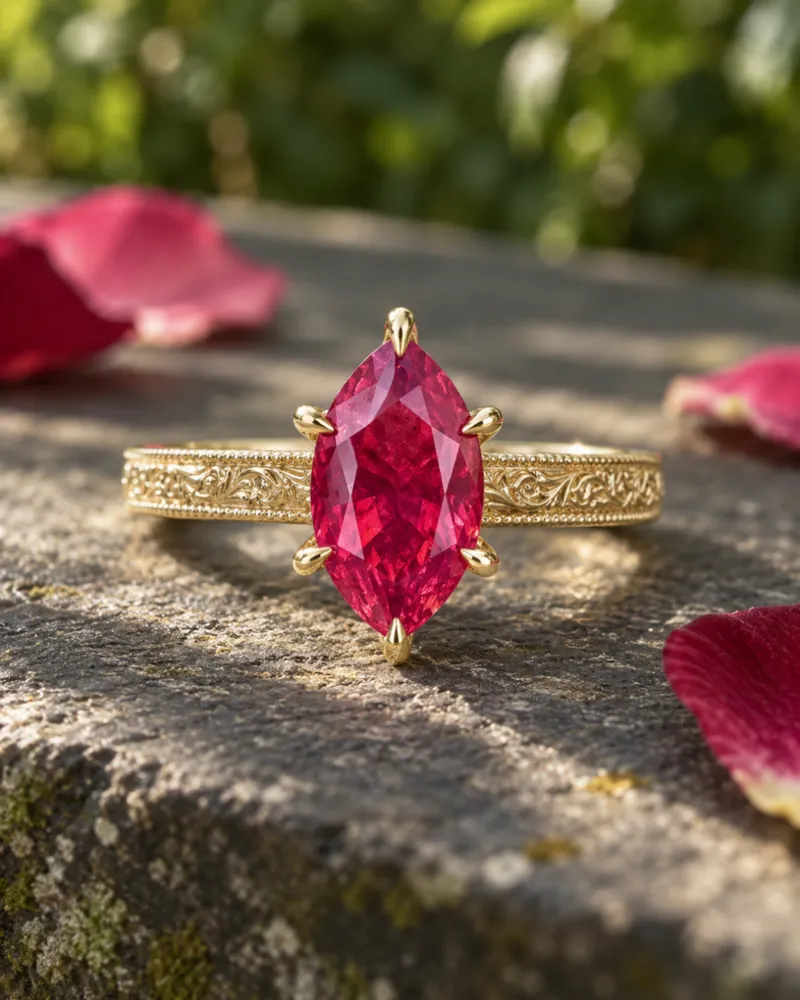
1Marquise
A long oval pointed at both ends. Searches are up 50% in a year.
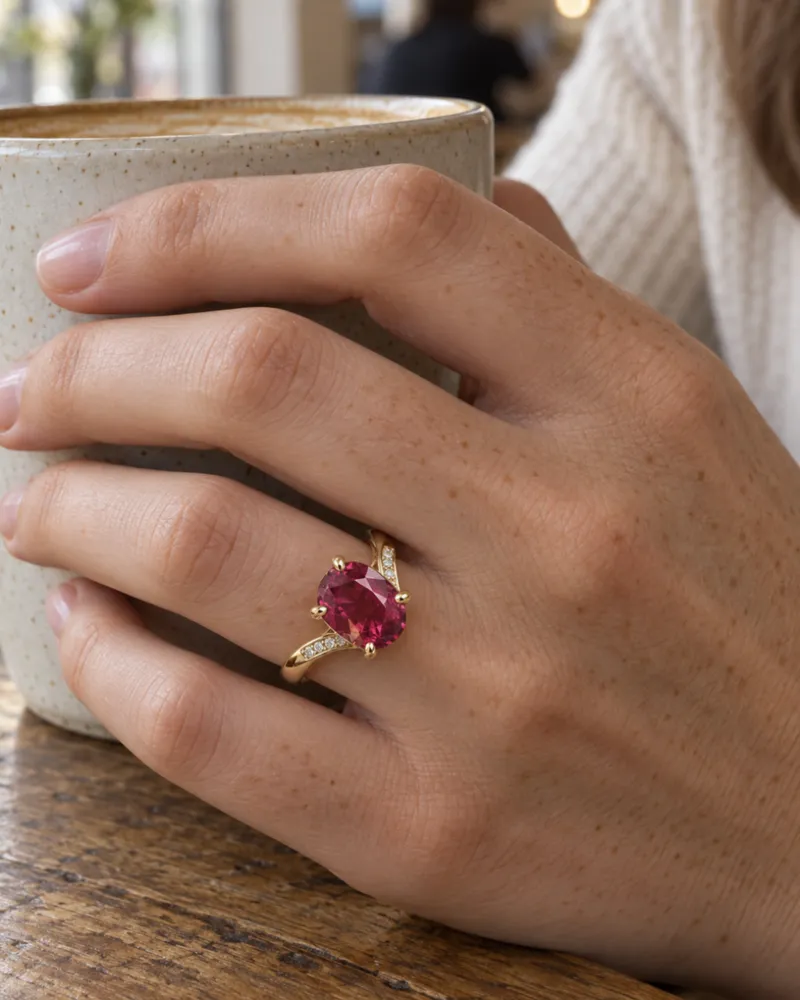
2Oval
A rounded, elongated outline with no corners.
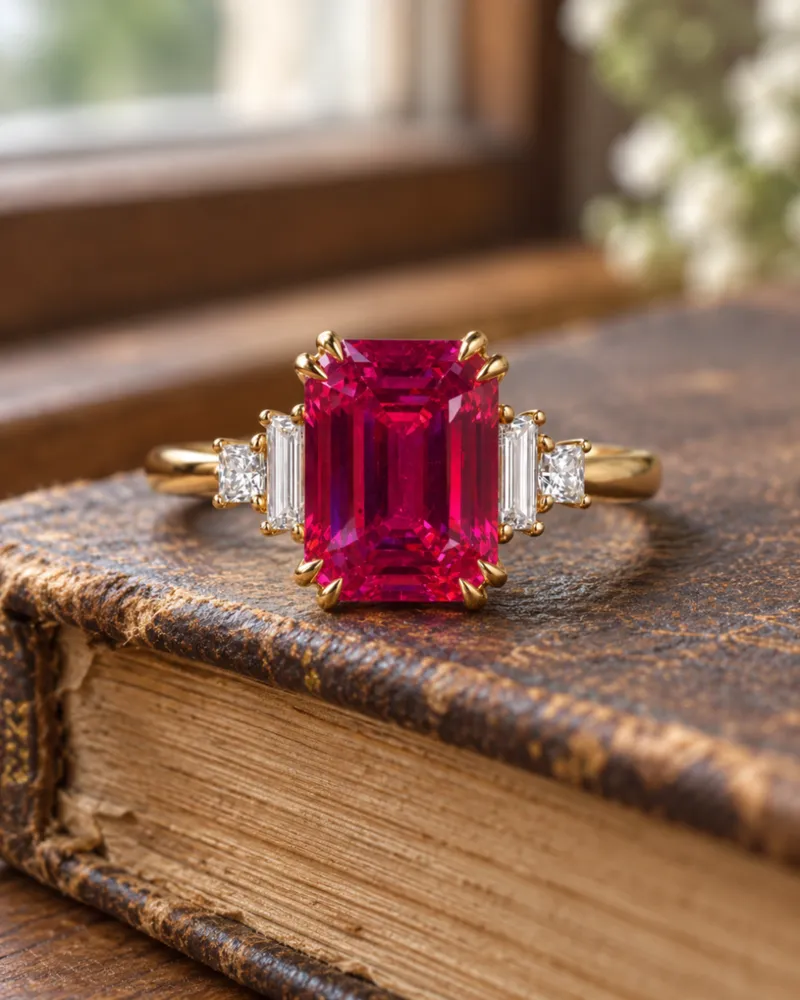
3Emerald cut
A rectangle with cut corners and long, parallel facets.
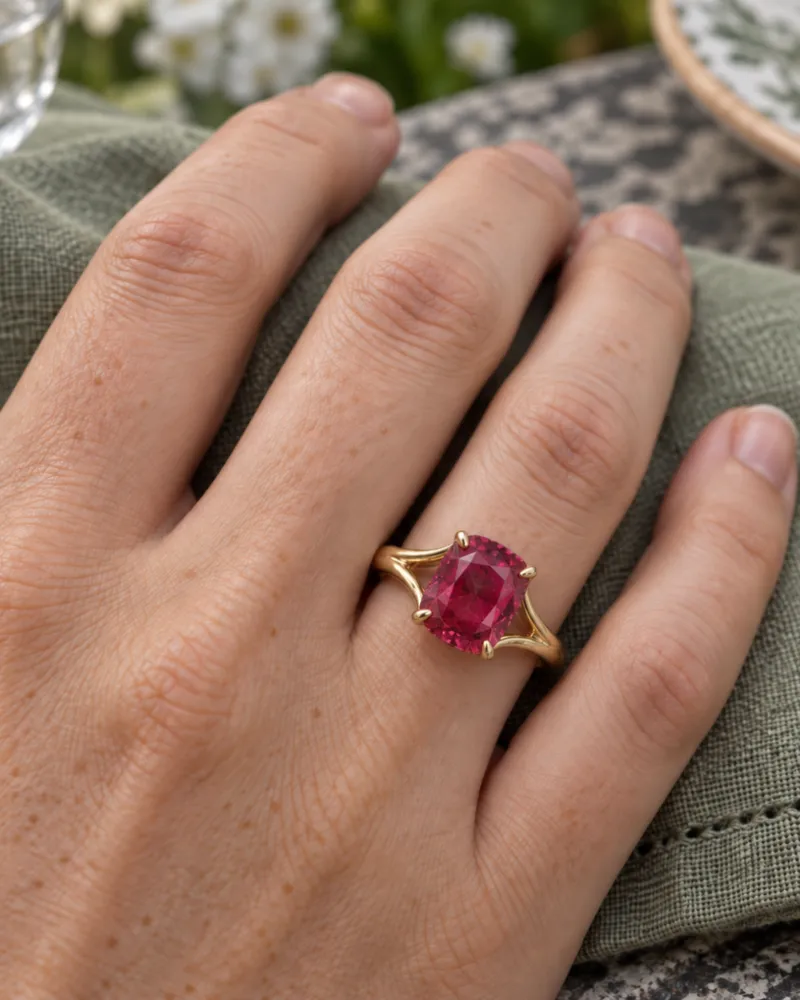
4Elongated cushion
A long rectangle with rounded corners and curved sides.
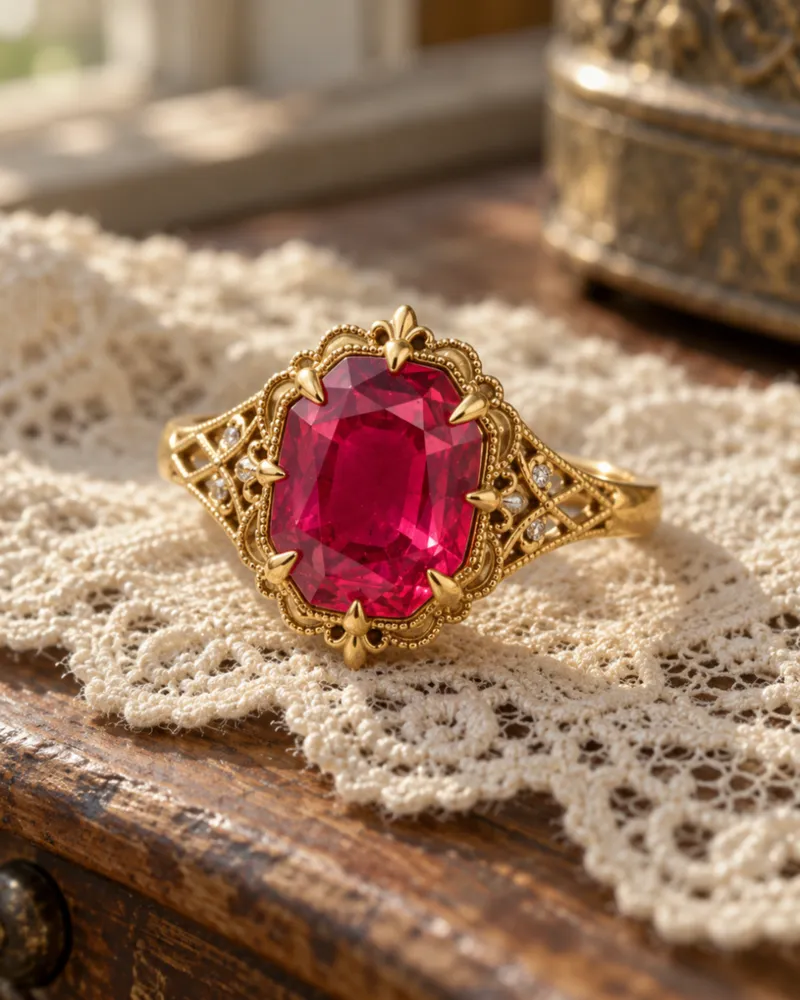
5Vintage
Openwork metal, a beaded edge and pierced shoulders, like an heirloom.
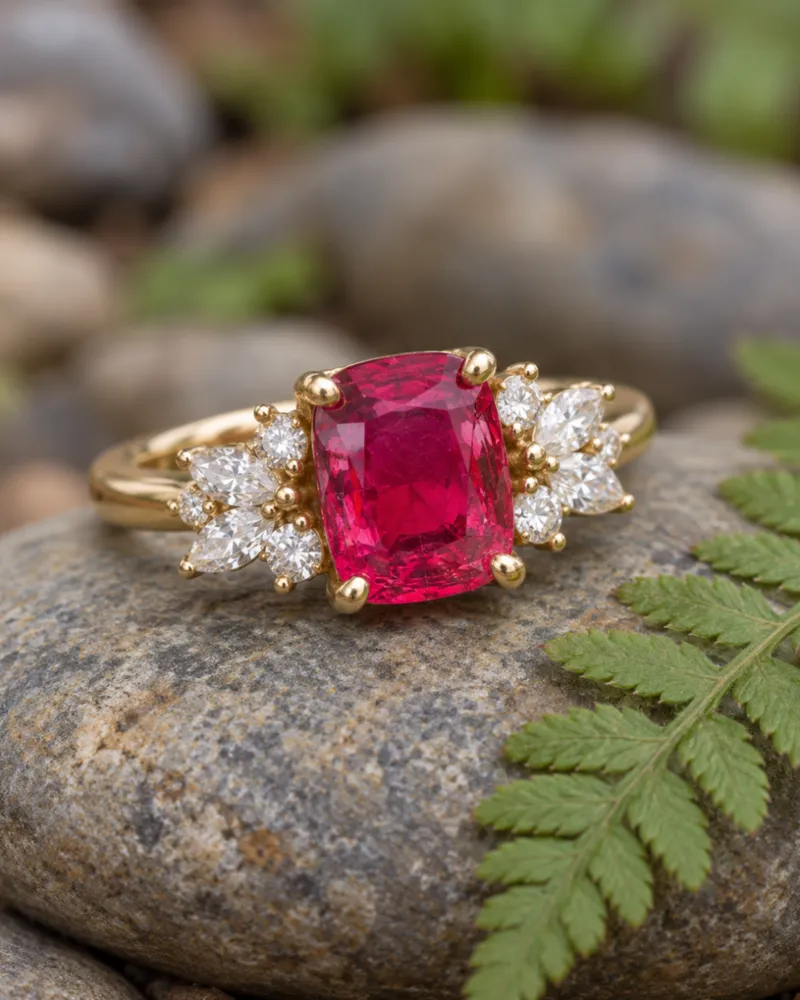
6Radiant
A rectangle with cropped corners and many small facets.
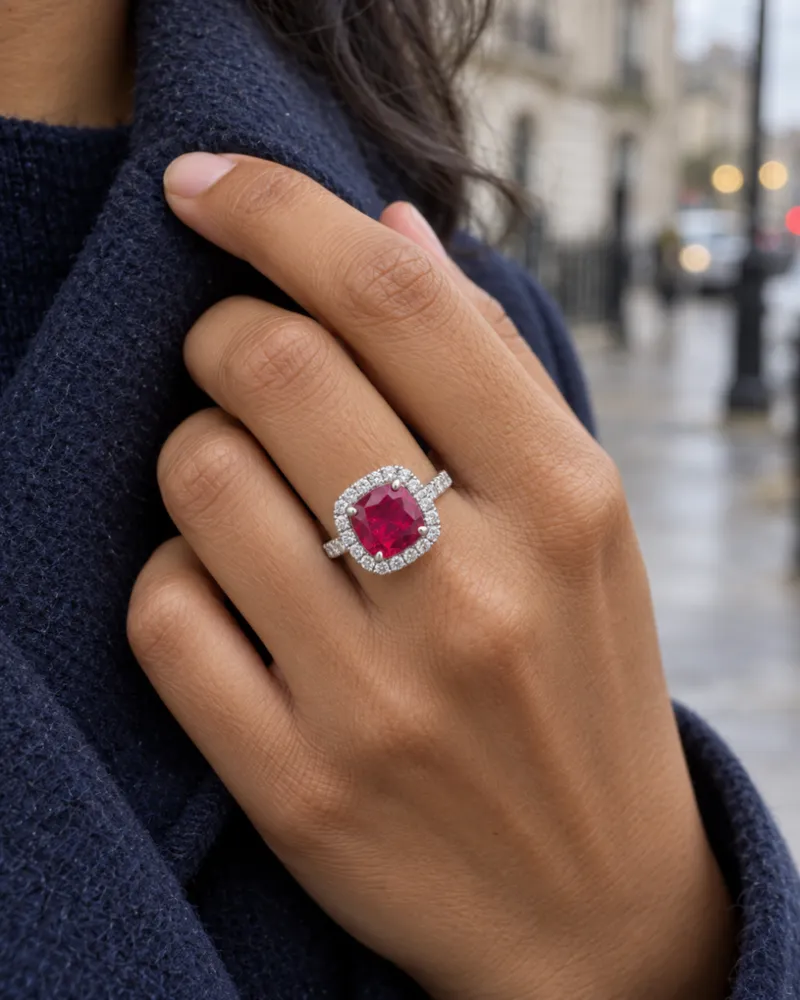
7Cushion
A soft square with rounded corners.
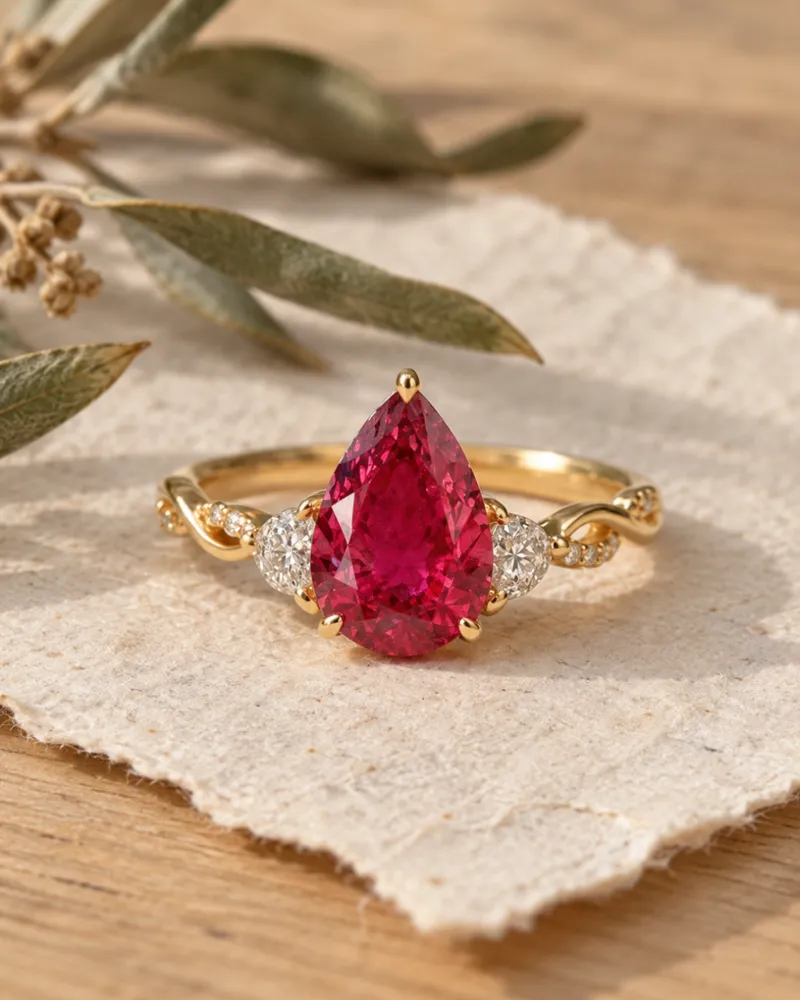
8Pear
A teardrop: one rounded end, one point.
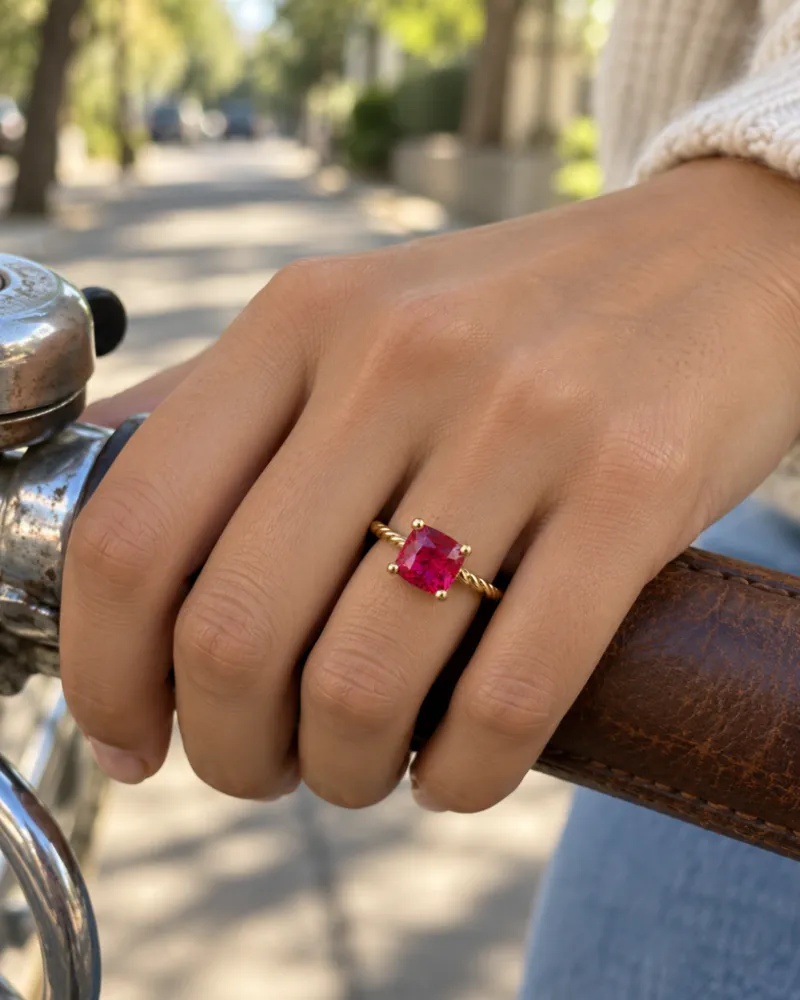
9Princess
A square outline with marked corners.
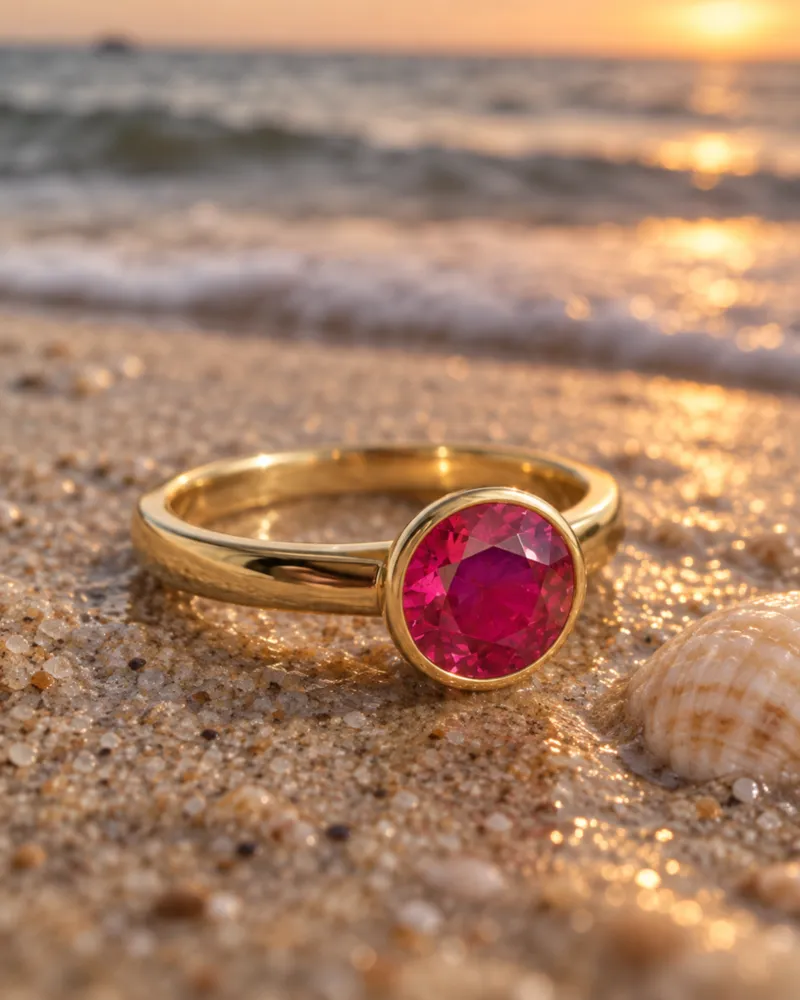
10Bezel
A rim of metal wraps the whole edge of the stone, with no prongs.
Whatever the style, the order stays the same: the ruby and its treatment first, the setting second.
What color should a ruby engagement ring be?
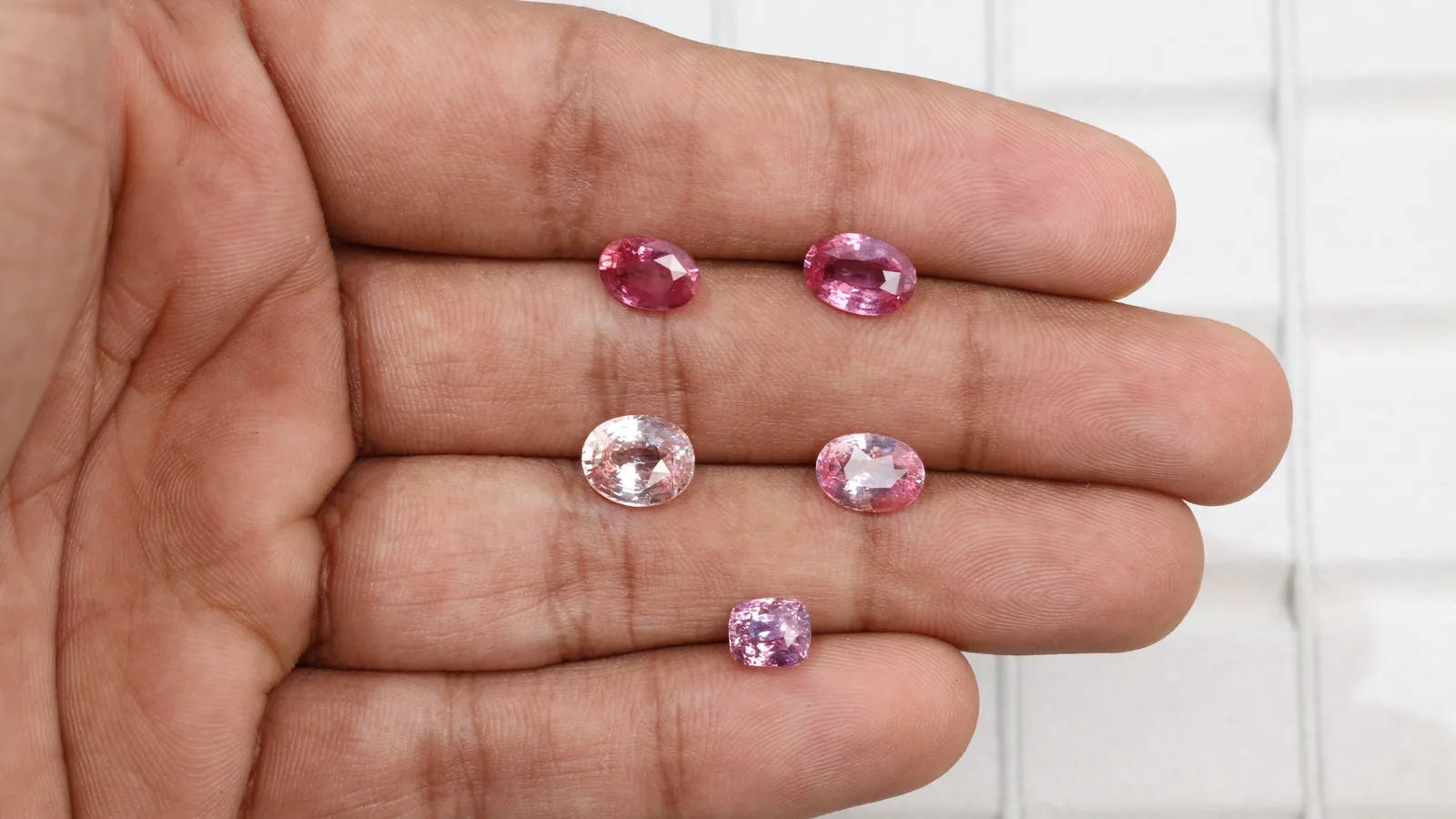
Color carries most of a ruby's value. The finest is a pure, vibrant red to slightly purplish red, medium to medium-dark in tone, with vivid saturation. Orangy or more purplish stones are worth less. Too dark, and the stone loses brilliance. Too light, and it's called pink sapphire, even when the color is vivid. Dealers still argue over where that line falls.
Slide to compare real stones
Drag the marker
Real stones from our catalogue, each sold with a laboratory report before it ships. Photos are not to scale. The scale is schematic: there is no fixed line between the two names.
At the top of that range, ruby can command the highest per-carat price of any colored stone, and our colored gemstone market statistics show where it sits. "Pigeon's blood" is the trade's old name for that top color: vivid, medium-dark red with a soft red glow. Treat it as a description, then read the treatment line. Our guide to what pigeon blood ruby really proves goes further.
Heated, glass-filled or untreated: which ruby belongs in a ring?
Assume heat. GIA's reference guide estimates that up to 95 percent of rubies undergo some form of heating, and the result is stable unless the stone is heated to very high temperatures again. A heated ruby is still a natural ruby.
Rarest
Widely accepted
UntreatedCommands a premium for its rarity.
No enhancement. Only a lab report can confirm it.
Standard heatThe market standard, fine for daily wear.
Heat improves color and can dissolve silk. Stable unless reheated to very high temperatures.
Disclosure vital
Lattice diffusionWorth less than heated rubies.
Heated with a coloring agent such as beryllium. The color can be shallow, and repolishing may remove it.
Lead-glass filledWorth less than heated rubies. Heat and chemicals can damage the glass. Never ultrasonic or steam. Not for a ring you wear every day.
Fractures and cavities filled with high-lead glass.
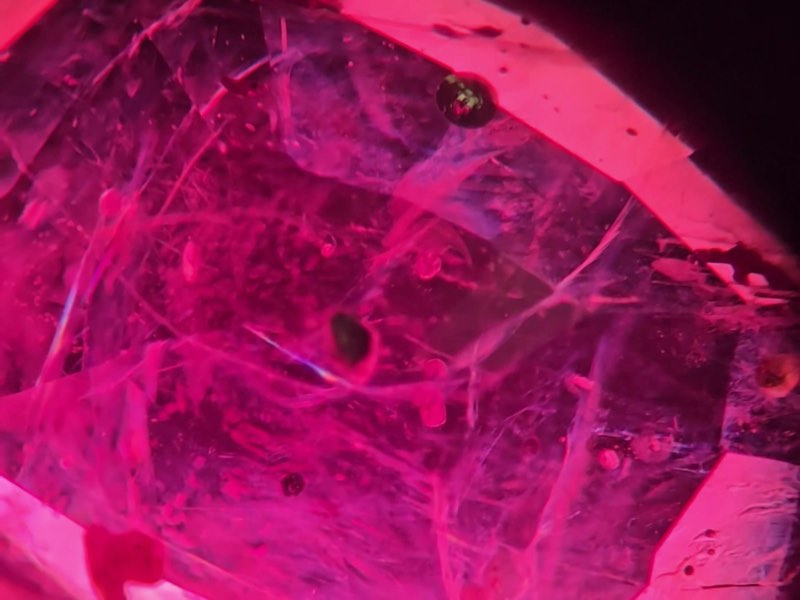
A ruby filled with glass, under the microscope. The glass fills fractures and cavities that reach the surface. It is a treatment and should always be disclosed to the buyer.
Needs the most care
Order, not price. The order of the last two rungs is our own editorial ranking, not a trade standard.
Will a ruby survive resizing and repairs?
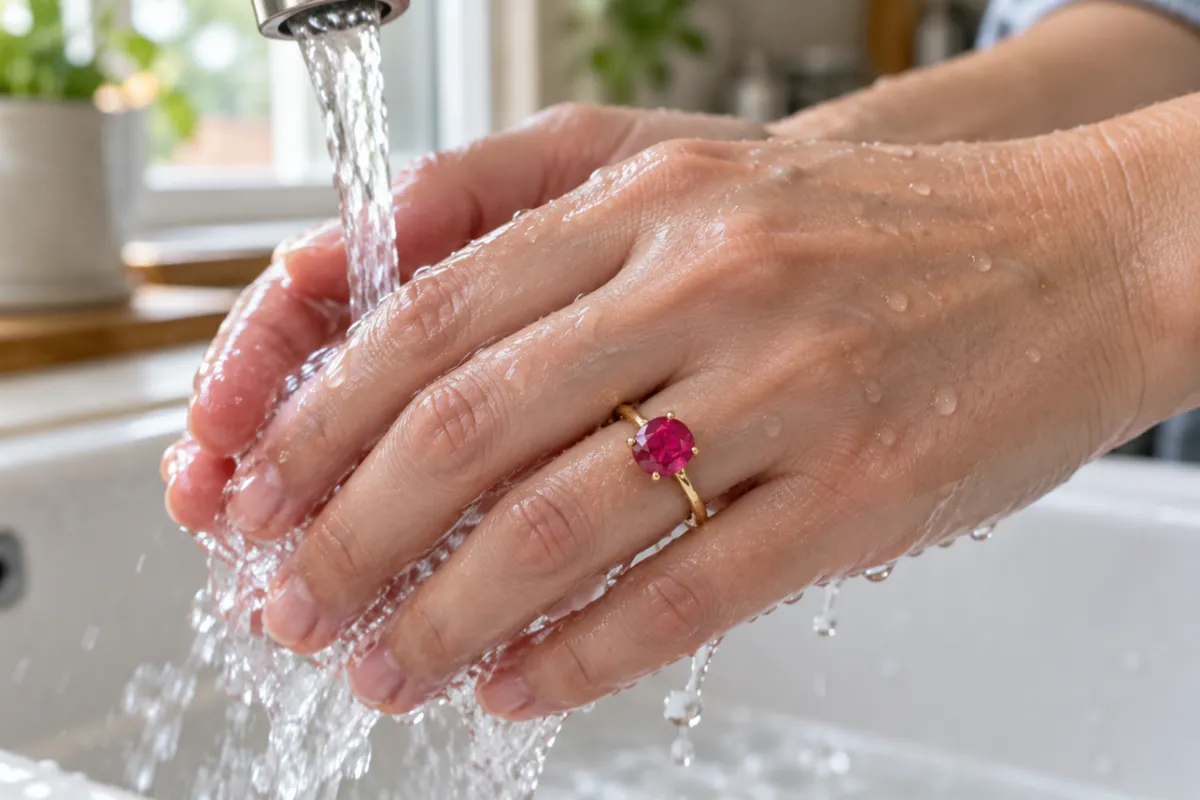
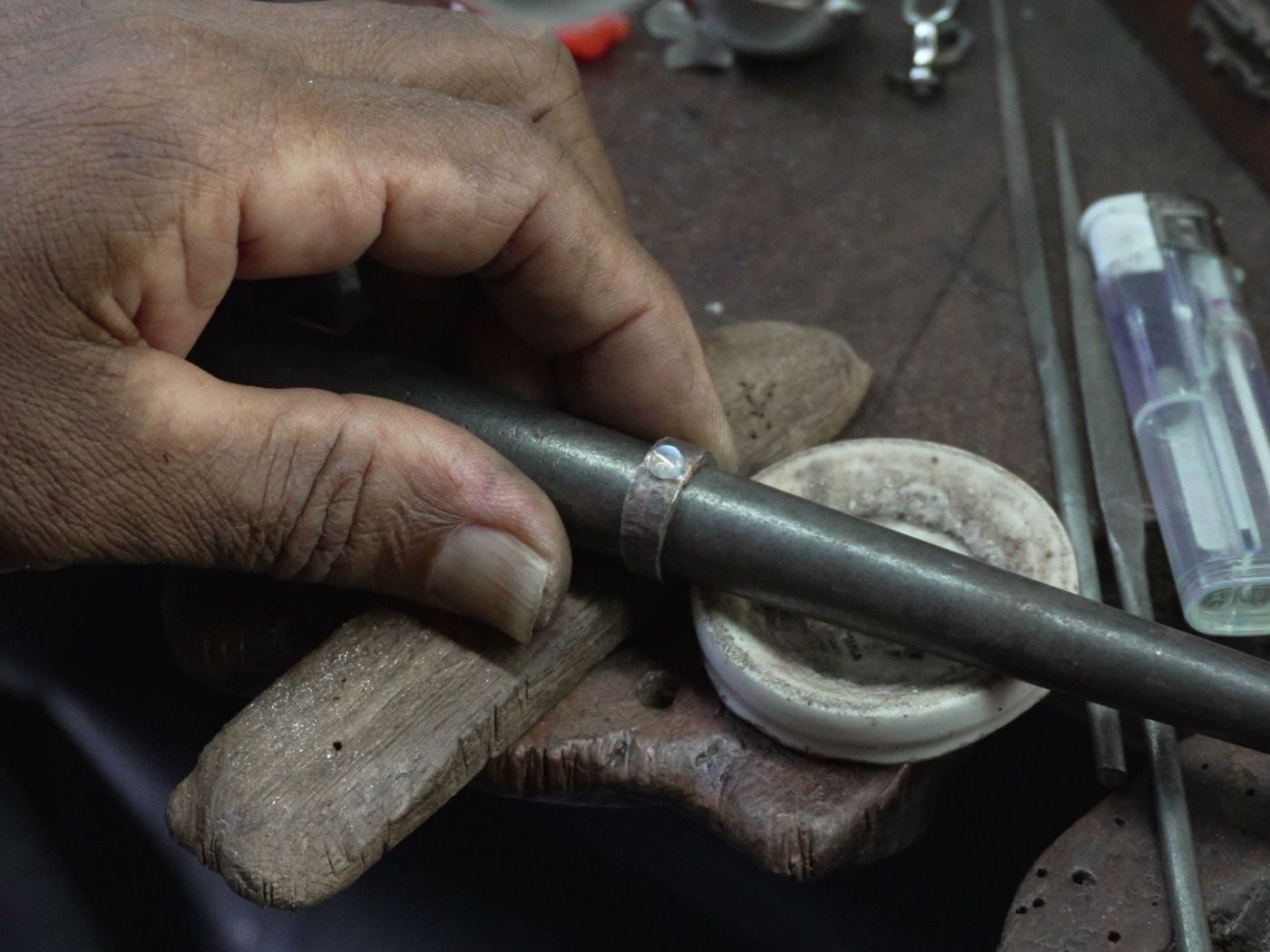
An engagement ring goes back to the bench: resizing, re-tipped prongs, a polish. Untreated and heated rubies are usually safe in ultrasonic and steam cleaners. Filled stones never are, and high heat can damage or destroy fracture and cavity fillings.
What the bench can do to your ruby
General care rules for ruby, not a guarantee for one stone. Show the jeweler the lab report before any work starts.
One trap catches even untreated rubies. GIA's reference guide warns that soldering flux containing boron, and firecoat made with boric acid powder, will etch the surface. So tell the jeweler what the report says before any work starts.
Which setting suits a ruby engagement ring?
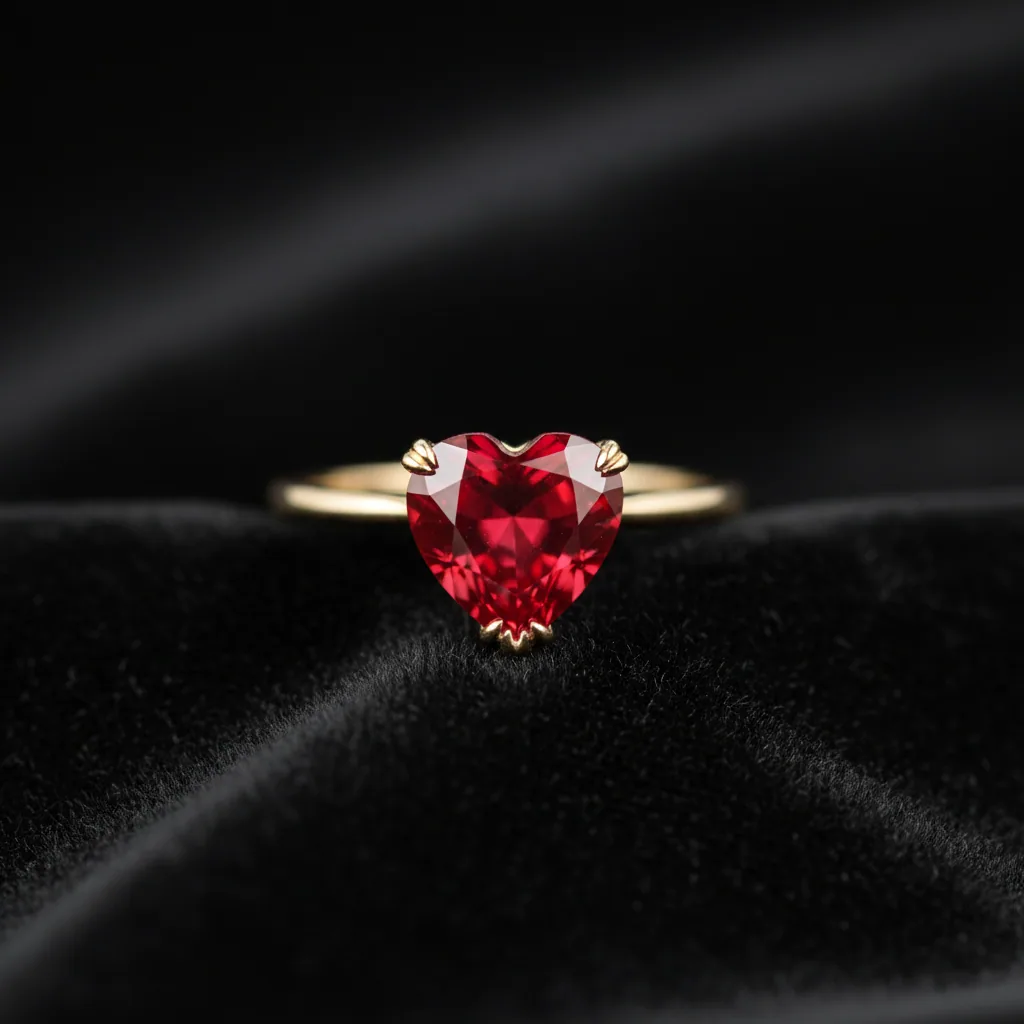
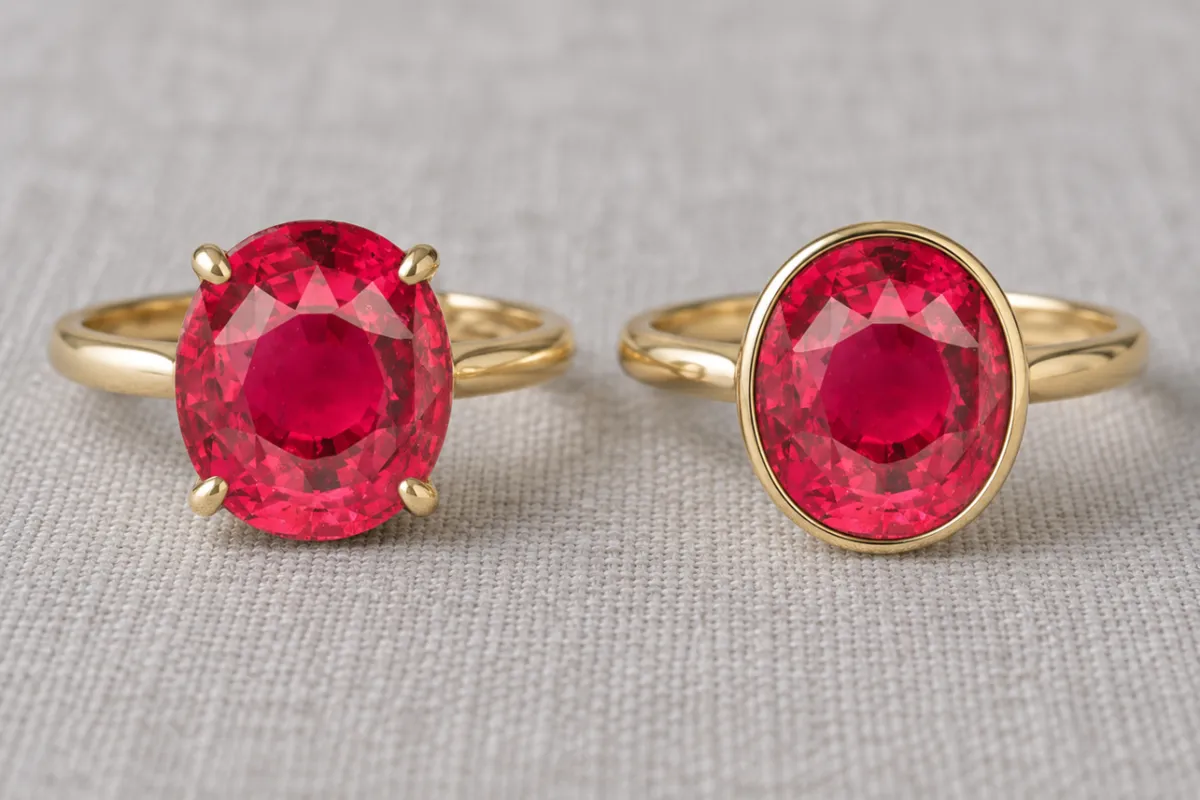
Ruby is tough enough for prongs, which leave most of the stone exposed and show it best. Prongs wear, though: GIA's 2026 guide to ring settings notes they may need re-tipping, meaning worn tips rebuilt with new metal. A bezel protects the whole perimeter and offers excellent resistance to chips and everyday wear, which suits hands that work. On a pear or marquise, V-shaped prongs wrap the points to reduce chipping, and a heart ruby ring needs the same care at its tip.
Size goes by millimeters, not carats. Ruby is denser than diamond (specific gravity 4.00 against 3.52), so a 1-carat ruby looks smaller than a 1-carat diamond of the same cut. One 1.03-carat oval ruby we measured came to 6.37 by 4.99 mm.
Real stones from our catalogue, drawn to the same scale from our measurements.
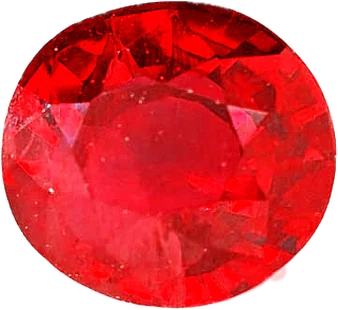
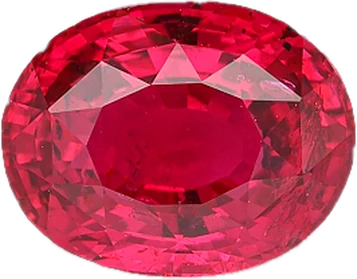
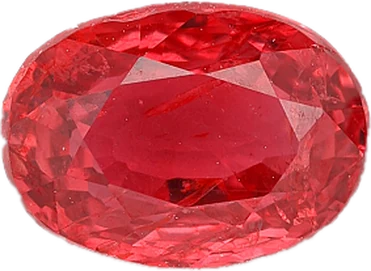
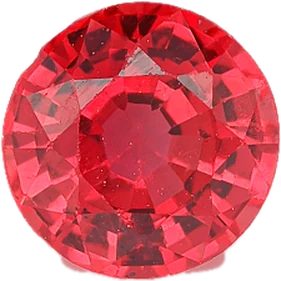
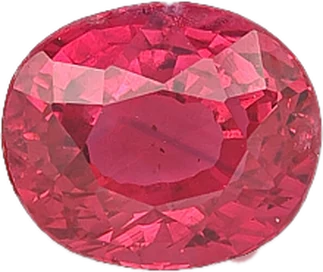
Three ovals of about 1 carat: 6.0 to 6.6 mm long and 4.8 to 5.5 mm wide.
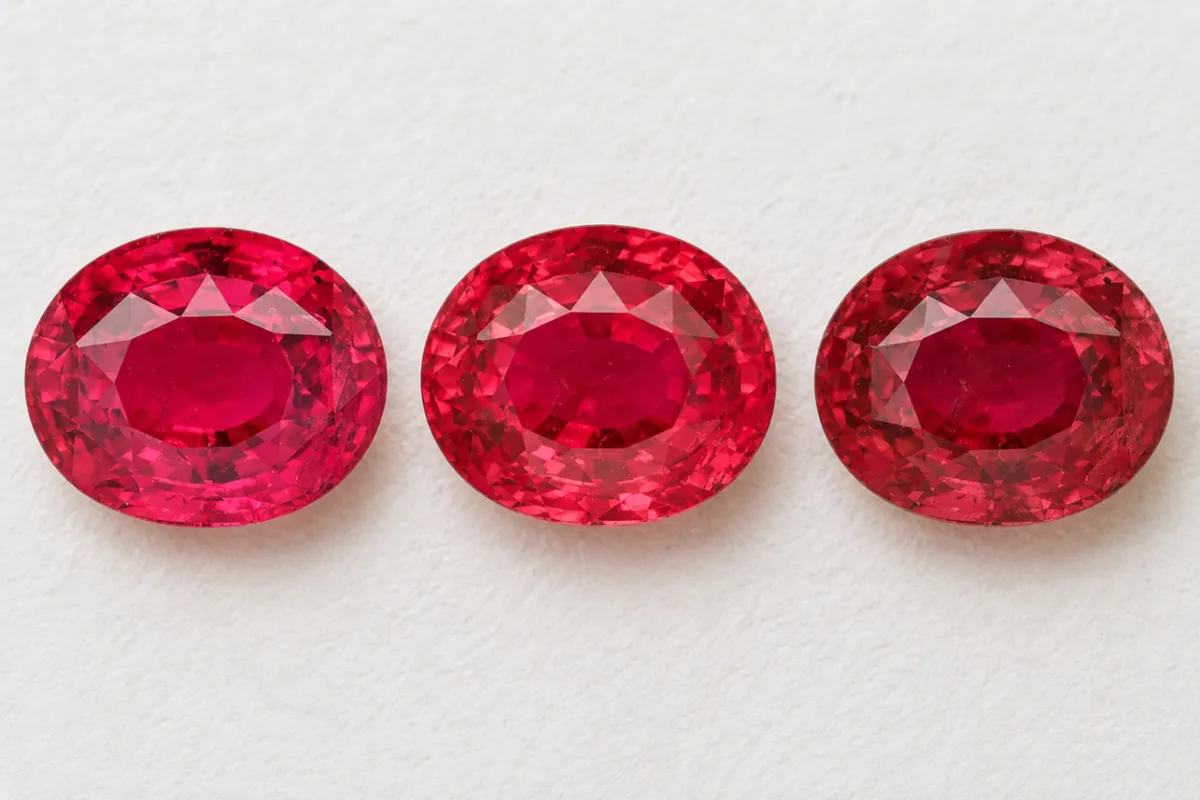
Three rubies from our catalogue, from 0.62 to 1.11 carats: one round, two ovals.
Stones are drawn in proportion to their measured length. On a screen this is not life size. Stock changes, so these are examples.
Ruby, red spinel, garnet or lab-grown: what's in the ring?
| Stone | Hardness, toughness | How it differs |
|---|---|---|
| Ruby | 9, excellent | Doubly refractive corundum |
| Red spinel | 8, good | Singly refractive, a fine stone itself |
| Red garnet | 7 to 7.5, fair to good | Singly refractive |
| Lab-grown ruby | 9, same as ruby | Same material, grown in a lab |
Red spinel isn't a fake: several famous "rubies" in royal jewels turned out to be red spinel. The only problem is a wrong label.
Shopping for a vintage ruby engagement ring? Age proves nothing. Synthetic ruby goes back to the late 1800s and reached the market in 1902. Doublets, a synthetic ruby base under a thin natural top, are often bezel-set to hide the join. Lab-grown ruby has essentially the same composition and properties as natural, and GIA calls telling them apart one of gemology's hardest challenges. Our guide to identifying a natural ruby shows what a loupe can and can't settle.
What should the lab report on a ruby say?
- Identity: natural ruby (corundum), not synthetic.
- Treatment: no indication of heating, heated, or filled.
- Origin: optional. On an untreated stone it can move the price.
- Color term: a description, read next to the treatment line.
A "certificate" written by the seller isn't a lab report. With us, the report comes after you buy: the stone goes to an independent outside laboratory, and the report ships with it. Details are in our certification policy.
Quick answers
Can you wear a ruby engagement ring every day?
What does a ruby engagement ring symbolize?
Is a lab-grown ruby a real ruby?
How much does a ruby engagement ring cost?
Is red spinel a good alternative to a ruby?
Start with the stone
Pick the color you love, confirm the treatment, then choose the setting that protects it. Browse loose rubies from our stock, or describe the one you want and we'll look for it. Then we make the ring around it, at your size.