What Is the Birthstone for March? Aquamarine & Bloodstone (2026)
March has two birthstones. Aquamarine is the modern, popular choice; bloodstone is the ancient tradition. Here is what each one is, what it costs, and how to pick the right one.
What is the birthstone for March?
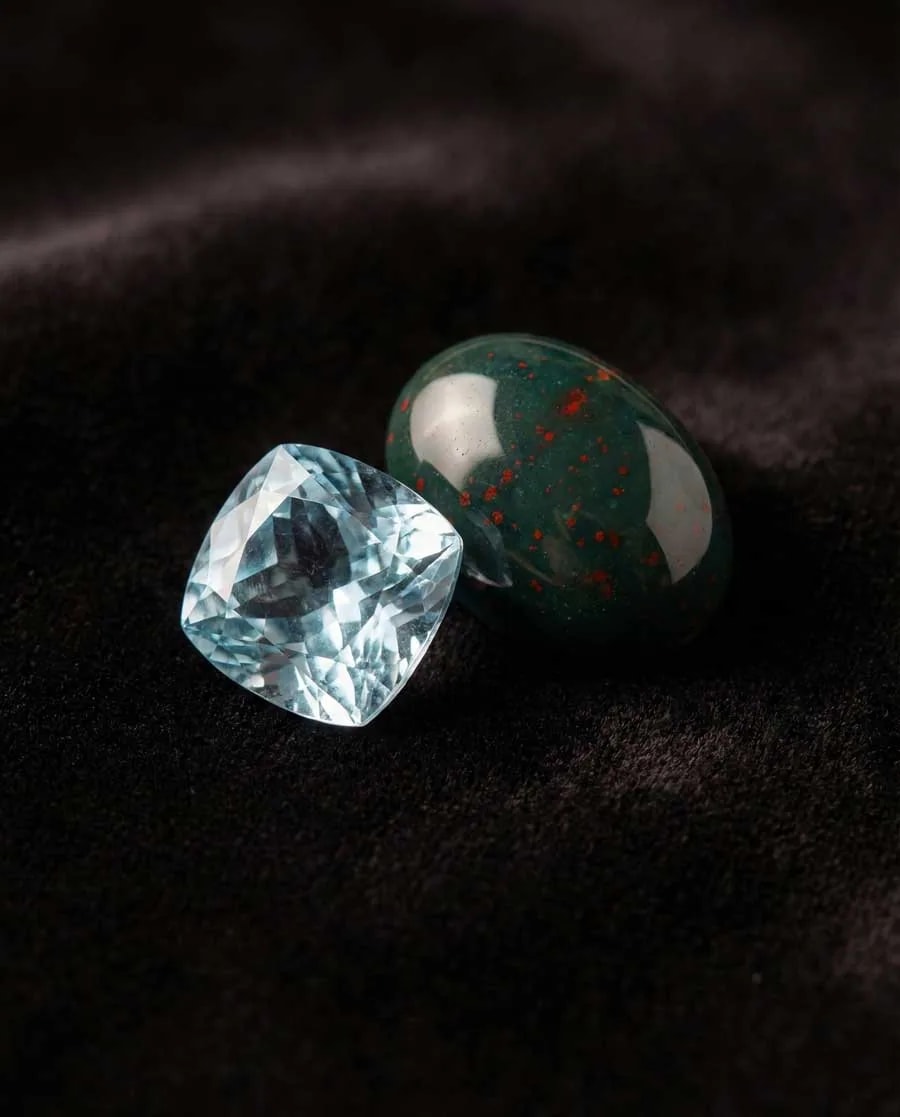
March has two birthstones: aquamarine and bloodstone. Aquamarine, a sky-blue beryl, is the modern and by far the more popular choice for jewelry. Bloodstone, a deep-green quartz flecked with red, is the older, traditional stone. Most people today wear aquamarine; bloodstone appeals to those who want history and character over sparkle.
What Is the Birthstone for March?
March has two birthstones: aquamarine and bloodstone. Aquamarine, a clear sky-blue beryl, is the modern stone jewelers stock and most March babies wear. Bloodstone, an opaque green stone flecked with red, is the ancient one. Here is the part that actually matters when you buy: aquamarine runs $50 to $500+ per carat and handles daily wear, while bloodstone runs $5 to $50 and scratches more easily. Same month, very different stones and budgets.
So which is the real one? Both are official. The modern list, standardized in 1912 and still used by the trade, keeps aquamarine as the headline stone and bloodstone as its traditional partner. Pick by feeling, not by rulebook: a clear blue gem, or a grounded green-and-red one.
| Attribute | Aquamarine (modern) | Bloodstone (traditional) |
|---|---|---|
| Color | Sky blue to blue-green | Dark green with red spots |
| Mineral | Beryl (emerald's family) | Chalcedony (a quartz) |
| Mohs hardness | 7.5 to 8 | 6.5 to 7 |
| Look | Transparent, faceted | Opaque, cut as cabochon |
| Typical price | $50 to $500+ per carat | $5 to $50 per carat |
| Main sources | Brazil, Madagascar, Pakistan | India, Brazil, Australia |
This guide covers both stones in depth: meaning, quality, real prices, plus March's birth flower and zodiac signs. Prefer a different month? See our February birthstone guide or the April birthstone guide.
Shopping for a March birthstone now? Browse our certified aquamarine collection, each with an independent lab report.
Aquamarine: The Modern March Birthstone
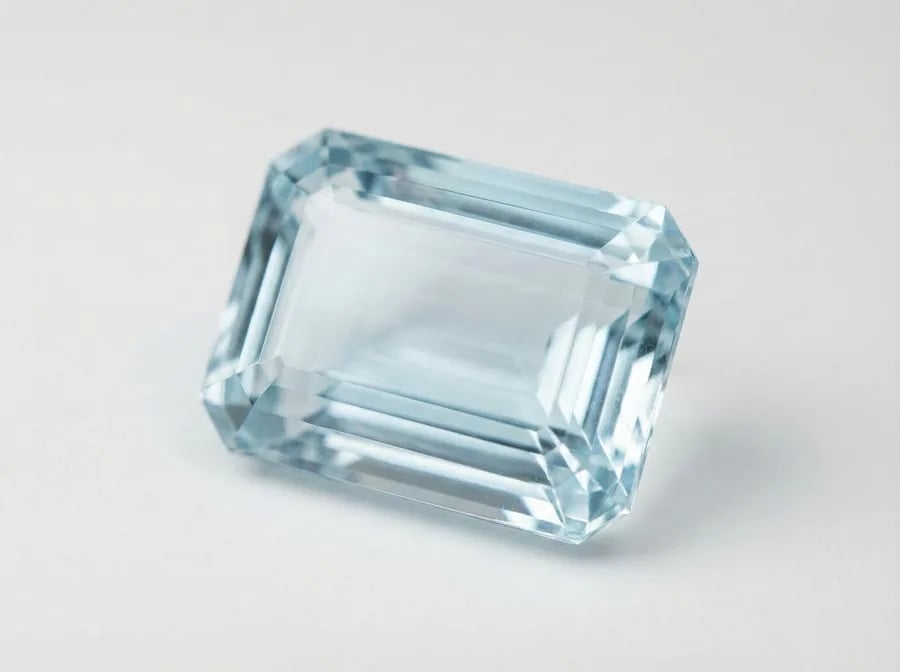
Aquamarine is a blue variety of beryl, the same mineral species as emerald and morganite. Its name comes from the Latin for seawater, and that is exactly the color range: pale sky blue through to a stronger blue-green. Per GIA, aquamarine owes its color to traces of iron, through two charge-transfer processes that together produce its hue.
It is a transparent stone, usually cut into clean faceted shapes such as emerald cuts, ovals and pears. Aquamarine is also pleochroic, meaning it shows near-colorless and strong blue in different crystal directions, so cutters orient the stone to keep the best blue facing up. It scores 7.5 to 8 on the Mohs scale (GIA), hard enough for rings, earrings and pendants with normal care.
Because it is part of the beryl family, aquamarine shares its DNA with the May birthstone, emerald, though the two behave very differently in the setting bench.
Aquamarine Color, Clarity and Quality: What Sets the Price
Color drives the value of aquamarine. Per GIA, the most-prized color is a moderately strong, medium-dark blue. Pale, washed-out stones are common and inexpensive; a saturated, even blue is what you pay a premium for. Watch the tone too, since very light aquamarine can look almost colorless in small sizes.
Most faceted aquamarine on the market is eye-clean, so visible inclusions are a real drawback rather than an expected feature. Cut matters more than people think: a well-proportioned stone returns light evenly, while a poorly cut one looks flat or shows a pale window in the center. Larger stones can actually cost less per carat above 25 carats, because big aquamarines are readily available and harder to set (GIA).
Here is the honest version. Two aquamarines of the same carat weight can differ in price by 5 to 10 times, purely on color saturation and cut quality. That is normal for colored stones, and it is why a certificate and your own eye matter more than the label.
Heated vs Unheated Aquamarine: What "Treated" Really Means
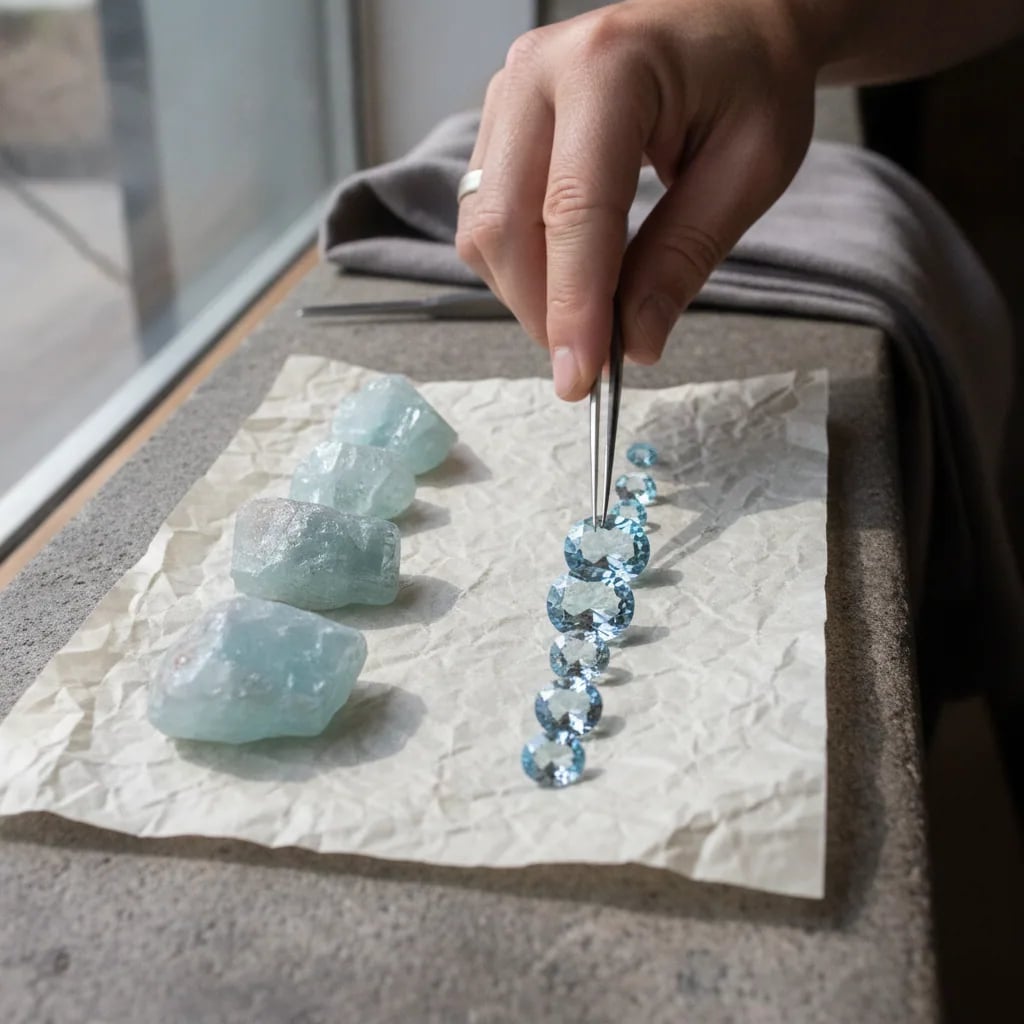
Here is the thing most sellers skip: nearly all the blue aquamarine you see in jewelry has been heat-treated. Per GIA, heat treatment removes the yellow color component from bluish-green or greenish-yellow rough and leaves a purer blue. Stones are typically heated between 250C and 700C, the treated color appears permanent, and the treatment is undetectable in the finished gem.
That is not a scandal, it is the market standard, and it does not make the stone fake. What matters is disclosure. Some dealers deliberately leave greenish-blue aquamarine untreated and promote that natural color as a point of difference. Both are legitimate, as long as you know which one you are buying.
We source Ceylon sapphire and spinel, not aquamarine, but the rule is the same across every colored stone we handle: treatment should be stated in writing, never assumed. If you want the full logic, see our guides on unheated versus heated stones and what a gemstone certificate actually proves.
Aquamarine Meaning and Symbolism
Aquamarine has always been the sailor's stone. Roman and Greek seafarers carried it for safe passage and calm waters, and that link to the sea still shapes its meaning today: serenity, clarity of mind, and steady courage under pressure. It is the gem people reach for when they want something that feels quiet rather than loud.
It is also the traditional gift for a 19th wedding anniversary, which keeps it in steady demand well beyond March birthdays. If the person you are buying for values calm over flash, aquamarine says it without shouting.
Bloodstone: The Traditional March Birthstone
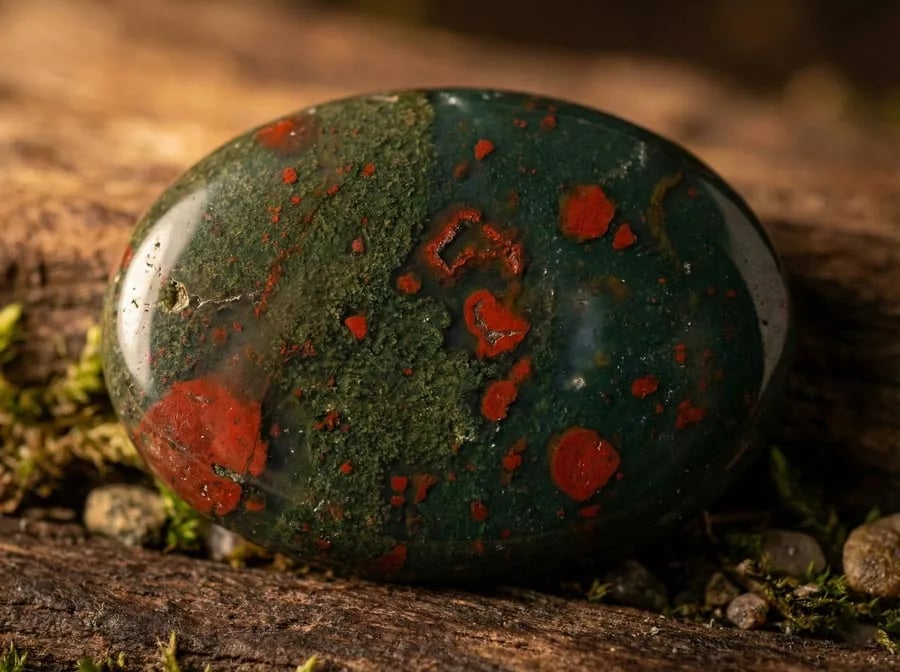
Bloodstone is the ancient March birthstone, and it could not look more different from aquamarine. It is a variety of chalcedony, a cryptocrystalline quartz, described by GIA as semitranslucent to opaque dark green with red to brownish-red spots. Those red flecks are iron oxide, and they gave the stone its dramatic name. It is also called heliotrope.
It scores 6.5 to 7 on the Mohs scale (GIA), softer than aquamarine, and because it is opaque it is cut into cabochons, beads and signet-style pieces rather than faceted gems. Historically it carried heavy symbolism: vitality, protection, and strength, and in medieval Europe it was linked to sacrifice and courage.
Most bloodstone comes from India, with additional material from Brazil and Australia. It is inexpensive, characterful, and increasingly chosen by people who want a birthstone with a story rather than a sparkle.
March Birthstone Prices: What You Will Actually Pay
The two March stones sit at opposite ends of the price scale. Bloodstone is one of the most affordable birthstones you can buy. Aquamarine ranges from budget-friendly to genuinely valuable, depending entirely on color and size.
For reference, GIA reported wholesale prices for good-quality 3-carat aquamarine ranging from about $50 to $220 per carat, with extra-fine quality reaching $425 to $600 per carat. At retail, commercial aquamarine often lands in the $50 to $200 per carat range, while top blue stones climb well past $500 per carat. Bloodstone typically costs $5 to $50 per carat, and you are paying for the material and the cutting more than for rarity.
- Everyday aquamarine: $50 to $200 per carat, light-to-medium blue, eye-clean.
- Fine aquamarine: $300 to $600+ per carat, saturated medium-dark blue.
- Bloodstone: $5 to $50 per carat, priced on quality of the green and the red spotting.
Our one honest warning: with colored stones, the biggest price trap is paying a blue-stone premium for a pale stone. Judge the color first, the certificate second, the name last.
The March Birth Flower: Daffodil
March's birth flower is the daffodil, the first bloom of spring. Its meaning fits the month perfectly: new beginnings, renewal, and optimism after winter. The jonquil, a fragrant member of the same narcissus family, is sometimes named as a secondary March flower.
It makes aquamarine an easy pairing gift. A clear blue stone and a bright spring flower both carry that same message of a fresh start, which is why March babies often get the two together for birthdays and christenings. If you are buying a birthstone-and-flower present, the daffodil is the natural companion to the March gem.
March Zodiac Signs: Pisces and Aries
March spans two zodiac signs. Pisces runs from February 19 to March 20, and Aries from March 21 to April 19. So a birthstone gift for a March baby depends on the exact date.
Aquamarine sits naturally with Pisces, a water sign, since the stone's whole identity is the sea, calm, and intuition. Bloodstone, with its red energy and long link to courage and vitality, suits fiery Aries better. If you want the gift to feel personal, match the stone to the sign: serene blue aquamarine for a Pisces, grounded bloodstone for an Aries. Neither rule is binding, but it makes the choice feel considered.
Aquamarine or Bloodstone: How to Choose
Choose by three things: budget, look, and how you will wear it. If you want a transparent, sparkling stone for a ring or pendant, aquamarine is the obvious pick. If you want something bold, affordable, and full of history, bloodstone delivers character for a fraction of the price.
One durability note from experience. Aquamarine at 7.5 to 8 is fine for most jewelry, but if you want a blue stone for a ring worn every single day, sapphire at 9 on the Mohs scale is the tougher long-term choice. We say that as sapphire sourcers, so weigh it accordingly, but the physics is real. If daily-wear hardness matters most, we set out where sapphire sits on the Mohs scale, and why toughness is a separate question before you decide.
Still weighing it up? Our guide to choosing birthstone jewelry walks through settings, metals and everyday practicality for any birth month.
Caring for Your March Birthstone Jewelry
Aquamarine is easy to live with. Clean it with warm water, mild soap and a soft brush. Ultrasonic and steam cleaning are generally safe unless a stone has been fracture-filled, so ask before you use them. Keep it away from hard knocks, since even a 7.5 to 8 stone can chip on a sharp edge.
Bloodstone needs a gentler hand. It is softer and slightly porous, so skip the ultrasonic, avoid harsh chemicals and perfumes, and just wipe it with a damp cloth. Store both stones separately from harder gems like sapphire and diamond so they do not get scratched. For a full routine across all your pieces, see our jewelry care and maintenance guide.
Frequently Asked Questions
Choosing Your March Birthstone
March gives you a real choice: aquamarine's clear spring-water blue, or bloodstone's grounded green-and-red character. Aquamarine is the modern, versatile, sparkling pick; bloodstone is the affordable, historic one. There is no wrong answer, only the stone that fits the person.
We source Ceylon sapphire and spinel in Sri Lanka rather than aquamarine, but the same honesty applies to every colored stone: judge the color first, insist on disclosed treatment, and let the certificate confirm what your eye already sees. That is how you avoid overpaying for a name.