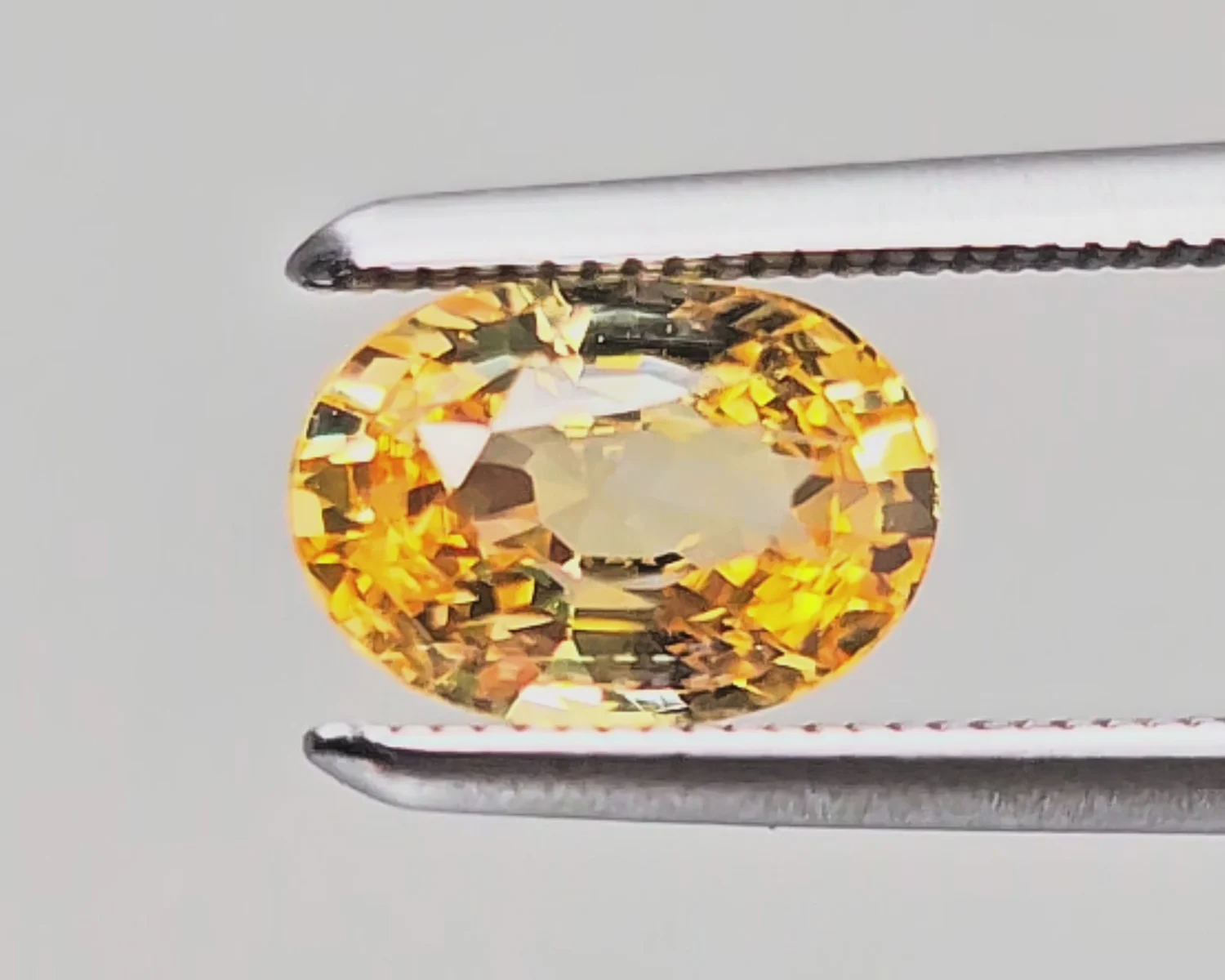
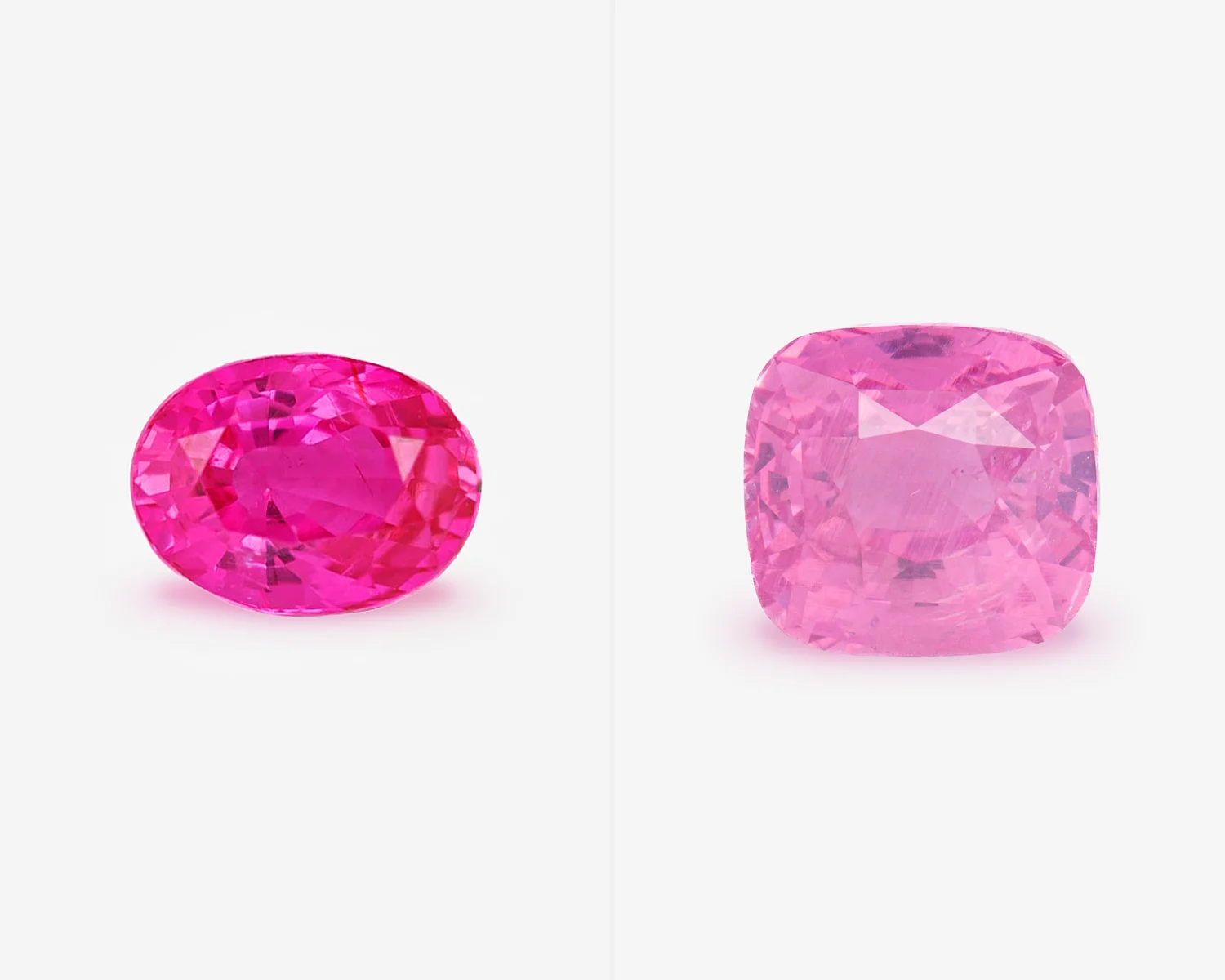
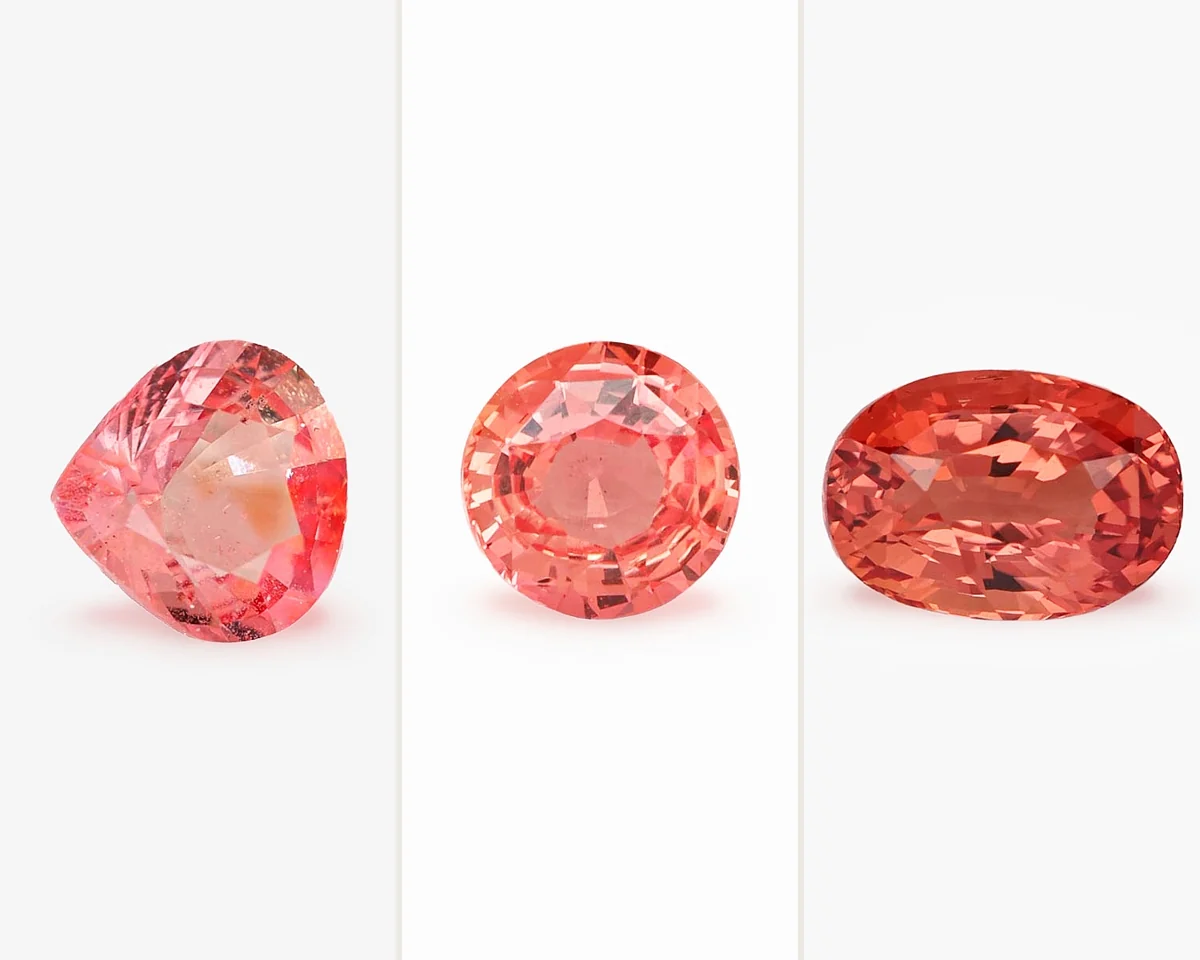
Orange Gemstones: Names, Shades and Which Last in a Ring
The orange stones that survive daily wear, when a brownish orange is a grade and when it is a taste, and which oranges fade or owe their color to a treatment.

For an orange stone in a ring you wear every day, choose orange sapphire or orange spinel. Spessartite garnet and citrine are good ring stones, a step softer. Keep fire opal, sunstone, amber and coral for earrings and pendants. Then ask two questions: is the orange bright or brownish, and does its color come from a treatment that fades?
| Orange stone | Hardness (Mohs) | Everyday ring? |
|---|---|---|
| Orange sapphire | 9 | Yes |
| Orange spinel | 8 | Yes |
| Spessartite garnet | 7 to 7½ | Yes, in a protective setting |
| Citrine | 7 | Yes |
| Carnelian | 6½ to 7 | Yes, as a cabochon |
| Imperial topaz, zircon | 6 to 8 | With care: cleavage, brittleness |
| Fire opal, sunstone, amber, coral | 2 to 6½ | Earrings and pendants |
Which Gemstones Are Orange?
Orange sits between red and yellow precious stones. In sapphire alone, it runs from soft peach to vivid tangerine.
- Transparent oranges. Orange sapphire goes from yellowish orange to reddish orange, in light to dark tones; when its orange is mixed with pink, it becomes padparadscha (more in pink precious stones). Spessartite garnet can be a bright, lively orange; hessonite, another garnet, is a browner orange also known as “cinnamon stone”. Vivid orange spinel carries the trade name flame spinel.
- Translucent and opaque oranges. Carnelian, a chalcedony, goes from yellowish orange to orangy red. Amber, a fossil resin, and coral (coral and its colours) both come in oranges.
- Rarities. A pure orange, with no hint of brown, is probably the rarest color in diamond.
Eight orange gemstones, one picture each
Grouped by kind of orange. The last line says whether it suits a ring worn every day.
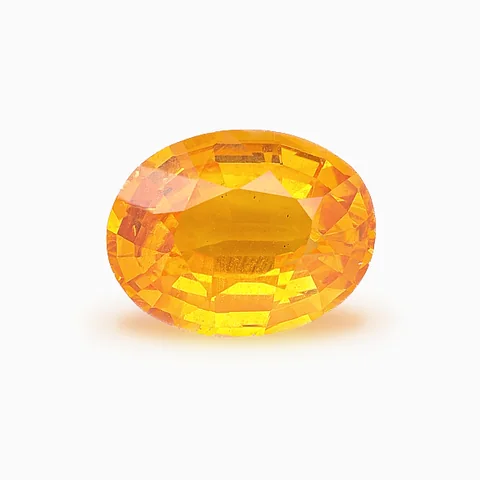
Orange sapphire
Transparent orange
- Everyday ring
- Yes
This one, 2.02 ct, is from our collection.
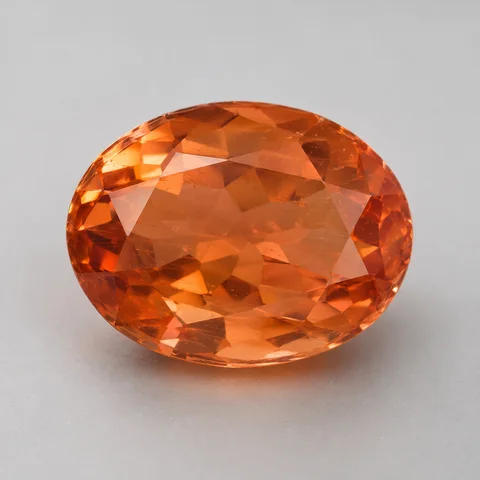
Imperial topaz
Transparent orange
- Everyday ring
- With care: cleavage, brittleness
For most of the trade, “imperial topaz” is a reddish orange, though the name is often stretched.
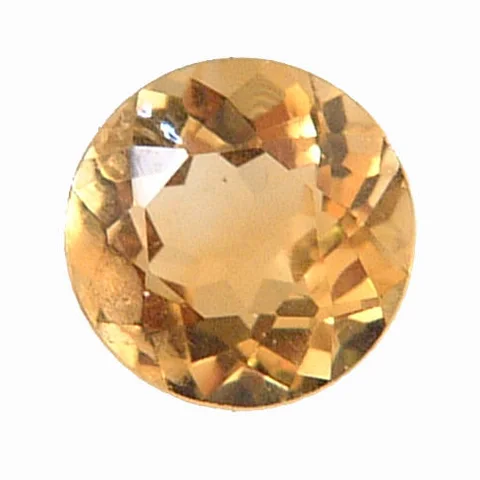
Citrine
Transparent orange
- Everyday ring
- Yes
Citrine reaches brownish orange.
Photo: Darla Sondrol, CC0, via Wikimedia Commons (cropped).
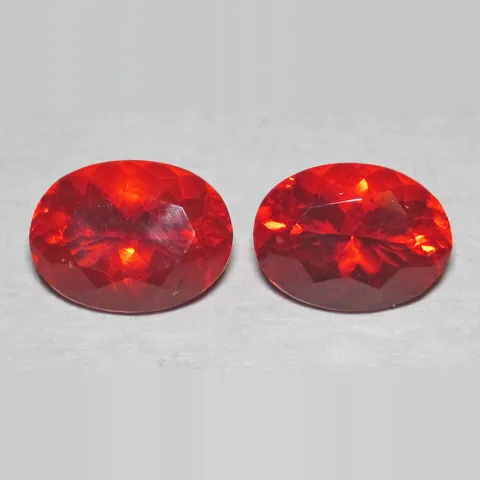
Fire opal
Transparent orange
- Everyday ring
- Earrings and pendants
Fire opal goes from yellow to orange and red.
Photo: James St. John, CC BY 2.0, via Wikimedia Commons (cropped).
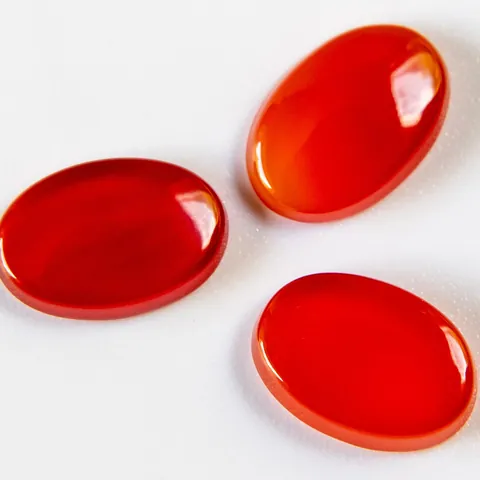
Carnelian
Translucent or opaque orange
- Everyday ring
- Yes, as a cabochon
Photo: W.carter, CC BY 4.0, via Wikimedia Commons (cropped).
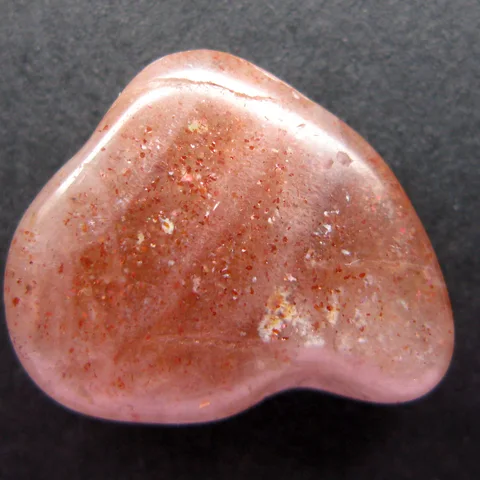
Sunstone
Translucent or opaque orange
- Everyday ring
- Earrings and pendants
Sunstone, a feldspar, glitters with reflective inclusions.
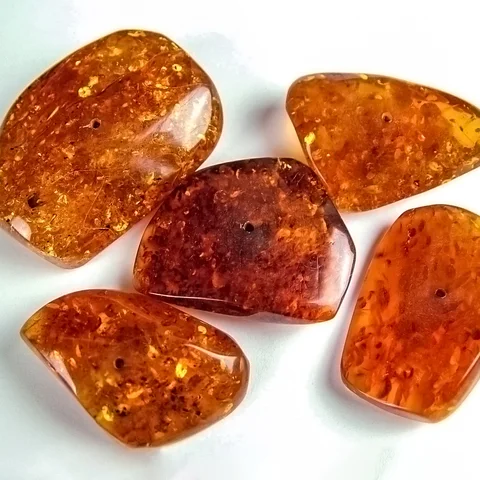
Amber
Translucent or opaque orange
- Everyday ring
- Earrings and pendants
Photo: W.carter, CC BY-SA 4.0, via Wikimedia Commons (cropped).
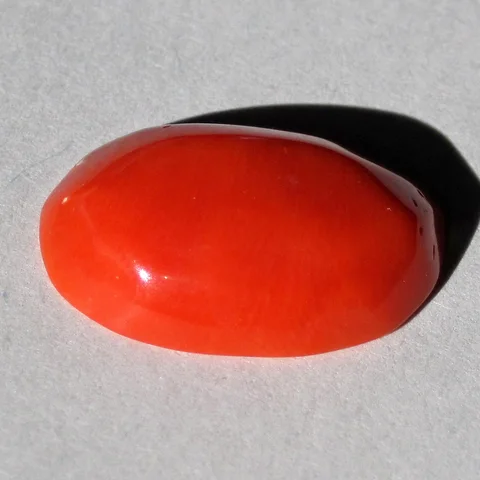
Coral
Translucent or opaque orange
- Everyday ring
- Earrings and pendants
Photo: James St. John, CC BY 2.0, via Wikimedia Commons (cropped).
Each card shows an example of the stone, not a standard. Each photo fills its tile: the stones are not to scale.
Source: Names, kinds of orange and ring use: gemological reference sheets, checked on 24 November 2026. Photo credits are under each card.
Which Orange Stones Are Safe in a Ring?
Dust in the air is mostly quartz, hardness 7. A stone below 7 slowly loses its polish on the hand.
Hard is not always tough
Hardness is resistance to scratches. Toughness is resistance to chips and breaks. Tap a stone.
Toughness (chips and breaks)
Mohs hardness (scratches)
Touch a point to read about the stone.
Orange sapphire Mohs 9 · Toughness: Usually excellent
Hard and usually very tough: the easy choice for daily wear.
Orange spinel Mohs 8 · Toughness: Good
Hard, with good toughness: a very good ring stone.
Imperial topaz Mohs 8 · Toughness: Poor, because of cleavage
Cleaves easily: in a ring, it needs care.
Spessartite garnet Mohs 7 to 7.5 · Toughness: Fair to good
Fair to good toughness: a good ring stone in a setting that guards its edges.
Citrine Mohs 7 · Toughness: Good
At dust level, with good toughness: a good ring stone.
Carnelian Mohs 6.5 to 7 · Toughness: Good
A little softer than dust, but tough, as chalcedony is.
Zircon Mohs 6 to 7.5 · Toughness: Fair to good
Heat-treated zircon can be brittle and its facet edges abrade easily.
Sunstone Mohs 6 to 6.5 · Toughness: Poor
Softer than dust, with poor toughness: earrings, pendants or occasional wear.
Fire opal Mohs 5 to 6.5 · Toughness: Very poor to fair
Softer than dust: keep it for earrings and pendants.
Coral Mohs 3 to 4 · Toughness: Fair to good
Fairly tough, but very soft: earrings and pendants.
Amber Mohs 2 to 2.5 · Toughness: Poor
Very soft, with poor toughness: it belongs in pendants.
| Stone | Mohs | Toughness |
|---|---|---|
| 1Orange sapphireHard and usually very tough: the easy choice for daily wear. | 9 | Usually excellent |
| 2Orange spinelHard, with good toughness: a very good ring stone. | 8 | Good |
| 3Imperial topazCleaves easily: in a ring, it needs care. | 8 | Poor, because of cleavage |
| 4Spessartite garnetFair to good toughness: a good ring stone in a setting that guards its edges. | 7 to 7.5 | Fair to good |
| 5CitrineAt dust level, with good toughness: a good ring stone. | 7 | Good |
| 6CarnelianA little softer than dust, but tough, as chalcedony is. | 6.5 to 7 | Good |
| 7ZirconHeat-treated zircon can be brittle and its facet edges abrade easily. | 6 to 7.5 | Fair to good |
| 8SunstoneSofter than dust, with poor toughness: earrings, pendants or occasional wear. | 6 to 6.5 | Poor |
| 9Fire opalSofter than dust: keep it for earrings and pendants. | 5 to 6.5 | Very poor to fair |
| 10CoralFairly tough, but very soft: earrings and pendants. | 3 to 4 | Fair to good |
| 11AmberVery soft, with poor toughness: it belongs in pendants. | 2 to 2.5 | Poor |
Points that would overlap are moved apart a little. The exact values are in the table.
Toughness has no number: these are the words gemmologists use. Dust is mostly quartz, hardness 7: a softer stone slowly loses its polish.
Source: Hardness and toughness as published in standard gemology references, checked on 24 November 2026.
- Orange sapphire: the easy choice.
- Orange spinel: made for daily wear in any jewel (spinel in every color).
- Spessartite garnet: a good ring stone in a setting that guards its edges (garnet in jewelry).
- Citrine: a good ring stone, at dust level.
- Carnelian: like jade, its aggregate structure makes it tough: a sound cabochon for a ring, though its polish dulls over time.
Imperial topaz cleaves easily and wants a protective mounting; heated zircon can be brittle. Fire opal and sunstone suit earrings, pendants or occasional wear, and amber and coral belong in pendants.
Bright Orange or Brownish Orange?
Orange is a warm color, and a warm color with weak saturation turns brownish, which lowers its value. In sapphire, the finest orange is a strong red-orange in a medium tone, with vivid saturation. In spessartite, the favored color is a vivid, slightly reddish orange; very dark or very light stones are worth much less.
Two orange garnets: bright and brownish
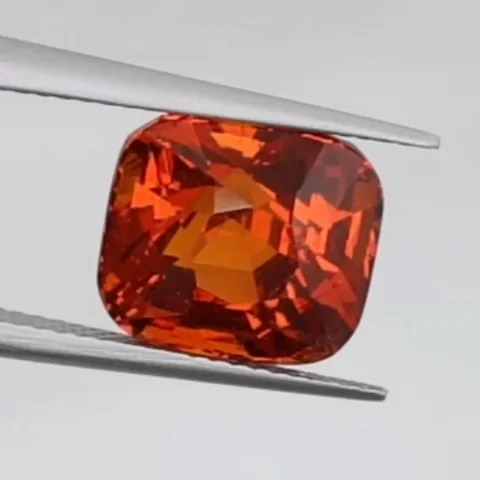
Spessartite garnet
Bright, slightly reddish orange
This one, 8.03 ct, is from our collection.
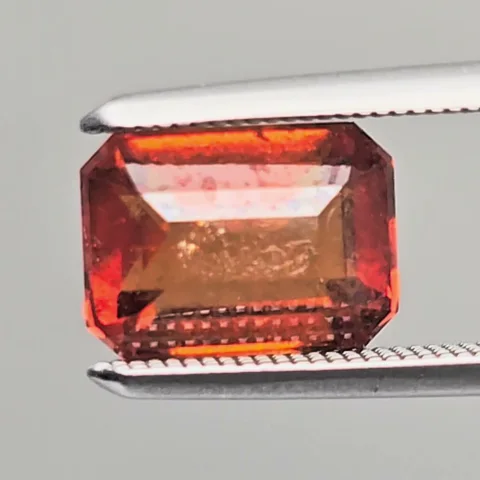
Hessonite garnet
Brownish orange
Hessonite, almost always brownish, is valued below spessartite.
Each card shows an example of the stone, not a standard. Each photo fills its tile: the stones are not to scale.
Source: Colors and value: gemological reference sheets, checked on 24 November 2026. Both photos: Joalys.
Citrine bends the rule. A saturated color free of brown is the prized one, yet an earthy, deep brownish or reddish orange has been its most popular shade: there, brown is a taste, not a fault. In padparadscha it is the opposite: some dealers find many stones too brownish, or too strongly orange, to carry the name (sapphire colors side by side).
Is the Orange Natural, and Will It Last?
Ask two things in writing before you choose: was the color treated, and does it hold in light?
Is the orange natural? Six questions, ready to send
Tick them as you get answers. The button copies all six, ready to send.
6 points
A message ready to send to the seller, with all the questions.
See the message
Hello, I am interested in this orange stone. Before I choose, could you confirm a few points in writing?

1. If it is an orange sapphire: does its color come from heat or from irradiation, and has it passed a fade test?
2. If it is an orange sapphire: has it been diffused with beryllium? Please state it in writing.
3. If it is a citrine or a carnelian: has its color been produced or improved by heating?
4. If it is a zircon: was it heated, and has its color held in light?
5. If it is a fire opal: is it free of crazing, and has it kept a clear look?
6. Will it come with a report from an independent laboratory that names the stone and any treatment?

Thank you for your time.
- Sapphire: heat brightens orange, and that color is stable. Irradiated or beryllium-diffused oranges are another matter (heated or unheated).
- Spinel and spessartite: rarely treated, and stable in light.
- Citrine and carnelian: often heated, a stable treatment.
Glass, synthetic sapphire, including synthetic “padparadscha”, and synthetic spinel imitate these oranges. For a stone that matters to you, the answer comes from an independent laboratory: what a lab report proves.
Quick answers
What is the most valuable orange gemstone?
Which orange gemstone is best for an engagement ring?
Is padparadscha an orange sapphire?
Does orange sapphire fade?
What is an orange garnet called?
Choose a bright orange, then ask where its color comes from
For a ring worn every day: orange sapphire or orange spinel, then spessartite garnet and citrine. Fire opal, sunstone, amber and coral are happier in earrings and pendants. Whatever the stone, check that its orange is bright rather than brownish, and ask whether its color comes from a treatment that fades.